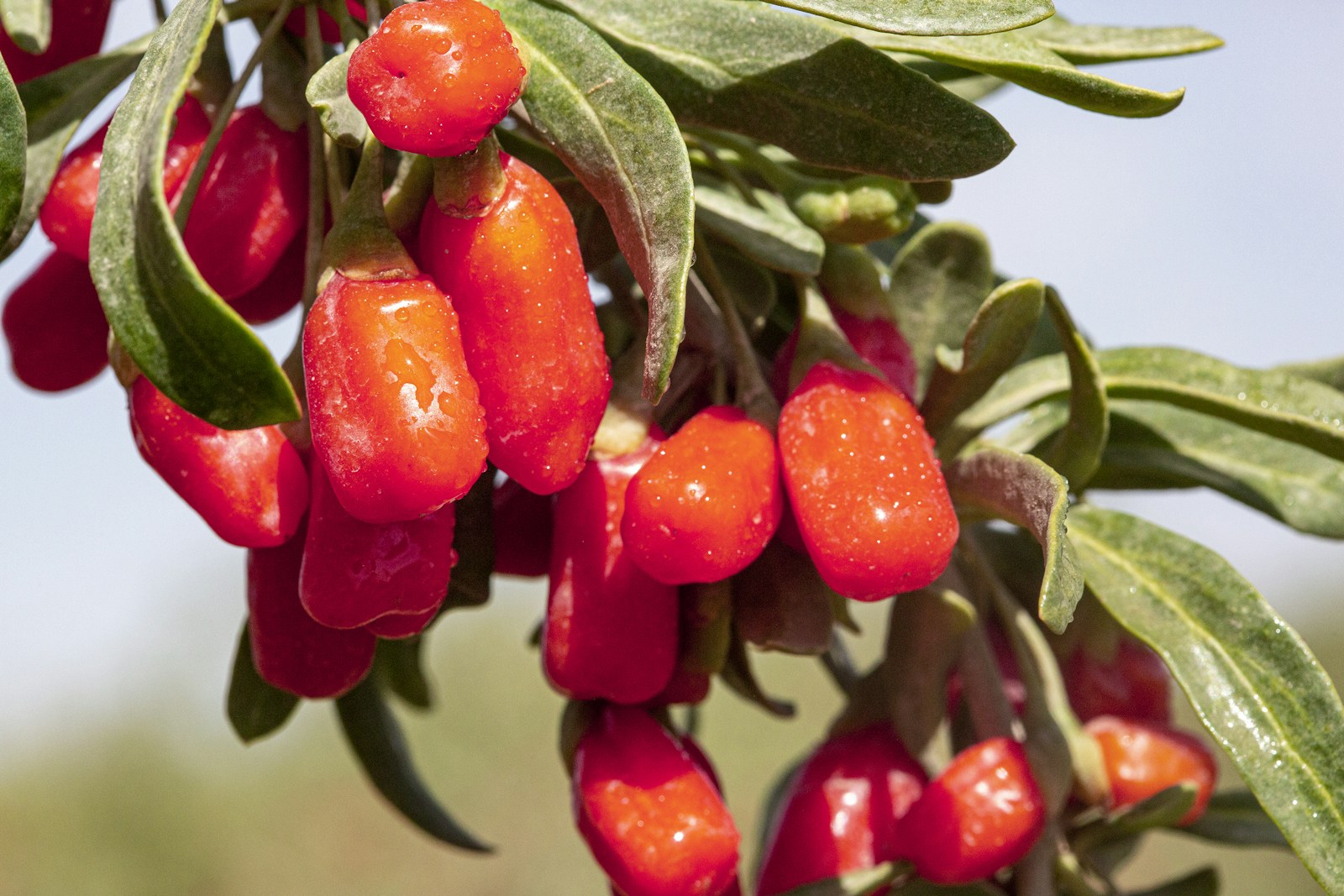
Goji berry is a woody shrub from the nightshade family, grown for its small, bright red berries. It shrugs off heat, wind, poor soil and drought once established. The berries are sweet-tart and slightly savoury, and most are eaten dried. It is easy to grow, but it spreads by suckers and needs a firm hand with the pruners.
Sowing and planting
Most gardeners buy a young potted plant or a bare-root plant (sold dormant, with no soil on the roots). Plant bare-root stock in early spring, as soon as the ground can be worked. Potted plants go in any time from spring to early autumn, as long as you can water them through their first summer.
Choose the sunniest, best-drained spot you have. Goji hates wet feet and rots in heavy, waterlogged clay. On clay, plant on a low mound or in a raised bed. Rich soil is not needed. Too much fertility gives you leafy growth and fewer flowers.
Dig a hole twice as wide as the root ball and the same depth. Set the plant at the level it grew before, backfill, firm gently and water well. Space plants 3 to 5 feet (90 to 150 cm) apart for a hedge or row.
Goji also grows well in a large container, at least 5 gallons (20 litres), filled with a free-draining potting mix. A pot has the bonus of stopping suckers from spreading. In zone 5 or colder, move potted plants to a sheltered spot for winter, since roots in pots freeze more easily.
From seed
Seed is cheap but slow. Sow indoors 8 to 10 weeks before your last frost. Press the seed onto moist seed compost and cover it very lightly. Keep it at 65 to 75°F (18 to 24°C). Seedlings usually appear in 1 to 3 weeks. Grow them on in pots and harden off (get them used to outdoor sun and wind over a week or two) after your last frost. Expect the first berries in year two or three.
From cuttings and suckers
Softwood cuttings (soft new shoot tips) taken in late spring root readily in moist potting mix. You can also dig up a rooted sucker in early spring and replant it. Both give you a copy of the parent plant.
Growing on
Water weekly through the first growing season, soaking the root zone. After that, water only in long dry spells. A plant that dries out hard while fruiting may drop its flowers, so a deep drink then helps.
Go easy on feeding. A thin layer of compost each spring is enough in most gardens. Avoid high-nitrogen fertilizer, which drives soft growth at the expense of fruit.
Mulch with 2 to 3 inches (5 to 8 cm) of wood chips or straw to hold moisture and smother weeds. Keep the mulch a hand's width from the stems.
Support and training
Young stems are long and arching and flop under the weight of fruit. Tie the main stem to a stout stake, or grow a row along a simple two-wire fence. In year one, let one or two strong stems grow up the stake. When they reach about 2 feet (60 cm), pinch the tips. This encourages side branches, which carry the fruit.
Pruning
Prune while the plant is dormant, in late winter. Fruit forms on new growth and one-year-old wood, so an annual trim keeps crops coming. Remove dead, crossing and weak stems. Shorten long side branches by about a third. Keep the plant open so light and air reach the centre. Use clean, sharp pruners, and wear gloves, since many plants carry small thorns.
Controlling suckers
Goji sends up suckers (new shoots rising from spreading roots), sometimes several feet away. Pull or cut them at ground level whenever you see them. A buried root barrier, or a lawn you mow around the plant, keeps it in bounds.
Companions
Keep goji away from tomatoes, potatoes, peppers and eggplants where you can. They share several pests and diseases. Low herbs and flowers that attract predatory insects make better neighbours.
Harvesting
Berries are ready when they are fully red, glossy and slightly soft, and taste sweet rather than bitter. They ripen in flushes from midsummer until the first frost. Unripe orange berries taste unpleasant.
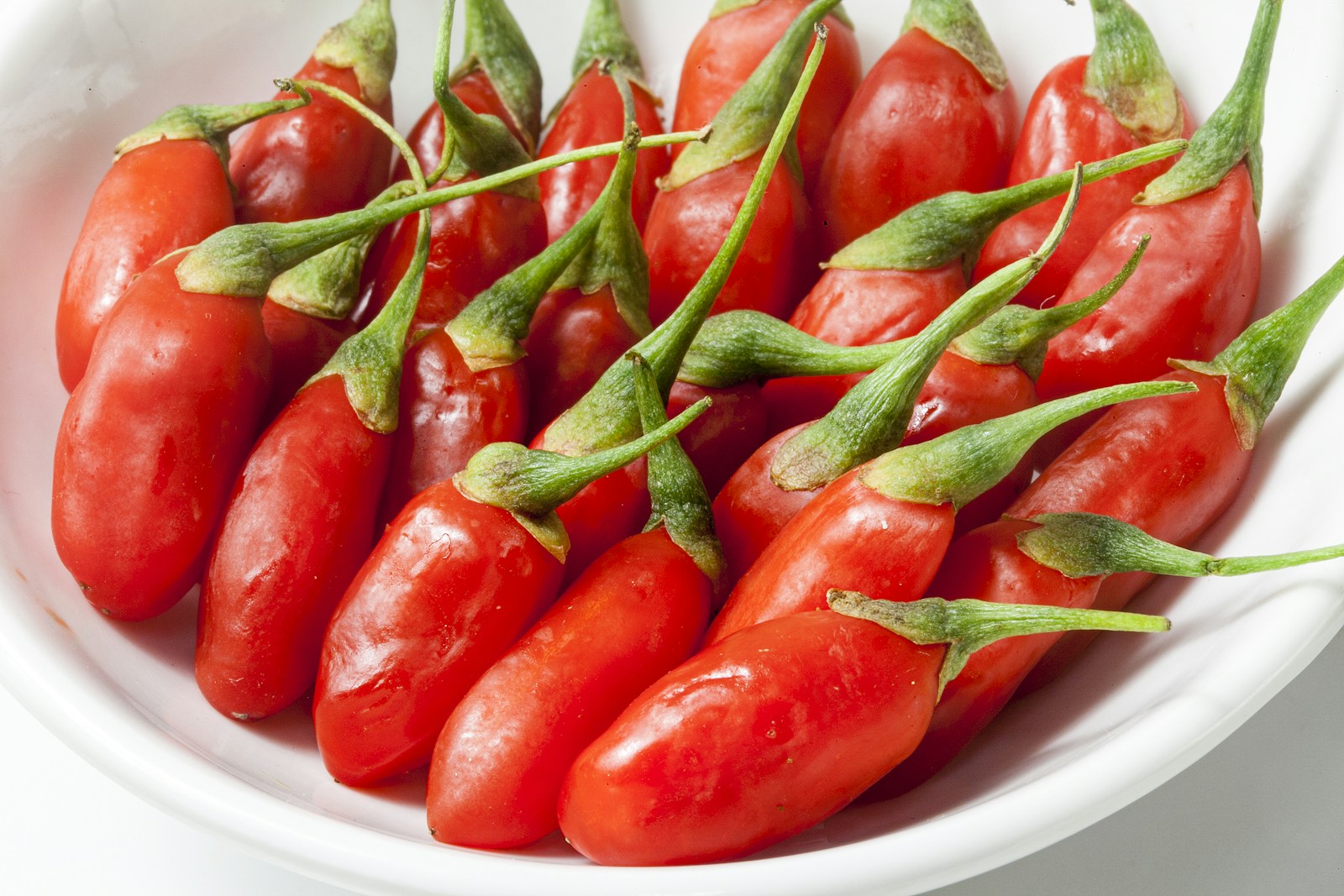
Fresh berries bruise and blacken where your fingers touch them. The easiest method is to spread a sheet under the plant and shake the branches gently. Ripe berries fall; unripe ones stay put. Otherwise pinch each berry off by its short stem.
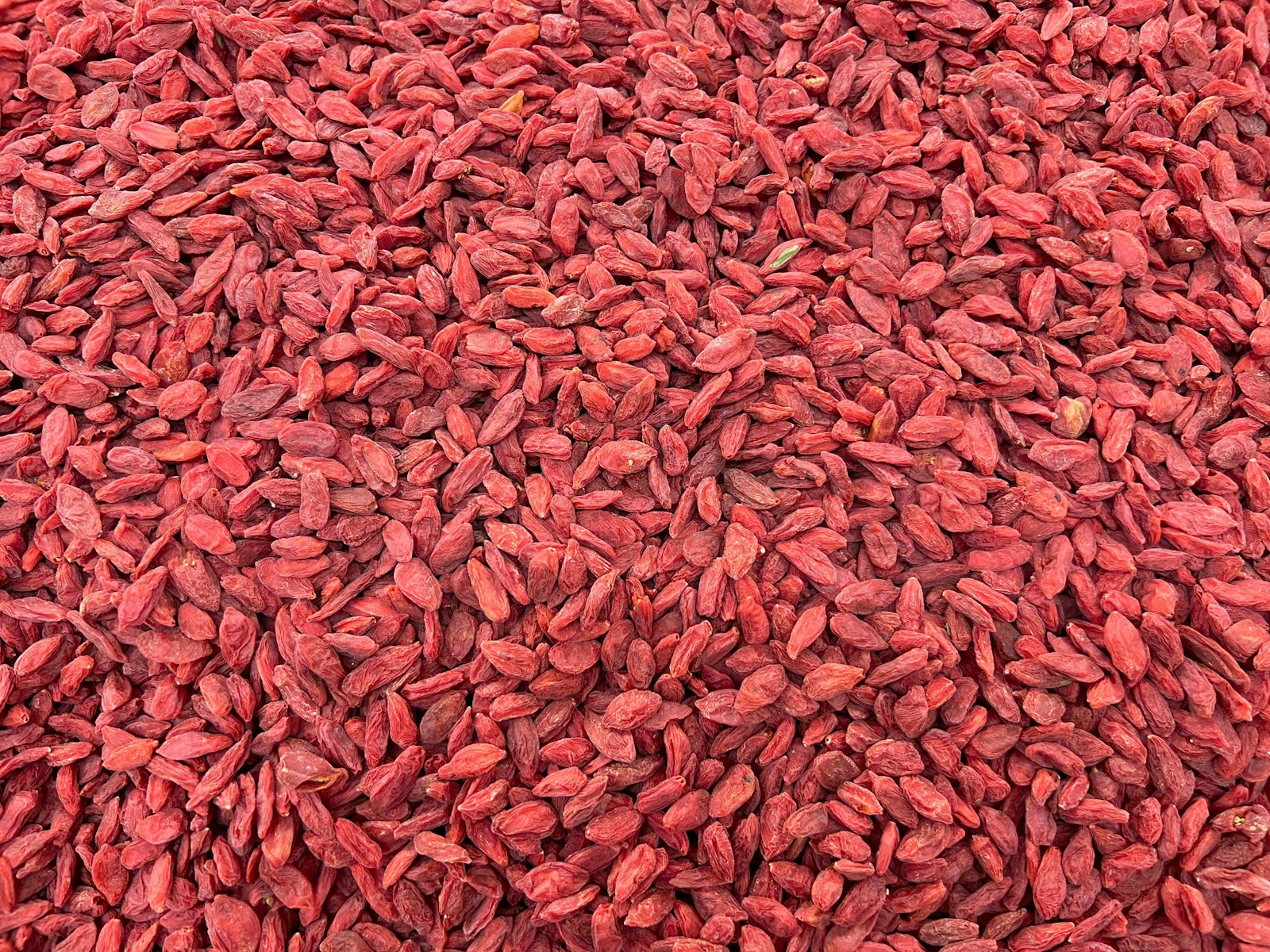
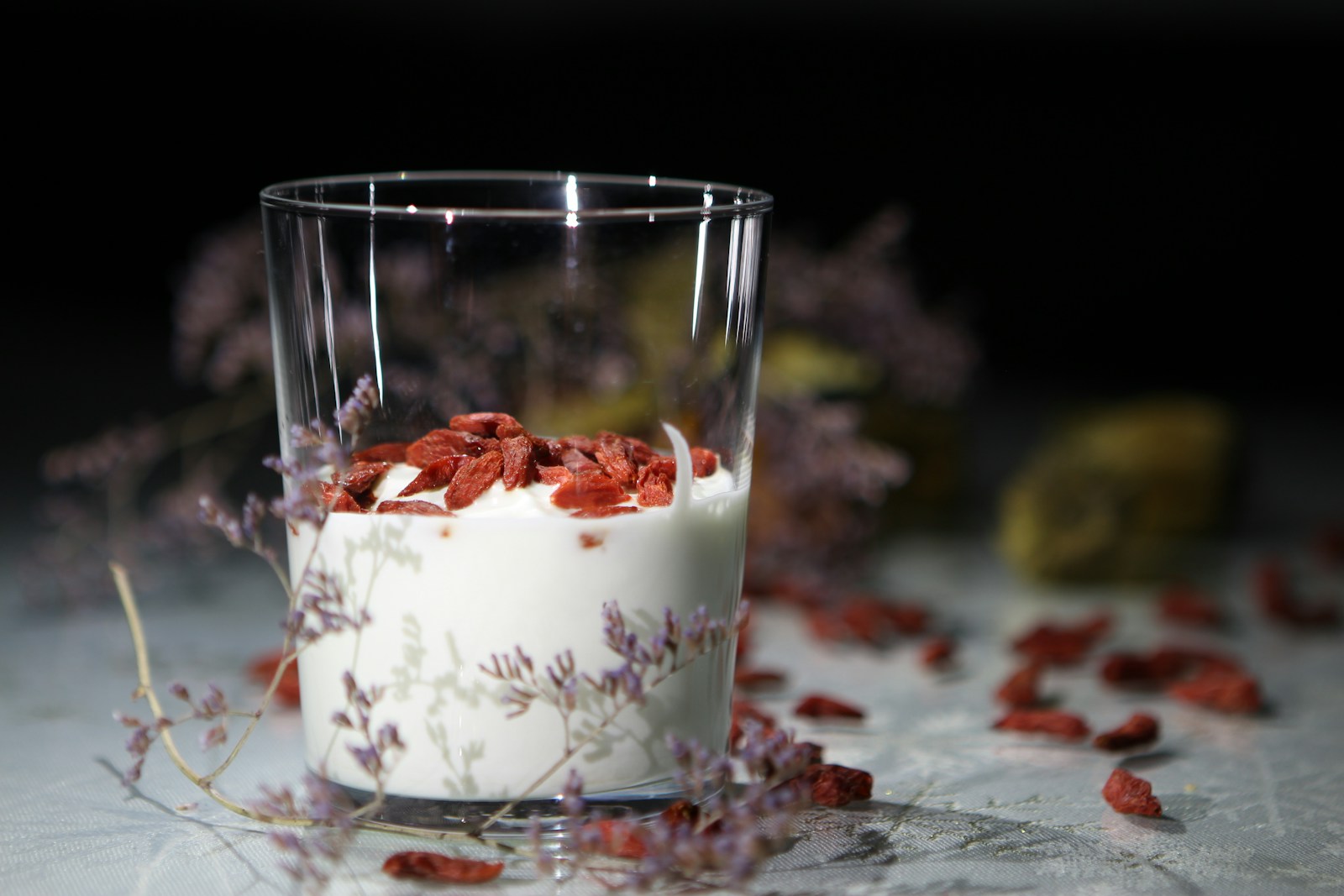
Fresh berries keep only a few days in the refrigerator. For longer storage, dry them on screens or in a dehydrator at low heat until leathery, like raisins. Dried berries keep for months in an airtight jar. You can also freeze them on a tray, then bag them.
To save seed, squash very ripe berries in water, rinse the seeds clean and dry them on paper.
Keep pets away from goji leaves and stems. Like many nightshades, the leaves contain compounds that are toxic to dogs, cats and livestock if chewed. Unripe berries are also best avoided. Fence off young plants if pets graze in the garden, and clear up fallen leaves and prunings.
Problems and pests
Leaves covered in white powder
Powdery mildew, a fungus that thrives in crowded plants with dry roots and humid air. Prune to open the centre and water the soil, not the leaves. Remove the worst leaves. A potassium bicarbonate spray labelled for mildew helps if used early; wear gloves and follow the label.
Sticky, curled shoot tips
Aphids (small sap-sucking insects) cluster on soft new growth. Knock them off with a strong jet of water. Ladybugs and lacewings usually control them if you avoid broad sprays.
Leaves chewed or peppered with tiny holes
Flea beetles or Colorado potato beetles, both nightshade pests. Handpick larger beetles into soapy water. Cover young plants with fine insect mesh in spring, and keep goji away from potato and eggplant beds.
Fine speckling and webbing under leaves
Spider mites, worst in hot, dry weather. Hose the undersides of the leaves regularly. Insecticidal soap works on contact; spray in the evening, test on a few leaves first and follow the label.
Berries vanish just as they ripen
Birds love goji. Drape fine netting over the plant as the first berries colour, and pin it at the base so birds cannot get trapped underneath.
Varieties worth growing
- 'Crimson Star': an upright, productive selection with large, sweet berries, widely sold in North America.
- 'Phoenix Tears': a compact, heavy-cropping selection that often fruits in its second year.
- 'Big Lifeberry': grown for its large berries and vigorous, bushy habit.
- 'Sweet Lifeberry': a sister selection bred for sweeter fruit and a heavy crop.