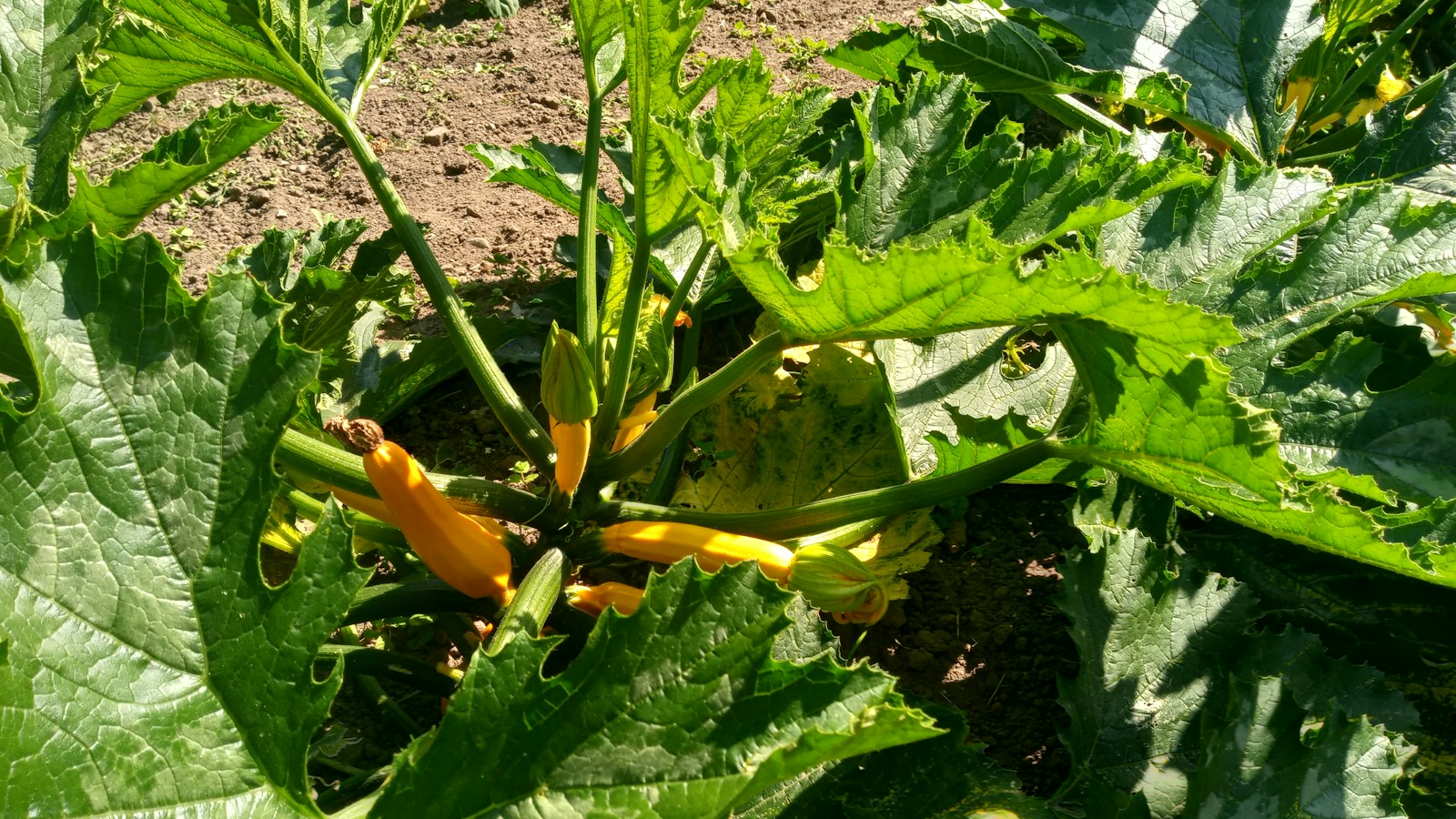
Zucchini, also called courgette, is a summer squash picked while the fruit is young and tender. One or two plants feed most households, as each keeps cropping for weeks. It is one of the easiest vegetables to grow, as long as you wait for warm weather.
Sowing and planting
Zucchini needs warm soil. Sow seed directly outdoors one to two weeks after your last frost, once the soil reaches at least 60°F (16°C). It germinates best at 70°F (21°C) or above. Cold, wet soil makes the seed rot before it sprouts.
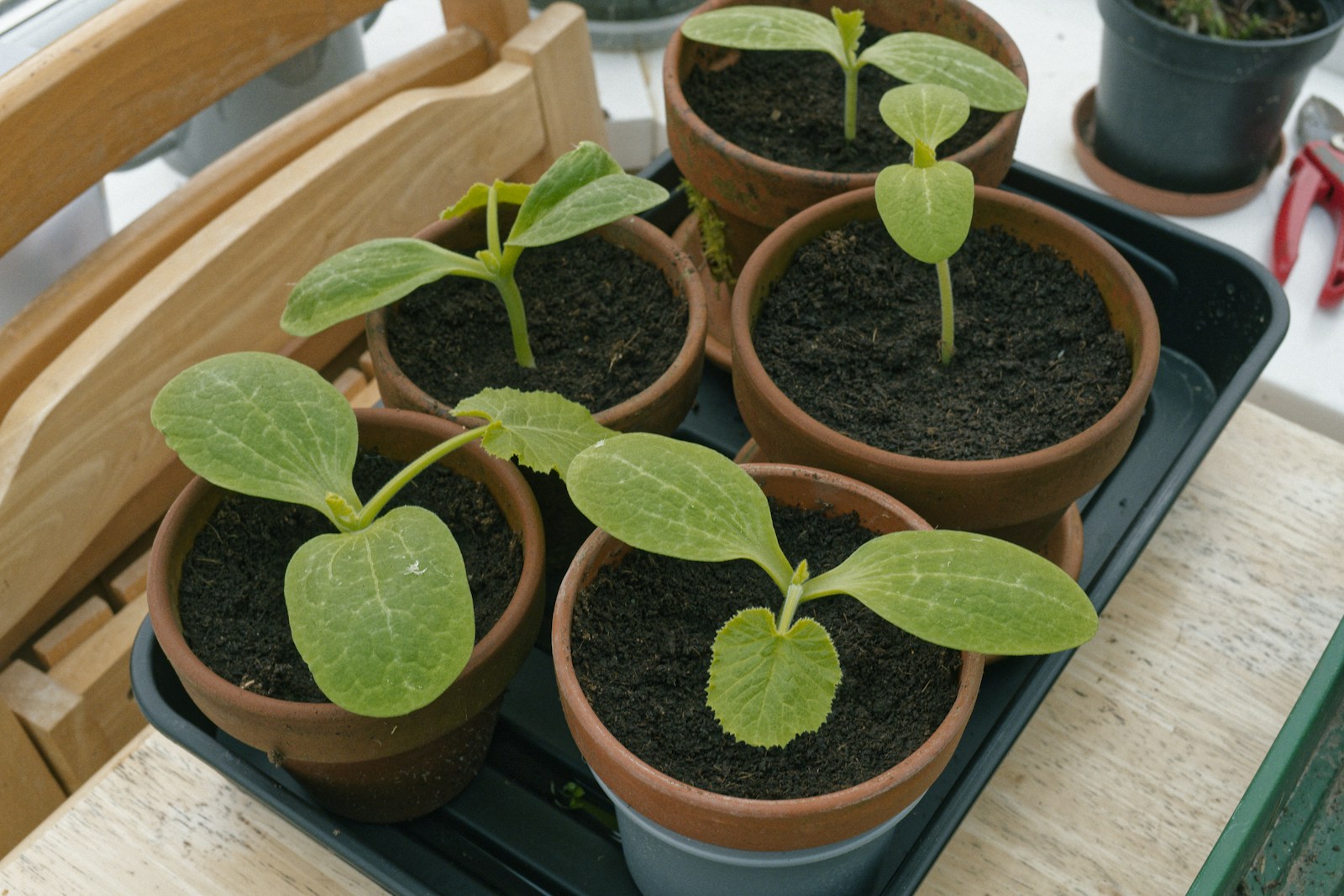
Sow two or three seeds together, 1 inch (2.5 cm) deep, at each planting spot. Once seedlings have their first true leaves, keep the strongest and snip off the rest at soil level. True leaves are the rough, lobed leaves that follow the smooth seed leaves. Seedlings usually appear in five to ten days.
In short-season areas, sow indoors two to four weeks before your last frost. Use individual 3 to 4 inch (8 to 10 cm) pots, as squash roots dislike disturbance. Harden off the seedlings for about a week before planting out. Hardening off means getting plants used to outdoor sun, wind and cool nights a little more each day. Plant out after your last frost, disturbing the root ball as little as possible.
Dig plenty of compost or well-rotted manure into each planting spot. Many gardeners plant on a low mound, which warms quickly and drains well.
For a longer harvest, sow a second batch four to six weeks after the first. The younger plants take over as the first ones tire or succumb to pests. In long-season areas, such as USDA zones 8 to 10, a third sowing is often possible.
Frost and cold soil are the main reasons zucchini fails. Seed rots in soil below 60°F (16°C), and a single frost kills young plants. Wait until the soil is warm, and cover new plants if a cold night is forecast.
Growing on
Watering and mulching
Water deeply once or twice a week, soaking the soil around the base. Aim at the roots and keep the leaves dry, which slows powdery mildew. Plants in hot weather or in containers may need water every day. Leaves that wilt in afternoon heat but recover by evening are normal.
Once the soil is warm, spread 2 to 3 inches (5 to 8 cm) of straw or shredded leaves around each plant. Mulch keeps the soil moist, keeps fruit off damp soil and smothers weeds.
Feeding
Zucchini is a hungry crop. In soil rich in compost, one side-dressing of compost or a balanced organic fertiliser as flowering starts is usually enough. Too much nitrogen gives huge leaves and fewer fruits. Wear gloves when handling fertiliser and wash your hands afterwards.
Pollination
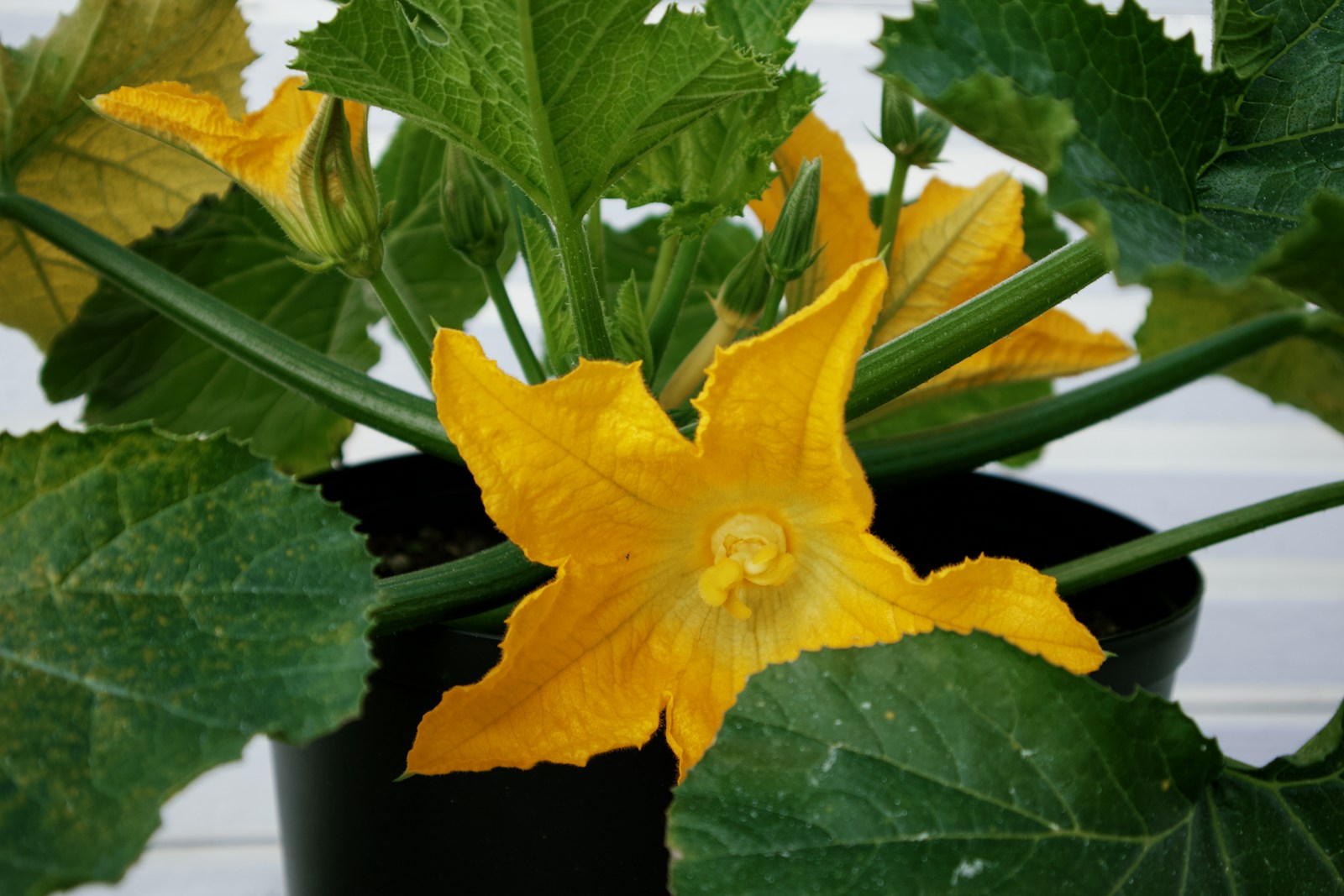
Each plant carries separate male and female flowers. Female flowers have a tiny swollen fruit behind the petals; male flowers sit on a thin stalk. The first flowers are often all male, so early fruit may lag by a week or two. Bees carry pollen from male to female flowers.
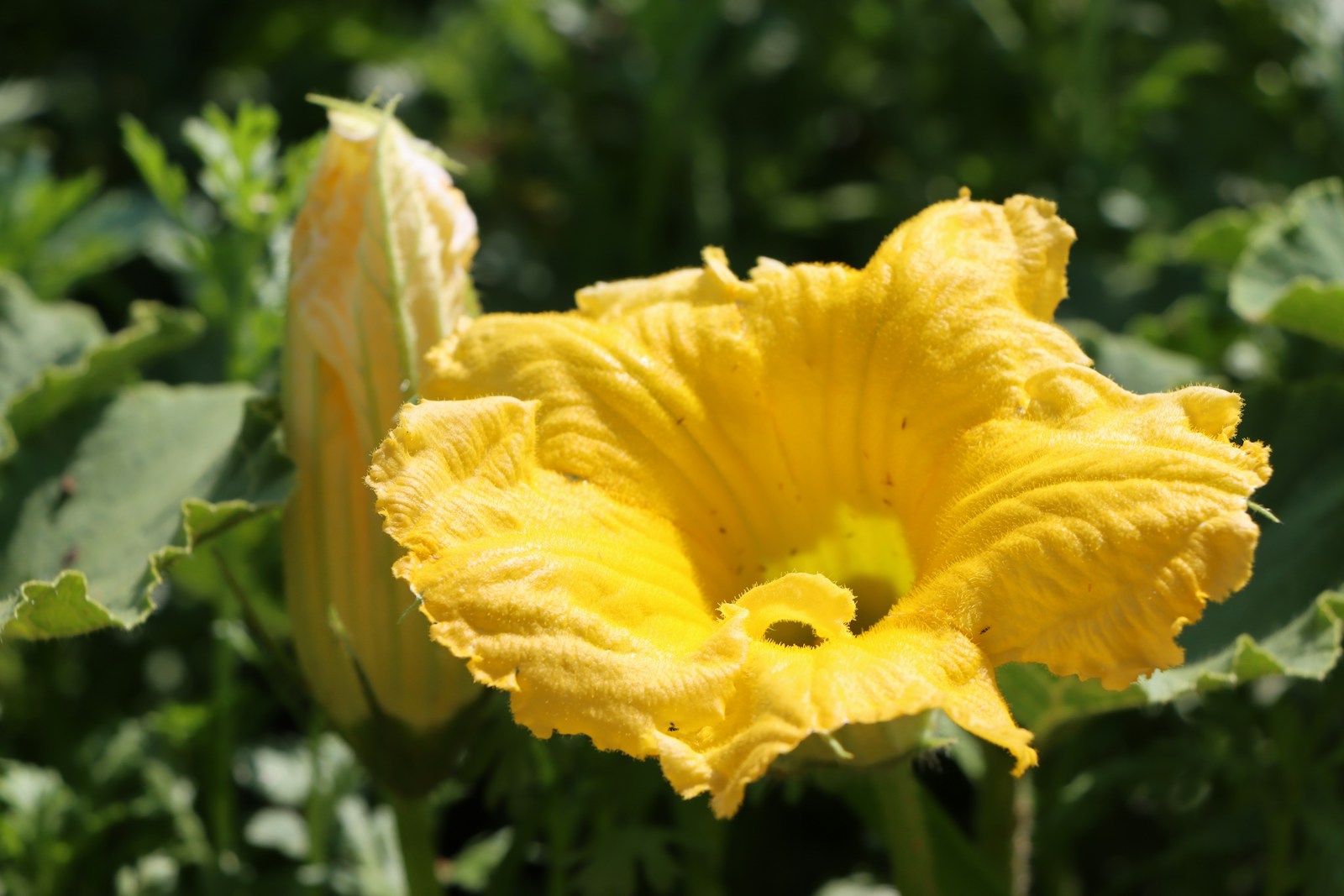
If small fruits shrivel from the tip, pollination has failed. Hand pollinate in the morning. Pick a male flower, peel back its petals and brush its pollen onto the centre of an open female flower. Planting flowers for bees nearby helps too.
Support and pruning
Most zucchini are bush types and need no staking. Remove old, yellowing or mildewed leaves at the base to improve airflow and make fruit easier to find. Use clean, sharp scissors and take care, as the stems are prickly. Some gardeners train plants up a sturdy stake to save space; tie the main stem loosely as it grows.
Nasturtiums, marigolds and beans sit well near zucchini. Avoid planting where squash, cucumbers or melons grew in the last two years.
Harvesting
Pick zucchini when it is 6 to 8 inches (15 to 20 cm) long and the skin is glossy. At this size the flesh is firm and the seeds are small. Round types are ready at 3 to 4 inches (8 to 10 cm) across. Fruit grows very fast in warm weather, so check plants every day or two.
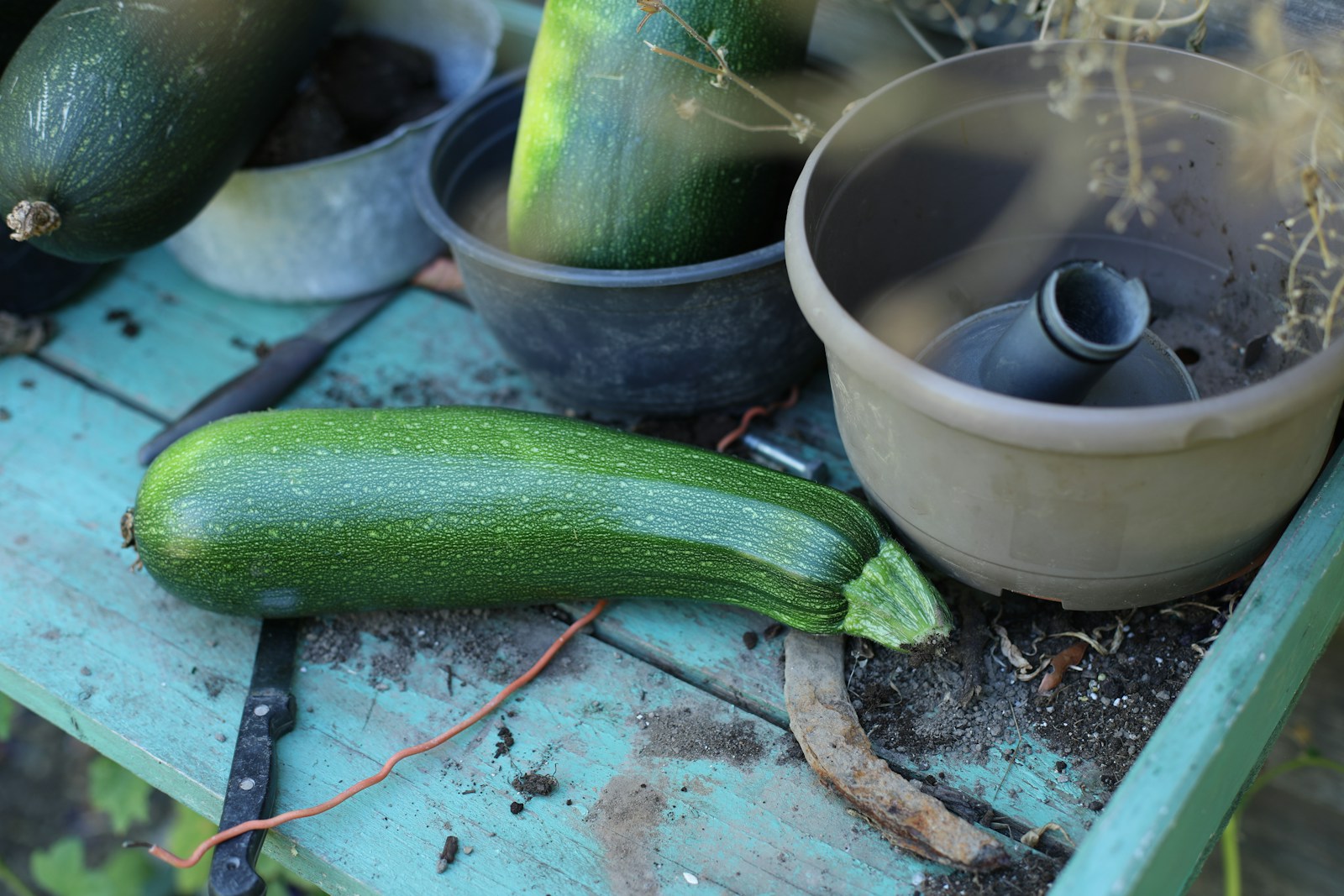
Cut the fruit off with a knife, leaving a short stub of stalk. Twisting can damage the stem. Pick every fruit, even if you do not need it. Oversized fruit left on the plant slows the growth of new ones.
The flowers are edible too. Pick male flowers in the morning, leaving a few for pollination, and stuff or fry them the same day.
Store zucchini unwashed in the fridge for up to a week. Surplus fruit can be grated and frozen for baking, or sliced and grilled before freezing. If a fruit tastes unusually bitter, do not eat it.
Seed saving is tricky, because zucchini crosses freely with other Cucurbita pepo squash and pumpkins. To save seed from an open-pollinated variety, hand pollinate a female flower and tape it shut. Leave that fruit on the plant until the skin hardens, then scoop, rinse and dry the seeds.
Problems and pests
White powdery patches on the leaves
Powdery mildew is a fungal disease that coats the leaves in white dust, usually from midsummer on. Space plants for airflow, water the soil not the leaves, and remove badly affected leaves. Resistant varieties help. A spray of diluted milk or potassium bicarbonate can slow it; test on a few leaves first and follow the label.
Plant suddenly wilts, with sawdust-like mess at the base
Squash vine borers are caterpillars that tunnel into the stem near soil level. Cover young plants with row cover until flowering begins, then remove it for bees. If you find an entry hole, slit the stem lengthways, remove the grub and mound moist soil over the wound so it roots again.
Grey or brown bugs clustering under leaves
Squash bugs suck sap, leaving yellow speckles that turn brown. Check leaf undersides and crush the bronze egg clusters. Hand pick adults into soapy water, and clear plant debris in autumn so they cannot overwinter.
Small fruits rot or shrivel from the tip
This is poor pollination, sometimes with rot from wet weather. Hand pollinate, attract bees and pick off affected fruit. Blossom end rot, a sunken dark patch at the flower end, comes from uneven watering; water steadily and mulch.
Varieties worth growing
- Black Beauty: classic open-pollinated variety with dark green, glossy fruit.
- Costata Romanesco: Italian heirloom with ribbed, pale-flecked fruit and a nutty flavour.
- Gold Rush: bright yellow hybrid, easy to spot among the leaves.
- Eight Ball: round, dark green hybrid, ideal for stuffing.
- Cocozelle: striped Italian heirloom with long, slender fruit.
- Dunja: hybrid known for good powdery mildew resistance.