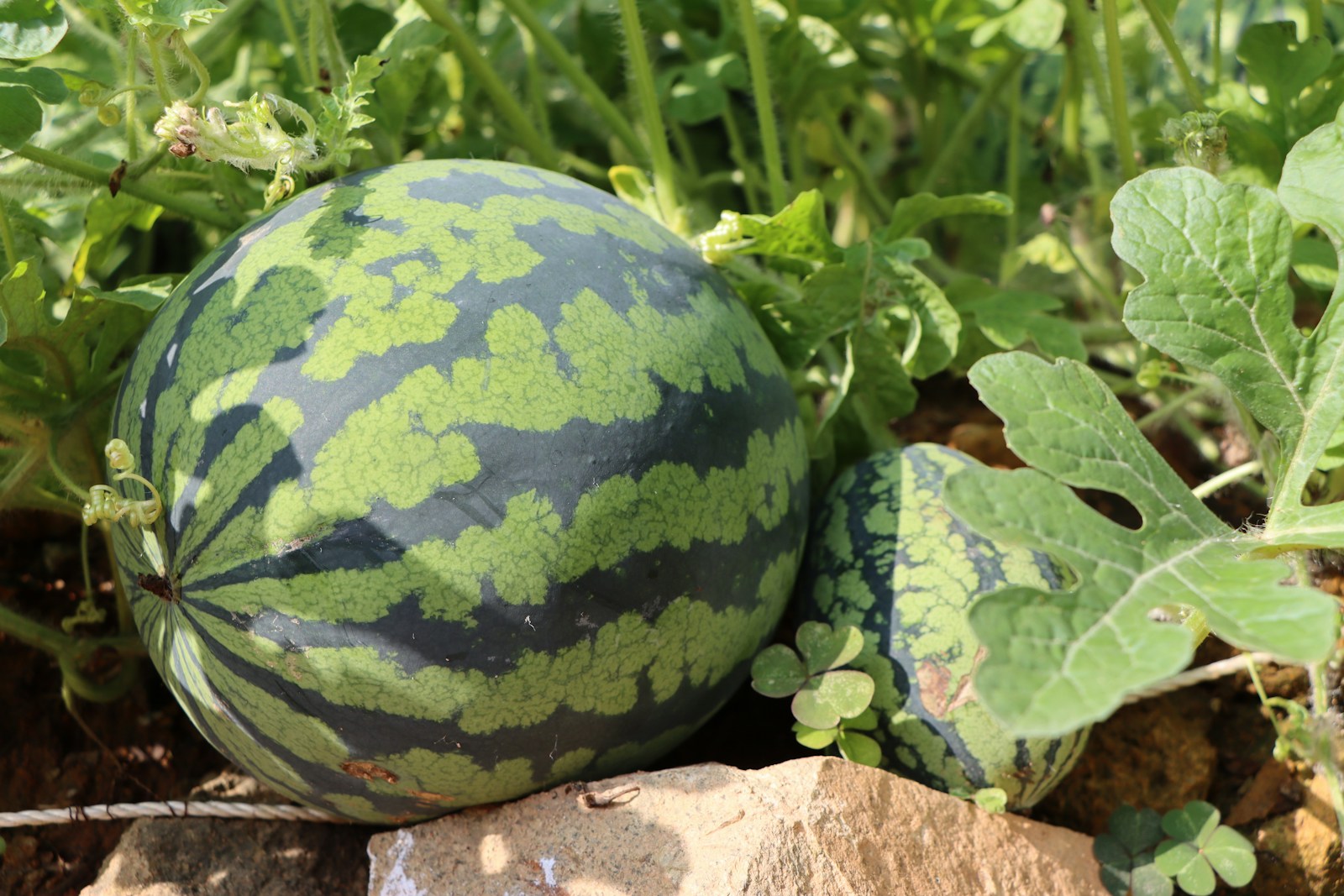
Watermelon (Citrullus lanatus, listed in older books as Citrullus vulgaris) is a frost-tender annual vine in the squash family. It came from Africa and became a staple of summer gardens across the American South, including the Appalachian hills. A home-grown melon picked fully ripe is sweeter than most shop fruit, which is often cut early for shipping. Difficulty: moderate. The plant is easy in a long, hot summer and tricky in a short, cool one.
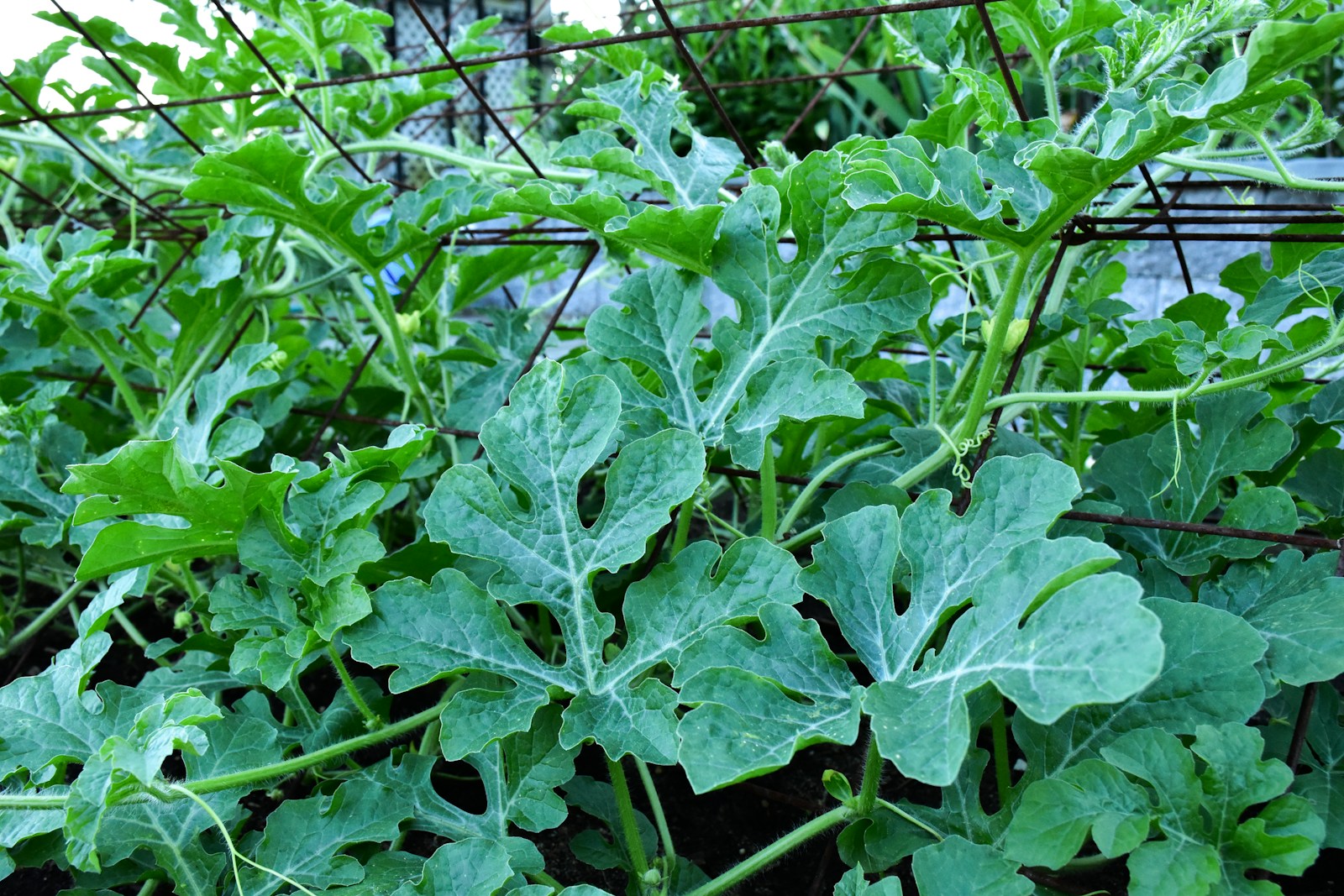
Sowing and planting
Watermelon is a heat lover. Seed rots in cold ground, so wait until the soil reaches 70°F (21°C) at sowing depth. In most gardens that is about two weeks after your last frost.
Frost kills watermelon plants outright, and cold soil stunts them for weeks. Never sow or plant out until all frost danger has passed and the soil is warm.
Choose the sunniest spot you have. Work a few inches of compost into the bed first. Heavy clay benefits from a raised mound, which drains faster and warms sooner.
Direct sowing suits long-summer gardens. Sow four to six seeds 1 inch (2.5 cm) deep in a low mound, called a hill. Space hills 4 to 6 feet (1.2 to 1.8 m) apart. When seedlings have two true leaves, thin to the strongest two or three per hill. True leaves are the lobed leaves that follow the first rounded pair.
Starting indoors helps where summers are short. Sow three to four weeks before your last frost, no earlier. Use individual pots at least 3 inches (8 cm) wide, because watermelon roots resent disturbance. Keep the pots at 75 to 85°F (24 to 29°C) until the seed sprouts. Harden off the seedlings (get them used to outdoor conditions over about a week) before planting. Set them out without breaking the root ball.
In cool regions, lay black plastic or dark mulch over the bed a week or two ahead to warm the soil. A floating row cover (a light fabric laid over the plants) holds extra heat and keeps early beetles off. Remove the cover when flowers open so bees can reach them.
Growing on
Watering. Give 1 to 2 inches (2.5 to 5 cm) of water a week while vines grow and fruit sets. Water deeply at the base, not over the leaves, because wet foliage invites disease. Once fruits reach full size, cut back watering. Drier soil in the last week or two concentrates the sugar, and heavy water late can split the fruit.
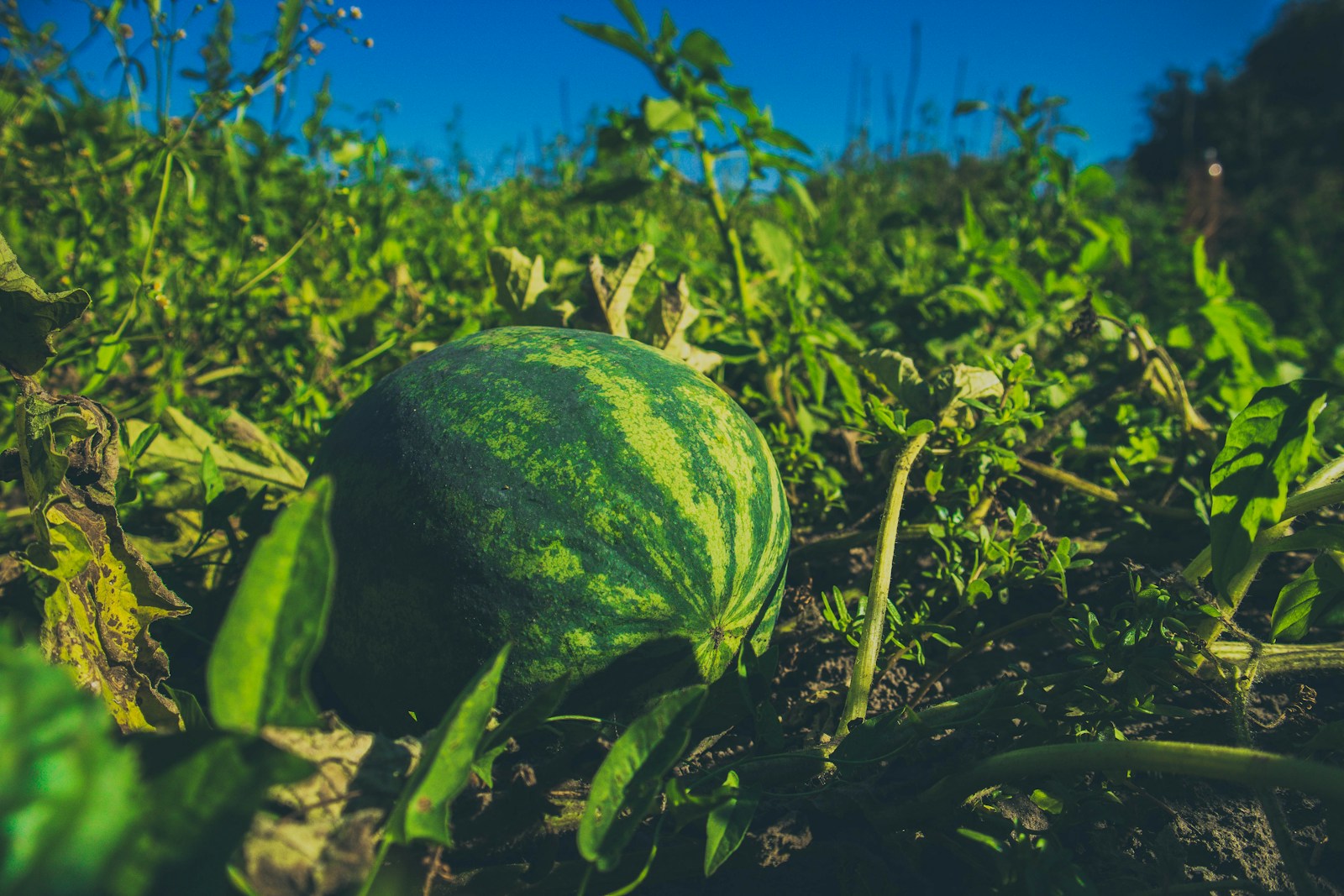
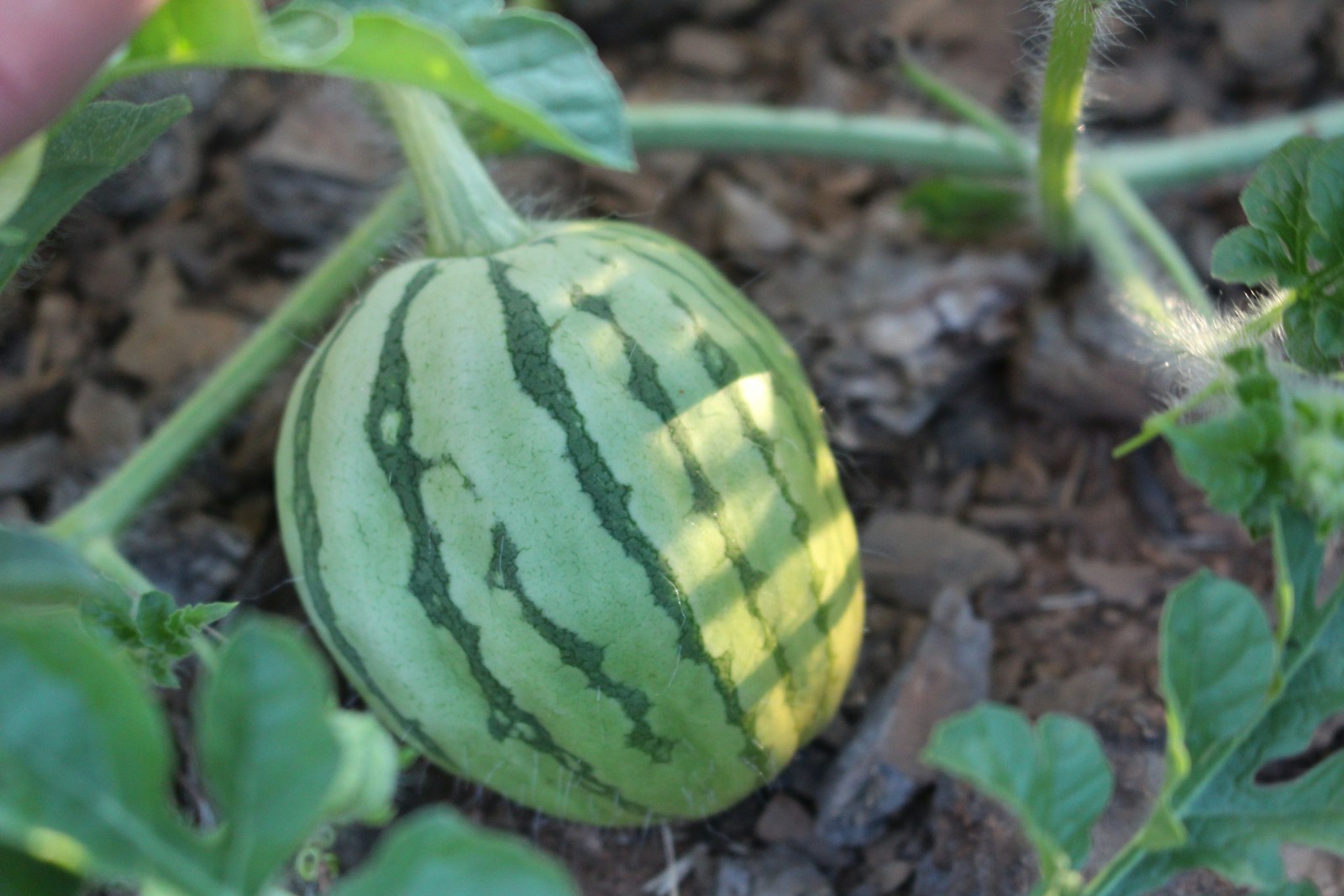
Feeding. Watermelon is a hungry plant. Compost at planting covers much of the need. If growth is pale, feed with a balanced fertilizer when vines start to run. Switch to a feed lower in nitrogen once flowers appear, since too much nitrogen gives leaves instead of fruit. Follow the label rate, wear gloves, and wash your hands after handling any fertilizer.
Mulch and weeds. Mulch with straw once the soil is warm. It holds moisture, smothers weeds and keeps fruit off damp ground. Weed by hand near the plants, as the roots are shallow.
Pollination. Each vine carries separate male and female flowers. Male flowers open first. Female flowers have a tiny swollen melon behind the petals. Bees move the pollen, so avoid spraying anything while flowers are open. Seedless varieties need a normal seeded variety planted nearby to supply pollen.
Support and pruning. Vines usually sprawl 6 to 10 feet (1.8 to 3 m) or more and need no pruning. Small-fruited types can climb a strong trellis if you cradle each fruit in a fabric sling. In short seasons, pinch off flowers that form in the last few weeks before frost. They cannot ripen, and the plant puts its energy into fruit already set.
Harvesting
A watermelon does not get sweeter after picking, so timing matters. Count the days to maturity listed for your variety, then check for these signs together:
- The curly tendril nearest the fruit stem turns brown and dry.
- The ground spot, where the melon rests on the soil, changes from white to creamy yellow.
- The rind loses its shine and turns dull, and it resists a fingernail.
- A knock gives a deep, hollow sound instead of a sharp ring. This test is the least reliable alone.
Cut the stem with pruners or a sharp knife, leaving about 2 inches (5 cm) attached. Do not pull or twist the fruit. A whole melon keeps for one to two weeks in a cool room and longer in the refrigerator once cut.
Watermelon also has a small place in mountain folk history. Anthony Cavender's Folk Medicine in Southern Appalachia records that mountain families used garden crops as readily as wild herbs. Watermelon seed was brewed into a tea that households gave for kidney and bladder complaints. The same source notes that the seed is not an effective diuretic, unlike some other plants used the same way. This is history only, not medical advice. See a doctor for any kidney or bladder trouble.
Problems and pests
Seedlings chewed, leaves full of small holes
Striped and spotted cucumber beetles feed on young plants. Cover seedlings with row cover until flowering. Hand-pick beetles early in the morning when they are slow.
Vines wilt by day and yellow from one side
Fusarium wilt, a soil-borne fungus, is the usual cause. There is no cure once a plant is infected. Pull and bin affected plants. Rotate the bed so no squash-family crop grows there for at least four years, and choose resistant varieties.
Sunken dark spots on leaves and fruit
Anthracnose, a fungal disease, spreads in warm, wet weather. Water at the base, give vines room for air to move, and clear all vine debris at season's end. Buy seed from a reliable supplier, as the disease can travel on seed.
White powdery coating on leaves
Powdery mildew appears late in the season. It weakens vines and reduces sweetness. Space plants well and remove the worst leaves. A healthy, well-fed vine usually ripens its fruit anyway.
Small fruits shrivel, or the blossom end turns black
Shrivelled young fruit usually means poor pollination, often after cool or rainy weather kept bees away. A black, leathery end is blossom end rot, which follows uneven watering. Keep moisture steady with mulch and regular deep watering.
Varieties worth growing
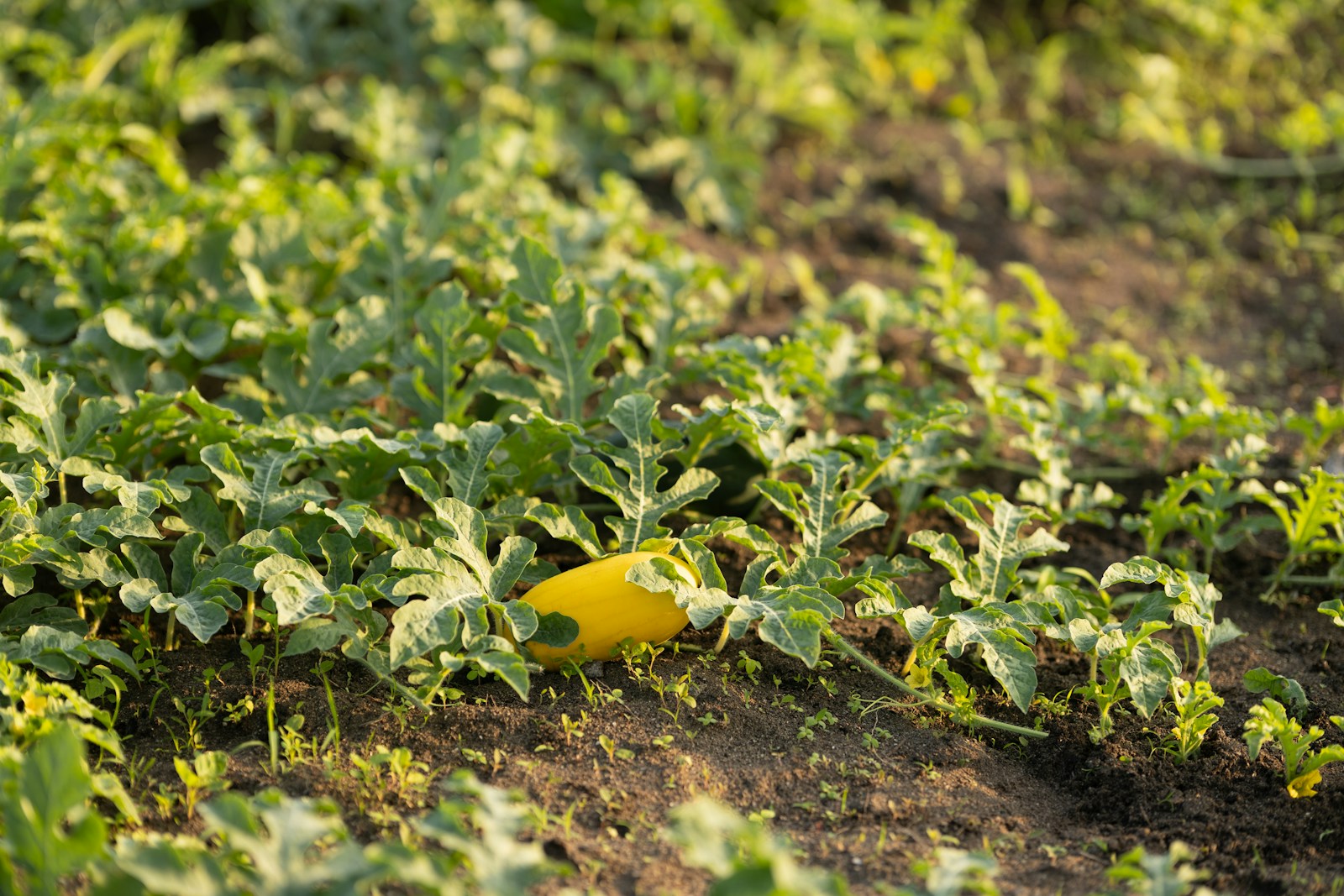
- Sugar Baby: a round, dark green icebox melon of about 8 to 10 pounds (3.6 to 4.5 kg), ripe in around 75 to 80 days. A good choice for small gardens.
- Crimson Sweet: a striped, round-oval melon of about 20 to 25 pounds (9 to 11 kg) in about 85 days. It is known for sweetness and some resistance to fusarium wilt and anthracnose.
- Charleston Gray: a long, pale gray-green melon with a tough rind, ripe in about 85 to 90 days. A classic for hot summers.
- Moon and Stars: an heirloom with a dark rind speckled in yellow spots, and spotted leaves to match. It needs a long season of 90 days or more.
- Blacktail Mountain: an early, dark green melon bred for short, cool seasons, ripe in roughly 70 to 75 days.