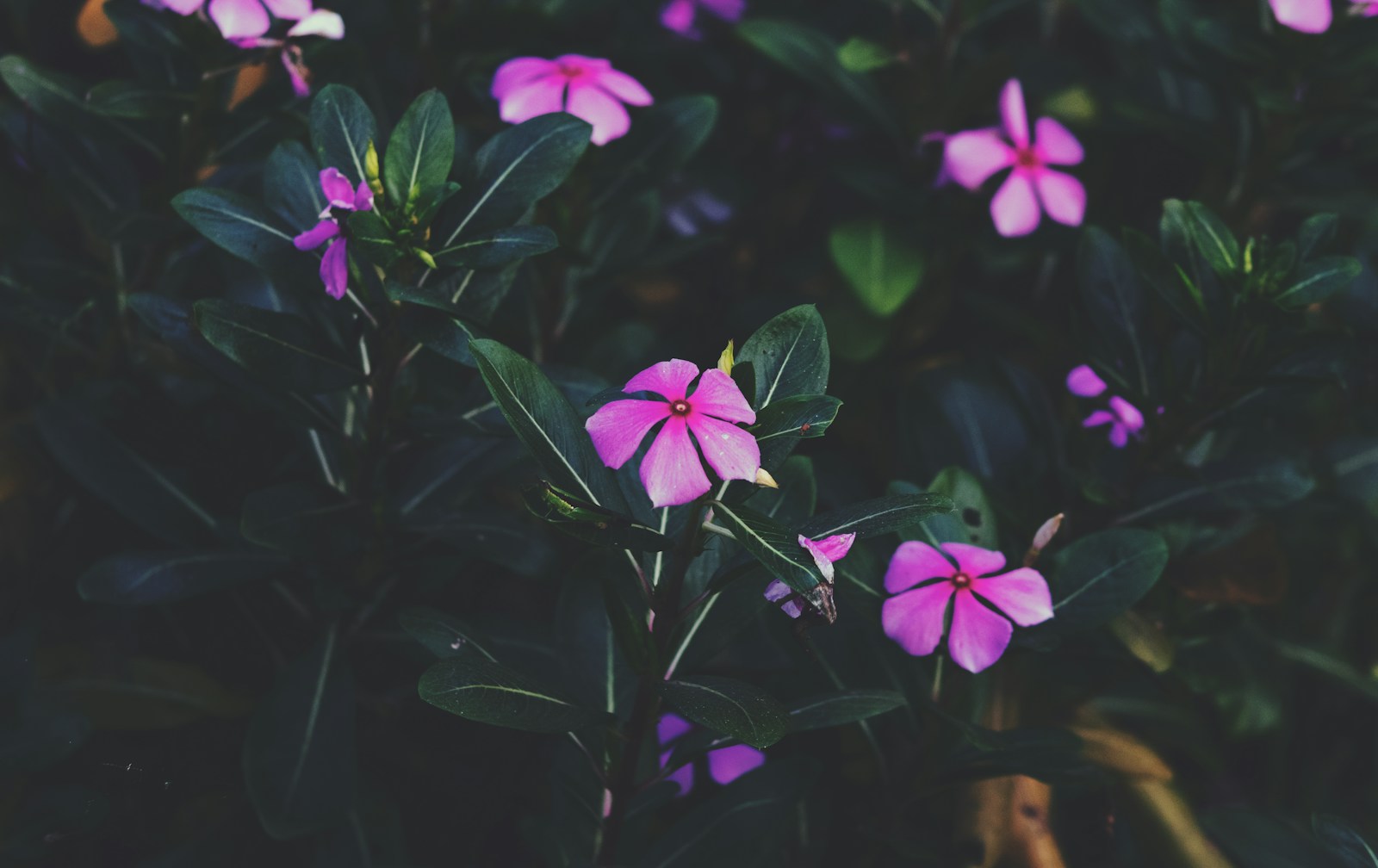
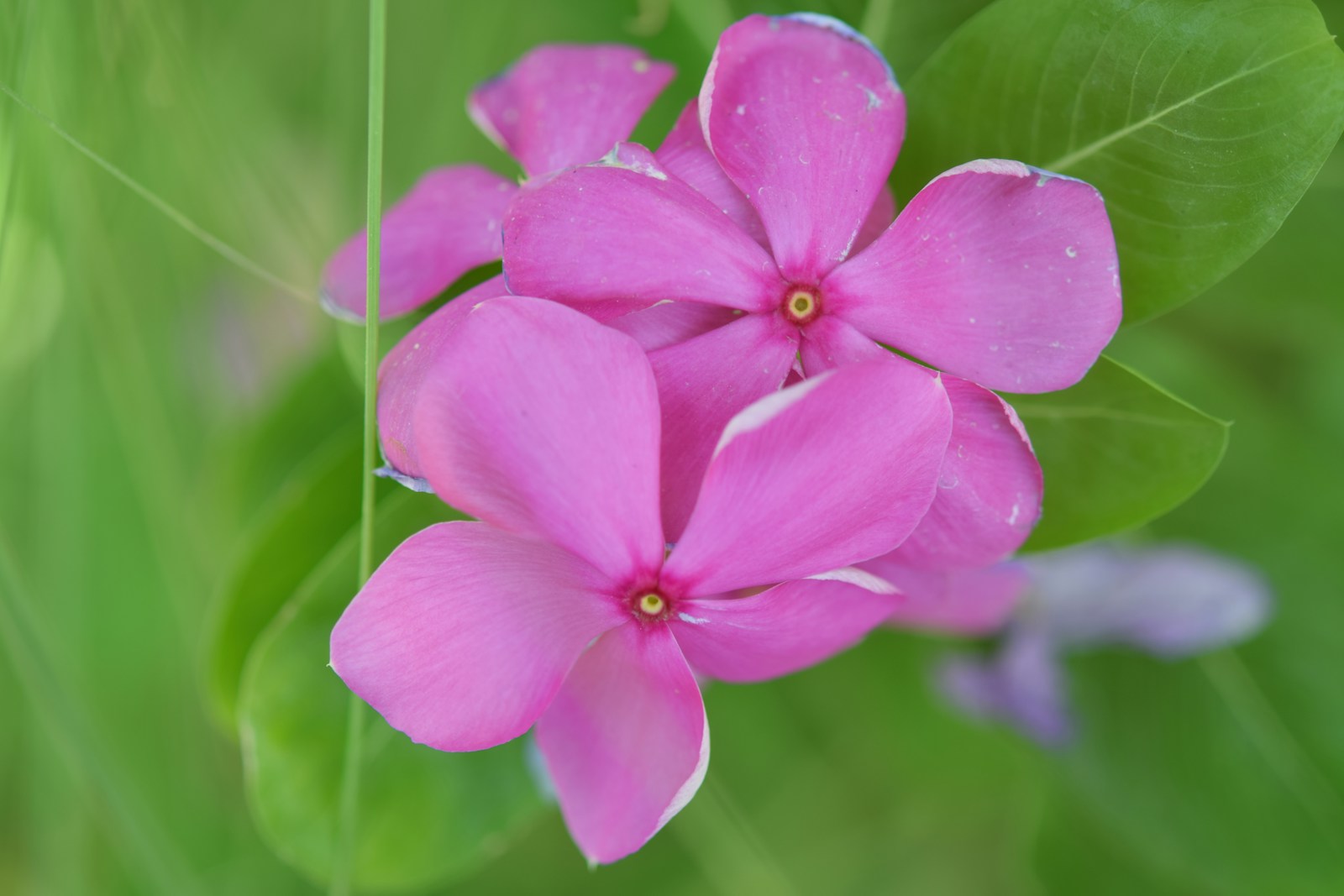
Annual vinca, also called Madagascar periwinkle, is Catharanthus roseus. It carries glossy leaves and flat, five-petaled flowers in white, pink, red, lavender and purple from early summer to frost. Heat, humidity and drought barely slow it down, which makes it a favorite for hot beds and containers. It is easy once planted, although slow and fussy from seed.
Do not confuse it with the ground cover called vinca or periwinkle, Vinca minor. That plant is a hardy, shade-tolerant evergreen with blue flowers and runners. This profile covers only the summer bedding plant.
Sowing and planting
Annual vinca grows slowly as a seedling. Sow indoors 12 to 16 weeks before your last frost. Cover the seed with compost or vermiculite and keep the tray dark, for example under black plastic. Keep it warm, ideally on a heat mat. Check daily and move the tray into bright light as soon as shoots appear.
Seedlings hate wet feet. Water from below and let the surface dry between waterings. Grow them on at 70 to 75°F (21 to 24°C). Cooler, wetter conditions invite damping off (a fungal rot that topples seedlings at soil level).
Most gardeners buy young plants instead, which saves months of care. Choose compact plants with dark green leaves and no yellowing.
Wait for real warmth before planting out. Vinca sulks and rots in cold, wet soil. Plant 2 to 3 weeks after your last frost, once nights stay above 60°F (16°C) and the soil has warmed to about 65°F (18°C). Harden off plants (get them used to outdoor conditions) over a week first.
Plant at the same depth as in the pot. Choose a sunny spot with good drainage and air flow. In heavy clay, use raised beds or containers. Vinca does well in window boxes, hanging baskets and hot spots beside paving.
Do not sow directly outdoors in most climates. The season is too short for such a slow starter.
Growing on
Water new plants regularly for the first two weeks while roots establish. After that, water only when the top inch (2.5 cm) of soil is dry. Water the soil in the morning and keep the foliage dry. Overwatering kills far more vinca than drought does.
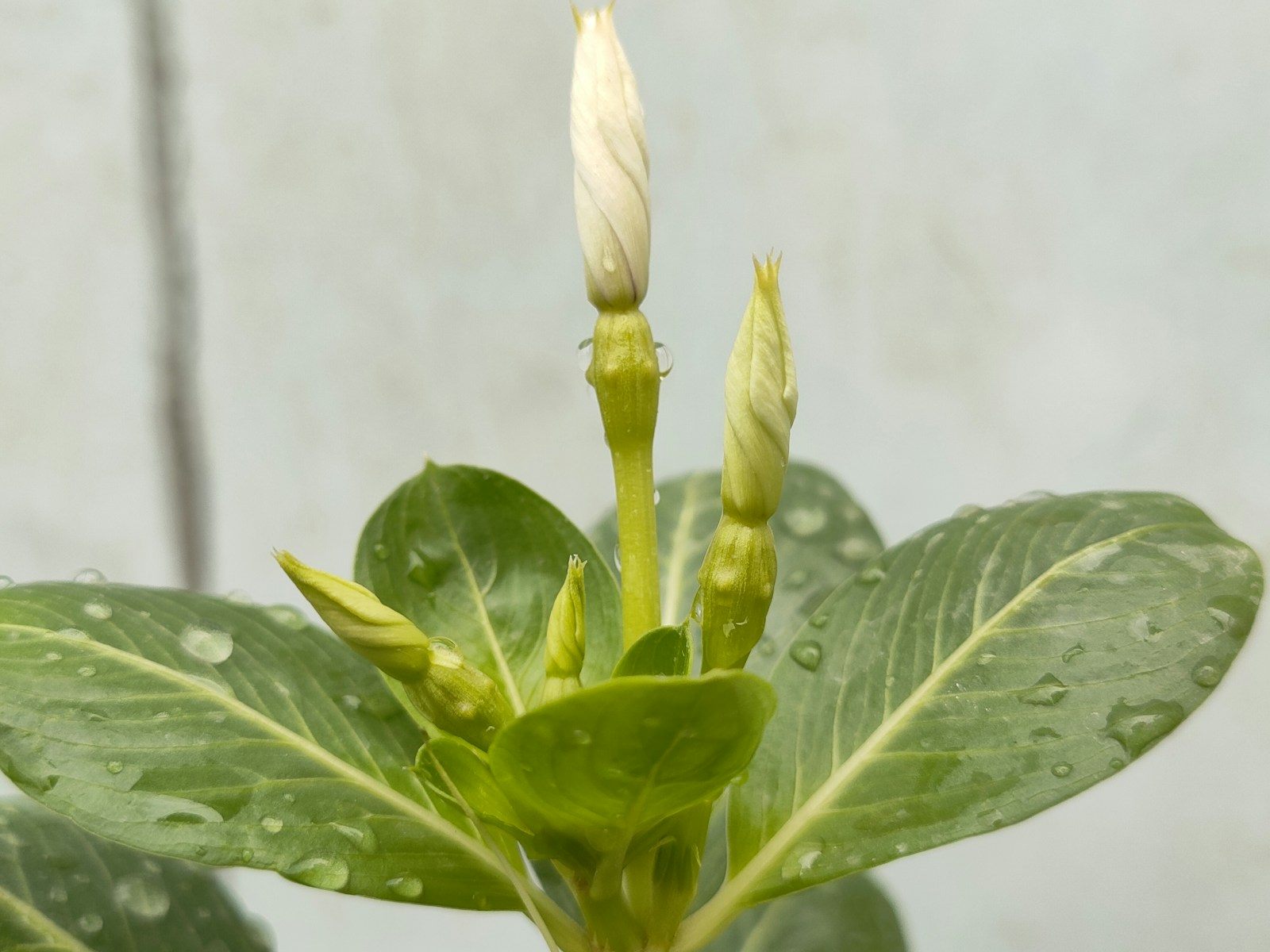
Feed lightly. Mix a slow-release fertilizer into the soil at planting, or give a half-strength liquid feed every 3 to 4 weeks. Too much nitrogen gives soft leaves and fewer flowers.
Yellow leaves with green veins usually point to soil that is too alkaline. Vinca then struggles to take up iron. Keep the pH slightly acidic. In pots, use a peat-free or standard potting mix rather than garden soil.
Mulch with a thin layer of fine bark, kept an inch (2.5 cm) from the stems. Heavy, wet mulch against the stems encourages rot.
Vinca needs no staking. It is self-cleaning, which means old flowers drop off on their own, so you do not need to deadhead. Pinch the tips of young plants once to encourage branching. If plants get leggy in late summer, trim them back lightly.
Wear gloves when you pinch, trim or pull plants, and wash your hands afterwards.
Plant it with other heat lovers such as lantana, zinnia, pentas and ornamental peppers.
Harvesting
Vinca is grown for garden color rather than for picking. Its flowers attract butterflies and day-flying moths, although bees visit less often than they do other annuals.
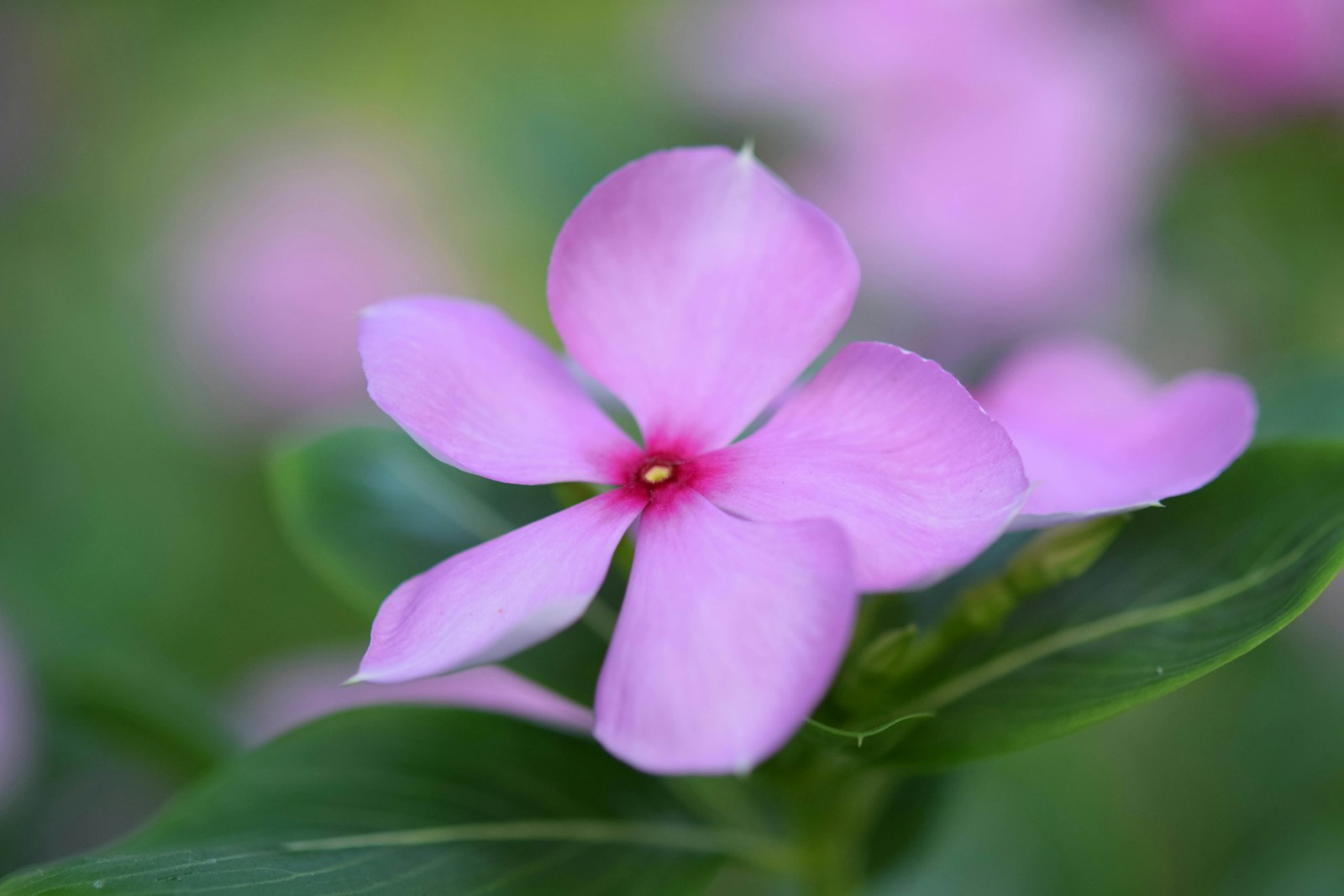
You can cut short stems for small vases. Cut in the morning, and expect a few days of display. The cut stems release a milky sap, so wear gloves and keep cut flowers away from children and pets.
Saving seed is rarely worth it. Most garden varieties are hybrids and do not come true from seed. Their seed is also slow and tricky to raise. Buy fresh seed or plants each year.
In zones 10 and 11, plants may live for several years. Elsewhere, pull them out after the first frost blackens them. You can bring a potted plant indoors to a bright, warm window for winter, but it rarely looks its best.
Problems and pests
Every part of annual vinca is poisonous if eaten, to people, children, cats and dogs. Plant it away from where pets graze, wear gloves when handling it, and keep cuttings and seed out of reach.
Plants wilt and collapse even though the soil is moist
This is usually root rot or blight caused by soil-borne fungus-like organisms, such as Phytophthora. It strikes in cool, wet soil or after heavy rain. Remove affected plants with their soil. Improve drainage, water less often and avoid planting vinca in the same spot every year. Choose resistant series.
Brown spots and gray fuzz on leaves and flowers
This is gray mold (Botrytis), which spreads in damp, still weather. Space plants for air flow and water the soil, not the leaves. Remove affected parts promptly.
Seedlings topple over at soil level
This is damping off. Use fresh seed compost and clean trays, and water from below. Keep seedlings warm and give them a gentle breeze from a small fan.
Speckled, dull leaves with fine webbing
Spider mites feed on the undersides of leaves in hot, dry spells. Hose the leaves every few days. If they persist, use insecticidal soap in the evening, following the label.
Sticky shoots and clusters of small insects
These are aphids. Knock them off with a jet of water. Ladybugs and lacewings usually follow if you avoid broad-spectrum sprays.
Varieties worth growing

- Cora series: upright plants bred for resistance to Phytophthora blight, in many colors.
- Cora Cascade series: the trailing form of Cora, for baskets and walls.
- Pacifica series: compact, uniform bedding plants with large flowers.
- Titan series: large flowers on vigorous, early-blooming plants.
- Mediterranean series: low, trailing plants for ground cover and containers.
- Tattoo series: flowers with smoky, darker shading around the eye.