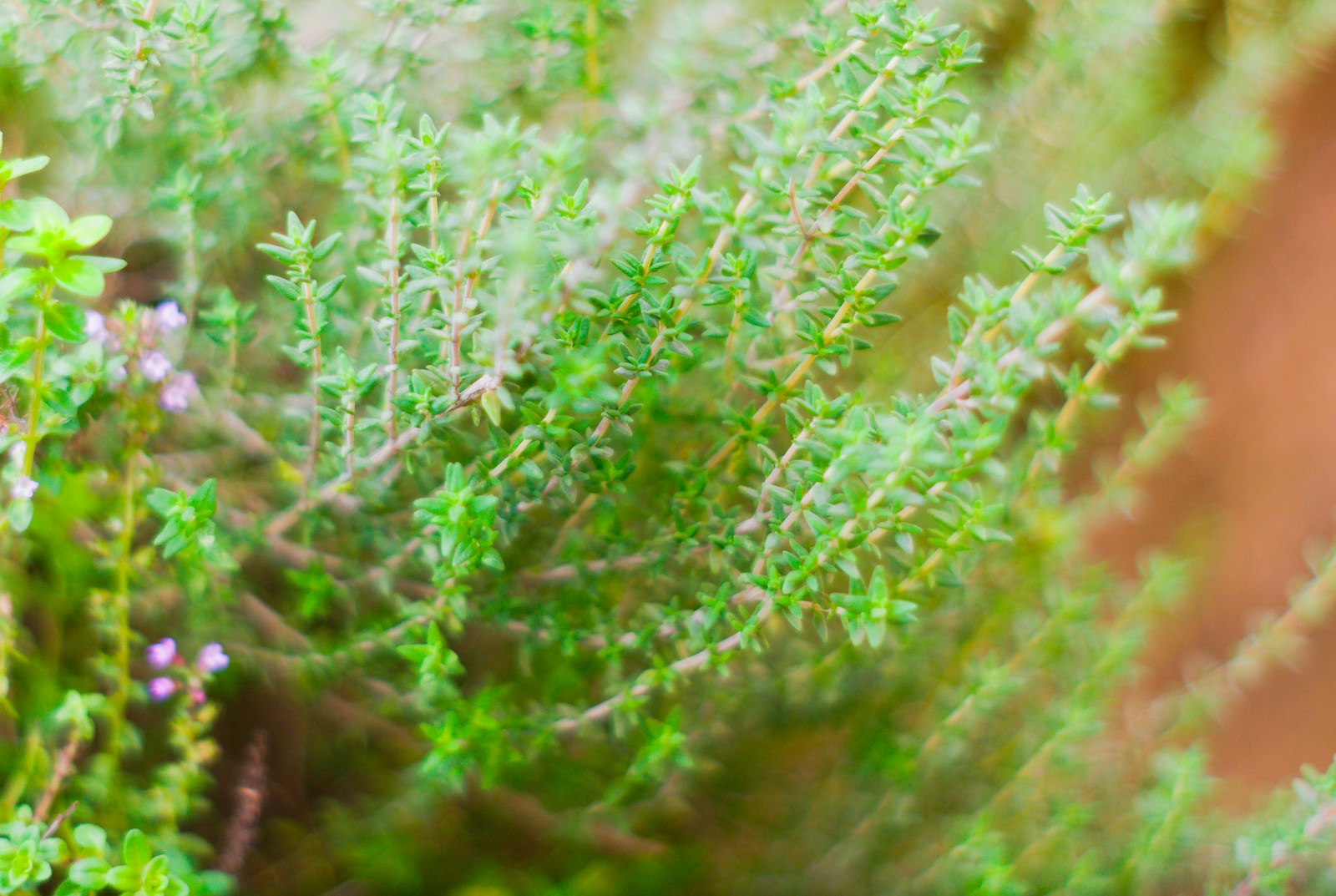
Thyme is a small, woody herb with tiny aromatic leaves. It flavours roasts, stews, soups and stuffings, and you can pick it almost all year. Its flowers draw bees and other pollinators. It thrives on neglect in sun and poor, dry soil, which makes it one of the easiest herbs to grow.
Sowing and planting
Thyme grows easily from seed, cuttings or bought plants. Seed is cheap but slow. Named varieties and many flavoured thymes do not come true from seed, so buy those as plants or take cuttings.
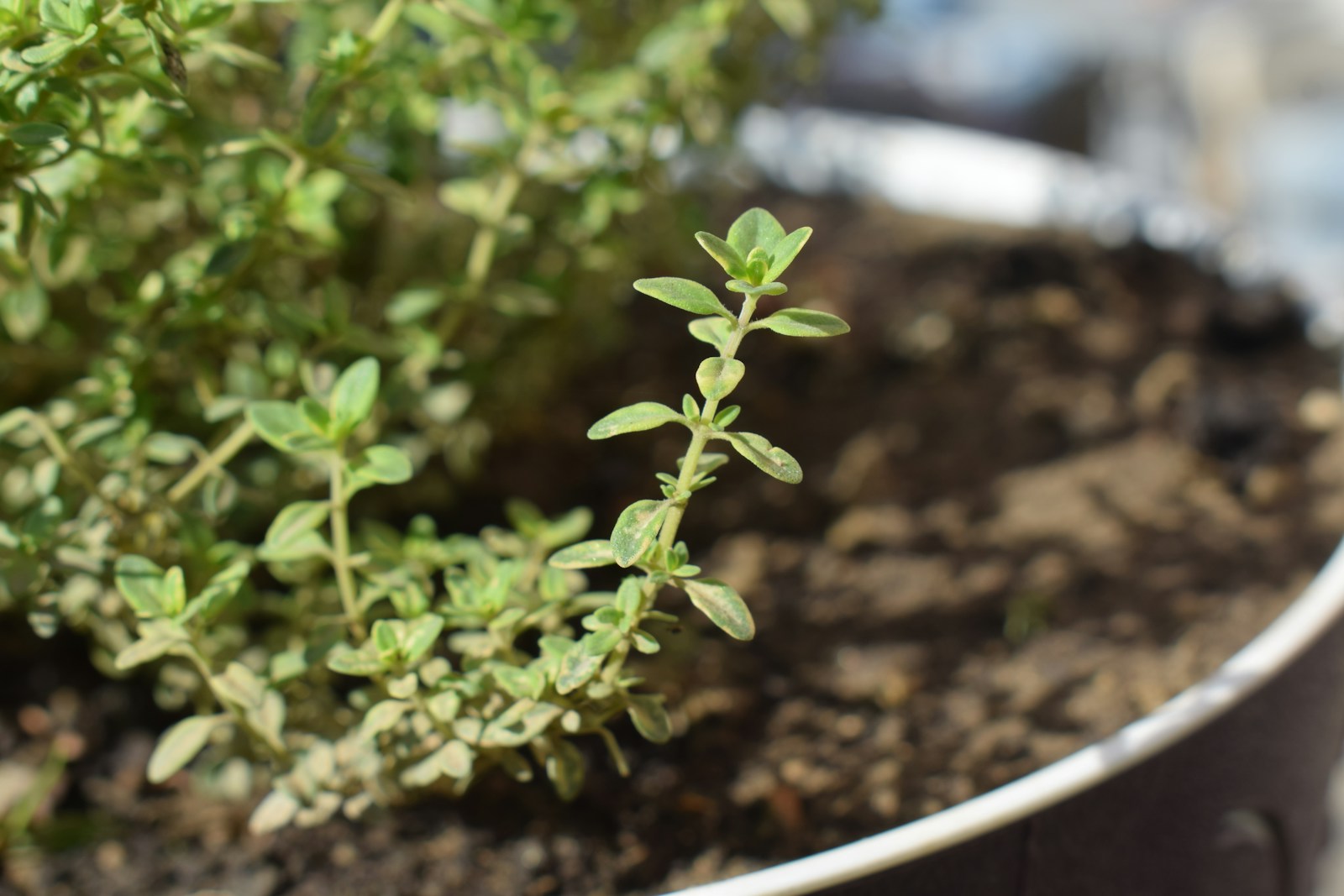
Sow seed indoors 6-10 weeks before your last frost. Scatter the tiny seed thinly on damp seed compost and press it in. Cover it with only a dusting of compost or none at all. Keep the tray at 60-70°F (16-21°C). Seedlings appear in one to four weeks. Water from below so you do not wash the seed away. Prick out small clumps of seedlings into pots once they are big enough to handle.
Harden off young plants (get them used to outdoor conditions) over a week or two. Plant out one to two weeks after your last frost. You can also sow directly outdoors after your last frost, once the soil is around 60°F (16°C). Growth is slow at first, so keep weeds down around the seedlings.
Take cuttings in late spring or early summer. Snip 2-3 inch (5-8 cm) tips from soft, non-flowering shoots. Strip the lower leaves and push them into a gritty mix of compost and sand or perlite. Keep them bright and just moist. Roots usually form in four to six weeks. You can also layer creeping thyme. Pin a stem to the soil, and once it roots, cut it free.
Choose the sunniest spot you have. Thyme suits raised beds, rock gardens, gravel paths, wall tops and the edges of borders. In heavy clay, mix in plenty of grit or plant on a slight mound. In pots, use a gritty, free-draining mix and a container with a drainage hole. Terracotta suits it well.
Growing on
Water young plants regularly until they root in. Once established, thyme rarely needs watering in the ground except in long droughts. In pots, water when the mix is dry an inch (2.5 cm) down. Never leave pots standing in water.
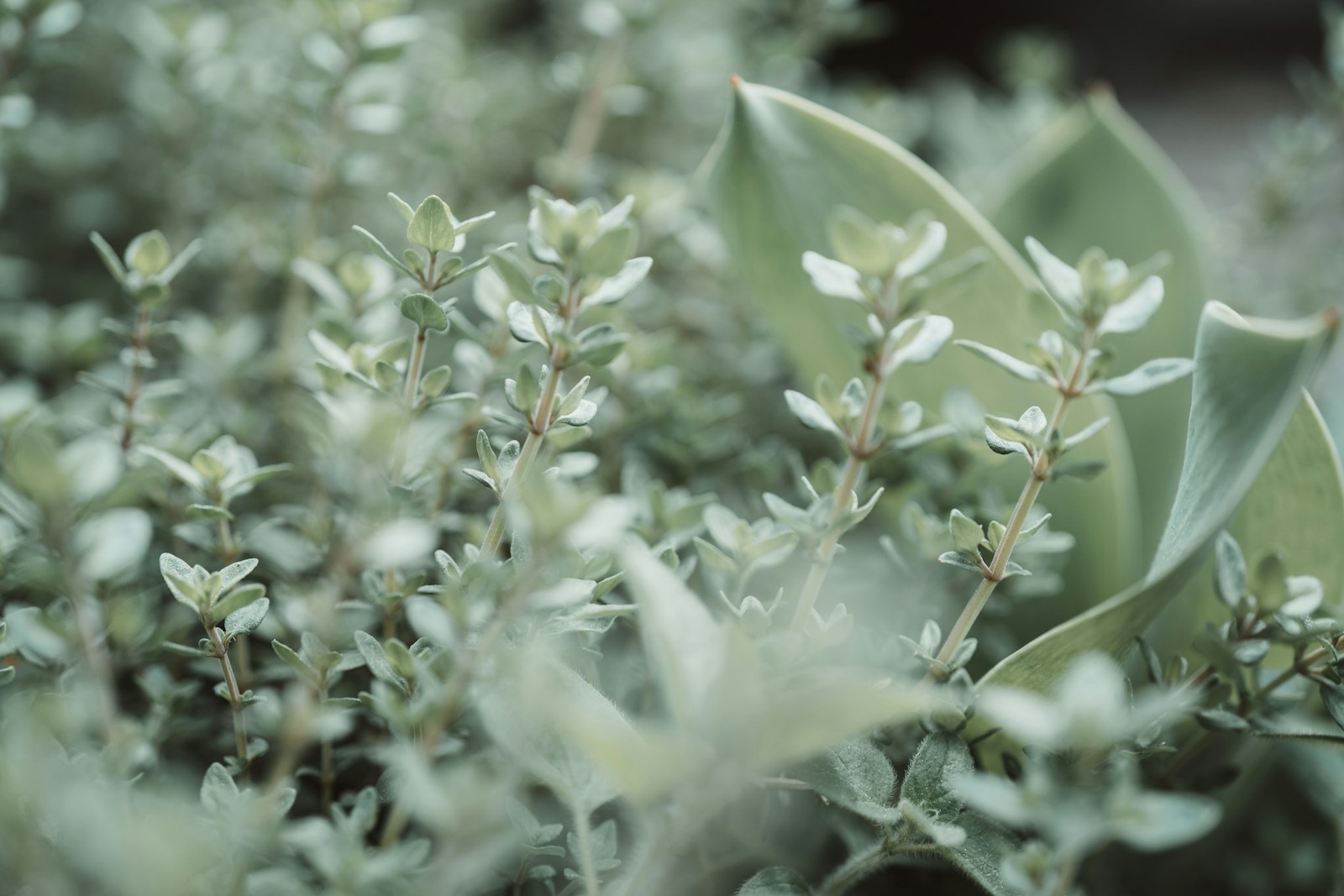
Do not feed thyme much. Rich soil gives soft, sprawling growth with weaker flavour. A light sprinkle of compost in spring is plenty. Potted plants appreciate a half-strength liquid feed once or twice in summer.
Mulch with gravel or grit rather than bark or compost. Gravel keeps the woody base dry and cuts the risk of rot.
Trim plants lightly after flowering. Cut back the flowered stems and a little of the leafy growth, but never into old, bare wood. Old wood rarely regrows. Regular trimming keeps plants compact and stops them becoming woody and gappy in the middle. A light tidy in spring, once new growth starts, also helps. Use clean, sharp scissors or shears.
Thyme plants tend to become woody and less productive after three to five years. Replace them with young plants from cuttings or layers.
Thyme is a useful companion for other sun-loving herbs such as rosemary, sage and oregano. Its flowers attract bees and other pollinators to nearby crops.
Wet, heavy soil kills thyme far more often than cold does. Plant it in sharp drainage, mulch with gravel, and water sparingly, especially in winter.
Harvesting
Start picking lightly once plants are about 6 inches (15 cm) tall or well spread. Cut the top 2-3 inches (5-8 cm) of the soft, leafy stems. Leave at least a third of the plant, and never cut into bare wood. The flavour is strongest just before the plant flowers. Pick in the morning, after the dew has dried.
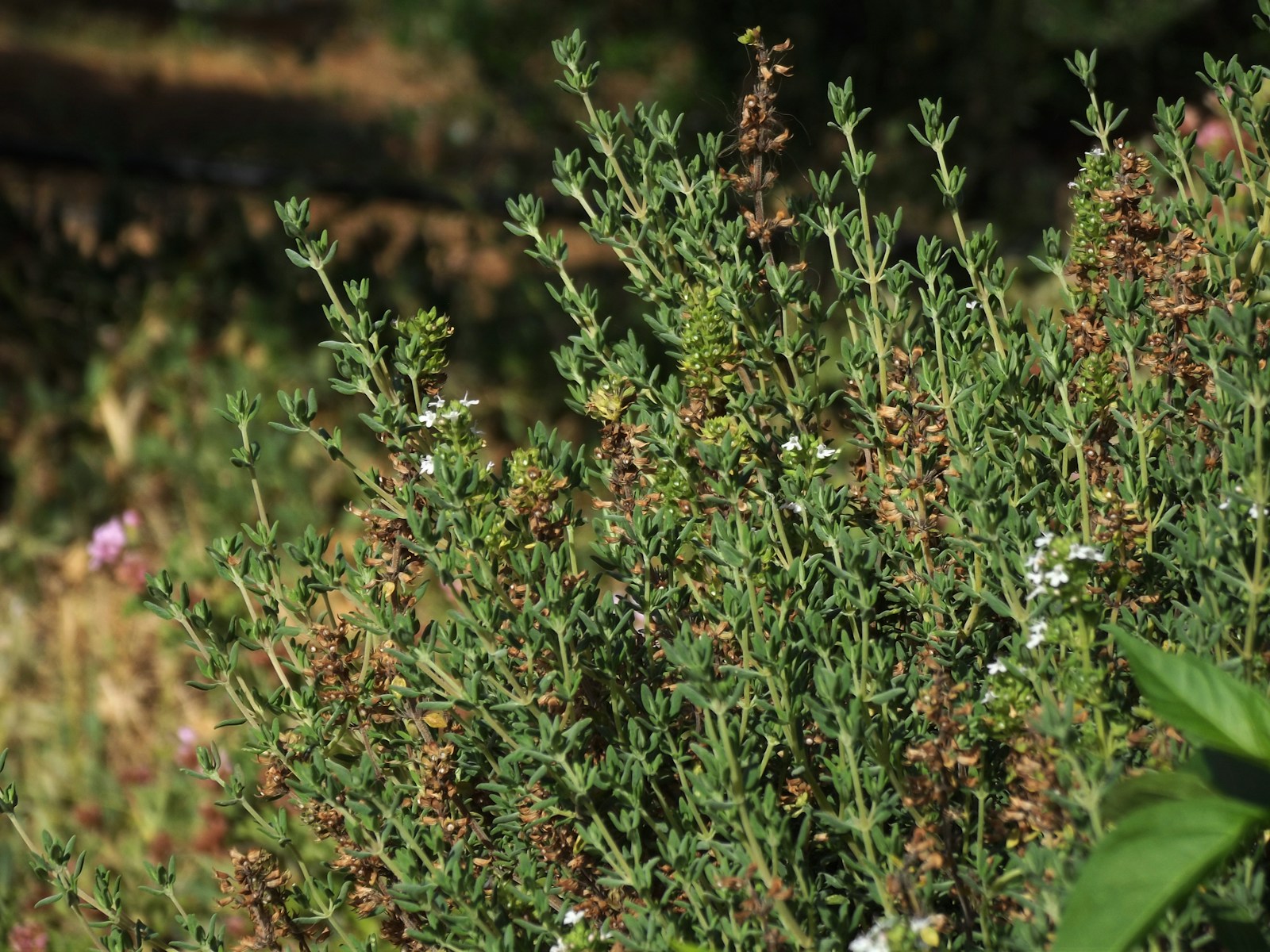
Stop heavy picking about a month before your first autumn frost. This lets new shoots toughen up for winter. You can still take the odd sprig in winter from established plants.
Fresh sprigs keep for about a week in the fridge, wrapped in a damp paper towel. To use, strip the leaves by running your fingers down the stem against the direction of growth.
Thyme dries very well. Tie small bunches and hang them upside down in a warm, dark, airy place. You can also spread sprigs on a tray. After one to two weeks, rub the dry leaves off the stems. Store them in an airtight jar away from light. To freeze, pack sprigs in a bag, or freeze leaves in ice-cube trays with a little olive oil.
The flowers are edible too. Scatter them over salads.
Saving seed from common thyme is possible. Cut flower heads once they turn brown and dry, then shake the seed into a paper bag. Seed from named or flavoured varieties may not come true.
Problems and pests
Plants rot and die back from the centre
Root and crown rot come from wet, heavy soil or overwatering. Improve drainage with grit, lift the crown slightly, and water less. Replace badly affected plants in a drier spot.
Plants become woody with bare centres
This is normal ageing, made worse by lack of trimming. Trim lightly each year after flowering. Replace plants every few years with young cuttings.
Fine webbing and pale speckling on leaves
Spider mites are tiny sap-sucking pests. They build up in hot, dry weather and on indoor plants. Spray the plant firmly with water every few days. If they persist, use insecticidal soap. Follow the label, test on a small area first, and spray in the evening, away from bees.
Sticky shoot tips with small insects
Aphids gather on soft new growth. Rub them off or wash them away with water. Ladybirds and other predators usually keep numbers in check outdoors.
Grey fuzzy mould on crowded plants
Grey mould (botrytis) is a fungus that spreads in damp, still air. Cut out affected stems, thin crowded plants, and water only at the base.
Varieties worth growing
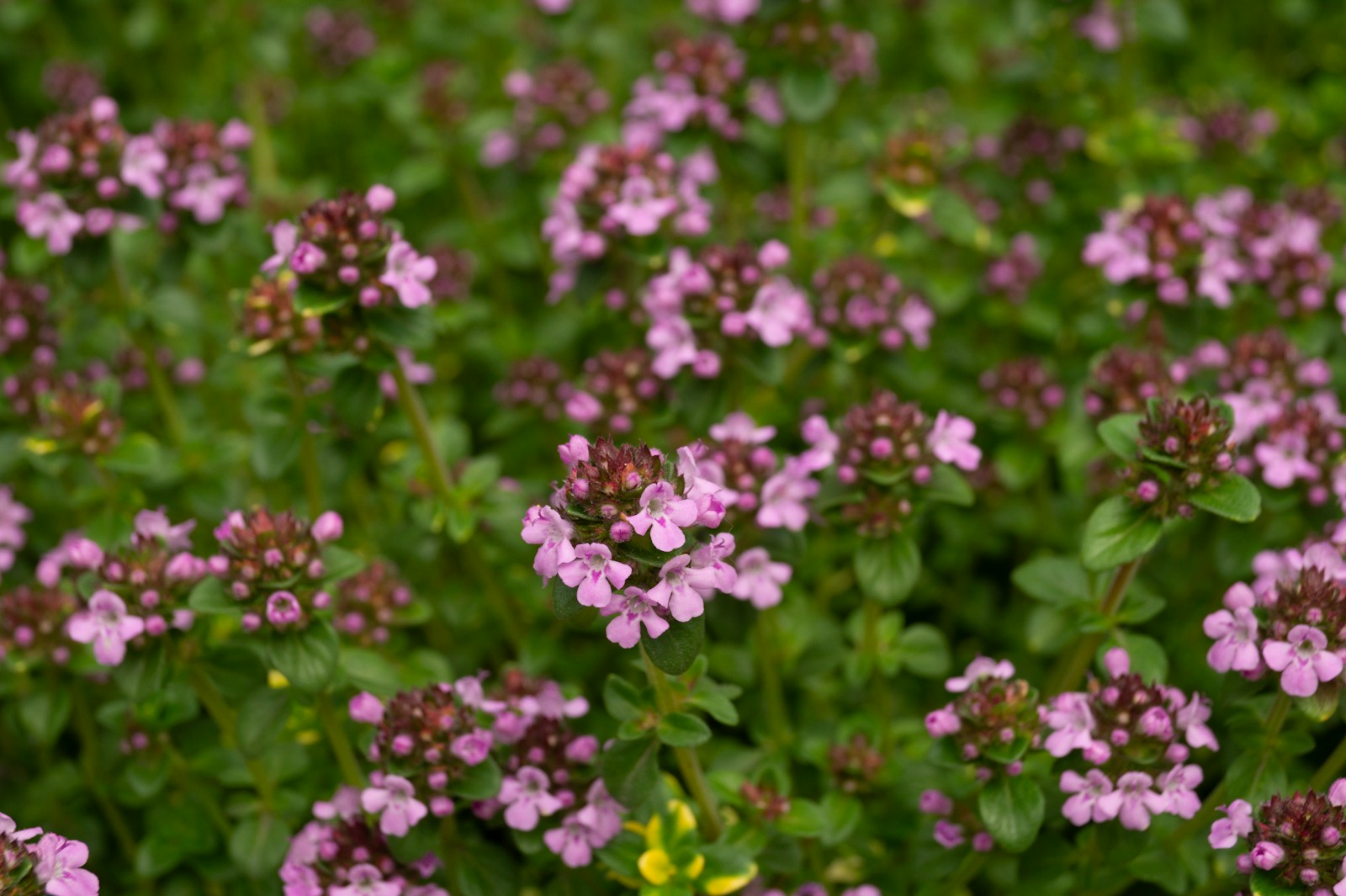
Upright culinary thymes
- Common thyme (Thymus vulgaris): the classic kitchen thyme, with small grey-green leaves and a strong flavour.
- 'German Winter': a compact form of common thyme, valued for good cold hardiness.
- French thyme: a narrow-leaved form of common thyme with a sweeter, milder flavour; less hardy.
- Lemon thyme (Thymus × citriodorus): bright lemon scent, good with fish and chicken; golden and variegated forms exist.
Creeping thymes
- Creeping thyme (Thymus serpyllum): a low mat with pink to purple flowers; great between paving and as ground cover.
- Woolly thyme (Thymus pseudolanuginosus): very low and grey-furred; ornamental rather than culinary.
- Caraway thyme (Thymus herba-barona): a creeping thyme with a caraway scent, traditionally used with beef.