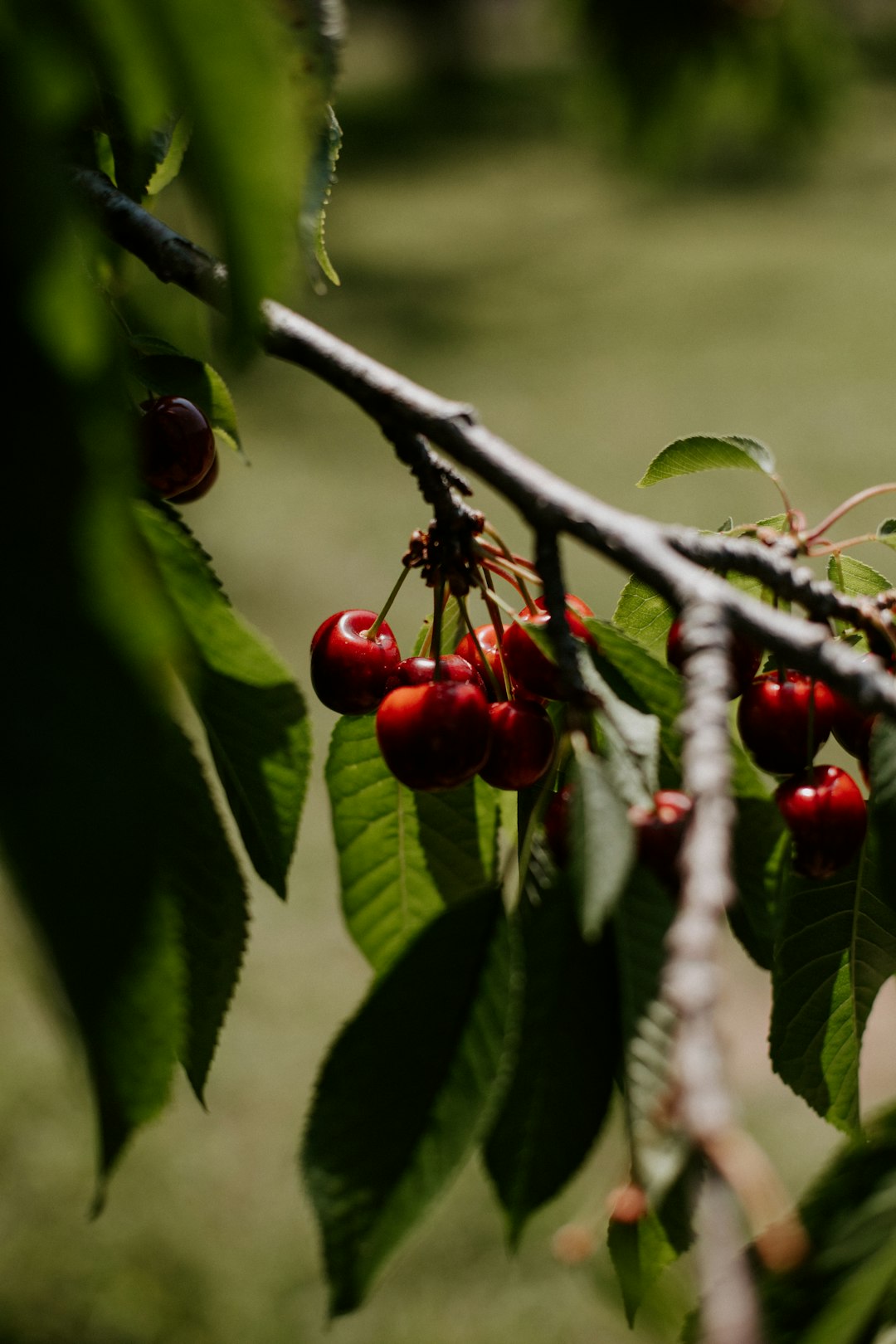
Sweet cherry (Prunus avium) is a large, long-lived deciduous tree in the rose family, grown for clusters of glossy fruit eaten fresh rather than cooked down. Depending on variety the fruit ranges from dark red to nearly black, or yellow blushed with red. It's genuinely one of the more demanding tree fruits: most varieties won't set a crop without a second, compatible variety nearby, ripening fruit splits easily if rain falls just before harvest, and birds often get to the crop before you do. Grow it if you have the space and patience for a long-term project, not as a quick win.
Sowing and planting
Sweet cherries are planted as a young bare-root (a dormant tree sold with its roots exposed, not potted) or container-grown tree, never grown from seed, since seedlings don't come true to the parent variety and take far longer to fruit. Buy a tree that's one or two years old from a reputable nursery.
Pollination is the detail to get right before you plant anything. Most sweet cherry varieties are self-incompatible, meaning a single tree's own pollen can't fertilize its own flowers, so you need a second, different variety flowering at the same time nearby to get any fruit at all. This is unlike sour cherry, which is self-fertile and manages fine alone. Not every pair of sweet cherry varieties is compatible with each other, either, so matching varieties matters. If you aren't certain two specific varieties are confirmed compatible, don't guess: ask the nursery for a pollination chart for the varieties you're considering, or choose a variety sold as self-fertile so you aren't relying on a second tree at all.
Choose a site in full sun with deep, well-drained soil; cherries do poorly with wet feet. Space trees about 240 inches (600 cm) apart, since mature sweet cherry trees grow large. Dig a hole as deep as the root ball and at least twice as wide, spread bare roots out naturally, and set the tree at the same depth it grew at the nursery (look for the soil line on the trunk). Water in thoroughly and stake a young tree if your site is windy. If you garden in zone 6b, as this site does, plant while the tree is fully dormant and the ground is workable, before buds begin to swell; a potted tree is more forgiving and can go in through the growing season as long as you water it in well and avoid planting during summer heat.
Growing on
Water newly planted trees deeply and regularly through their first couple of growing seasons while roots establish; an established tree copes with brief dry spells but still benefits from deep watering during fruit swell. Avoid shallow, frequent watering, which encourages roots to stay near the surface.
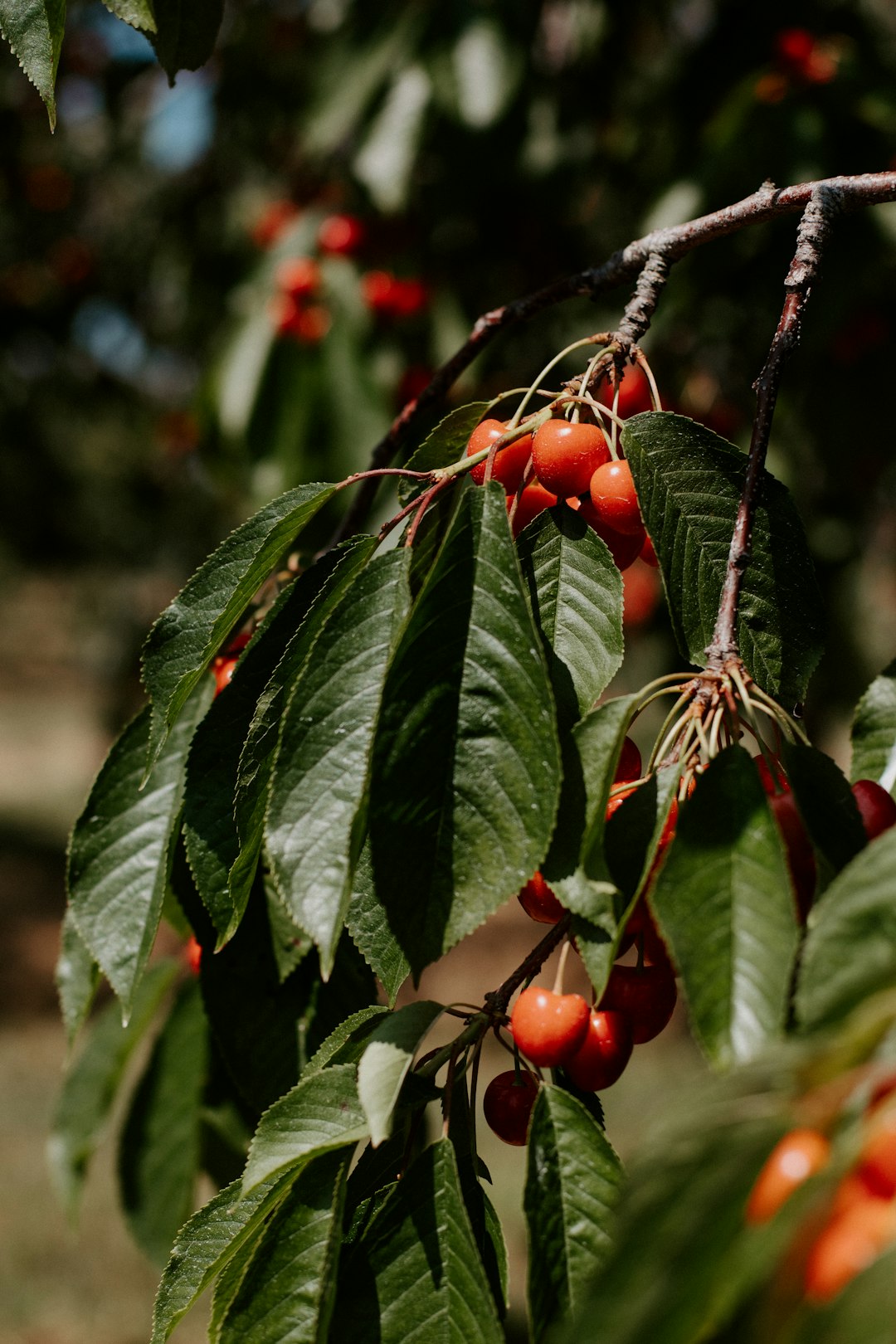
Feed young trees lightly each spring with a balanced fertilizer to support steady growth, tapering off as the tree matures; too much nitrogen pushes soft, leafy growth at the expense of fruiting wood. A layer of mulch around the base, kept clear of the trunk, helps retain moisture and suppress weeds.
Prune to build an open, well-spaced framework of main branches, removing any crossing, damaged, or crowded growth. Most guidance favors pruning sweet cherries in summer rather than during the dormant season, because pruning cuts made in cool, damp conditions are more vulnerable to fungal diseases that enter through fresh wounds. Keep pruning cuts clean and avoid heavy pruning in a single session once the tree is established.
Harvesting
Sweet cherries don't continue ripening once picked, unlike some fruit, so timing the harvest matters: pick when the fruit has reached its full color and tastes sweet, not before. Color alone can be misleading, so taste a few from different parts of the tree before picking in earnest.
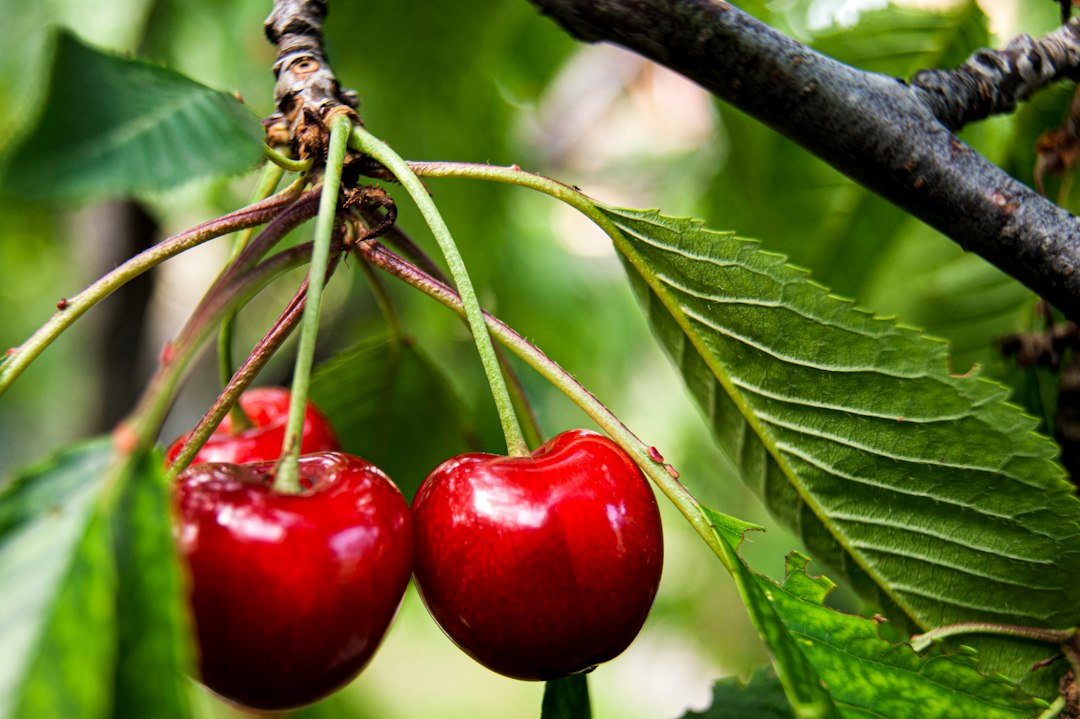
Pick with the stem still attached to each cherry rather than pulling the fruit free on its own; fruit picked without its stem bruises more easily at the point of detachment and spoils faster. Handle fruit gently and collect it into a shallow container so the cherries at the bottom aren't crushed under the weight of those above. Refrigerate what you don't use right away, since sweet cherries keep for only a week or two even when handled carefully.
Problems and pests
Fruit splits open, especially near the stem
Rain shortly before harvest is the usual cause: the tree's roots take up water faster than the ripening skin can stretch to accommodate it, and the fruit cracks. There's no reliable cure once it happens. Picking as soon as fruit is ripe, rather than leaving it to hang, reduces the window of risk, and some gardeners reduce irrigation in the days before an expected harvest if rain hasn't fallen.
Birds strip the crop before you get to it
Birds find ripening cherries as readily as you do, and a flock can clear a small tree in a day. Netting draped over the tree as fruit starts to color, supported so it doesn't rest directly on the branches, is the most reliable protection on a tree small enough to cover.
Fruit develops soft brown patches and a fuzzy gray-brown coating
This is brown rot, a fungal disease that thrives in warm, humid conditions and often enters through damaged or split skin. Remove and destroy affected fruit promptly rather than leaving it on the tree or ground, prune for good airflow, and avoid overhead watering that keeps foliage and fruit wet for long periods.
Sap oozes from cracks or wounds in the bark
This points to bacterial canker, a disease that enters through pruning cuts and other wounds, especially in cool, wet weather. Prune only in summer when the tree is actively growing and wounds heal faster, remove and destroy badly affected branches, and avoid wounding the bark unnecessarily.
Good blossom but little or no fruit follows
This usually means pollination failed, most often because there's no compatible second variety flowering nearby, or because cold, wet weather kept pollinating insects away during bloom. Plant a confirmed compatible variety, or a self-fertile one, within range for cross-pollination, and avoid spraying insecticides on open blossom.
Varieties worth growing
- Bing – the classic dark-red to near-black sweet cherry sold widely in grocery stores; needs a compatible pollinator variety.
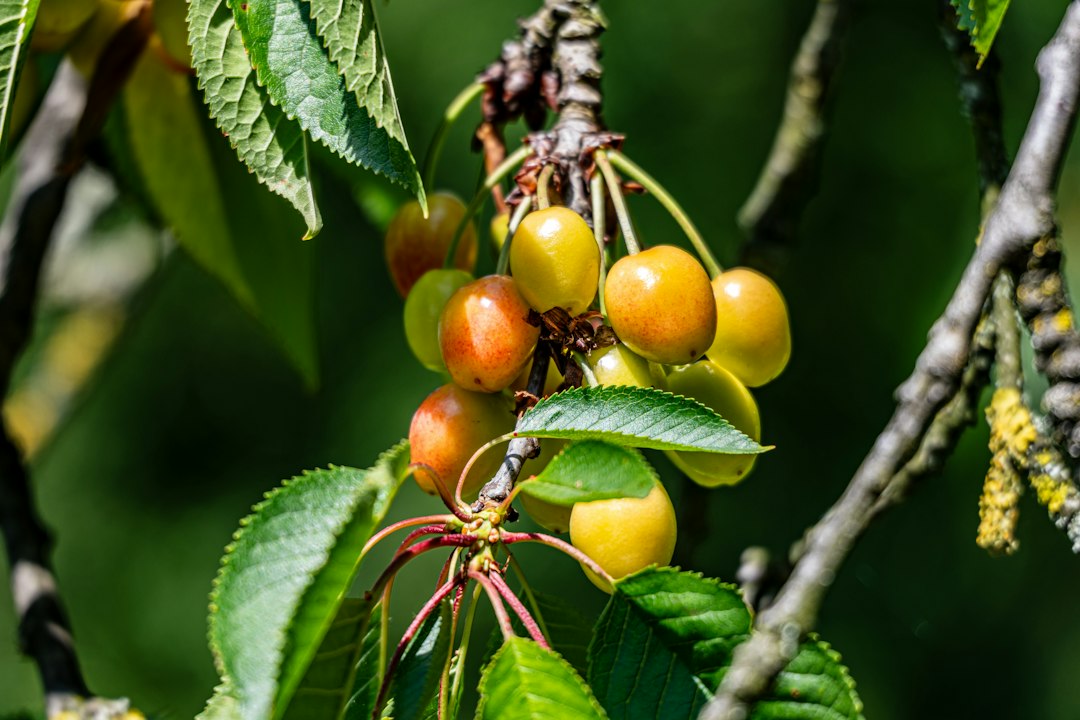
- Rainier – a yellow cherry blushed with pink-red, prized for its sweetness and thinner skin.
- Stella – self-fertile, so it can be grown alone or used to help pollinate other varieties.
- Lapins – another self-fertile variety, dark-skinned and reliable, useful where space for a second tree is limited.
- Black Tartarian – an older variety with small, deep purple-black fruit and vigorous growth.