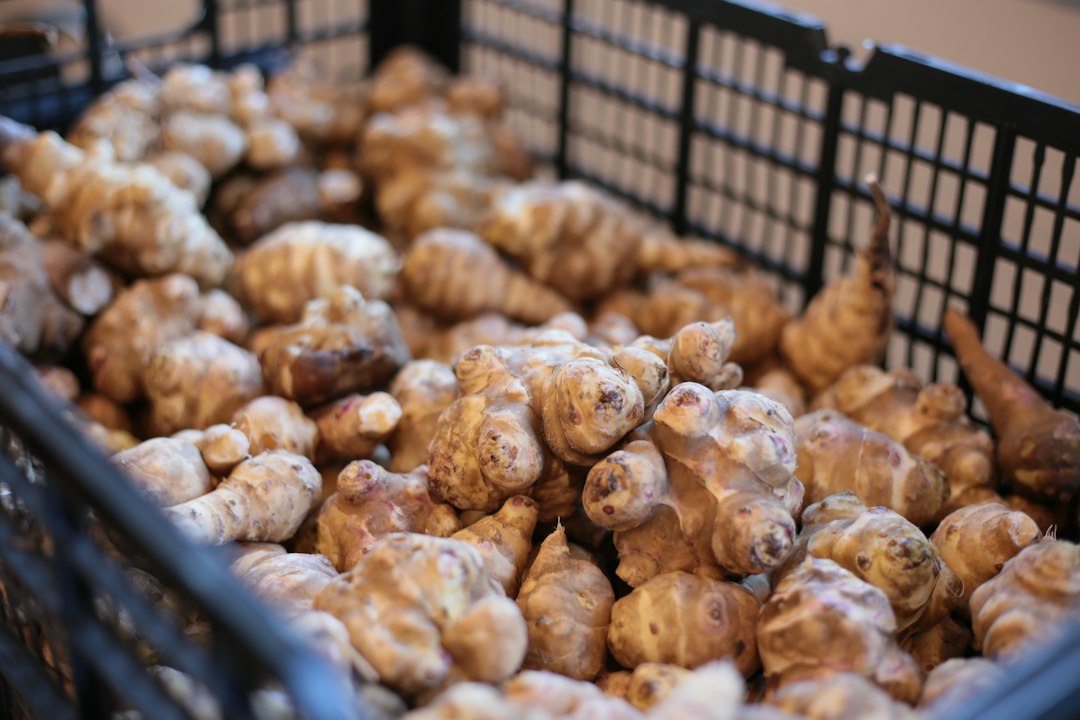
Sunchokes (Helianthus tuberosus) are a perennial, sunflower-relative vegetable grown for their knobby, ginger-like tubers rather than their flowers. Despite the common name Jerusalem artichoke, they are not related to true artichokes and have no connection to Jerusalem at all — the name is widely thought to be a mangling of girasole, the Italian word for sunflower. This is an easy plant to grow, almost to a fault: any tuber piece left in the ground resprouts, and sunchokes spread through the soil the way horseradish does. Plant them somewhere you genuinely don't mind them colonizing, and the rest of the growing process takes very little effort.
Sowing and planting
Sunchokes grow from tuber pieces, not seed, in the same way seed potatoes do. Each piece needs at least one or two visible eyes (the small bumps a new shoot will grow from). Cut larger tubers into pieces a couple of inches (5 cm) across, letting the cut surfaces dry for a day before planting so they're less likely to rot.
Because of how readily this plant spreads, containment is the main planting decision. A dedicated bed well away from other crops, a solid barrier buried 18 inches (45 cm) or more into the soil around the planting area, or large containers all work. Many gardeners simply give sunchokes a corner of the property where spreading is welcome, such as a screening row along a fence line, and let them run.
Plant tuber pieces about 4 inches (10 cm) deep and 18 inches (45 cm) apart, in rows spaced about 3 feet (90 cm) apart if you're growing more than one row. In zone 6b, plant in early spring once the soil can be worked, a few weeks before the last expected frost — the tubers tolerate cool soil far better than the tender shoots tolerate a hard freeze later. Shoots emerge within a couple of weeks in good conditions.
Growing on
Once established, sunchokes need very little attention. Water during dry spells in the first season while roots are developing; after that, the plant is quite drought-tolerant and rarely needs supplemental watering except in prolonged dry weather. It isn't a heavy feeder — a layer of compost worked in at planting time is usually enough for the whole season, and additional fertilizer is rarely necessary.
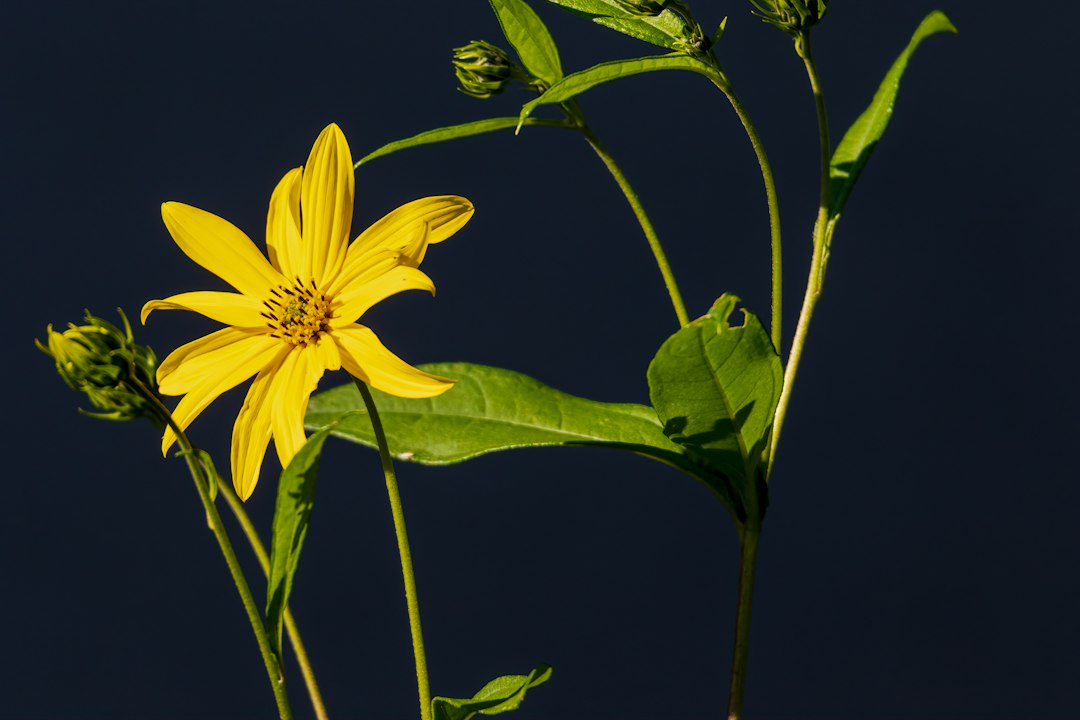
The one genuinely useful thing to plan for is height. Sunchokes commonly reach 6 to 10 feet (1.8 to 3 m) by late summer, topped with small yellow sunflower-like blooms. In an open or windy spot, this top growth can lean or snap. Staking the stems, or siting the planting somewhere sheltered from strong prevailing wind, keeps the stand upright through to harvest.
Harvesting
Tubers are ready to dig after the first frost kills back the tall top growth, similar to other root crops like potatoes. The dying foliage signals that the plant has finished directing energy into the tubers for the season. Cut the dead stalks back to a few inches above ground to make the planting easier to find and dig.
One of the most useful things about sunchokes is that the tubers don't need to be dug all at once. Left in the ground, they store perfectly well through winter and into spring, and cold weather is even said to improve their flavor. Many gardeners dig only what they need for the next meal or two, a few at a time, right through the dormant season, rather than lifting the whole crop in one go. The only catch is to dig before new growth resumes in spring, and to remember that any tuber piece left behind will simply become next year's (unwanted, if you're not careful) planting.
Problems and pests
Sunchokes are spreading beyond where you planted them
This is the plant's own habit working as intended, not a disease or pest. Every small tuber piece left in the soil after harvest can resprout the following year. Dig thoroughly at harvest time, contain the planting with a buried barrier or a dedicated bed, and pull or dig out any stray shoots that appear outside the intended area while they're still small.
Slugs have damaged the surface of freshly dug tubers
Slugs are drawn to the exposed flesh of tubers sitting at or near the soil surface, especially in damp conditions. Harvest promptly once dug rather than leaving tubers lying on top of the soil, and handpick or trap slugs in the bed if damage is recurring.
Stems have snapped or flopped over in wind
This is a structural issue rather than a disease, caused by the plant's height outpacing the sturdiness of the stems. Stake taller plantings, or site future plantings in a more sheltered spot out of strong prevailing wind.
Lower leaves have yellowed late in the season
As sunchokes approach the end of their growing season, especially after a dry stretch, lower leaves naturally yellow and die back before the first frost finishes the job. This is normal senescence rather than a problem, and it's a useful early sign that the tubers below are nearing full size.
Varieties worth growing
Most sunchokes sold for planting are simply labeled "Jerusalem artichoke" or "sunchoke" without a named variety, and the straight species performs reliably in most home gardens. Where named varieties are available, a few worth looking for include:
- 'Stampede' — matures earlier than most types, useful in areas with a shorter growing season.
- 'Fuseau' — produces long, relatively smooth tubers that are easier to clean than the knobbiest types.
- 'Red Fuseau' — similar elongated shape to 'Fuseau', with reddish-skinned tubers.
If you can't source a named variety, unnamed sunchoke tubers from a farmers' market or grocery store (provided they haven't been treated with a sprout inhibitor) will generally grow just as well.