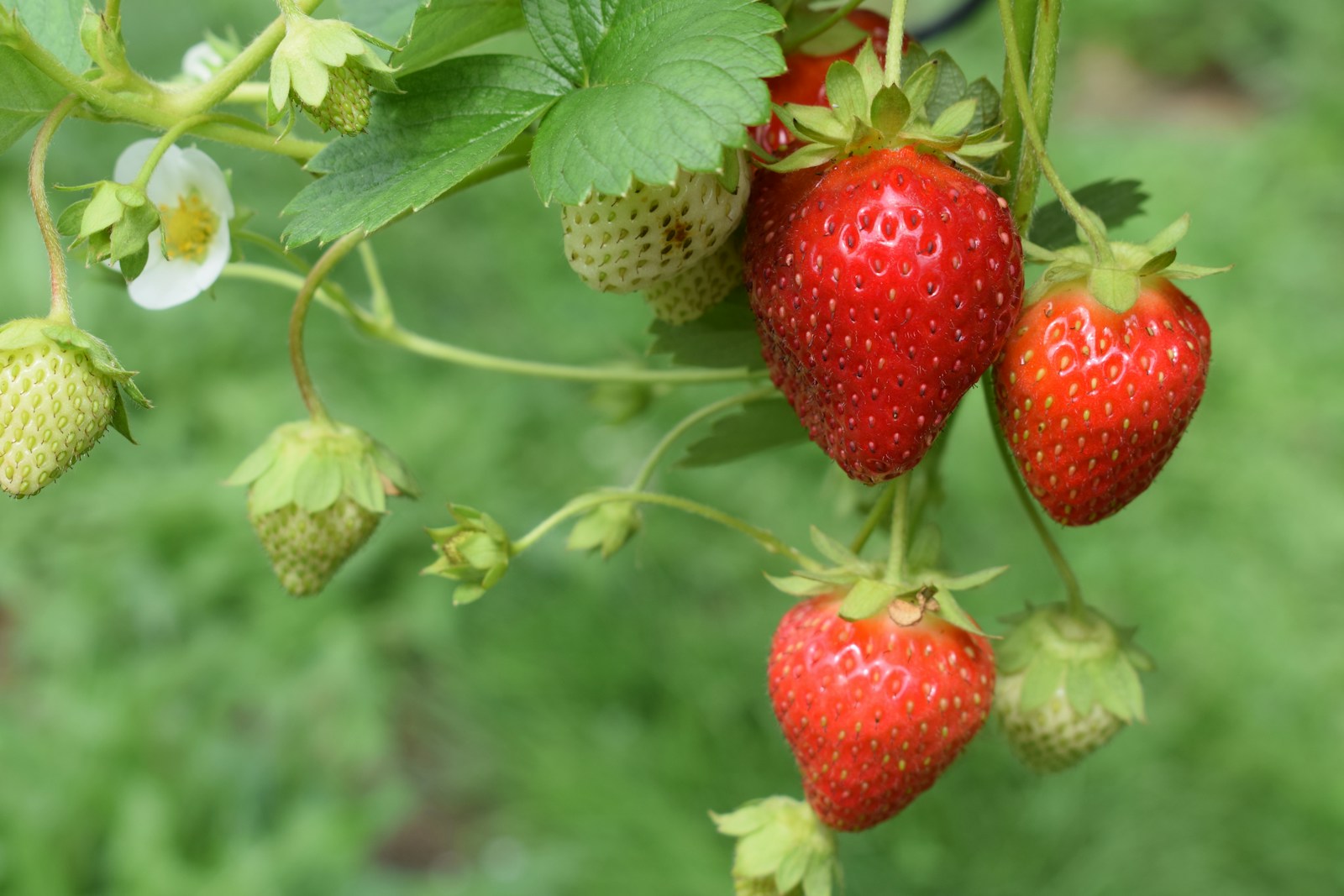
Strawberries are low, spreading perennials that give you sweet fruit in the first or second summer. A home-grown berry, picked warm and fully ripe, tastes far better than anything shipped. They suit beds, pots and hanging baskets. They are easy to grow, but beds need renewing every few years to stay productive.
Sowing and planting
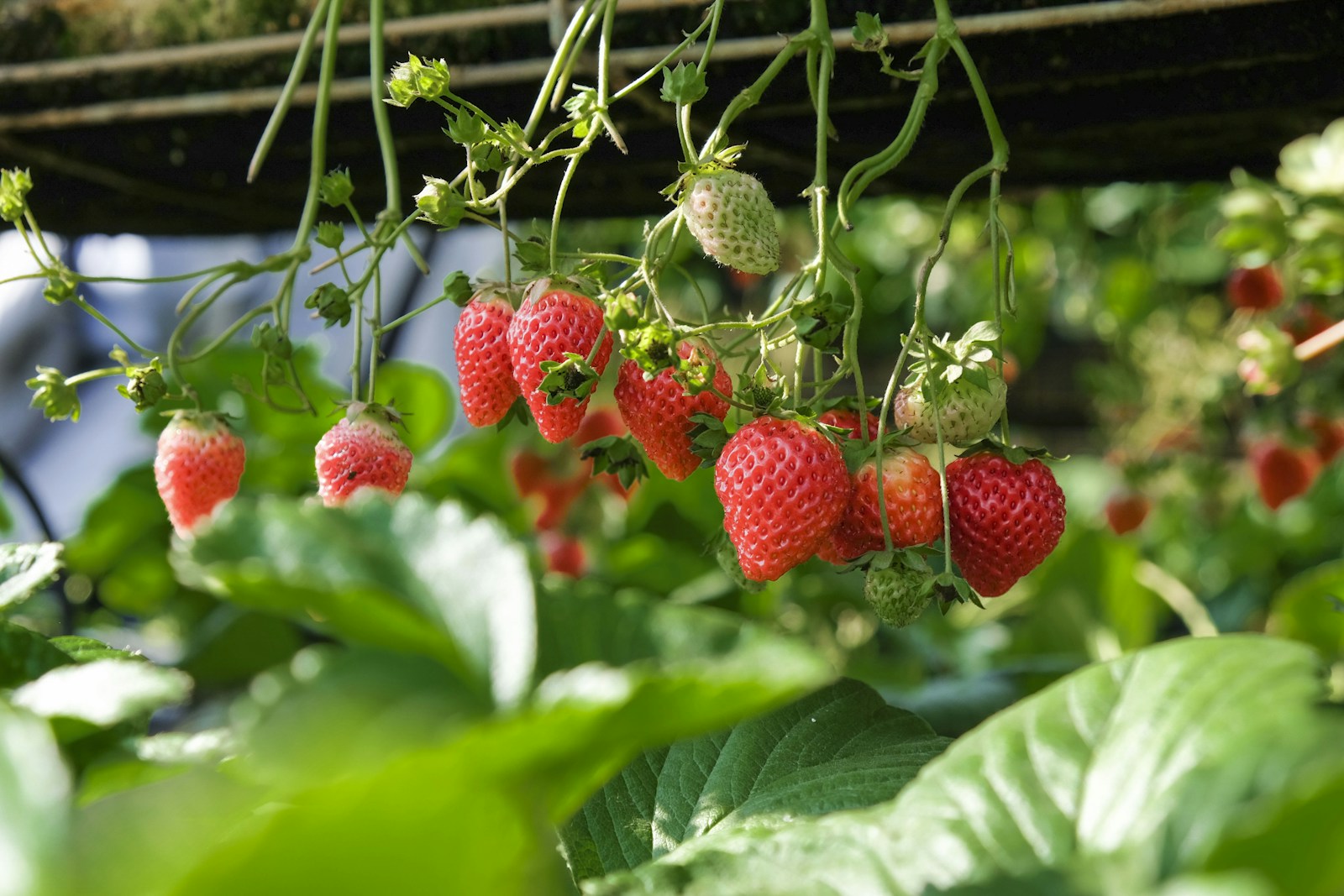
Which type to plant
The types differ mainly in when they fruit.
- June-bearing plants give one large crop over two to three weeks in early summer. The name refers to that single early-summer crop, not a fixed date. They make many runners (long stems that root new plantlets).
- Everbearing plants give two or three smaller crops: one in early summer and more in late summer and autumn.
- Day-neutral plants flower whenever the weather is mild, so they fruit steadily from summer to autumn. They make few runners and suit pots.
- Alpine strawberries are a separate species with tiny, intensely flavoured berries. They make few or no runners and fruit all summer.
When and how to plant
In zones 3 to 7, plant in early spring, two to four weeks before your last frost, as soon as the soil can be worked. In zones 8 to 10, plant in autumn for a crop the next spring.
Most gardeners buy bare-root crowns (dormant plants with bare roots) or small potted plants. Soak bare roots for 20 minutes first. Dig a hole deep enough to spread the roots down, not bent. Set the crown so its middle sits exactly at soil level. Too deep and it rots; too high and the roots dry out. Firm the soil and water well.
Work in plenty of compost before planting. Avoid ground that grew tomatoes, potatoes, peppers or eggplants in the last three years. Those crops share a soilborne wilt disease with strawberries.
Alpine strawberries from seed
Sow alpine seed indoors 10 to 12 weeks before your last frost. Scatter it on moist seed compost and press it in without covering, since light helps it sprout. Keep it at 60 to 75°F (16 to 24°C). Germination is slow and uneven, taking 2 to 4 weeks. Harden off the seedlings (get them used to outdoor conditions over a week or two) and plant out after your last frost.
Growing on
Water at the base in the morning, keeping leaves and fruit dry. Aim for steady moisture, especially while fruit swells. Drip lines or soaker hoses work well.
Feed lightly. Compost at planting is enough for the first season. Give June-bearing beds a balanced organic fertilizer after harvest, and feed day-neutral plants lightly every four to six weeks while fruiting. Too much nitrogen gives lush leaves and soft, rot-prone fruit.
Once the soil warms, mulch with clean straw. It keeps berries off the soil, stops mud splash and holds moisture. In zones 3 to 6, cover plants with 3 to 4 inches (8 to 10 cm) of loose straw once the ground starts to freeze. Rake it off as growth starts in spring.
Pinching flowers
In the first season, pinch off all flowers on June-bearing plants. They put that energy into roots and crowns, and crop much better the next year. Pinch flowers from everbearing and day-neutral plants for the first four to six weeks after planting, then let them fruit.
Managing runners
June-bearing plants are often grown as a matted row: let runners root to fill a strip about 18 inches (45 cm) wide, and cut the rest. For bigger berries, remove all runners and keep each plant separate. On everbearing and day-neutral plants, snip runners off as they appear.
Renovating and replacing
Renovate June-bearing beds straight after harvest. Mow or cut the leaves to about 2 inches (5 cm) above the crowns, taking care not to cut the crowns. Thin the plants, weed, feed and water. Most beds decline after three or four years. Start a new bed from young, healthy runners in a fresh spot.
Strawberries grow happily near onions, garlic, lettuce and spinach.
Harvesting
Pick berries when they are fully coloured to the tip, glossy and fragrant. They do not ripen further once picked. Check plants every day or two in peak season.
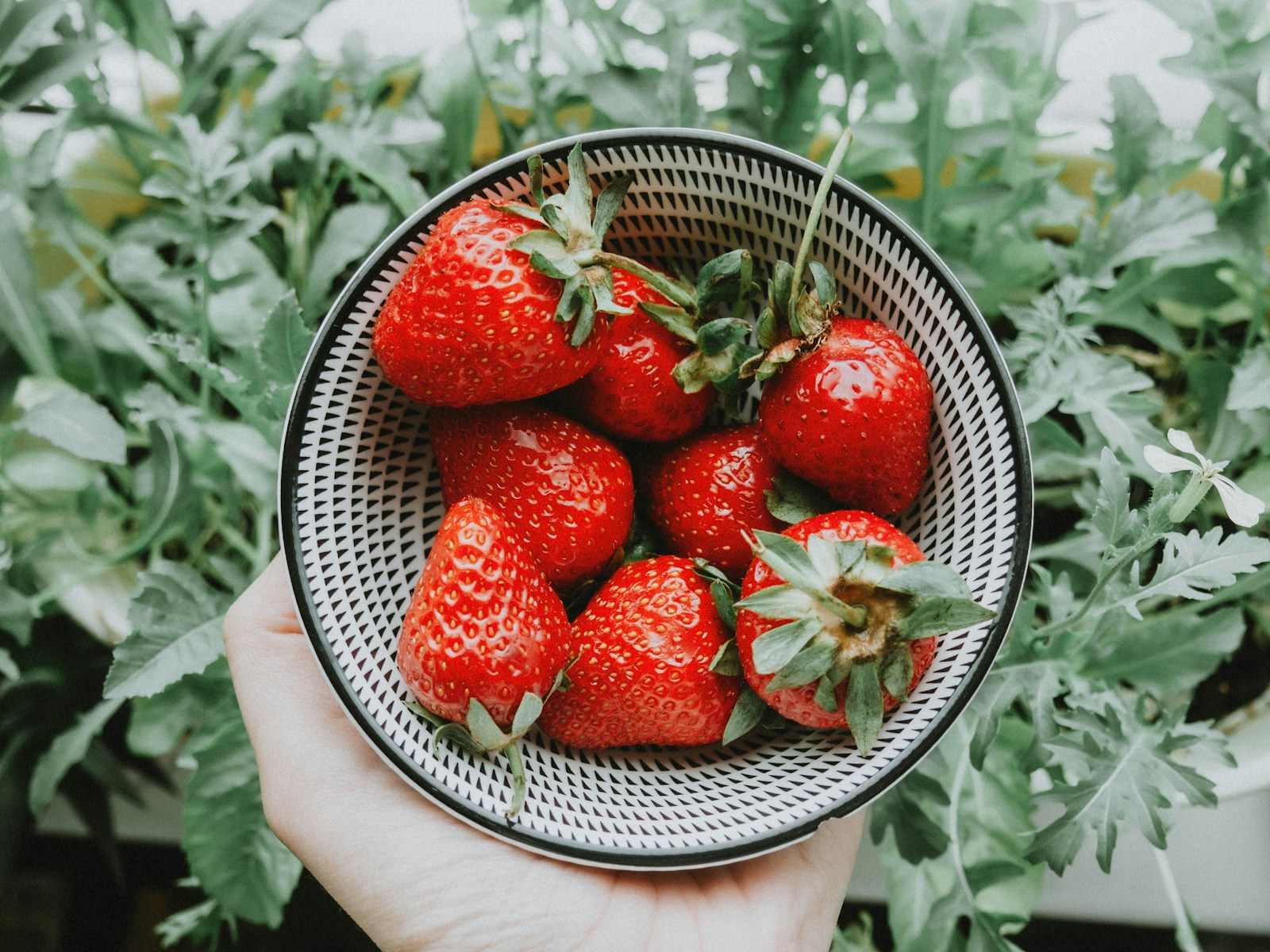
Pick in the cool of the morning. Pinch through the stem just above the berry so the green cap stays on. This helps the fruit keep. Handle berries gently and pick into shallow trays.
Refrigerate unwashed berries and use them within two or three days. Wash just before eating. For longer storage, freeze whole berries on a tray, then bag them, or make jam.
Garden strawberries are hybrids, so saved seed does not come true. Propagate them from runners instead. Alpine strawberries do come true from seed. Mash very ripe berries in water, rinse the seed clean and dry it.
Protect blossoms from late frost. One cold night blackens the centres of open flowers, and those flowers never fruit. If frost is forecast while plants are in bloom, cover them overnight with floating row cover or an old sheet, and remove it in the morning.
Problems and pests
Berries rot with grey fuzz
Grey mould (a fungus called Botrytis) thrives in wet, crowded beds. Mulch with straw, space plants well and water at the base. Pick ripe fruit promptly and bin any mouldy berries.
Ragged holes in ripe berries
Slugs and snails feed at night in damp weather. Remove hiding places, go out after dark to handpick, and set shallow beer traps. Iron phosphate slug bait is an organic option; follow the label and keep it away from pets.
Berries vanish or are pecked
Birds and squirrels take ripening fruit. Cover beds with fine netting on hoops as the first berries colour. Pin the edges down so birds cannot get tangled.
Small, seedy, misshapen berries
Poor pollination, or feeding by tarnished plant bugs (small sap-sucking insects). Plant flowers nearby for bees, keep weeds down and cover plants with insect mesh after flowering.
Plants wilt and collapse in warm weather
Root rots and wilt diseases, worse in wet soil or after nightshade crops. Remove affected plants, improve drainage and start a new bed from certified disease-free plants in fresh ground.
Varieties worth growing
June-bearing
- 'Earliglow': an early, very sweet berry with good disease resistance.
- 'Honeoye': heavy crops of firm, bright red berries; hardy in cold areas.
- 'Jewel': a mid-to-late season berry, large and glossy, good for freezing.
Everbearing
- 'Ozark Beauty': a hardy, widely grown everbearer with large, sweet fruit.
Day-neutral
- 'Albion': long, conical, firm berries over a long season.
- 'Seascape': reliable, flavourful and compact enough for pots.
Alpine
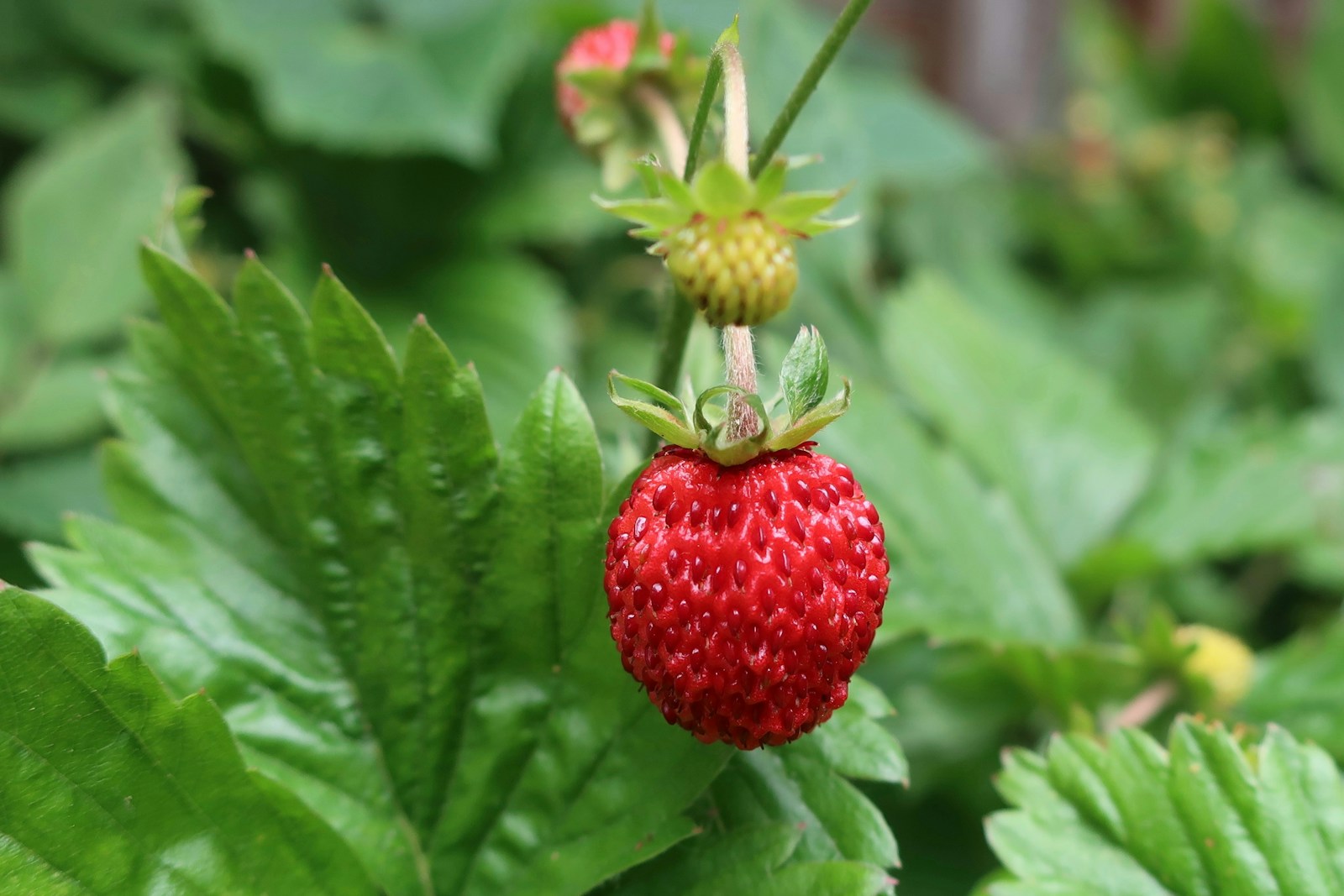
- 'Mignonette': small, aromatic red berries on neat, runnerless plants.
- 'Yellow Wonder': pale yellow berries that birds tend to ignore.