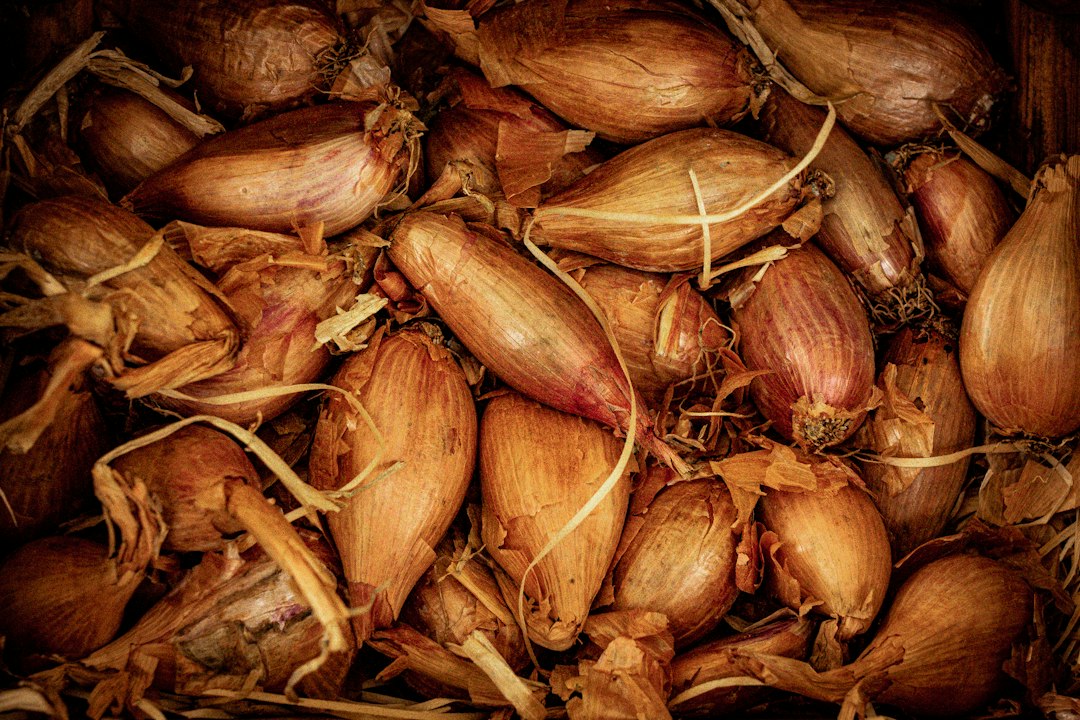
Shallots (Allium cepa, Aggregatum Group) are a mild, sweet-flavored member of the onion family, grown for their small, elongated bulbs. Plant one set, a small dormant bulb, and by harvest it has multiplied underground into a cluster of several bulbs, unlike a regular onion, which stays as the single bulb it started as. That clustering habit is what sets shallots apart in the kitchen garden, and it's part of why they're an easy, forgiving crop for beginners, needing little beyond full sun, even moisture, and some early weeding while the roots are shallow and young.
Sowing and planting
Shallots grow from sets, small dormant bulbs, rather than from seed. Look for firm, dry sets with no soft spots or premature sprouting.
In zone 6b, both fall and spring planting work, and the right choice depends on your schedule and how settled the weather has been:
Fall planting. Set bulbs out about 4 to 6 weeks before the ground freezes, typically in mid-to-late fall. The sets root and put up a little top growth before winter, then resume growing as soon as the soil warms, which usually brings an earlier summer harvest. Mulch heavily with straw or shredded leaves right after planting to protect against hard freezes and frost heave.
Spring planting. As soon as the soil can be worked in late winter or early spring, push sets in directly. This is the simpler, more forgiving option in zone 6b, since a mild fall can tempt sets into sprouting before a hard freeze arrives and damages the young growth.
Whichever season you choose, plant in full sun in loose, well-drained soil enriched with compost. Push each set in pointed end up, spacing them about 6 inches (15 cm) apart with roughly 12 inches (30 cm) between rows. The detail that matters most: set the bulb so its tip sits just at or barely below the soil surface. Buried too deep, sets rot or produce a smaller, misshapen cluster; left too shallow, they get heaved out of the ground by frost or washed loose by watering. Firm the soil gently around each set and water it in.
Growing on
Keep the soil evenly moist while the bulbs are forming, especially during dry spells, but let the surface dry a little between waterings, since shallots sitting in soggy soil are prone to rot. Feed lightly with a balanced fertilizer early in the season to support leafy top growth, then ease off as the bulbs begin to swell; too much nitrogen late in the season delays curing and shortens how well the bulbs store.
Shallots have shallow, sparse roots and compete poorly with weeds, so keep the bed weeded by hand or with a shallow hoe rather than letting weeds crowd them out for water and nutrients. A light mulch between plants helps suppress weeds and holds soil moisture without burying the bulbs themselves. Shallots need no staking or pruning.
Harvesting
Shallots are ready to lift once the foliage yellows and flops over, usually around 90 to 120 days after planting. Once you see this happen, stop watering for a week or two so the bulbs' outer skins start to dry and toughen ahead of storage. On a dry day, gently fork up each cluster from below rather than pulling on the leaves, which can tear the roots or pull bulbs loose from the stem before they're ready.
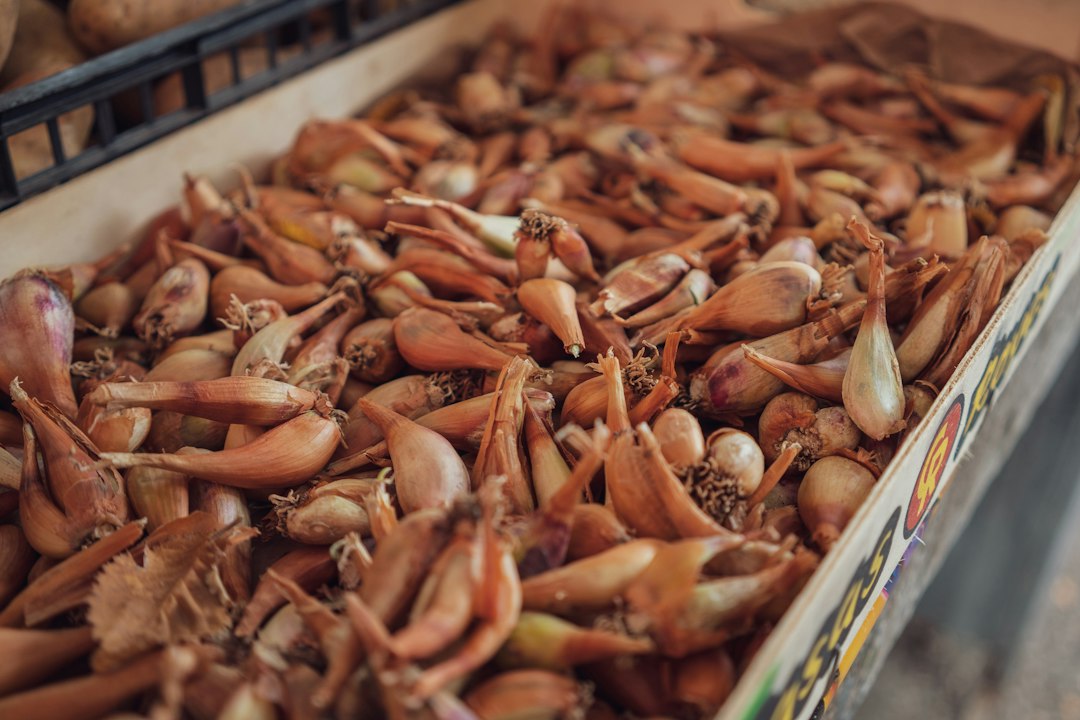
Lift the clusters whole and lay them out to cure somewhere warm, dry, and well ventilated, out of direct sun, such as a shed or covered porch, for two to three weeks. Curing dries the outer skins and necks fully, the same principle used for curing onions and garlic, and it's what lets the bulbs keep for months in storage instead of rotting within weeks. Once the skins are papery and the necks are completely dry, brush off loose soil, trim the roots and dried tops, and separate the cluster into individual bulbs for storage somewhere cool, dry, and dark.
Problems and pests
Silvery streaks on the leaves
Onion thrips are tiny, slender insects that rasp at leaf tissue, leaving behind silvery-white streaks and patches, especially during hot, dry weather. Heavy infestations stunt growth and reduce bulb size. Knock thrips off with a strong jet of water, keep the bed weeded since thrips often overwinter on nearby weeds, and avoid broad-spectrum insecticides so that natural predators like lacewings can help keep numbers down.
Plants send up a flower stalk early
Bolting (flowering before the bulb has finished forming) happens when young shallot plants go through a cold snap after being planted too early, or after an unusually warm spell is followed by a sharp cold one. A bolted plant's bulb center toughens and becomes less pleasant to cook with, though it's still edible. Cut off flower stalks as soon as you spot them to redirect the plant's energy back into the bulb, and avoid setting out sets too far ahead of your area's typical last hard freeze.
Soft, mushy bulbs
Fungal rots take hold in wet, poorly drained soil, especially where bulbs sit in standing water after heavy rain. Affected bulbs turn soft and discolored and may develop an unpleasant smell. Plant in raised beds or soil that drains freely, avoid overwatering, and remove and discard any affected bulbs promptly rather than storing them alongside healthy ones.
Wilting, yellowing young plants
Onion maggots, the larvae of a small gray fly, tunnel into the base of young shallot plants, causing wilting and yellowing that's easy to mistake for a watering problem. A floating row cover placed over the bed at planting time keeps the adult flies from laying eggs near the stems. Rotating shallots to a different bed each year also helps, since the maggots overwinter in the soil.
Grayish-purple fuzz on the leaves
Downy mildew shows up as pale yellow patches on the upper leaf surface with a grayish-purple, fuzzy growth underneath, usually during cool, damp weather. Give plants their full spacing to improve air circulation, water at the soil line rather than overhead, and remove and dispose of affected foliage as soon as you notice it.
Varieties worth growing
- Prisma has copper-brown skin and a reliably uniform cluster, and is a common choice in seed catalogs.
- Ambition is a productive, round-bulbed variety with copper skin, widely sold as sets.
- Matador produces a generous cluster of yellow-brown bulbs that store well through winter.
- Zebrune is a French heirloom "banana" type with elongated, rose-copper bulbs and a milder, more complex flavor than round types.
- French Grey (Echalote Grise) is the traditional French shallot prized by cooks for its intense flavor, though it multiplies more slowly than Dutch types.