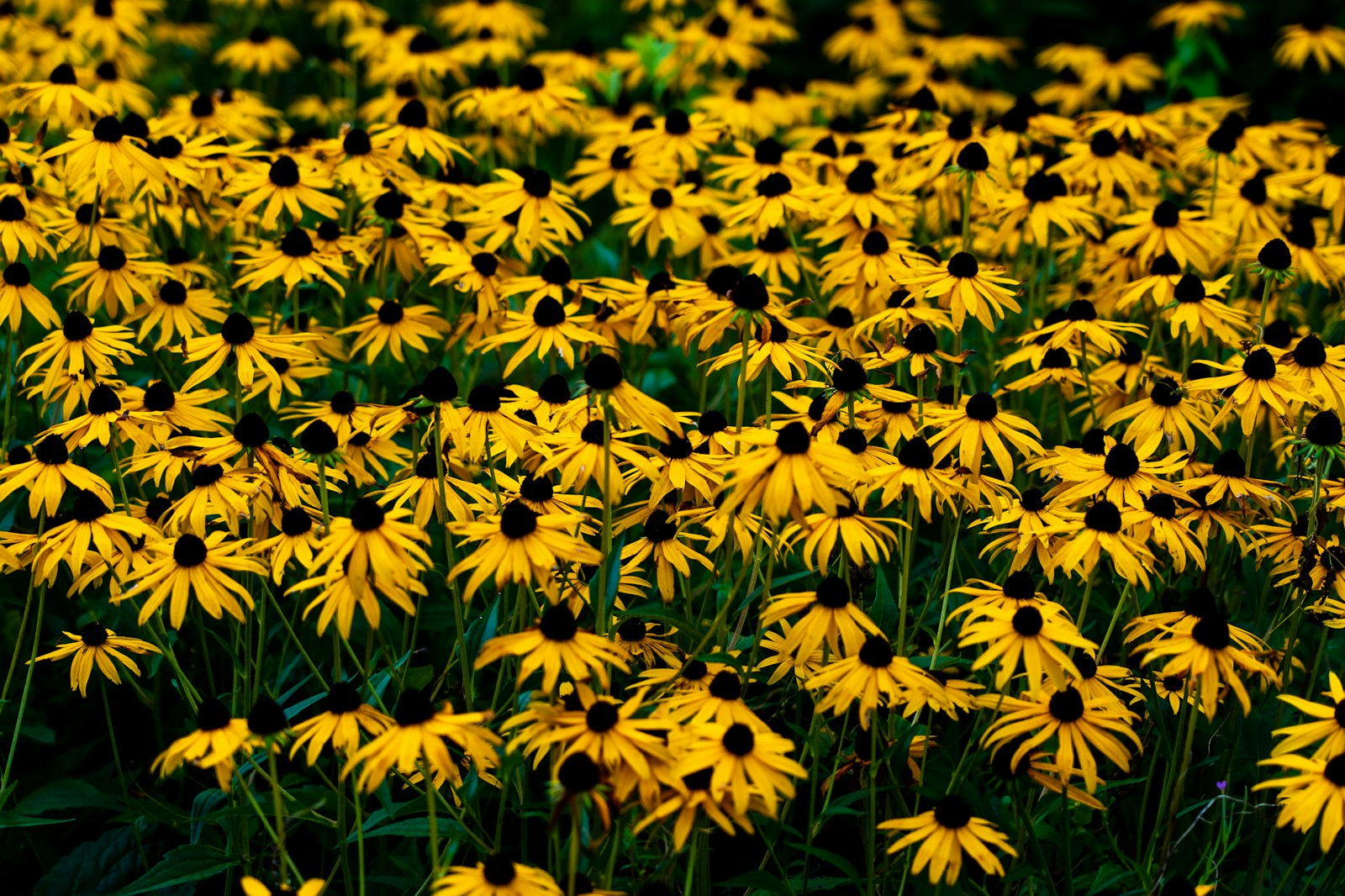
Perennial rudbeckias fill late summer borders with gold daisies around dark centres. They are tough, long-lived plants that suit prairie-style planting, cottage borders and wildlife gardens. This profile covers four: orange coneflower (Rudbeckia fulgida), cutleaf coneflower (R. laciniata), brown-eyed Susan (R. triloba) and sweet coneflower (R. subtomentosa). Annual black-eyed Susan (R. hirta) has its own profile. All four are easy for beginners.
Sowing and planting
Buying plants. The quickest start is a potted plant or a division from a friend. Plant in spring after your last frost, or in early autumn at least six weeks before your first frost. This gives roots time to settle before the ground freezes.
Growing from seed. Many perennial rudbeckia seeds, including 'Goldsturm', germinate better after cold stratification. Cold stratification means chilling moist seed to copy winter. You have two ways to do it:
- Sow outdoors in late autumn. Scatter the seed on prepared soil and press it in. Winter does the chilling, and seedlings appear in spring.
- Mix seed with a little damp sand in a sealed bag. Keep it in the fridge for four to six weeks. Then sow indoors 8-10 weeks before your last frost.
Indoors, sow on the surface of moist seed compost, or cover with the thinnest dusting. Light helps germination. Keep the tray at 65-70°F (18-21°C). Seedlings usually appear in 1-3 weeks. Prick them out into individual pots when they have two true leaves.
Planting out. Harden off seedlings first. Hardening off means getting them used to outdoor sun and wind over 7-10 days. Plant out after your last frost at the spacing in the table. Set each plant at the same depth it grew in its pot. Water it in well.
Dividing. Clumps of R. fulgida and R. laciniata spread by underground stems. Divide them every three to four years, in spring or early autumn. Lift the clump, split it into fist-sized pieces with a spade, and replant the healthiest outer sections.
Growing on
Watering. Water new plants weekly through their first summer. Established plants cope with dry spells, although R. laciniata flowers best in soil that stays moist. Water at the base, not over the leaves, to help prevent leaf spot.
Feeding. Rudbeckias need little feeding. Spread a layer of compost around them in spring. Too much fertiliser gives soft, floppy stems.
Mulching. Mulch with 2 inches (5 cm) of compost or shredded bark to keep roots cool and moist. Keep the mulch a hand's width away from the crowns.
Staking and pinching. R. fulgida rarely needs staking. Tall R. laciniata and R. subtomentosa can flop in rich soil or wind. Put in plant supports early in spring so the stems grow through them. Alternatively, cut the stems back by a third to a half in early summer. This is called the "Chelsea chop", and it gives shorter, sturdier plants that flower a little later.
Deadheading. Snip off faded flowers to extend flowering. Stop deadheading in late summer and leave the seed heads standing. Goldfinches and other small birds feed on them through autumn and winter.
Tidying. Cut the old stems down to the ground in late winter or early spring, before new growth starts.
Pollinators and companions. Bees, butterflies and hoverflies visit the open flowers from midsummer into autumn. Rudbeckias look good with purple coneflower, asters, sedums and ornamental grasses.
Wet, heavy soil is the main cause of failure. Rudbeckias tolerate drought and poor soil, but soggy ground in winter rots their crowns. Plant them in free-draining soil, or add grit and grow them in a raised bed if your ground stays wet.
Harvesting
Rudbeckias make excellent, long-lasting cut flowers. Cut stems when the petals have fully opened but the centre is still firm and tight. Cut early in the morning, choosing long stems. Strip the lower leaves and stand the stems in cool water straight away. Most last about a week in a vase, often longer.
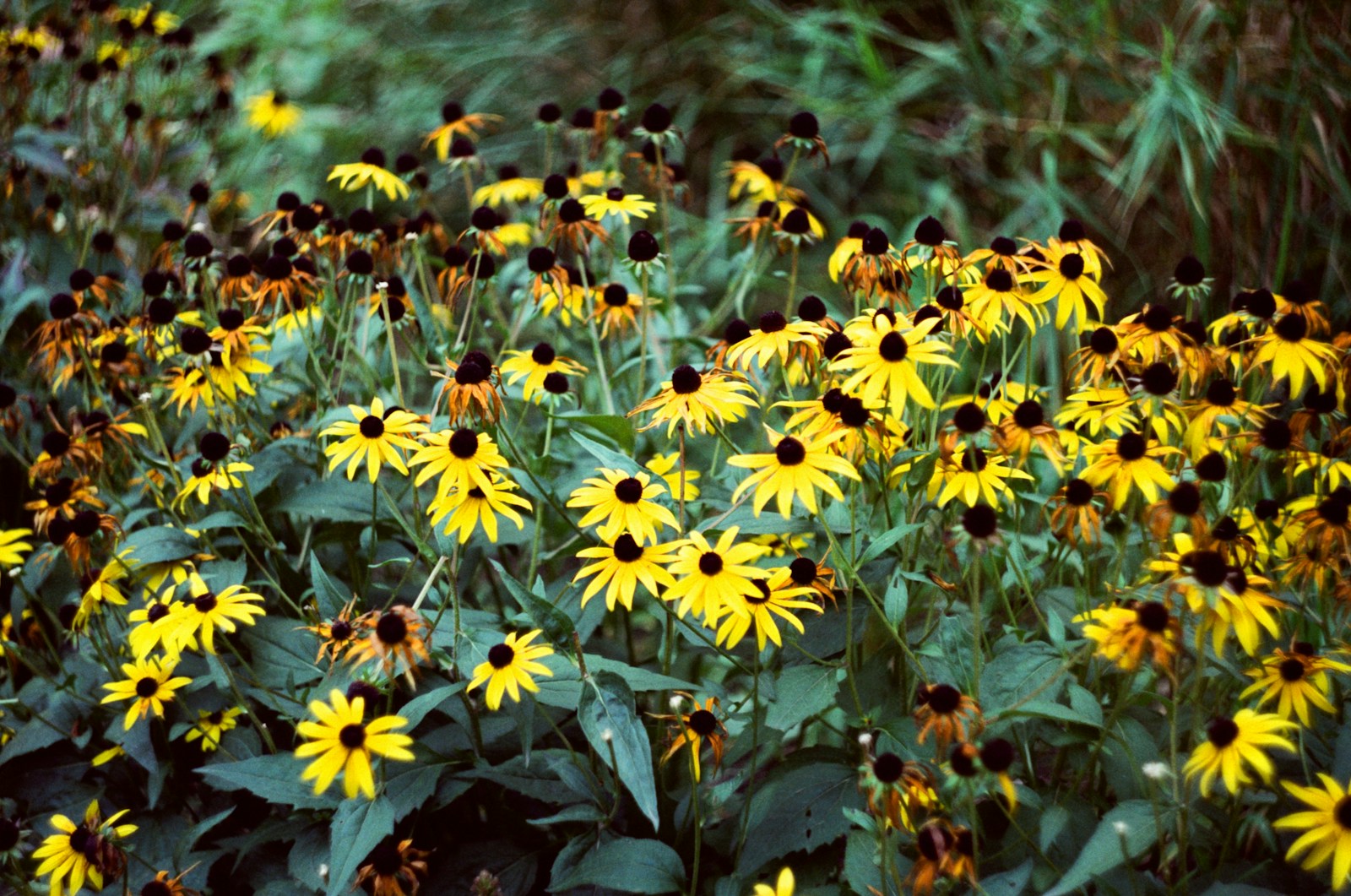
Seed heads are useful in dried arrangements. Cut them once the petals have dropped and the cones have turned dark and firm.
Saving seed. Leave some flower heads on the plant until the cones turn dark brown and dry. Snip them into a paper bag. Crumble the cones between your fingers to release the small, dark seeds, then pick out the chaff. Store the seed in a labelled envelope somewhere cool and dry. Seed from species usually comes true, but seed from named varieties may vary. For identical plants, divide your clumps instead.
Problems and pests
Dark brown spots on the lower leaves
This is usually septoria leaf spot, a fungal disease that spreads by splashing water. Spots start small, then merge until leaves turn black. Remove badly affected leaves and clear old foliage in autumn. Water at the base, space plants well and divide crowded clumps.
White powder on the leaves
Powdery mildew, a fungal disease, appears in late summer when soil is dry and air is still. It rarely harms the plant. Water during dry spells, improve air flow, and cut affected stems down once flowering ends.
Clusters of small insects on stems and buds
These are aphids (small sap-sucking insects). Knock them off with a jet of water. Ladybirds and lacewings usually control them. For heavy infestations, spray insecticidal soap in the evening when bees are not active. Follow the label and wear gloves.
Young shoots chewed in spring
Slugs and snails feed on the new growth. Check plants at night and remove them by hand. Use beer traps or wildlife-safe slug pellets. Keep pellets away from pets.
Plants collapse or fail to return after winter
Crown rot from waterlogged soil is the usual cause. R. triloba is also naturally short-lived. Improve drainage and let R. triloba self-seed to replace old plants.
Varieties worth growing
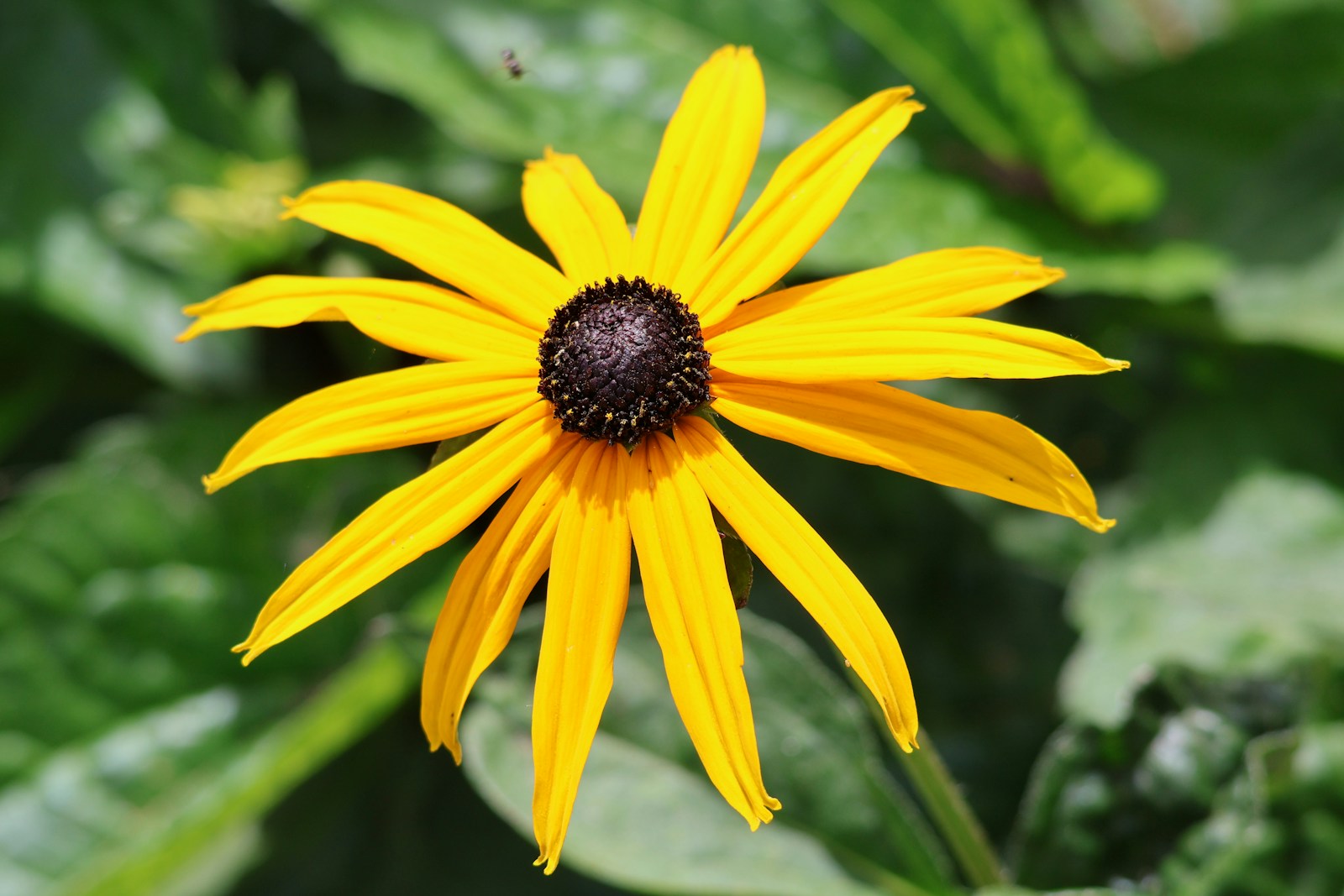
Orange coneflower (R. fulgida)
- 'Goldsturm': the classic border rudbeckia, with gold petals and near-black cones on bushy plants.
- 'Little Goldstar': a compact form packed with smaller flowers, good at the front of a border.
Cutleaf coneflower (R. laciniata)
- 'Goldquelle': double, lemon-yellow flowers on shorter, sturdier plants than the species.
- 'Herbstsonne': tall stems carrying yellow flowers with green cones; sometimes sold under R. nitida.
Brown-eyed Susan (R. triloba)
- 'Prairie Glow': small flowers in rusty red and orange, edged with gold, on branching stems.
Sweet coneflower (R. subtomentosa)
- 'Henry Eilers': unusual quilled petals, like narrow tubes, in pale gold.
- 'Little Henry': a shorter version of 'Henry Eilers' for smaller gardens.