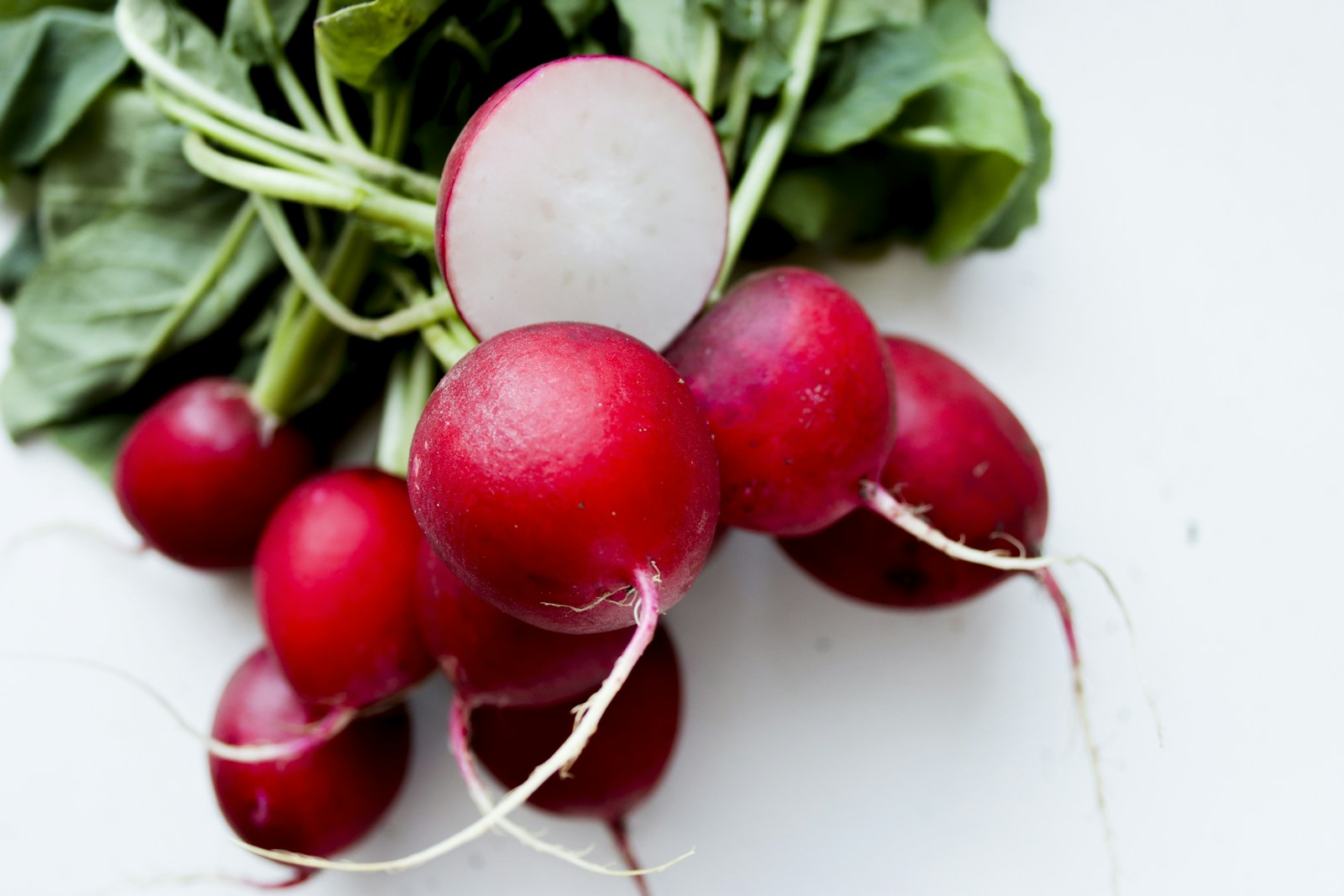
Radishes are the fastest root crop you can grow. Spring types go from seed to salad in about a month, which makes them ideal for children and new gardeners. Winter radishes, including the long white daikon, take longer and store for weeks. Both want cool weather and steady moisture. Difficulty: easy.
Sowing and planting
Radishes are sown directly where they are to grow. They dislike root disturbance, so transplanting is rarely worth it.
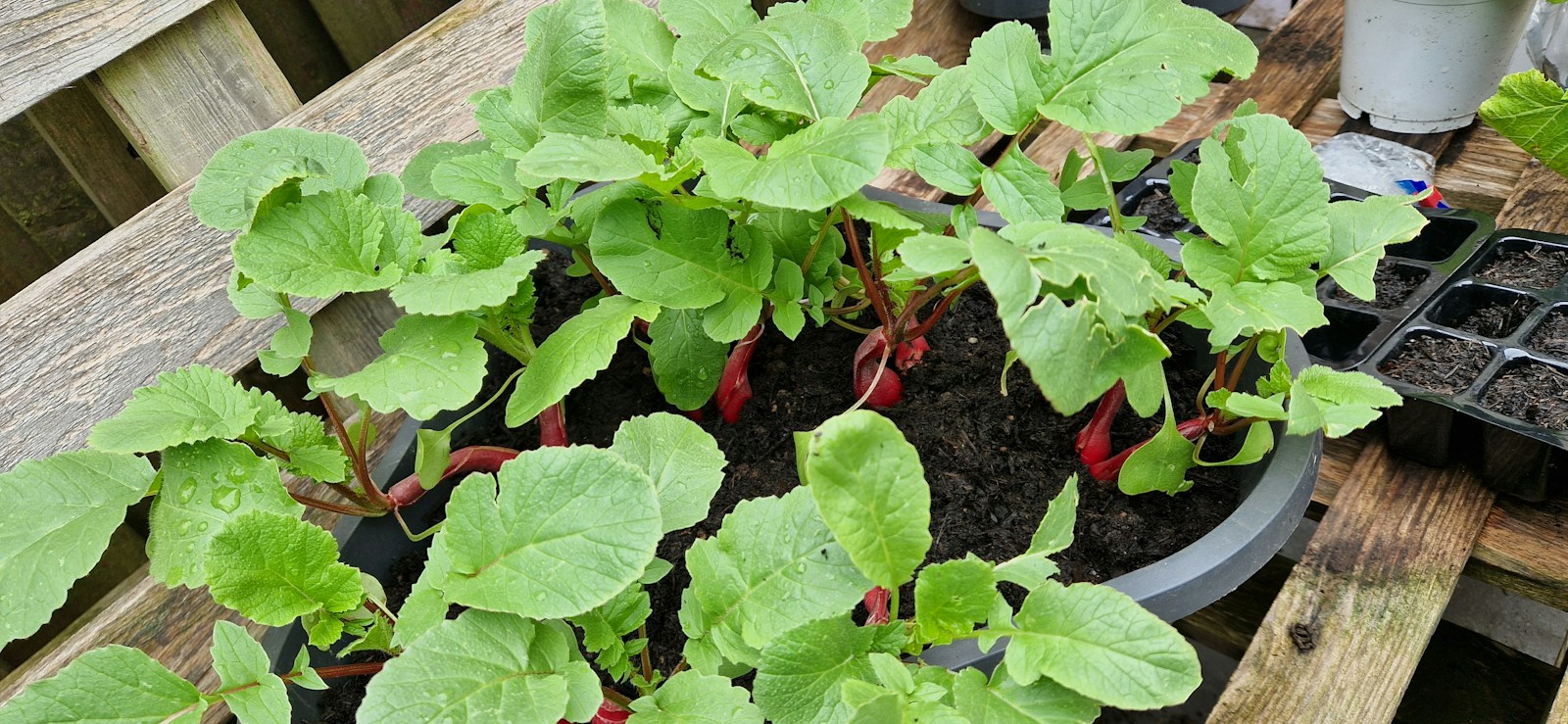
Spring radishes are the small, quick round or finger-shaped types. Start sowing four to six weeks before your last spring frost, as soon as the soil can be worked. Keep sowing every 7 to 14 days until the weather turns hot. Start again in late summer, about four to six weeks before your first autumn frost.
Winter radishes include daikon and other large types. They need the shortening days and cool nights of autumn to form good roots. Sow them from midsummer until about eight to ten weeks before your first autumn frost. Spring sowings of winter types often bolt (run to flower) before they size up.
Seed germinates in three to seven days in soil between 45 and 85°F (7 and 29°C). Rake the soil to a fine tilth (a crumbly surface) and remove stones. Sow 1/2 inch (1 cm) deep in rows about 6 to 12 inches (15 to 30 cm) apart. Space spring types 1 inch (2.5 cm) apart. Sow winter types a little thicker and thin them to 4 to 6 inches (10 to 15 cm).
Thin early. Crowded radishes make leaves but no roots. Pull spares when seedlings have their first true leaves, and eat the thinnings.
Radishes fit into gaps anywhere. Sow them between slow crops such as parsnips or carrots to mark the rows. They are pulled long before the slower crop needs the space. Spring types also grow well in pots and window boxes at least 6 inches (15 cm) deep. Daikon needs a container at least 12 inches (30 cm) deep, or open ground.
Avoid freshly manured soil. Too much nitrogen gives lush leaves and small, forked roots. Soil enriched with compost the season before is ideal.
Growing on
Consistent watering is the secret to crisp, mild radishes. Dry soil makes them hot, woody and quick to bolt. Uneven watering, with a dry spell followed by a soaking, splits the roots. Water about 1 inch (2.5 cm) a week, and more in warm, windy weather. Aim to keep the soil evenly damp, not wet.
A thin mulch of compost or fine grass clippings helps hold moisture around winter radishes. Spring radishes grow so fast that mulching is rarely needed.
Radishes need no extra feeding in reasonable soil. They need no staking, pinching or pruning either.
Weed by hand while plants are small. Radish seedlings are easily smothered, and hoeing close to them can nick the roots.
Cover the rows with fine insect netting from sowing if flea beetles or root flies are common in your garden. Seal the edges well. The cover also keeps soil moist and shades the crop in warm spells.
For companions, radishes sit happily among lettuce, peas, spinach and carrots. Keep them away from other cabbage-family crops if pests are a problem, since they share the same pests.
Harvesting
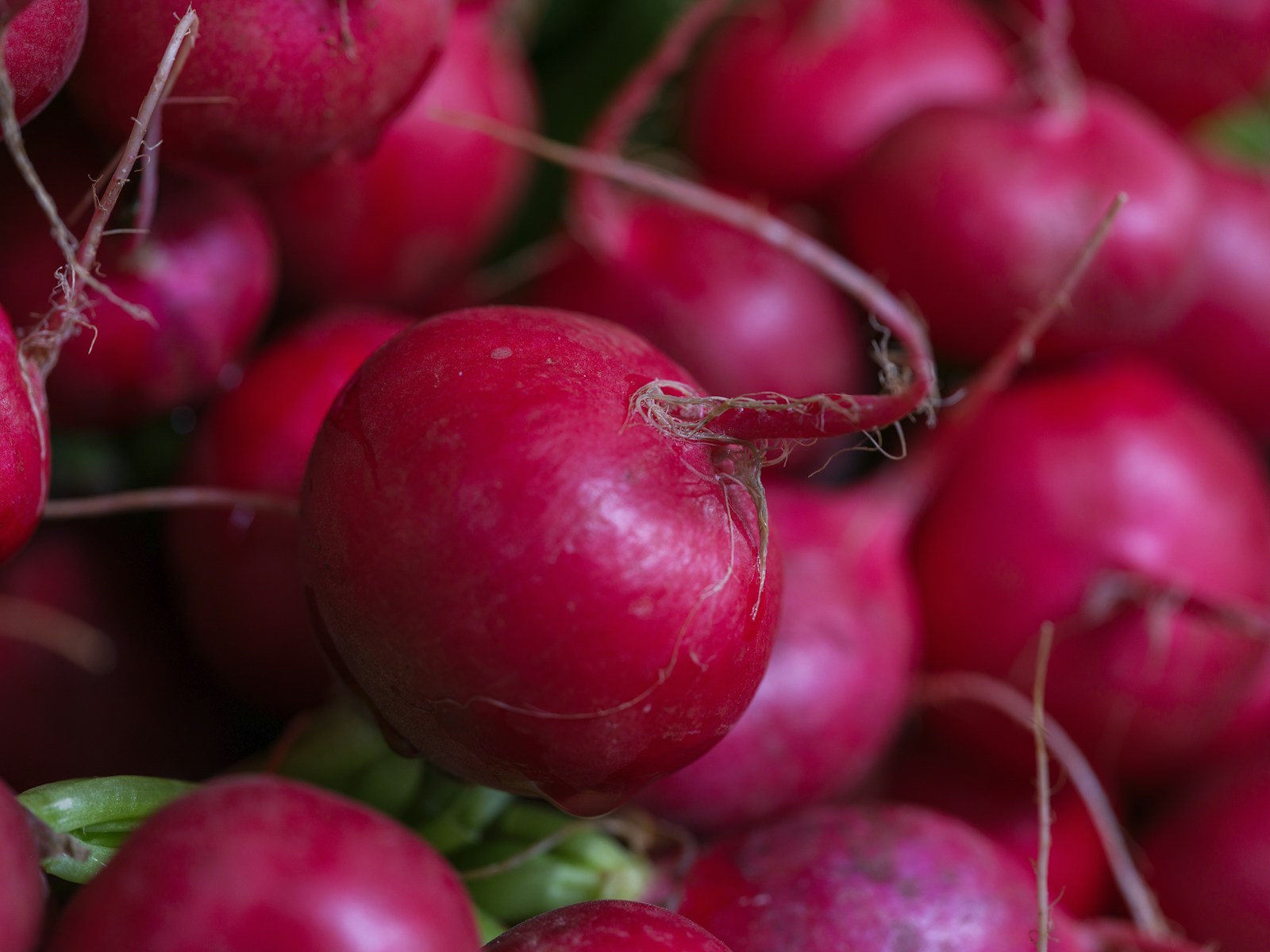
Spring radishes are ready when the tops of the roots push up through the soil. Most round types are best at about 1 inch (2.5 cm) across. Check them often, because they pass their best within a week. Pull them before they get large, spongy (pithy) or hot.
Winter radishes are ready when roots reach a useful size for the variety. For daikon, that is often 8 to 16 inches (20 to 40 cm) long. Loosen the soil beside long roots with a fork before pulling, or they snap.
Twist off the leaves, leaving a short stub of stem. Young radish leaves are edible, cooked or in salads.
Store spring radishes in a bag in the refrigerator for one to two weeks. Winter radishes keep for two to four months in a refrigerator. They also store well in boxes of damp sand in a cool, frost-free shed or cellar. In mild zones, you can leave them in the ground and dig as needed until hard frost.
Radishes left in the ground bolt and produce crisp, green seed pods. These are good raw or pickled. Some varieties are grown for their pods alone.
To save seed, let a group of plants flower and form pods. Radishes are pollinated by insects and cross with each other, so grow only one variety in flower at once. Pick the pods when they turn dry and brown, and crush them to release the seed.
Problems and pests
Leaves grow but no roots form
Crowding, too much shade, too much nitrogen or hot weather are the usual causes. Thin seedlings early, grow in full sun, and sow in cool seasons.
Roots are hot, woody or pithy
The crop grew too slowly, dried out, or was left too long. Water steadily, harvest young, and sow little and often rather than one big row.
Roots are split
Heavy rain or watering after a dry spell makes roots swell suddenly and crack. Keep watering even and harvest promptly after rain.
Tiny round holes in the leaves
Flea beetles chew these holes, especially on seedlings in warm, dry weather. Cover rows with fine insect netting from sowing. Keeping plants well watered helps them outgrow light damage.
Brown tunnels in the roots
Cabbage root fly or root maggot larvae tunnel into the roots. Cover crops with fine netting at sowing, and rotate cabbage-family crops to fresh soil each year. Remove and bin damaged roots.
Radishes that dry out or meet hot, lengthening days run straight to flower. Sow spring types little and often in cool weather, and keep the soil evenly moist.
Varieties worth growing
Spring radishes
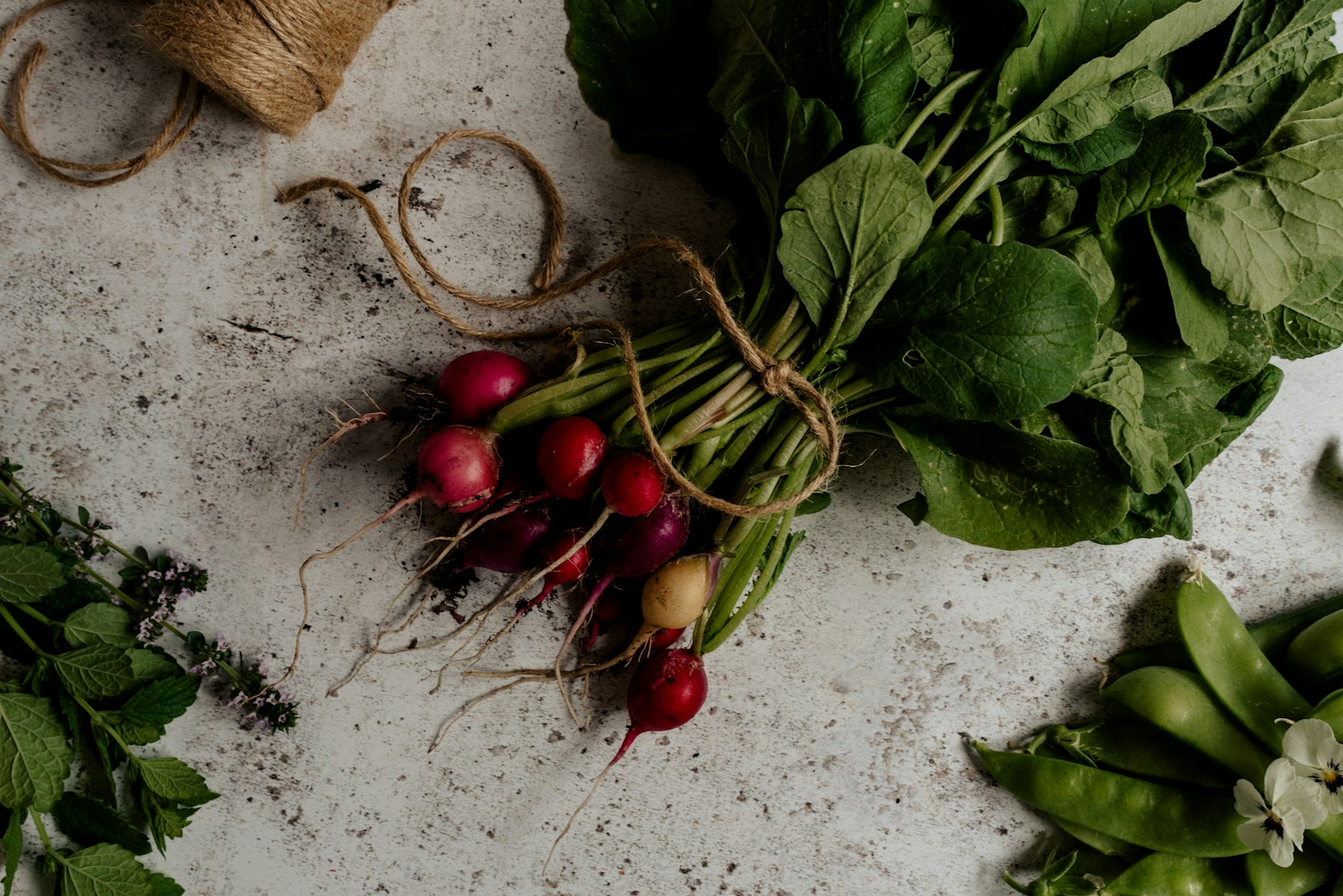
- Cherry Belle: Round, bright red and mild, a reliable standard for beginners.
- French Breakfast: Oblong, red with a white tip, crisp and mild when young.
- Easter Egg: A mix of red, pink, purple and white round roots.
- Sparkler: Round red roots with a white lower half.
- White Icicle: Slender, white, carrot-shaped roots about 4 inches (10 cm) long.
Winter radishes and daikon
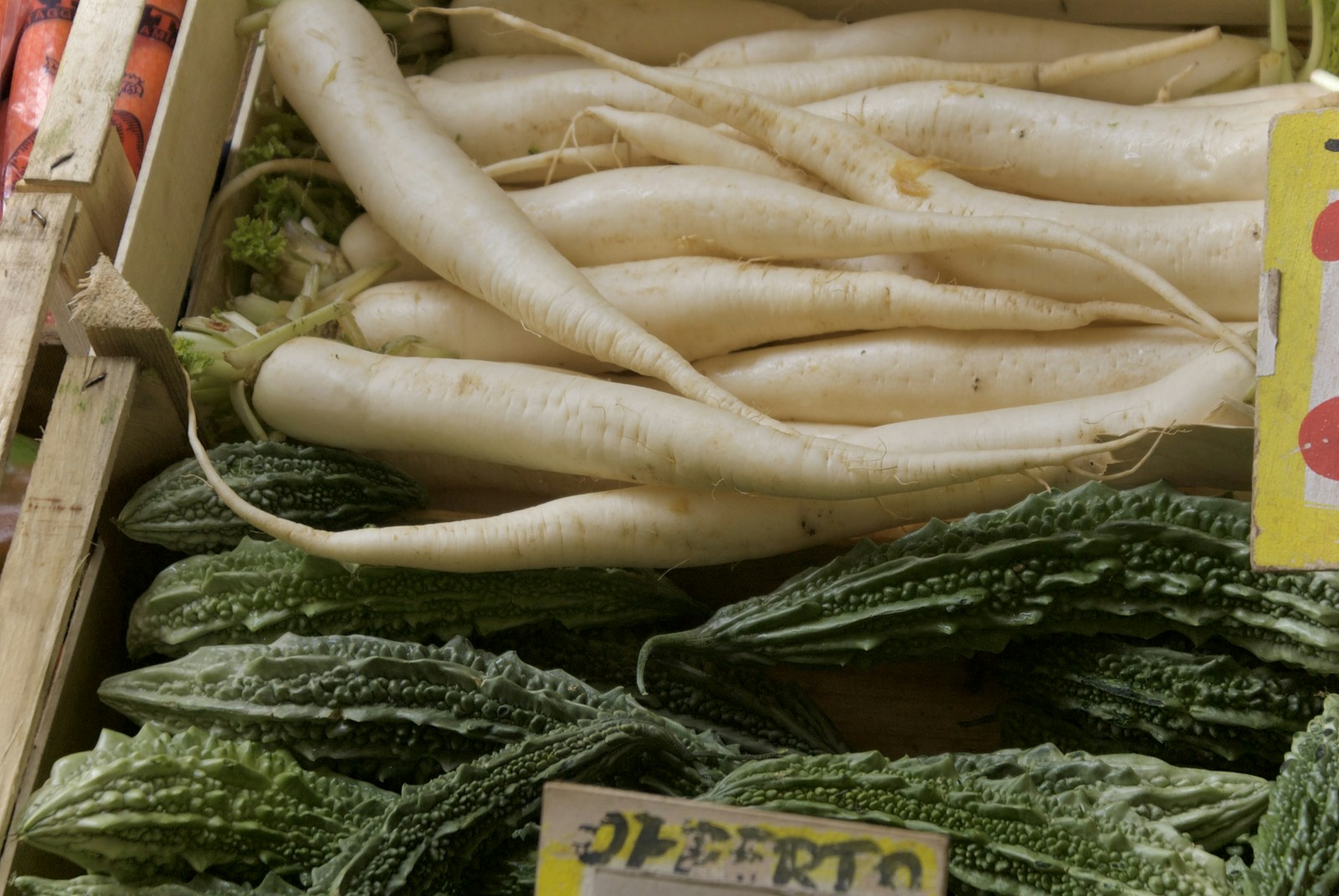
- Miyashige: A classic long, white daikon with thick, mild roots.
- Black Spanish Round: Black-skinned, white-fleshed and pungent; stores for months.
- China Rose: Rose-pink skin and white flesh, with a firm texture.
- Watermelon: Pale green outside, bright pink-red inside; good sliced raw.