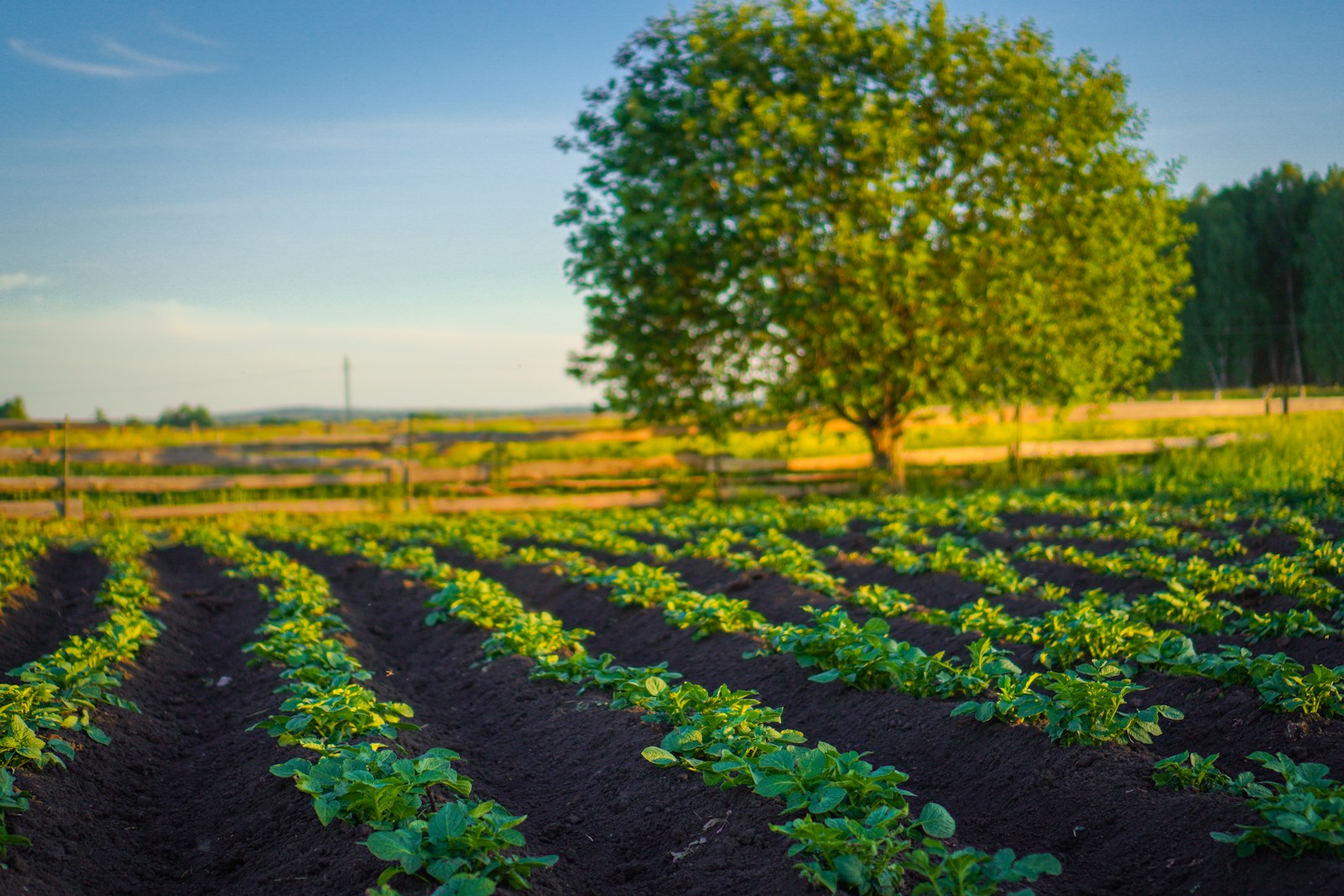
The potato (Solanum tuberosum) is a cool-season crop grown for its starchy underground tubers. A tuber is a swollen stem, not a root, and that fact shapes how you grow it. Few vegetables give as much food from a small bed, and freshly dug new potatoes taste nothing like stored ones. Potatoes are easy for beginners, provided you keep the tubers covered and the soil evenly moist.
Sowing and planting
Potatoes are not grown from true seed in home gardens. You plant seed potatoes, which are small tubers saved for planting. Buy certified seed potatoes, meaning stock inspected and found free of major diseases. Grocery store potatoes are often treated to stop sprouting and can carry disease into your soil.
Plant two to four weeks before your last expected spring frost. The soil should be workable and at least 45°F (7°C). Cold, wet ground rots seed pieces before they sprout. In USDA zones 8 to 10, summers are too hot for good tuber growth. There, plant in late winter, or in late summer for a fall crop.
Small seed potatoes go in whole. Cut larger ones into pieces about the size of a hen's egg, each with at least two eyes (the buds on the tuber). Let the cut pieces dry for a day or two so the surface seals.
Choose a bed in full sun that has not grown potatoes, tomatoes, peppers or eggplant in the last three years. These relatives share diseases. Work in finished compost, but avoid fresh manure and lime, because both encourage scab.
Dig a trench 3 to 4 inches (8 to 10 cm) deep. Set the pieces 12 inches (30 cm) apart with the eyes facing up, then cover them. Leave 30 to 36 inches (75 to 90 cm) between rows so you have soil for hilling later.
Potatoes also grow well in large containers and grow bags. Use a pot that holds at least 10 gallons (38 liters) and has drainage holes. Plant two or three seed pieces in a few inches of potting mix, then add more mix as the stems grow.
Growing on
Hilling is the most important job. It means mounding soil up around the stems. New tubers form along the buried stem above the seed piece, so more buried stem means more room for the crop. Hilling also keeps light off the tubers.
Start when the plants are 6 to 8 inches (15 to 20 cm) tall. Draw soil up from between the rows until only the top few leaves show. Repeat two or three times over the following weeks. You can use straw or shredded leaves in place of some soil. A thick mulch also keeps the ground cool, which potatoes prefer.
Green potato tubers, and all the leaves, stems, sprouts and small tomato-like fruits of the plant, contain solanine and related toxins. Do not eat them. Keep tubers covered with soil while they grow, store them in the dark, and discard any tuber that is green through much of its flesh.
Water deeply so the bed gets 1 to 2 inches (2.5 to 5 cm) a week, including rain. Even moisture matters most from flowering onward, when tubers are swelling. Swings between dry and soaked soil cause knobby, cracked or hollow tubers. Stop watering once the vines yellow, so the skins can toughen.
Potatoes are moderate feeders. Compost at planting is enough in most garden soils. If you use a fertilizer, choose a balanced one and follow the label rate. Too much nitrogen grows tall vines and few tubers.
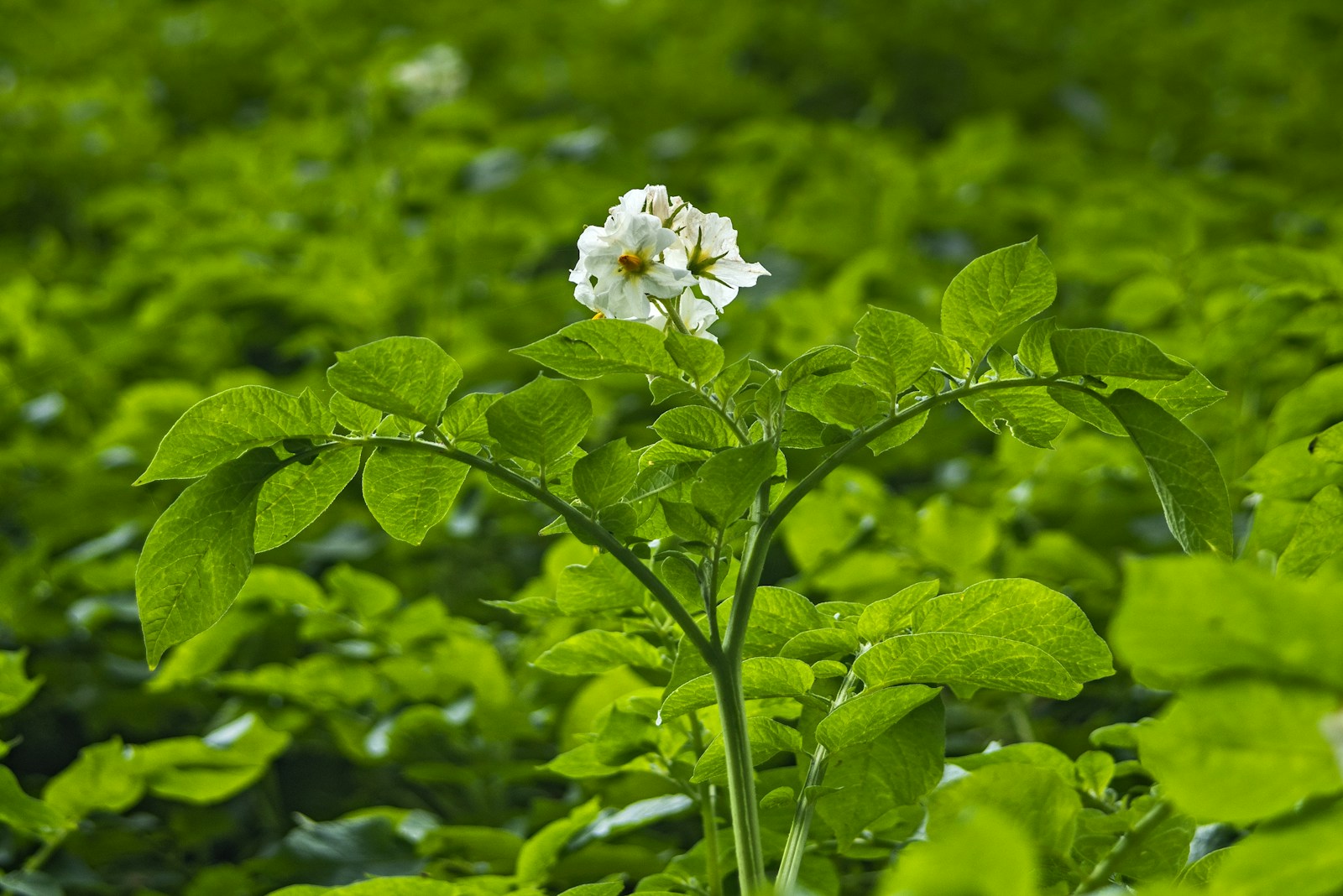
Plants need no staking or pruning. Some varieties flower heavily and then form small green fruits that look like cherry tomatoes. These fruits are poisonous, so pick them off if children use the garden.
Harvesting
You have two harvests to choose from.
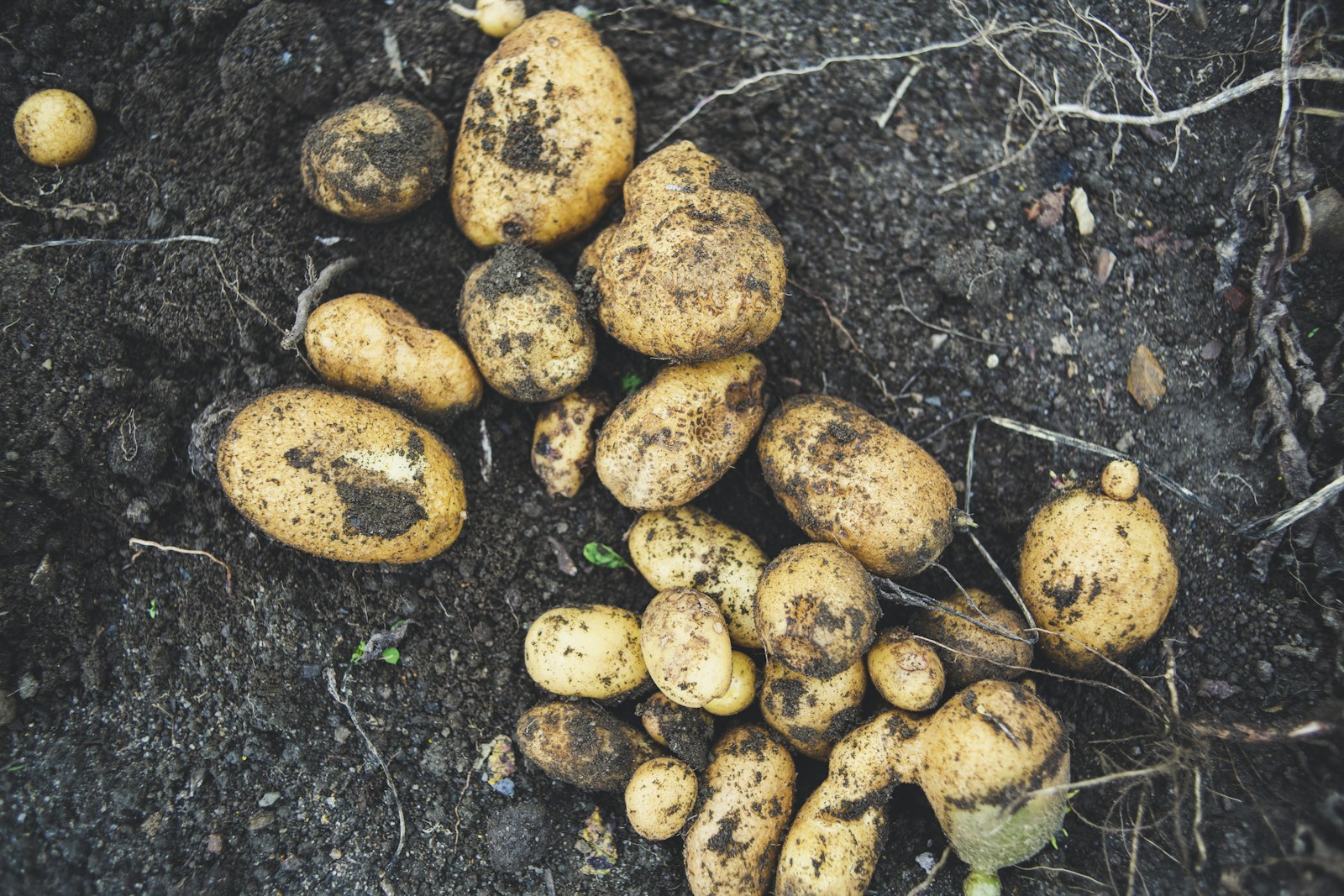
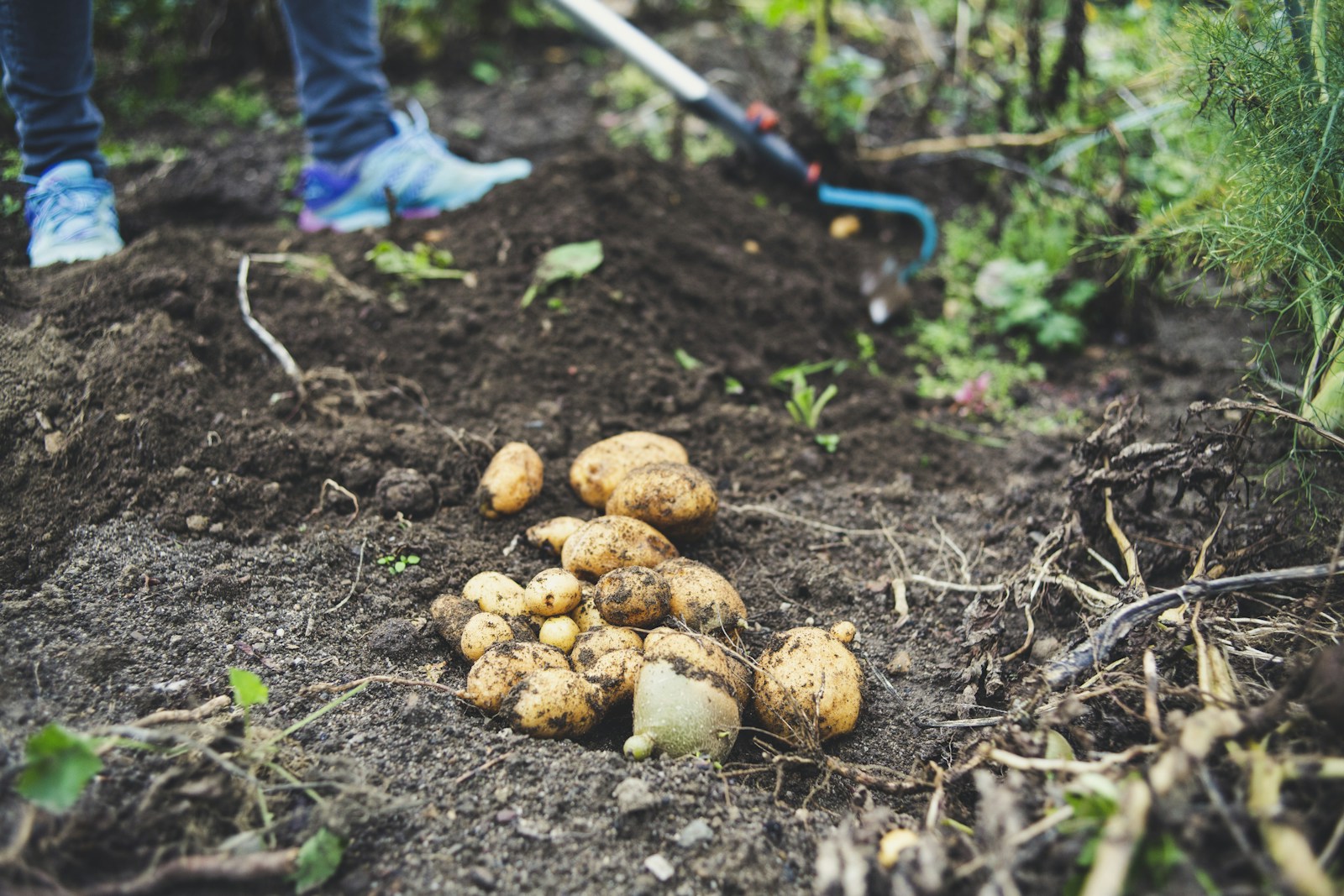
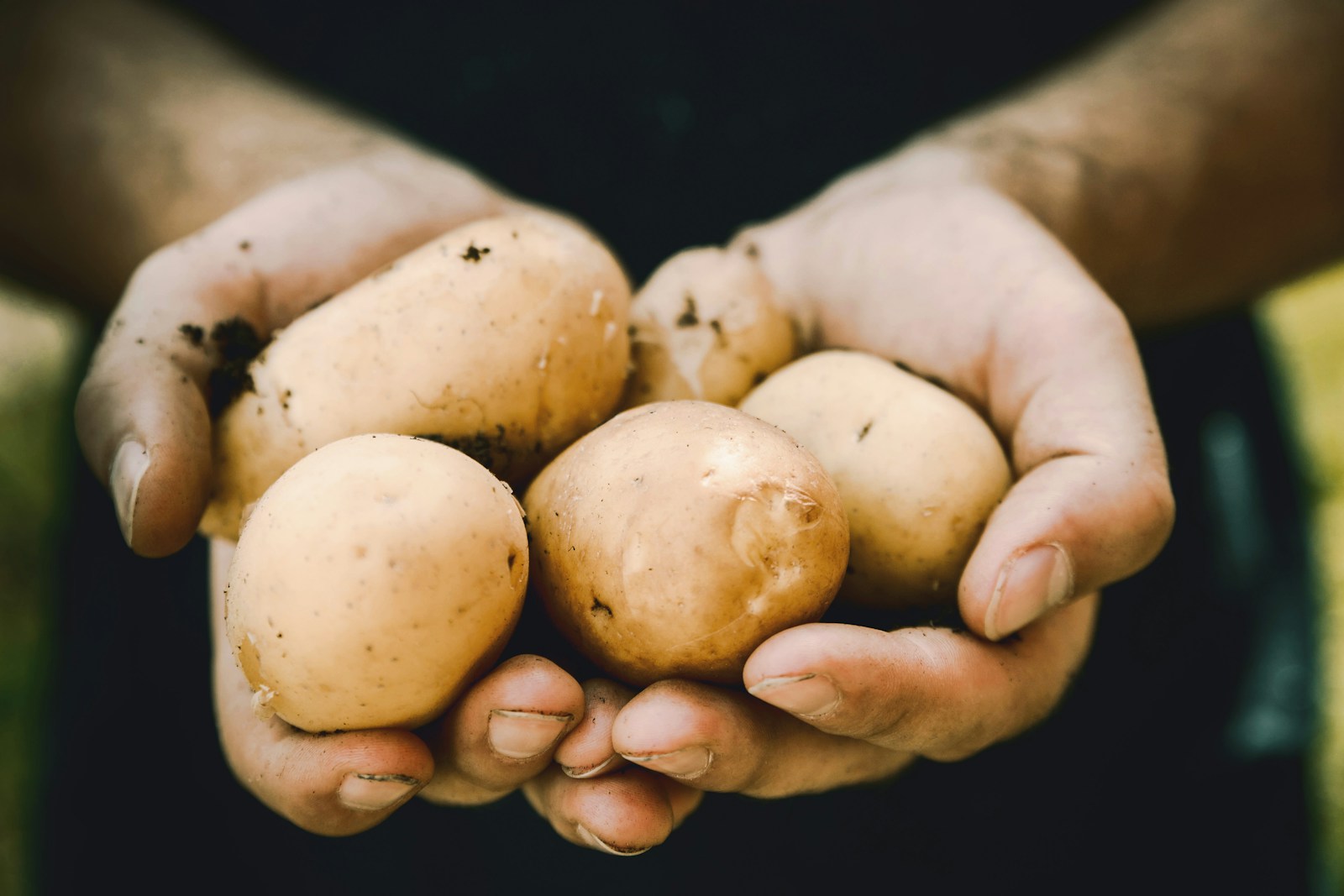
New potatoes are small, thin-skinned and sweet. They are usually ready two to three weeks after the plants begin to flower. Feel gently in the side of the hill and take a few tubers from each plant. Eat them within days, because they do not store.
Storage potatoes are ready when the vines yellow and die back. Leave the tubers in the ground for about two more weeks so the skins set. A set skin does not rub off under your thumb. Dig before a hard freeze reaches the tubers.
Dig on a dry day. Push a garden fork into the soil about 12 inches (30 cm) from the stem and lift toward the plant. Work by hand near the center to avoid spearing tubers. Eat any damaged ones first.
Brush off loose soil but do not wash the crop. Cure the tubers in a dark, airy, humid place at about 50 to 60°F (10 to 15°C) for one to two weeks. Curing heals small scrapes and thickens the skin. Then store them in the dark at roughly 40 to 45°F (4 to 7°C).
A place in mountain folk tradition
Potatoes were a staple of Southern Appalachian gardens, and the kitchen supply also served as a home remedy. Anthony Cavender's Folk Medicine in Southern Appalachia records several such customs. Mountain families laid raw potato scrapings or a slice on a burn. Some used a potato poultice on a sty or a bruise. Others rubbed a slice on a wart, or carried a potato in a pocket in the belief that it drew out rheumatism. These practices are reported here as history only. This article is not medical advice, and nothing in it is a suggestion to treat any condition with potatoes.
Problems and pests
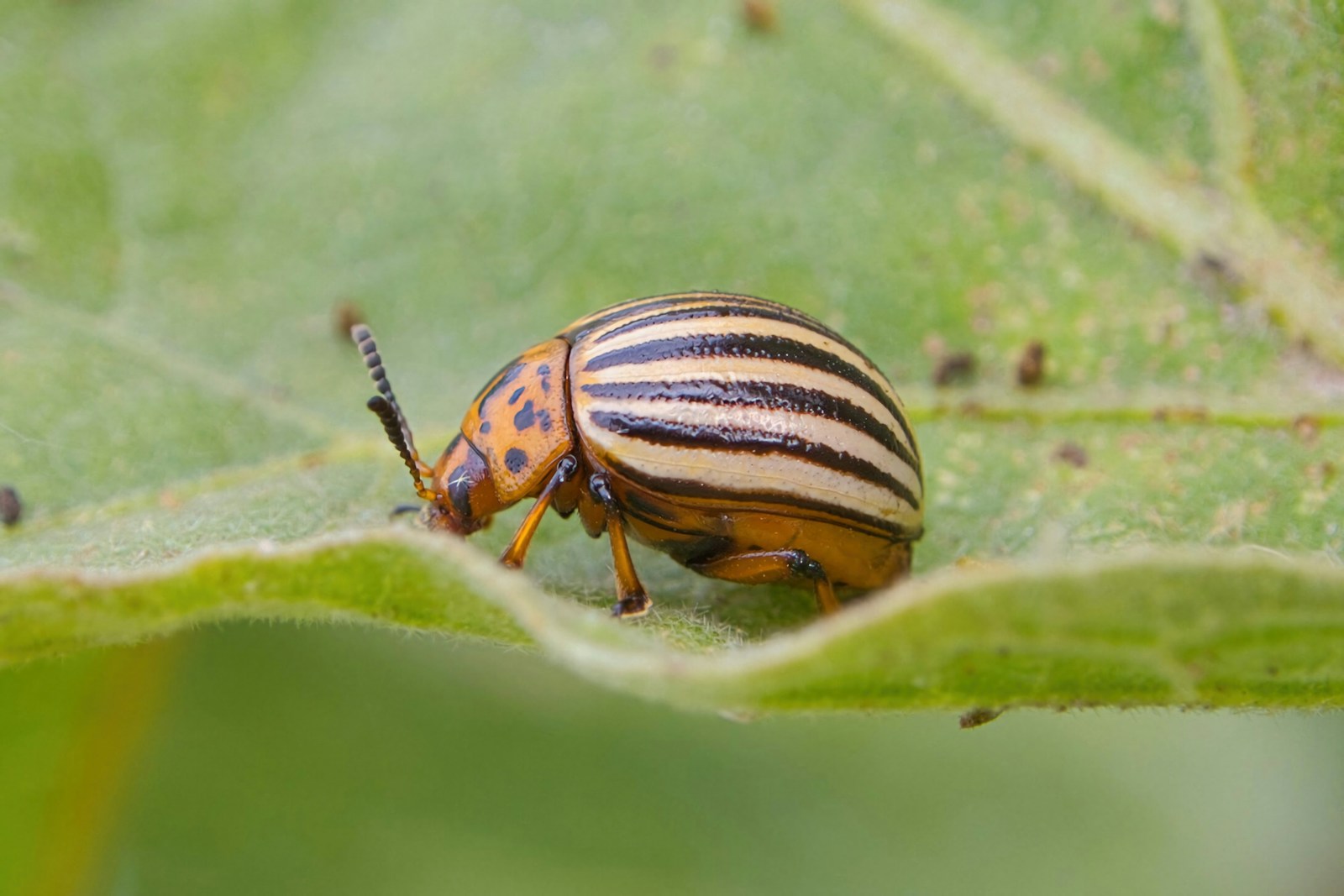
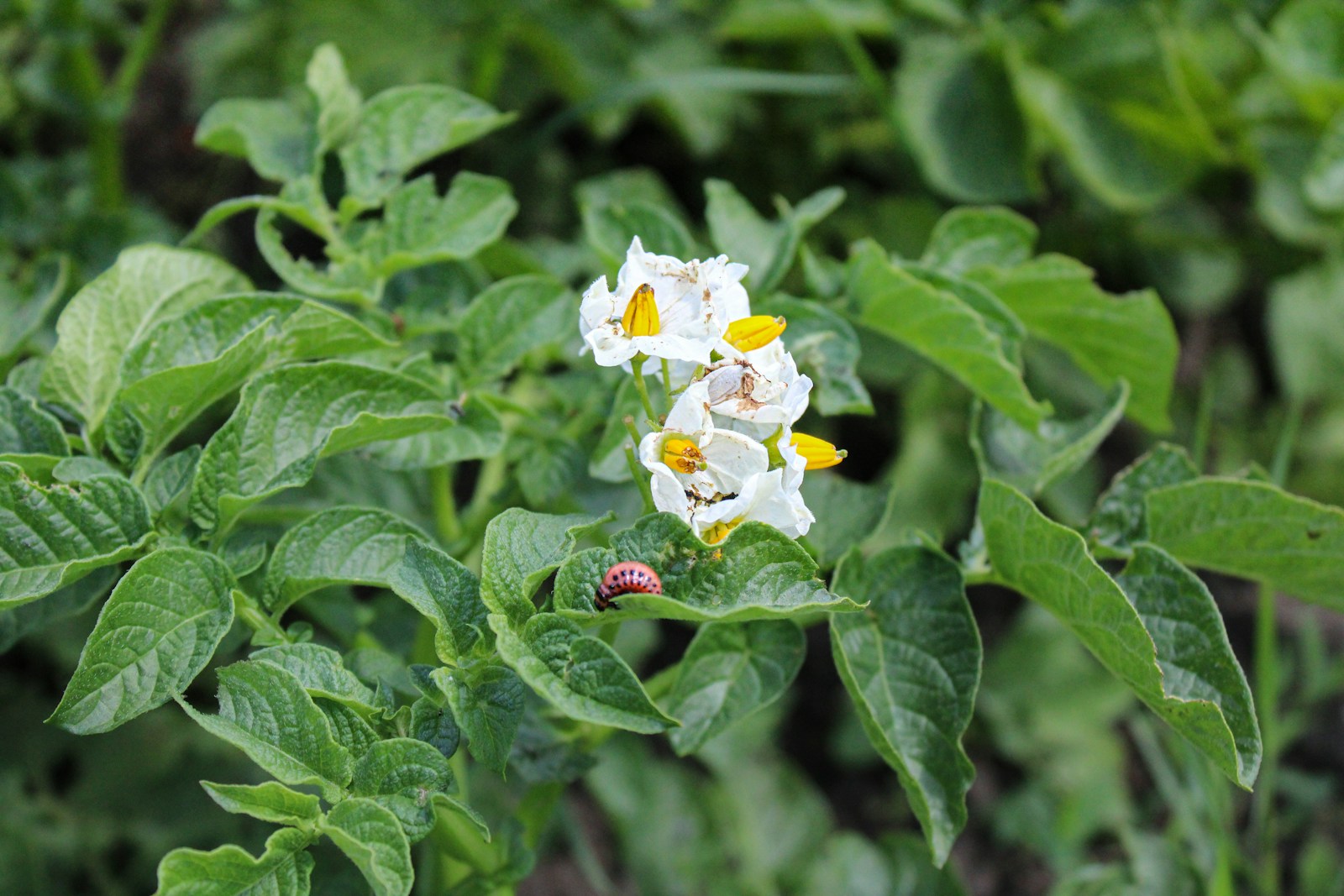
Striped beetles and plump red grubs strip the leaves
This is the Colorado potato beetle. Adults are yellow with black stripes, and the larvae are soft and brick red. Check plants twice a week and look under leaves for clusters of orange eggs. Hand-pick adults, larvae and eggs into soapy water. Rotate the bed each year and cover young plants with row cover, which is a light fabric barrier.
Dark, greasy patches spread fast in cool wet weather
This is late blight, the disease behind the Irish potato famine. Patches may show white fuzz underneath, and whole plants can collapse within days. Cut the vines off at ground level, bag them, and put them in the trash, not the compost. Wait two weeks before digging so spores on the surface die. Prevention is better: plant certified seed, space plants for airflow, and water the soil instead of the leaves.
Rough, corky patches cover the tuber skin
Common scab is a soil disease that is worse in dry, alkaline soil. The tubers are safe to eat once peeled. Keep the soil evenly moist while tubers form, skip lime and fresh manure, and choose resistant varieties.
Tubers have green skin
Light reached them. Hill higher, mulch thickly, and store the harvest in full darkness. See the warning above before eating any green tuber.
Varieties worth growing
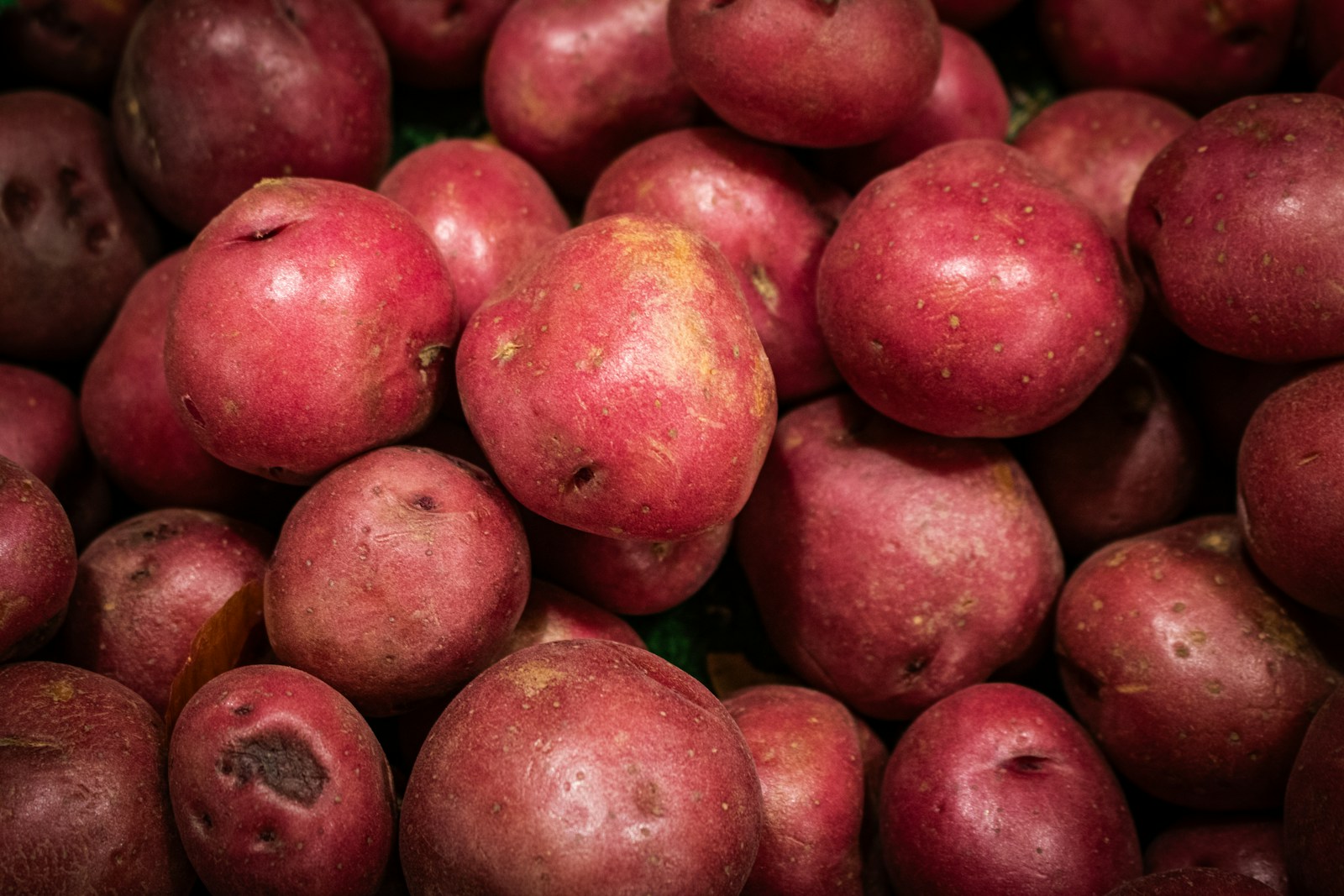
- Yukon Gold: early to midseason, with yellow flesh and a buttery texture. It is a good all-purpose kitchen potato.
- Red Norland: an early red-skinned variety that is often grown for new potatoes.
- Kennebec: midseason to late, with white flesh and heavy yields. It stores well.
- Red Pontiac: a midseason red with deep eyes. It tolerates heavier soils better than most.
- Russet Burbank: the classic late baking potato. It needs a long season and steady water.