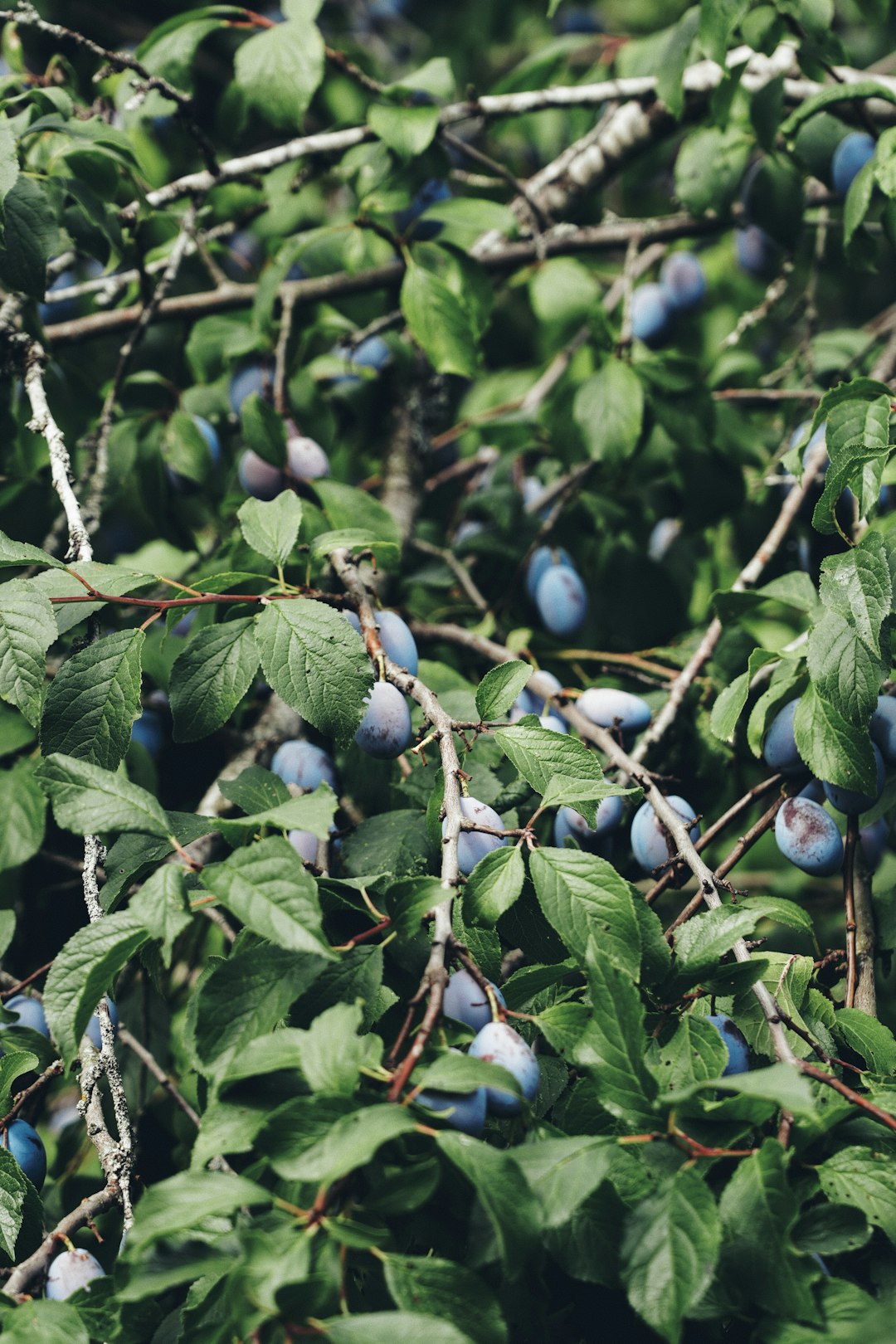
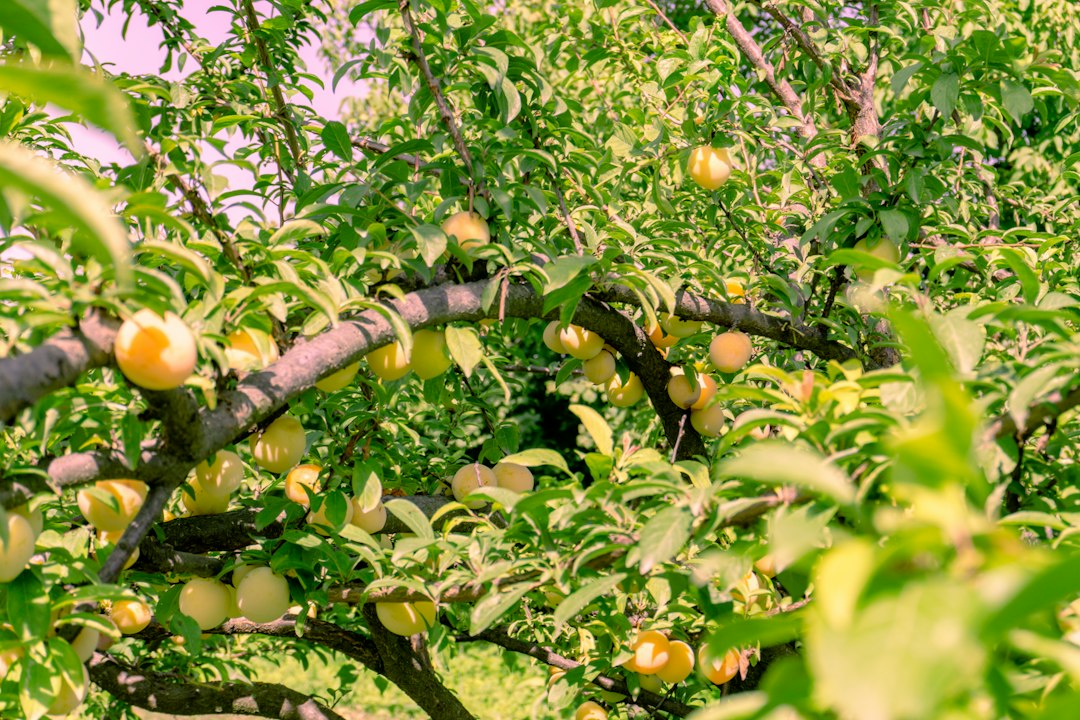
Plums are stone fruit trees grown for round-to-oval fruit with a dusty bloom on the skin, in shades of purple, red, or yellow depending on variety, eaten fresh, dried, or cooked into jams and desserts. Two distinct kinds are grown in home gardens — European plums and Japanese plums — and both do well with the right site and a little patience while the tree matures. Difficulty is moderate: the tree itself isn't fussy, but matching pollination needs to your space and staying ahead of a handful of common pests and diseases takes some attention.
Sowing and planting
Plums are planted as a young bare-root or potted tree, not started from seed — seedling trees take years longer to bear and rarely grow true to the parent variety. Nurseries generally sell two distinct kinds. European plums (Prunus domestica) are the firmer fruit, often purple or blue, traditionally dried into prunes or baked into desserts; many European varieties are at least partly self-fertile, meaning a single tree can set some fruit on its own, though planting two varieties usually improves the crop. Japanese plums (Prunus salicina) are the juicier, earlier-ripening type usually eaten fresh, with red, yellow, or mottled skins; most Japanese varieties need a different variety nearby to pollinate them, since a lone tree often sets little or no fruit. Because pollination needs vary by variety even within each type, check the specific requirements of the variety you buy rather than assuming one tree will be enough.
Choose a site in full sun with well-drained soil, and space trees about 180 inches (450 cm) apart — closer if the tree is grafted onto a dwarfing rootstock, so check the nursery label. In zone 6b, plant bare-root trees in early spring while they're still dormant, as soon as the ground can be worked; potted trees can go in anytime from spring through early fall, avoiding the hottest weeks of summer. Dig a hole as wide as the spread roots and no deeper than the root ball, and set the tree at the same depth it grew at the nursery, with the graft union (the swollen point where the variety meets the rootstock) sitting a couple of inches above the soil line. Water in thoroughly and stake young trees on an exposed site.
Growing on
Water young trees regularly through their first couple of summers while roots establish, favoring a deep soak over frequent light watering. Established trees tolerate some dryness, but even moisture during fruit development — roughly 1 inch (2.5 cm) a week in the absence of rain — helps the fruit size up well and reduces splitting.
Feed lightly in early spring with a balanced fertilizer at the rate on the product label. Mature, cropping trees usually need little beyond a yearly mulch of compost, since heavy feeding, particularly high nitrogen, pushes soft growth that's more vulnerable to disease.
Prune young trees in late winter, while they're dormant, to an open, vase-like shape with three to five main branches, removing any crossing, damaged, or inward-growing wood. Once the framework is established, prune lightly each winter to keep the center open to light and airflow, and remove dead or diseased wood as soon as you notice it.
When a tree sets a heavy crop, thin the young fruit by hand in late spring or early summer, leaving one plum roughly every 4-6 inches (10-15 cm) along each branch. This feels wasteful at the time, but it's a genuinely useful step: an overloaded branch is prone to breaking under the weight of a full crop, and the fruit that remains after thinning grows noticeably larger and ripens more evenly.
Harvesting
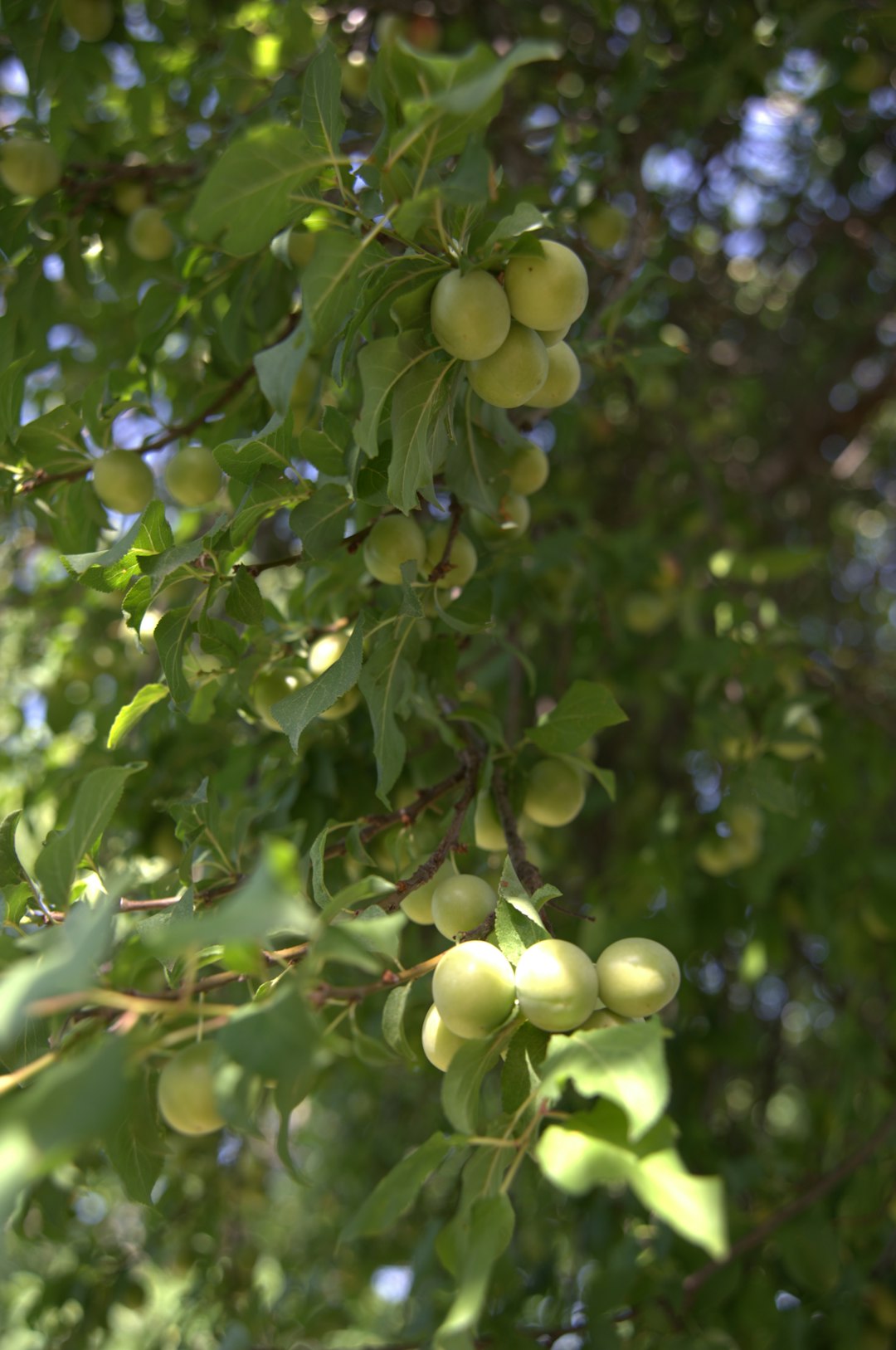
Judge a plum's ripeness by feel more than by color, since the skin often changes color before the fruit is actually ready inside. A ripe plum gives slightly to gentle pressure, the way a ripe peach does, and separates from the branch with a light twist rather than needing a hard tug.
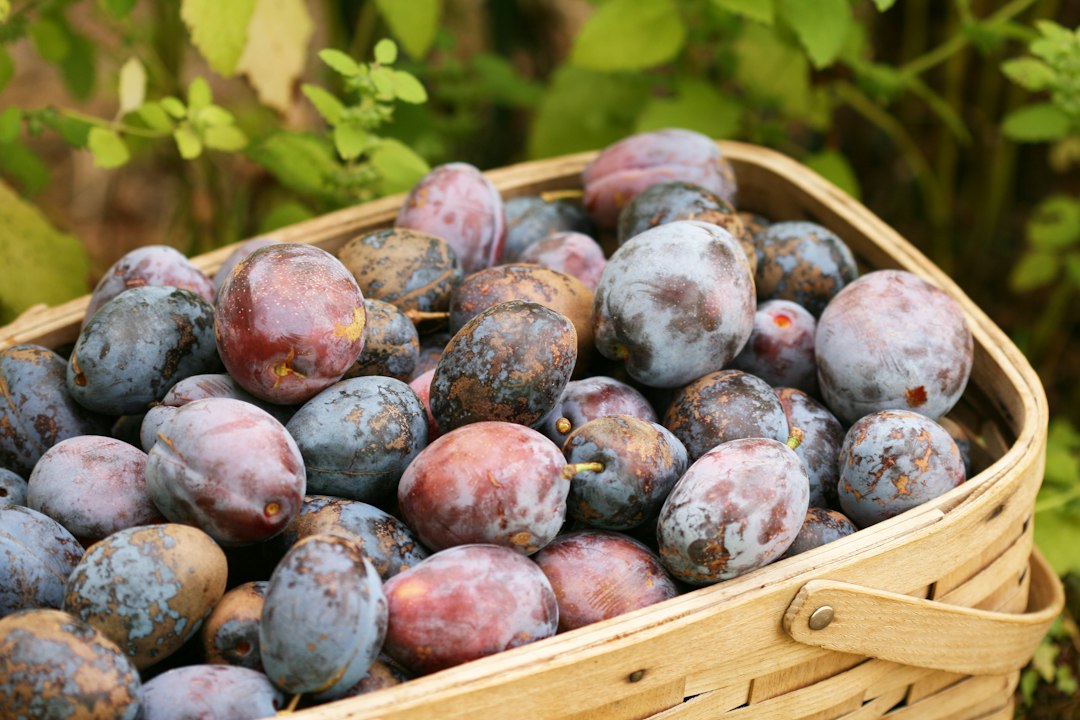
Pick carefully, since plums bruise easily — cradle each fruit in your palm rather than gripping it tightly, and set it gently into a shallow container rather than dropping it in, since bruised fruit spoils quickly and doesn't store well. Most varieties don't ripen much further once picked, so aim to harvest when the fruit is genuinely ready rather than picking early and hoping it finishes off the tree. Fruit on the same tree ripens unevenly, so expect to go over it several times across a week or two rather than picking it all in a single pass.
Problems and pests
Fruit develops a sunken, rapidly spreading brown patch, often with fuzzy tan spores
Brown rot, a fungal disease, spreads fast in warm, humid weather, especially where fruit touch each other or the skin has been damaged by insects. Remove and destroy infected fruit as soon as you spot it, avoid wetting the foliage when watering, prune to improve airflow through the canopy, and clear away fallen or mummified fruit over winter, since the fungus overwinters there.
Dark, rough, swollen growths form along branches and twigs
Black knot, a fungal disease, produces elongated black galls that gradually girdle and kill the branch beyond them. Prune out knots during the dormant season, cutting at least 3-4 inches (8-10 cm) into healthy wood below each gall, and destroy the prunings rather than composting them, since the fungus can keep producing spores from cut wood.
Small holes appear in developing fruit, with a gummy ooze and a crescent-shaped scar on the skin
Plum curculio, a small weevil, lays eggs in young fruit and leaves a characteristic crescent-shaped scar as it does so. Spread a sheet under the tree and shake the branches in the early morning, when the weevils are sluggish, to collect and destroy them, and clear fallen fruit promptly, since the larvae complete their development inside it.
Leaves show small purple-rimmed spots that later drop out, leaving a shot-hole appearance
Shot hole disease favors wet spring weather and is usually more unsightly than serious. Rake up and dispose of fallen leaves, avoid overhead watering, and prune to keep air moving through the canopy; a tree in otherwise good health usually shrugs this off without lasting harm to the crop.
New growth curls, puckers, and looks sticky
Aphids clustering on tender shoots distort the new leaves as they feed and excrete a sticky honeydew that sooty mold can then grow on. Hose off light infestations with a strong jet of water, encourage ladybugs and lacewings into the garden, and reserve insecticidal soap for persistent colonies, applying it in the cool of the evening to protect visiting pollinators.
Varieties worth growing
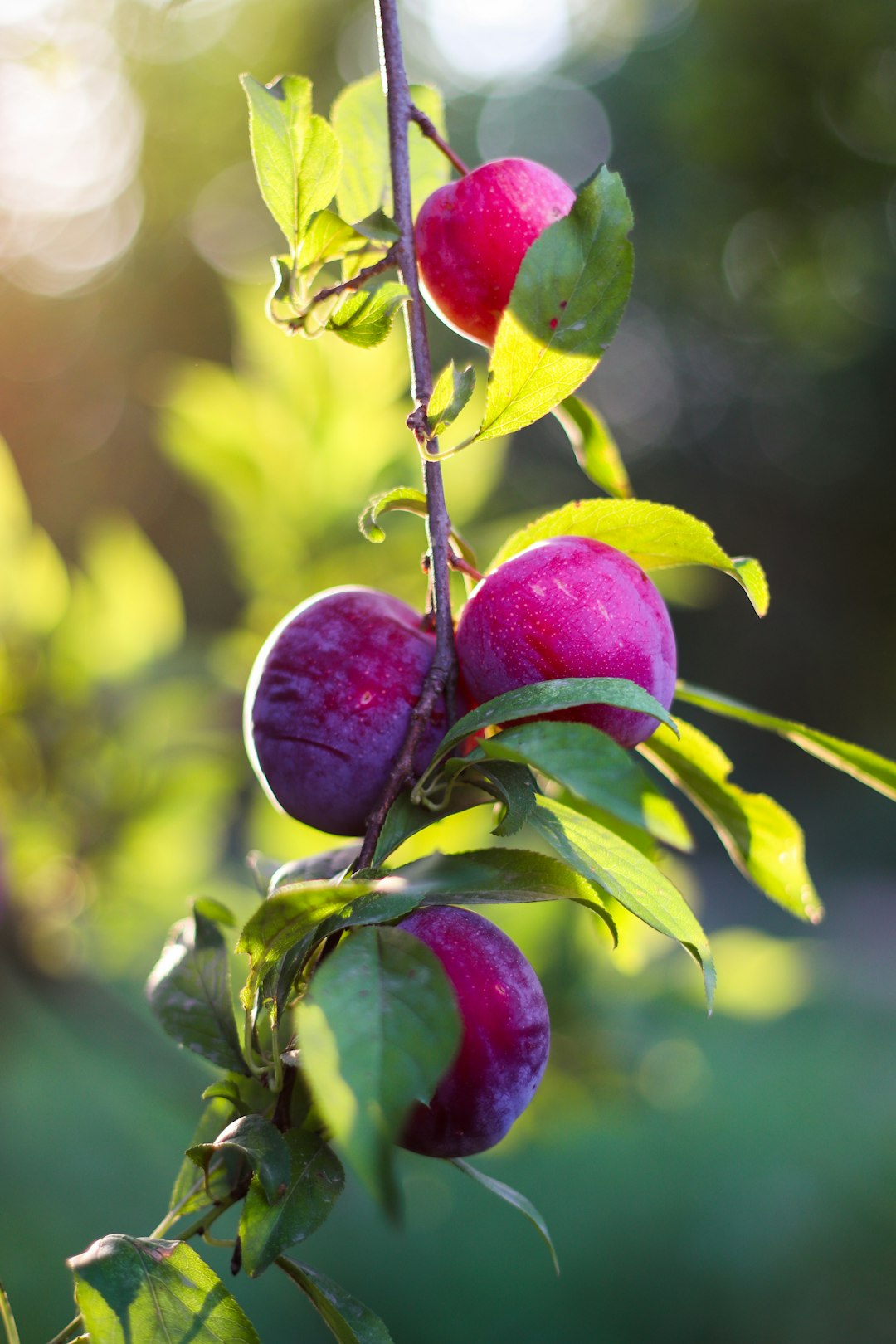
- Stanley – a reliable, cold-hardy European plum and one of the most widely planted prune-type varieties, good fresh, cooked, or dried, and at least partly self-fertile.
- Santa Rosa – an early-ripening Japanese plum with reddish-purple skin and juicy amber flesh; plant a pollinator nearby for the best crops.
- Methley – a compact, sweet Japanese-type plum often sold as self-fertile, a sensible choice where there's only room for one tree.
- Green Gage (also sold as Reine Claude) – a smaller European dessert plum with green-gold skin, grown for rich flavor rather than striking looks.
- Shiro – a vigorous, heavy-cropping yellow Japanese plum, sweet and juicy, good fresh or cooked into jam.