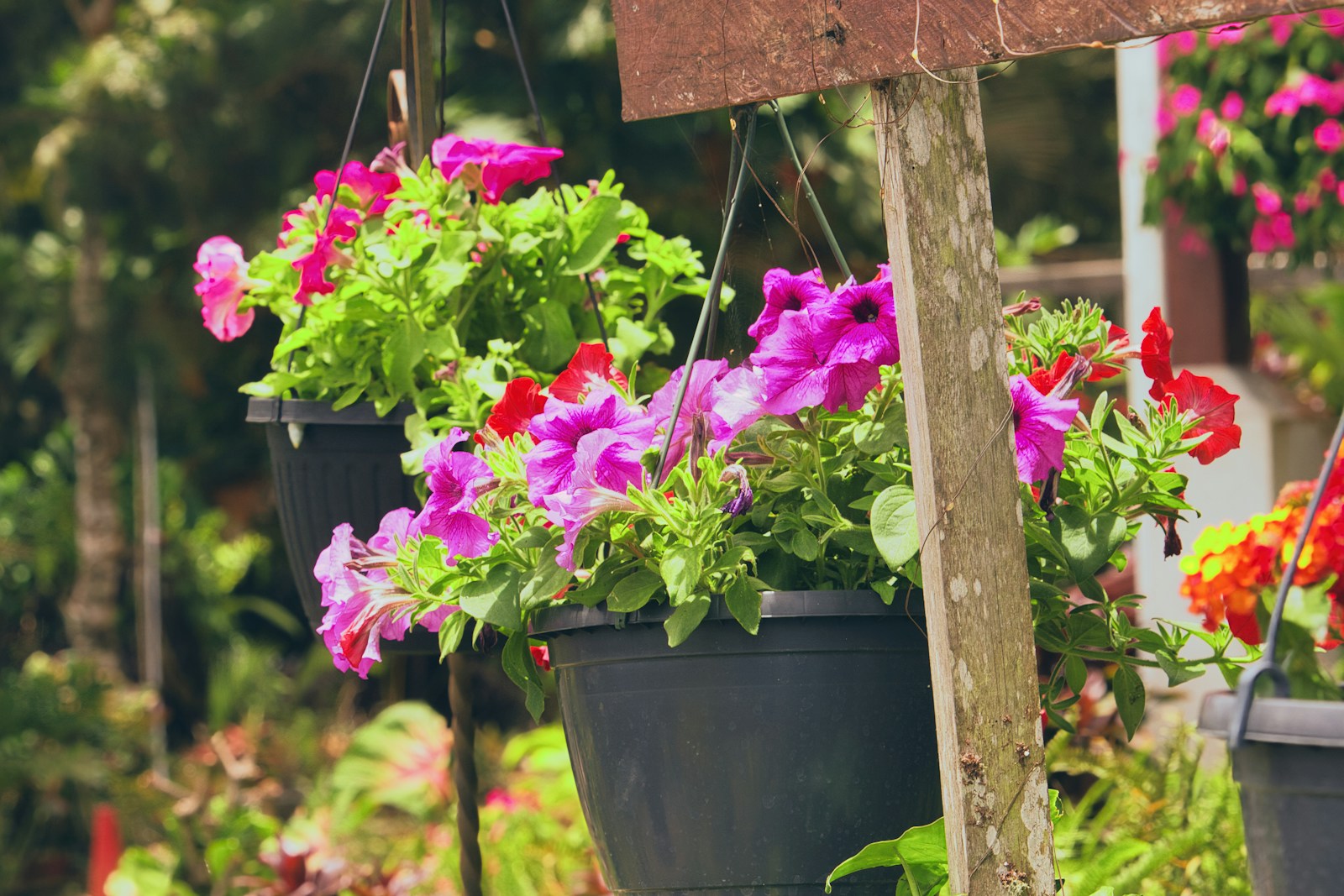
Petunias are summer annuals with trumpet-shaped flowers in almost every color except true orange. They bloom from late spring until frost in beds, hanging baskets and window boxes. Bought plants are easy to grow. Seed is tiny and slow, so starting from seed is moderately difficult.
Sowing and planting
Petunias are slow from seed. Sow indoors 10 to 12 weeks before your last frost. Most seed is sold as pellets (seed coated in clay to make it easier to handle). Press the pellets onto moist seed compost and leave them uncovered, because they need light to germinate.
Keep the tray at 70 to 80°F (21 to 27°C) under a clear lid. Seedlings usually appear in 7 to 14 days. Remove the lid once most have come up and move them under bright light or grow lights. Grow them on a little cooler, around 60 to 65°F (16 to 18°C), for compact plants.
When seedlings have two or three true leaves, move each into its own small pot. Water from below to avoid disturbing the tiny roots.
Petunias are frost tender. Harden off plants over 7 to 10 days, getting them used to outdoor sun and wind. Plant out one to two weeks after your last frost, once nights stay above about 50°F (10°C).
Plant at the same depth the plants grew in their pots. Mix compost into beds before planting. In containers, use fresh potting mix rather than garden soil. Spreading types need room, so allow one plant per 12 inch (30 cm) hanging basket or window box section.
Petunias pair well with sweet alyssum, marigolds and trailing verbena in mixed pots. They also make a bright edging along paths.
Growing on
Water deeply when the top inch (2.5 cm) of soil feels dry. Beds usually need water once or twice a week in dry weather. Hanging baskets and small pots dry fast and may need daily watering in hot spells. Water at the base to keep leaves and flowers dry.
Petunias are heavy feeders. Mix a slow-release fertilizer into the soil at planting. For containers and spreading types, add a liquid feed every one to two weeks through summer. Yellowing leaves with green veins often point to iron shortage, which is common in alkaline soil or mix. A feed with added iron or a slightly more acidic mix usually corrects it.
Mulch beds with 1 to 2 inches (2.5 to 5 cm) of fine bark or compost. It keeps roots cool and the soil evenly moist.
Pinching (removing the growing tip) makes plants bushier. Pinch young plants back by about a third after planting. This delays the first flowers slightly but gives more stems and more blooms.
Deadheading (removing faded flowers) matters most for grandiflora and older multiflora types. Pull off each spent bloom with the small green seed pod at its base, not just the petals. Many modern spreading types are bred to need little or no deadheading.
By midsummer many petunias turn leggy, with flowers only at the stem tips. Cut the stems back by a third to a half, then water and feed. New growth and fresh flowers usually follow within two to three weeks.
Petunias need no staking. Their flowers attract hummingbirds and moths, and some varieties are fragrant in the evening.
Harvesting
Cut petunias for small vases once the flowers have fully opened. Cut in the morning and place the stems straight into water. Choose stems with several buds, as they open over a few days indoors. Blooms last only a few days, but picking also works as deadheading.
Most modern petunias are hybrids, so saved seed rarely comes true. If you want to try, let a few pods on older varieties ripen until brown and dry. Pick them just before they split and store the dust-fine seed in a paper envelope.
You can take cuttings of favorite plants in late summer. Root 3 to 4 inch (8 to 10 cm) shoot tips in moist potting mix. Keep them on a bright, cool windowsill over winter, then plant them out after your last frost.
Problems and pests
Petunias die at the first hard frost. Never plant them out while frost is possible. In cool springs, wait until nights stay above about 50°F (10°C).
Sticky leaves and curled shoot tips
Aphids feed on new growth and flower buds. Blast them off with a strong spray of water. For heavy infestations, spray insecticidal soap on a cool, still day. Wear gloves, cover the undersides of leaves, and keep the spray off open blooms visited by pollinators.
Holes in flowers and buds, with tiny black droppings
Budworms (caterpillars that bore into buds) are the usual cause. They are worst in late summer. Hand-pick them in the evening. A spray of Bacillus thuringiensis (Bt), a bacterial caterpillar control, works on young caterpillars. Follow the label and wash your hands after use.
Plants wilt although the soil is wet
Root rot from overwatering or poor drainage is the likely cause. Let the soil dry more between waterings. Make sure every container has drainage holes, and replace badly affected plants.
Gray fuzz on flowers in damp weather
Gray mold (Botrytis) spreads on spent and wet blooms. Remove dead flowers promptly. Space plants for air flow and water in the morning at soil level.
Stippled, pale leaves with fine webbing
Spider mites thrive in hot, dry weather. Hose the undersides of leaves regularly. Insecticidal soap or horticultural oil helps with heavy cases. Apply in cool conditions and follow the label to avoid scorching leaves.
Varieties worth growing
Grandiflora
These have the largest flowers, up to 4 to 5 inches (10 to 13 cm) across. Rain can batter them, so give them a sheltered spot or containers.
- Ultra series: large, weather-tolerant flowers on compact plants.
- Dreams series: big blooms on plants that recover well from rain.
Multiflora
These carry more, smaller flowers and stand up better to wind and rain. They suit massed beds.
- Celebrity series: a widely grown bedding petunia with many colors.
- Carpet series: low, compact plants for edging and beds.
Spreading and trailing
These grow flat and wide, covering ground or tumbling from baskets. They need more space and more feeding.
- Wave series: vigorous spreading petunias that cover several feet.
- Easy Wave: a more mounding version of Wave for pots and beds.
- Supertunia series: vigorous, self-cleaning trailing petunias grown from cuttings.
Calibrachoa, a close relative
Calibrachoa, sold as million bells, looks like a miniature petunia. It needs sharp drainage and slightly acidic mix, and it rarely needs deadheading. The Million Bells and Superbells series are widely grown.