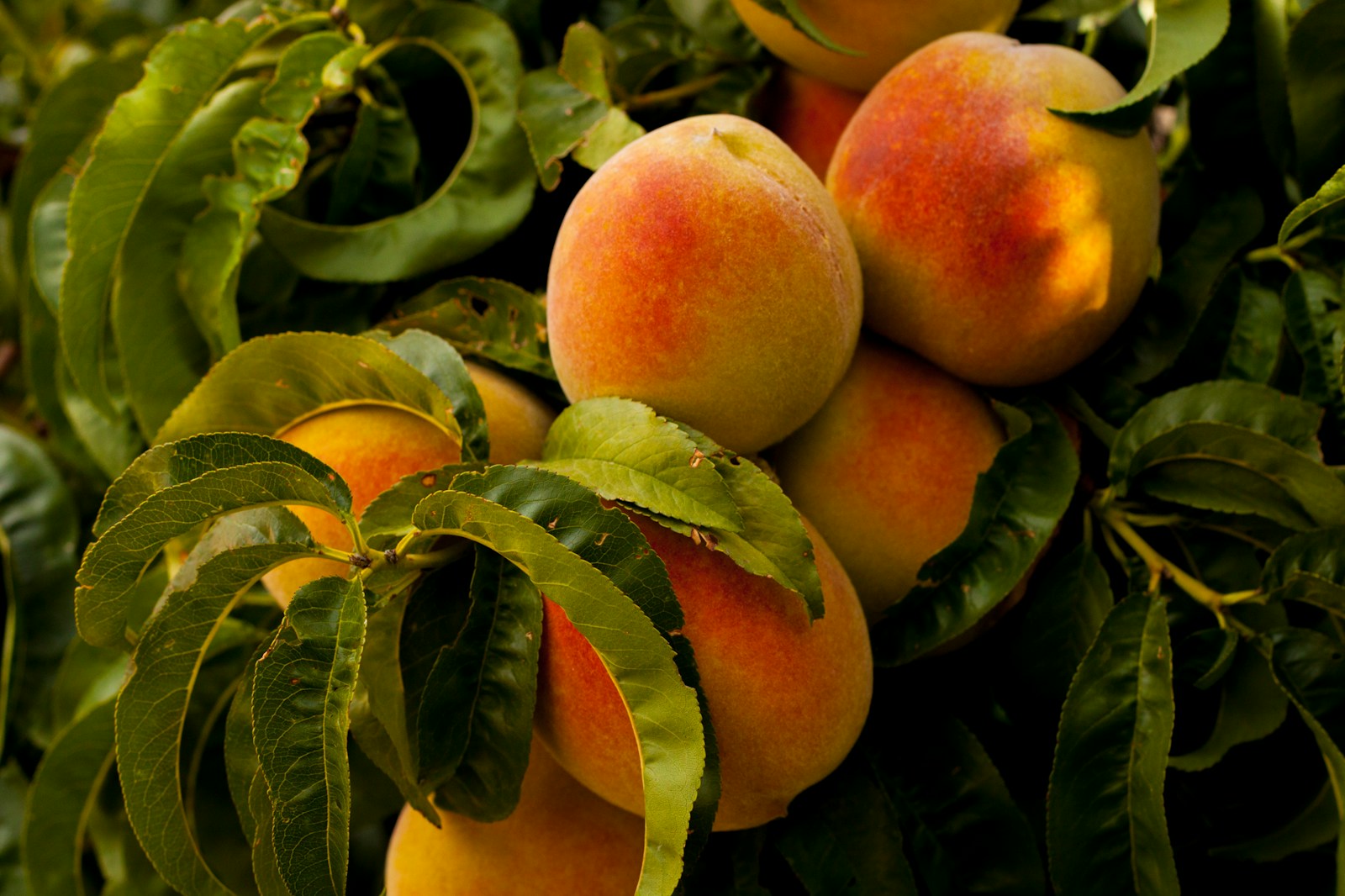
Peach (Prunus persica) is a small deciduous fruit tree that bears sweet, fuzzy stone fruit in summer. It fruits young, often in its third year, and one tree feeds a household because most varieties pollinate themselves. It also asks for more care than an apple or pear. Peaches need yearly pruning, fruit thinning and some disease control, and the trees are short-lived, often 12 to 20 years. Difficulty: moderate.
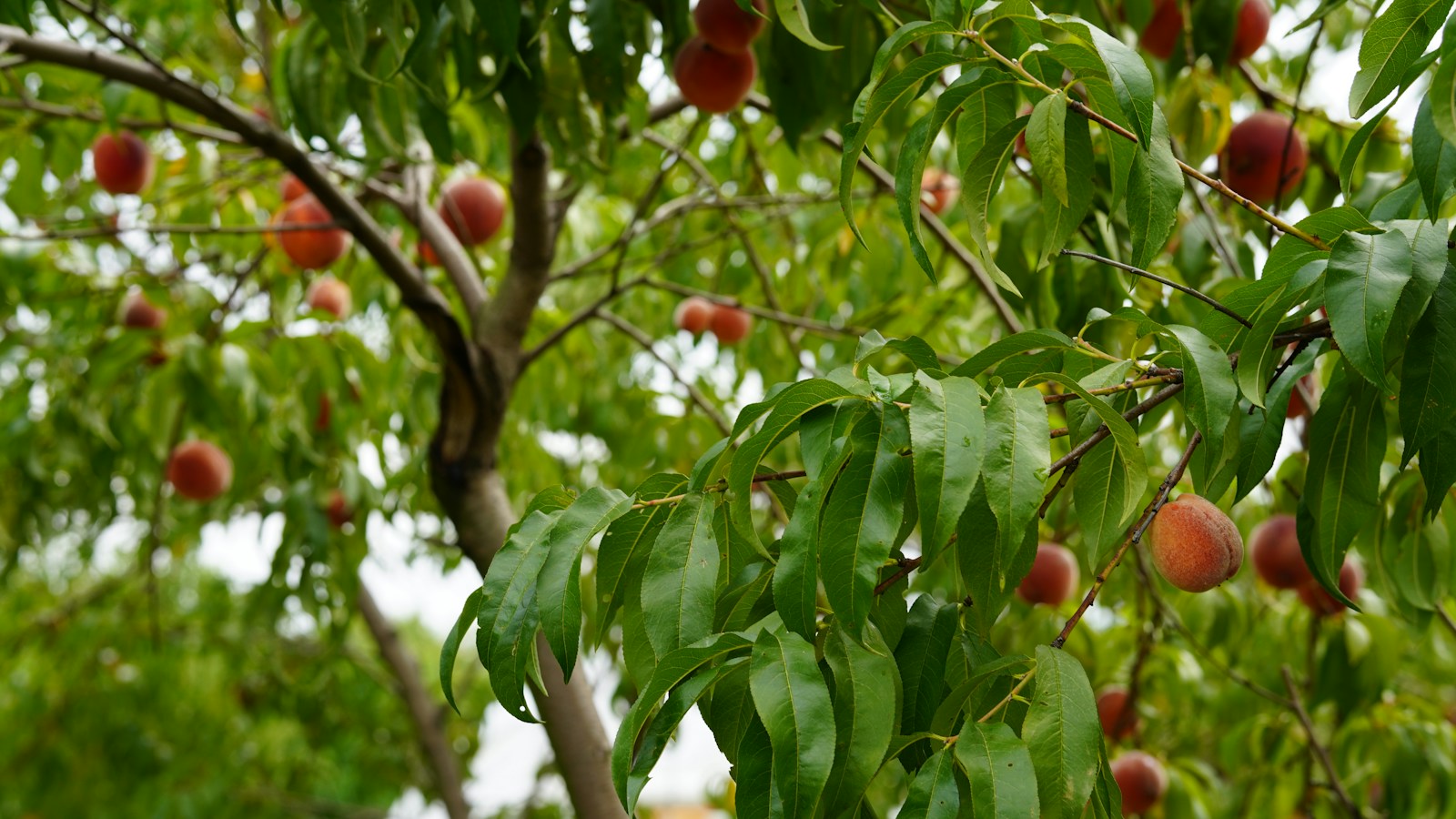
Sowing and planting
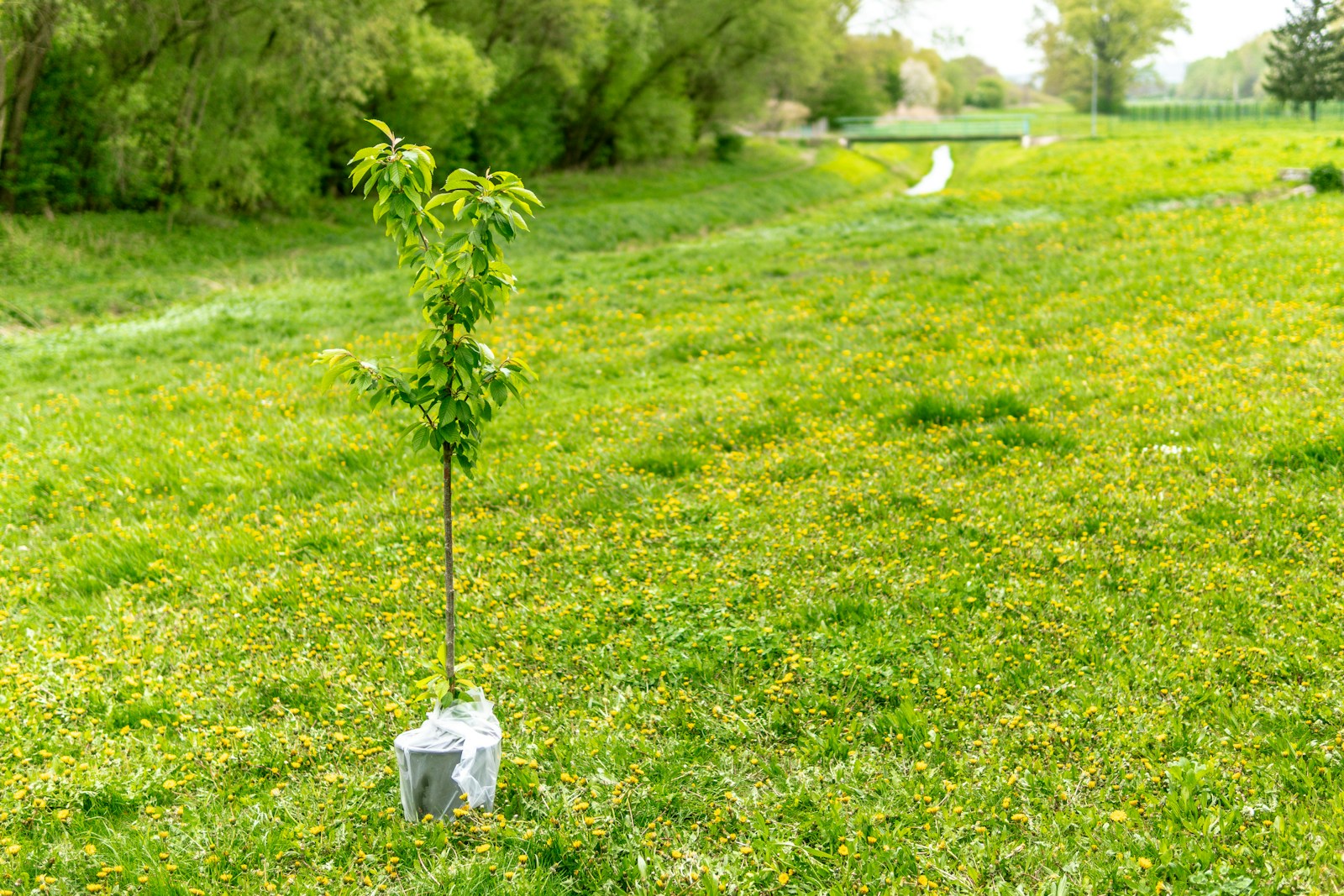
Peaches are not grown from seed if you want a known variety. A seedling rarely matches its parent. Buy a grafted tree instead, which is a named variety joined onto a separate rootstock. A one-year-old bare-root tree about 3 to 4 feet (90 to 120 cm) tall establishes faster than a large one.
Before you choose a variety, check its chill hours. This is the number of winter hours between roughly 32°F and 45°F (0°C and 7°C) that the tree needs before its buds open normally. Many eastern varieties need 600 to 900 hours. Low-chill varieties for mild winters need 150 to 400. Too little chill gives weak, patchy bloom. A low-chill tree in a cold region blooms too early and loses its flowers to frost.
Plant bare-root trees while they are dormant, in late winter or early spring once the soil can be worked. In mild-winter regions, fall planting also works. Container trees can go in through spring.
Choose the sunniest spot you have, on ground that drains well. Peach roots rot in wet soil. Avoid frost pockets, which are low spots where cold air settles, because peach blossom opens early.
- Dig a hole twice as wide as the roots and no deeper.
- Set the tree so the graft union, the bulge low on the trunk, sits 2 to 3 inches (5 to 8 cm) above the soil.
- Backfill with the soil you dug out, firm gently and water well.
- Cut the young tree back to about 24 to 30 inches (60 to 75 cm) tall. This forces low side branches, which become the frame of the tree.
- Mulch 2 to 3 inches (5 to 8 cm) deep, kept clear of the trunk.
Growing on
Watering. Water new trees weekly through their first summer. Established trees need about 1 inch (2.5 cm) a week. Steady moisture in the last few weeks before harvest gives larger fruit.
Feeding. Spread compost or a balanced fertilizer in early spring as buds swell. Stop feeding by midsummer. Late feeding pushes soft growth that winter cold kills.
Open-centre pruning. Peaches are trained to an open centre, also called a vase shape. In the first year, pick three or four strong, evenly spaced side branches as the main limbs. Remove the central upright shoot above them. The finished tree is a bowl with no leader, which lets sun and air reach the middle.
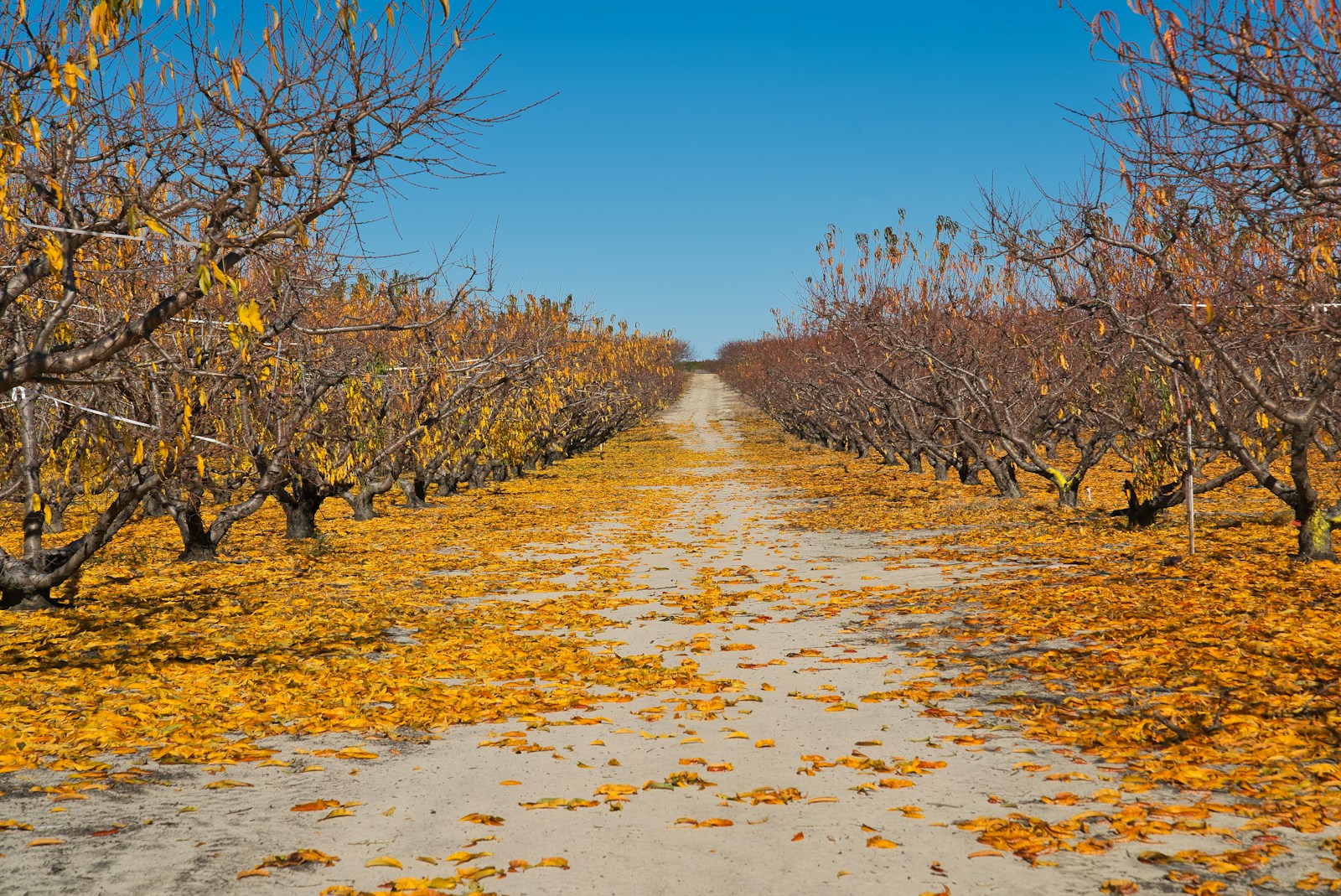
Peaches fruit only on wood that grew the previous year, so they need harder pruning than most fruit trees. Each year remove shoots growing into the centre, anything dead, crossing or straight up, and shorten the rest. Expect to take out a third or more of last year's growth. Prune in late winter to early spring, around the time buds swell, not in the depth of winter. Cuts made in dry weather near bloom heal faster and invite less disease. Use sharp, clean tools, and work from a stable footing or a proper orchard ladder.
Thinning fruit. A healthy peach sets far more fruit than it can ripen. About four to six weeks after bloom, when fruitlets are the size of a thumbnail, twist off the extras. Leave one fruit every 6 to 8 inches (15 to 20 cm) along each branch. It feels wasteful. Skip it and you get small, bland peaches and broken limbs.
Folk history. Peach trees stood in most old southern Appalachian homesteads, and not only for fruit. Anthony Cavender's Folk Medicine in Southern Appalachia records that mountain families brewed teas from the leaves or root bark for stomach and bowel complaints. They also laid cooked leaves on bruises and sprains as a poultice. This is history, not medical advice, and these preparations are not safe to copy.
Peach kernels, leaves and bark contain compounds that release cyanide. Never eat the kernel inside the stone, and do not make teas or remedies from leaves, twigs or bark. Keep wilted prunings away from livestock. The ripe flesh and skin are safe to eat.
Harvesting
Peaches ripen from early summer to early fall, depending on variety. Judge ripeness by the background colour, not the red blush. The skin behind the blush turns from green to yellow, or to creamy white on white-fleshed types. A ripe peach gives slightly at the shoulder and comes away with a gentle lift and twist.
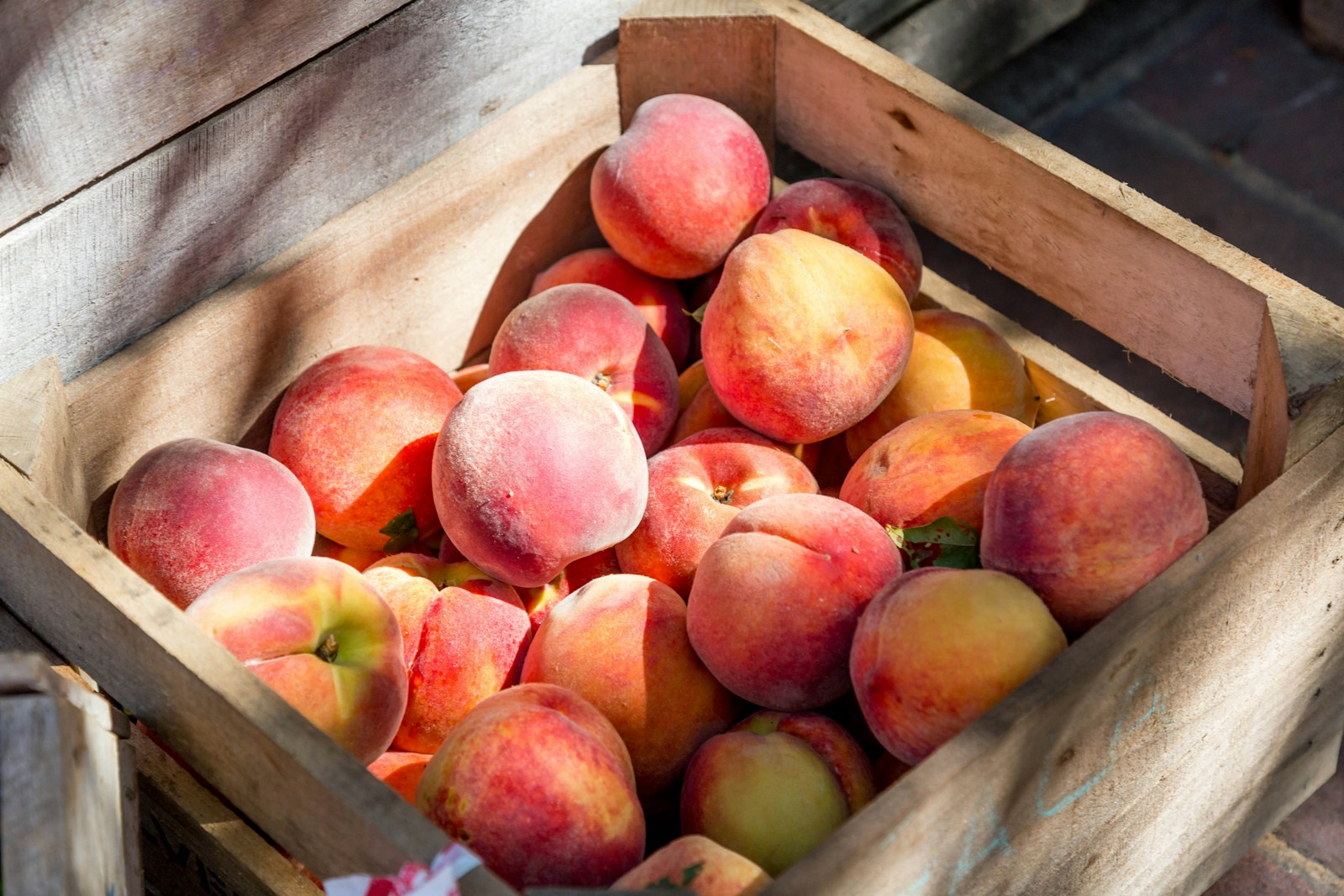
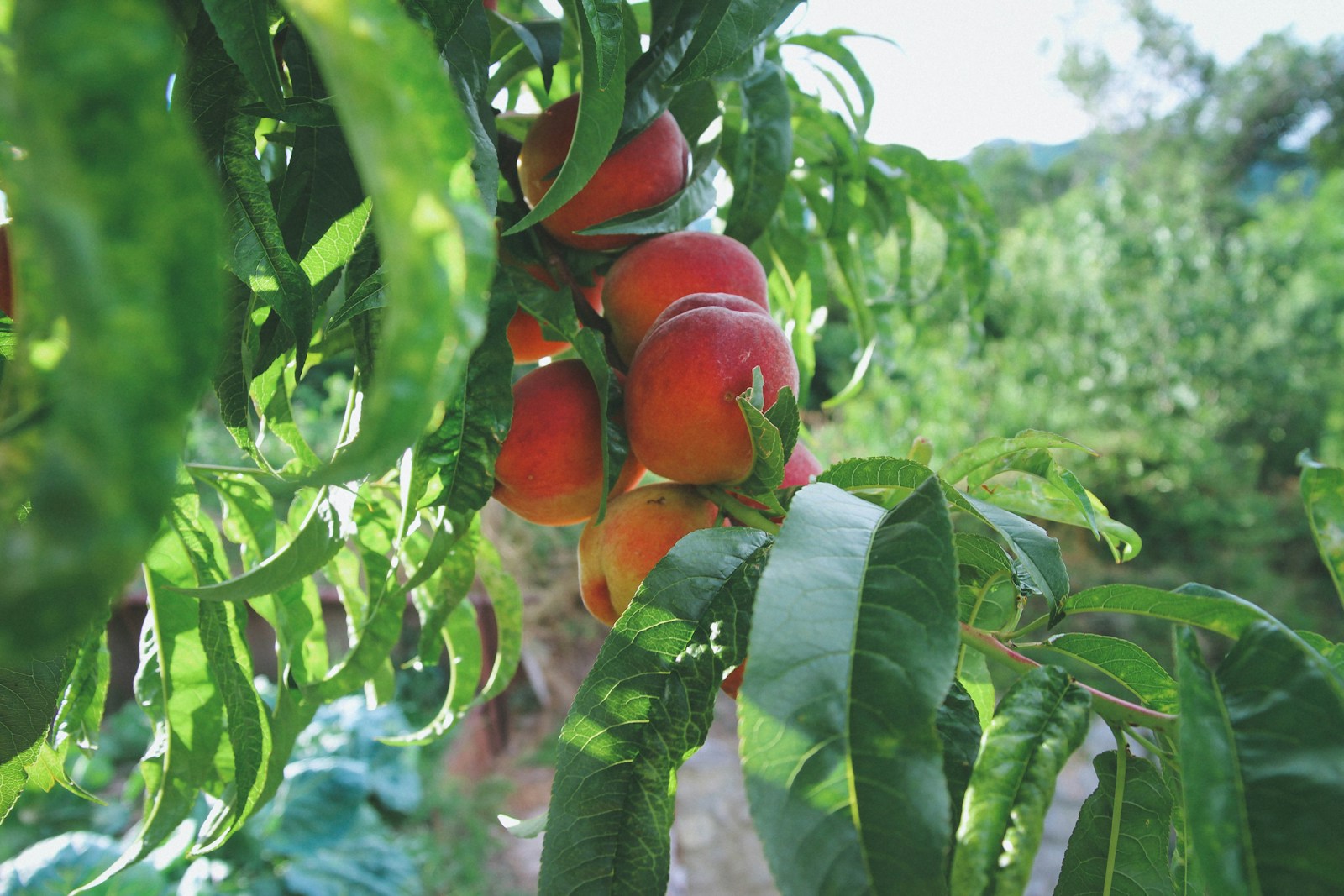
Fruit on one tree ripens over one to two weeks, so pick every couple of days. Handle peaches like eggs, because every bruise turns brown. Firm-ripe fruit finishes softening on a counter in a day or two. Fully ripe fruit keeps only a few days in the refrigerator, so plan to eat, freeze, can or dry the surplus quickly.
Problems and pests
Leaves pucker, thicken and turn red in spring
This is peach leaf curl, a fungal disease that infects buds in cool, wet weather. Distorted leaves later turn grey and drop. Once you see it, spraying does nothing that season. Water and feed the tree so it regrows, and thin the crop harder. Prevent it with one fungicide spray labelled for leaf curl, such as a copper product, applied after leaf fall or in late winter before buds swell. Follow the label exactly, and wear gloves and eye protection.
Gummy sap mixed with sawdust at the base of the trunk
Peachtree borers are moth larvae that tunnel under the bark near the soil line. Clear jelly without sawdust-like droppings is usually stress, not borers. Keep mulch and weeds away from the trunk and avoid wounding it with mowers or trimmers. On a small tree you can carefully probe the tunnels with a wire to kill the larvae.
Fruit rots on the tree with tan, fuzzy spores
Brown rot spreads fast in warm, humid weather. Remove every rotten and shrivelled fruit from the tree and the ground, including dried "mummies" left over winter. Thinning and open-centre pruning help by letting fruit dry quickly after rain.
Flowers killed by a late frost
Open blossom is damaged at a few degrees below freezing. Small trees can be covered overnight with frost cloth. Long term, choose a later-blooming or bud-hardy variety and a site where cold air drains away.
Varieties worth growing
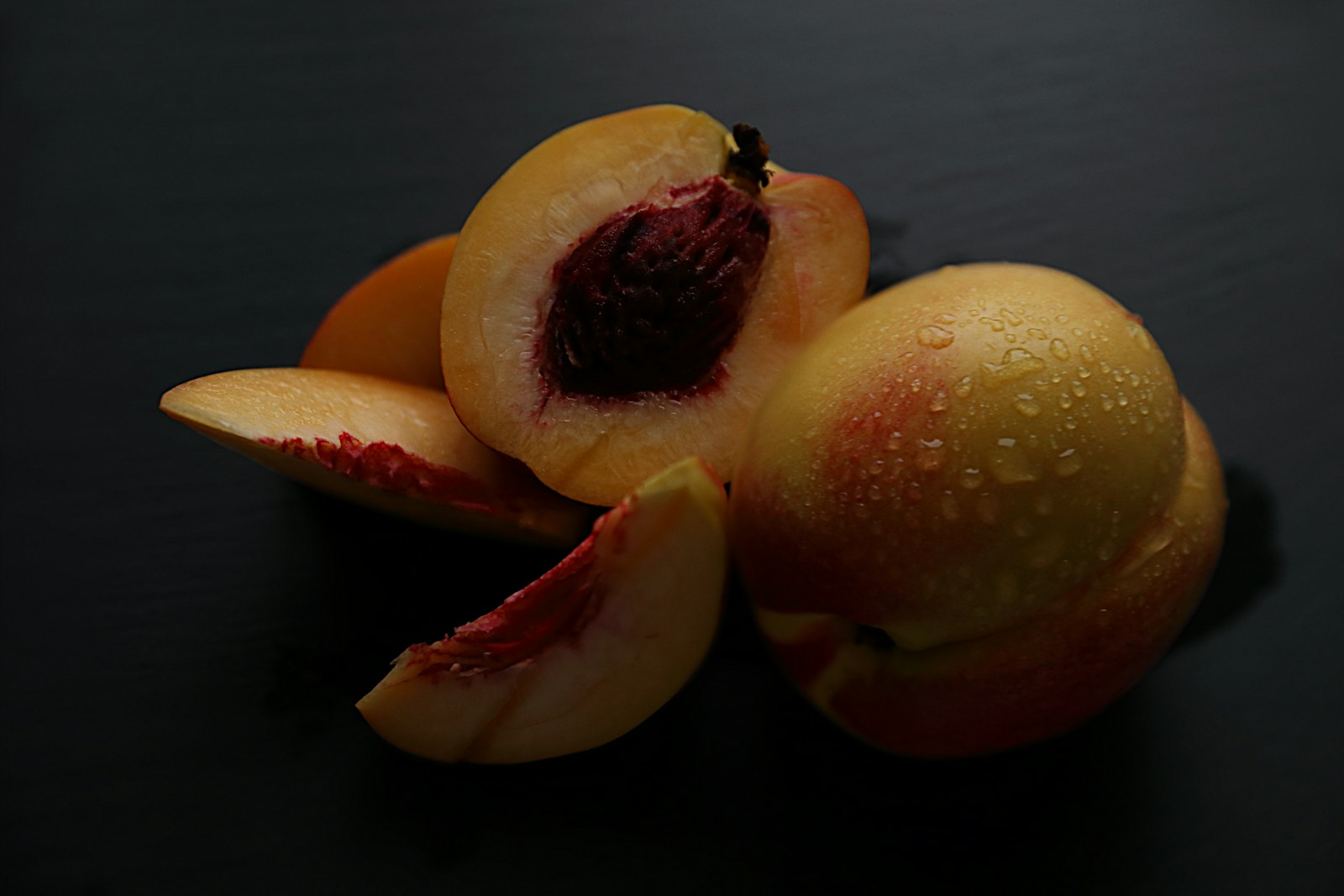
- Redhaven – the standard early to midseason yellow peach; reliable, and the fruit comes free of the stone when fully ripe.
- Reliance – very cold-hardy; the usual choice for the coldest peach regions.
- Contender – cold-hardy and late blooming, so it often escapes spring frost; yellow freestone.
- Elberta – the classic late, large, yellow freestone for canning and eating fresh.
- Belle of Georgia – old white-fleshed freestone with very sweet, aromatic fruit.
Nectarines are the same species as peaches, with smooth skin, and grow the same way. In mild-winter areas, ask a local nursery for low-chill varieties suited to your region.