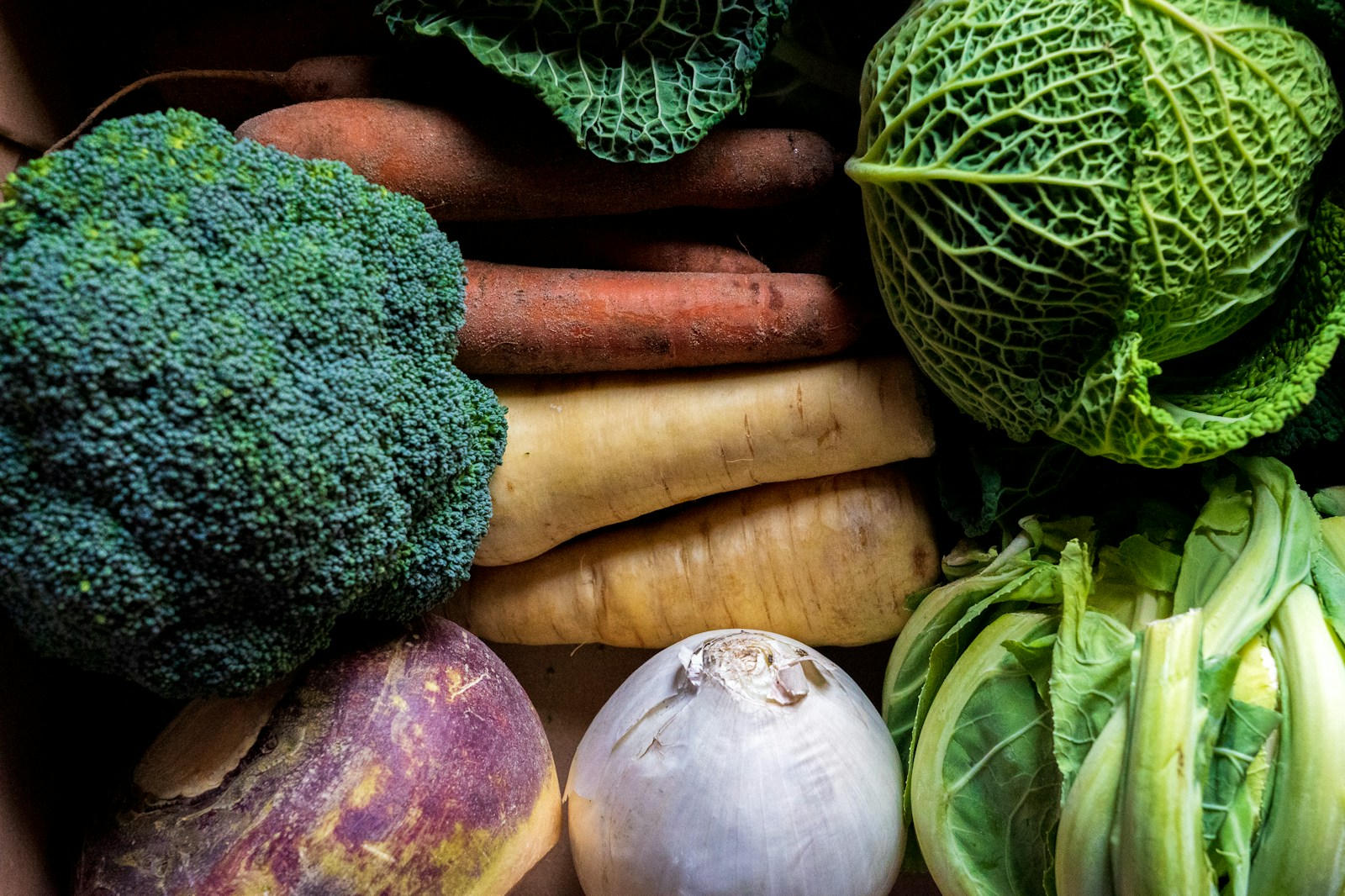
Parsnips are creamy white roots with a nutty sweetness that deepens after a few hard frosts. They need a long season and patience at sowing, but little care once they are up. Difficulty: easy to grow, fiddly to germinate.
Sowing and planting
Sow parsnips directly where they will grow. The long taproot (a single main root that grows straight down) resents being moved, so transplanting rarely works.
Sow outdoors from about two to three weeks before your last frost until a few weeks after it. In mild-winter areas such as USDA zones 8-10, you can also sow in autumn for a spring harvest. Seed sown into cold, wet soil often rots, so wait until the soil is workable and starting to warm.
Always use fresh seed. Parsnip seed loses viability quickly, often within a year. Old seed is the most common reason for a patchy row.
Prepare the bed by loosening the soil at least 12 inches (30 cm) deep. Remove stones and clods, which make roots fork. Do not add fresh manure before sowing, as it also causes forking. Soil manured for a previous crop is ideal.
Sow three or four seeds together every 4-6 inches (10-15 cm) along the row, ½ inch (1 cm) deep. This is called station sowing. Many gardeners sow a pinch of radish seed between the stations. The radishes sprout within days, mark the row and are pulled long before the parsnips need the space.
Germination is slow: expect two to four weeks. Keep the soil surface moist the whole time. A plank or strip of burlap laid over the row holds in moisture, but lift it daily and remove it as soon as seedlings appear. Once they have a few true leaves, thin each station to the strongest seedling. Snip the extras at soil level rather than pulling, which disturbs neighbours.
For stony or shallow soil, make holes with a crowbar or dibber about 12 inches (30 cm) deep and fill them with sifted soil or potting mix. Sow on top of each filled hole for long, straight roots.
Growing on
Keep the rows weeded while the seedlings are small. Young parsnips grow slowly and are easily smothered. Hoe shallowly to avoid nicking the roots.
Water during dry spells so the soil stays evenly moist. Sudden heavy watering after a long drought can split the roots. Mulch between rows with 2 inches (5 cm) of straw or shredded leaves to hold moisture and suppress weeds.
Parsnips rarely need feeding in reasonably fertile soil. Too much nitrogen produces lush leaves and hairy, forked roots. If growth looks pale and weak, water with a diluted liquid seaweed feed once or twice in early summer.
No staking or pruning is needed. Draw a little soil over any root shoulders that push above ground. This helps prevent greening and canker.
Parsnips grow well near onions, garlic and lettuce. Avoid sowing them where carrots, celery or parsley grew the year before, since they share the same pests and diseases.
The foliage contains a sap that can make skin burn and blister when it is then exposed to sunlight. The warning below explains how to handle it safely.
Handle parsnip foliage with care. The sap in parsnip leaves and stems can cause painful, blistering skin burns when exposed skin meets sunlight afterwards, much like wild parsnip. Wear gloves and long sleeves when weeding around, thinning or cutting back the foliage, especially on sunny days. Wash any sap off your skin with soap and water promptly.
Harvesting
Roots are usable once the shoulders reach about 1-2 inches (2.5-5 cm) across, usually from mid-autumn onwards. Flavour improves after two or three hard frosts, when some of the starch turns to sugar.
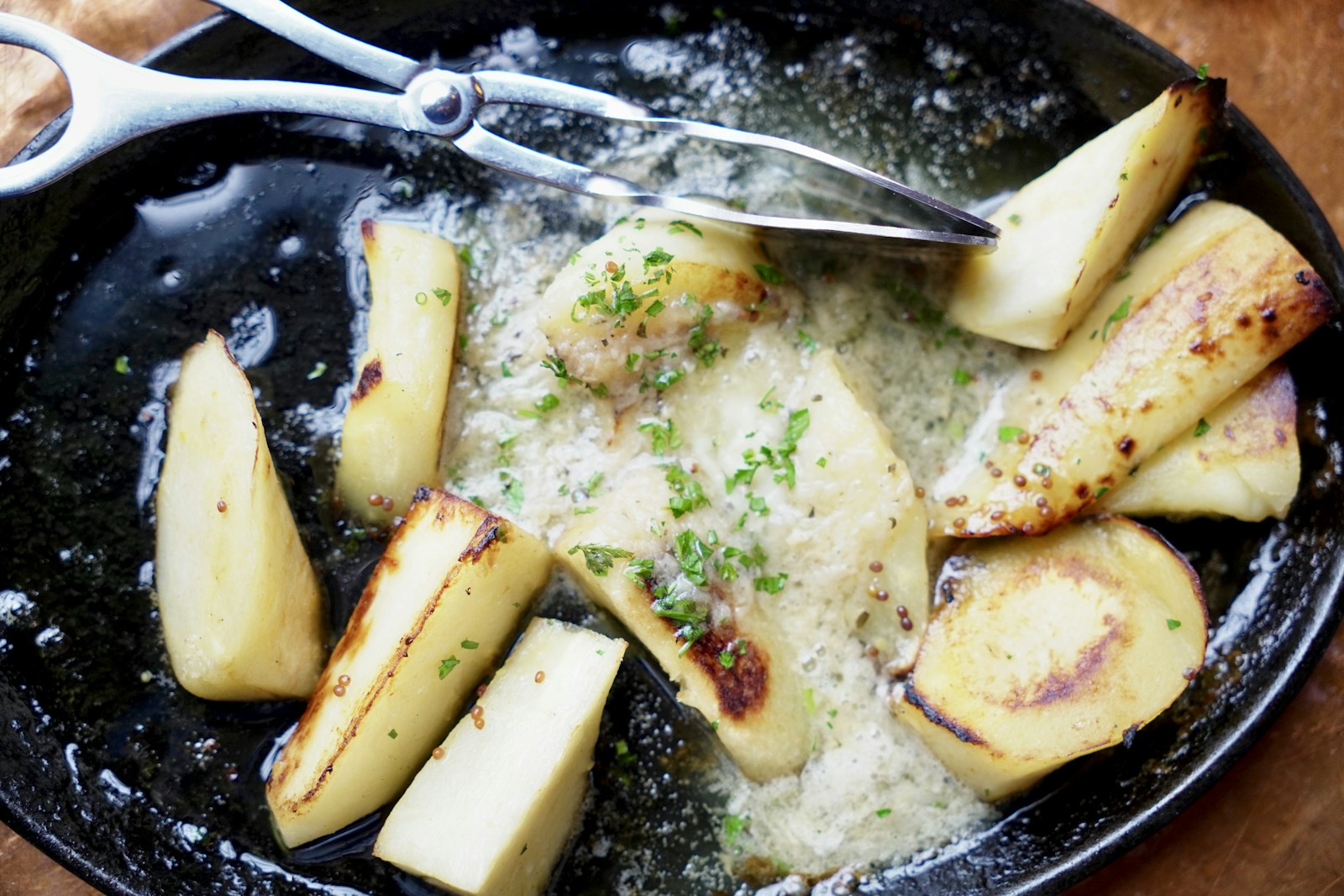
Loosen the soil beside the row with a garden fork before lifting. Pushing the fork in a few inches away from the roots avoids spearing them. Then ease each root out by its shoulders. Pulling on the leaves alone usually snaps the root.
In most gardens you can leave parsnips in the ground and dig them as needed through winter. Where the ground freezes solid, cover the row with 12 inches (30 cm) of straw or leaves so you can still dig. Harvest all remaining roots before new growth starts in spring. Once the plant sends up a flower stalk, the root turns woody.
For storage, cut the tops off to about ½ inch (1 cm) and leave the soil on. Keep roots in damp sand or sawdust in a cool shed or cellar at 32-40°F (0-4°C). They also keep for several weeks in a bag in the refrigerator.
Saving seed is possible because parsnips flower in their second year. Leave a few of the best roots in the ground over winter. Parsnips cross readily with wild parsnip, so seed saving is only worthwhile if there is none nearby. Wear gloves and long sleeves around flowering plants too.
Problems and pests
Seeds do not come up
The usual cause is old seed or soil that dried out during the long germination period. Buy fresh seed every year, sow a little thicker and keep the row surface moist until seedlings appear.
Orange-brown or black patches on the root shoulders
This is parsnip canker, a disease that enters through small wounds or cracks. Grow resistant varieties, avoid damaging roots when hoeing and keep the soil evenly moist. Earthing up the shoulders and later sowing, which gives smaller roots, also help. Rotate crops so parsnips do not follow parsnips.
Roots are forked or twisted
Stones, compacted soil or fresh manure divert the growing tip. Dig the bed deeply, remove stones and grow in soil manured the previous year. In heavy clay, use filled crowbar holes or a raised bed.
Rusty tunnels in the roots
Carrot rust fly larvae (the maggots of a small fly) burrow into the roots. Cover the crop with fine insect mesh from sowing, sealing the edges well. Rotating the bed and harvesting promptly also reduces damage.
Brown blisters on the leaves
Celery leaf miner larvae tunnel inside the leaves. Pinch off and destroy affected leaves as soon as you see them. Fine mesh keeps the adult flies out. Mature plants usually tolerate light damage.
Varieties worth growing
- 'Hollow Crown': a long-rooted heirloom with a sweet flavour, best in deep soil.
- 'Harris Model': smooth, white, tapering roots with good flavour.
- 'Gladiator': an F1 hybrid with vigorous growth and good canker resistance.
- 'Tender and True': a long heirloom valued for flavour and canker resistance.
- 'Albion': an F1 hybrid with white, smooth roots and good canker resistance.
- 'All American': a reliable, medium-long variety with a small core.