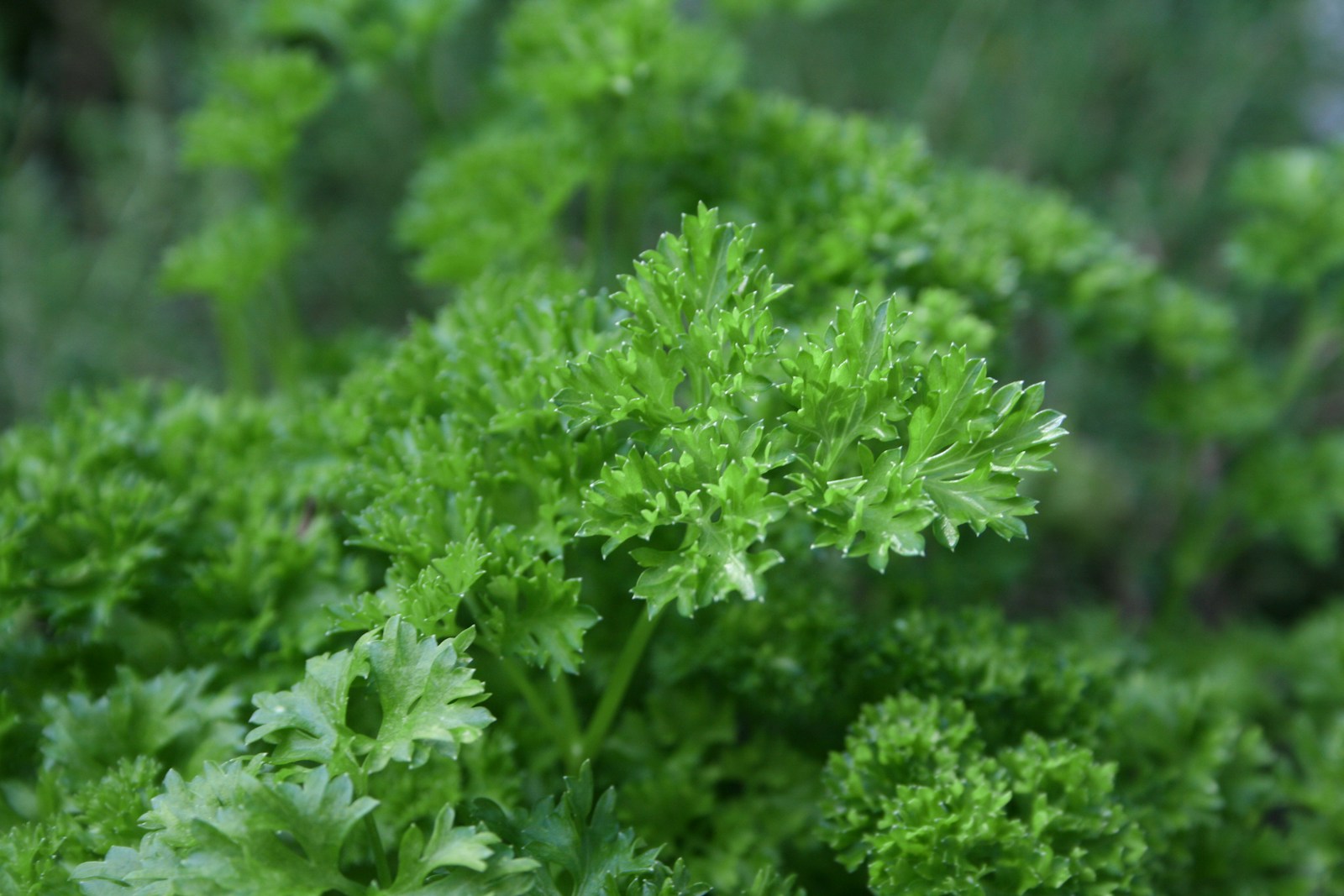
Parsley (Petroselinum crispum) is a leafy herb with a fresh, green flavour that suits almost any savoury dish. Flat-leaf parsley has broad leaves and a stronger taste. Curly parsley has frilly, tightly crimped leaves and a milder flavour. Both are easy to grow once they germinate, which is the slow part.
Sowing and planting
Parsley seed is slow and uneven to sprout. Soak it in warm water overnight before sowing to speed things up. Change the water once or twice if you can.
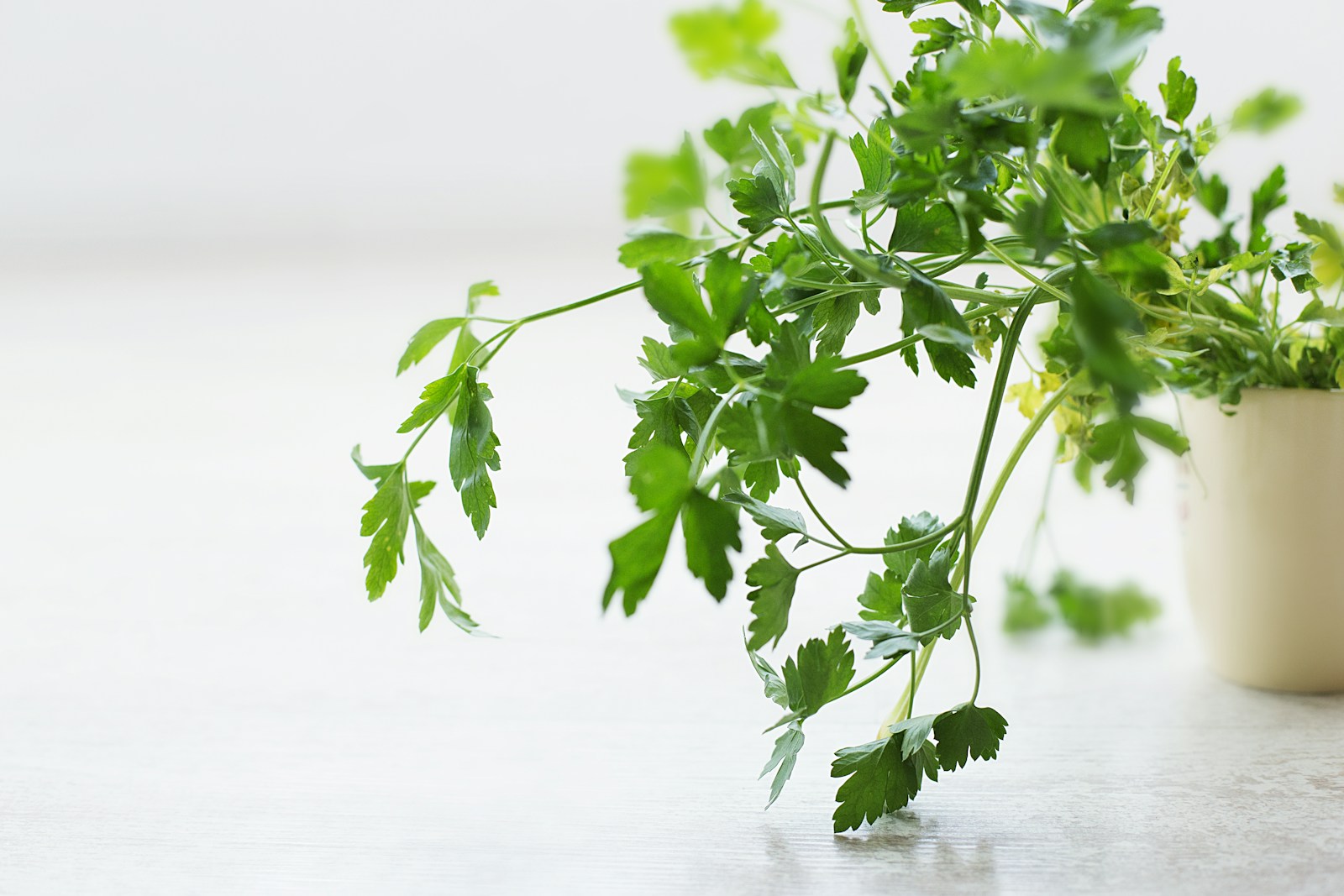
Start seed indoors 6 to 8 weeks before your last frost. Parsley grows a taproot (a single deep main root) and dislikes root disturbance. Sow two or three seeds per module or small pot rather than in an open tray. Cover them with 1/4 inch (6 mm) of compost and keep them at about 70°F (21°C). Keep the surface moist until seedlings appear, which can take up to five weeks. Thin to the strongest seedling in each module.
Harden off the young plants over 7 to 10 days. Hardening off means getting seedlings used to outdoor conditions a little at a time. Plant out around your last frost date, before the roots circle the pot. Space plants 8 to 12 inches (20 to 30 cm) apart.
You can also sow direct from 2 to 3 weeks before your last frost until early summer. Sow in rows 12 inches (30 cm) apart and keep the soil moist. Mark the row, because weeds often appear long before the parsley does. Thin seedlings in stages to their final spacing.
For a steady supply, make a second sowing in early to midsummer. This gives fresh plants for autumn and, in mild areas, through winter. In zones 8 and 9, an autumn sowing also works.
Parsley grows well in pots at least 8 inches (20 cm) deep to suit its taproot. Use a good multipurpose compost. Pots on a sunny windowsill give a small winter supply.
Growing on
Water regularly so the soil never dries out completely. Dry spells make parsley tough and bitter, and can push it into flower early. Pots need checking daily in hot weather.
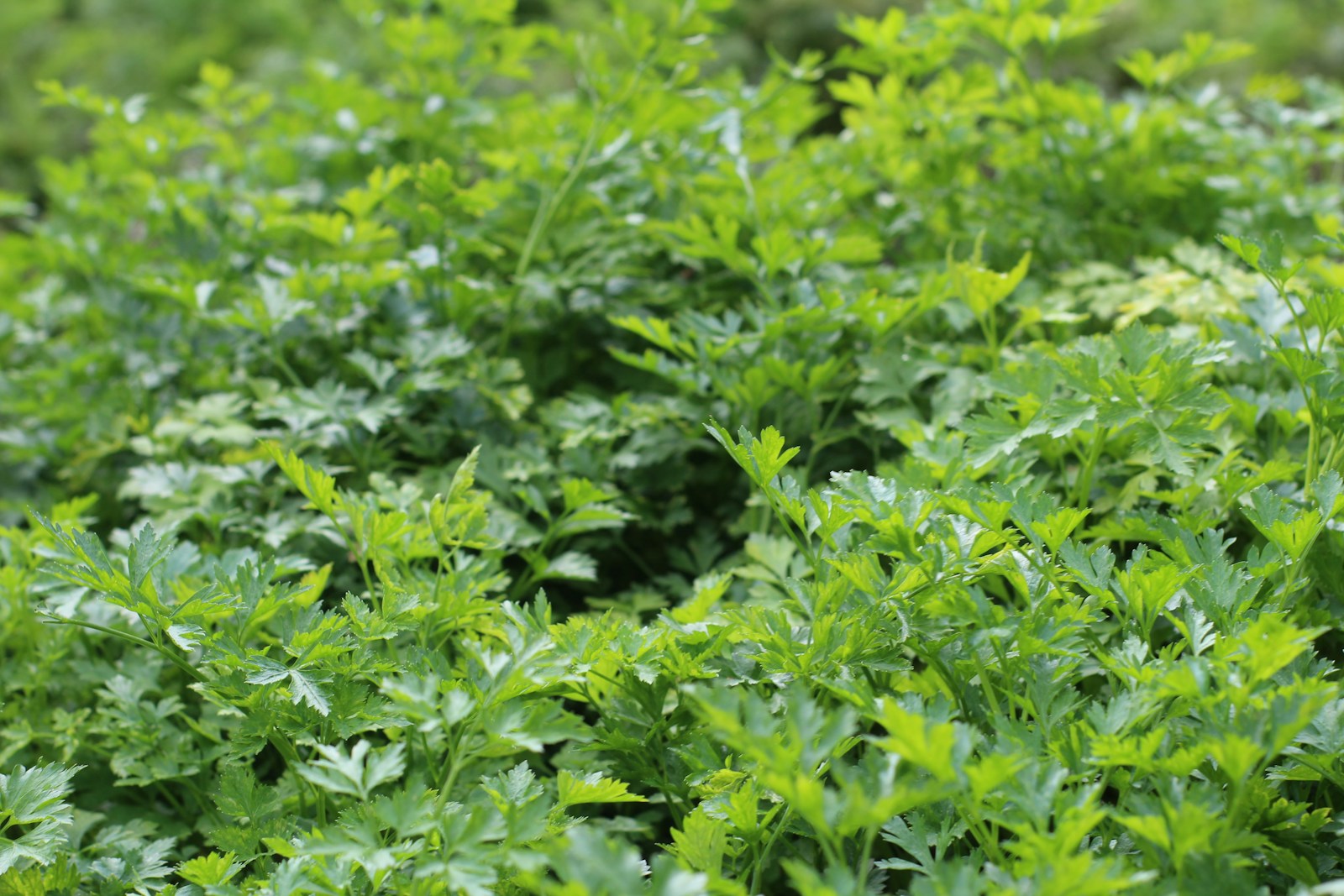
Feed every three to four weeks with a balanced liquid feed, or one high in nitrogen, once plants are growing strongly. Nitrogen encourages lush leaves. A mulch of compost around plants in beds holds moisture and feeds the soil. Keep mulch a little away from the crowns.
Parsley needs no staking or pinching. Regular picking keeps plants producing. Remove any yellow or damaged outer leaves to keep air moving around the crown.
As a biennial, parsley grows leaves in its first year. In its second spring it sends up a tall flower stem, then sets seed and dies. Leaves on flowering plants turn coarse and bitter. Most gardeners sow fresh plants each year, or each spring and summer, for a constant crop.
If you let a few plants flower, the flat heads of tiny yellow-green flowers attract bees, hoverflies and small parasitic wasps. These insects help control garden pests.
Parsley is also a host plant for swallowtail butterflies. In North America, black swallowtail caterpillars feed on it. They are striped green, black and yellow. Consider growing a few extra plants to share rather than removing them. You can gently move caterpillars onto a spare plant.
Companion notes are brief. Parsley grows well beside tomatoes, asparagus and roses. Keep it apart from carrots if carrot fly is a problem, since both are hosts.
Harvesting
Start picking once plants have 8 to 10 leaf stems and are about 6 inches (15 cm) tall. Always cut the outer stems first, close to the base. The new leaves grow from the centre, so never cut that. Take no more than a third of the plant at once.
Pick in the morning when leaves are crisp. Stand stems in a glass of water, or wrap them in a damp paper towel and keep them in the fridge. They stay fresh for about a week.
Freezing keeps parsley's flavour far better than drying. Chop the leaves and pack them into ice-cube trays with a little water or oil. You can also freeze whole sprigs in a bag and crumble them straight from frozen.
To dry parsley, hang small bunches in a warm, airy, shaded place, or lay leaves on a tray. Store crisp dry leaves in an airtight jar away from light. Dried parsley has a gentler flavour than fresh.
Use parsley in sauces, salads, soups, grain dishes and as a finishing herb. Flat-leaf is usually preferred for cooking. Curly is popular as a garnish and in salads.
To save seed, let a healthy second-year plant flower. Cut the heads once the seeds turn brown and dry, then rub them out over paper. Parsley can cross with other parsley types, so let only one type flower at a time.
Problems and pests
Seed never seems to come up
Parsley germinates slowly and the seed dries out easily. Soak seed overnight and keep the surface constantly moist.
Most parsley failures happen before the plants ever appear. Seed that dries out even briefly during its long germination often fails, so keep the soil damp for up to five weeks.
Leaves wilt and roots show brown tunnels
Carrot fly larvae tunnel into the roots. Cover plants with fine insect mesh from sowing. Sow away from carrots and thin in the evening to reduce the scent that draws the flies.
Brown spots with dark specks on leaves
This is septoria leaf spot, a fungal disease spread by water splash. Remove affected leaves and water the soil, not the foliage. Space plants for airflow and sow fresh plants each year.
Curled leaves and sticky shoots
Aphids cluster on young growth. Wash them off with a jet of water or rub them away. Ladybirds and hoverflies usually keep them in check.
Plants send up a tall stem and turn bitter
This is bolting, when a plant switches to flowering. It is normal in the second year, and stress from heat or drought can trigger it early. Keep plants watered and sow fresh each year.
Varieties worth growing
Flat-leaf parsley
- 'Gigante d'Italia' (Italian Giant): tall, vigorous flat-leaf parsley with large, richly flavoured leaves.
- 'Italian Plain Leaf': the standard flat-leaf type, reliable and full of flavour.
Curly parsley
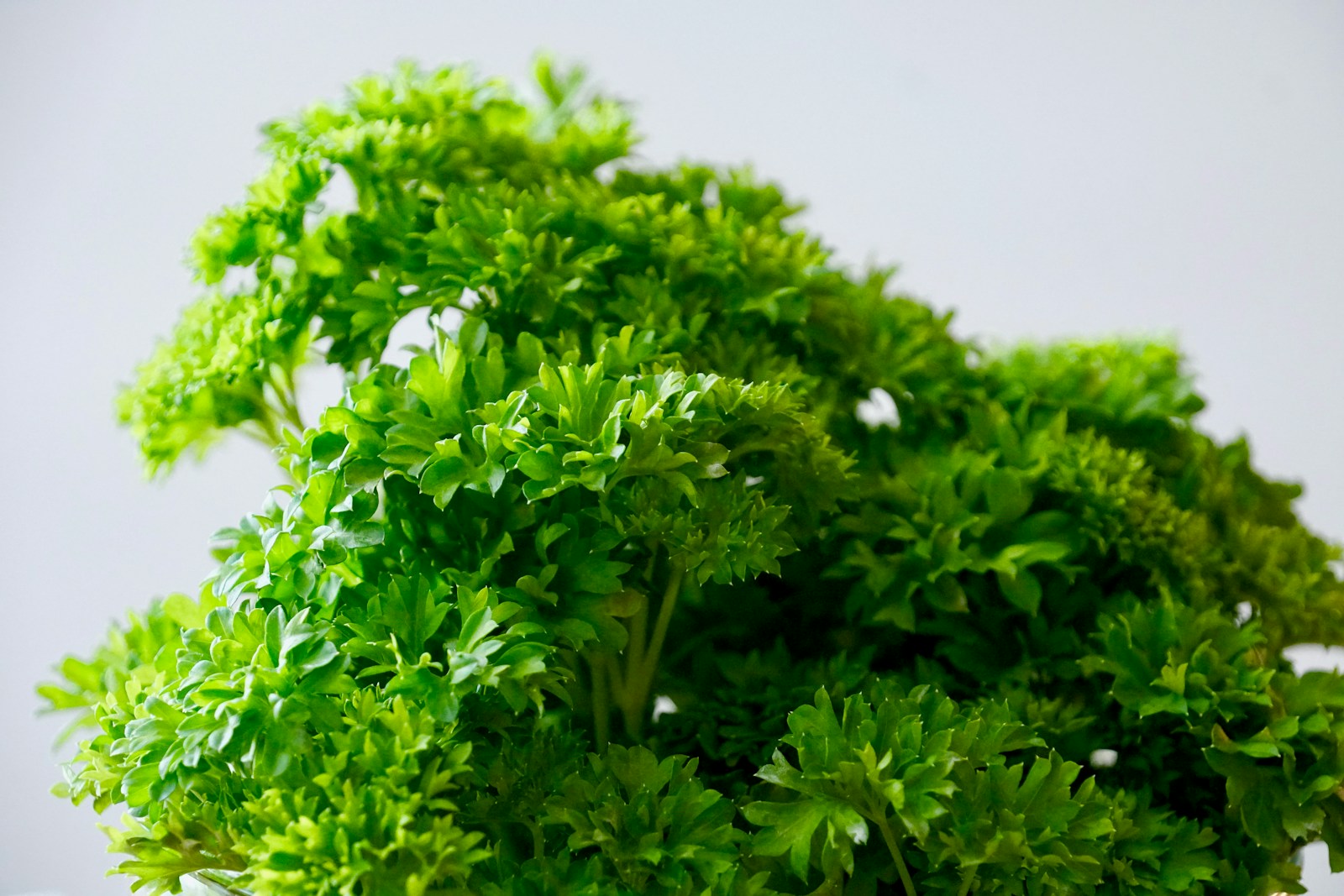
- 'Moss Curled': the classic tightly crimped curly parsley, compact and good in pots.
- 'Forest Green': dark green curly leaves on long stems, easy to pick.
Root parsley
- 'Hamburg': grown for its parsnip-like white root, with leaves usable as a herb.