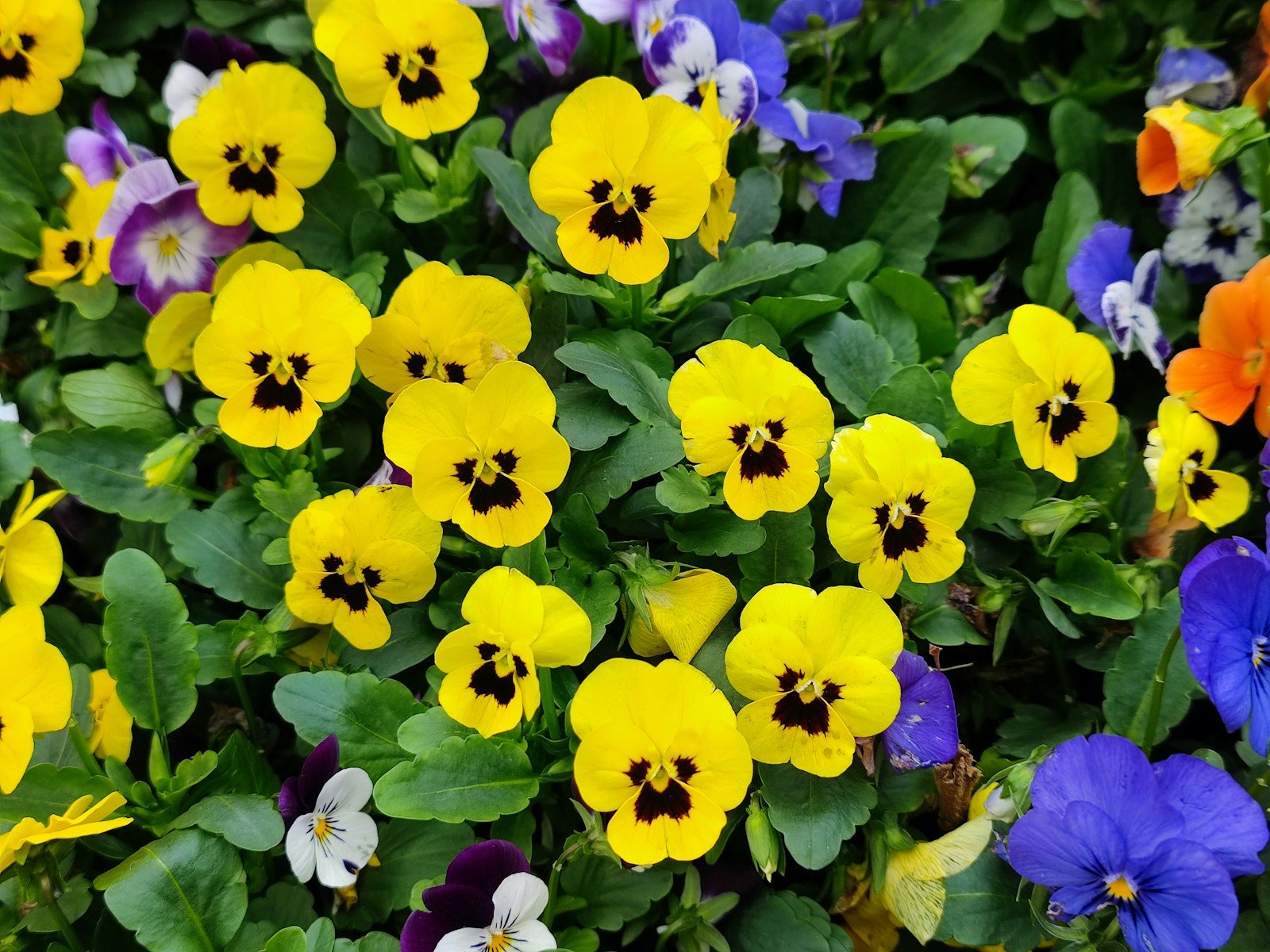
Pansies are cool-season flowers with flat, open faces, often marked with a dark central blotch. Their smaller cousins, violas, carry more flowers on tougher, more compact plants. Both fill beds, pots and window boxes when little else blooms. They are easy to grow from bought plants and moderately easy from seed.
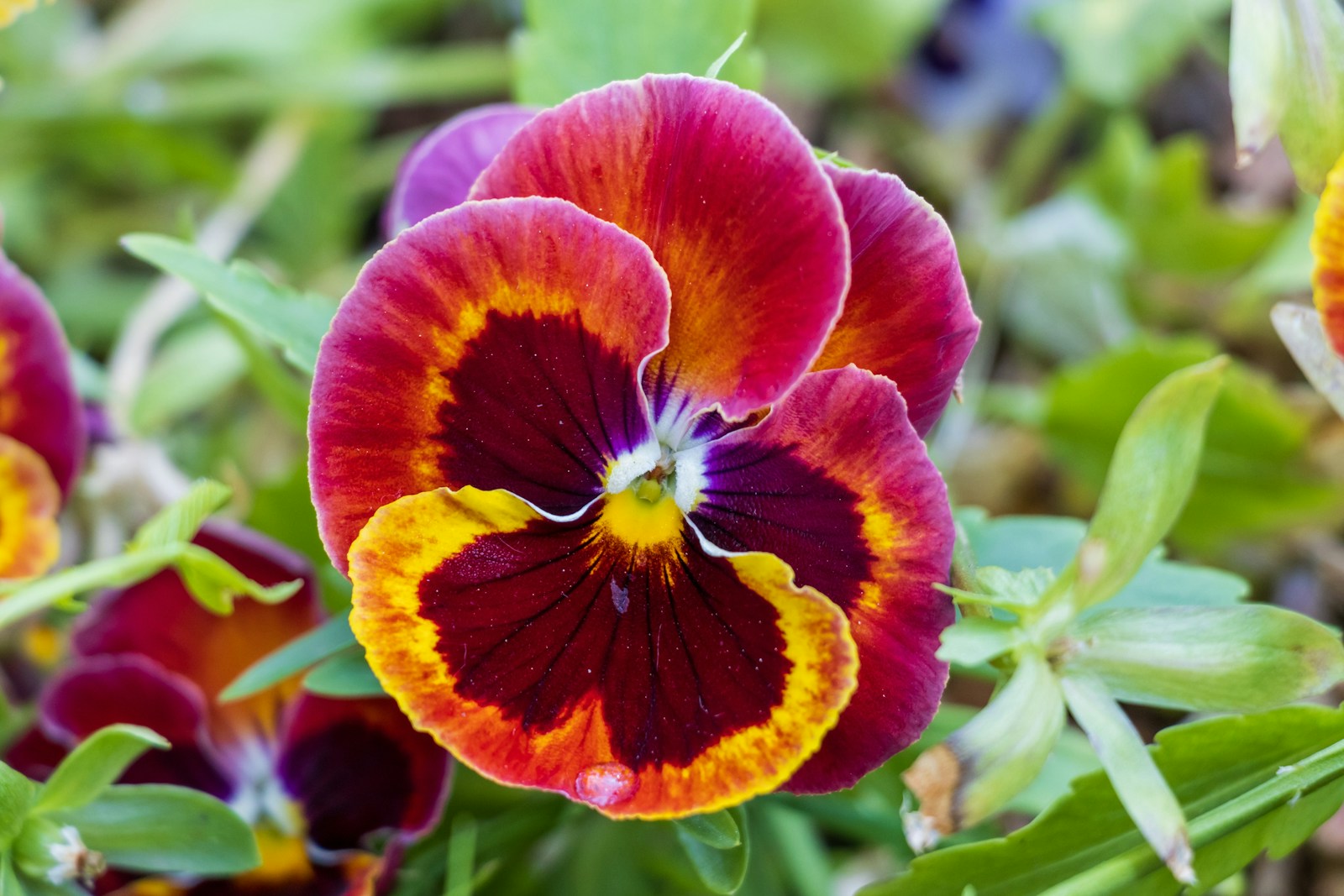
Sowing and planting
Timing depends on your winters. In mild areas, roughly USDA zones 7 to 10, plant pansies in fall. They settle in while the soil is still warm, bloom through fall, pause in the coldest spells and flower again strongly in spring. Plant about six weeks before your first frost, once daytime temperatures drop below about 80°F (27°C).
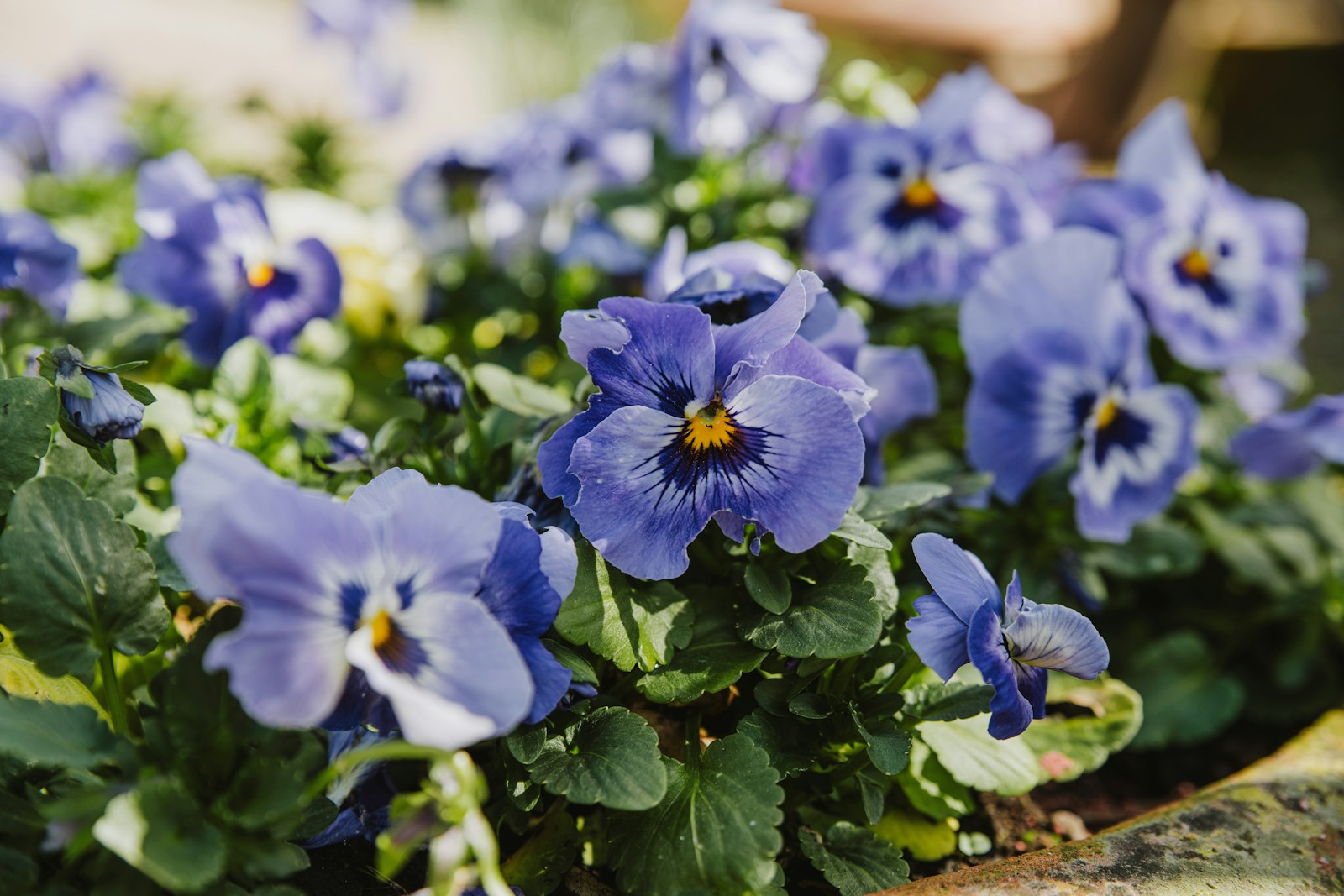
In colder zones, plant in early spring. Set plants out two to four weeks before your last frost, as soon as the soil can be worked. Pansies shrug off light frosts. In zones 5 and 6, fall-planted pansies often survive winter under a mulch and bloom again in spring.
To grow from seed for spring planting, sow indoors 10 to 12 weeks before your last frost. For fall planting, sow in midsummer, about 10 to 12 weeks before your first frost. Midsummer sowing is harder because the seed germinates poorly above 75°F (24°C). Sow in a cool room or basement.
Press the seed onto moist seed compost and cover it thinly. Pansy seed germinates best in darkness, so cover the tray with black plastic or cardboard. Seedlings usually appear in 7 to 14 days. Remove the cover as soon as they do and give them bright light. Grow them on at about 60°F (16°C) for sturdy plants.
Harden off seedlings before planting out. This means getting them used to outdoor sun, wind and cold over 7 to 10 days. Set plants at the same depth they grew in their pots. Water them in well.
Pansies suit beds, borders, containers and hanging baskets. They pair well with spring bulbs such as tulips and daffodils. Plant the bulbs first, then set the pansies over them.
Growing on
Keep the soil evenly moist but never soggy. Pansies have shallow roots and wilt fast in dry spells. Containers may need water every day or two in warm, windy weather. Water at the base of the plant in the morning so the leaves dry quickly.
Feed lightly and often. Work a balanced slow-release fertilizer into the soil at planting time. Plants in pots benefit from a liquid feed every two weeks while they bloom. In cold soil, pansies take up nitrogen poorly, so a feed made for cool-season flowers works better than a general one.
Spread 1 to 2 inches (2.5 to 5 cm) of mulch around the plants. It keeps roots cool and moist. In cold zones, add a loose layer of straw or evergreen boughs after the ground freezes. Remove it gradually as spring arrives.
Deadheading (removing faded flowers) is the most important job. Pinch or snip each spent bloom with its stalk before it sets seed. Plants that set seed slow down and stop flowering. Check every few days during peak bloom.
If plants get leggy, cut them back by about a third. New growth and fresh flowers usually follow within a few weeks, as long as temperatures stay cool.
Pansies need no staking. Violas often self-seed where they are happy, which many gardeners welcome.
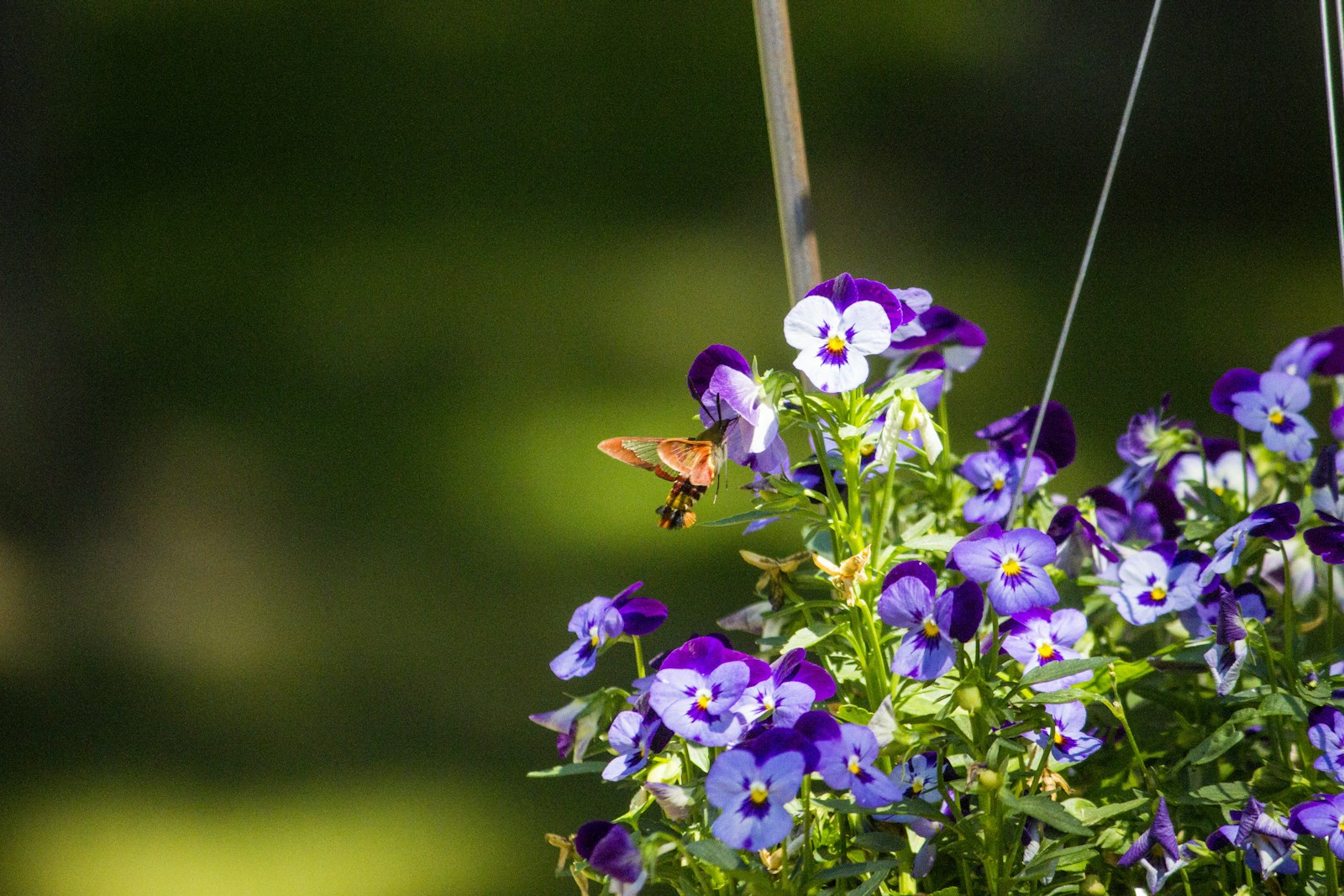
Bees visit pansies and violas, especially early in the season when other flowers are scarce. Violas also host the caterpillars of fritillary butterflies in some regions.
Harvesting
Pick flowers for small vases once they have fully opened. Cut them in the cool of the morning with a short stalk and place them straight into water. They suit tiny posies and egg-cup arrangements. Expect them to last a few days indoors. Regular picking works like deadheading and keeps plants blooming.
The flowers of pansies and violas are edible if grown without pesticides. Use them fresh on salads and cakes, or candy them with egg white and sugar. You can also press them flat between paper for crafts.
Saving seed is possible but the results vary. Most pansies are hybrids, so saved seed rarely comes true. Let a few pods ripen until they turn pale and point upward. Collect them just before they split and dry them in a paper bag.
Problems and pests
Heat is the most common reason pansies fail. Once nights stay above about 65°F (18°C), plants stretch, stop flowering and collapse. Plant for the cool seasons, not for summer.
Plants stretch and stop flowering
Rising summer heat is usually the cause. Give afternoon shade and keep the soil moist to buy a little time. In most gardens, pull the plants once they decline and replace them with heat-loving annuals. Plant pansies again in fall.
Leaves with holes and silvery trails
Slugs and snails feed at night, especially in damp, mild weather. Hand-pick them after dark, set beer traps sunk to soil level, or use iron phosphate pellets. Keep pellets away from children and pets, and follow the label.
Sticky, curled new growth
Aphids cluster on shoot tips and flower buds. Knock them off with a strong spray of water. For heavy infestations, use insecticidal soap on a cool, still day, covering the undersides of leaves. Wear gloves and keep it off open flowers visited by bees.
Gray fuzzy mold on flowers and leaves
This is gray mold (Botrytis), a fungus that thrives in cool, damp, crowded conditions. Remove affected flowers and leaves at once. Space plants well, water in the morning and avoid wetting the foliage.
Plants wilt and rot at the base
Root and crown rots strike in soggy, poorly drained soil. Affected plants rarely recover, so remove them. Improve drainage with compost or grow in raised beds and containers.
Varieties worth growing
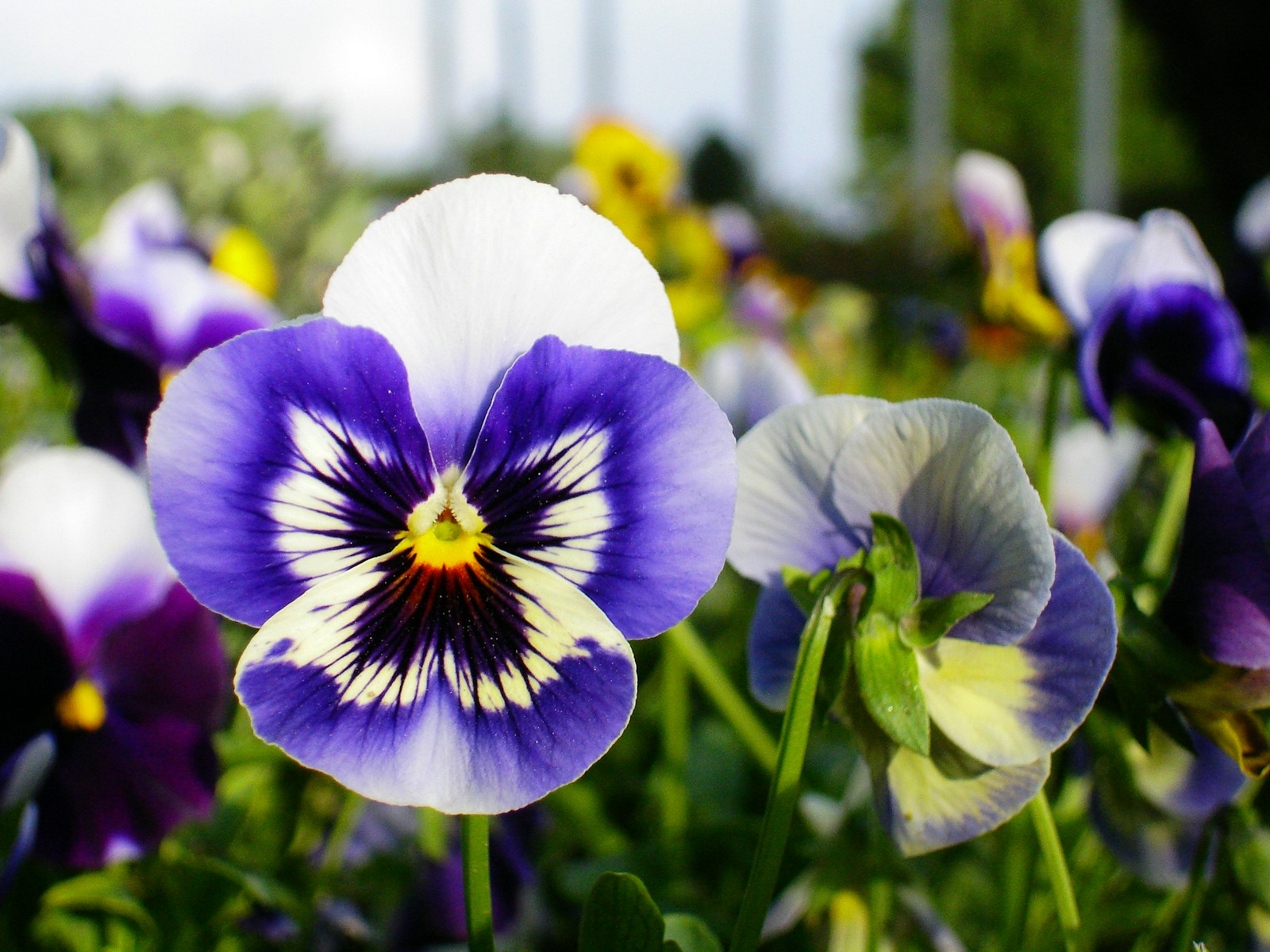
Large-flowered pansies
- Majestic Giants: very large blooms with bold dark blotches, in a wide color mix.
- Swiss Giants: a long-standing large-flowered mix with classic faced blooms.
- Delta series: medium-large flowers on compact plants, in many clear and blotched colors.
- Matrix series: bred for sturdy plants that keep flowering in changeable weather.
Trailing and cold-hardy pansies
- Cool Wave: spreading, trailing pansies for baskets and window boxes, with good cold tolerance.
Violas
- Sorbet series: small, profuse flowers in many shades on tough, compact plants.
- Penny series: compact violas with plenty of small blooms, useful for edging.
- Johnny Jump Up (Viola tricolor): tiny purple and yellow faces that self-seed freely.