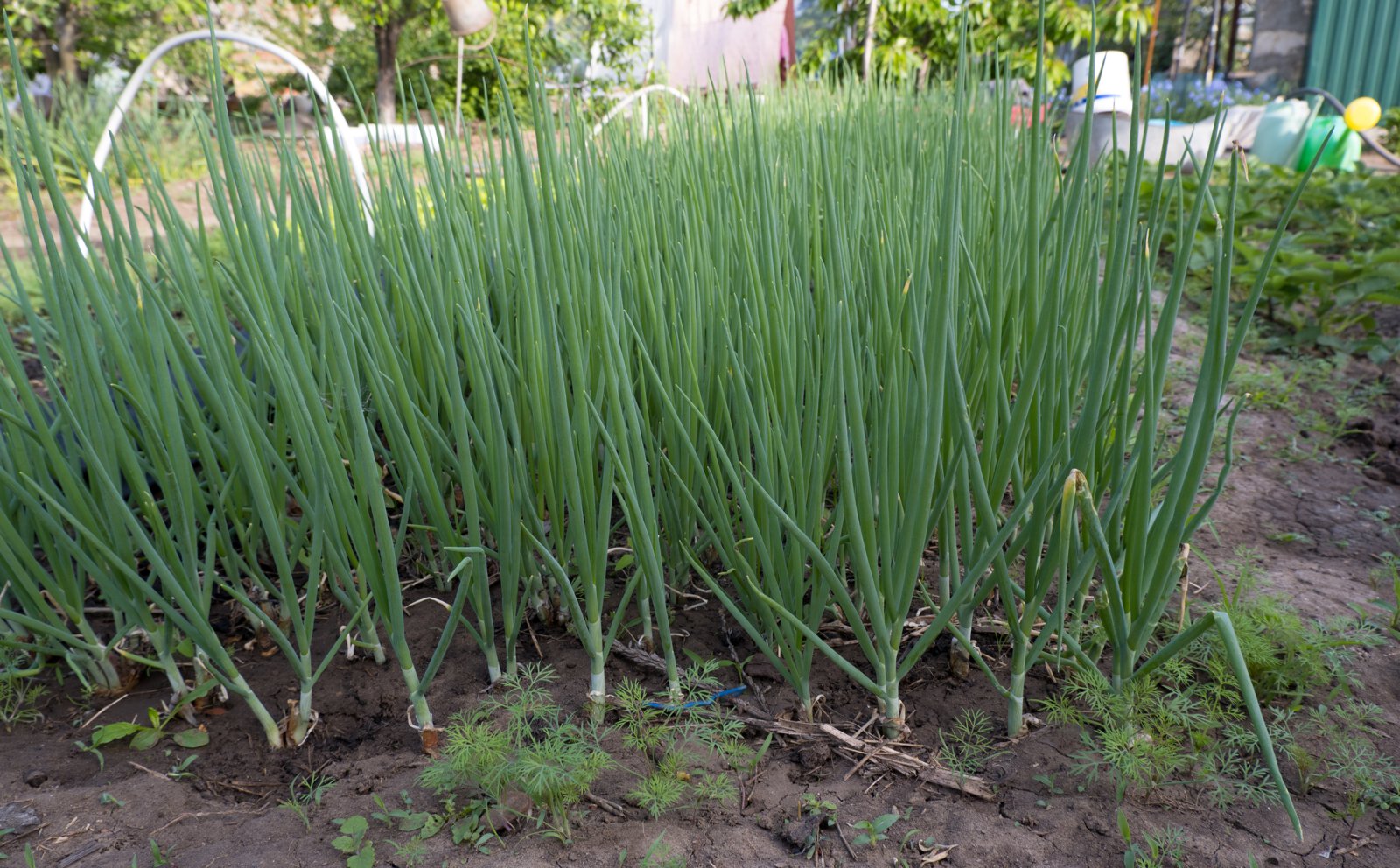
The garden onion (Allium cepa) is a cool-season bulb crop grown for its layered, pungent bulb and its green tops. It takes little space and stores for months. Onions are easy to grow once you choose a type that suits your day length. Get that choice wrong and the plants make small bulbs, however well you tend them.
In the southern Appalachian mountains the onion was as much a household remedy as a food. Anthony Cavender's Folk Medicine in Southern Appalachia records that mountain families ate onions raw or roasted during colds. They also laid warm poultices of fried or sliced onion on the chest, and some hung onions in a sickroom in the belief that they drew out a fever. The native wild onion (Allium canadense) was gathered and used in the same ways. This is history only. Nothing here is medical advice.
Sowing and planting
Start with day length. An onion grows leaves first, then begins to swell a bulb only when the days reach a certain length. Each leaf becomes one ring of the bulb, so a plant with many leaves at that moment makes a large bulb. The three groups are:
| Type | Bulbs when days reach | Where it suits |
|---|---|---|
| Short-day | 10 to 12 hours | The South, roughly below 35°N; planted in fall for a spring harvest |
| Intermediate-day (day-neutral) | 12 to 14 hours | The middle band, roughly 32° to 42°N; forgiving almost anywhere |
| Long-day | 14 to 16 hours | The North, roughly above 37°N; planted in early spring |
A long-day onion grown in the far South never gets long enough days, so it makes only leaves. A short-day onion grown in the North bulbs too early, while the plant is still tiny. If you garden in the overlap, intermediate-day varieties are the safe choice.
You can plant in three ways:
- Seed gives the widest choice of varieties and the best storage bulbs. Sow indoors 8 to 12 weeks before your last frost.
- Transplants are pencil-thin seedlings sold in bundles. They are the easiest route to large bulbs.
- Sets are small dry bulbs from the previous year. They are simple to plant but more likely to bolt (send up a flower stalk). Choose sets smaller than a dime, about 1/2 inch (1.5 cm) across.
Plant outside 4 to 6 weeks before your last expected frost, as soon as the soil can be worked. Harden off (gradually accustom to outdoor conditions) indoor-raised seedlings for a week first. In mild-winter areas, zone 7 and warmer, plant short-day types in fall to overwinter.
Choose a sunny bed with loose soil. Work in finished compost before planting, and avoid fresh manure. Set transplants about 1 inch (2.5 cm) deep and no deeper, because deep planting restricts the bulb. Push sets in so the tip just shows. Space plants 4 to 6 inches (10 to 15 cm) apart.
Onions, like all alliums, are toxic to dogs and cats, whether raw, cooked or dried. Keep pets away from the bed, harvested bulbs, trimmings and kitchen scraps.
Growing on
Onions have shallow, sparse roots and thin upright leaves. They cannot shade out weeds or reach far for water, so the work is mostly weeding and watering.
- Weed often and shallowly. Hand pull near the plants and hoe lightly between rows. Deep hoeing cuts the roots.
- Water steadily. Give about 1 inch (2.5 cm) a week, rain included. Dry spells lead to small, strong-flavored bulbs and split or doubled bulbs.
- Mulch lightly. A thin layer of straw or shredded leaves holds moisture and slows weeds. Pull it back from the bulbs as they swell so they can dry.
- Feed early. Onions need nitrogen while they are making leaves. Side-dress (scatter fertilizer along the row) with a nitrogen-rich feed every 2 to 3 weeks after planting. Stop once the bulbs start to swell and push the soil aside. Late nitrogen gives thick necks and poor storage.
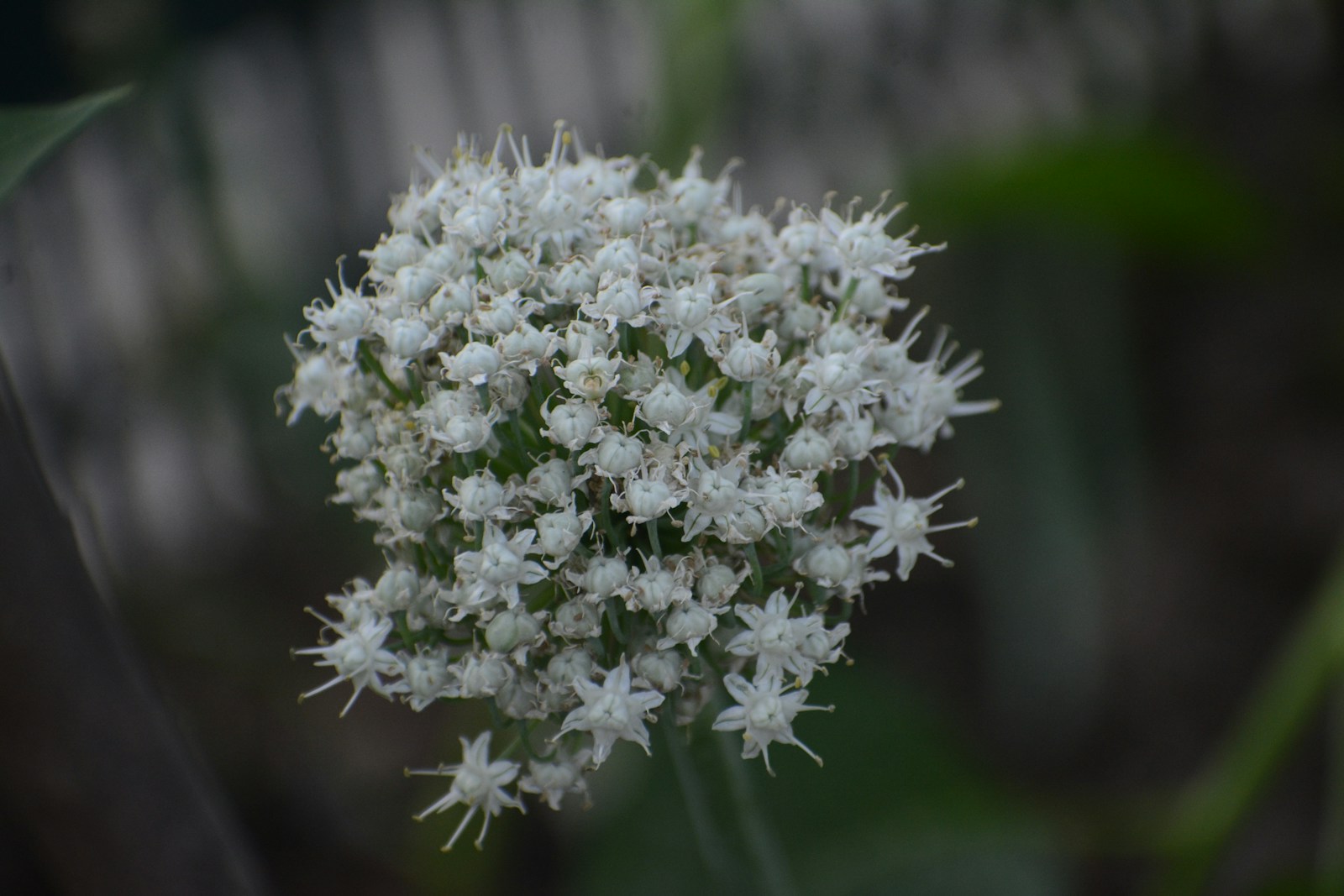
If a plant sends up a round flower stalk, it has bolted. A cold spell after the plants reach pencil thickness is the usual cause. Pull that onion and eat it soon.
Harvesting
Pull green onions whenever they are big enough to use.
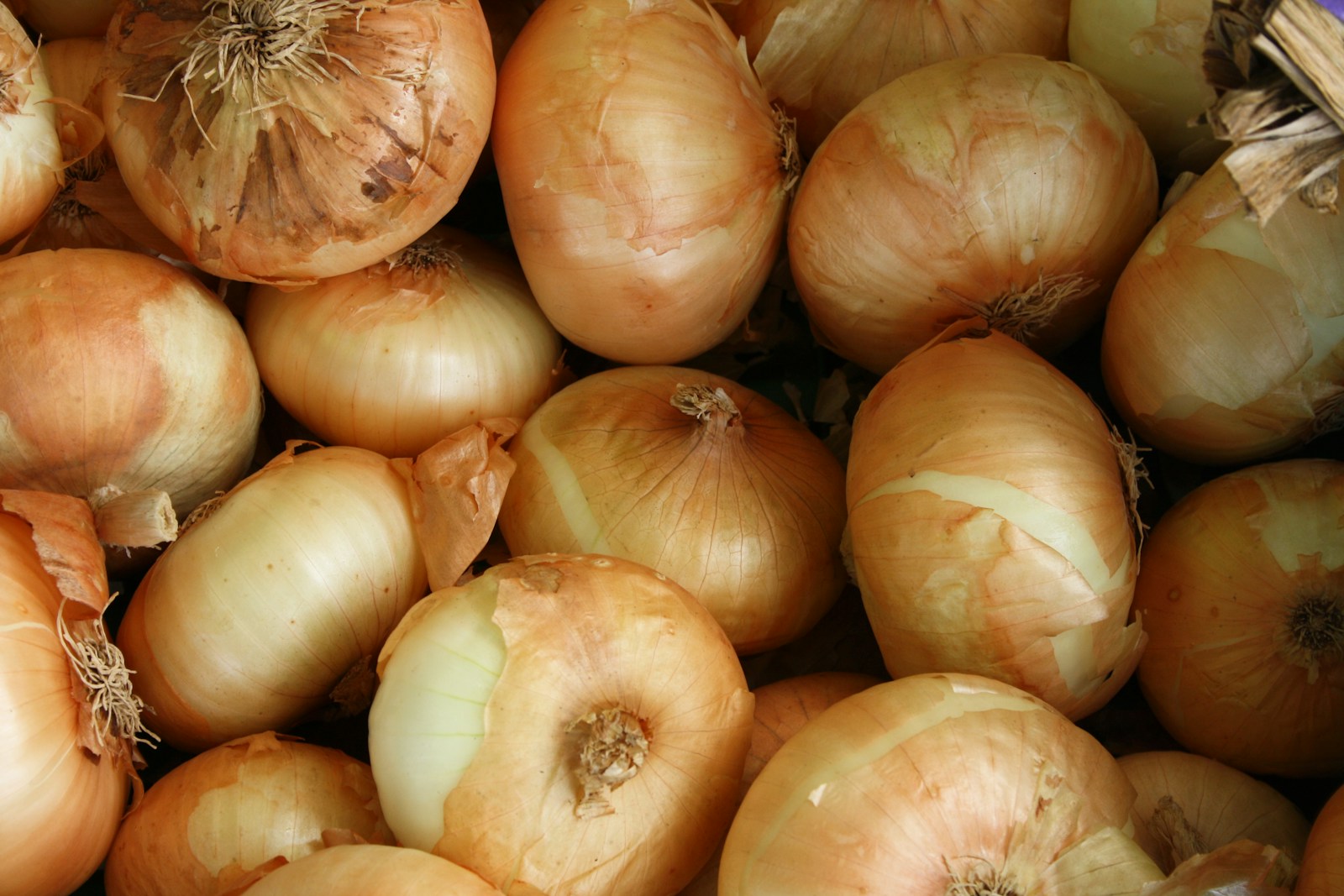
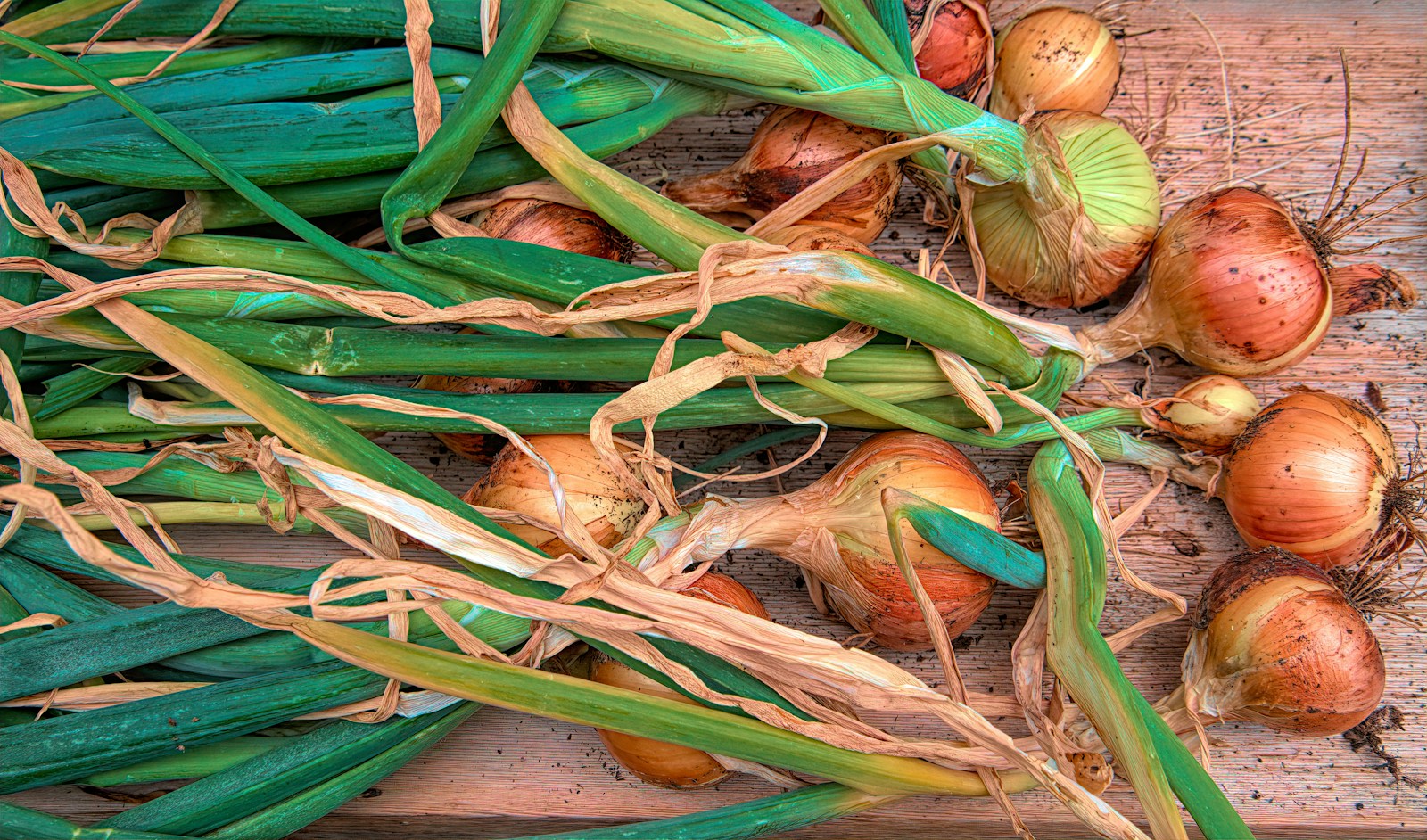
For storage, wait until the tops yellow and fall over on their own. When half to three quarters of the tops are down, stop watering. About a week later, loosen the soil with a fork and lift the bulbs on a dry day.
Cure (dry for storage) the bulbs before you put them away. Spread them in a single layer somewhere warm, shaded and airy, such as a porch or an open shed. Leave them for 2 to 3 weeks, until the necks are tight and dry and the outer skins rustle. Then trim the roots and cut the tops to about 1 inch (2.5 cm), or braid the dry tops instead.
Store in mesh bags or shallow crates in a cool, dry, dark place. Aim for 32 to 40°F (0 to 4°C) with good air movement. Use thick-necked or bolted bulbs first. Pungent long-day storage types often keep for 6 months or more. Mild, sweet onions hold more water and usually keep only 1 to 2 months.
Problems and pests
Silvery streaks and blotches on the leaves
Onion thrips are tiny, slender insects that rasp the leaf surface. They hide deep in the leaf folds and are worst in hot, dry weather. Keep plants well watered and knock thrips back with a firm spray of water. Insecticidal soap helps in a heavy attack. Follow the label and wear gloves when you mix or spray it.
Plants wilt and the bulb is tunneled and rotting
Onion maggots are the larvae of a small gray fly. They bore into the base of the plant, mostly in cool, wet springs. Cover the bed with floating row cover right after planting, and seal the edges. Rotate onions to fresh ground each year and clear every scrap of the crop at harvest.
Pale patches on leaves with gray-purple fuzz in damp weather
This is downy mildew, a disease that spreads in cool, humid spells. Space plants for air movement and water at soil level early in the day. Remove badly hit leaves, and keep onions and their relatives out of that bed for 3 to 4 years.
Yellow, dying leaves and white fluffy mold at the base
White rot is a soil fungus that forms tiny black specks on the bulb and survives in soil for many years. There is no cure in a home garden. Lift and bin affected plants with the soil around them, never compost them, and stop growing alliums in that spot.
Varieties worth growing
- Walla Walla - a large, very mild, sweet long-day onion. It keeps only a month or two.
- Yellow Sweet Spanish - a big, mild long-day yellow onion with moderate storage life.
- Copra - a firm, pungent long-day yellow hybrid known for keeping through winter.
- Candy - an intermediate-day hybrid that bulbs well across a wide range of latitudes. A good first onion.
- Texas 1015Y (Texas Supersweet) - a large, sweet short-day yellow onion for southern gardens.
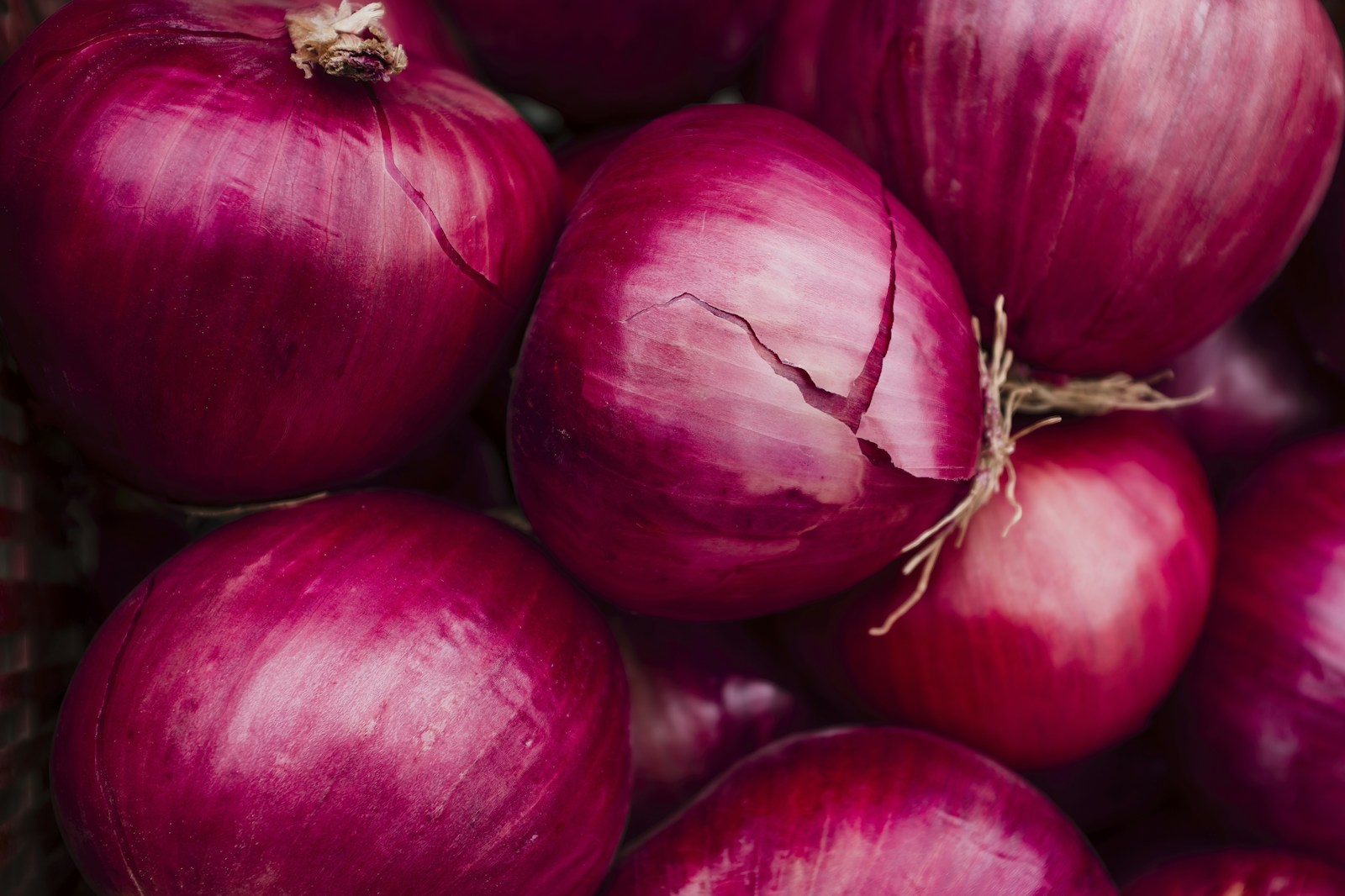
- Red Burgundy - a short-day red onion with mild flesh, good for slicing raw.
Seed catalogs list the day-length group beside each variety. Check it before you buy.