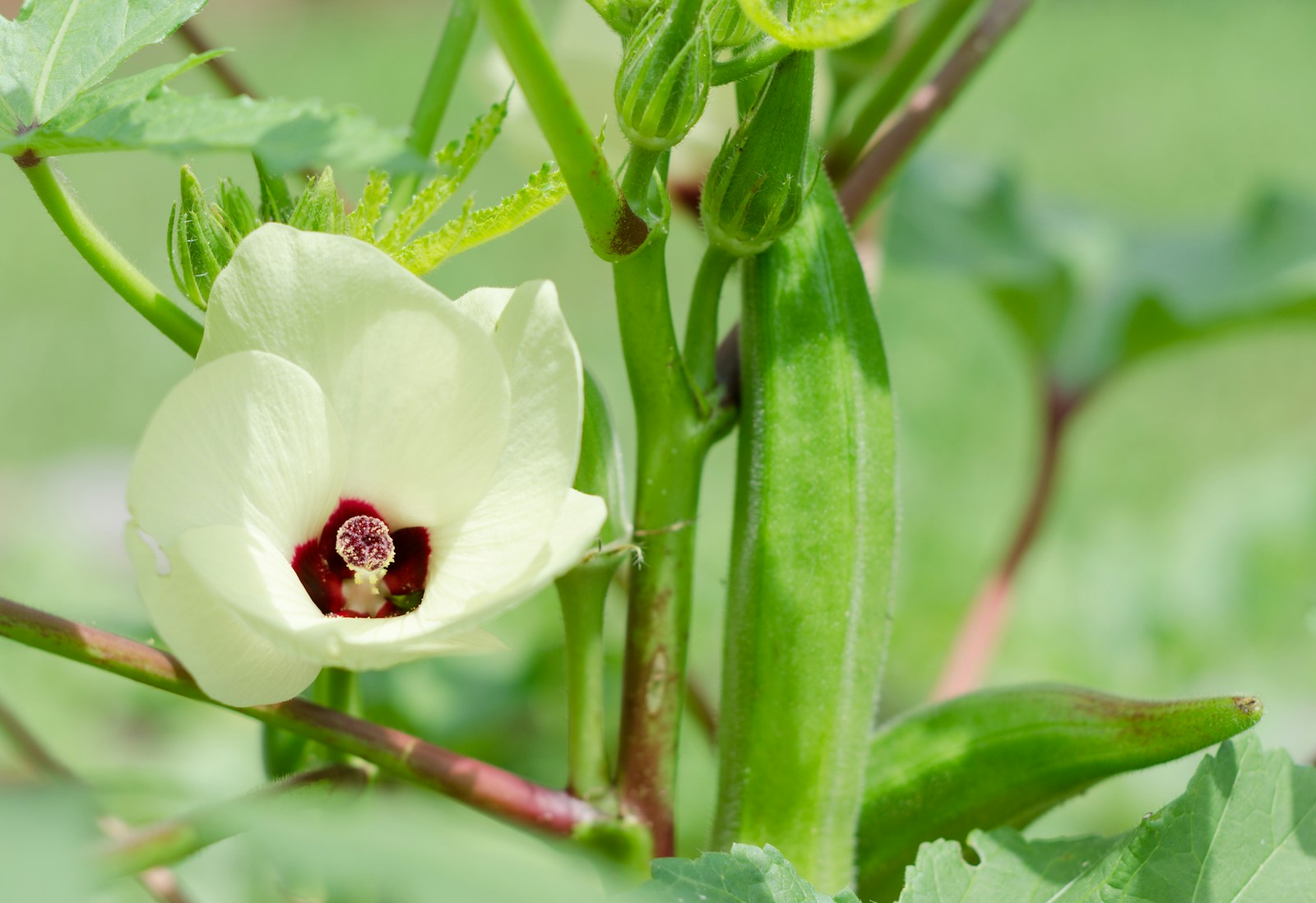
Okra is a tall, heat-loving vegetable grown for its tender green or red pods. It is a close relative of hibiscus, and its creamy yellow flowers are handsome in their own right. Okra shrugs off hot, humid summers that defeat many other crops. It is easy to grow when the weather is warm, and difficult where summers are short or cool.
Sowing and planting
Okra needs warm soil and warm nights. Plant too early and seeds rot or seedlings sit still for weeks.
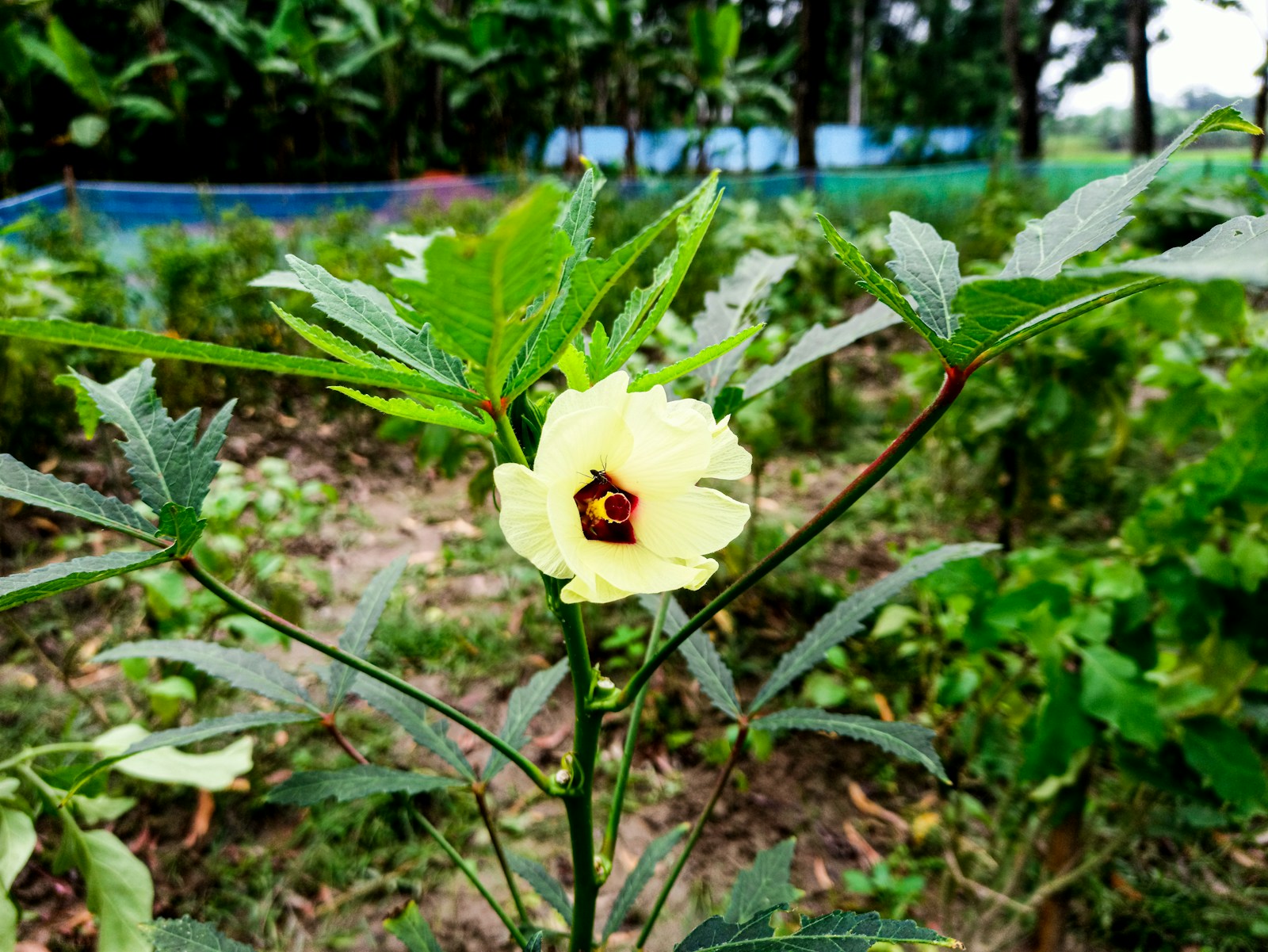
Outdoors. Sow directly in the garden two to four weeks after your last frost. Wait until the soil is at least 65°F (18°C) at planting depth, and 70°F (21°C) is better. Nights should stay above 55°F (13°C). In the warmest regions, including USDA zones 9 to 11, you can sow a second crop in early summer for autumn harvests.
Indoors. In short-season areas, start seed indoors three to four weeks before your last frost. Sow two seeds per biodegradable pot, since okra dislikes root disturbance. Keep the pots at 75 to 85°F (24 to 29°C). Thin to one seedling per pot. Harden off (get seedlings used to outdoor sun and wind) for about a week, then plant out two to three weeks after your last frost.
Preparing seed. Okra seed has a hard coat. Soak it in warm water overnight before sowing to speed germination. Seedlings usually appear within 5 to 12 days in warm soil.
How to sow. Sow seeds 3 to 4 inches (8 to 10 cm) apart, 1/2 to 1 inch (1 to 2.5 cm) deep. When seedlings are about 3 inches (8 cm) tall, thin them to 12 to 18 inches (30 to 45 cm) apart. Cut the extras at soil level rather than pulling them, to protect the roots of those you keep.
Warm the bed first in cooler areas by covering it with black plastic for a week or two. Compact varieties grow well in large containers at least 5 gallons (20 litres) in size.
Growing on
Watering. Give okra about 1 inch (2.5 cm) of water a week, more during hot, dry spells. It tolerates short droughts once established, but pod production slows. Water deeply at the base rather than little and often.
Feeding. Work compost or well-rotted manure into the bed before sowing. Side-dress (scatter fertilizer beside the plants) with a balanced organic fertilizer when the first pods form, and again a month later. Avoid heavy nitrogen, which gives you tall, leafy plants with few pods.
Mulching. Wait until the soil has warmed fully, then mulch with straw, grass clippings or shredded leaves. Mulch holds moisture, keeps down weeds and protects the shallow roots when you hoe.
Support. Most okra stands up on its own thick stems. Tall varieties in windy or exposed sites may need a sturdy stake. Tie the main stem loosely with soft twine.
Pruning. As you harvest, remove the leaves below the lowest pods. This improves airflow and makes picking easier. In long, hot seasons, some gardeners cut tall, tired plants back by about a third in midsummer. They then regrow and crop again into autumn.
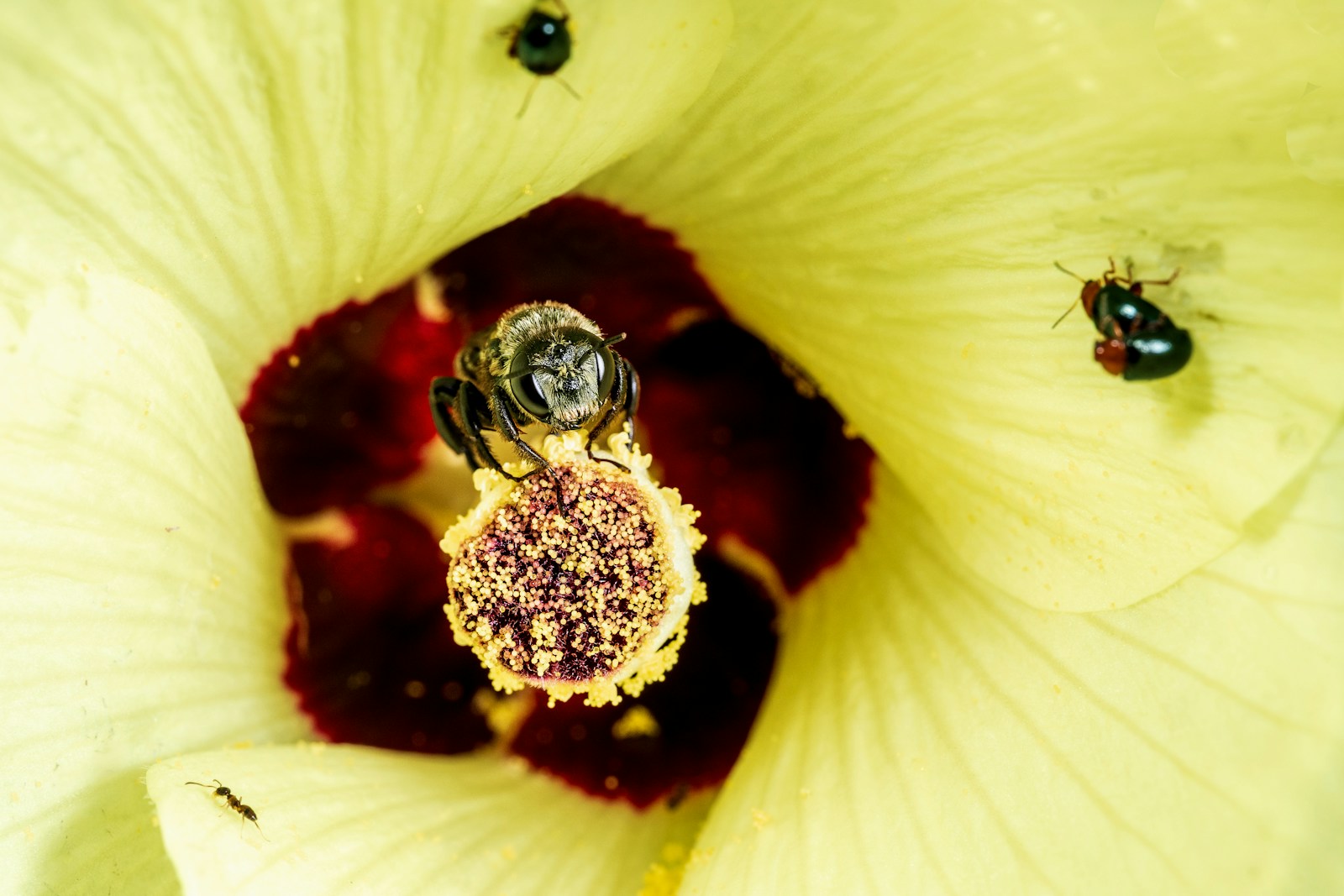
Flowers and pollinators. Each flower lasts only a day. Okra flowers are mostly self-pollinating, but bees visit them freely, so they add value to a pollinator-friendly garden.
Companions. Okra shades heat-tolerant crops such as peppers, basil and lettuce sown late in summer. Southern peas and melons do well beside it.
Okra fails most often from cold. Seeds rot in soil below 65°F (18°C), and chilly nights stunt young plants for weeks. Wait for truly warm soil and nights before you sow or plant out.
Harvesting
Okra begins to crop 50 to 65 days after sowing. Pods grow very fast and are ready four to six days after a flower opens.
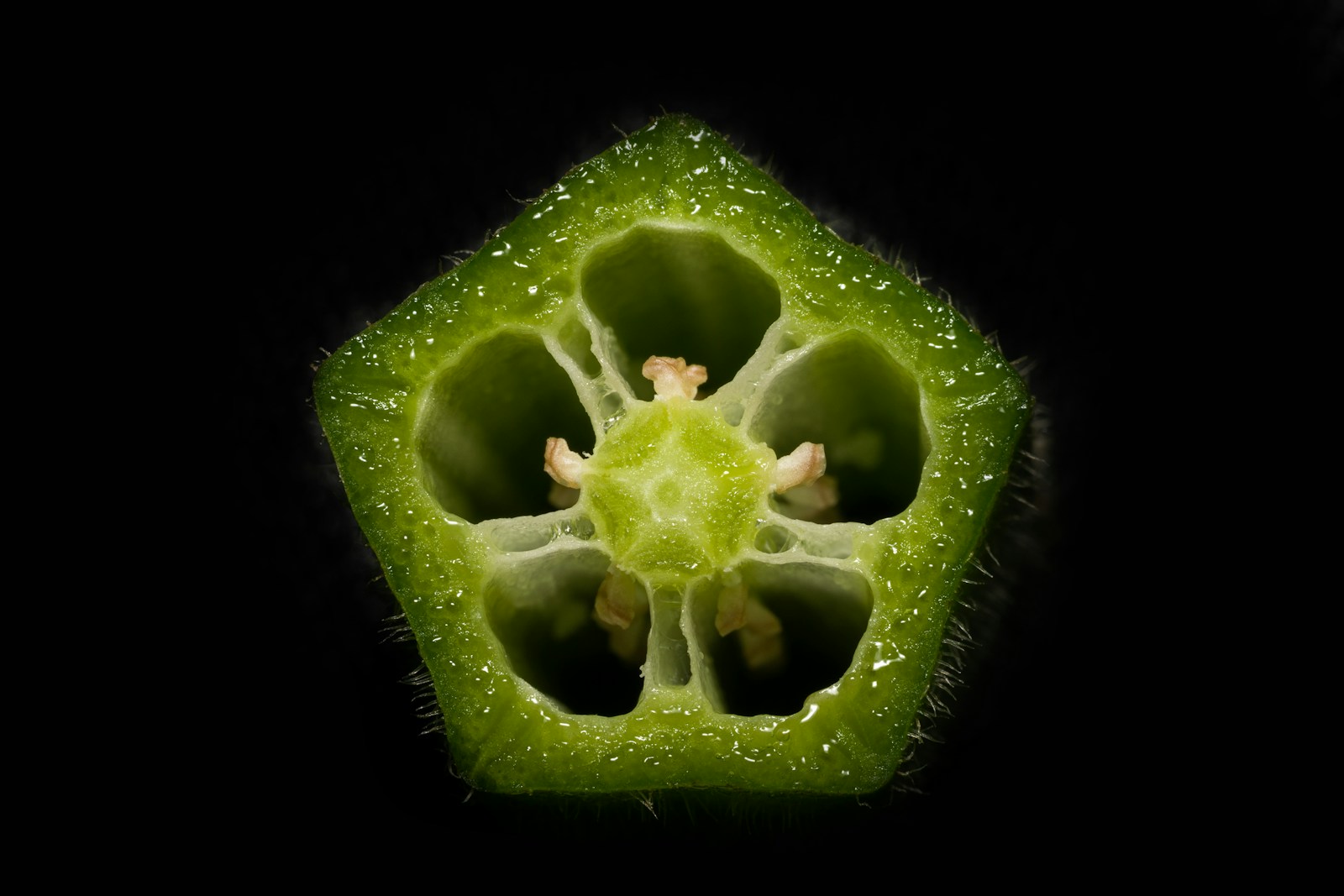
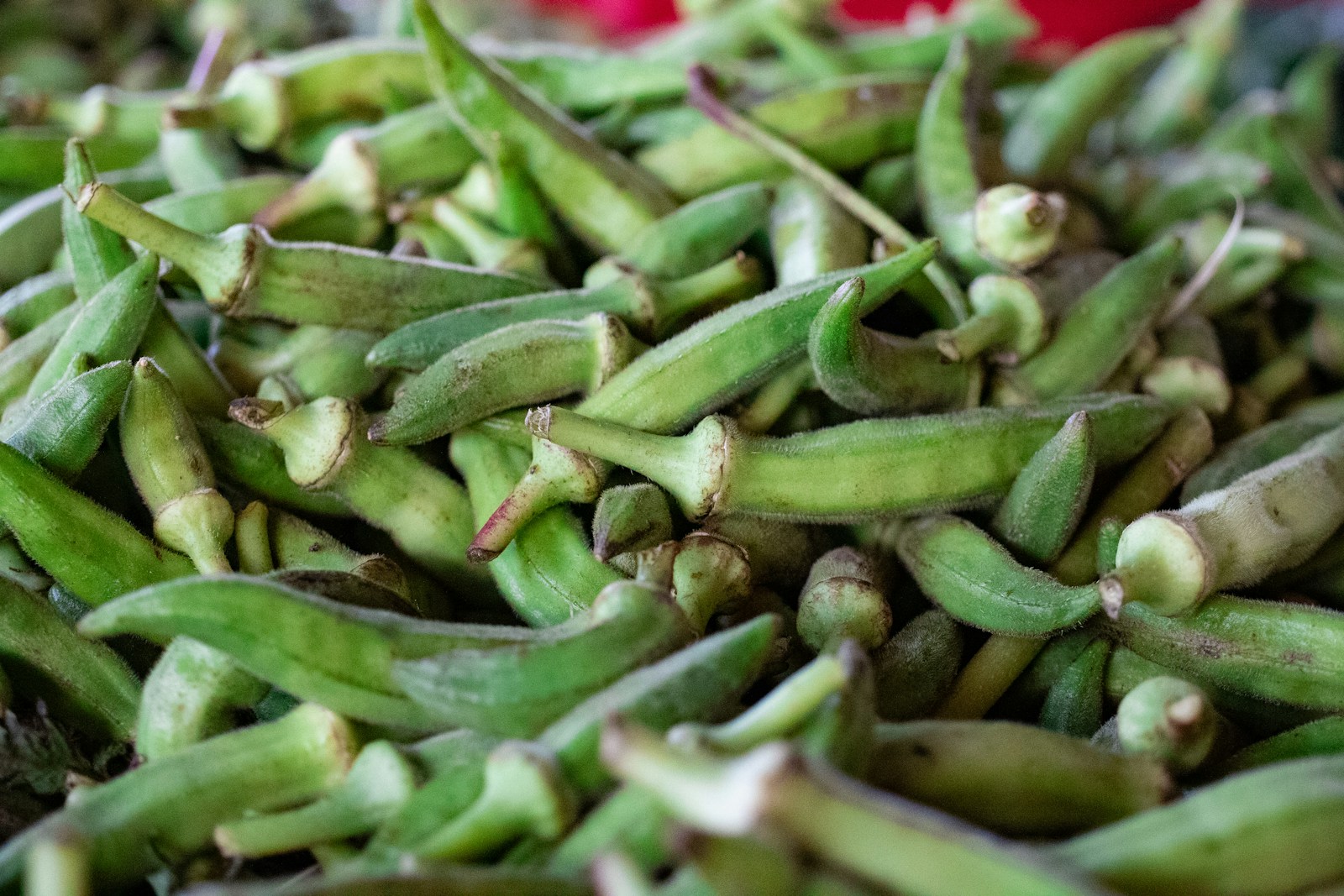
When to pick. Pick pods at 2 to 4 inches (5 to 10 cm) long for most varieties, while they are still tender. A ripe pod snaps cleanly and your knife slides through it easily. Pods left even a few days longer become woody and fibrous.
How to pick. Cut the stem just above the pod cap with pruners or a sharp knife. Harvest every one or two days in warm weather. Frequent picking keeps the plant producing. Pods left to mature signal the plant to slow down.
Protect your skin. Okra leaves, stems and pods carry fine hairs, and many people find they irritate the skin. Wear gloves and long sleeves when you pick. Spineless varieties are more comfortable to handle but still slightly prickly.
Storage. Keep unwashed pods in a paper bag in the refrigerator and use them within three or four days. For longer storage, blanch whole pods for three to four minutes, cool them in iced water and freeze. Okra also pickles well. In the kitchen, use it in gumbos, stews, curries, roasted dishes and fried okra.
Saving seed. Okra is mostly self-pollinated, but insects can cross different varieties. Grow only one variety, or cover a few flowers with small paper bags before they open. Let the chosen pods dry on the plant until they are brown and start to split. Shell the seeds and store them cool and dry.
Problems and pests
Sticky, curled leaves with clusters of insects
Aphids (small sap-sucking insects) cluster on young leaves and pods. Knock them off with a strong spray of water. Encourage ladybirds and lacewings, which eat them. For heavy infestations, use insecticidal soap, spraying in the evening away from bees.
Twisted, bumpy or misshapen pods
Stink bugs pierce young pods to feed, leaving hard, warped spots. Hand-pick the bugs into soapy water in the morning. Keep weeds down around the bed, since they shelter there. Row cover on young plants helps, but remove it once flowers open.
Holes bored into pods
Corn earworms and other caterpillars tunnel into the pods. Pick and destroy damaged pods. Check flowers and young pods often. If damage is heavy, spray Bacillus thuringiensis (Bt), a bacterial insecticide that targets caterpillars. Wear gloves and follow the label.
Stunted, wilting plants with knotted roots
Root-knot nematodes (microscopic soil worms) cause swollen galls on the roots, especially in sandy soils. Rotate crops so okra does not follow itself or tomatoes in the same bed. Add plenty of compost. Pull and dispose of infected plants at the end of the season.
Flowers and small pods fall off
Heat stress, drought or a sudden cold spell makes okra drop flowers and buds. Water deeply during hot spells and mulch to keep roots cool. Production usually resumes when conditions settle.
Varieties worth growing
- 'Clemson Spineless' – A long-standing favourite with ridged, dark green pods and few spines; reliable and productive.
- 'Emerald' – An heirloom with smooth, round, dark green pods that stay tender a little longer.
- 'Burgundy' – Red stems and deep red pods that turn green when cooked; ornamental in the border.
- 'Cow Horn' – A tall heirloom with long, curved pods; harvest them young for tenderness.
- 'Star of David' – An heirloom with thick, deeply ridged pods; pick them short.
- 'Annie Oakley II' – A compact hybrid that suits containers and shorter seasons.