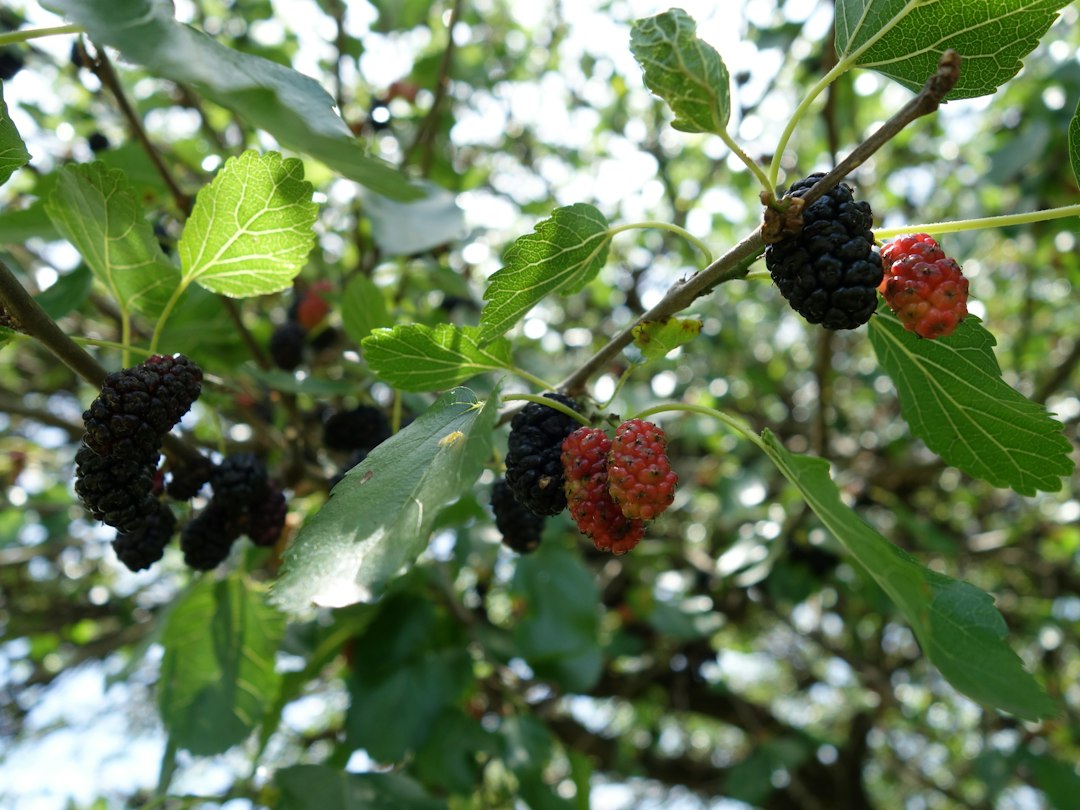
Mulberry (Morus spp.) is a fast-growing deciduous tree grown for its abundant, sweet, elongated fruit, which looks like a stretched-out blackberry and ripens from pale green through red to deep purple-black. It is genuinely one of the lowest-maintenance fruit trees you can plant: it shrugs off poor soil, needs almost no spraying, and starts cropping within a few years of planting. The one real catch is mess. Ripe mulberries drop steadily over several weeks and stain hands, clothing, decking and paving a deep purple that is hard to shift, so where you plant one matters as much as how you grow it. Never site a mulberry over a patio, driveway, or anywhere you park a car.
Sowing and planting
Mulberry is almost always planted as a young nursery tree rather than raised from seed, since named varieties do not come true (produce offspring identical to the parent) from seed and seedlings take much longer to reach fruiting size. Buy a container-grown or bare-root tree from a reputable nursery and plant it while it is dormant, in late winter or very early spring before new growth starts, or in fall after leaves drop, in a spot with full sun.
Siting is the decision that matters most. Mulberry trees grow large, so give a standard tree the roughly 300 inches (750 cm) of spacing it eventually needs, and keep it well clear of patios, driveways, paths, decking, and parked cars, because dropped fruit stains all of these heavily. A spot over rough grass or a bed you do not mind staining works far better than anywhere paved. In a zone 6b garden like much of Harrison County, Kentucky, mulberry is reliably hardy and does not need winter protection once established. Dig a hole as deep as the root ball and twice as wide, back fill with the original soil, water in well, and stake loosely for the first year if the site is windy.
Growing on
Water a young mulberry regularly through its first one to two growing seasons while the roots establish, then ease off. Once established, mulberry is quite drought-tolerant and rarely needs supplemental watering except in prolonged dry spells. An annual mulch of compost in spring is usually enough feeding for a healthy tree; a balanced fertilizer in early spring helps on poor soils, but avoid overfeeding, which pushes soft, sappy growth prone to pest damage.
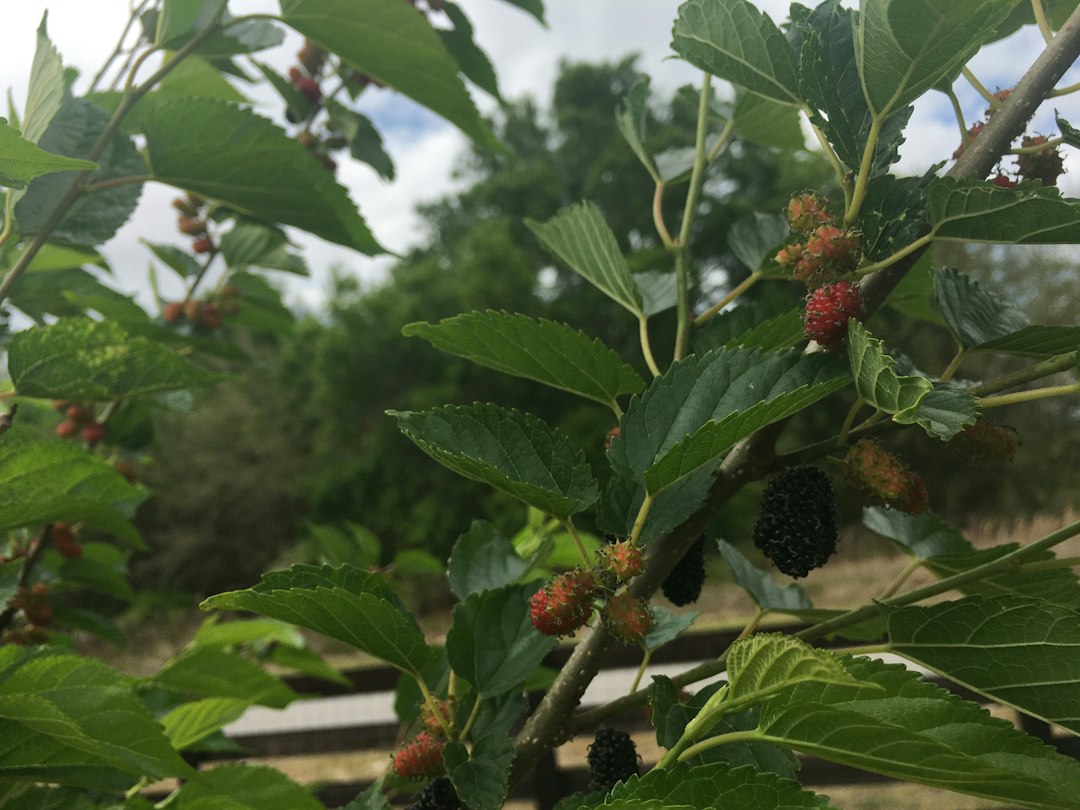
Mulberry grows fast and vigorously, often putting on several feet of new growth a year once established, and it needs little to no routine pruning. Prune only to remove dead, damaged or crossing branches, to lift the canopy for mowing underneath, or to control overall size, and do this in late winter while the tree is dormant, since mulberry can bleed sap heavily if cut while in leaf.
Harvesting
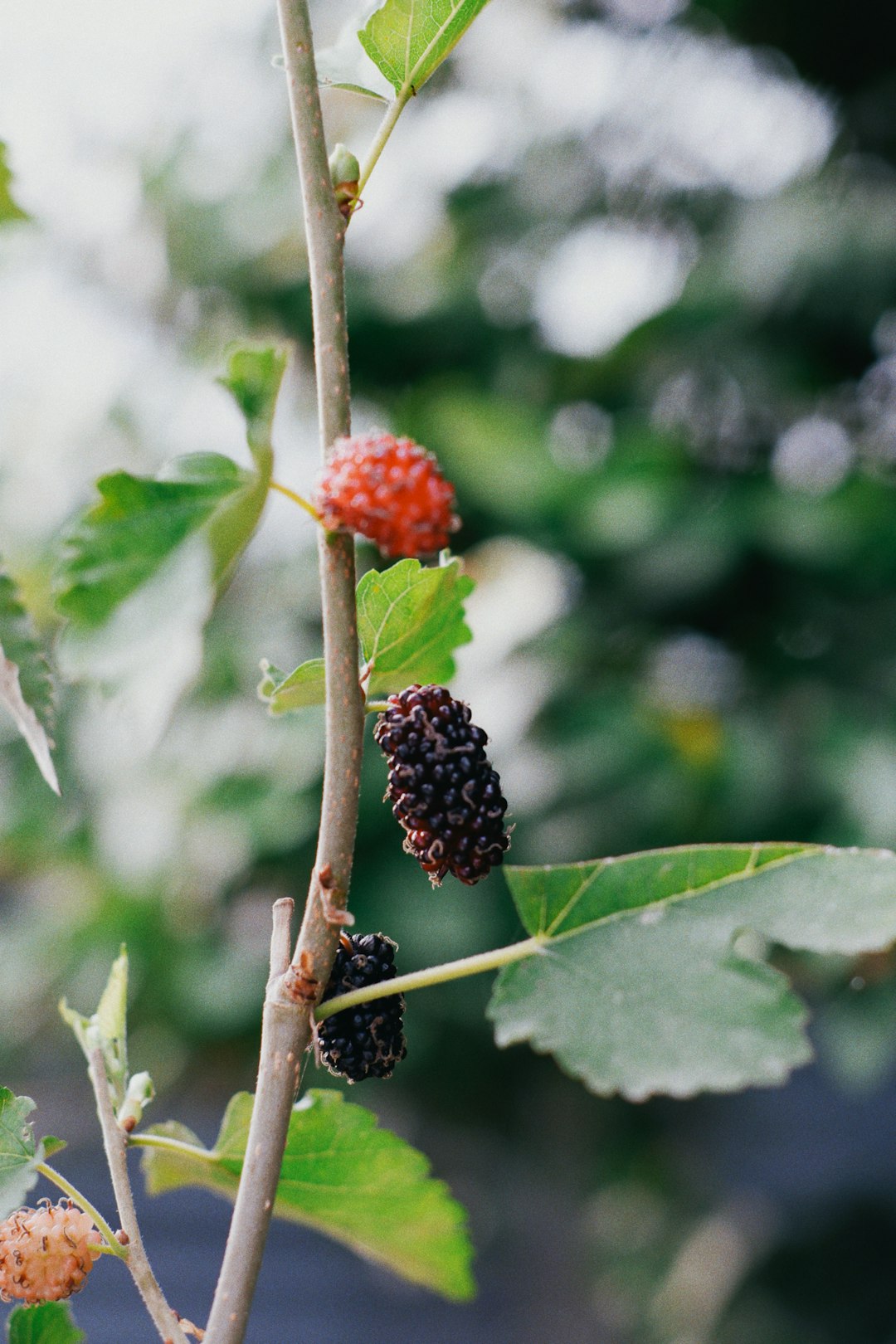
Mulberries ripen over an extended period rather than all at once, with fruit on the same branch maturing from green through red to a deep, almost black purple over several weeks. A ripe mulberry is very soft, bruises easily, and does not travel or store well, which is why you will never find it in a grocery store. Pick fruit only once it has turned fully dark and comes away from the stem with the gentlest tug; anything that resists is not ready.
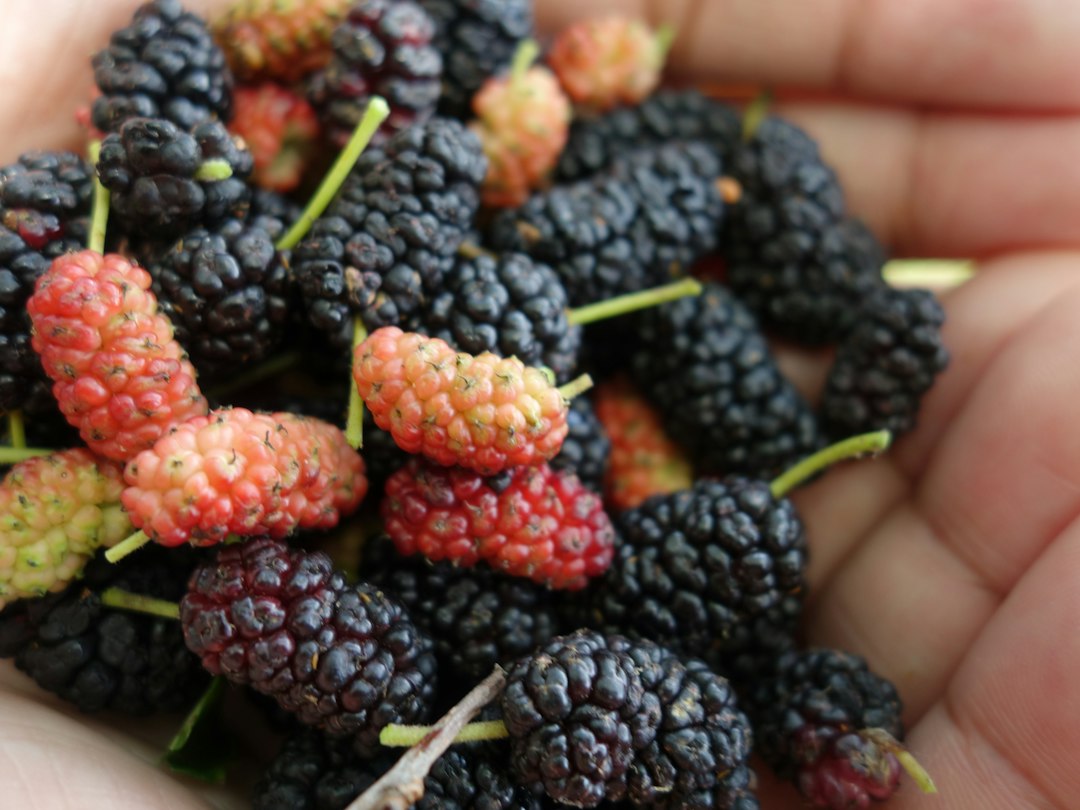
Because ripe fruit is so soft and the tree usually drops a steady rain of it once cropping gets underway, the easiest harvest method is not picking by hand at all. Spread a clean sheet or tarp on the ground under the canopy and shake or gently tap the branches; ripe mulberries let go readily and fall onto the sheet largely undamaged, while unripe ones stay put. Gather the sheet's contents straight into a container and use or refrigerate the fruit within a day or two, since it spoils quickly at room temperature.
Problems and pests
Mulberry is a genuinely low-pest, low-disease tree, and most gardeners grow one for years without a serious problem. The issues below are more about living with the tree than fighting off threats.
Fruit drop staining everything underneath
This is the tree's defining drawback rather than a pest or disease. Ripe fruit drops steadily for weeks and stains paving, decking and fabric a deep purple that is genuinely difficult to remove. The only real fix is prevention: site the tree well away from patios, driveways, paths and parking, over lawn or a bed instead.
Birds stripping the crop
Birds are often the biggest competition for the fruit, sometimes clearing a tree before you get a decent picking. Netting a young or small tree protects the crop, though on a mature full-size tree this is rarely practical; most gardeners simply accept sharing some of the harvest with wildlife.
Leaf spot in wet seasons
Occasional fungal leaf spotting can appear as small brown or black blotches on leaves after a wet spring, usually without lasting harm to the tree. Raking up and disposing of fallen leaves in autumn reduces the fungus carrying over to the following year; it rarely needs any chemical treatment.
Suckers at the base or along surface roots
Mulberry's vigorous growth sometimes shows as suckers, which are shoots that spring up from the roots or trunk base, especially if the main trunk is damaged. Cut these off at ground level as you notice them; left alone, they thicken into an unwanted thicket around the base.
Varieties worth growing
- Red mulberry (Morus rubra) – the species native to North America, producing dark, sweet fruit on a tree well suited to wilder or naturalized plantings.
- White mulberry (Morus alba) – a widely naturalized introduced species with mild, sweet fruit; the species historically grown to feed silkworms.
- Black mulberry (Morus nigra) – prized for the richest, most intensely flavored fruit, though it is less cold-hardy and slower growing than red or white mulberry.
- 'Illinois Everbearing' – a hardy, heavy-cropping cultivar that fruits over a long season and tolerates colder winters well, making it a popular choice in northern gardens.
- Dwarf or 'Issai'-type mulberries – compact forms bred for containers and small gardens, often fruiting while still young and small.