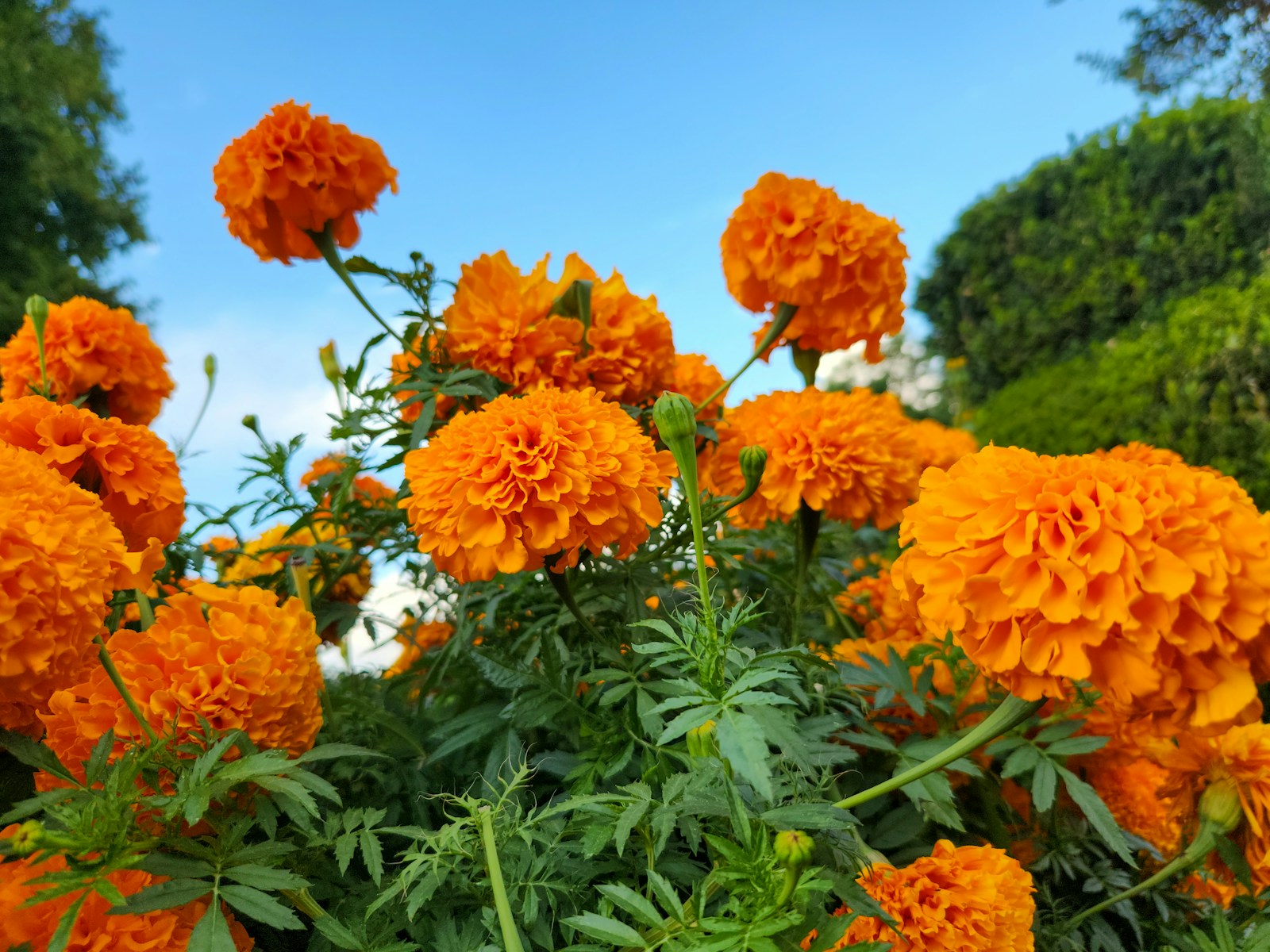
Marigolds (Tagetes) are warm-season annuals with pompon or daisy-like flowers in yellow, gold, orange and red. They bloom for months, shrug off heat and poor soil, and draw bees and butterflies to the vegetable garden. They are among the easiest flowers to grow from seed. Pot marigold, or calendula, is a different plant with different needs.
Sowing and planting
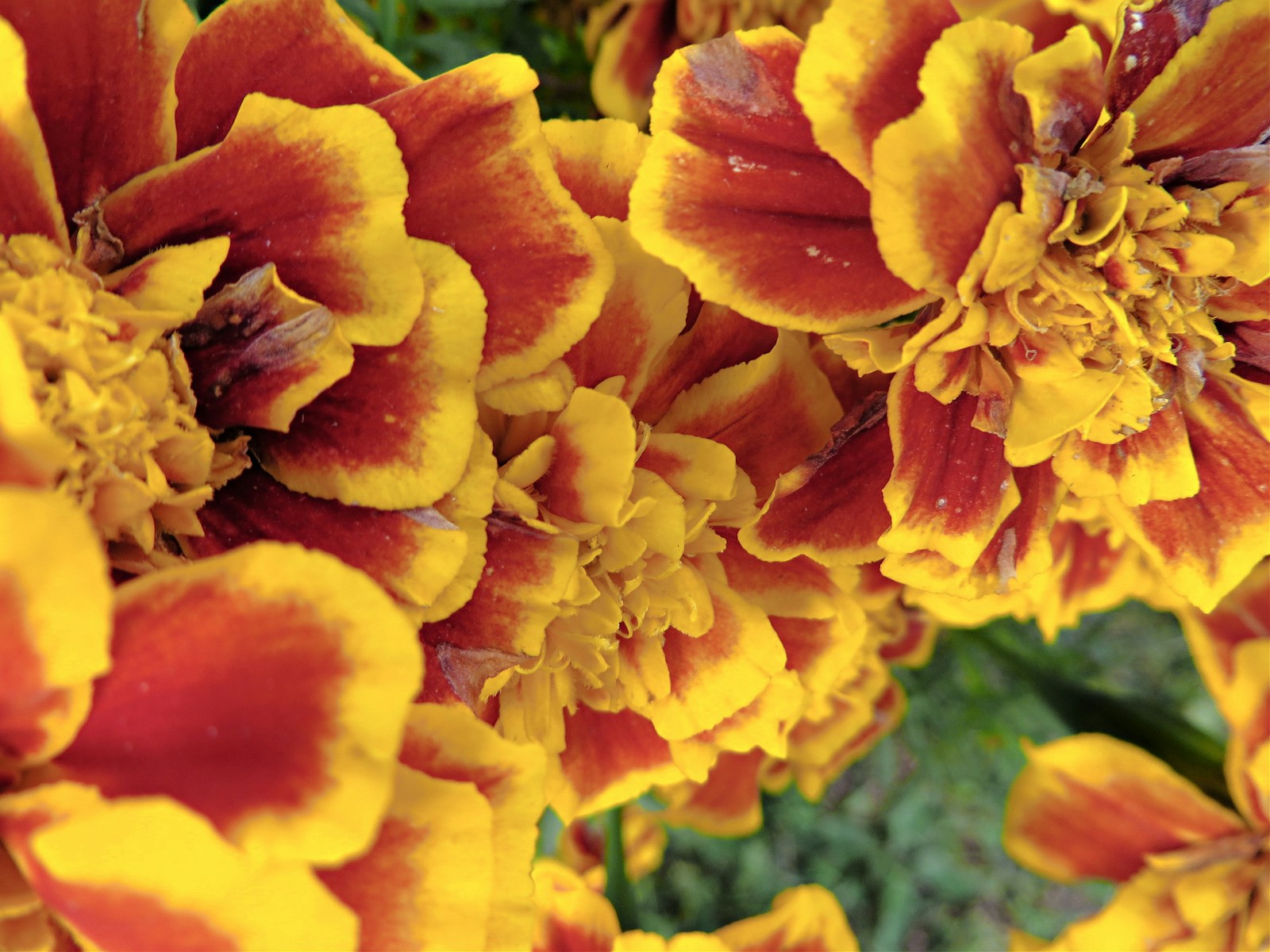
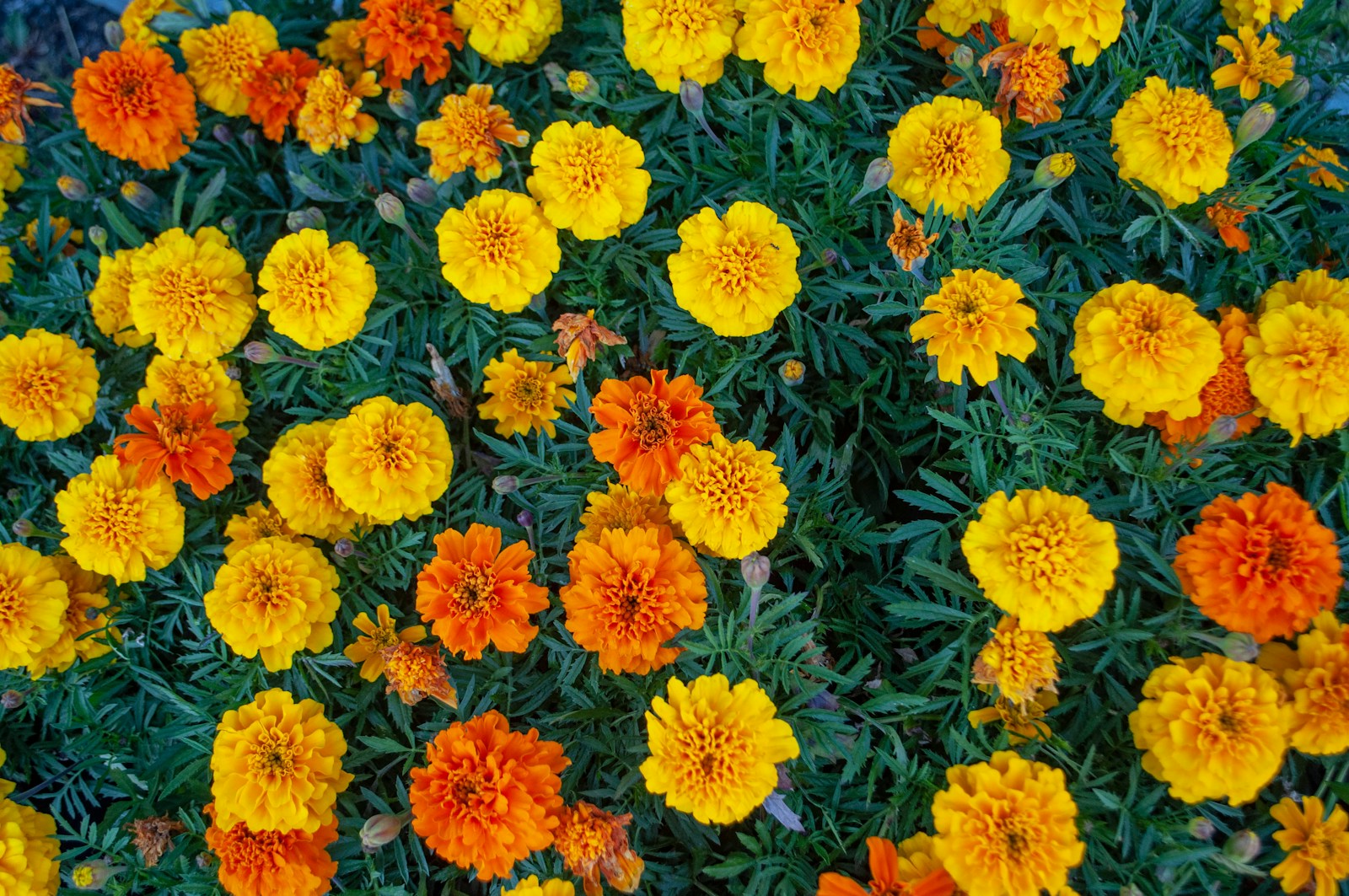
Three main types are grown. African marigolds (Tagetes erecta) are tall, with large, fully double flowers up to 4 inches (10 cm) across. French marigolds (T. patula) are compact and bushy, with smaller single or double flowers, often in two tones. Signet marigolds (T. tenuifolia) form mounds of lacy, lemon-scented leaves covered in small single flowers.
African marigolds take longest to flower. Start them indoors six to eight weeks before your last frost. French and signet types can be started indoors four to six weeks before the last frost, or sown directly outdoors.
Indoors, sow seed 1/4 inch (6 mm) deep in trays of seed-starting mix. Keep them at 70 to 80°F (21 to 27°C). Seedlings usually appear in five to ten days. Move them into bright light at once, and grow them on at about 65 to 70°F (18 to 21°C) to keep them sturdy.
Before planting out, harden off the seedlings (getting them used to outdoor conditions) over seven to ten days. Plant them out once all danger of frost has passed. Set them at the same depth they grew in their pots. African types with leggy stems can be planted a little deeper.
To sow directly, wait until one to two weeks after your last frost, when the soil has warmed to at least 65°F (18°C). Sow thinly and thin the seedlings to the spacing in the table.
In long-season climates, a second sowing of French marigolds in early summer gives fresh plants for fall color.
Growing on
Water young plants regularly until they establish. After that, water deeply when the top inch (2.5 cm) of soil is dry. Water at the base of the plant, not over the flowers. Marigolds in pots dry out quickly and may need water daily in hot weather.
Go easy on fertilizer. Rich soil and high-nitrogen feeds give plenty of leaves but fewer flowers. A little compost at planting is usually enough in the ground. In pots, a balanced liquid feed every three to four weeks keeps plants blooming.
Mulch between plants with 1 to 2 inches (2.5 to 5 cm) of compost or shredded leaves. It keeps roots cool, holds moisture and smothers weeds. Keep mulch off the stems.
Pinch out the growing tip of young plants when they have three or four pairs of leaves. This makes them bushier with more flower stems. Tall African varieties benefit from a stake or a ring of canes in windy sites. Their heavy heads can snap after rain.
Deadhead (remove faded flowers) every few days. Snip or pinch the spent head back to the next leaf or bud. This keeps plants tidy and flowering until frost.
Marigolds are classic companions in the vegetable garden. French types are often edged along tomato and bean rows, where their flowers attract pollinators and predatory insects. Single-flowered types are more useful to bees than fully double ones.
Harvesting
Cut marigolds for the vase when the flowers are almost fully open. Buds that are still tight rarely open in water. Cut in the morning and strip any leaves that would sit below the water line. The leaves foul vase water quickly and have a strong scent. Cut flowers usually last one to two weeks.
The petals of signet marigolds are edible and have a mild citrus flavor. Pull the petals from fresh flowers and scatter them over salads, rice or desserts. Only eat flowers you have grown yourself without pesticides, and know the variety. Marigold petals also dry well for crafts and potpourri. Spread them on a screen in a warm, dry, shady place until crisp.
To save seed, leave a few flowers on the plant until the heads turn brown and dry. Pull the dried heads apart to find the slender, dark seeds with pale tips. Dry them for a week, then store them in a labeled paper envelope somewhere cool and dry. Seed usually stays viable for two to three years. Seed from hybrid varieties may not come true to the parent.
Marigold sap can irritate sensitive skin, so wear gloves when deadheading large amounts. The plants are considered mildly toxic to cats and dogs if chewed. Eat only the petals of signet marigolds you have grown without sprays.
Problems and pests
Fine speckling and webbing on leaves
Spider mites cause this in hot, dry weather. Leaves turn dull and bronze. Spray plants, including the undersides of leaves, with a strong jet of water every few days. Keep plants well watered. Insecticidal soap works on bad attacks; test it on a few leaves first, and spray in the evening.
Seedlings chewed or vanished overnight
Slugs and snails love young marigolds. Check plants with a flashlight after dark and remove the pests by hand. Protect seedlings with collars or plant out larger, sturdier transplants. Iron phosphate slug bait is an option; scatter it thinly and keep it away from pets.
Gray fuzz on flower heads
Gray mold (Botrytis, a fungal disease) rots the dense heads of double African types in cool, wet weather. Remove affected flowers promptly and put them in the trash. Space plants well and water the soil, not the flowers.
Seedlings collapse at soil level
Damping off (a fungal disease that rots young stems) strikes in cold, wet, crowded trays. Use fresh seed-starting mix and clean containers. Sow thinly, water from below and give seedlings good airflow.
Tall, floppy plants with few flowers
Too much shade or too much nitrogen is the usual cause. Move pots to full sun and stop feeding. Pinch young plants to encourage bushier growth.
Varieties worth growing
African marigolds
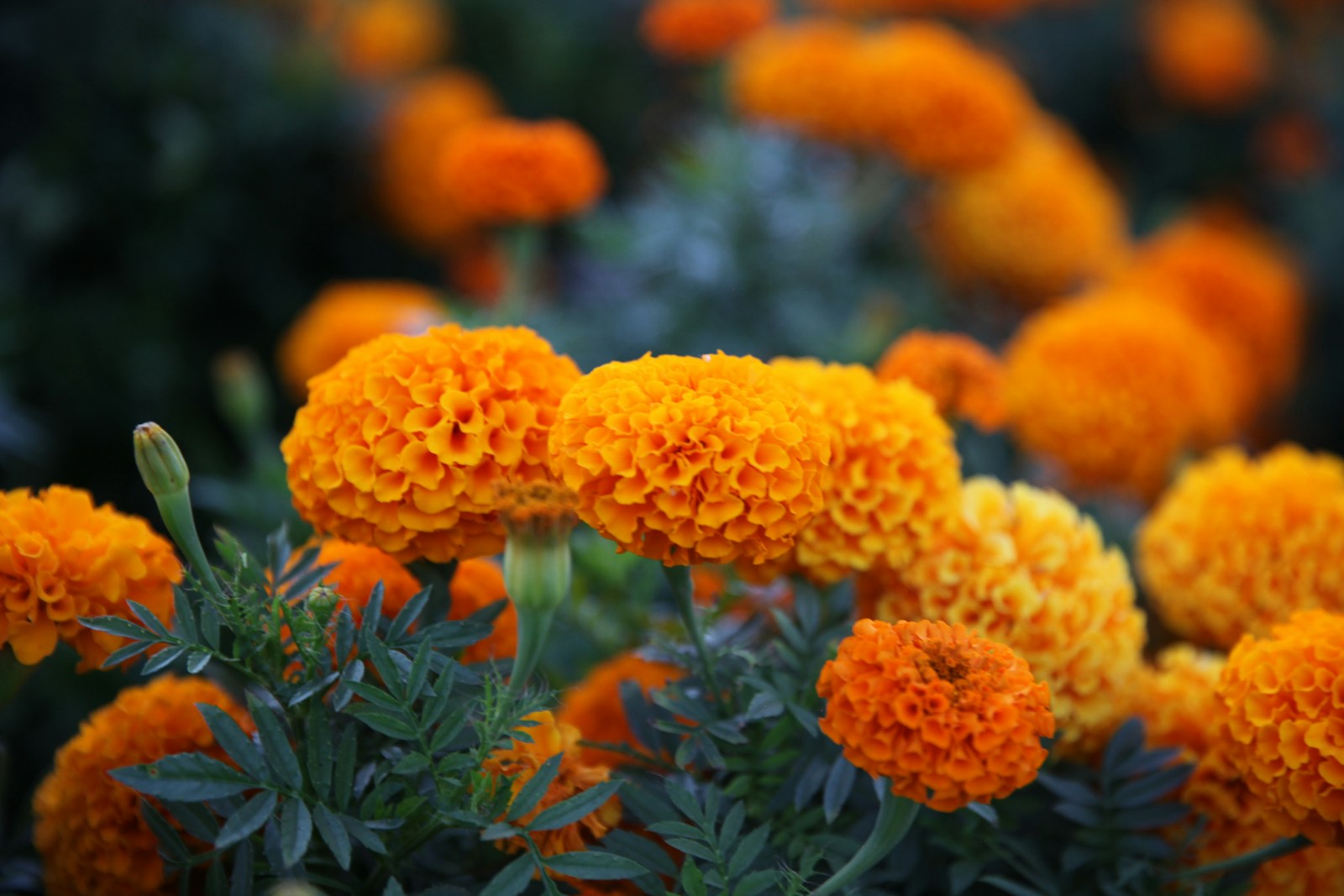
- 'Crackerjack': a tall mix of large, double gold, yellow and orange flowers, good for cutting.
- 'Inca II': a sturdy, medium-height series with big, fully double blooms.
- 'Vanilla': an unusual African type with creamy white, double flowers.
French marigolds
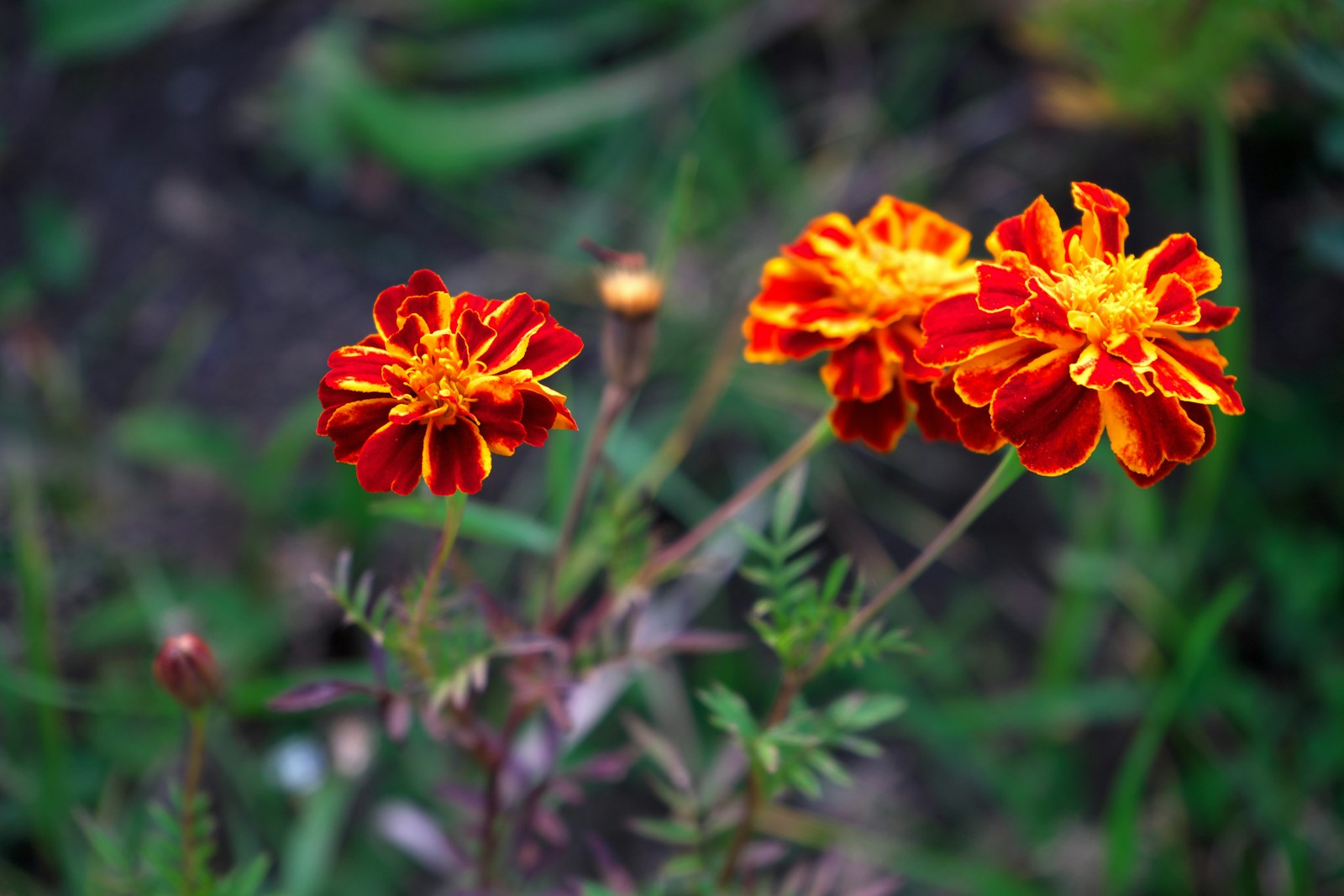
- 'Queen Sophia': double rust-red flowers edged with gold, on compact plants.
- 'Durango': a popular bedding series with large flowers on neat, bushy plants.
- 'Bonanza': a reliable, early-flowering series in yellow, orange and bicolors.
Signet marigolds
- 'Lemon Gem': mounds of lacy foliage smothered in small lemon-yellow flowers.
- 'Tangerine Gem': bright orange single flowers, popular for edible petals.