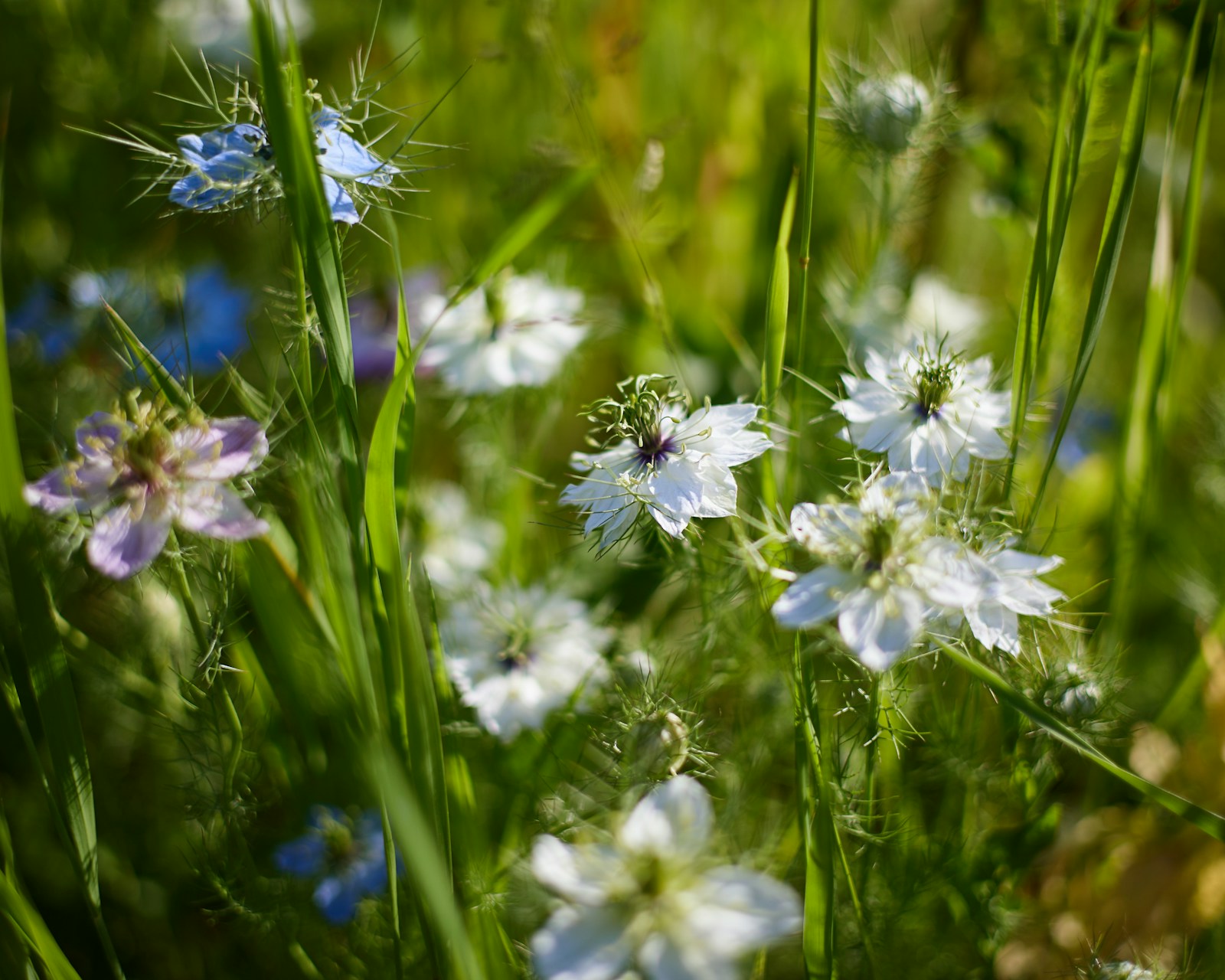
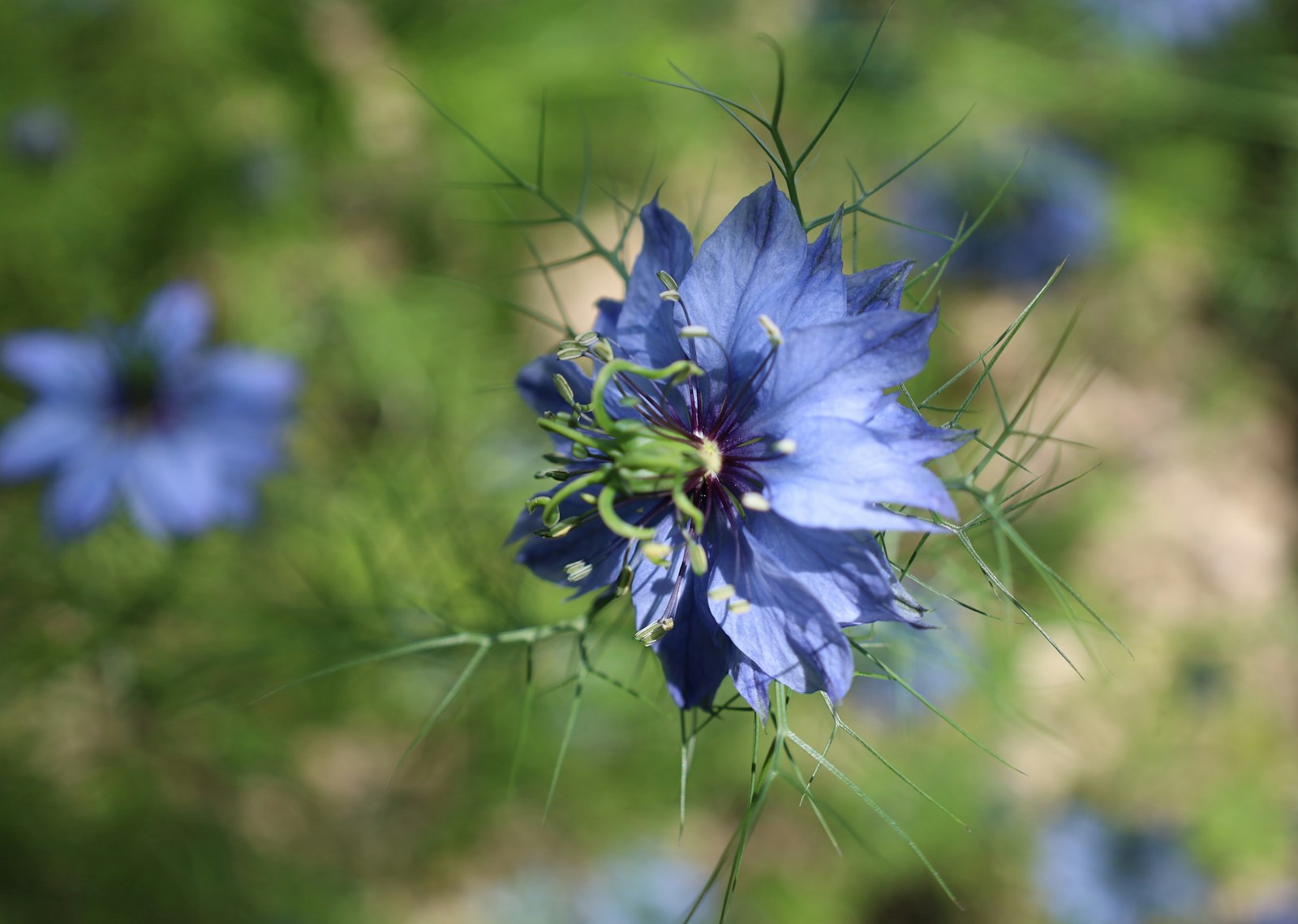
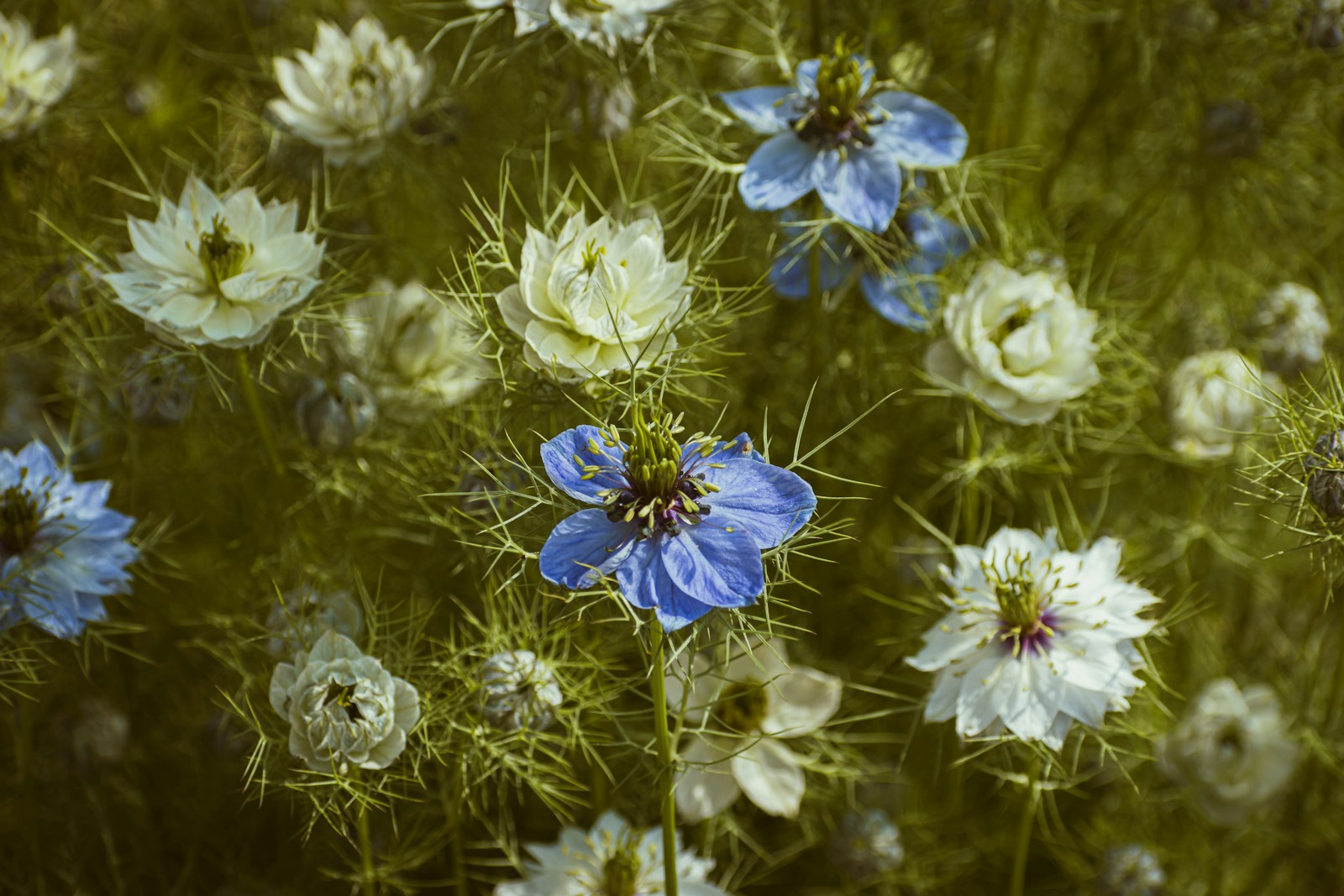
Love-in-a-mist (Nigella damascena) is a cottage-garden annual with starry flowers set in a ruff of thread-fine leaves. After the flowers fade, it forms inflated, striped seed pods that are prized for dried arrangements. It is one of the easiest flowers to grow from seed, and the only real rule is to sow it where it is to flower.
Sowing and planting
Love-in-a-mist grows a long taproot (a single deep main root) and resents being moved. Sow it directly in the bed rather than in trays. If you must start it indoors, use biodegradable pots or cell trays and plant the whole plug out without disturbing the roots.
Outdoors, sow as soon as you can work the soil in spring, usually two to four weeks before your last frost. The seedlings shrug off light frost. In USDA zones 6 to 9, a fall sowing about six weeks before your first frost gives stronger plants that flower earlier the following year. In colder zones, fall-sown seed often waits in the soil and sprouts in spring.
Rake the soil to a fine crumb and scatter the seed thinly. Cover it with a sprinkling of fine soil no deeper than 1/8 inch (3 mm), then water gently. Seedlings usually appear in 10 to 20 days when the soil is 55 to 70°F (13 to 21°C). Germination slows sharply in hot soil, so summer sowings are less reliable.
Thin the seedlings to 6 to 9 inches (15 to 23 cm) apart once they have two or three true leaves. Crowded plants stay thin and flower briefly.
Each plant flowers for four to six weeks and then sets seed. For a longer display, make succession sowings (small sowings repeated at intervals) every three to four weeks until early summer.
Growing on
Water young plants regularly until they are about 4 inches (10 cm) tall. After that, water only in dry spells, soaking the soil rather than wetting the foliage. Established plants cope with some drought but flower for longer with steady moisture.
Skip heavy feeding. Rich soil and high-nitrogen fertilizer produce lush leaves and fewer flowers. A thin layer of compost worked in before sowing is enough for most gardens.
A light mulch of fine compost or leaf mold between plants keeps the soil cool and holds moisture. Keep it away from the stems of small seedlings.
Most plants stand without help. In windy sites or rich soil, push twiggy sticks around a block of plants while they are still small. The foliage grows through and hides them.
Deadhead (remove faded flowers) if you want more blooms and no pods. Leave the flowers on if you want the decorative seed pods. Many gardeners do both, deadheading some plants and leaving others to set pods.
Love-in-a-mist fills gaps between perennials and suits the edge of vegetable beds. Its open flowers attract bees and other pollinators, which forage on the nectar at the base of the petals.
Harvesting
Cut flowers
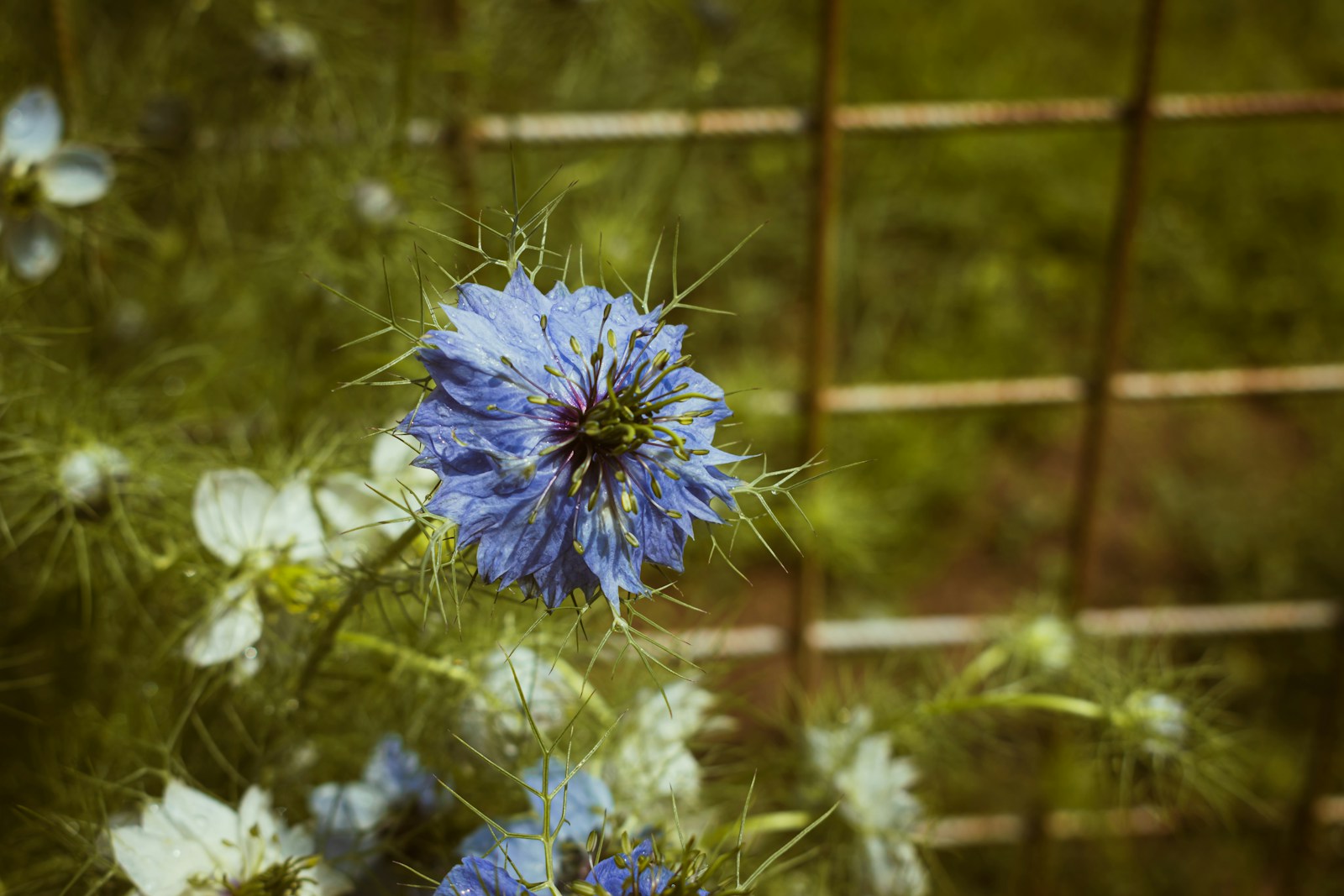
Cut stems when the flowers have just opened or when the petals show color but have not yet fully flattened. Pick in the cool of the morning and place the stems straight into water. The flowers usually last about a week in a vase. Cutting regularly also encourages side shoots to flower.
Seed pods for drying
Let some flowers fade on the plant. Over two to three weeks the centers swell into rounded, papery pods, often striped with purple or maroon. Cut them when they are fully inflated and well colored but before they split. Tie the stems in small bunches and hang them upside down in a dark, dry, airy place for one to two weeks. The pods keep their shape for months in dried arrangements.
Saving seed
For seed, leave the pods on the plant until they turn brown and rattle. Cut them on a dry day and shake the black seed into a paper bag. Store it cool, dry and dark in a labeled envelope. Seed usually stays viable for two to three years. Different colors cross freely, so saved seed from mixed plantings gives a mix of colors.
Love-in-a-mist is grown for ornament only. Its seeds and plant parts are considered toxic if eaten, so keep them away from children and pets. Do not confuse it with Nigella sativa, the culinary black seed, which is a different species.
Problems and pests
Plants flower briefly, then yellow and die
This is normal. Love-in-a-mist is an annual that sets seed and dies within a few weeks. Hot, dry weather speeds this up. Sow in succession and water during dry spells to extend the display.
Seedlings collapse at soil level
Damping off (a fungal disease that rots young stems) is the usual cause. It is worst in cold, wet, crowded soil. Sow thinly, avoid overwatering and thin seedlings promptly. Indoors, use fresh seed-starting mix and clean pots.
Small green or black insects on shoot tips
Aphids cluster on soft new growth and flower buds. Knock them off with a strong spray of water, or rub them off by hand. Ladybugs, lacewings and hoverflies usually bring them under control. Insecticidal soap works as a backup; spray in the evening when bees are not foraging, and follow the label.
White powdery coating on leaves
Powdery mildew often appears late in the season on dry, crowded plants. Space plants well and water the soil in dry weather. Pull affected plants that have finished flowering and put them in the trash, not the compost.
Seedlings pop up everywhere
Love-in-a-mist self-sows freely. Enjoy the free plants, or thin them in spring. The feathery seedlings are easy to recognize and pull. To limit spread, cut the pods before they split.
Varieties worth growing
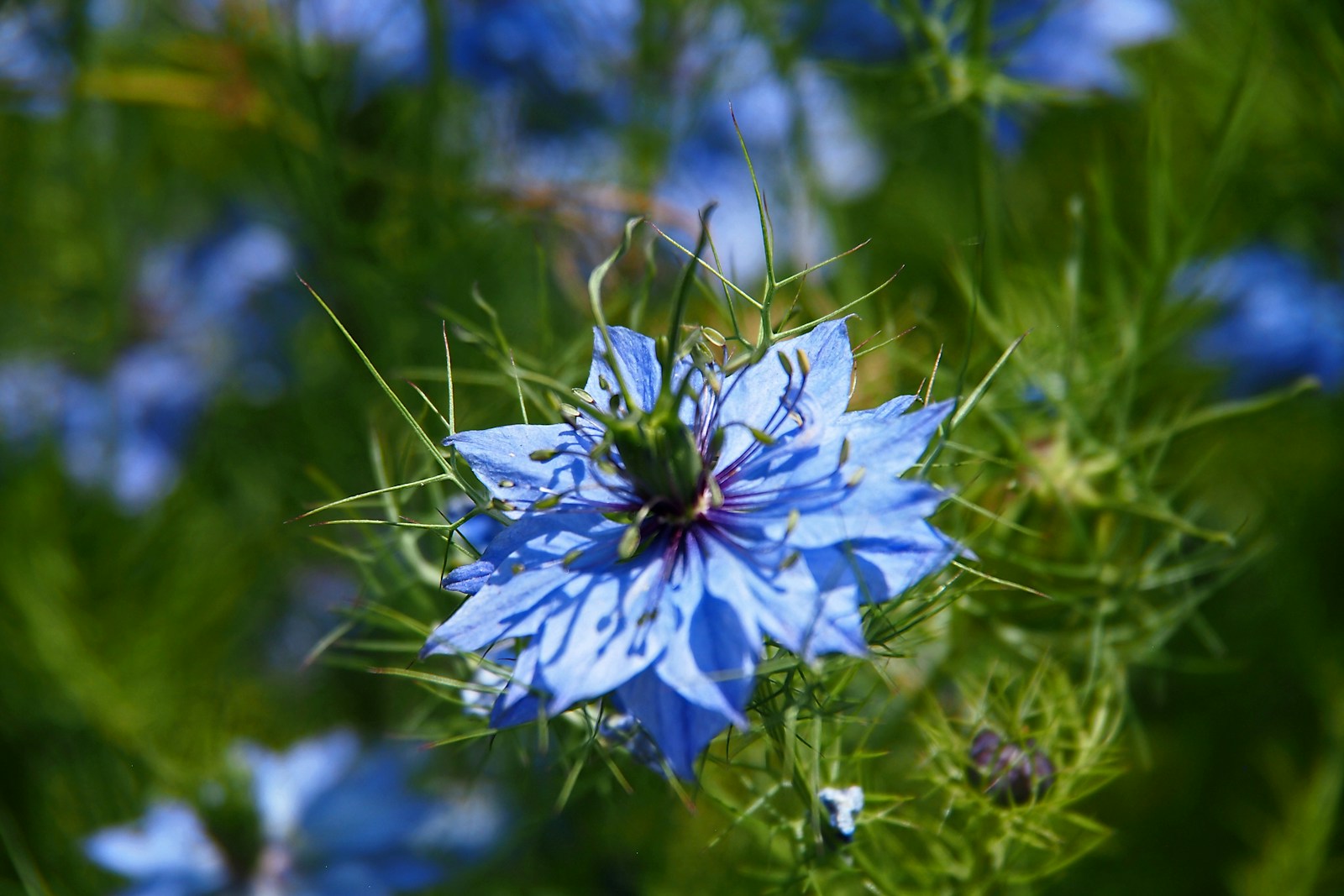
- 'Miss Jekyll': the classic cornflower-blue, semi-double selection, about 18 inches (45 cm) tall.
- 'Persian Jewels': a popular mix of blue, white, pink, rose and purple flowers.
- 'Mulberry Rose': soft pink flowers that deepen with age, and dark pods.
- 'Albion Black Pod': white flowers followed by very dark pods, grown mainly for drying.
- 'Albion Green Pod': white flowers and plump green pods, a favorite for dried arrangements.
- 'Oxford Blue': tall stems with deep blue, double flowers and dark pods, good for cutting.