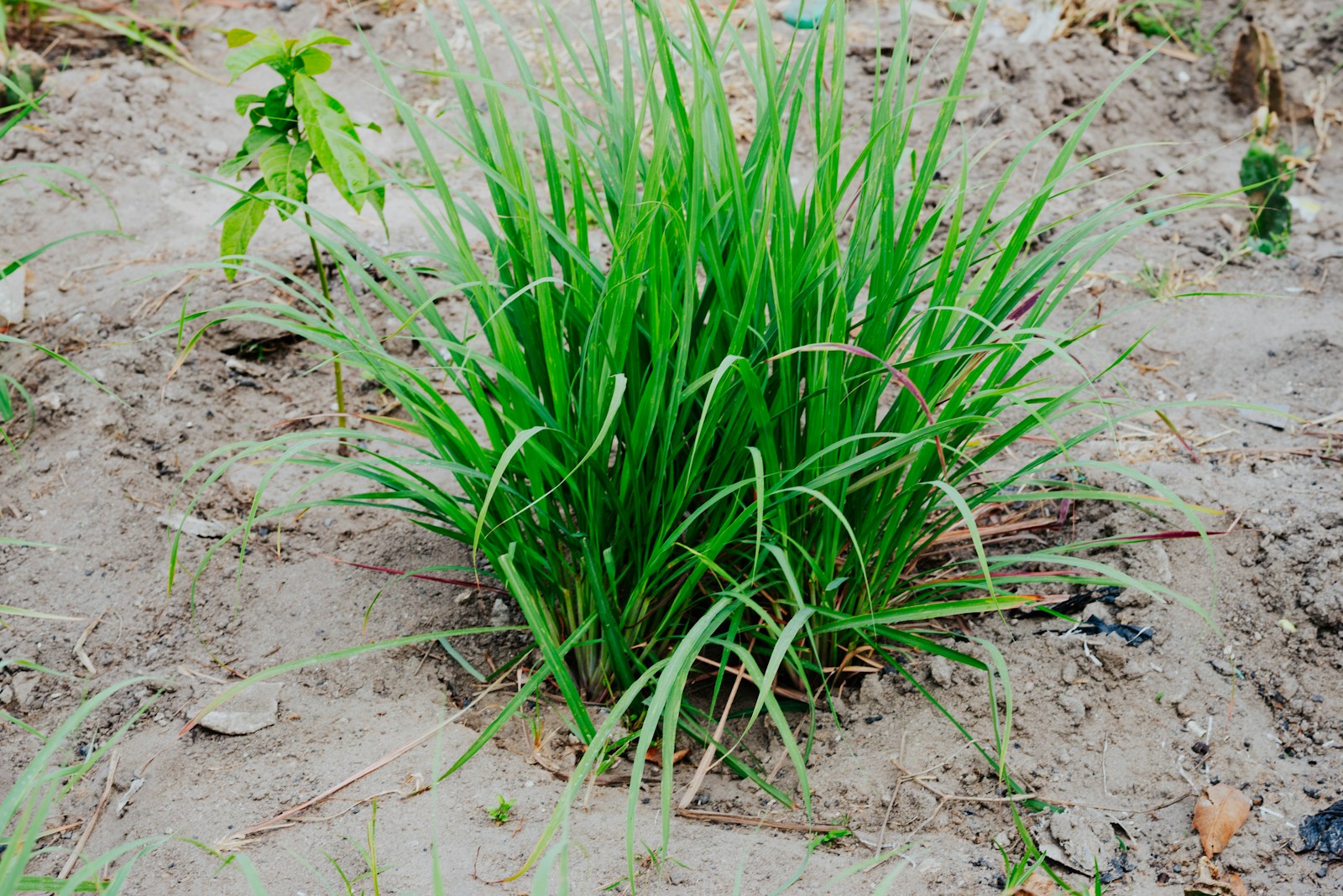
Lemongrass is a clump-forming tropical grass grown for the lemon-scented stalks used in Southeast Asian cooking. The leaves also make a bright, citrusy tea. It grows fast in heat and sun, and one plant gives you plenty of stalks by late summer. It is easy to grow, provided you treat it as the tender plant it is.
Sowing and planting
You can grow lemongrass from seed, from nursery plants, or by rooting stalks bought from a grocery store. Rooting stalks is quick and cheap.
To root stalks, choose firm, fresh stems with the base intact. Trim the top to leave stalks about 6 inches (15 cm) long. Stand them in a glass with 1-2 inches (2.5-5 cm) of water on a bright windowsill. Change the water every couple of days. Roots appear in 1-3 weeks. Pot them up once the roots are about 1 inch (2.5 cm) long.
To grow from seed, sow indoors 8-10 weeks before your last frost. Scatter seed on moist seed compost and barely cover it. Keep the tray warm, at 70-85°F (21-29°C), using a heat mat if needed. Seedlings appear in 1-3 weeks and look like fine blades of grass. Grow them on in a bright spot and pot them on once they are a few inches tall.
Plant out 2-3 weeks after your last frost, once nights stay above 50°F (10°C). Cold soil and chilly nights stall growth badly. Harden off young plants first (get them used to outdoor conditions over 7-10 days).
Choose the sunniest, warmest spot you have, sheltered from strong wind. Dig in plenty of compost. Plant 24-36 inches (60-90 cm) apart, as each clump spreads wide by summer's end.
Lemongrass grows well in containers, which makes overwintering easy. Use a pot at least 12-16 inches (30-40 cm) across with drainage holes. A larger pot gives a bigger clump.
Growing on
Water regularly. Lemongrass comes from humid tropical regions and dislikes drying out in summer. Aim to keep the soil evenly moist but never waterlogged. Pots may need water daily in hot weather.
Lemongrass is a hungry grass. Feed it every 2-4 weeks through the growing season with a balanced or nitrogen-rich fertilizer. Liquid seaweed or fish emulsion both work well. Stop feeding as the weather cools.
Mulch around the base with compost or straw. It holds moisture, keeps roots cool and cuts down on weeding.
No staking is needed. Cut out dead or brown leaves as they appear to keep the clump tidy.
Lemongrass is toxic to cats, dogs and horses if they eat it in quantity, causing stomach upset. Keep pets from chewing the leaves, and store the concentrated oil well out of reach.
The leaves have sharp, serrated edges that can cut skin like paper. Wear gloves and long sleeves when you handle, trim or divide the plant. Keep the clump back from paths, and wear eye protection when working close among the leaves.
In late summer, a tired clump benefits from a trim. Cut the leaves back to about 12 inches (30 cm). New growth follows quickly in warm weather.
Overwintering
In zones 10-11, lemongrass stays outdoors all year. In zone 9, mulch the crown heavily before cold weather. Expect top growth to die back after a light frost.
In colder zones, bring plants in before the first autumn frost. Dig up the clump, divide it into pieces with a few stalks each, and pot them up. Cut the leaves back to about 8 inches (20 cm). Keep pots on a bright, cool windowsill and water sparingly. Growth slows almost to a stop over winter. Move plants back outside once nights stay above 50°F (10°C).
Divide large clumps every 2-3 years in spring. Use a sharp spade or knife and wear gloves. Replant or share the pieces.
Lemongrass is a good companion in a sunny herb or vegetable bed. Its bulk also makes a useful screen along a fence.
Harvesting
Start harvesting once stalks are about 1/2 inch (1 cm) thick at the base and at least 12 inches (30 cm) tall. This usually takes 3-4 months from planting.
Take outer stalks first, leaving the younger ones to grow. Cut each stalk at soil level with a sharp knife, or twist and snap it off at the base. Wear gloves. The tender, pale lower 4-6 inches (10-15 cm) is the part you cook with. Peel off the tough outer layer before chopping or bruising it.
Use the green leaves for tea. Snip them at any time through the season. They are too fibrous to eat but release plenty of flavour when steeped.
Fresh stalks keep for 1-2 weeks wrapped in a damp paper towel in the fridge. For longer storage, freeze them. Trim and peel the stalks, then freeze them whole or finely chopped in bags. They keep their flavour well for several months.
To dry the leaves, bundle them loosely and hang them in a warm, dark, airy place. You can also cut them into short lengths and dry them on a screen. Store dried leaves in a sealed jar away from light.
Lemongrass rarely flowers outside the tropics, so saving seed is not practical. Save a few rooted pieces instead.
Problems and pests
Rusty orange or brown streaks on leaves
Rust is a fungal disease that shows as reddish-brown pustules. Cut out affected leaves and bin them. Water at the base, avoid wetting the foliage and thin crowded clumps.
Leaf tips turn brown and dry
Usually a sign of dry soil, cold nights or low humidity indoors. Water more consistently outdoors. Indoors, keep plants away from heaters and trim off the brown tips.
Fine speckling on leaves, with webbing
Spider mites attack stressed plants, especially indoors in winter. Rinse leaves with a strong jet of water, and repeat every few days. Raising humidity helps prevent them.
Stalks turn soft and brown at the base
This is root or crown rot from cold, wet soil. It is common in overwintered pots. Let the pot dry out between waterings, and make sure it drains freely. Discard any rotten stalks.
Plant blackens and collapses after a cold night
Frost has killed the top growth. Cut back the damaged leaves. If the base is still firm, the plant may regrow in warmth. Bring plants in earlier next season.
Varieties worth growing
Lemongrass is not usually sold by cultivar name. Instead, you choose between a few related species.
West Indian lemongrass (Cymbopogon citratus)
The standard culinary lemongrass, with thick, fleshy stalks. It is the one to grow for cooking and the one sold in grocery stores.
East Indian lemongrass (Cymbopogon flexuosus)
A taller, grassier plant with thinner stalks and a strong lemon scent. It is mostly used for tea and is grown commercially for its oil. It is often the type sold as seed.
Citronella grass (Cymbopogon nardus)
A close relative with a sharper, less pleasant scent. It is grown as an ornamental and is not the one to use in the kitchen.