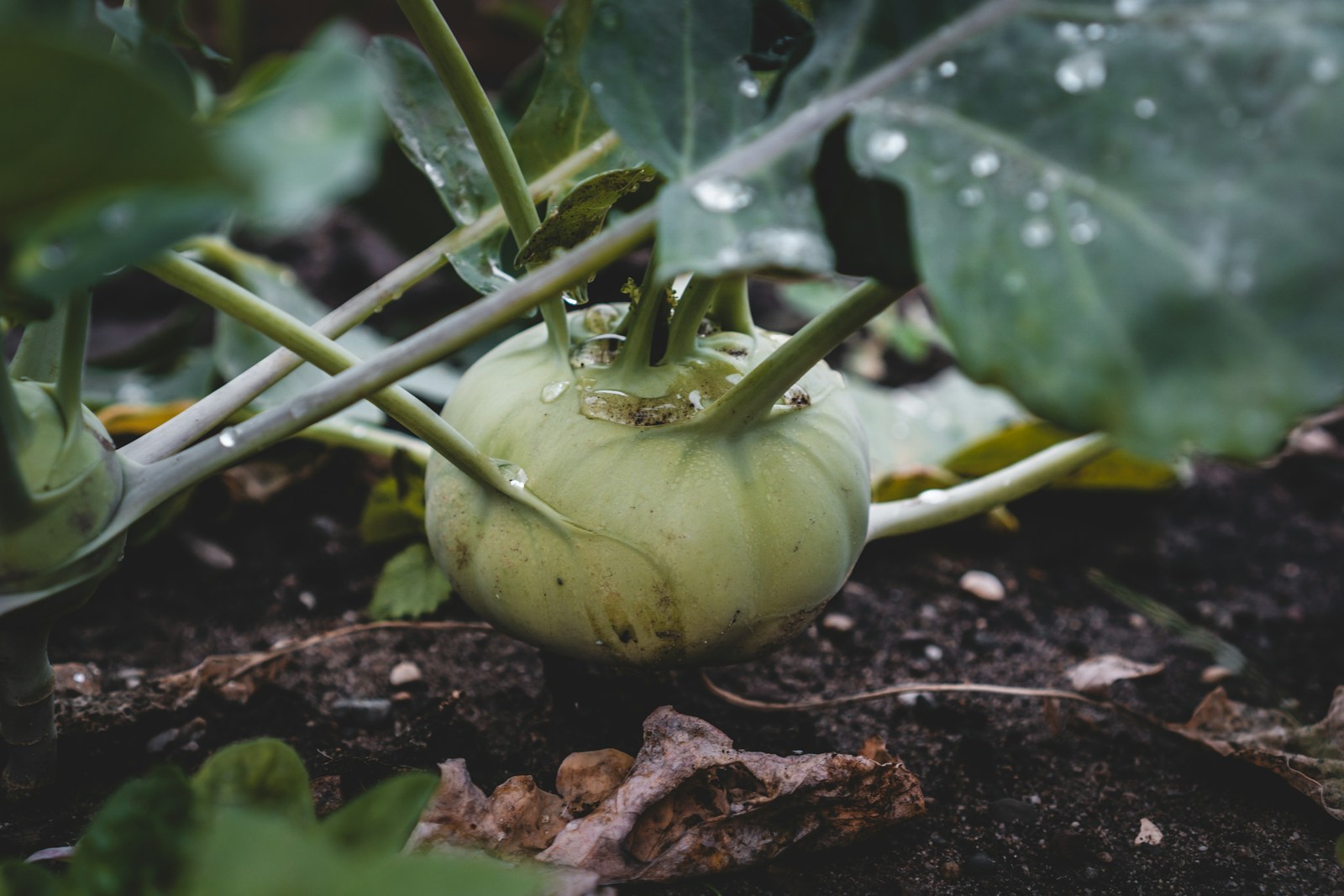
Kohlrabi is a cabbage relative grown for the round, swollen stem that forms just above the soil. It tastes like a mild, sweet broccoli stem with the crunch of an apple, and you can eat it raw or cooked. It grows fast, fits in small beds and suits containers. It is easy to grow as long as you keep it cool and pick it young.
Sowing and planting
Kohlrabi is a cool-season crop. It grows best when days sit between 60 and 75°F (16-24°C). In most gardens that means two crops: one in spring and one in late summer for autumn.
For a spring crop, sow indoors four to six weeks before your last frost. Use a seed tray or cell pack filled with seed compost. Sow two seeds per cell and thin to the strongest one. Keep the tray at about 70°F (21°C) until the seedlings appear, usually in five to ten days. Then move them to a bright, cooler spot.
Plant the seedlings out two to four weeks before your last frost, once they have three or four true leaves. First harden them off (getting seedlings used to outdoor conditions) over about a week. Set them in at the same depth they grew in the tray. Planting deeper can stop the bulb forming cleanly.
You can also sow straight into the bed two to four weeks before your last frost, once the soil can be worked. Sow thinly in rows and thin the seedlings to their final spacing when they are about 2 inches (5 cm) tall. Eat the thinnings in salads.
For an autumn crop, count back from your first frost. Sow about ten weeks before your first frost date, directly in the bed or in trays for planting out. Autumn crops are often sweeter because they mature in cooling weather. In mild winter areas, around USDA zones 8 to 10, you can grow kohlrabi right through the cool season.
Sow small batches every two to three weeks during spring and again in late summer. This gives a steady supply of tender bulbs rather than a glut. Stop spring sowings when hot weather approaches.
Growing on
Watering. Even moisture is the key to tender, sweet bulbs. Give about 1 inch (2.5 cm) of water a week, more in dry or windy weather. Uneven watering makes bulbs split or turn woody. Water at the base, not over the leaves.
Feeding. Kohlrabi is a quick crop, so prepare the bed well before planting. Dig in 2 inches (5 cm) of compost or well-rotted manure. If growth looks slow or the leaves turn pale, side-dress (scatter fertilizer along the row) with a balanced organic fertilizer about three weeks after planting. Avoid heavy doses of nitrogen, which push leaf growth at the expense of the bulb.
Mulching. Spread 2-3 inches (5-8 cm) of straw or shredded leaves around the plants once the soil warms. Mulch keeps the roots cool, holds moisture and smothers weeds. Keep it an inch clear of the swelling stem.
Weeding. Pull weeds by hand or hoe very shallowly. The roots are close to the surface and easily damaged.
Support and pruning. Kohlrabi needs no staking and no pruning. You can pick a few young leaves for cooking, but leave most of them to feed the bulb.
Companions. Kohlrabi grows well beside lettuce, beets, onions and herbs. Keep it apart from pole beans and tomatoes, which shade it and compete for space. Rotate it with other brassicas, so you do not plant any cabbage-family crop in the same spot two years running.
Containers. One plant fits a pot 8 inches (20 cm) across and deep. Choose compact varieties and water more often than you would in the ground.
Harvesting
Harvest most varieties when the bulb is 2-3 inches (5-8 cm) across, about the size of a tennis ball. At this stage the flesh is crisp, juicy and sweet. Bigger bulbs of ordinary varieties turn fibrous and woody. Giant varieties are the exception and stay tender at much larger sizes.
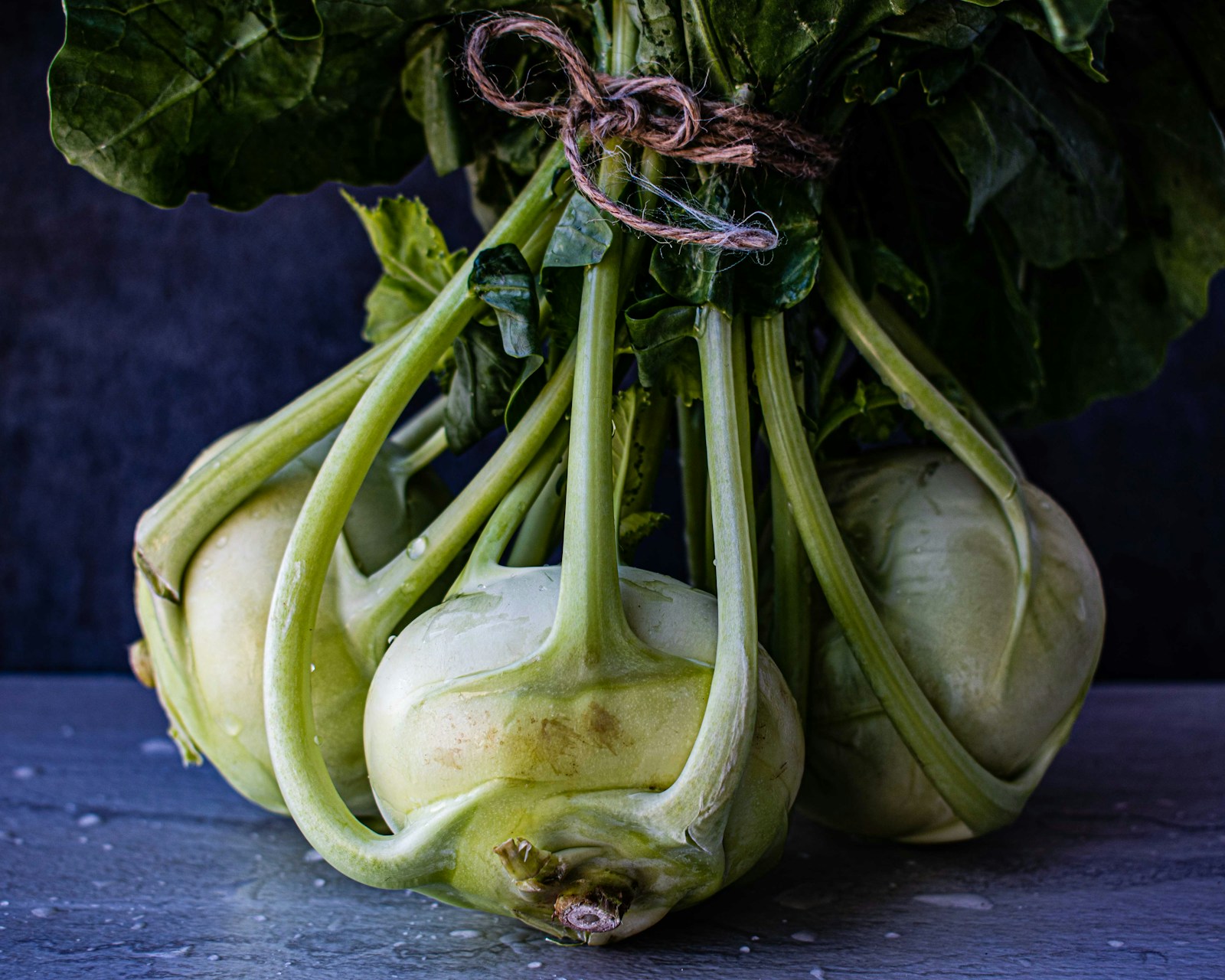
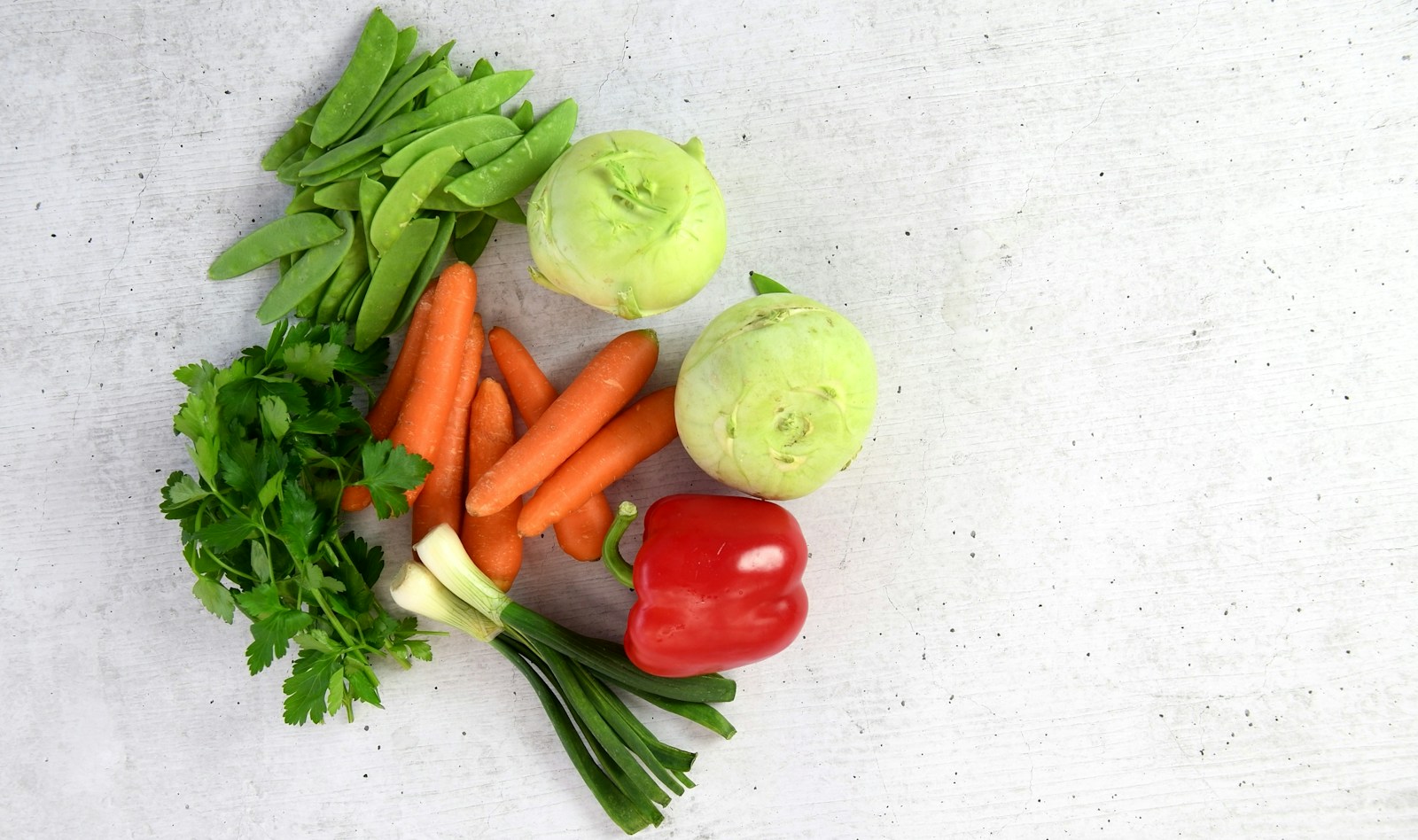
Cut the stem just below the bulb with a sharp knife. Alternatively, pull the whole plant and trim off the root. Trim off the leaves, which you can cook like kale or collards.
Kohlrabi turns woody and tough when it grows too slowly, meets hot weather or stays in the ground too long. Pick bulbs at 2-3 inches (5-8 cm) across, and do not let spring crops mature in summer heat.
Peel the tough outer skin before eating. Slice or grate the flesh raw into salads and slaws, or roast, steam or stir-fry it.
Storage. Remove the leaves and store the bulbs in a plastic bag in the fridge for several weeks. Leaves keep only a few days. For longer storage, keep the bulbs in a cool, humid root cellar near freezing for up to two months. Late autumn bulbs can also stay in the ground through light frosts.
Saving seed. Kohlrabi is a biennial. It flowers only in its second year after a period of cold. It also cross-pollinates with cabbage, kale, broccoli and other Brassica oleracea crops. Saving pure seed takes isolation and space, so most home gardeners buy fresh seed.
Problems and pests
Leaves riddled with small holes
Flea beetles are tiny black jumping beetles that chew pinholes in young leaves. They do most harm to seedlings in warm, dry weather. Cover plants with floating row cover (a light fabric that lets in light and water) straight after sowing or planting. Keep the soil moist, since flea beetles prefer dry conditions.
Large ragged holes and green droppings
Cabbage worms and loopers are green caterpillars that feed on the leaves. Look for them on the undersides and pick them off by hand. Row cover keeps the white butterflies and moths from laying eggs. For heavy attacks, spray Bacillus thuringiensis (Bt), a natural bacterium that targets caterpillars. Follow the label, wear gloves and spray on a calm day.
Plants wilt and roots are tunnelled
Cabbage root maggots are small white larvae that feed on the roots, most often in cool, damp spring soil. Place collars of cardboard or felt around each stem at planting to stop the flies laying eggs. Row cover also helps. Pull and destroy infested plants.
Bulbs split or turn woody
This is caused by uneven watering, heat, or leaving bulbs too long. Water steadily, mulch well and harvest on time.
Plants bolt without forming a bulb
Young plants exposed to a long cold spell, below about 50°F (10°C), can flower early. Do not plant out too early. Protect transplants with row cover during a sudden cold snap.
Varieties worth growing
Green (white) kohlrabi
- 'Early White Vienna': a reliable heirloom with pale green skin and mild flesh.
- 'Winner': a smooth, uniform hybrid that holds well without turning woody.
- 'Grand Duke': an older hybrid with large, even bulbs and good tolerance of variable weather.
Purple kohlrabi
- 'Early Purple Vienna': a heirloom with deep purple skin and white flesh.
- 'Kolibri': a hybrid with vivid purple skin, crisp flesh and quick growth.
Giant kohlrabi
- 'Kossak': a hybrid that grows very large bulbs that stay tender and store well.
- 'Superschmelz': a giant heirloom that stays sweet and crisp at large sizes, best as an autumn crop.