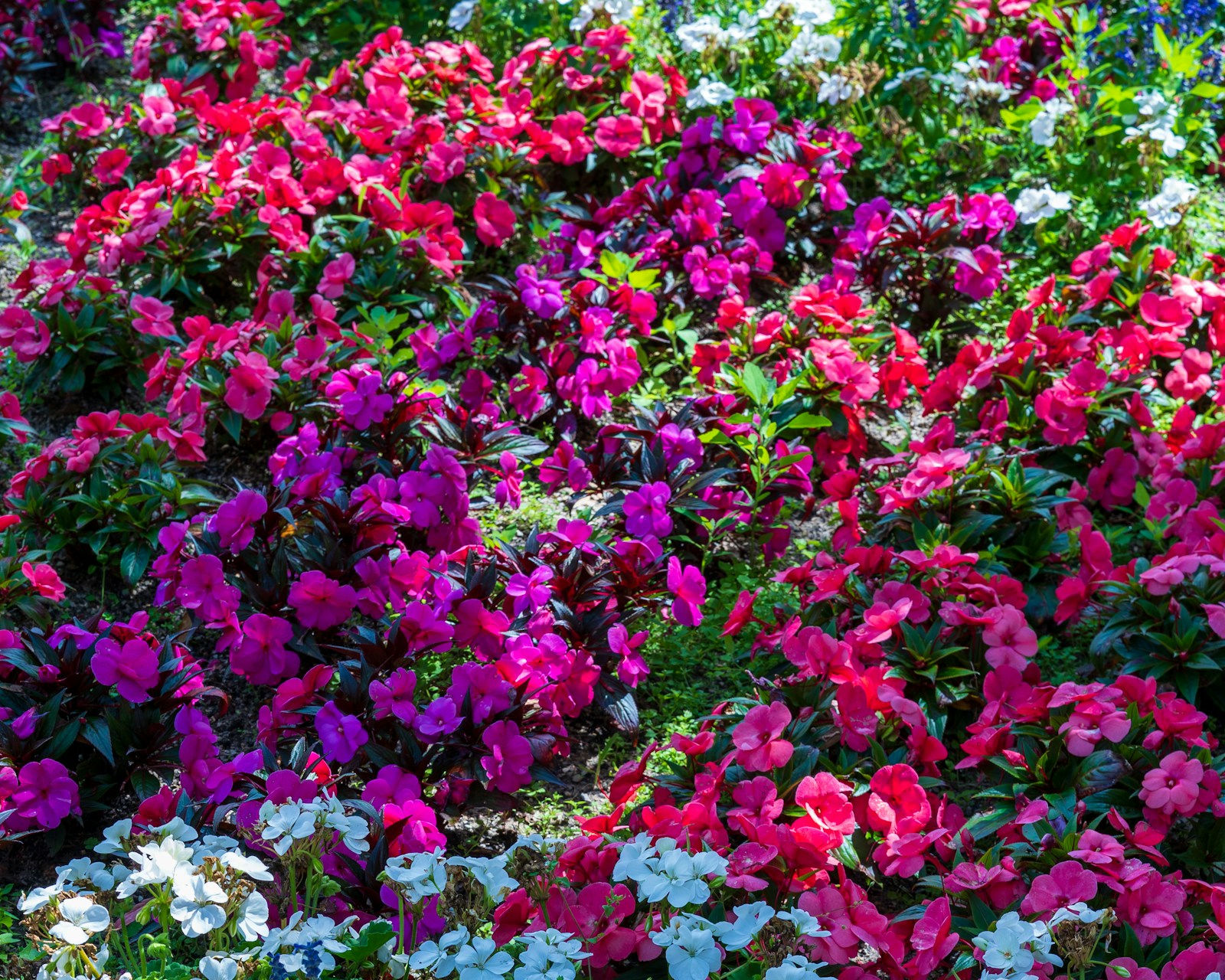
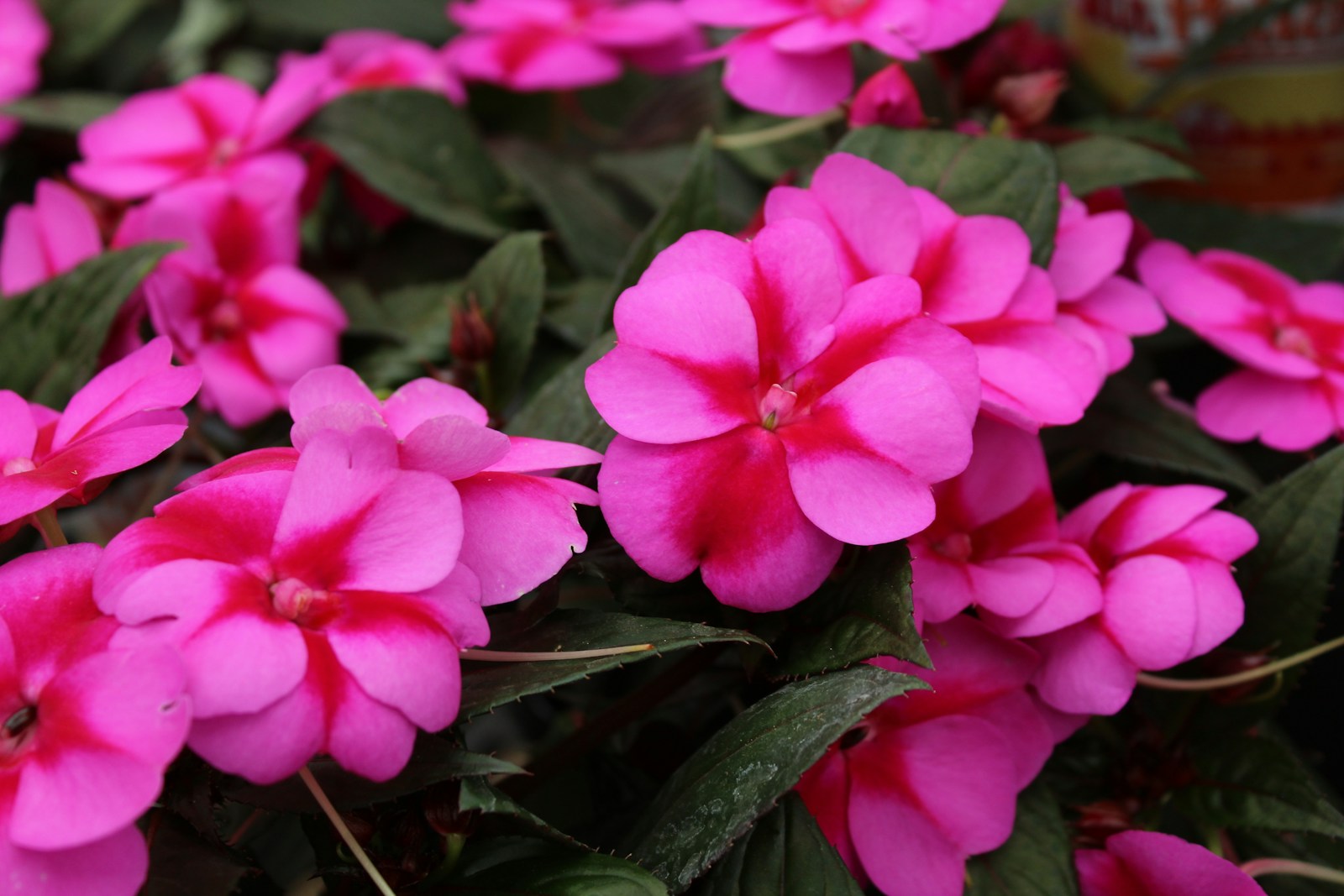
Impatiens are the go-to flower for shade. They form neat mounds covered in flat, five-petalled blooms from early summer until frost, in white, pink, red, orange, purple and bicolours. Few other bedding plants flower so freely out of direct sun. They are easy to grow from young plants, but seed takes patience, and a disease called downy mildew has made variety choice important.
This profile covers bedding impatiens, Impatiens walleriana, and its tougher relatives. Garden balsam (Impatiens balsamina) has its own profile.
Sowing and planting
Most gardeners buy impatiens as young plants. Growing from seed is cheaper but slow, because the seed is tiny and seedlings grow slowly at first.
Indoors from seed. Sow 10 to 12 weeks before your last frost. Press the seed onto the surface of moist seed-starting mix and do not cover it, because light triggers germination. Cover the tray with a clear lid to hold humidity. Keep it at 70 to 75°F (21 to 24°C), ideally on a heat mat, in bright indirect light.
Once seedlings appear, remove the lid gradually and give strong light for 12 to 16 hours a day. Grow lights set a few inches above the seedlings prevent stretching. Pot them on into small cells or pots once they have two true leaves (the leaves that follow the first seed leaves).
Planting out. Impatiens are killed by frost and sulk in cold soil. Wait until 1 to 2 weeks after your last frost, when nights stay above 50°F (10°C). Harden off first: get plants used to outdoor conditions over 7 to 10 days, starting with an hour or two in shade.
Plant at the same depth they grew in the pot. Space them 8 to 12 inches (20 to 30 cm) apart; they fill in quickly. They thrive in beds under trees, along north-facing walls, and in pots, window boxes and hanging baskets.
From cuttings. Impatiens root easily. Take 3 to 4 inch (8 to 10 cm) shoot tips, strip the lower leaves and stand them in water or moist potting mix. Roots usually form within two weeks. Take cuttings in late summer to overwinter young plants on a bright windowsill.
Growing on
Watering. Impatiens wilt fast when dry, which is often the first sign of thirst. Water deeply whenever the top inch (2.5 cm) of soil feels dry. Pots and baskets may need water daily in hot weather. Water the soil rather than the leaves, and water in the morning so foliage dries quickly.
Feeding. Mix compost into beds before planting. Feed every 2 to 3 weeks with a balanced liquid fertilizer at half strength. Plants in containers need regular feeding, since watering washes nutrients out. Too much nitrogen gives lush leaves with fewer flowers.
Mulching. Spread 1 to 2 inches (2.5 to 5 cm) of fine mulch, such as shredded leaves, to keep roots cool and moist. Keep it clear of the stems.
Pinching and trimming. Modern varieties branch well on their own. If plants grow leggy by midsummer, cut them back by a third. They regrow and flower again within a couple of weeks. Impatiens are self-cleaning, so you rarely need to deadhead; spent flowers simply drop.
Companions. Pair them with other shade lovers, such as ferns, hostas, coleus and begonias. Their low, rounded shape suits the front of a shady border.
Pollinator value. Single-flowered impatiens offer some nectar and attract bees and occasional hummingbirds. Double-flowered types offer less.
Harvesting
Impatiens are grown for garden colour rather than cut flowers, and their stems are short. Short sprigs still look pretty floating in a shallow bowl or in a small posy vase. Cut them in the cool of the morning and put them straight into water.
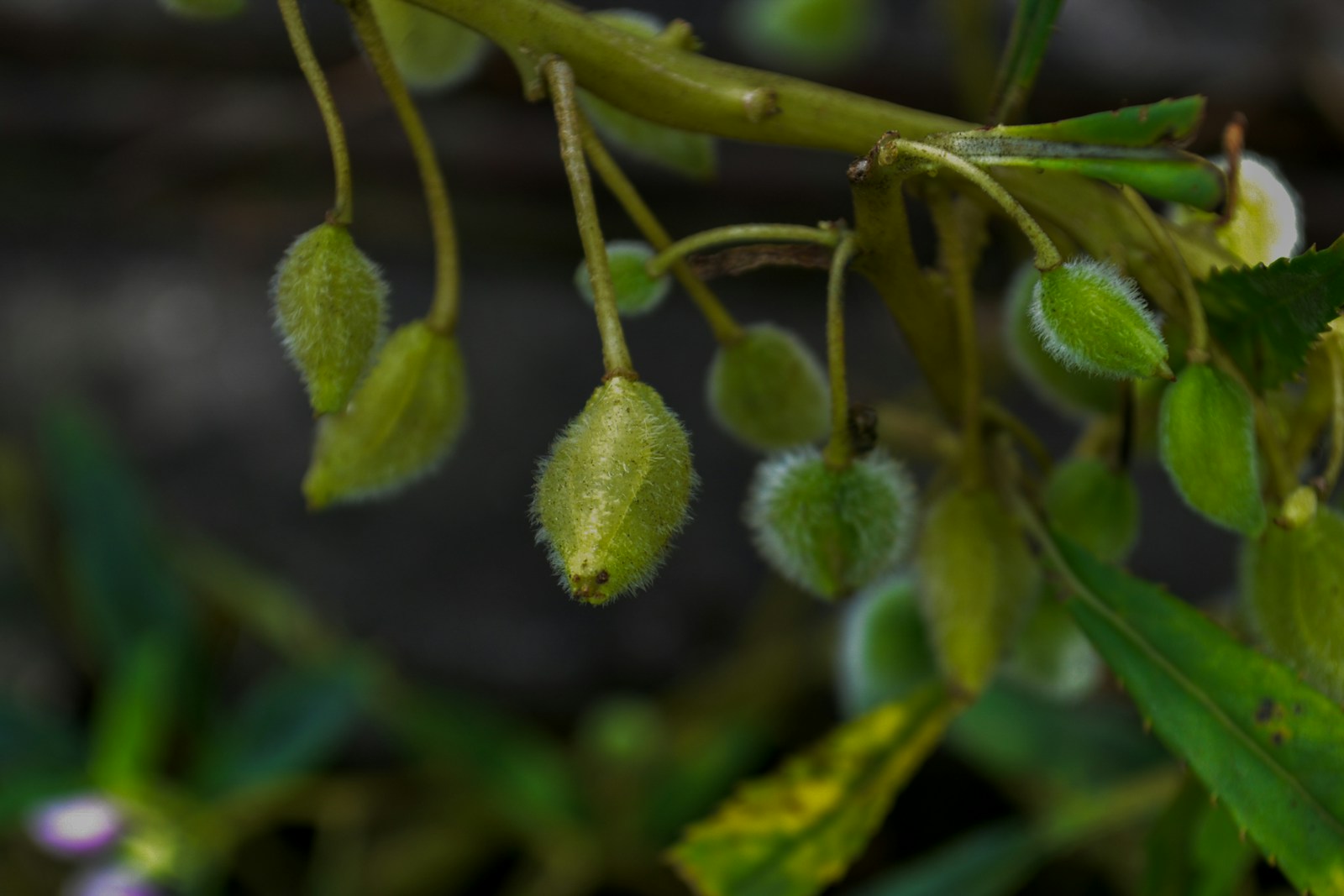
Saving seed. The ripe seed pods burst when touched, flinging the seed. This is where the name "touch-me-not" comes from. To collect seed, gently slip a small paper bag over a fat, pale green pod and pinch it. Dry the seed on paper for a week, then store it in a labelled envelope somewhere cool and dry.
Most bedding impatiens are hybrids, so saved seed may not match the parent. Cuttings give identical plants instead.
Overwintering. Before your first frost, dig up a favourite plant or take cuttings. Keep them in a bright, warm room above 55°F (13°C), water sparingly and plant them out again after frost.
Problems and pests
Leaves yellow, curl down and drop, leaving bare stems
This is impatiens downy mildew, a water mould (a fungus-like organism). Look for white, fuzzy growth under the leaves. Cool, damp nights spread it fast. There is no cure. Pull out affected plants, roots and all, and bag them for the trash. Resting spores can stay in the soil, so do not replant I. walleriana in that bed for several years. Grow resistant types instead (see below).
Plants wilt suddenly in the afternoon
Usually simple thirst, especially in pots or where tree roots compete. Water deeply and mulch. If plants stay limp in moist soil, check for root rot from waterlogging and improve drainage.
Leaves speckled and pale, with fine webbing
Spider mites (tiny sap-sucking pests) like hot, dry conditions. Spray leaf undersides with water every few days. If they persist, use insecticidal soap, following the label, and avoid spraying in full sun.
Sticky leaves and clusters of small insects
Aphids and whiteflies feed on the sap. Knock aphids off with a jet of water. Encourage ladybugs and other predators, and use insecticidal soap for heavy infestations.
Holes in leaves, especially in young plants
Slugs and snails love moist shade. Check at night and remove them by hand. Keep the bed free of debris where they hide.
Impatiens downy mildew can wipe out a whole bed of Impatiens walleriana in a few weeks. If it has appeared in your area, plant resistant varieties or New Guinea impatiens instead.
Varieties worth growing
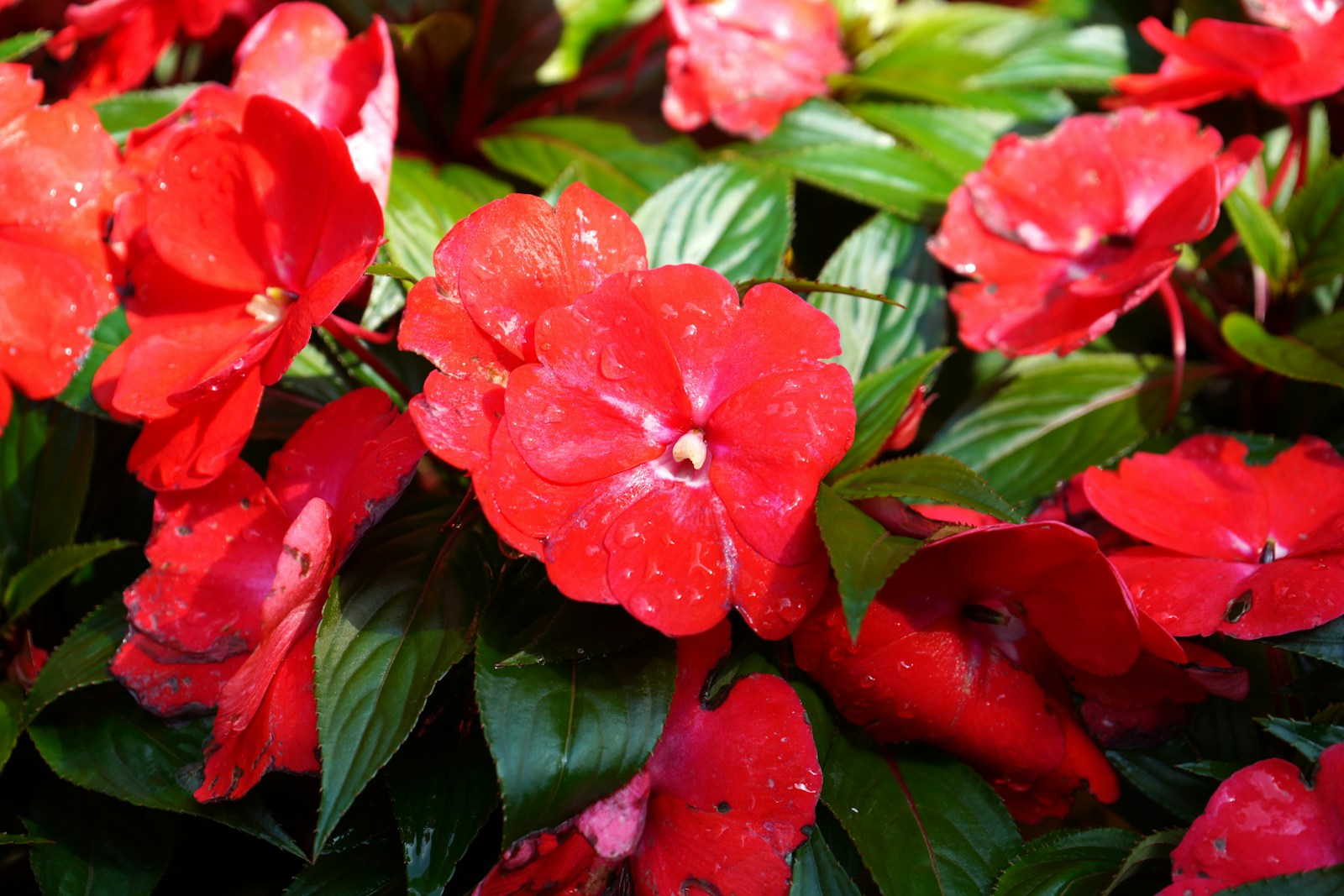
Bedding impatiens (Impatiens walleriana)
- 'Super Elfin' series: compact, free-flowering classics in a wide colour range; prone to downy mildew.
- 'Accent' series: low, even mounds with large flowers; prone to downy mildew.
Downy mildew-resistant bedding types
- 'Beacon' series: look like classic impatiens but have strong resistance to downy mildew; grown from seed or plugs.
- 'Imara XDR' series: another resistant series with the familiar bedding impatiens habit.
New Guinea and hybrid impatiens
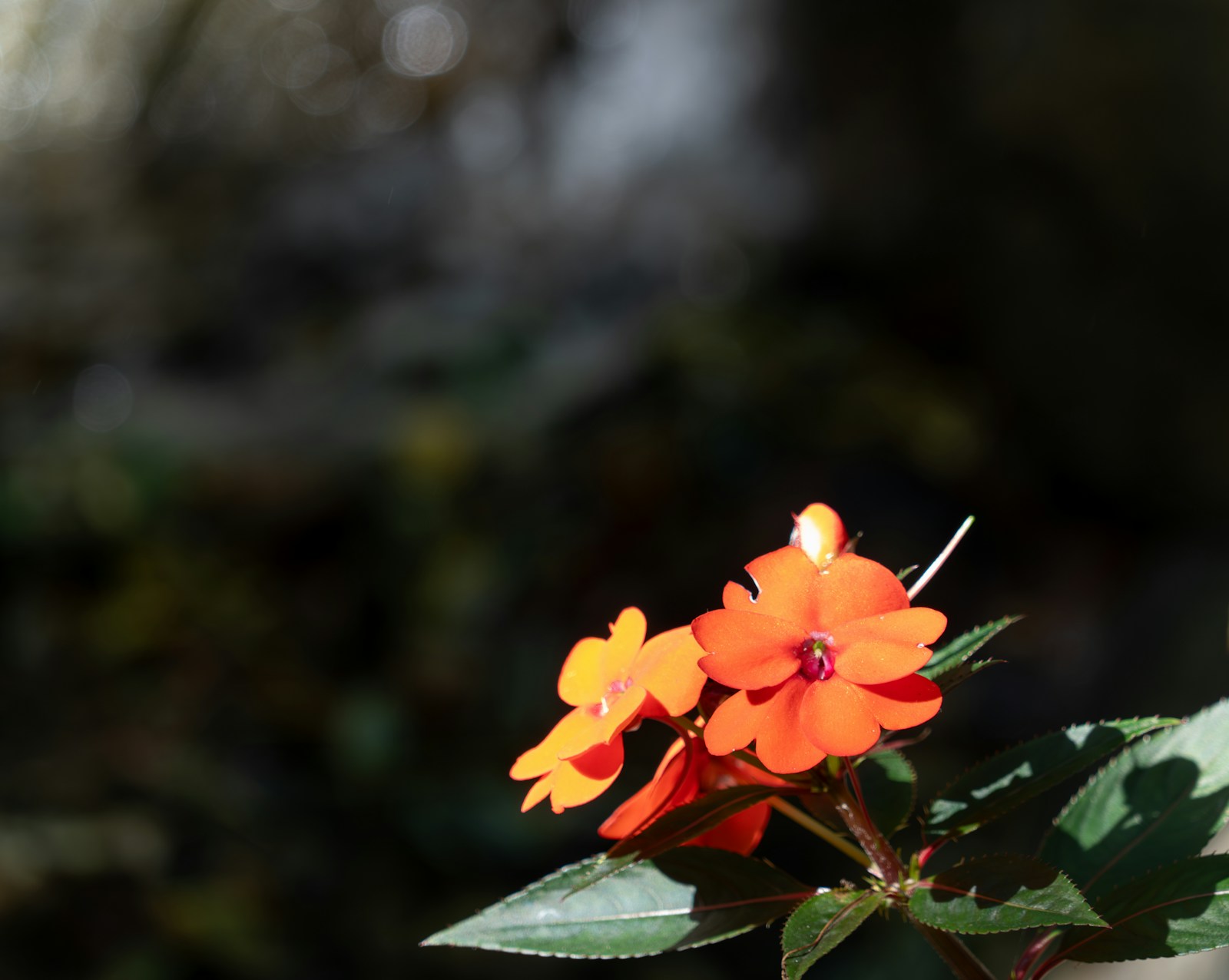
New Guinea impatiens (Impatiens hawkeri) have larger flowers and bold, often bronze or variegated leaves. They are highly resistant to downy mildew and take a little more sun.
- 'Divine' series: New Guinea impatiens you can grow from seed.
- 'SunPatiens' series: vigorous hybrids that tolerate full sun as well as shade, with strong downy mildew resistance.