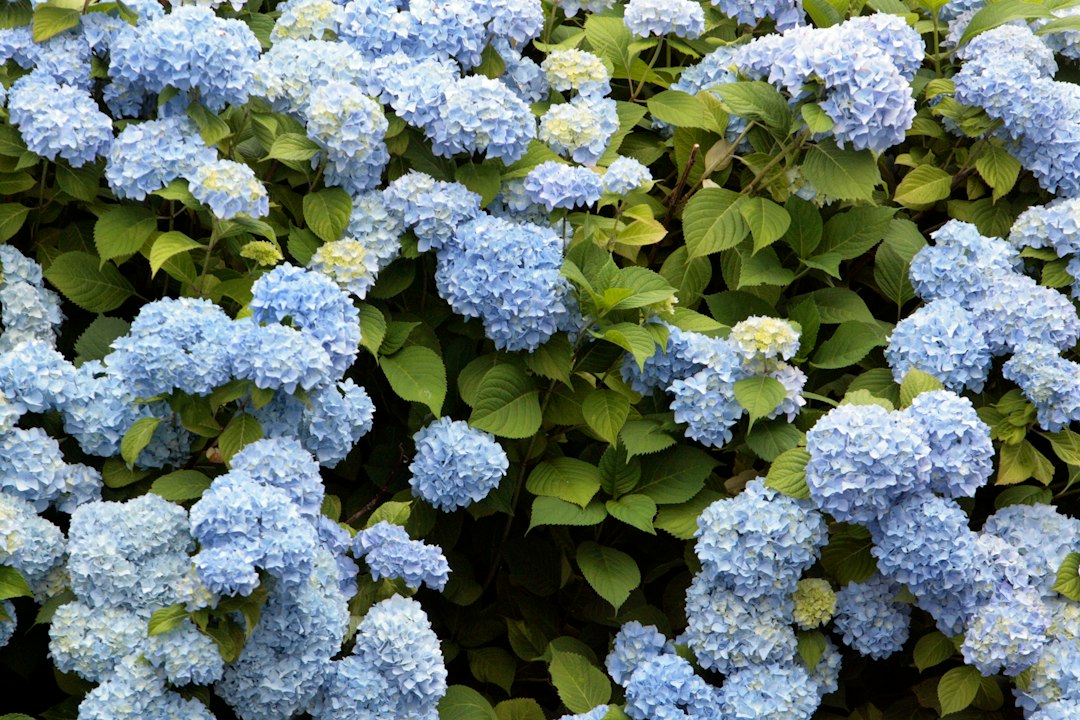
Hydrangea is a group of flowering shrubs grown for their big, showy flower clusters — some rounded like pom-poms (mophead types), others cone-shaped (panicle types) — set against broad, deep-green leaves. Gardeners grow it for a long season of bold color in a part-shade border, and because few other shrubs give you this much bloom for so little daily attention. It counts as a low-difficulty shrub once it is settled into the right spot, though getting the watering and pruning right usually takes a season or two to learn.
Sowing and planting
Hydrangea almost always goes into the garden as a potted shrub from a nursery, not from seed. Named varieties don't come true from seed, and seed-grown plants can take several years to flower, so a potted plant is the practical starting point for nearly every gardener.
Choose a site with part sun: morning sun and afternoon shade works best, since it reduces afternoon wilting and leaf scorch on hot days, while full-day sun stresses most types in a typical garden. Work compost into the planting hole to improve both drainage and moisture retention, since hydrangea sits poorly in soil that is either soggy or fast-draining. Space plants about 60 inches (150 cm) apart to leave room for the mature spread — many types grow as wide as they do tall.
Plant in spring, once the ground has thawed and is workable, or in fall while the soil is still warm enough for roots to establish before winter sets in. Fall planting gives roots a head start, but if you garden somewhere colder — zone 6b, for example — spring planting avoids the risk of a young, unestablished plant facing its first hard winter. Water in well after planting and keep the root zone consistently moist through the first full growing season while roots spread out.
Growing on
The name hydrangea comes from Greek words for "water vessel," a fair description of how thirsty this shrub is. Water deeply whenever the top couple of inches (5 cm) of soil dry out, more often during hot spells, and apply a 2-3 inch (5-8 cm) layer of mulch to hold moisture and keep roots cool. Feed once in spring with a balanced, slow-release fertilizer; too much nitrogen pushes leafy growth at the expense of flowers.
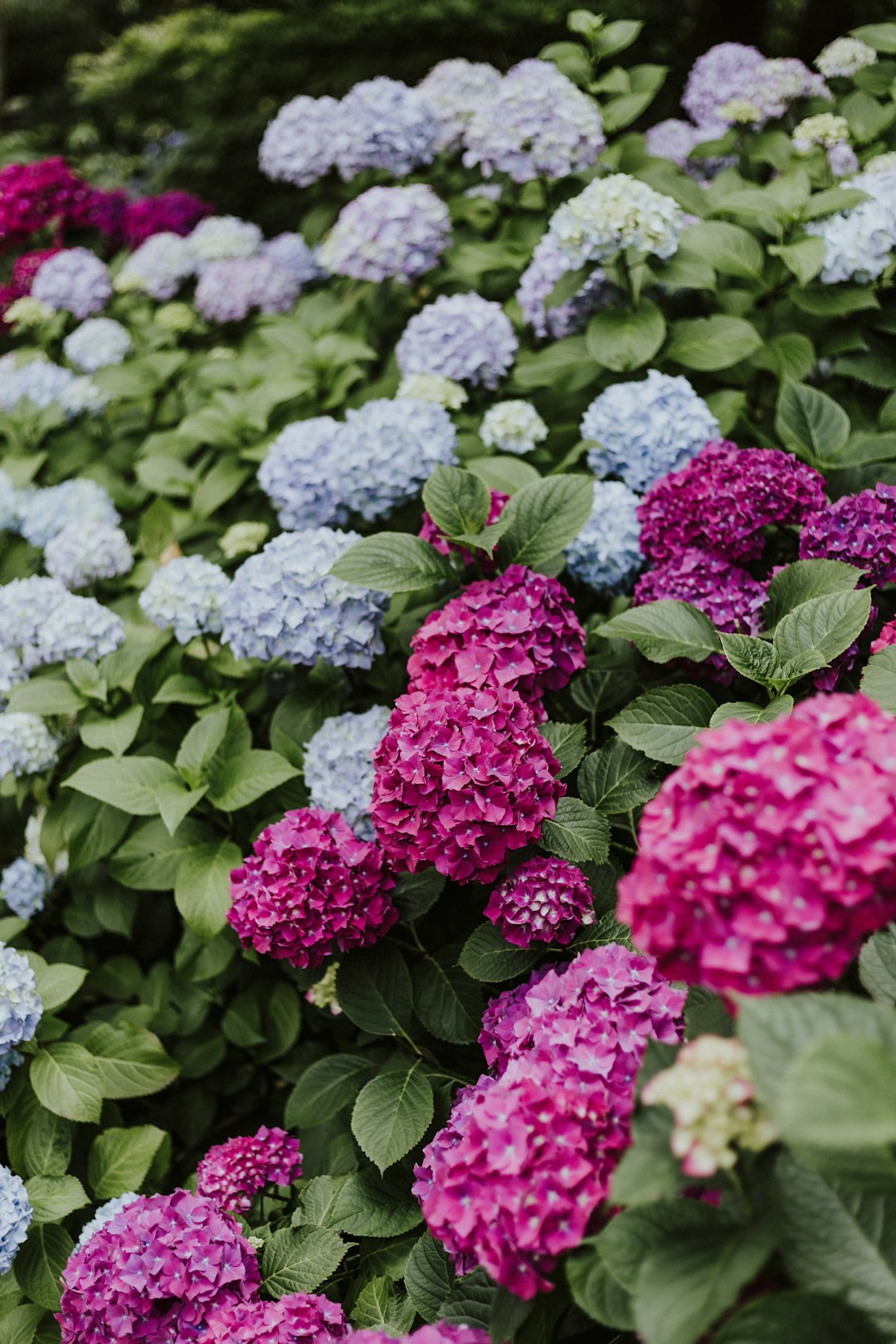
One genuinely useful, well-documented quirk: on bigleaf hydrangea (Hydrangea macrophylla), flower color shifts with soil chemistry. Acidic soil makes aluminum available to the plant, which turns blooms blue; alkaline soil locks that aluminum up, and blooms turn pink. Gardeners nudge this with soil amendments — garden lime to push toward pink, aluminum sulfate or sulfur to push toward blue — though changes take a full season or more to show and only work within that variety's genetic range. This color-shifting trait doesn't apply to most other hydrangea species; white-flowered types, in particular, generally stay white regardless of soil pH.
Pruning is the single biggest source of "why didn't my hydrangea bloom" frustration, because different species flower on different wood. Some types, including most bigleaf and oakleaf hydrangeas, set next year's flower buds in late summer on "old wood" (stems grown the previous year), so pruning in late fall, winter, or early spring cuts off the very buds that would have bloomed. Others, including smooth hydrangea and panicle hydrangea, bloom on "new wood" (the current season's growth) and can be cut back hard in late winter without losing flowers. Find out which type you're growing before you reach for the pruners. When in doubt, limit pruning to removing dead or damaged stems right after flowering, which is safe for nearly every type.
Harvesting
Hydrangea blooms cut beautifully for indoor arrangements, fresh or dried. For fresh arrangements, cut stems once the flower clusters have fully opened and feel firm, early in the morning when stems hold the most moisture, then strip the lower leaves and place the stems in water right away. For dried arrangements, wait until the blooms start to feel slightly papery and thinner on the plant, usually later in the season, then cut them and hang the stems upside down in a dry, airy spot out of direct sun until they're fully dry.
Problems and pests
Few or no blooms
The most common cause is pruning at the wrong time of year and removing next season's flower buds, especially on old-wood bloomers. A late, hard frost after buds have formed can also damage or kill them outright. Learn whether your hydrangea blooms on old or new wood, and prune accordingly.
Leaves look scorched or crispy at the edges
Usually too much direct sun combined with too little water, especially in a hot, afternoon-facing spot. Move the plant to a part-shade position if you can, and water more deeply and more often during heat.
Wilting on hot afternoons despite moist soil
Hydrangea's big, soft leaves lose water faster than the roots can replace it on hot, sunny afternoons, so the plant droops even when the soil underneath is damp. This is usually temporary, and the plant perks back up by evening; it only signals a real problem if it hasn't recovered by the next morning.
White, powdery coating on leaves
This is powdery mildew, a fungal disease favored by poor air circulation and humid conditions. Space plants to allow airflow, water at the base rather than overhead, and remove badly affected leaves.
Small, clustered insects on new growth
Aphids feed on tender new shoots and buds. A strong jet of water knocks most off, and insecticidal soap handles persistent infestations; check the product label and handle any spray carefully around pollinators.
Varieties worth growing
- 'Annabelle' (Hydrangea arborescens) — smooth hydrangea with large white mophead blooms on new wood, hardy and easy to cut back hard each year.
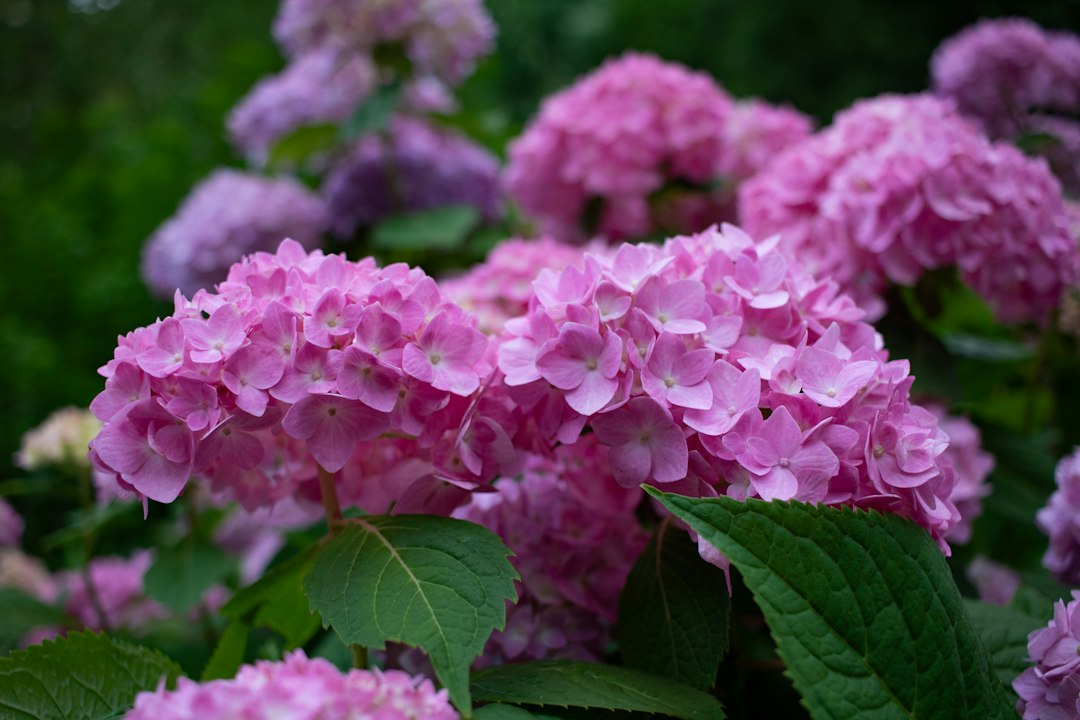
- 'Endless Summer' (Hydrangea macrophylla) — a reblooming bigleaf type that flowers on both old and new wood, more forgiving of pruning mistakes.
- 'Limelight' (Hydrangea paniculata) — panicle hydrangea with cone-shaped blooms that open lime-green and age to pink; tolerates more sun and colder winters than bigleaf types.
- Oakleaf hydrangea (Hydrangea quercifolia) — distinctive lobed leaves with strong fall color, plus cone-shaped white blooms.
- 'Nikko Blue' (Hydrangea macrophylla) — a classic mophead that typically turns blue in acidic soil.