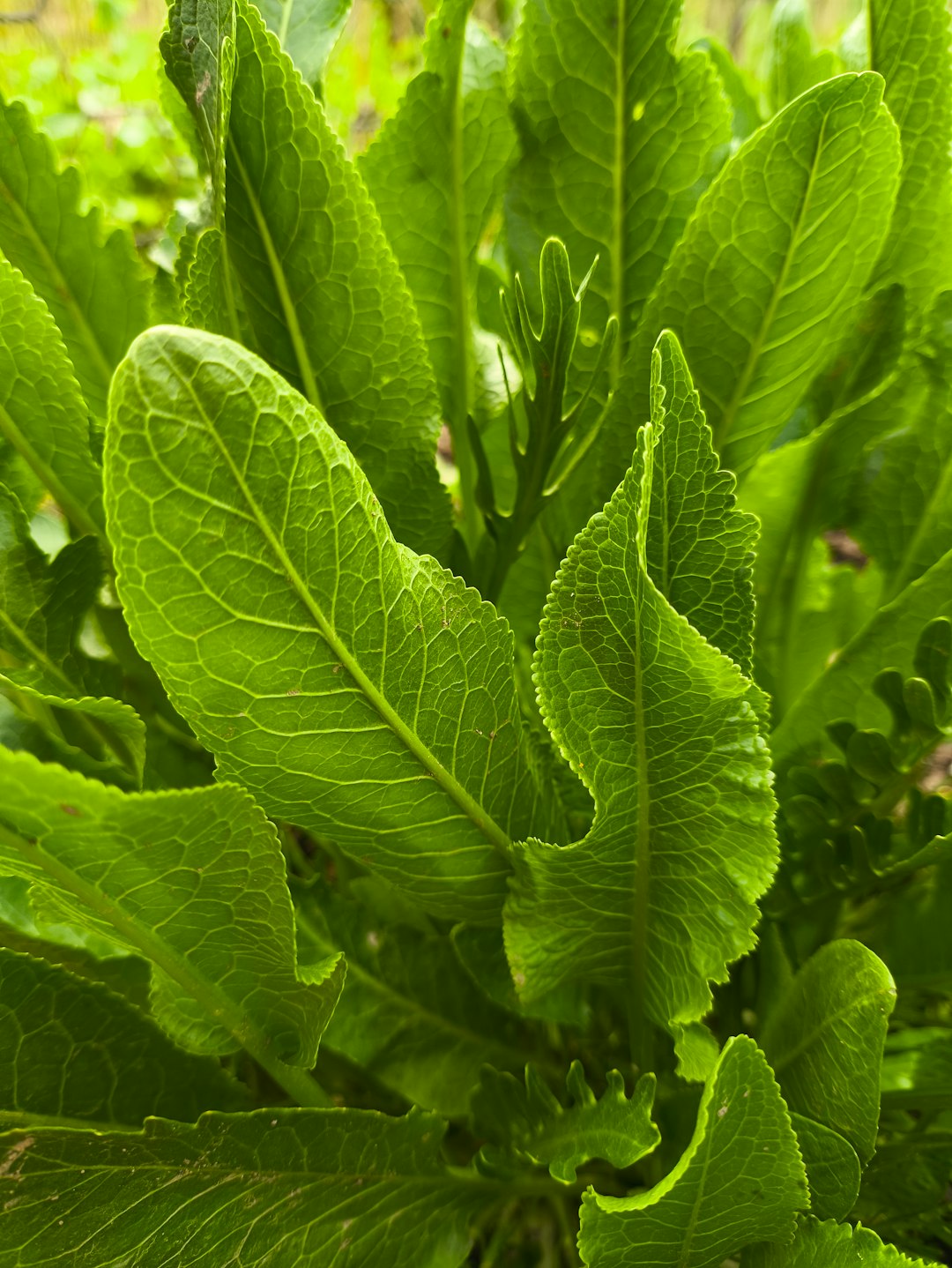
Horseradish (Armoracia rusticana) is a hardy perennial in the Brassicaceae (cabbage family), grown for its pale, knobby root rather than its broad leaves — grated fresh, that root is the sharp heat behind horseradish sauce and other prepared condiments. Before you plant it, know the one thing that matters most: horseradish spreads from even small fragments of root left behind in the soil, and once it's established in open ground it's genuinely difficult to remove completely. Plant it somewhere you're happy to have it forever — a bottomless bucket sunk into the soil, a dedicated raised bed, or an out-of-the-way corner all work well. Grown that way, it's an easy, trouble-free crop that asks very little of you over a single growing season.
Sowing and planting
Horseradish is almost never grown from seed — plants rarely flower or set viable seed, and seedlings that do appear don't reliably resemble the parent plant. Instead, it's grown from root cuttings, sometimes called sets or crowns: short pieces of root, usually about 6-8 inches (15-20 cm) long and roughly as thick as a pencil, taken from an established plant or bought from a nursery or seed supplier.
Siting matters more with horseradish than with almost any other vegetable, because of how readily it spreads. Any piece of root left in the soil, even a short section overlooked while digging, can resprout into a new plant, and an established patch can be genuinely hard to dig out completely. Give it a permanent, contained spot rather than tucking it into a vegetable bed you'll want to rotate other crops through later. A bottomless bucket or large container sunk into the ground (which blocks roots from spreading sideways while still draining freely), a dedicated raised bed, and an out-of-the-way corner where spreading doesn't matter are all legitimate, commonly used options. Choose a spot in full sun to part shade with loose, deep, well-drained soil — heavy, compacted, or rocky ground tends to produce forked, twisted roots that are harder to use.
In zone 6b, plant root cuttings in early spring as soon as the soil can be worked. Set each piece at a slight angle, about 45 degrees, with the top end 2-3 inches (5-7.5 cm) below the soil surface and the narrower end pointing down. Space plants about 24 inches (60 cm) apart to give the roots room to bulk up. New top growth usually appears within a few weeks.
Growing on
Horseradish needs little attention once it's growing. Water regularly through the season, especially during dry spells, to keep the root growing steadily — growth that stalls and restarts tends to leave the root woodier and less pleasant to use. It isn't a heavy feeder: a yearly top-dressing of compost, or a balanced, general-purpose fertilizer worked into the soil in spring, is usually enough. Too much nitrogen pushes leafy top growth at the expense of the root.
Some growers dig down partway alongside the plant in midsummer to "lift and trim" the thinner side roots branching off the main root, then firm the soil back into place. The idea is to channel the plant's energy into one larger, straighter main root instead of several thinner, forked ones. It's optional and not necessary for a usable harvest, but worth trying if you'd rather have fewer, larger roots to work with.
Harvesting
Horseradish root can be dug any time after the first good frost of fall, and many growers prefer to wait for one or two frosts before digging, since cold weather is thought to sweeten and concentrate the root's flavor — much the same logic that applies to parsnips. The foliage typically dies back after frost, which also makes the plant easier to locate.
Dig carefully with a garden fork, loosening the soil well beyond where you expect the root to reach, since horseradish roots grow long and branch unpredictably. Lift as much of the root system as you can, including the smaller side roots, then go back over the area by hand to pick out any pieces you missed. If limiting the plant's spread matters to you, treat this as an ongoing task rather than a one-time fix — even careful digging rarely removes every fragment, and anything left behind will likely resprout the following spring. Store a few healthy root pieces in damp sand or soil in a cool spot over winter to replant the following year.
Problems and pests
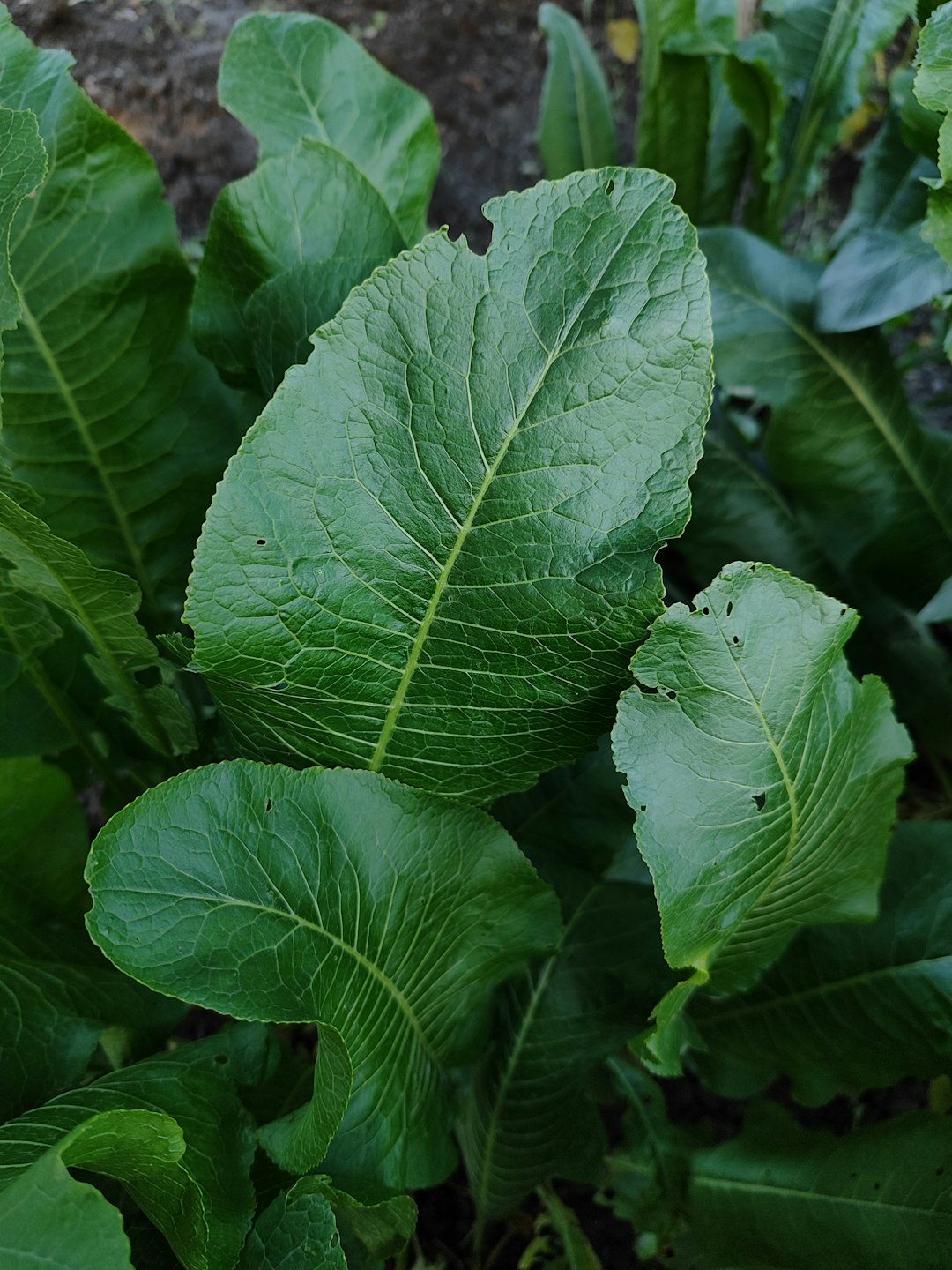
Small, shot-hole-like holes appear across the leaves
Flea beetles, tiny jumping beetles common on brassica-family plants, chew small round holes in the leaves, usually worst on young growth in warm, dry weather. Established horseradish plants generally shrug off the damage without a real drop in root size. Floating row cover over young growth, and keeping the surrounding area free of plant debris where beetles overwinter, both help reduce numbers.
Leaves develop pale or dark spots that enlarge over the season
Fungal leaf spot diseases, common across the cabbage family, can take hold in humid weather or where leaves stay wet for long periods. They rarely threaten the root itself. Remove badly affected leaves, water at the soil line rather than overhead, and space plants to let air move freely between them.
The plant keeps coming back where you don't want it
This is horseradish's real problem: any fragment of root left in the soil can resprout, so plants that are dug up, tilled through, or grown without a contained bed tend to spread well beyond their original spot over time. Prevention — a sunken bottomless container, a dedicated bed, or a spot where spreading genuinely doesn't matter — is far easier than removal after the fact. If it does escape its intended spot, dig out as much root as you can find and keep removing any new shoots as soon as they appear; repeated removal eventually exhausts the root's stored energy, though it can take more than one season.
Varieties worth growing
Most home gardeners simply grow "horseradish," with root pieces passed along from another gardener rather than bought as a named cultivar, and a single generic type suits home use perfectly well. Where named stock is available, 'Common' (also sold as 'Bohemian') is the classic type grown by home gardeners and small producers, valued for its reliable flavor. 'Big Top Western' is grown more by commercial producers, known for larger, more upright leaves and a heavier yield, and is sometimes available from specialty suppliers. Unless you have a particular reason to seek out named stock, a locally sourced root piece of unknown variety grows and performs just as well.