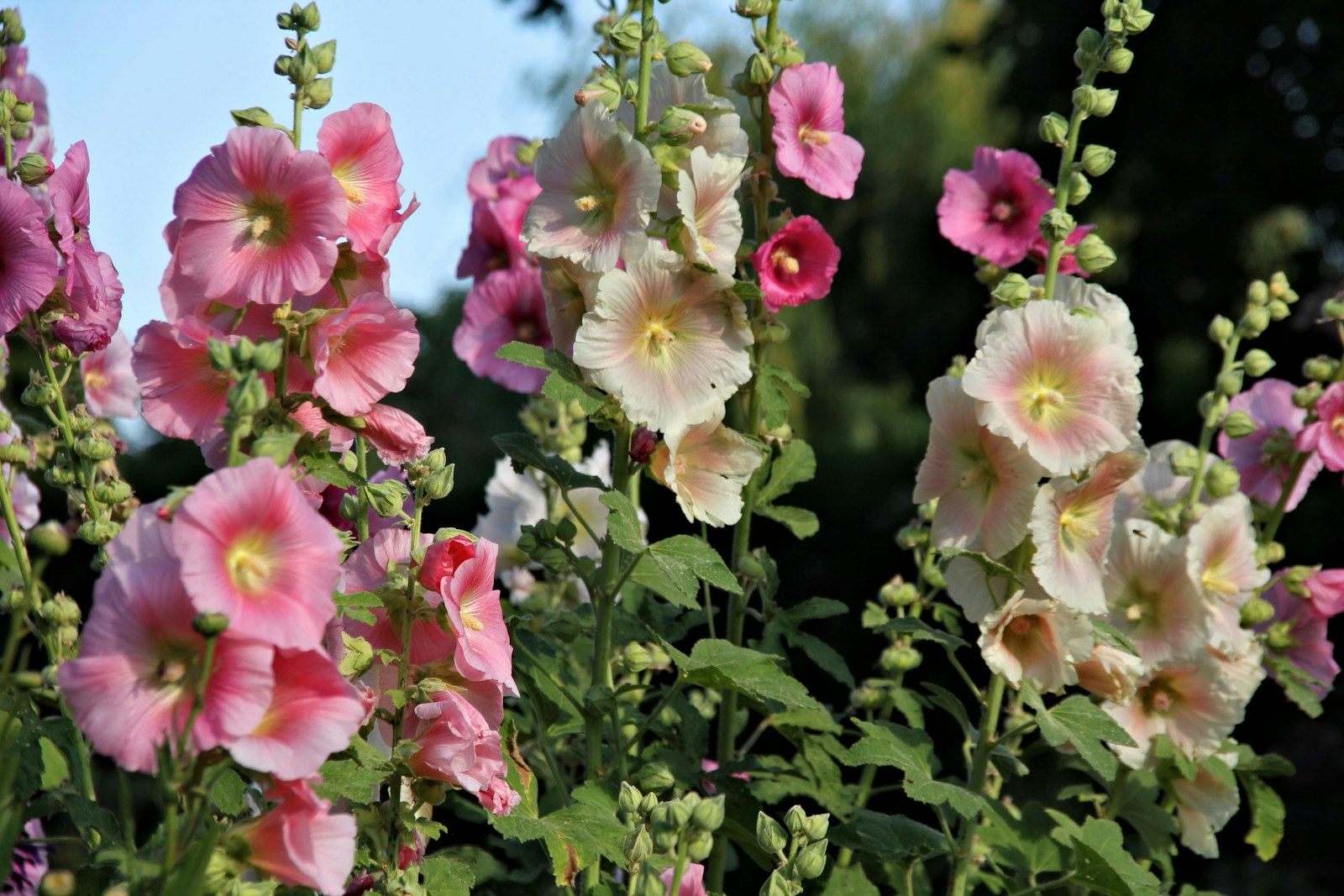
Hollyhocks send up flower spikes taller than most people, lined with blooms from the bottom up. They bring height to the back of a border, a fence line or a sunny wall, and bees love them. Most are biennial or short-lived perennials: leaves in the first year, flowers in the second. They are easy to raise from seed, but rust makes them a moderate challenge.
Sowing and planting
Hollyhocks grow a long taproot (a single, deep main root), so they dislike being moved once established. Sow them where they are to flower, or move them while they are still small.
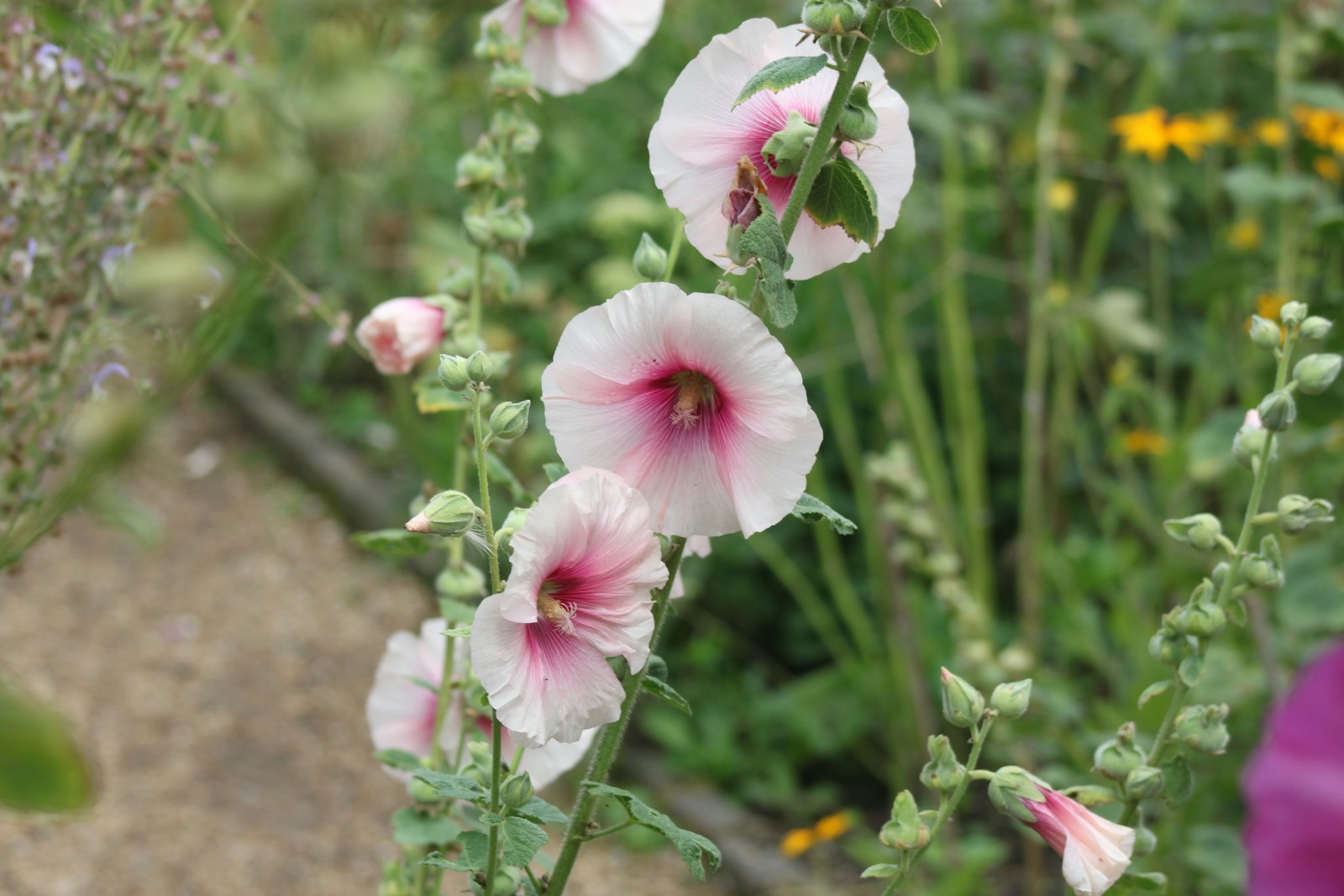
You have three good windows:
- Late spring to midsummer outdoors. Sow after your last frost, once the soil has warmed. Plants build a rosette (a low ring of leaves) this year and flower next summer. This is the classic biennial method.
- Late summer outdoors. In zones 6 to 9, sowing 8 to 10 weeks before your first frost gives sturdy rosettes that overwinter and bloom the next year.
- Indoors for first-year flowers. Sow first-year strains 8 to 10 weeks before your last frost in deep pots. Plant them out 1 to 2 weeks after your last frost.
Soaking seed in warm water overnight can speed germination. Sow 1/4 inch (6 mm) deep in groups of two or three, then thin to the strongest seedling. Keep the soil evenly moist until seedlings appear.
Harden off indoor-raised plants first. This means getting them used to outdoor conditions over 7 to 10 days, starting with a few hours in shade. Plant at the same depth they grew in the pot, and disturb the root ball as little as possible.
Choose a spot with full sun and good airflow. A site against a fence or wall gives shelter from wind, but leave a gap of at least a foot (30 cm) so air can move around the leaves. Crowded, still air encourages rust.
Growing on
Water deeply once a week in dry spells, more often in sandy soil. Aim the water at the base of the plant, not over the leaves. Wet foliage spreads rust. Morning watering lets any splashes dry quickly.
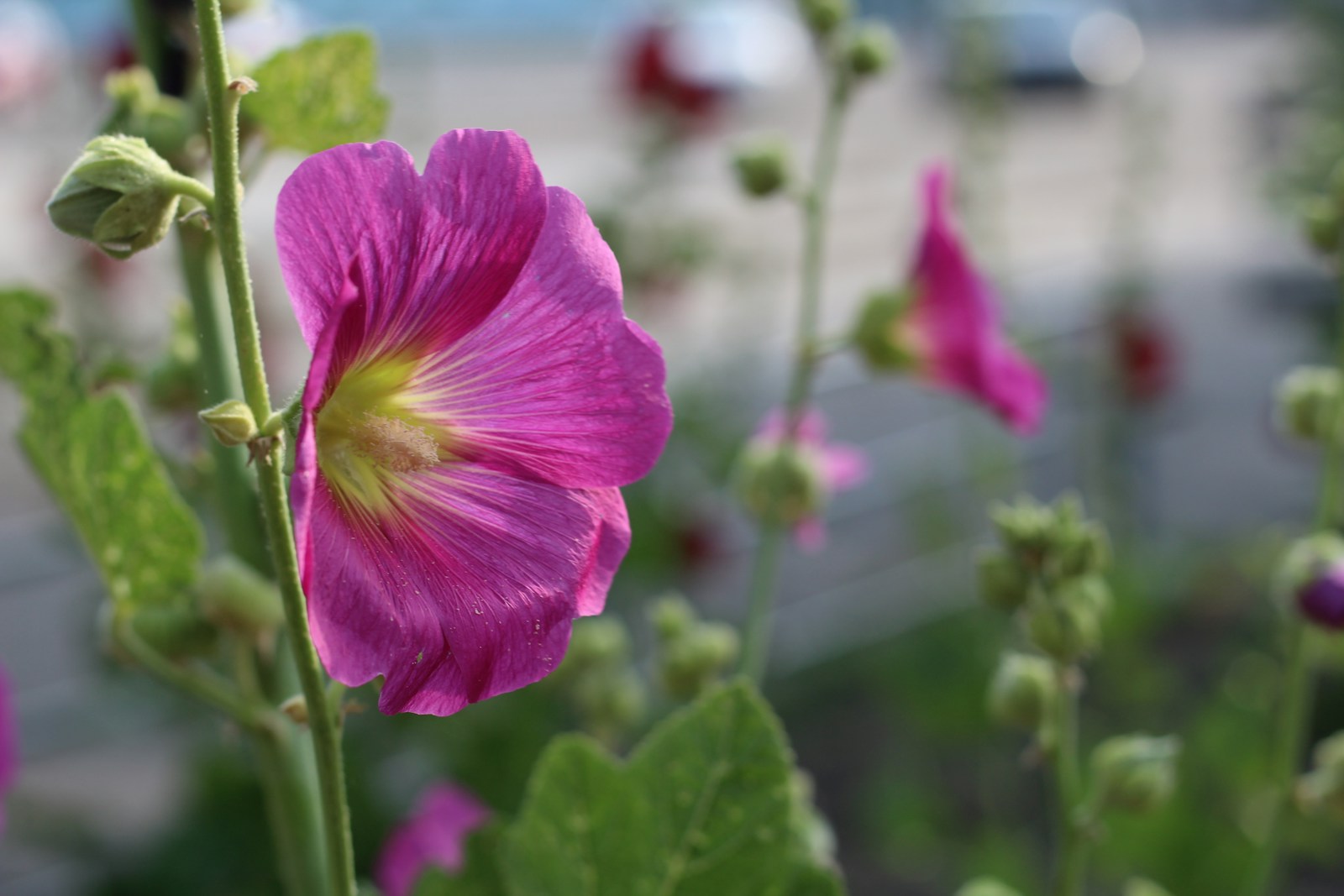
Hollyhocks are not greedy. Dig in compost before planting, then give a balanced fertilizer once in spring as the flower stalk starts to rise. Too much nitrogen makes soft, leafy growth that flops and attracts disease.
Spread 2 inches (5 cm) of mulch around the plants to keep roots cool and moist. Keep it a few inches clear of the crown (where stems meet the roots). In zones 3 to 5, a loose winter mulch of straw or leaves helps young rosettes through hard cold. Pull it back in spring.
Staking. Tall types often lean or snap in wind and rain. Push a sturdy stake in early, before the stalk passes 2 feet (60 cm). Tie the stem loosely every foot (30 cm) as it grows. Plants set against a fence can be tied to the fence instead.
Deadheading and cutting back. Pinch off faded blooms to keep the spike tidy. Once the whole spike has finished, cut it down to the base unless you want seed. Cutting back before seeds set sometimes coaxes a short-lived plant into flowering another year.
Companions. Hollyhocks suit the back row. Plant lower, bushy flowers in front to hide the bare lower stems and any rust-marked leaves.
Pollinator value. The open, bowl-shaped single flowers feed bees and other insects. Hummingbirds and butterflies visit too. Double forms offer less pollen and nectar.
Harvesting
Cutting for vases. Cut a spike when the bottom two or three flowers have opened and the upper buds show colour. Cut early in the morning and plunge the stems straight into water. Many growers sear the cut ends in hot water for a few seconds to help them last. Expect several days in a vase, with buds opening in turn.
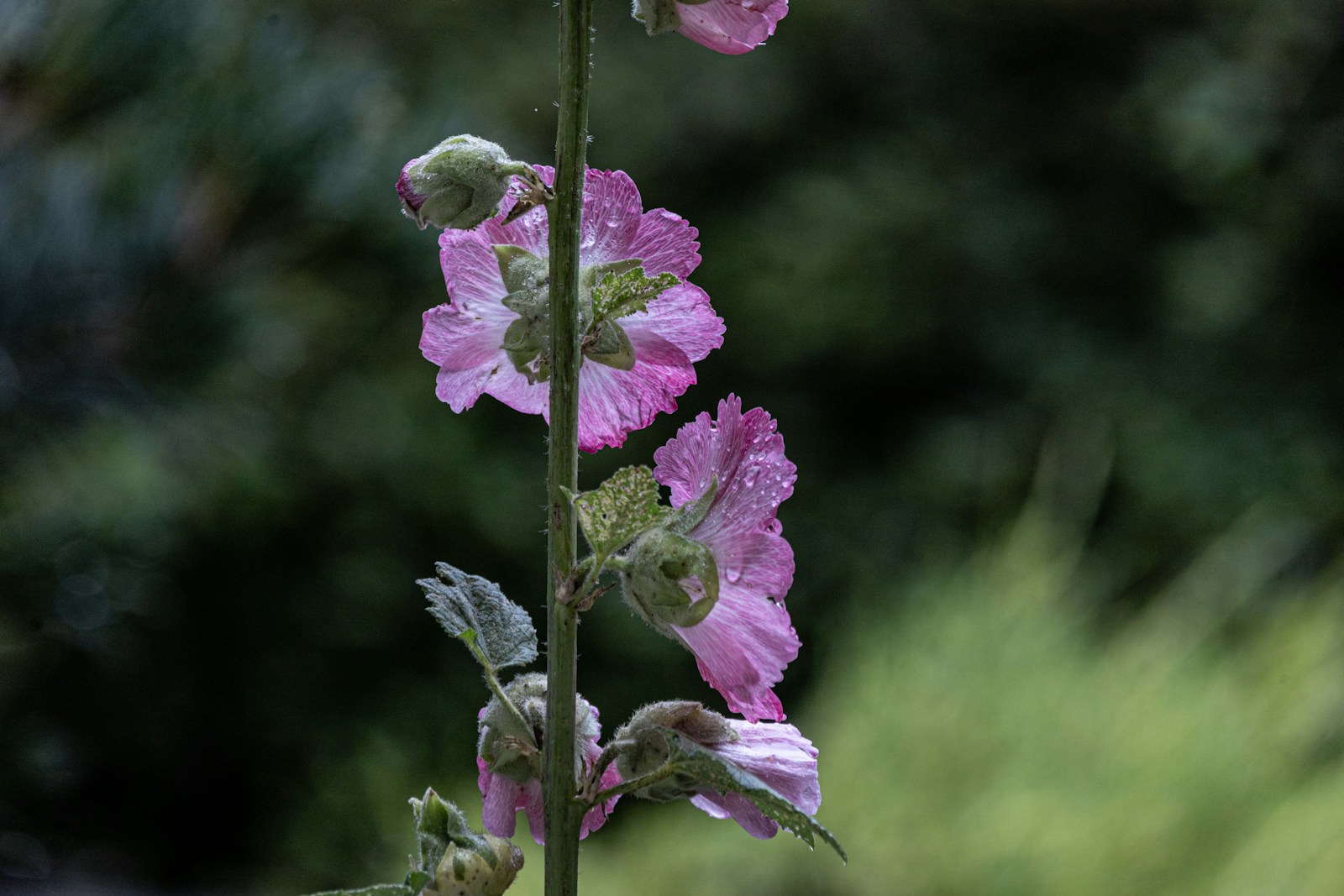
Saving seed. Leave one or two spikes on the plant. The round seed pods dry to brown and split into flat, disc-shaped seeds. Collect them on a dry day once the pods crack easily. Spread them on paper to finish drying for a week, then store them in a labelled paper envelope somewhere cool and dry. Seed usually stays viable for a few years.
Hollyhocks cross freely, so saved seed may give different colours. Single forms come truer than doubles. Plants left to drop seed also self-sow, which keeps a clump going long after the original plants have died.
Problems and pests
Orange bumps under the leaves and yellow spots on top
This is hollyhock rust, a fungal disease. Lower leaves go first, then turn brown and drop. Pick off spotted leaves as soon as you see them and put them in the trash, not the compost. Water at the base, thin crowded plants and pull any wild mallow weeds nearby, which carry the same rust. In autumn, cut all growth to the ground and clear away debris. A sulfur fungicide used from spring can slow the disease; wear gloves and eye protection, follow the label and never spray in heat above 85°F (29°C).
Holes chewed in leaves and flowers
Japanese beetles, slugs and caterpillars are the usual culprits. Hand-pick beetles into a bucket of soapy water early in the morning. Check for slugs at night and remove them by hand. Young seedlings need the most protection.
Speckled, pale leaves with fine webbing
Spider mites (tiny sap-sucking pests) thrive in hot, dry weather. Spray the undersides of leaves with a strong jet of water every few days. If they persist, use insecticidal soap, following the label, and avoid spraying in full sun.
Seeds hollow or missing from pods
Hollyhock weevils lay eggs in the developing seed. Remove and destroy spent flower spikes before the pods mature if you see them. Save seed only from clean pods.
Plants flower once, then die
This is normal for a biennial. Let some plants set seed, or sow a fresh batch each summer so there are always rosettes coming on.
Hollyhock rust is the most common reason plants fail. Check leaf undersides weekly from spring, remove spotted leaves at once, and never water over the foliage.
Varieties worth growing
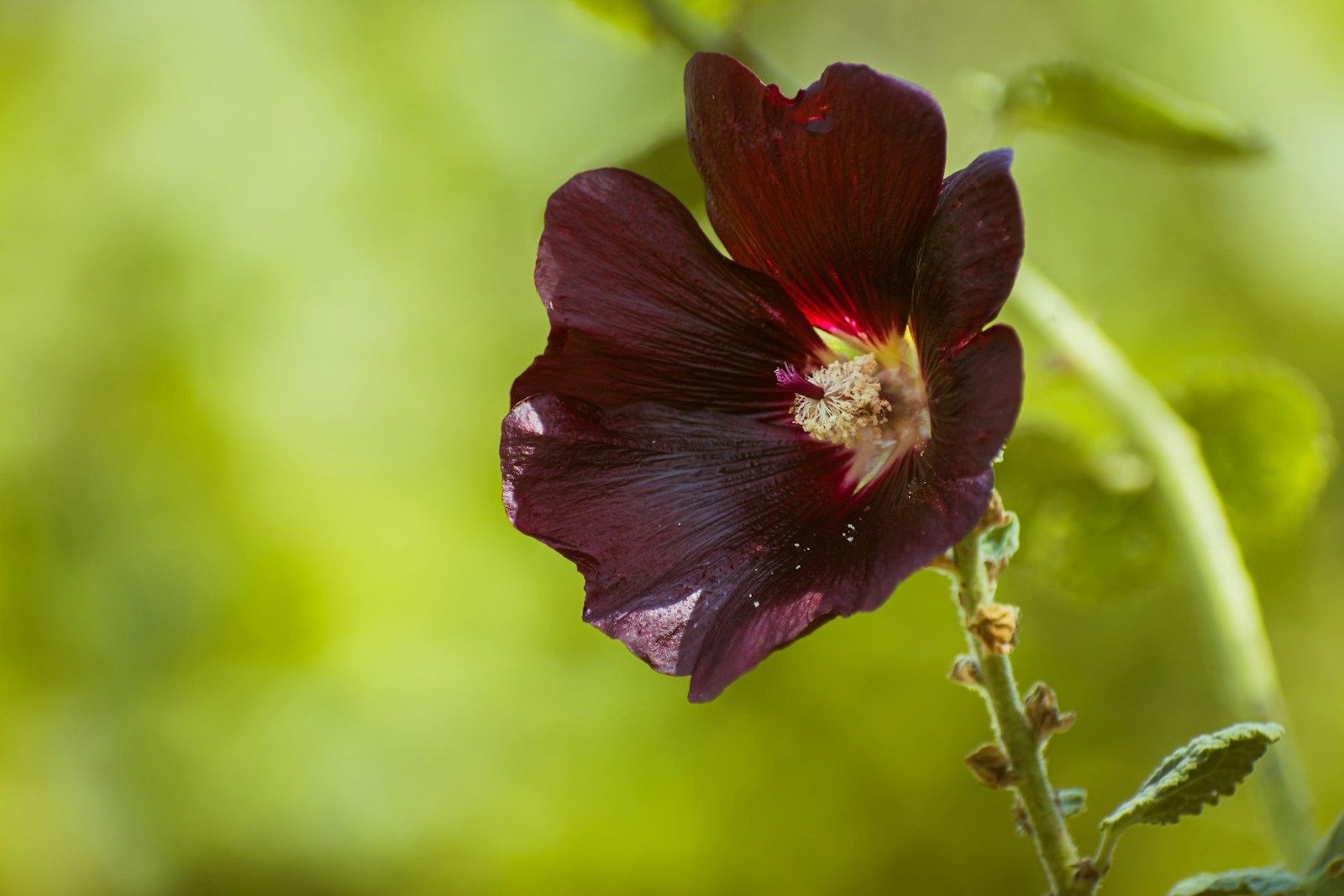
Double-flowered
- 'Chater's Double': a classic with fully double, ruffled blooms in a wide colour range.
- 'Summer Carnival': double and semi-double flowers that often bloom in the first year from an early sowing.
Single-flowered
- 'Nigra': deep maroon, almost black single flowers; striking against a pale wall.
- 'Indian Spring': single pink and white flowers that bloom in the first year.
- 'Halo' series: single blooms with a contrasting darker centre ring.
Other species
- Fig-leaved hollyhock (Alcea ficifolia): lobed leaves and single flowers; often shows more rust resistance than A. rosea.