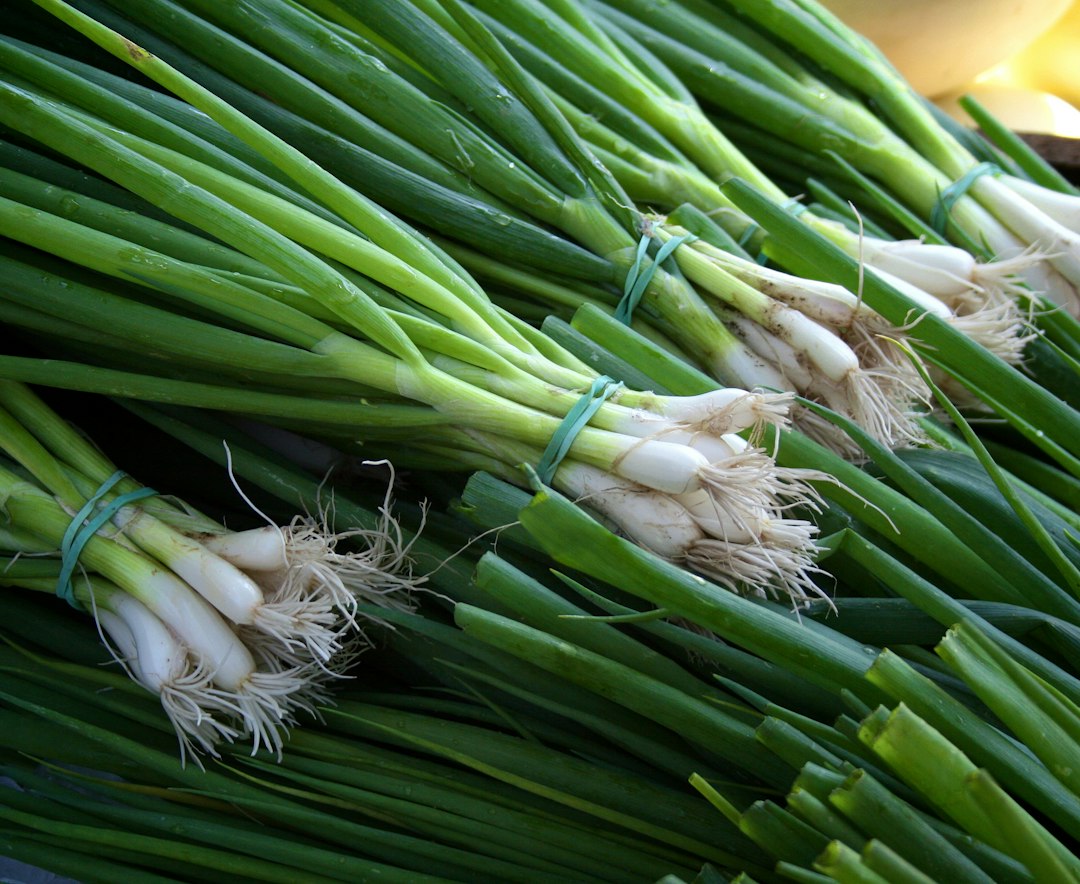
Green onion, also called scallion or bunching onion, is a quick, low-fuss crop that rewards you with a steady supply of mild onion flavor from a very small patch of ground. Unlike a storage onion, you grow it for its slender white stalk and hollow green leaves rather than for a large bulb, so there is no curing or long storage to think about. It is one of the easiest vegetables for a new gardener to succeed with, and a packet of seed goes a long way in a narrow bed, a border edge, or a container.
Sowing and planting
Direct-sow green onion seed as soon as the soil can be worked in spring, several weeks before your last expected frost. The seeds tolerate cool soil and the young shoots shrug off a light frost, so there is no need to wait for warm weather. Sow seed about 1/4 inch (6 mm) deep in rows 12 to 18 inches (30 to 45 cm) apart, scattering it more thickly than you would a storage onion, then thin seedlings to roughly 2 inches (5 cm) apart once they are a few inches tall. The thinnings themselves are edible, so nothing goes to waste.
For an earlier harvest, start seed indoors under grow lights about 8 to 10 weeks before your last frost date, in trays or cell packs filled with seed-starting mix. Harden off the seedlings (gradually getting them used to outdoor conditions over a week or so) before transplanting them out in small clumps once the soil has warmed slightly.
Because Allium fistulosum is a true perennial, you can also start a patch from a nursery-bought clump and simply divide it each spring, replanting the smaller sections at the same 2 inch (5 cm) spacing. In zone 6b and similarly cold climates, a late-summer sowing can be mulched over winter for an earlier crop the following spring; in colder zones it is simpler to treat green onion as a spring-to-fall crop and start fresh each year.
Growing on
Green onion has shallow roots, so keep the top few inches of soil consistently moist, especially through dry spells, rather than letting it dry out between waterings. A layer of mulch around the rows helps hold moisture and keeps weeds down, which matters because the thin, upright leaves compete poorly with weeds for light.
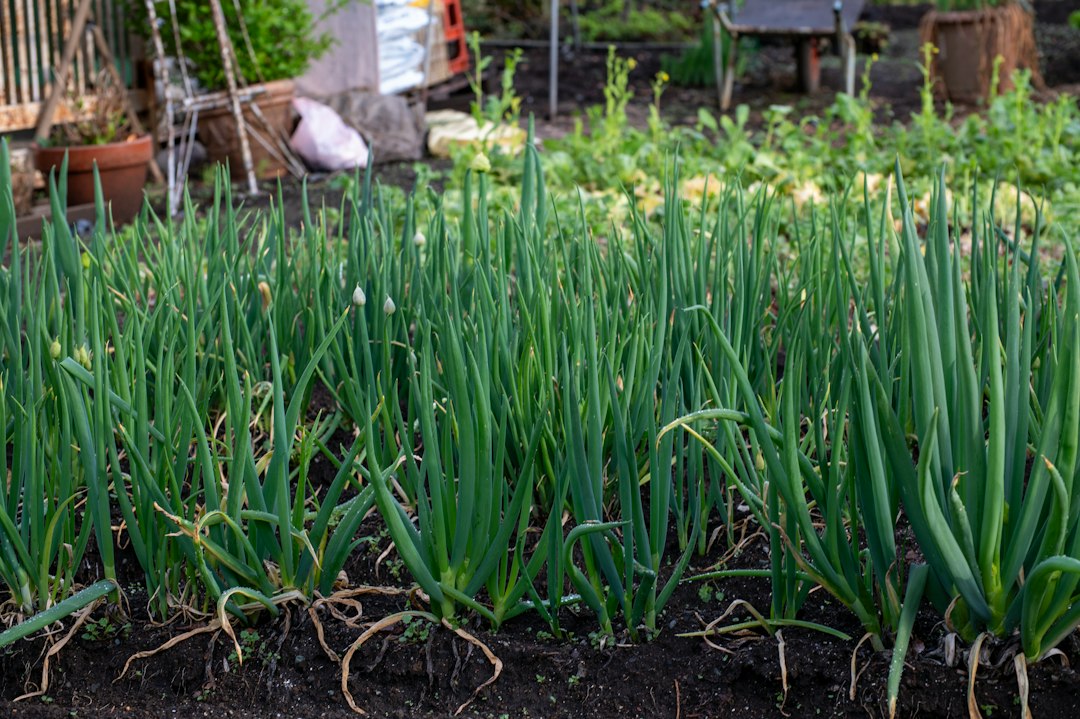
Feed lightly rather than heavily. A balanced, general-purpose fertilizer or a side-dressing of compost worked in once seedlings are a few inches tall is usually enough to keep growth steady; too much nitrogen late in the season can make the stalks soft. Because the crop matures quickly, succession sowing is the easiest way to keep a kitchen supply going: sow a short new row every two to three weeks through the growing season so that as one batch is harvested, the next is already on its way.
Harvesting
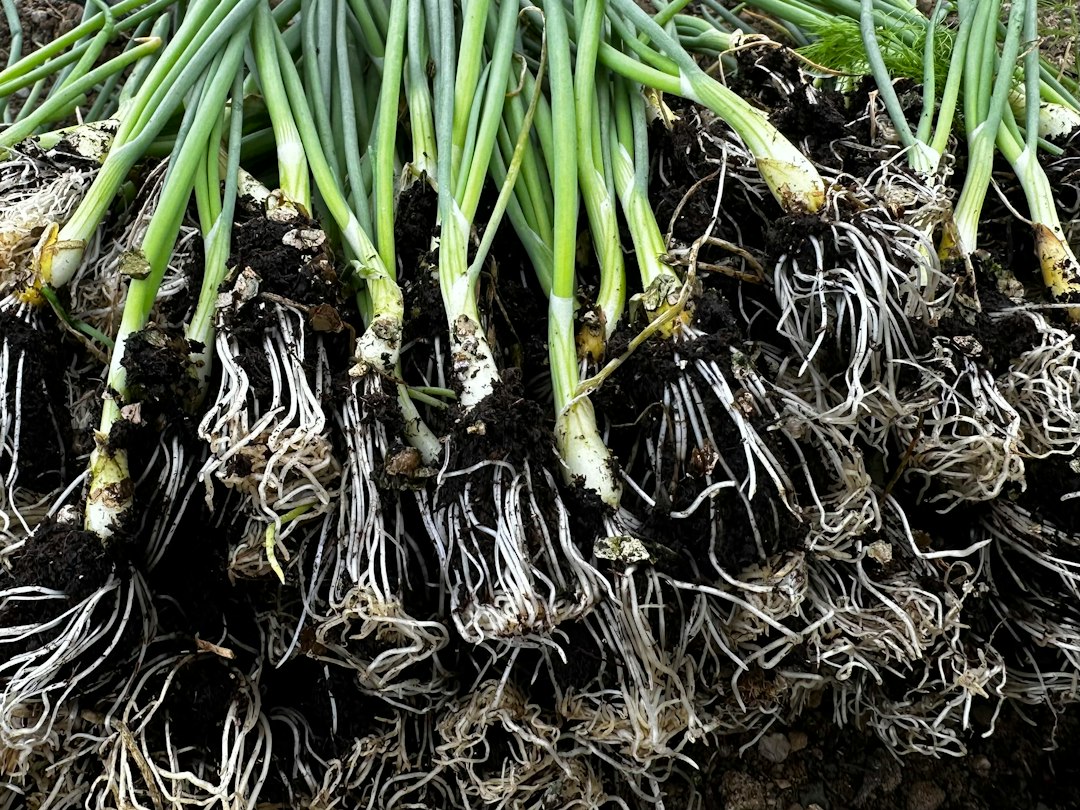
Green onions are ready to pull once the white stalks are about the thickness of a pencil, usually around 60 days from sowing, though you can harvest earlier if you want a milder, more delicate onion. There are two ways to pick them. The simplest is to pull the whole plant, roots and all, then trim the roots and any damaged outer leaf before use. If you are growing a perennial clump rather than a single-sowing row, you can instead cut the leaves and upper stalk a few inches above the soil line and let the plant regrow for a second and sometimes third cutting, much like a cut-and-come-again salad green. Harvest in the cool of the morning where possible, and use green onions soon after picking, since the hollow leaves wilt faster than a cured bulb onion would.
Problems and pests
Leaves show silvery streaks or flecking
Thrips (tiny, slender insects that rasp at the leaf surface) are the likely cause, especially in hot, dry weather. Keep plants watered during dry spells, remove nearby weeds where thrips shelter, and knock populations back with a strong jet of water or an insecticidal soap if the damage is heavy.
Plants wilt and the base feels soft or rotten
Onion maggot (the larva of a small fly that lays eggs at the base of the plant) tunnels into the stalk and root. Pull and dispose of affected plants, rotate where you grow alliums each year, and cover young seedlings with floating row cover (a lightweight fabric laid over the crop) to stop the adult fly from reaching them.
Leaves develop pale, fuzzy, purple-gray patches
Downy mildew favors cool, damp, still air. Space plants properly, water the soil rather than the foliage, and avoid overhead watering in the evening so leaves dry before nightfall.
Orange-brown, dusty pustules appear on the leaves
Rust is a fungal disease that spreads in humid conditions with poor airflow. Remove and discard affected leaves, avoid crowding plants, and water at the base rather than from overhead.
Plants send up a hard central flower stalk instead of staying leafy
This is bolting, usually triggered by a cold snap after an early sowing or by heat stress later in the season. Bolted stalks turn woody and the flavor coarsens, so harvest promptly once you notice one starting and resow for a fresh batch if the season allows.
Varieties worth growing
- Evergreen Hardy White – a reliable, cold-tolerant heirloom that clumps and regrows, good for both spring sowing and overwintering.
- Tokyo Long White – fast-growing with long, straight white stalks, a classic Japanese bunching type.
- Ishikura – a non-bulbing bunching onion prized for its long, straight, pure white stalk and mild flavor.
- Parade – a vigorous, uniform hybrid that holds well in the garden without toughening.
- Deep Purple – a hybrid with attractive purple-tinged stalks that keep some of their color when cooked.