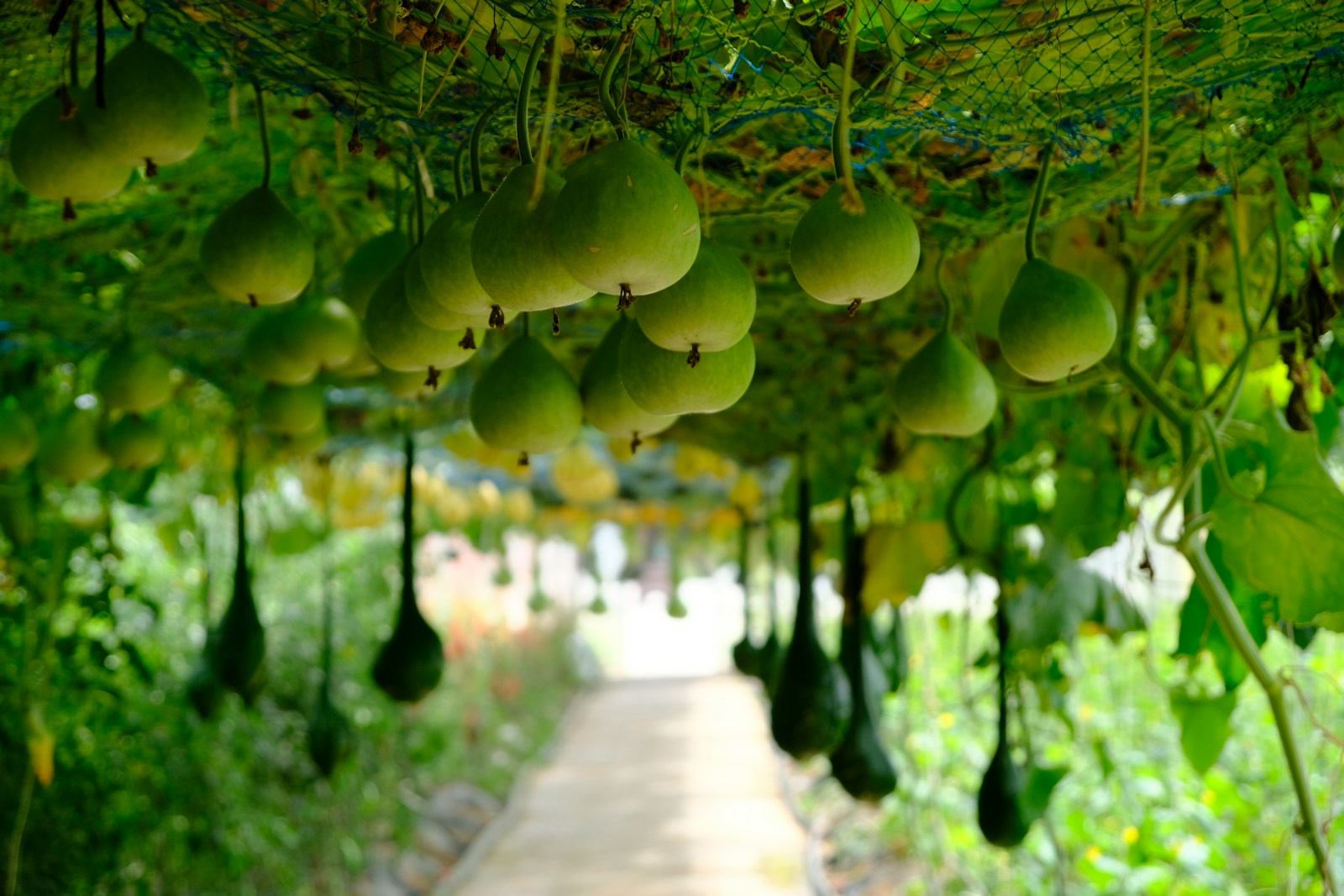
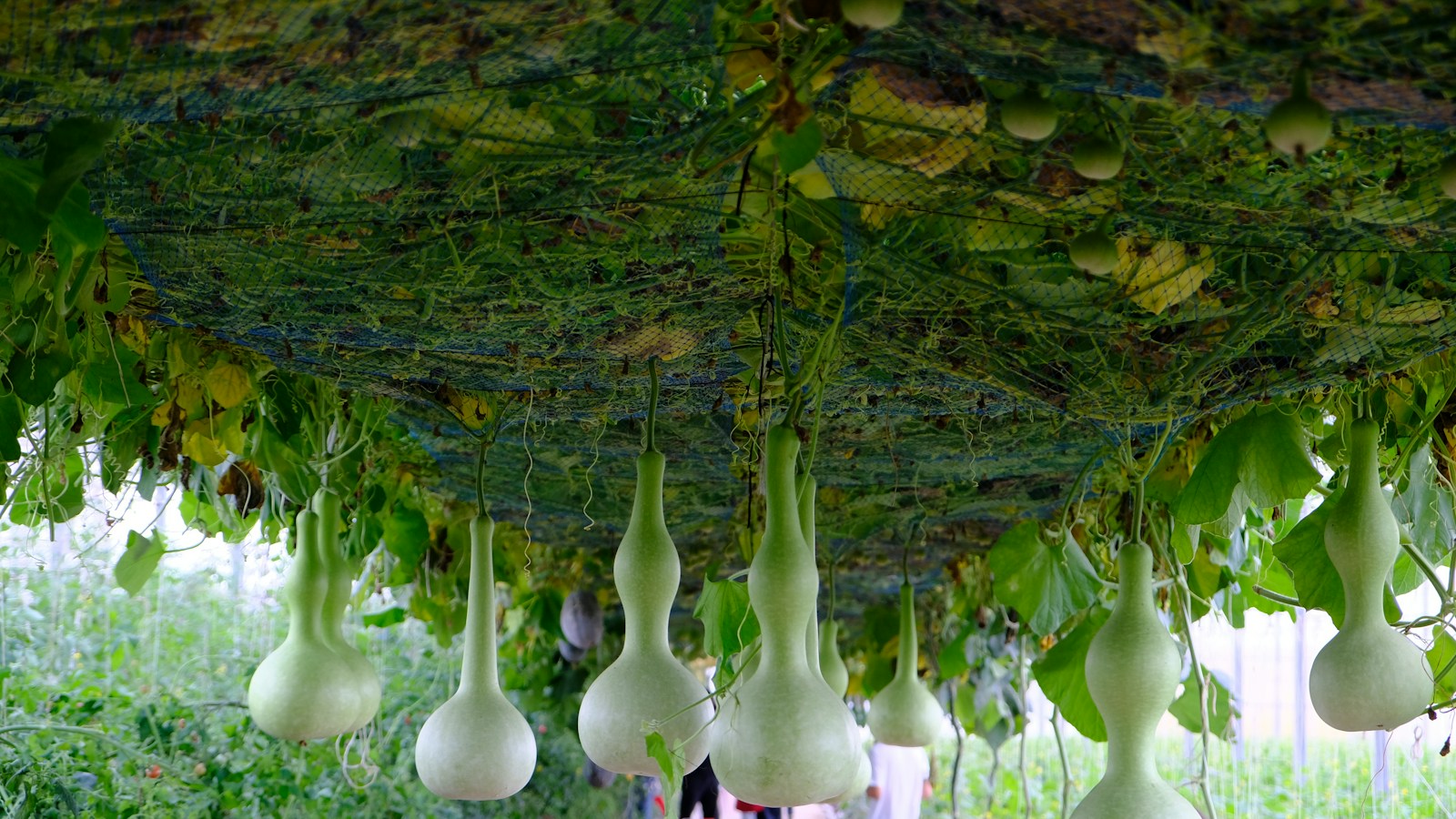
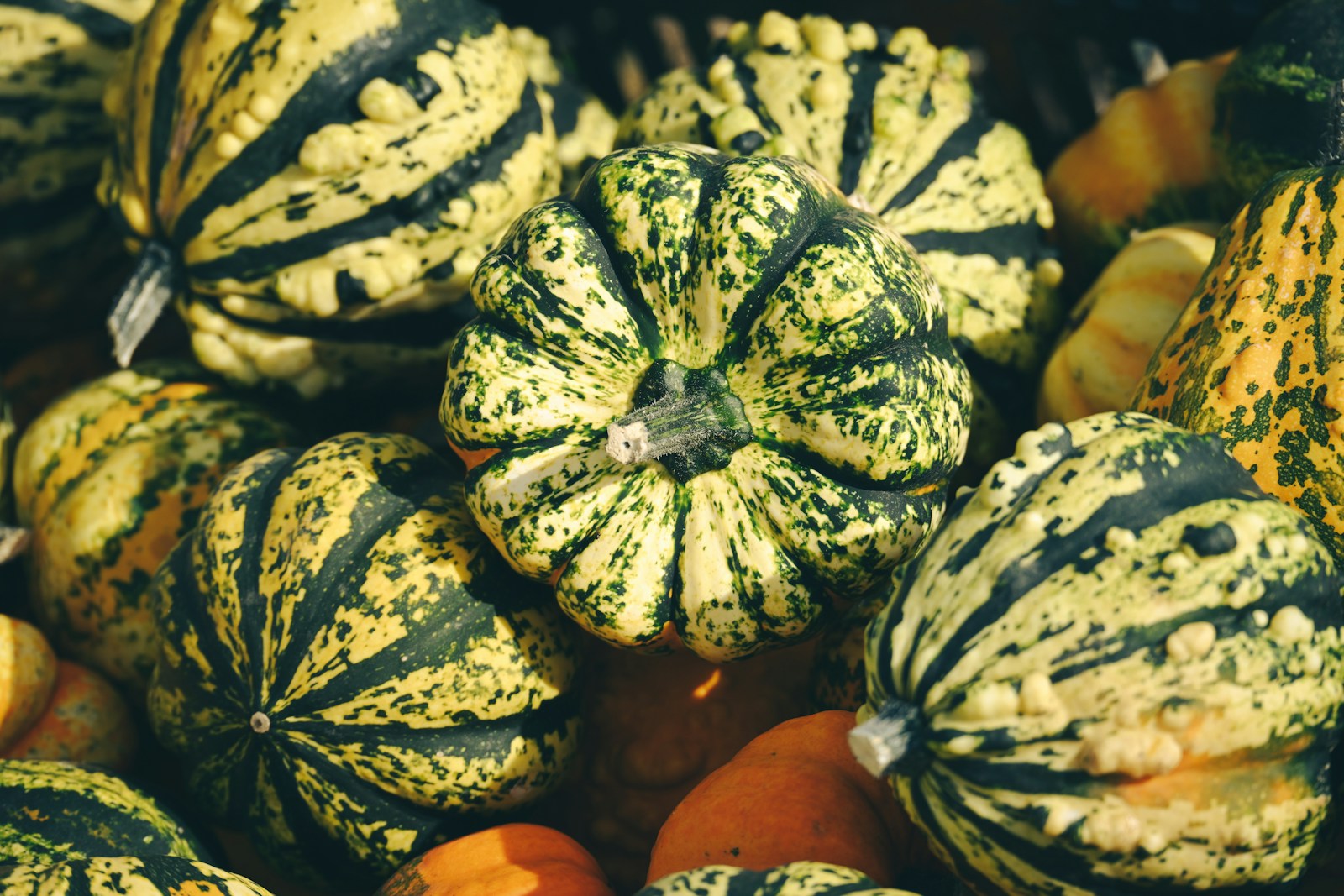
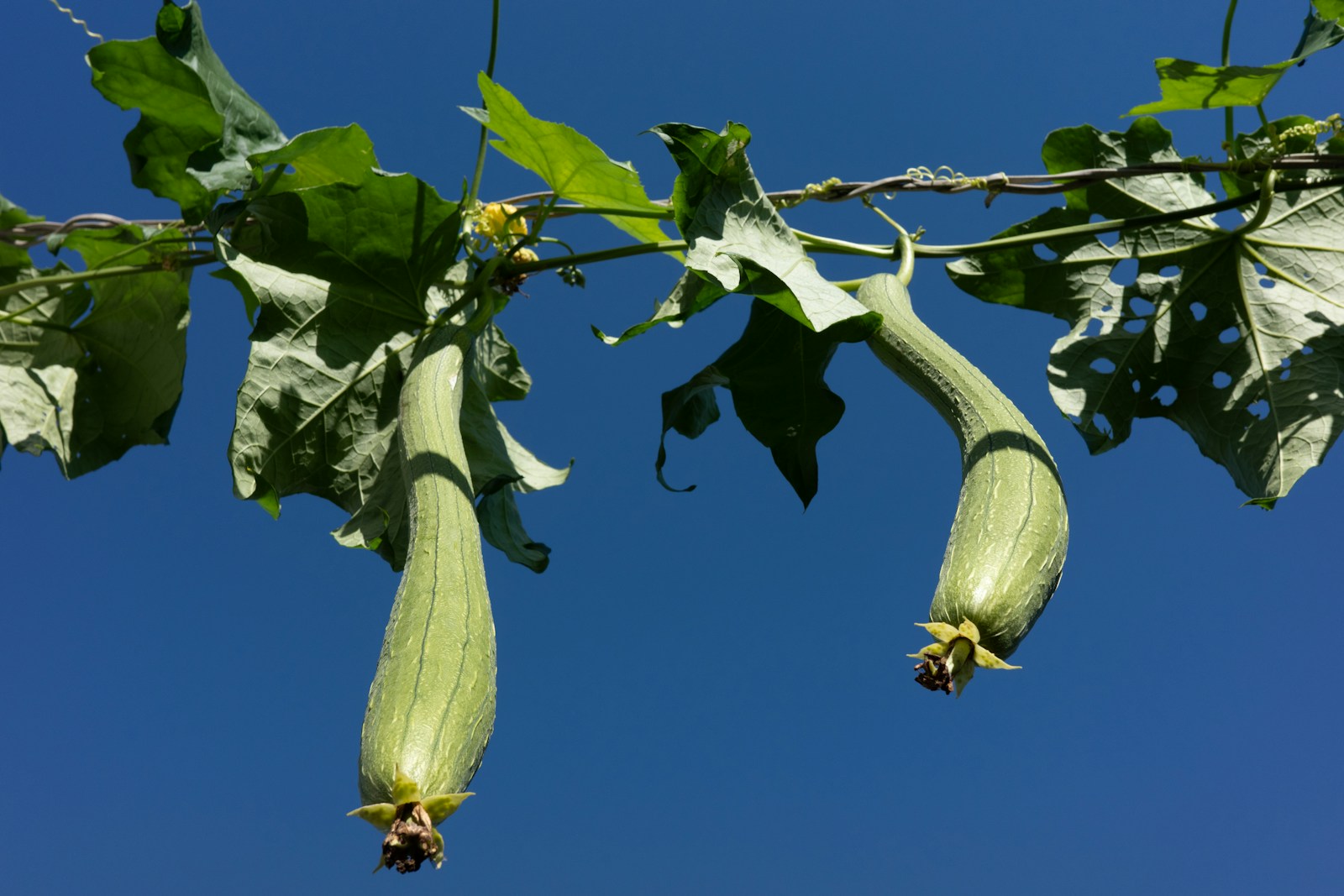
Gourds are vigorous, frost-tender vines grown for fruit you dry rather than eat. Three groups matter to most gardeners. Small ornamental gourds (Cucurbita pepo) give the colourful, warty autumn displays. Hard-shell or bottle gourds (Lagenaria siceraria) dry into wood-like shells for birdhouses, dippers and bowls. Luffa (Luffa species) is a close relative whose dried fruit becomes a scrubbing sponge. All are easy to grow if you have a long, hot season. Curing them takes more patience than growing them.
Sowing and planting
Gourds need warm soil and a long season. Sow outdoors one to two weeks after your last frost, once the soil reaches 65°F (18°C). Cold, wet soil rots the seed.
In areas with short summers, roughly USDA zones 3-6, start bottle gourds and luffa indoors. Sow three to four weeks before your last frost. Use biodegradable pots, because gourd roots dislike disturbance. Keep the pots at 75-85°F (24-29°C) on a heat mat if you can.
Bottle gourd and luffa seeds have hard coats. Soak them in warm water overnight before sowing to speed germination. Some growers also nick the pointed end lightly with a nail file.
Sow two or three seeds per spot, 1 inch (2.5 cm) deep. Thin to the strongest seedling once true leaves appear. Harden off indoor seedlings (getting them used to outdoor conditions) over a week before planting out. Plant out one to two weeks after your last frost, when nights stay above 50°F (10°C).
Build the support before you plant. A sturdy trellis, arch or fence at least 6 feet (1.8 m) tall suits most gourds. Hard-shell gourds grow heavy, so use strong posts and wire panels. Fruit that hangs clear of the ground grows straighter, cleaner and less prone to rot.
Growing on
Water deeply at the base once or twice a week, aiming for about 1 inch (2.5 cm) in total. Water more in hot, dry spells. Keep leaves dry where you can to limit mildew.
Work plenty of compost into the bed before planting. Side-dress (spread fertiliser alongside the row) with compost or a balanced organic feed when vines begin to run. Avoid heavy nitrogen feeding after that. Too much nitrogen gives lush leaves and few fruit.
Mulch with straw or shredded leaves once the soil is warm. Mulch holds moisture and keeps sprawling fruit off bare soil.
Tie young vines to the trellis until their tendrils take hold. For bottle gourds, pinch out the main vine tip once it reaches 10 feet (3 m). This encourages side shoots, which carry most of the female flowers.
Bottle gourd flowers are white and open in the evening. Moths pollinate them, so fruit set can be poor. Hand-pollinate if few fruit form. Pick a male flower (thin stem), strip its petals and dab its pollen onto the centre of a female flower (tiny gourd behind the petals). Ornamental gourds and luffa have yellow, day-opening flowers that bees visit readily.
Companion notes are simple. Tall marigolds and nasturtiums nearby attract beneficial insects. Keep gourds away from potatoes, which compete hard for water.
Harvesting
Do not eat ornamental gourds. Many contain bitter compounds that can cause severe stomach upset. The same applies to any squash or gourd that tastes bitter: spit it out and throw the fruit away. Keep drying gourds, seeds and mouldy shells away from children and pets.
Ornamental gourds are ready when the stem turns brown and dry and the skin is hard. A fingernail should not dent it. Pick before the first hard frost.
Bottle gourds can stay on the vine until the vine dies back. They tolerate a light frost, but a hard freeze can damage immature fruit. Cut them with 2-3 inches (5-8 cm) of stem attached.
Luffa is ready when the skin turns yellow-brown, feels light and starts to separate from the fibres inside.
Always cut gourds with pruners rather than pulling. Handle them gently; bruises lead to rot. Never carry them by the stem.
Curing hard-shell and ornamental gourds
Wash the skin with warm, soapy water. You can also wipe it with a household bleach solution of 1 part bleach to 9 parts water. Wear gloves, work in a well-ventilated spot and never mix bleach with other cleaners, especially ammonia.
Dry the surface for about a week in a warm, dark, airy place. Then move the gourds to a dry spot with good air flow for internal drying. Set them on slats or hang them so they do not touch. Ornamental gourds take a few weeks. Hard-shell gourds take one to six months.
Mould on the skin during drying is normal and usually harmless to the shell. Throw away any gourd that turns soft, wrinkled or leaks. A cured gourd is light, and the seeds rattle inside. Scrape off the mould with a scrubber, wearing a dust mask, and it is ready to cut and paint.
Processing luffa
Soak the dry fruit in water, then peel off the skin. Shake out the seeds and rinse the sponge. Dry it fully in the sun before storing.
Saving seed
Bottle gourds do not cross with ornamental gourds or squash. Ornamental gourds do cross with zucchini and pumpkins of the same species. Save seed only from isolated or hand-pollinated fruit if you want it to come true. Collect seed from fully cured gourds and store it cool and dry.
Problems and pests
Leaves wilt suddenly and do not recover
Cucumber beetles spread bacterial wilt as they feed. Cover young plants with floating row cover (a light fabric) until flowering, then remove it for pollinators. Hand-pick beetles and pull out wilted plants.
Leaves turn speckled yellow, then brown
Squash bugs suck sap from the leaves. Check leaf undersides and crush the bronze egg clusters. Trap adults under a board laid on the soil and remove them each morning.
A whole vine collapses at the base
Squash vine borers tunnel into ornamental gourd stems. Look for a hole and sawdust-like waste near the base. Slit the stem, remove the larva and bury the wounded section in soil to reroot. Bottle gourds and luffa are rarely attacked.
White powdery patches on the leaves
Powdery mildew is a fungal disease common in late summer. Space vines for air flow and water at the base. Remove the worst leaves. It rarely stops fruit from ripening.
Fruit rots on the vine or in storage
Rot usually starts where fruit touches wet soil or where the skin is bruised. Grow vines on a trellis or set fruit on a board. Harvest carefully and cure with good air flow.
Varieties worth growing
Ornamental gourds
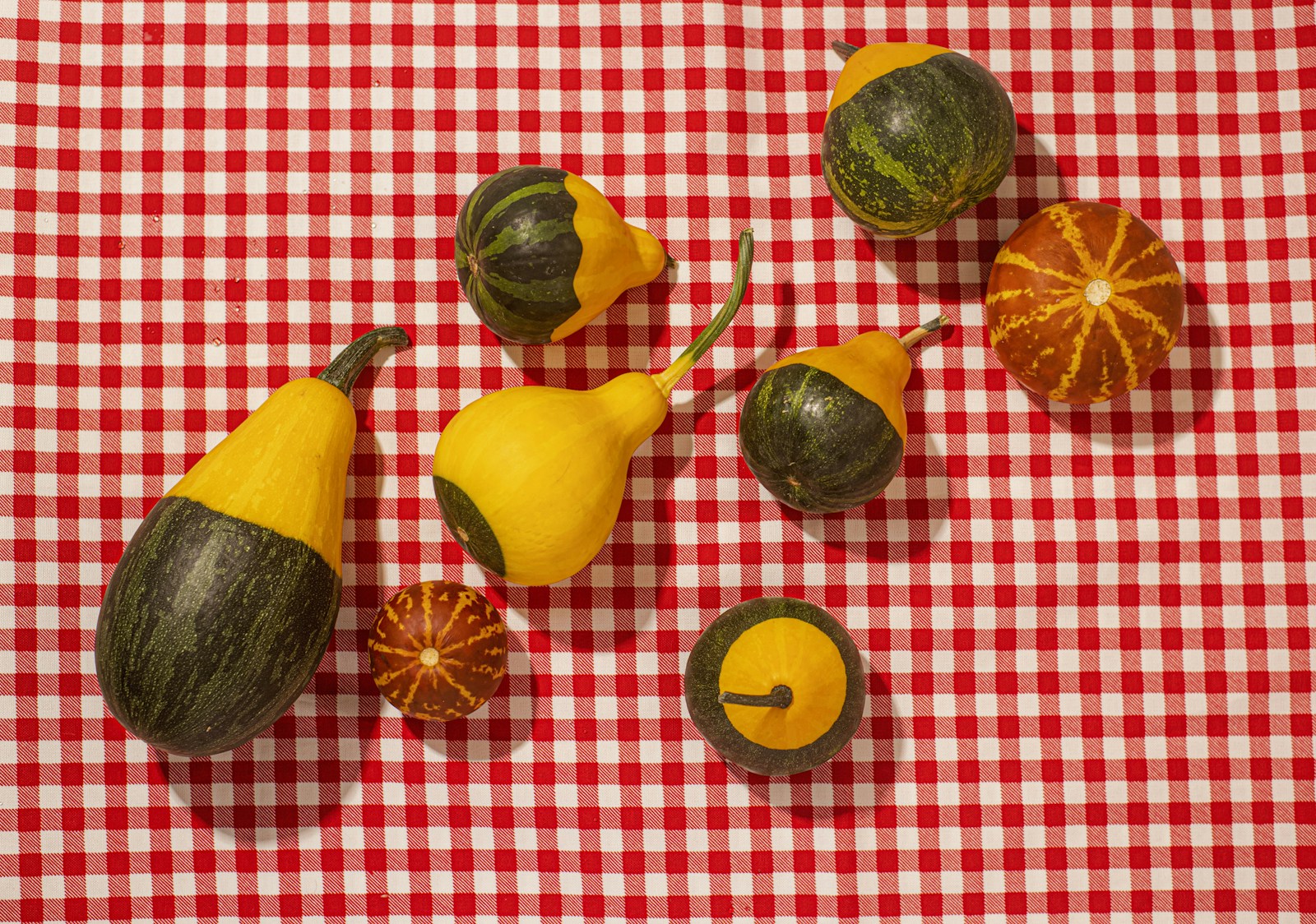
- 'Autumn Wings': a mix of flared, winged gourds in green, yellow and cream.
- 'Crown of Thorns': small gourds with a ring of finger-like points, often striped.
- Small ornamental mix: seed packets of mixed shapes, warts and colours for autumn displays.
Hard-shell bottle gourds
- 'Long Handle Dipper': a round base on a long, straight or curved neck for dippers.
- 'Speckled Swan': a speckled, curved-neck gourd shaped like a swan.
- 'Bushel Basket': very large, round gourds for baskets and storage bowls.
- Birdhouse (martin house) types: medium round gourds ideal for nesting boxes.
Luffa
- Smooth luffa (Luffa aegyptiaca): the usual sponge type; very long season.