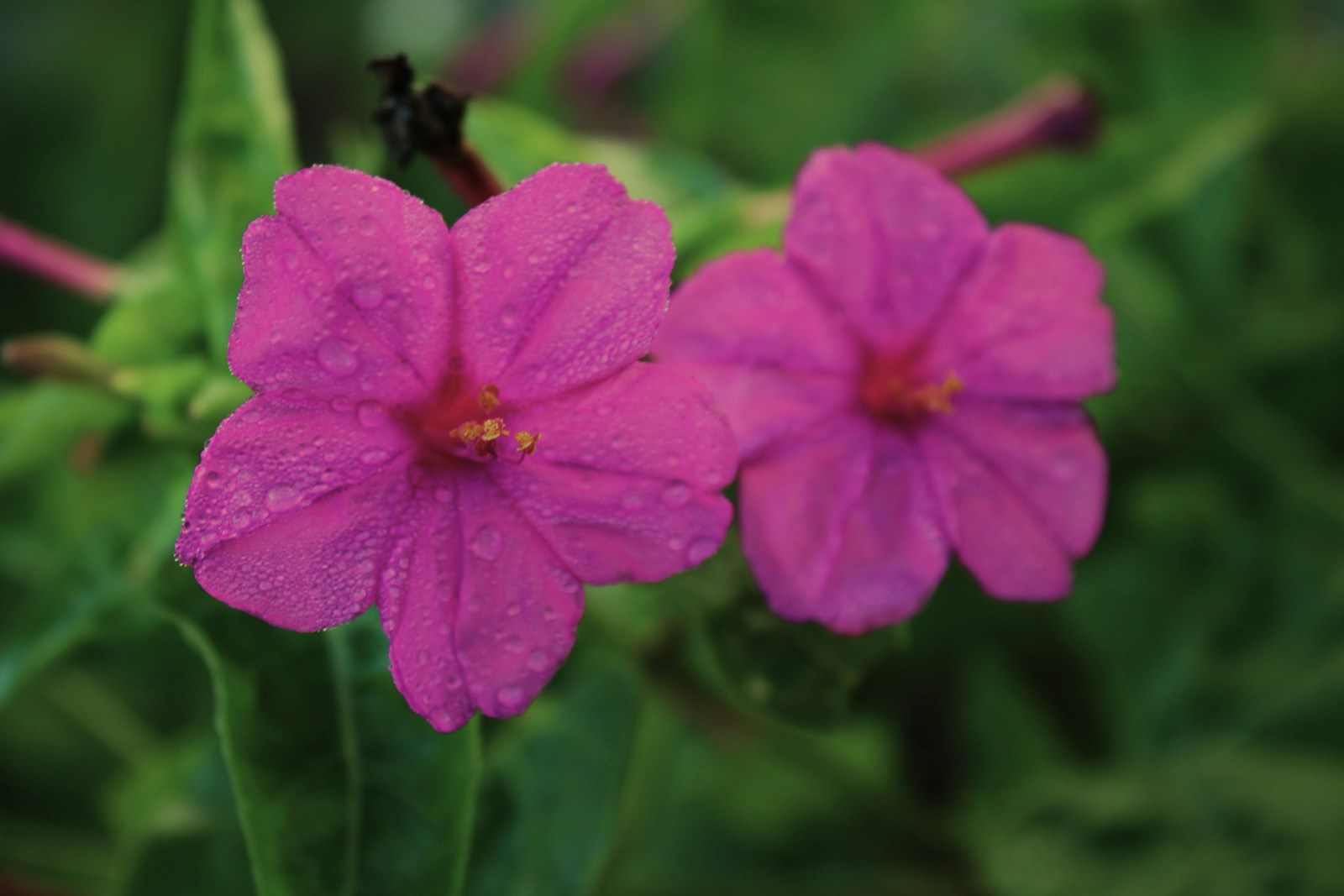
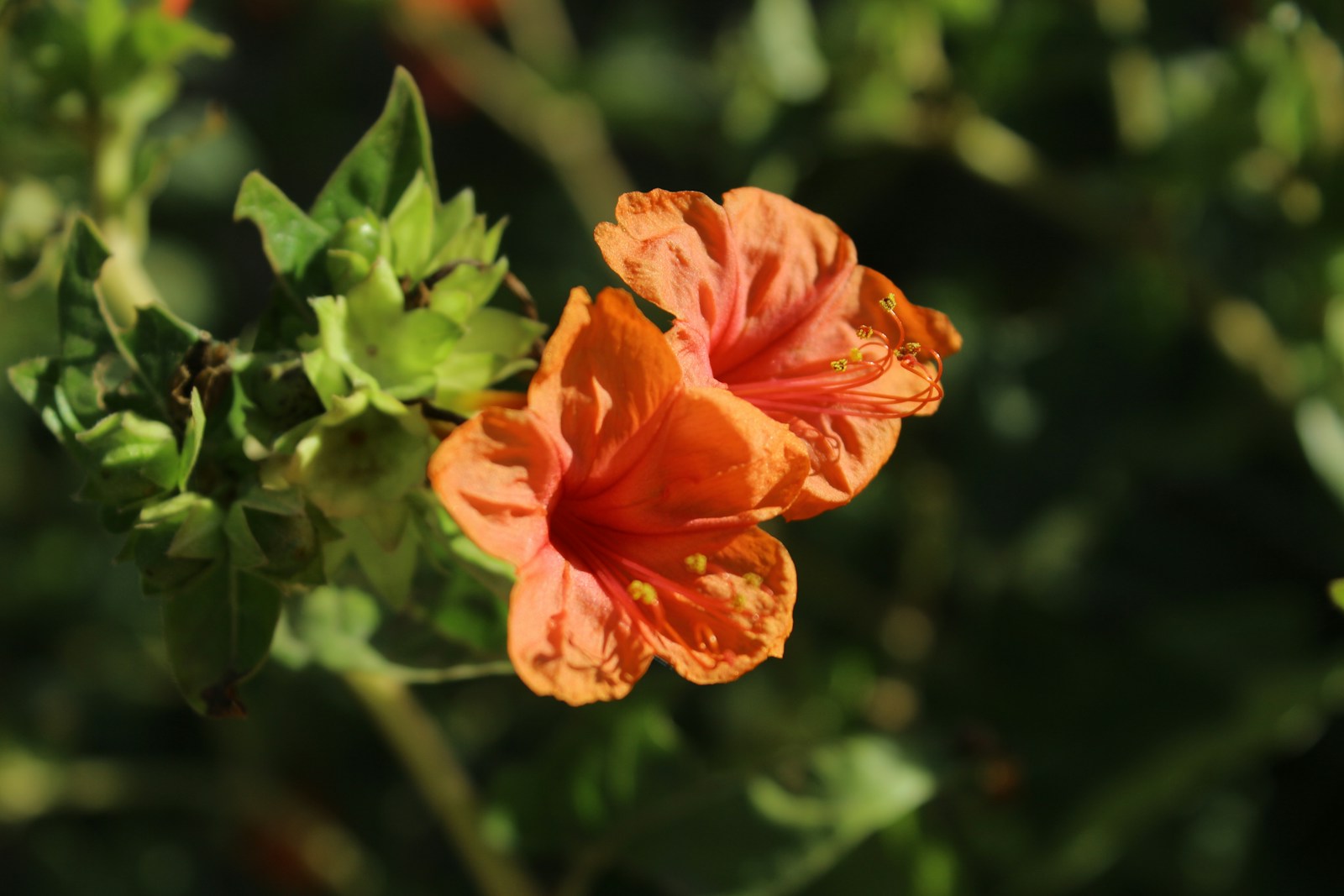
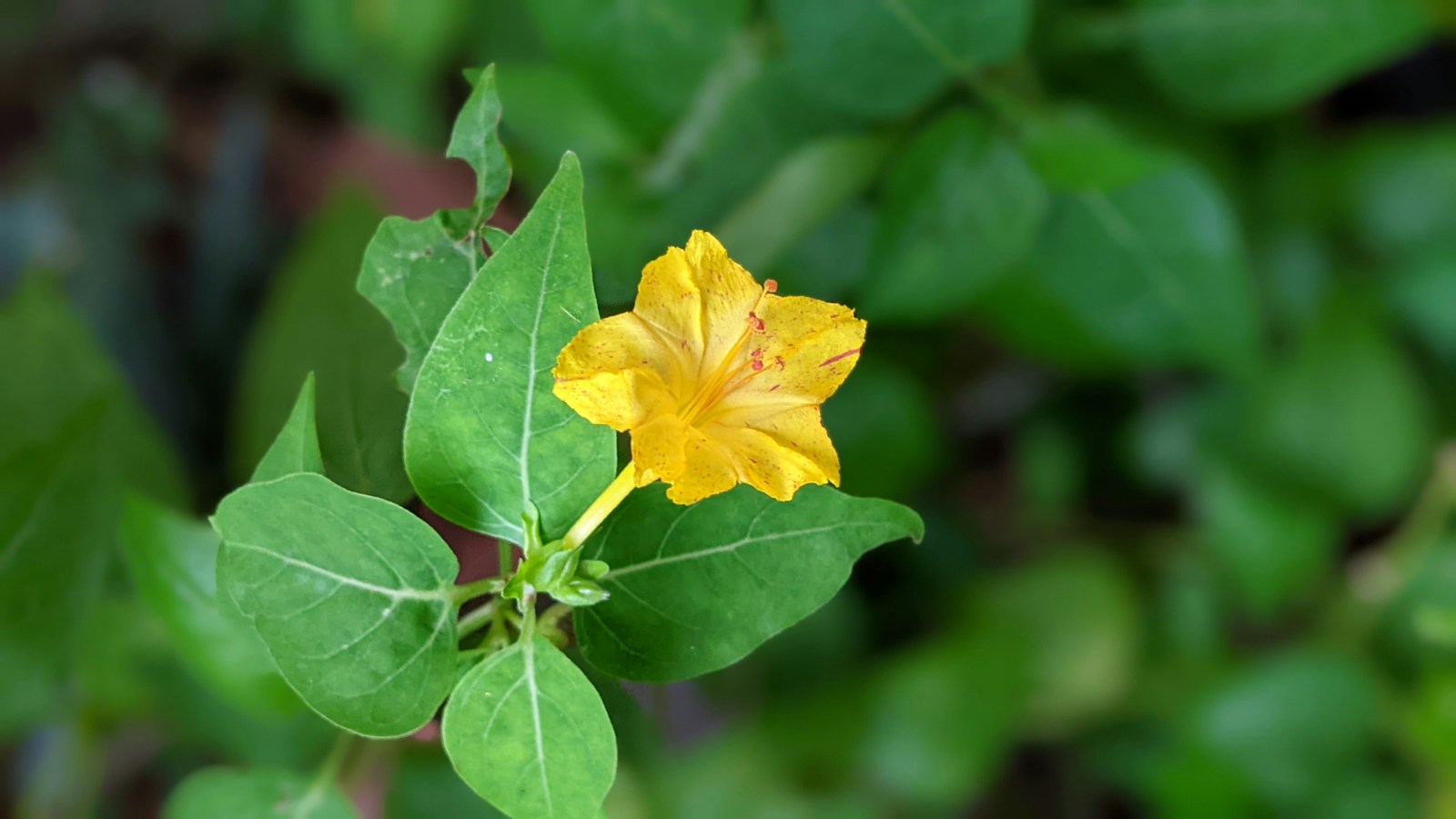
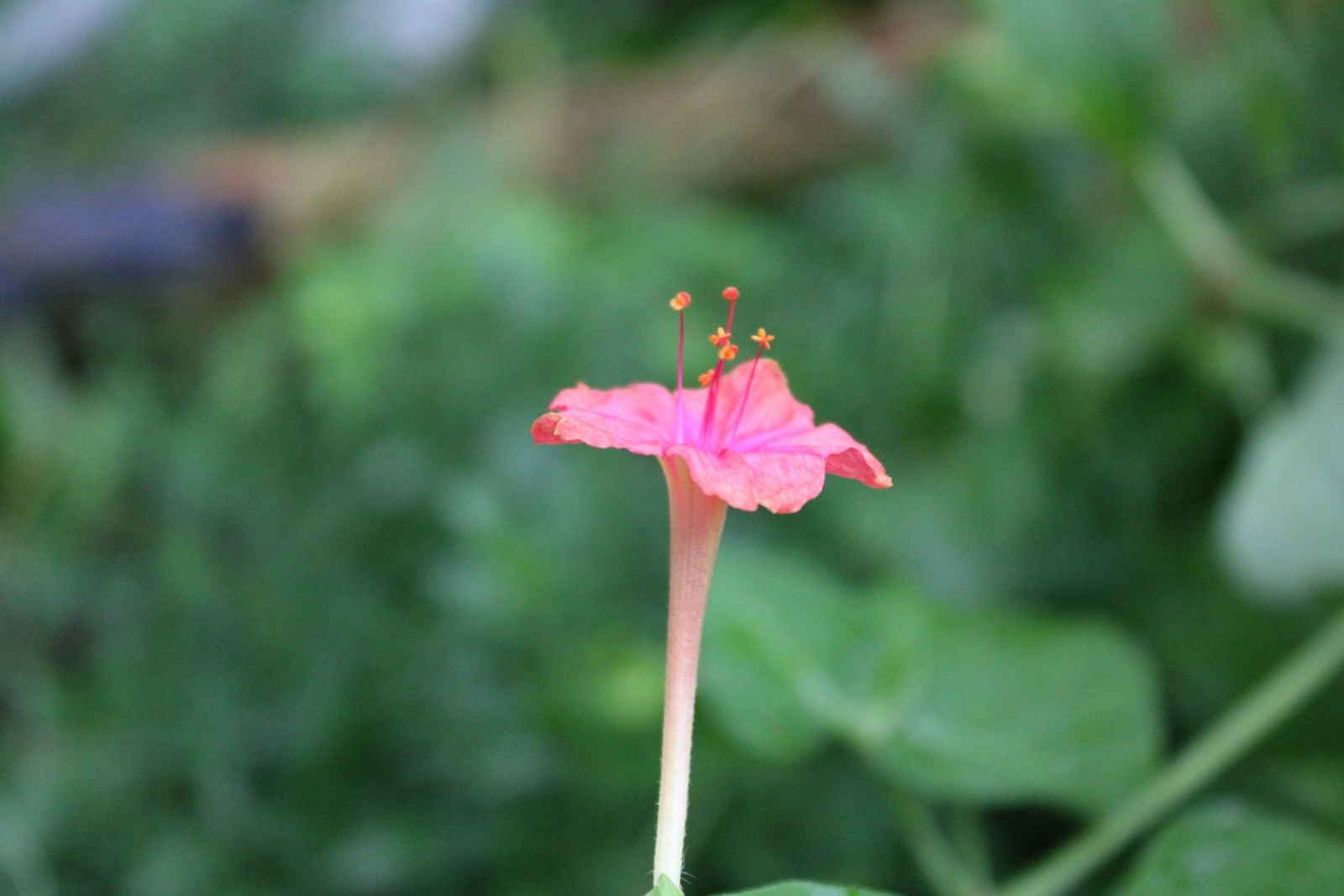
Four o'clocks (Mirabilis jalapa), also called marvel of Peru, are bushy plants that flower in late afternoon. The trumpet-shaped blooms stay open overnight and close the next morning. One plant often carries several colours, and many flowers are streaked or splashed. The evening scent draws moths. Difficulty: very easy, even in poor soil.
Sowing and planting
Four o'clocks grow from large, black, wrinkled seeds. Soak them in lukewarm water overnight before sowing. This softens the hard coat and speeds germination.
Sowing indoors. Sow 4 to 6 weeks before your last frost for earlier flowers. Use individual pots, 3 inches (8 cm) wide, because the seedlings form a thick taproot and dislike disturbance. Sow two seeds per pot and remove the weaker seedling. Keep the pots at 70 to 80°F (21 to 27°C) until the shoots appear, then move them into bright light.
Sowing outdoors. Sow direct 1 to 2 weeks after your last frost. Wait until the soil has warmed to at least 65°F (18°C). Space seeds 6 inches (15 cm) apart and thin the seedlings to their final spacing once they have a few true leaves.
Planting out. Harden off indoor seedlings first. This means getting them used to outdoor sun and wind over 7 to 10 days. Plant them out after the last frost, when nights stay above 50°F (10°C). Set them at the same depth they grew in the pot.
Starting from tubers. Stored roots from last year can go back in the ground after the last frost. Plant them 2 to 3 inches (5 to 8 cm) deep, with the old stem stub pointing up. In colder areas, start them in pots indoors 3 to 4 weeks earlier for a head start.
Choose a spot where you can enjoy the evening scent, such as beside a patio, path or open window. Four o'clocks also make a quick, temporary hedge or a filler in gaps left by early bulbs. They grow well in large containers, at least 12 inches (30 cm) across.
Growing on
Water young plants weekly until they are growing strongly. Established plants cope with dry spells, but a deep watering during long droughts keeps them flowering. Container plants need watering whenever the top inch (2.5 cm) of compost is dry.
Feed sparingly. Rich soil and heavy feeding give lush leaves and fewer flowers. In poor soil, one balanced feed at planting time is enough.
Mulch around the plants with 2 inches (5 cm) of compost or shredded leaves once the soil is warm. This holds moisture and keeps weeds down. Keep mulch a few inches away from the stems.
Four o'clocks rarely need staking. They form a dense, rounded bush on their own. If plants get leggy in part shade, pinch out the tips once when they are 8 inches (20 cm) tall to encourage branching.
Deadheading is optional. The spent flowers drop cleanly, and the plant keeps blooming until frost regardless. Picking off the forming seeds does reduce self-seeding.
Self-seeding. Four o'clocks drop plenty of seed. In warm zones, seedlings can pop up all over the bed the following year. Pull unwanted seedlings while they are small, before the taproot thickens. In the warmest zones they can become weedy, so remove the seeds before they fall if that is a concern.
Pollinators. The long-tubed flowers are visited by hawk moths (large, fast-flying moths that hover like hummingbirds) at dusk. Hummingbirds sometimes visit too.
Companions. Pair them with evening-scented plants such as nicotiana and moonflower for a night garden. Keep them away from vegetable beds, where children might mistake the seeds for something edible.
Harvesting
Four o'clocks are grown for garden display rather than vases. Cut stems last only a day, because each flower closes the next morning. For a short evening arrangement, cut stems with plenty of buds in the afternoon, just before they open.
Saving seed. Seeds ripen from green to black at the base of faded flowers. Collect them when they are hard and black, or when they fall at a touch. Dry them indoors for a week on paper, then store them in a labelled envelope in a cool, dry place. Wear gloves and wash your hands afterwards. Colours do not always come true, so expect surprises.
Lifting tubers. In zones 7 and colder, dig up the roots after the first frost blackens the leaves. Cut the stems back to 2 inches (5 cm). Let the tubers dry for a few days out of the sun. Store them in a box of dry sawdust, sand or peat-free compost, somewhere cool and frost-free at 40 to 50°F (4 to 10°C). Check them occasionally and discard any that go soft. Tubers get larger each year and give bigger plants that flower sooner. Wear gloves when handling them.
Problems and pests
Poison warning: Four o'clock seeds and roots are poisonous to people, children and pets if eaten. They can cause vomiting, stomach pain and diarrhoea. The sap may irritate skin. Wear gloves when handling seeds and tubers, store them well out of reach, and avoid planting near play areas.
Plants stop growing and the base goes soft
This is root or crown rot from soggy soil. Remove affected plants. Grow them in well-drained soil or raised beds, and let the surface dry between waterings.
Holes and skeletonised leaves
Japanese beetles, metallic green and copper beetles, often feed on the foliage. Knock them into a bucket of soapy water in the early morning, when they are sluggish.
Sticky, curled shoot tips
Aphids, small sap-sucking insects, cluster on new growth. Rub them off or blast them away with a jet of water. Ladybirds and lacewings usually keep them in check.
Few flowers and lots of leaves
Too much shade or too much fertiliser is the usual cause. Stop feeding and move plants to a sunnier spot next year.
Plants collapse overnight in autumn
Frost kills the top growth. In cold zones, lift the tubers promptly for storage. In mild zones, cut the stems down and cover the roots with a thick mulch.
Varieties worth growing
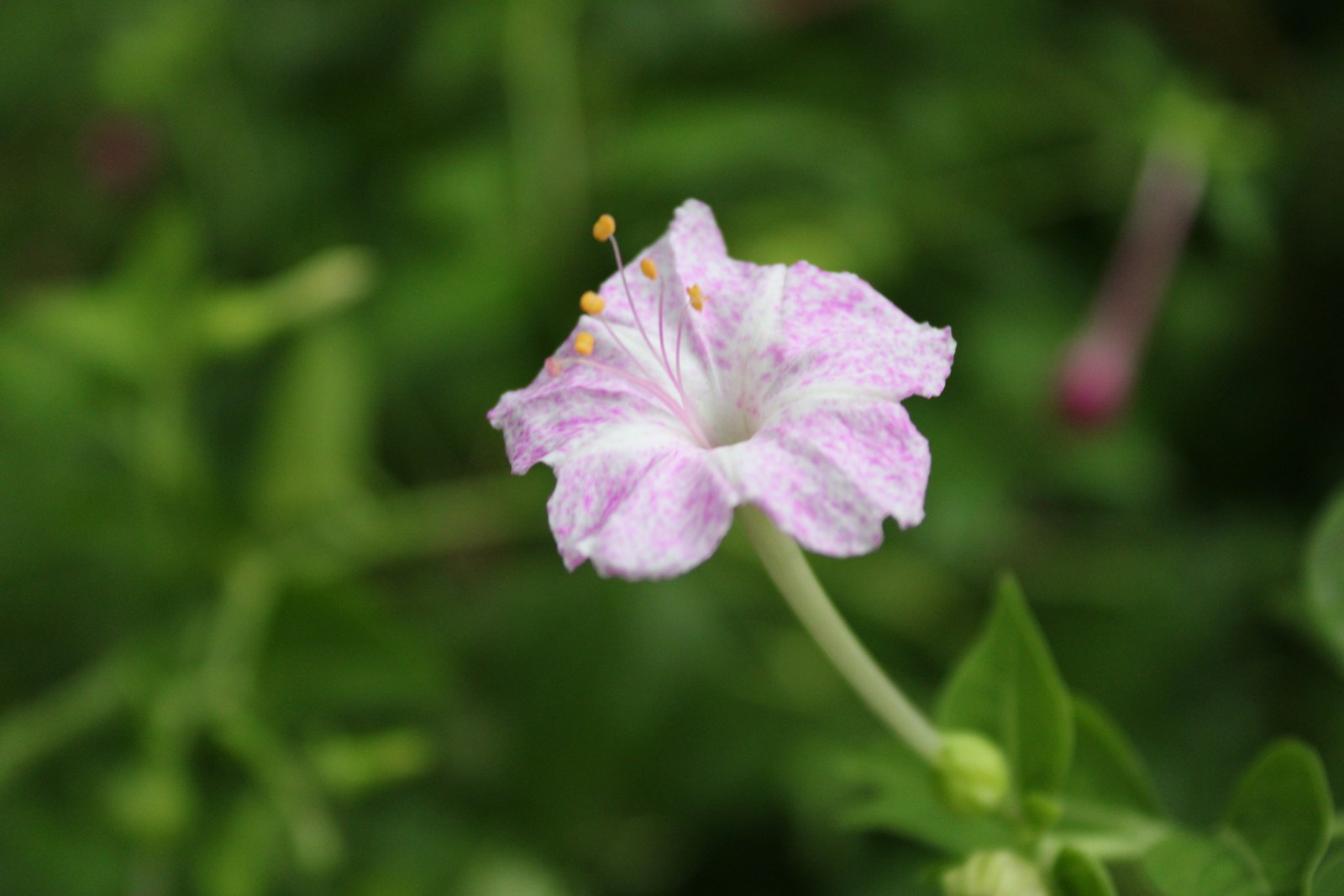
- 'Broken Colors': mixed plants with flowers striped and flecked in several colours on one bush.
- Tea Time series: compact plants in single colours and mixes, good for containers.
- 'Limelight': bright chartreuse foliage topped with vivid magenta flowers.
- 'Salmon Sunset': soft salmon-pink flowers, a gentler shade than most.
- Sweet four o'clock (Mirabilis longiflora): related species with very long, white, strongly scented trumpets.