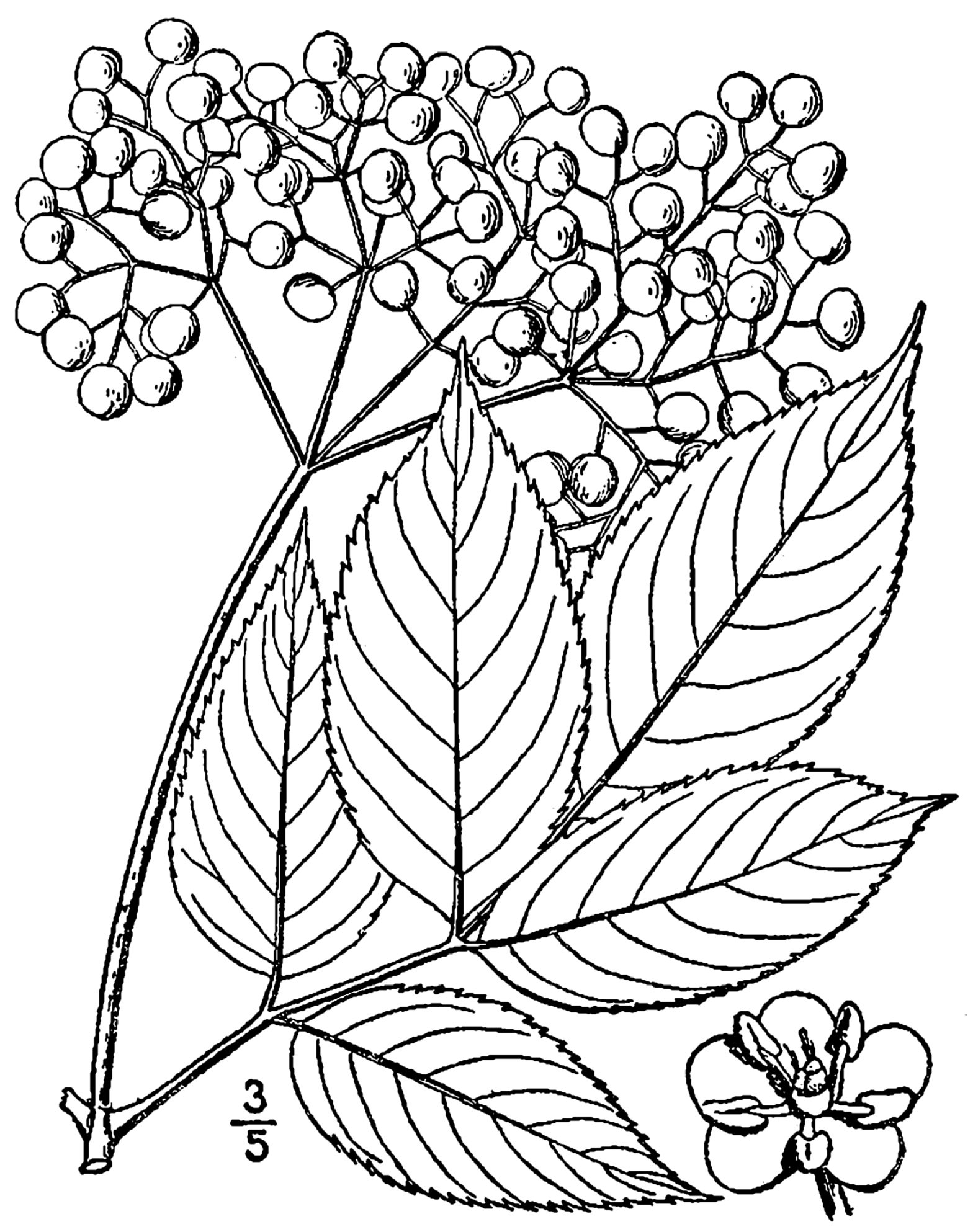
American elderberry (Sambucus nigra subsp. canadensis) is a fast-growing native shrub of eastern North America. It carries wide, flat heads of creamy flowers in early summer. Heavy clusters of purple-black berries follow in late summer. Gardeners grow it for jelly, syrup, pie and wine, and for the birds and pollinators it feeds. It is an easy shrub for beginners who have the space.
Elder was a staple of mountain home remedies. Anthony Cavender's Folk Medicine in Southern Appalachia notes that families used the leaves, berries and bark for colds and fevers and as a blood tonic. Elderberry wine was kept on hand as a so-called blood builder. These are historical uses only. Nothing here is medical advice.
Quick facts
| Feature | Detail |
|---|---|
| Family | Adoxaceae (moschatel family) |
| Sun | Full sun to partial shade |
| Water | Moist soil, about 1 inch (2.5 cm) a week |
| Spacing | 6 to 10 feet (1.8 to 3 m) |
| Time to harvest | Second or third year after planting |
| Hardiness | USDA zones 3 to 9 |
Raw or unripe berries, and all stems, leaves, roots and seeds, are toxic and can cause nausea and vomiting. Eat only fully ripe berries that have been stripped from their stems and cooked.
Sowing and planting
Choose a spot in full sun for the heaviest crop. Elderberry tolerates partial shade but fruits less there. It likes moist, fertile soil with a slightly acid pH of about 5.5 to 6.5. Damp corners that are too wet for fruit trees often suit it well. Avoid ground where water stands for days.
Give it room. A mature shrub reaches 6 to 12 feet (1.8 to 3.6 m) tall and nearly as wide. It also spreads by suckers, which are new shoots that rise from the roots.
Plant bare-root or potted shrubs in early spring once the soil can be worked. Potted plants can also go in during autumn, several weeks before the ground freezes. Dig a hole twice the width of the roots. Set the plant at the same depth it grew in the pot, or slightly deeper. Backfill, firm the soil and water deeply. Finish with 3 inches (8 cm) of wood chip or straw mulch, kept clear of the stems.
Plant at least two different varieties within about 60 feet (18 m) of each other. Elderberries set some fruit alone, but cross-pollination between varieties gives much larger crops.
Elderberry is rarely grown from seed, because seedlings vary and germinate slowly. Hardwood cuttings are the easy route. Take pencil-thick pieces of dormant one-year stem in late winter, each with two or more pairs of buds. Push the lower buds into moist potting mix or straight into a prepared bed. Most root by late spring.
Growing on
Watering matters most in the first two years. The roots are shallow and dry out fast. Aim for about 1 inch (2.5 cm) of water a week from rain or the hose. Keep watering through fruit swell in summer.
Mulch and weeding go together. Renew the mulch each spring to hold moisture and smother weeds. Pull weeds by hand near the plant. Deep hoeing cuts the shallow roots.
Feeding is light. Spread compost around each shrub in early spring. On poor soil, add a balanced garden fertilizer at the rate on the label. Stop if the shrub puts on long, soft growth and few flowers.
Remove the flower heads in the first season. That sends the plant's energy into roots and canes. Expect the first real crop in the second or third year.
Pruning keeps the shrub productive. Do it in late winter while the plant is dormant.
- Leave the plant unpruned for the first two years, apart from dead or broken stems.
- From year three, cut out all dead, weak and damaged canes at ground level.
- Remove canes older than three years. They fruit poorly and tend to harbor borers.
- Keep a roughly equal number of one-, two- and three-year-old canes.
Wear gloves and eye protection, and use sharp loppers for thick canes. Some growers instead cut the whole shrub to the ground each winter. Several varieties fruit well on new canes, and this gives fewer but larger clusters that ripen together. Mow or dig out suckers that appear where you do not want them.
Harvesting
Berries ripen from mid to late summer, varying with variety and climate. A cluster is ready when every berry is deep purple-black and slightly soft. The whole head then droops under its own weight. Green or red berries are unripe, so leave those clusters a little longer.
Cut the entire cluster with pruners and drop it into a bucket. Pick every few days, because clusters ripen in turn and birds are watching. Chill the fruit soon after picking, as it spoils fast in the heat.
Strip the berries from their stems before cooking. The simplest way is to freeze whole clusters and then rub the berries off with a fork or your fingers. Pick out bits of stem and any green berries. Always cook the fruit. Heat breaks down the compounds that cause stomach upset.
You can also harvest flowers for cordial or fritters. Cut heads when most blossoms have just opened, on a dry morning. Shake out insects and trim away the thicker stalks. Every flower head you take is a berry cluster lost, so leave plenty.
Problems and pests
Ripe berries vanish overnight
Birds strip a shrub quickly. Drape bird netting over the plant as the berries begin to color, and secure it at the base. Check the net daily for trapped birds. Varieties with hanging clusters lose slightly less fruit.
Tiny white maggots in soft, leaking berries
This is spotted wing drosophila, a fruit fly that lays eggs in ripening fruit. Pick often and chill the harvest at once. Remove and bin overripe or fallen fruit. Fine insect mesh fitted before the berries color keeps the flies out.
Shoot tips wilt, or old canes die back with sawdust at the base
Elder borers tunnel inside the canes. Cut affected canes to the ground in winter and destroy them. Regular removal of old wood is the best prevention.
Leaves crinkle, cup and yellow
Eriophyid mites, too small to see, feed on new growth. Healthy shrubs usually outgrow the damage. Cutting all canes to the ground in late winter reduces their numbers.
White powdery coating on leaves in late summer
Powdery mildew appears in humid weather and crowded growth. Thin the canes for better airflow and water at the base. It arrives late and rarely affects the crop.
Varieties worth growing
- 'Adams': An old, reliable selection with very large clusters and strong growth. A good pollination partner for most others.
- 'York': Large berries on a big, productive shrub that ripens late. Often paired with 'Nova'.
- 'Nova': A slightly more compact plant with sweet fruit that ripens early and evenly.
- 'Bob Gordon': Heavy yields of large berries in clusters that hang downward, which slows bird damage. Fruits well on first-year canes.
- 'Wyldewood': A vigorous, tall variety with very large flower heads and a late, generous crop. Also suits yearly cutting to the ground.