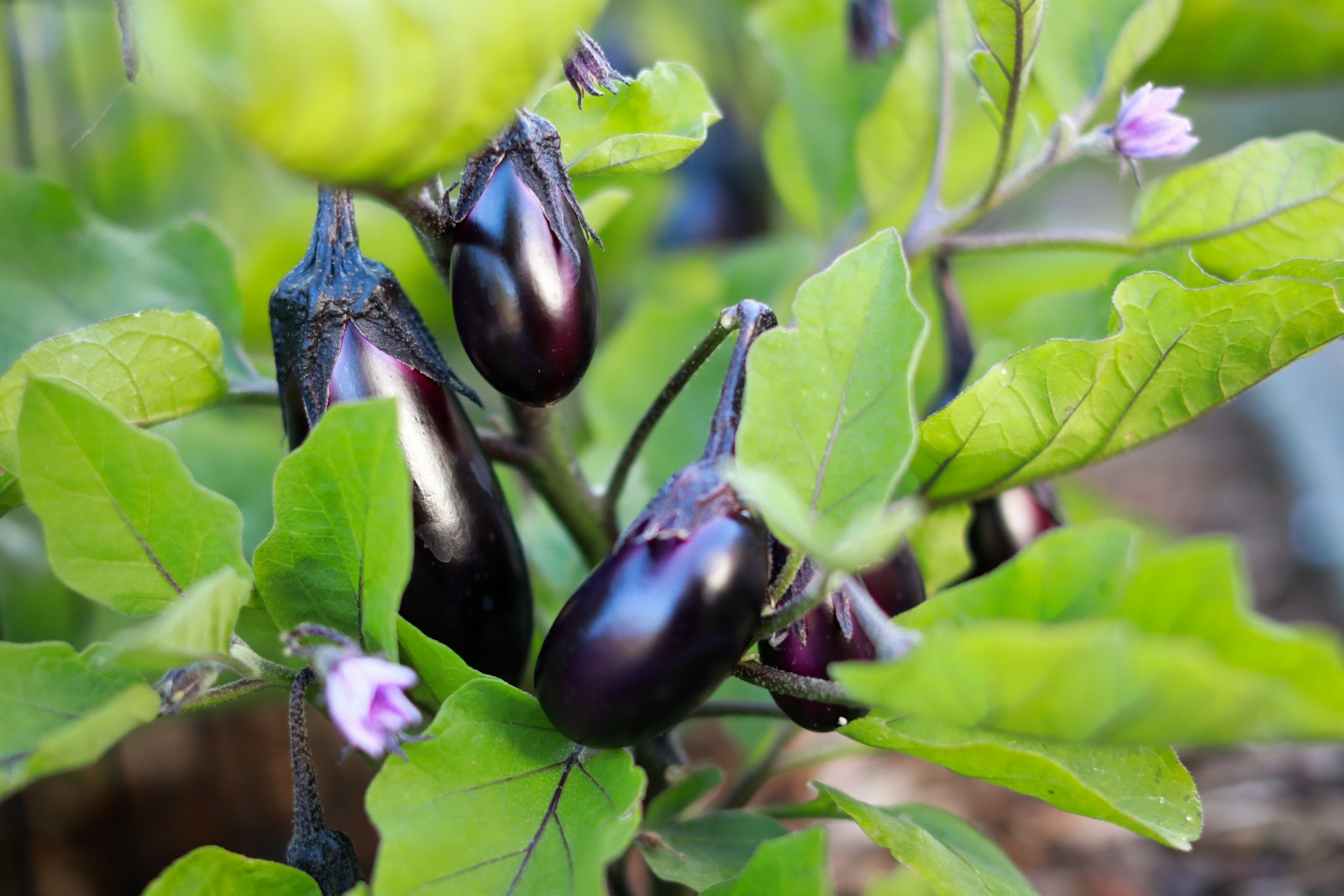
Eggplant, also called aubergine, is a bushy warm-season plant grown for its glossy fruit. The fruit comes in deep purple, white, green, lilac and striped forms, from egg-sized to long and slender. The plants are handsome too, with soft grey-green leaves and violet flowers. Eggplant is moderately easy where summers are long and hot, and more of a challenge in cool areas.
Sowing and planting
Eggplant needs a long, warm season. In most gardens you start the seed indoors.
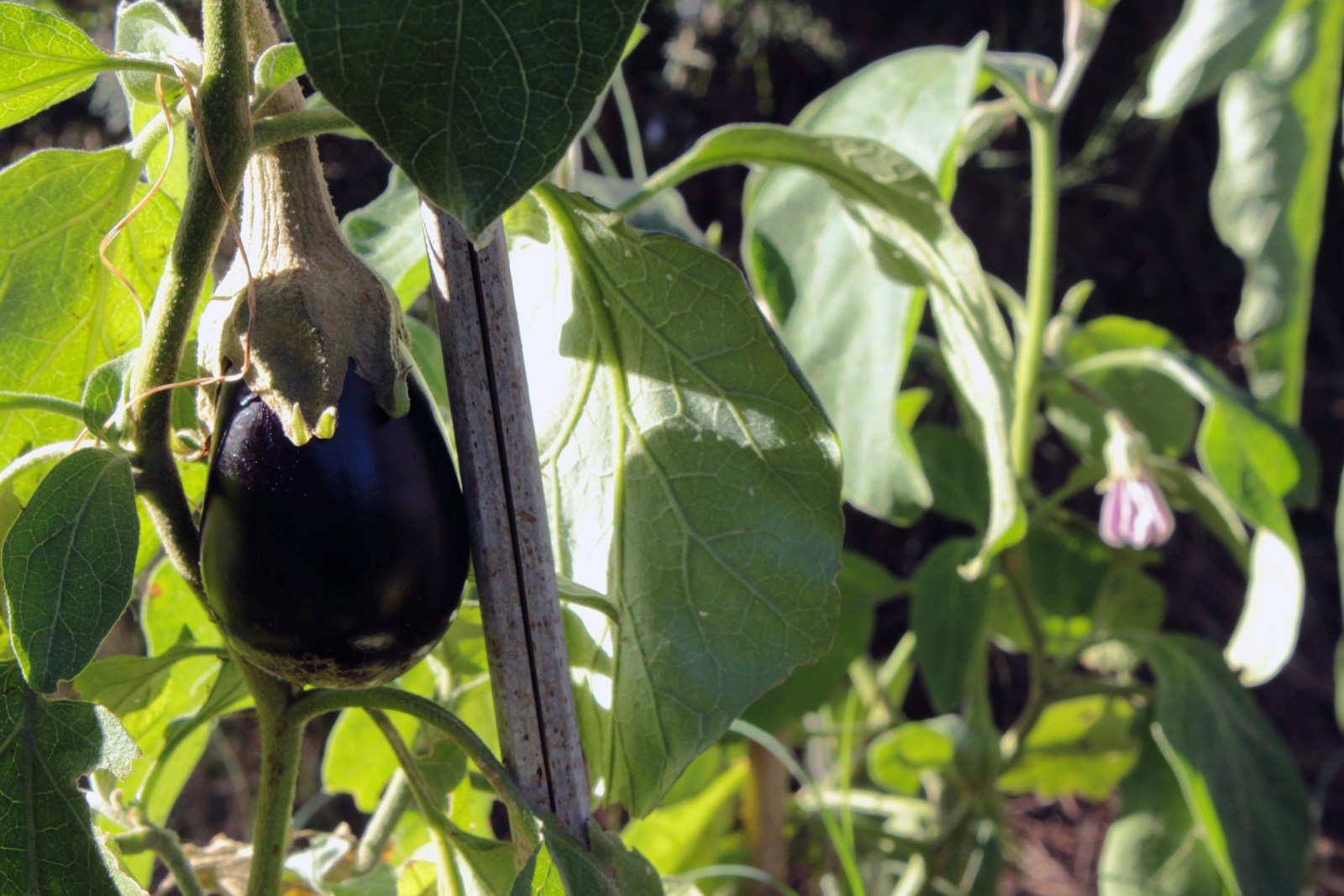
Sowing indoors. Sow eight to ten weeks before your last frost. Sow seed 1/4 inch (6 mm) deep in trays or small pots of moist seed compost. Keep the soil at 75 to 90°F (24 to 32°C); a heat mat makes a real difference. Seedlings usually appear in 7 to 14 days, sometimes longer in cooler rooms.
Once the seedlings have their first true leaves, move each one into its own 3 to 4 inch (8 to 10 cm) pot. Grow them in strong light, at 70 to 80°F (21 to 27°C) by day. Keep nights above 60°F (16°C). Cold slows eggplant seedlings badly.
Sowing outdoors. Direct sowing only suits long, hot summers, such as in USDA zones 9 to 11.
Planting out. Harden off seedlings (get them used to outdoor sun, wind and cooler nights) over seven to ten days. Plant out two to three weeks after your last frost. Wait until nights stay above 55°F (13°C) and the soil is at least 65°F (18°C). Planting early into cold soil stunts plants for weeks. In cool areas, warm the bed first with black plastic, and use row cover for the first few weeks.
Set each plant at the same depth it grew in its pot. Water in well. Put in stakes or cages now, so you do not damage roots later.
Containers. Eggplant does well in pots, which warm up faster than the ground. Use a container of at least 5 gallons (20 litres) per plant. Compact varieties suit pots best.
Succession sowing is not usually worthwhile, because each plant crops for months until frost.
Growing on
Watering. Water deeply at the base, about 1 to 2 inches (2.5 to 5 cm) a week. Increase this in hot, dry spells. Drought stress causes flower drop, small fruit and bitterness. Plants in containers may need water every day in summer.
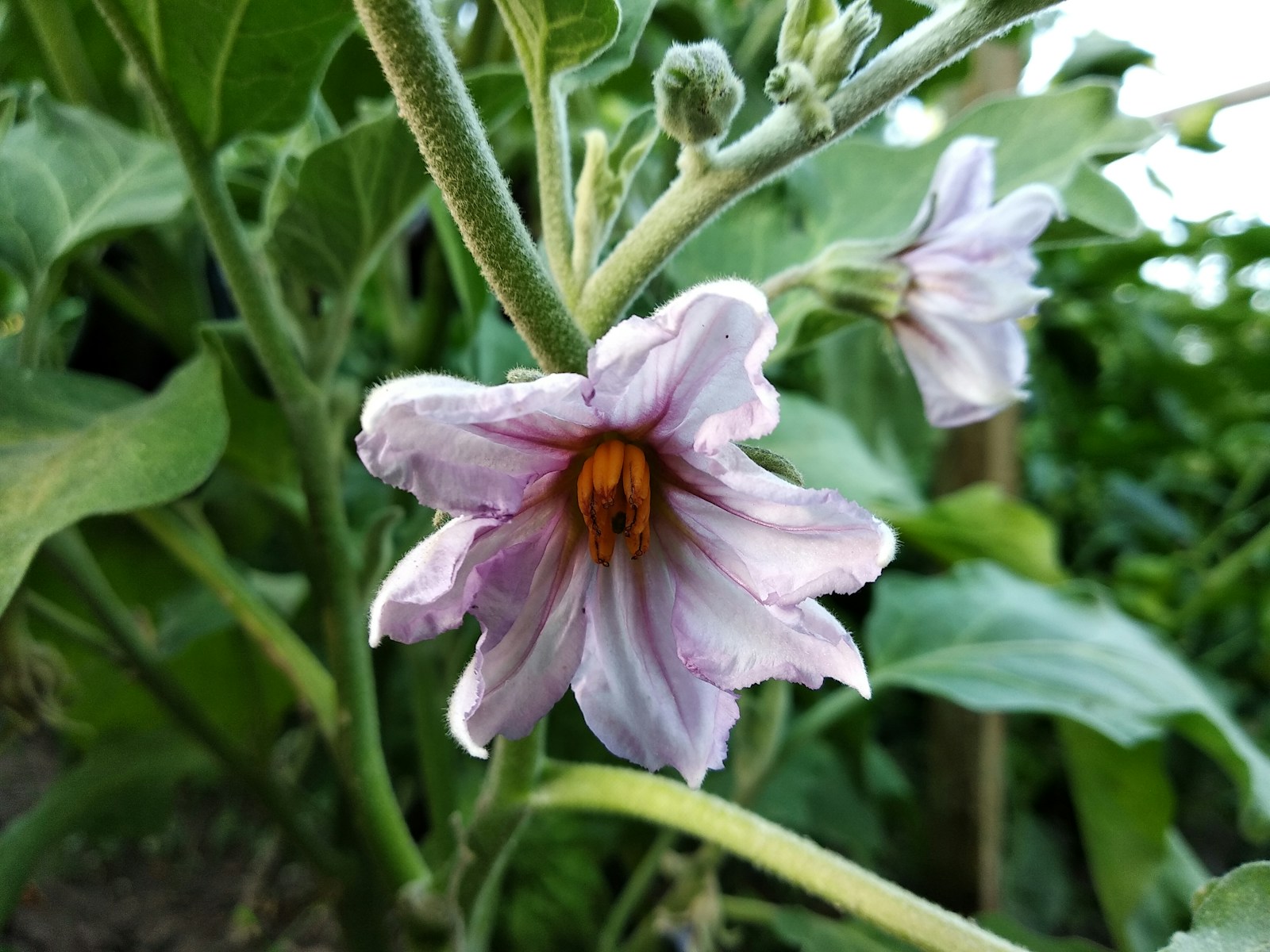
Feeding. Eggplant is a heavy feeder. Dig 2 to 3 inches (5 to 8 cm) of compost into the bed before planting. Side-dress (feed in a band beside the plants) with compost or a balanced organic fertiliser when the first flowers open. Repeat every three to four weeks. Too much nitrogen gives big leaves and few fruit.
Mulching. Once the soil has warmed fully, add 2 to 3 inches (5 to 8 cm) of straw or shredded leaves. Mulch keeps moisture even and roots cool. Do not mulch cold soil early, as it keeps the ground chilly.
Support. Heavy fruit can snap stems or topple a plant. Tie the main stem to a sturdy stake, 3 to 4 feet (90 to 120 cm) tall, or use a tomato cage. Tie loosely with soft twine as the plant grows.
Pruning and pinching. Pinch out the growing tip when a plant reaches about 12 inches (30 cm) to encourage bushier growth. Remove suckers (small side shoots) below the first flower. Late in the season, pinch off new flowers about four to six weeks before your first fall frost. This lets the plant ripen the fruit it already carries.
Pollination. Eggplant flowers pollinate themselves, but bees help fruit set.
Companions. Beans and marigolds make good neighbours. Avoid planting where tomatoes, peppers, potatoes or eggplant grew in the last three years. Rotation helps prevent soil-borne diseases.
Harvesting
Pick eggplant when the skin is glossy and the fruit is firm but gives slightly when pressed. Press the skin with your thumb. If it springs back, the fruit is ready. If it stays dented, it is overripe. If it is hard and does not give, wait a few days.
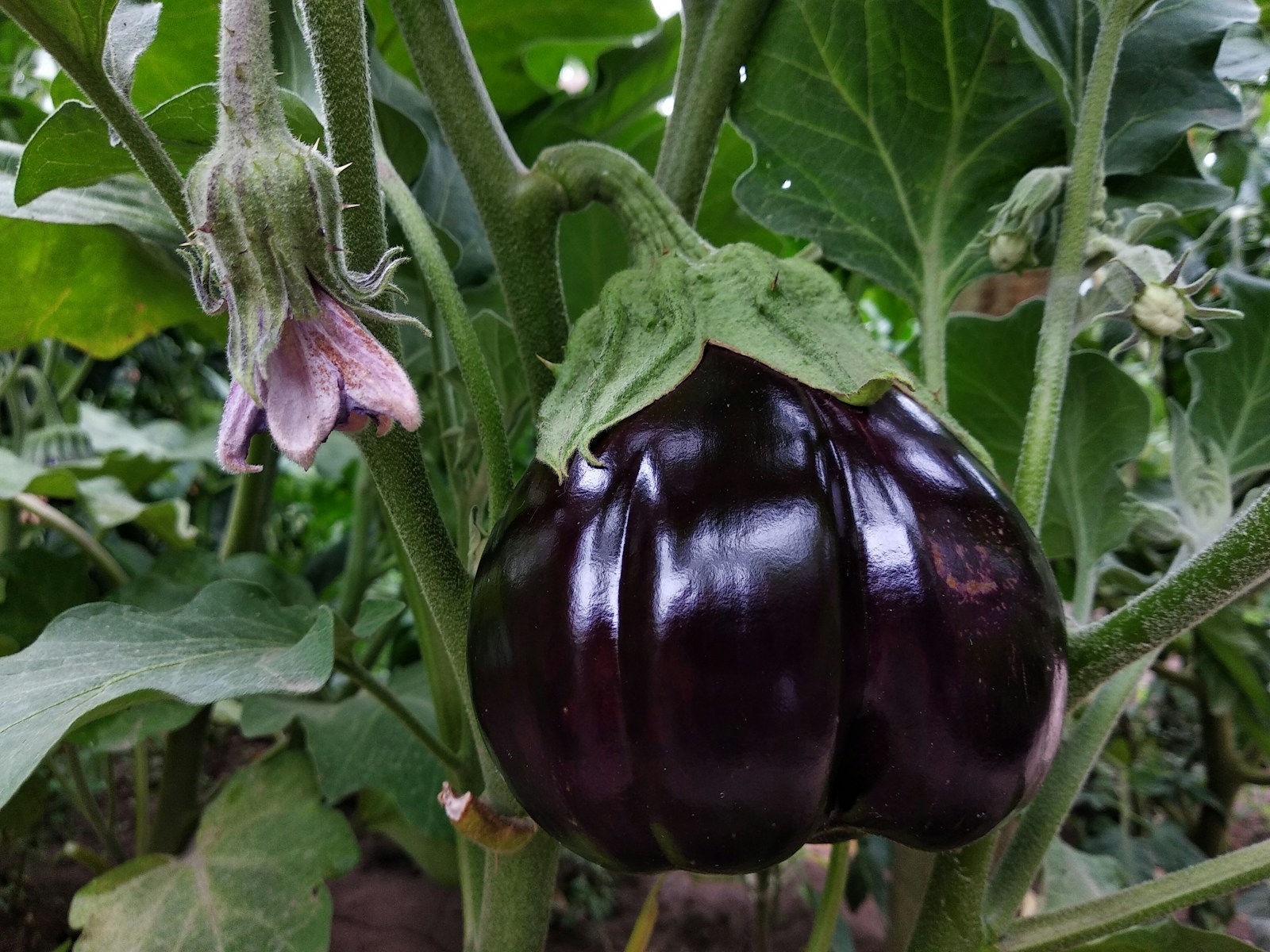
Overripe fruit has dull skin, hard brown seeds and a bitter taste. Size depends on variety, so go by shine and firmness rather than length.
Cut the stem with pruners or a sharp knife, leaving about an inch (2.5 cm) of stem on the fruit. Do not twist or pull; the stems are tough and the plant tears. Wear gloves, as some varieties have small spines on the calyx (the green cap on the fruit).
Regular picking keeps plants producing. Check every few days once fruit starts to size up.
Storage. Eggplant is best eaten within a few days. Store it in a cool spot, around 50°F (10°C), or in the fridge's salad drawer for up to a week. Colder storage causes brown pitting. For longer keeping, cook first and then freeze.
Saving seed. Save seed only from open-pollinated varieties. Leave a fruit on the plant well past eating stage, until it turns dull, hard and yellow-brown or bronze. Grate or mash the flesh in water; good seed sinks. Rinse, dry thoroughly and store somewhere cool and dry.
Problems and pests
Eggplant is a nightshade. Its leaves, stems and flowers are poisonous if eaten, so keep children and pets away from the plants and never use the foliage as food.
Leaves covered in tiny round holes
Flea beetles are the most common eggplant pest. These small, jumping beetles can stunt young plants. Cover transplants with row cover straight after planting. Remove it when flowers appear. Larger plants usually outgrow light damage.
Leaves stripped by striped beetles or soft red larvae
Colorado potato beetles and their larvae feed on eggplant as well as potatoes. Hand-pick adults and larvae into soapy water. Crush the orange egg clusters on the undersides of leaves.
Fine speckling, bronzed leaves and fine webbing
Spider mites are tiny sap-sucking pests that thrive in hot, dry weather. Spray the undersides of leaves with water every few days. Keep plants well watered. For bad cases, use insecticidal soap. Spray the pests directly, test on one leaf first and avoid spraying in hot sun.
Lower leaves yellow and wilt, often on one side
This is often verticillium wilt, a soil-borne fungal disease. There is no cure. Remove and bin affected plants rather than composting them. Rotate crops and choose resistant varieties or grafted plants where it is a known problem.
Flowers fall off without setting fruit
Blossom drop comes from stress. Common causes are nights below 55°F (13°C), days above 90°F (32°C), or dry soil. Keep watering steady, mulch the soil and wait for more moderate weather. Fruit set usually resumes once conditions settle.
Varieties worth growing
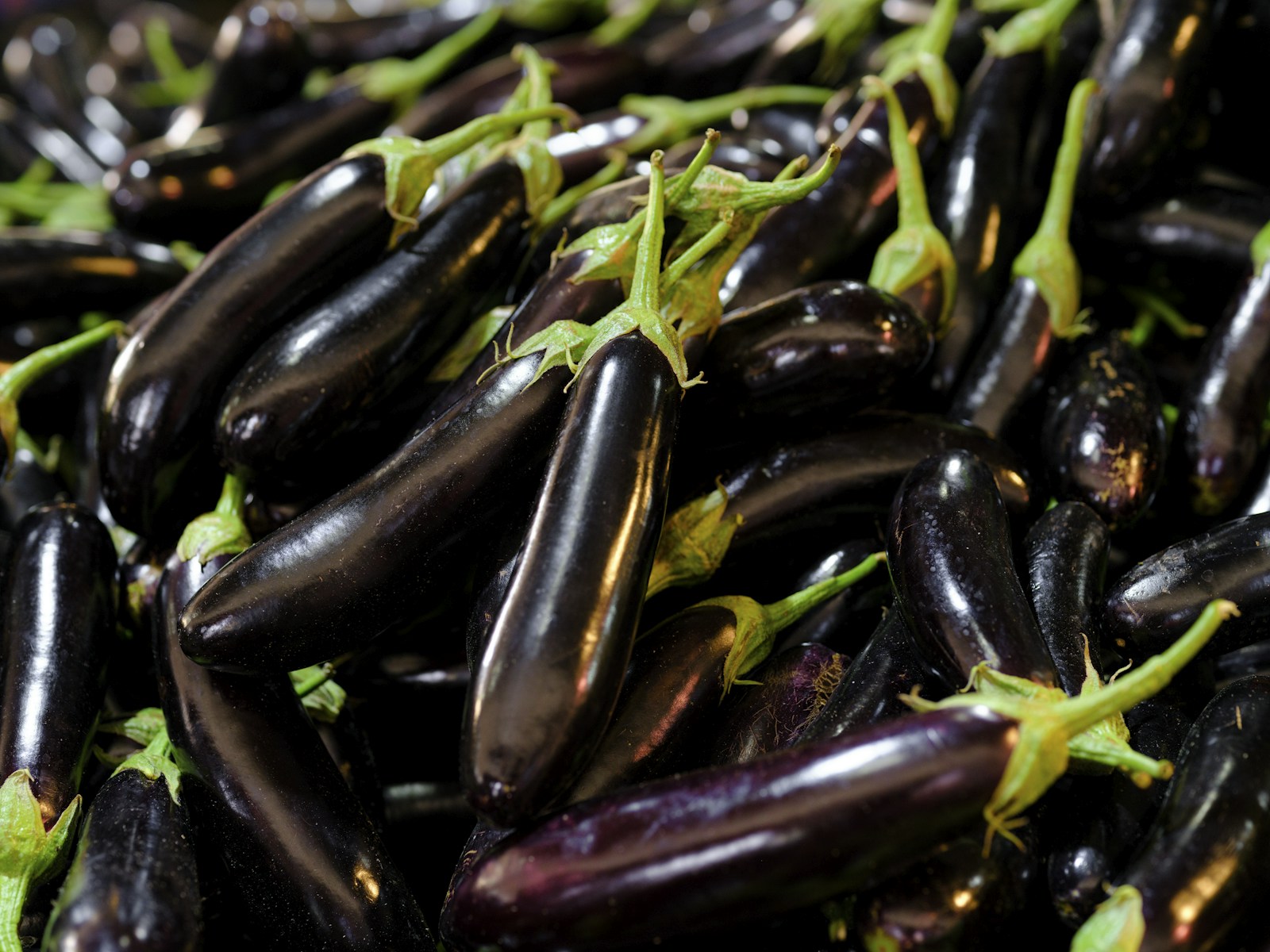
Globe or Italian types
- 'Black Beauty': the classic large, deep purple, oval heirloom.
- 'Rosa Bianca': a round Italian heirloom, white blushed with lilac, mild and creamy.
- 'Listada de Gandia': a striking purple-and-white striped heirloom that copes well with heat.
Asian or long types
- 'Ichiban': a productive Japanese type with long, slim, dark purple fruit.
- 'Ping Tung Long': a very long, slender, lavender-purple Taiwanese heirloom.
Compact types
- 'Fairy Tale': a dwarf plant with small, purple-and-white striped fruit, ideal for containers.
- 'Hansel': a compact plant that bears clusters of small, finger-length purple fruit.