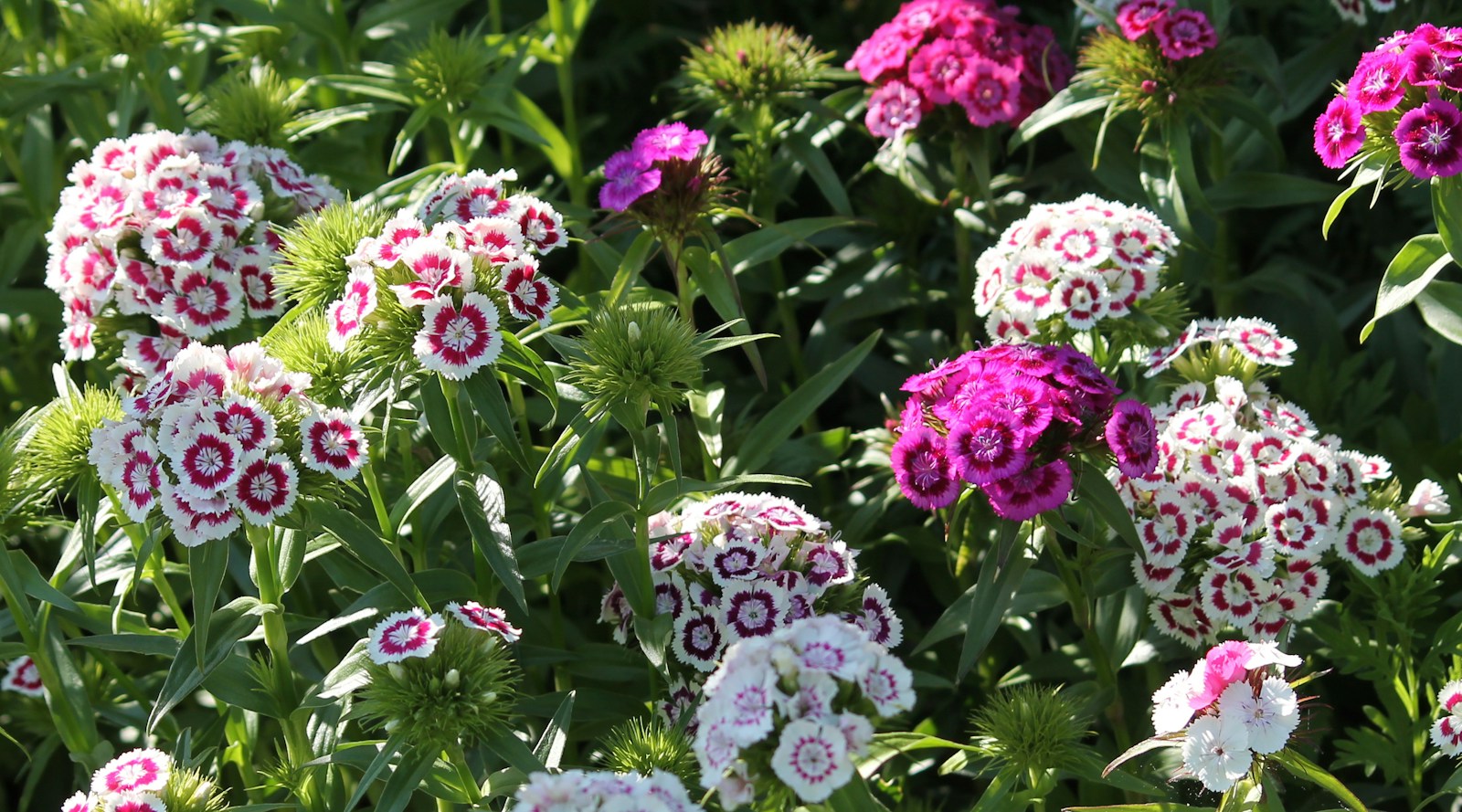
Dianthus is a large family of cottage flowers that includes pinks, sweet William and carnations. Most have fringed petals, blue-grey leaves and a spicy clove scent. They suit borders, rock gardens, edging and pots, and they make long-lasting cut flowers. Difficulty: easy, as long as the soil drains well.
Sowing and planting
Annual China pinks (Dianthus chinensis) and their hybrids flower in their first year. Sow them indoors 8 to 10 weeks before your last frost. Plant out 1 to 2 weeks after the last frost, once the soil has warmed.
Perennial pinks (Dianthus plumarius, Dianthus gratianopolitanus and hybrids) are usually bought as young plants. Plant them in spring after the last frost or in early autumn, at least six weeks before your first frost. Seed sown indoors 8 to 10 weeks before the last frost often gives a few flowers in the first year.
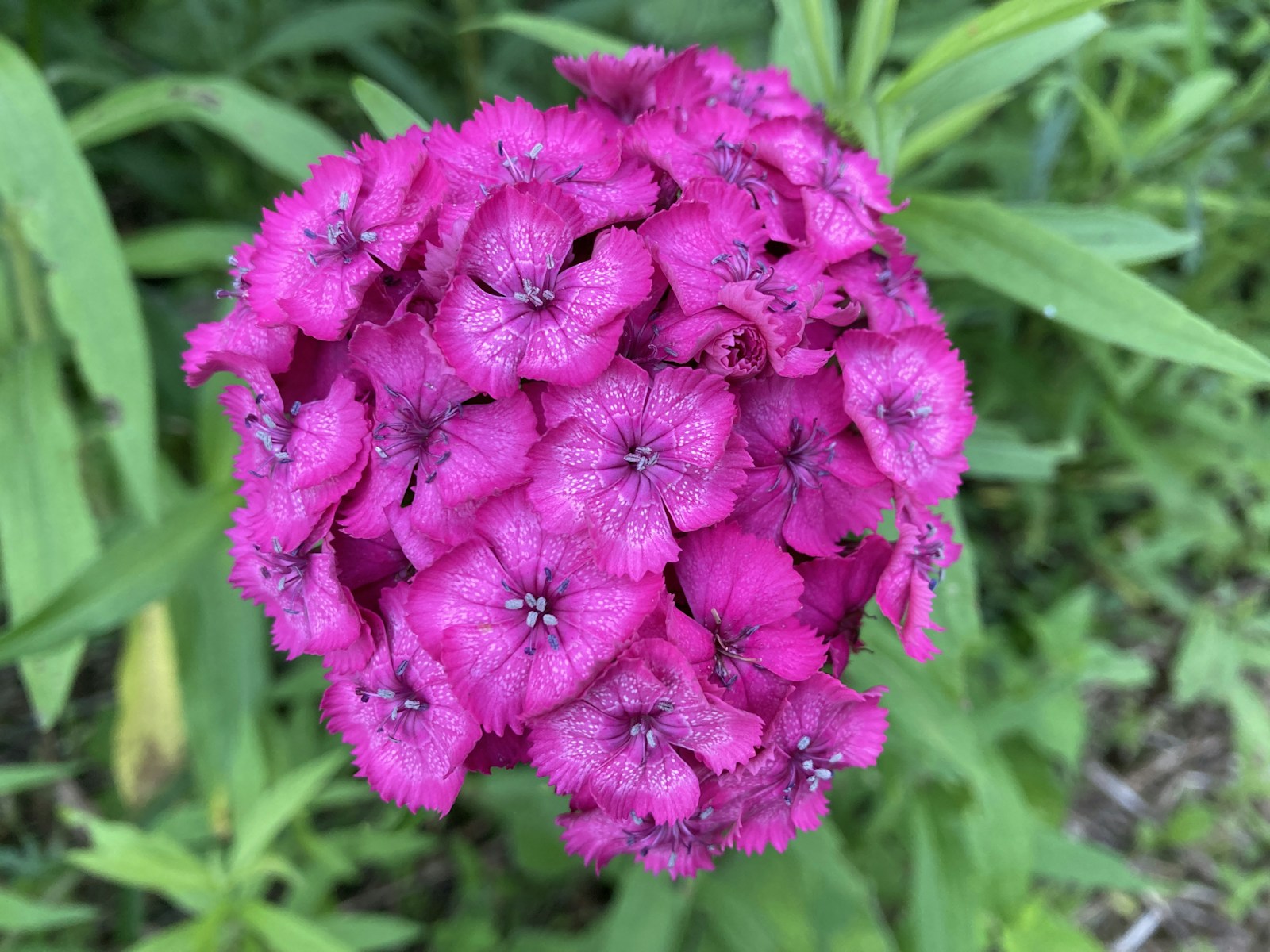
Sweet William (Dianthus barbatus) is a biennial, a plant that grows leaves in its first year and flowers in its second. Sow it outdoors in late spring or early summer. Move the young plants to their flowering spot in early autumn, and they bloom the following late spring.
Carnations (Dianthus caryophyllus) need a long season. Sow them indoors 10 to 12 weeks before the last frost, or buy plants.
To sow indoors, scatter seed thinly on moist seed compost. Cover it with the thinnest layer of compost or vermiculite. Keep the tray at 60 to 70°F (16 to 21°C) and move it into bright light as soon as seedlings appear. Grow them cool, around 55 to 60°F (13 to 16°C), to keep them sturdy. Prick out (move each seedling to its own small pot) once they have two true leaves.
Harden off seedlings before planting out. This means getting them used to outdoor sun and wind over 7 to 10 days. Plant at the same depth as in the pot. Burying the crown, the point where stems meet the roots, invites rot.
Choose the sunniest, best-drained spot you have. In heavy clay, use a raised bed or add grit rather than rich compost. If your soil is acidic, a light dusting of garden lime raises the pH; wear gloves and eye protection when you spread it.
Growing on
Water new plants weekly until they root in. After that, water only in long dry spells. Water at the base in the morning so the foliage dries quickly. Dianthus die far more often from wet feet than from drought.
Feed lightly. A thin layer of compost in spring is usually enough for pinks. Annual types and carnations in pots benefit from a balanced liquid feed every 2 to 3 weeks while flowering. Too much nitrogen gives soft, floppy growth and fewer flowers.
Mulch with gravel or grit, not bark. Organic mulch holds damp against the crown. A gravel collar keeps the crown dry and reflects warmth.
Pinching. Pinch out the growing tip of young carnations and China pinks when they have 6 to 8 pairs of leaves. This makes bushier plants with more stems. Leave low mat-forming pinks alone.
Staking. Tall carnations need support. Push in twiggy sticks or a grow-through grid early in the season. Low pinks and sweet William rarely need staking.
Deadheading. Snip off faded flowers just above a pair of leaves. Pinks often rebloom through summer if you keep this up. Once the main flush ends, shear mat-forming pinks lightly to keep them compact. Sweet William usually dies after flowering, so let a few heads ripen if you want it to self-seed.
Dividing and renewing. Perennial pinks get woody and bare in the middle after 3 to 4 years. Replace them with cuttings. In summer, pull off non-flowering side shoots 3 to 4 inches (8 to 10 cm) long and root them in gritty compost. Gardeners call these cuttings "pipings".
Companions. Pair them with lavender, catmint and thyme, which also like dry soil.
Pollinators. Single and semi-double flowers attract butterflies, moths and bees. Heavily double carnations offer them less.
Harvesting
Cut stems for the vase when the first flowers on a stem have opened and the rest are in bud. For carnations, pick when the bloom is about half open. Sweet William is ready when a quarter to a third of the flowers in each head are open.
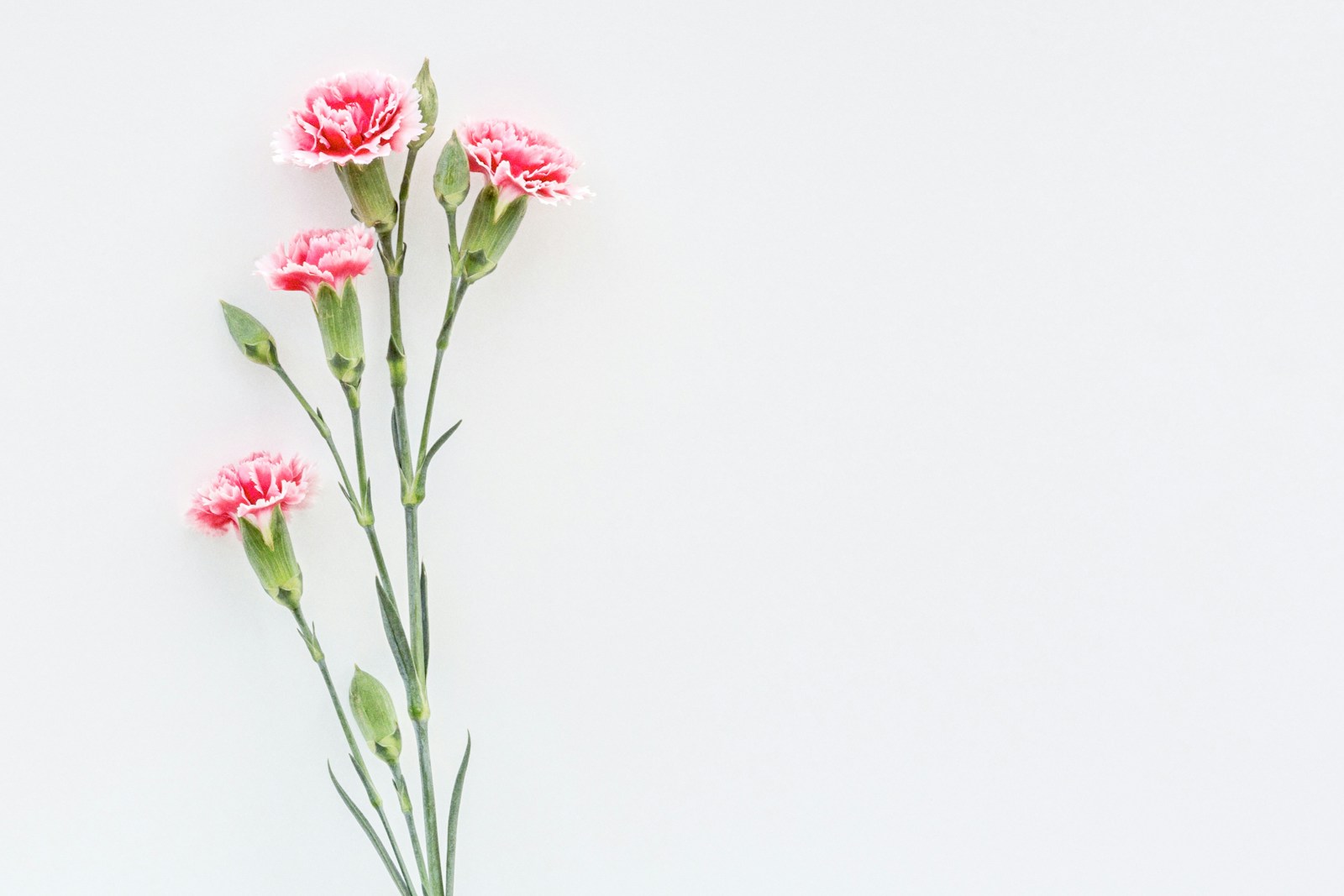
Cut in the cool of the morning with clean, sharp snips. Cut carnation stems just above a leaf joint, a node, rather than through it. Strip the lower leaves and stand the stems in cool water for a few hours before arranging. Change the water every 2 days. Carnations commonly last 1 to 2 weeks in a vase; pinks and sweet William last about a week.
Saving seed. Let a few flowers fade on the plant. The seed pods turn tan and dry, and the tip splits open. Snip them into a paper bag and shake out the small black seeds. Store them in a labelled envelope in a cool, dry place. Seed from hybrids and named varieties may not come true, meaning the offspring can differ from the parent. Take cuttings to keep a favourite variety exactly.
Problems and pests
Pet warning: Dianthus, especially carnations, are mildly toxic to cats and dogs. Chewing the leaves or flowers can cause mild stomach upset and skin irritation. Keep cut flowers and pots out of reach of pets that like to chew plants.
Plants yellow, collapse and rot at the base
This is crown or root rot, caused by wet, heavy soil or mulch against the stems. Remove affected plants. Replant in raised, gritty soil with a gravel collar, and cut back on watering.
Orange-brown powdery spots under the leaves
This is rust, a fungal disease that thrives in damp, crowded conditions. Pick off and bin spotted leaves. Space plants for airflow and water at the soil, not over the foliage.
Sticky, curled shoot tips
Aphids, small sap-sucking insects, cluster on soft new growth. Rub them off or knock them away with a strong jet of water. Encourage ladybirds and lacewings, which eat them.
Fine speckling and webbing on leaves
Spider mites, tiny sap-feeders, build up in hot, dry weather. Rinse the undersides of leaves with water every few days.
Seedlings and young shoots chewed overnight
Slugs and snails graze young plants, especially in damp spells. Check at dusk with a torch and remove them by hand. A ring of grit around each plant helps.
Varieties worth growing
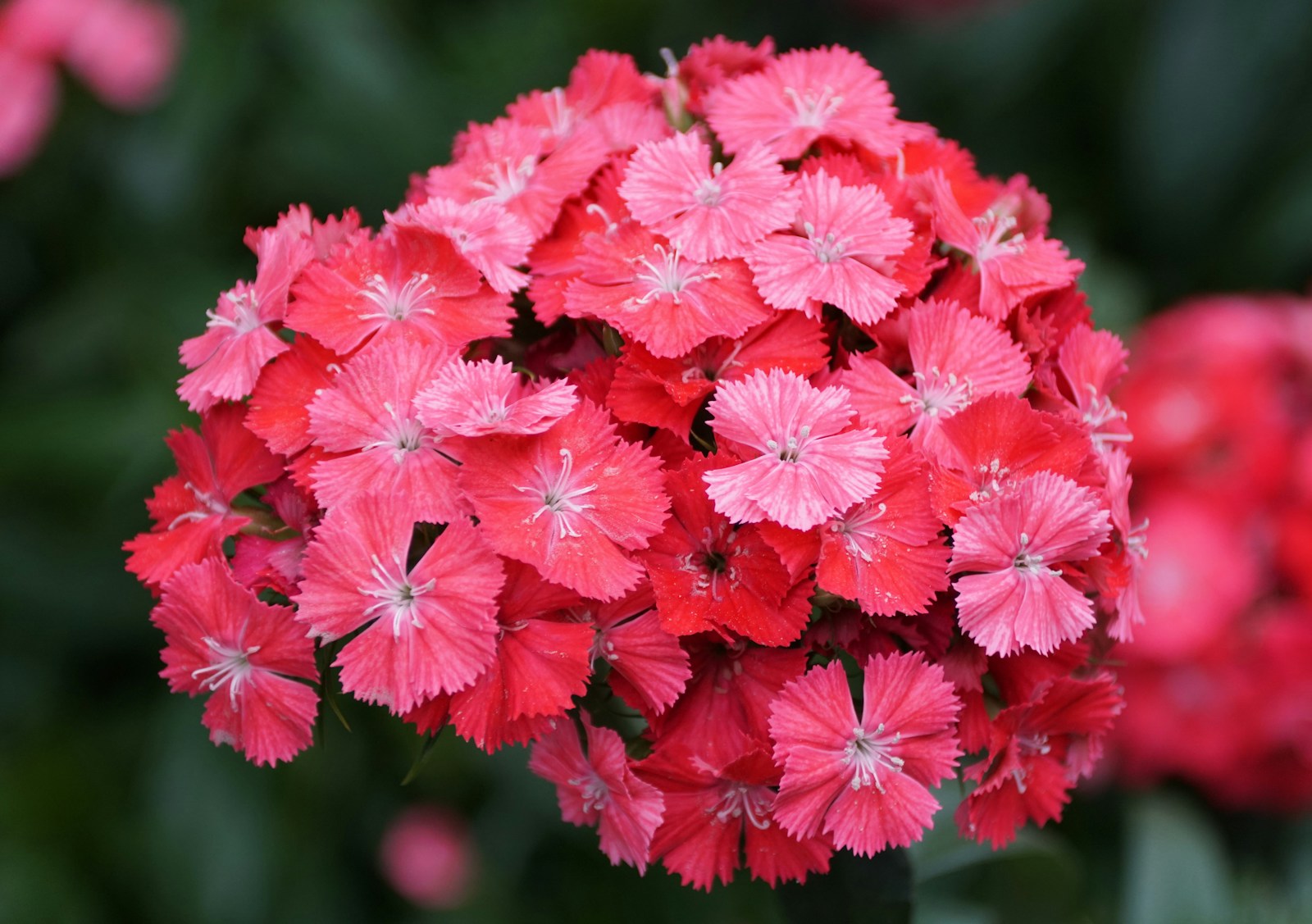
Perennial pinks
- 'Firewitch': low mat of silver-blue leaves with scented magenta flowers; very hardy and tough.
- 'Bath's Pink': soft pink, fringed flowers on a spreading mat; handles heat and humidity well.
- 'Doris': classic salmon-pink pink with a darker eye and strong scent; repeat flowering.
- 'Mrs Sinkins': old-fashioned double white pink with a powerful clove scent.
Annual and sweet William types
- Telstar series: compact China pinks in red, pink and white that flower from early summer.
- 'Sooty': sweet William with dark foliage and near-black, velvety flowers.
- 'Green Trick': unusual sweet William with round green pompom heads, popular for cutting.
Carnations
- Chabaud series: tall, scented, frilly carnations grown easily from seed; stake them.