
Cosmos is a tender annual from Mexico with open, daisy-like flowers on airy stems. One packet of seed fills a border with colour from midsummer until the first frost. It is one of the best cut flowers for beginners, and bees, hoverflies and butterflies visit it constantly. Difficulty: very easy, as long as you do not overfeed it.
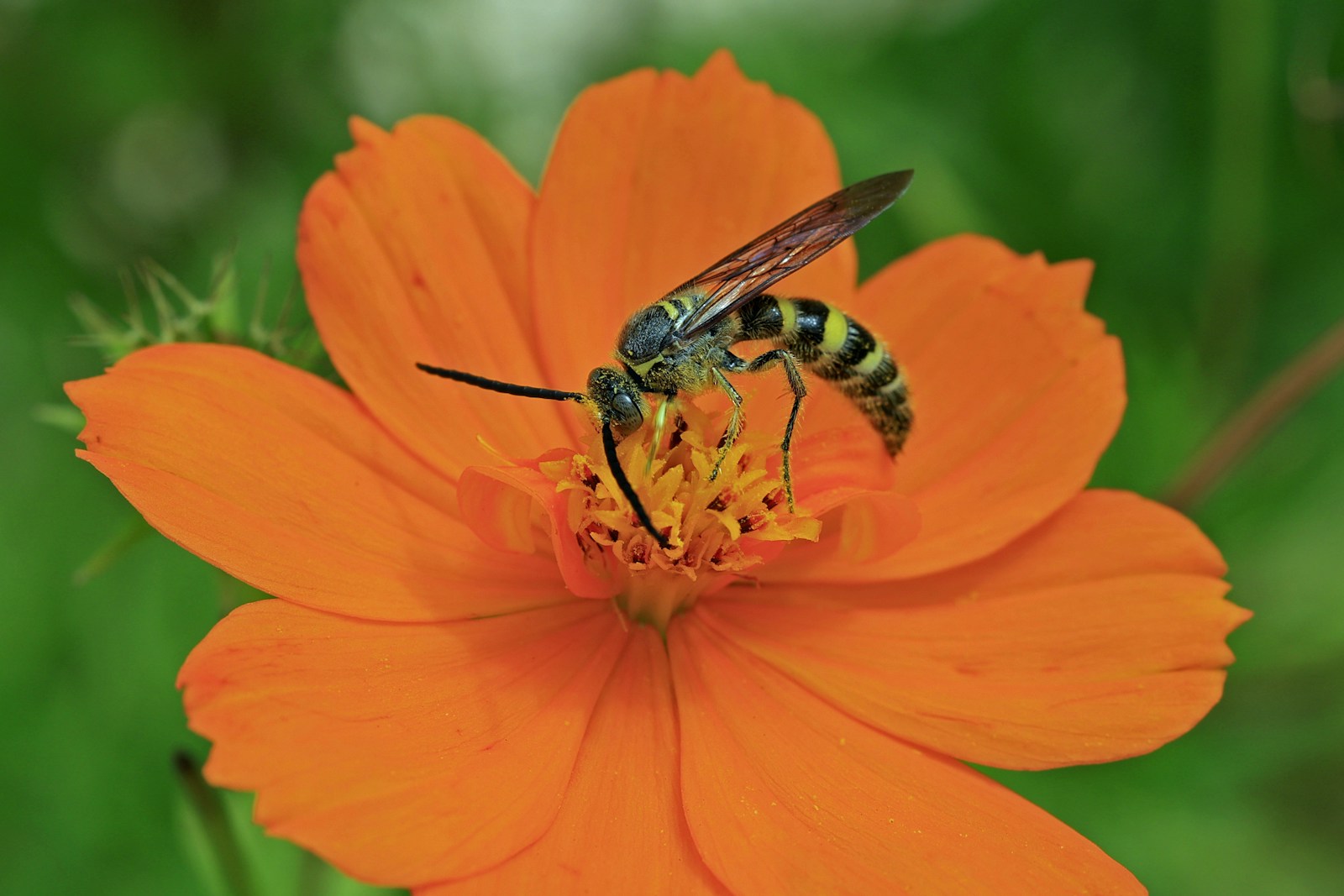
Two species are widely grown. Garden cosmos, Cosmos bipinnatus, has feathery leaves and pink, white or crimson flowers. Sulphur cosmos, Cosmos sulphureus, is shorter and bushier, with yellow, orange and red flowers. It copes even better with heat and drought.
Sowing and planting
Cosmos grows so quickly that direct sowing works well in most gardens. Sow outdoors once all danger of frost has passed and the soil has warmed to at least 65°F (18°C). This is usually one to two weeks after your last frost.
Rake the soil fine and sow seeds 1/4 inch (6 mm) deep. Water gently and keep the surface moist. Seedlings usually appear in 5 to 14 days. Thin them to 12 to 18 inches (30 to 45 cm) apart once they have two sets of true leaves.
For earlier flowers, sow indoors four to six weeks before your last frost. Sow two seeds per small pot or cell and keep them at 70 to 75°F (21 to 24°C). Remove the weaker seedling if both come up. Give seedlings plenty of light, or they become long and floppy.
Harden off indoor plants before planting out. Hardening off means getting seedlings used to outdoor conditions over seven to ten days. Plant them out after your last frost, at the same depth they grew in the pot.
Succession sowing
A second sowing three to four weeks after the first keeps fresh plants coming for cutting. In warm climates, with a long season, a third sowing can flower well into autumn. Stop sowing about 12 weeks before your first autumn frost.
Growing on
Water seedlings regularly until they are established. After that, water only in long dry spells. Cosmos tolerates drought far better than most annuals.

Do not feed cosmos. Rich soil and fertilizer, especially high-nitrogen feeds, give huge leafy plants with few flowers. Skip compost in the planting spot if your soil is already fertile. A light mulch of shredded leaves or straw helps keep weeds down and the soil evenly moist.
Pinching
Pinching means removing the growing tip of a young plant. It makes the plant branch, giving more flowers on sturdier stems. When plants reach 12 to 18 inches (30 to 45 cm) tall, snip out the top 3 to 4 inches (8 to 10 cm) just above a pair of leaves. Side shoots grow from the leaf joints below.
Support
Tall garden cosmos can topple in wind and rain, especially in rich soil. Pinching keeps plants shorter and stronger. On exposed sites, push in a few stakes around each group and run garden twine between them. Sulphur cosmos rarely needs support.
Deadheading
Deadheading means removing spent flowers. It is the key to a long season. Cosmos that sets seed slows down and stops flowering. Every few days, cut faded flowers back to the next bud or leaf joint. Frequent cutting for vases does the same job.
Cosmos is a fine companion in the vegetable garden. Its open flowers draw in pollinators and beneficial insects such as hoverflies, which feed on aphids. Keep tall plants to the north side of low crops so they do not cast shade.
Harvesting
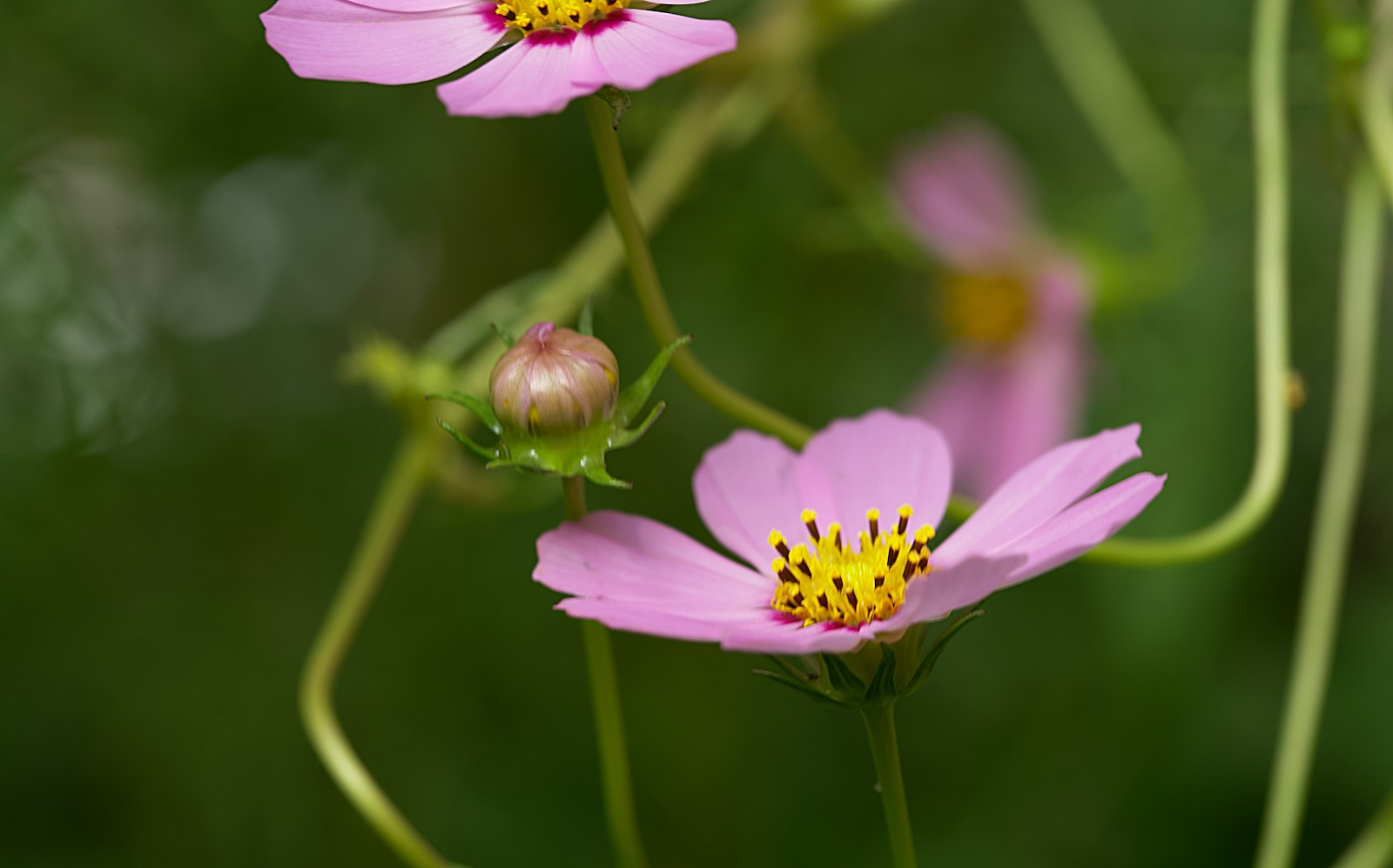
For vases, cut stems when the flowers are just starting to open. The petals should be unfurling but not yet flat. Buds showing colour also open in water. Cut in the cool of the morning or evening, and take a long stem back to a side shoot. Put stems straight into water. Cut cosmos usually lasts about a week, and each cut encourages more flowers.
Saving seed
Leave a few of the best flowers to fade on the plant late in the season. The seeds form as long, thin, dark spikes in the centre. Pick the head when the seeds are brown and pull away easily. Dry them indoors for a week, then store in a paper envelope in a cool, dry place.
Different varieties cross readily when grown together. Saved seed may not match the parent in colour or form. Cosmos also self-sows freely, so expect seedlings the following spring.
Problems and pests
Too much fertilizer is the most common reason cosmos disappoints. Rich soil gives tall, leafy plants that flop over and flower late or barely at all. Grow cosmos in lean soil and never feed it.
Seedlings collapse at soil level
Damping off, a fungal disease, rots young stems in cold, wet compost. Sow in fresh seed compost, use clean pots and water from below. Do not sow outdoors until the soil is warm.
Clusters of small insects on shoot tips
Aphids, small sap-sucking insects, gather on soft new growth. Knock them off with a strong spray of water. Encourage ladybirds and hoverflies, which eat them. Squash small colonies by hand.
White powder on the leaves
Powdery mildew, a fungal disease, appears late in the season when plants are crowded or dry at the roots. Thin plants for better air flow and water in dry spells. Remove badly affected leaves.
Plants flop and fall over
Rich soil, too much shade and strong wind all cause flopping. Pinch young plants, stake tall varieties and choose the sunniest spot you have.
Few flowers, lots of leaves
This is usually overfeeding or seed setting. Stop all feeding and deadhead every few days.
Varieties worth growing

Garden cosmos (C. bipinnatus)
- 'Sensation' mix – tall, classic mix of pink, white and crimson single flowers.
- 'Purity' – pure white single flowers on tall stems; a cutting garden favourite.
- 'Sea Shells' – petals rolled into fluted tubes, in pink, white and crimson.
- 'Double Click' – semi-double to double flowers that look like small pompons.
- 'Sonata' – a compact type around 2 feet (60 cm) tall, suited to pots and edges.
Sulphur cosmos (C. sulphureus)
- 'Bright Lights' – mix of yellow, orange and scarlet semi-double flowers.
- 'Cosmic Orange' – compact plants covered in bright orange flowers.