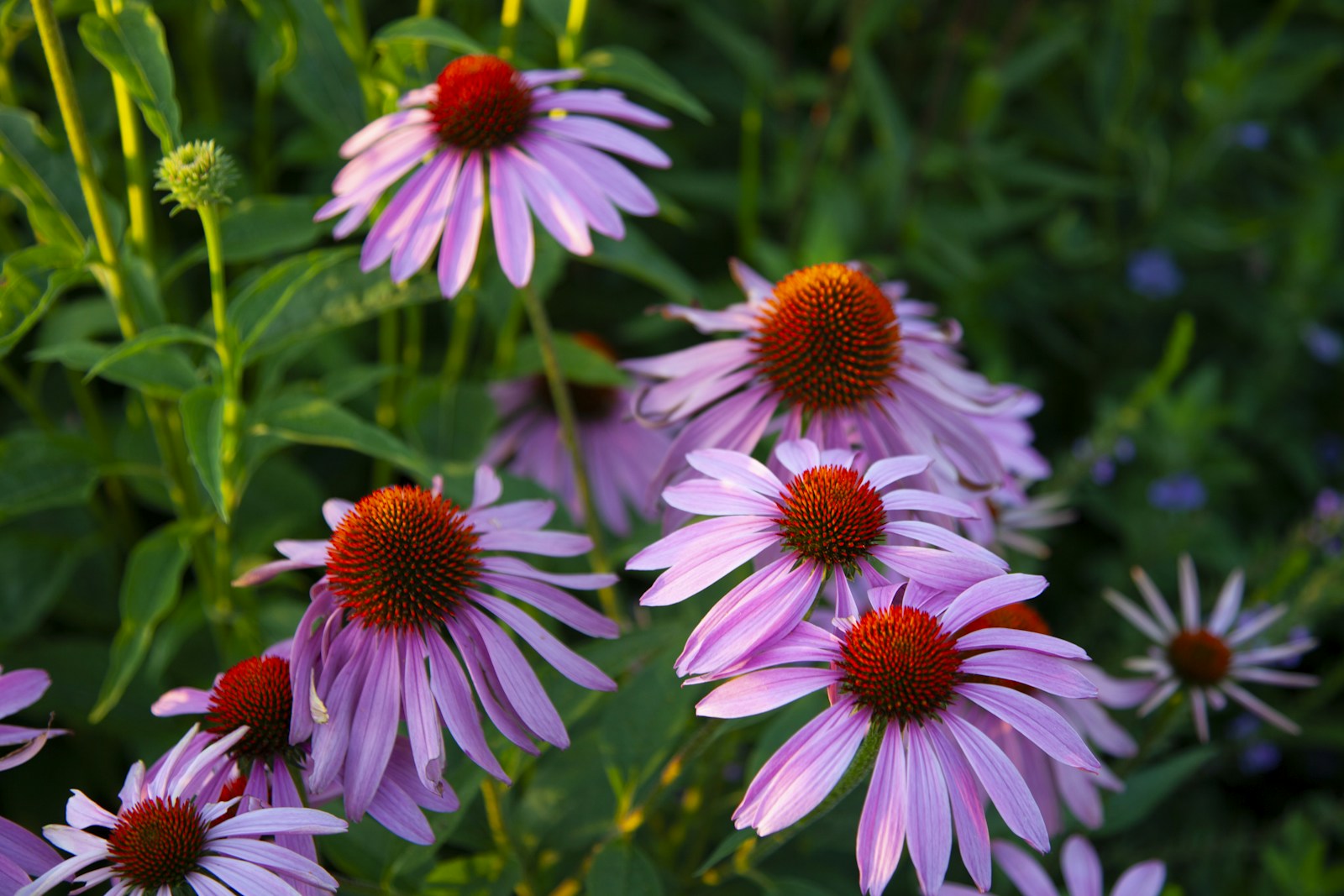
Coneflower is a hardy North American perennial with daisy-like flowers and a raised, spiny cone at the centre. The classic purple coneflower, Echinacea purpurea, flowers from early summer into autumn and shrugs off heat and dry spells. Bees and butterflies work the flowers, and goldfinches strip the seed heads in cold weather. Difficulty: easy, as long as the soil drains well.
Sowing and planting
You can grow the species from seed, but named hybrids do not come true. That means their seedlings differ from the parent. Buy hybrids as plants.
Seed germinates better after cold stratification. This is a spell of cold, moist conditions that mimics winter. Mix the seed with damp sand in a sealed bag and keep it in the fridge for four to six weeks. Alternatively, sow outdoors in late autumn and let winter do the work.
Sow indoors eight to ten weeks before your last frost. Barely cover the seed and keep the tray at 65 to 75°F (18 to 24°C). Seedlings usually appear in 10 to 20 days. Grow them on in bright light and pot them on once they have two true leaves.
To sow direct, scatter seed on raked soil from two weeks before to two weeks after your last frost. Thin seedlings to their final spacing.
Harden off indoor-raised plants before planting out. Hardening off means getting seedlings used to outdoor conditions over seven to ten days. Plant them out after your last frost. Set potted plants in spring or early autumn, at the same depth they grew in the pot. Deeper planting invites crown rot, which is decay where stems meet roots.
Coneflower dislikes heavy, wet clay in winter. Plant on a slight mound or in a raised bed if your soil stays soggy.
Growing on
Water new plants weekly through their first summer, soaking the root zone. Established plants have deep taproots and rarely need watering except in long droughts. Water at the base, not over the leaves.
Go easy on feeding. Rich soil and heavy fertilizer give soft, floppy stems and fewer flowers. A thin layer of compost in spring is enough in most gardens.
Mulch with 2 inches (5 cm) of shredded bark or leaf mould. Keep it a hand's width clear of the crown.
Tall plants on exposed sites can lean after heavy rain. Grow them among sturdy neighbours such as grasses, or use a ring of pea sticks early in the season. Pea sticks are twiggy branches pushed into the soil around young plants.
For bushier, slightly later flowering plants, cut back a third of the stems by half in late spring. This is known as the Chelsea chop. It staggers the flowering and shortens the plants.
Deadheading and seed heads
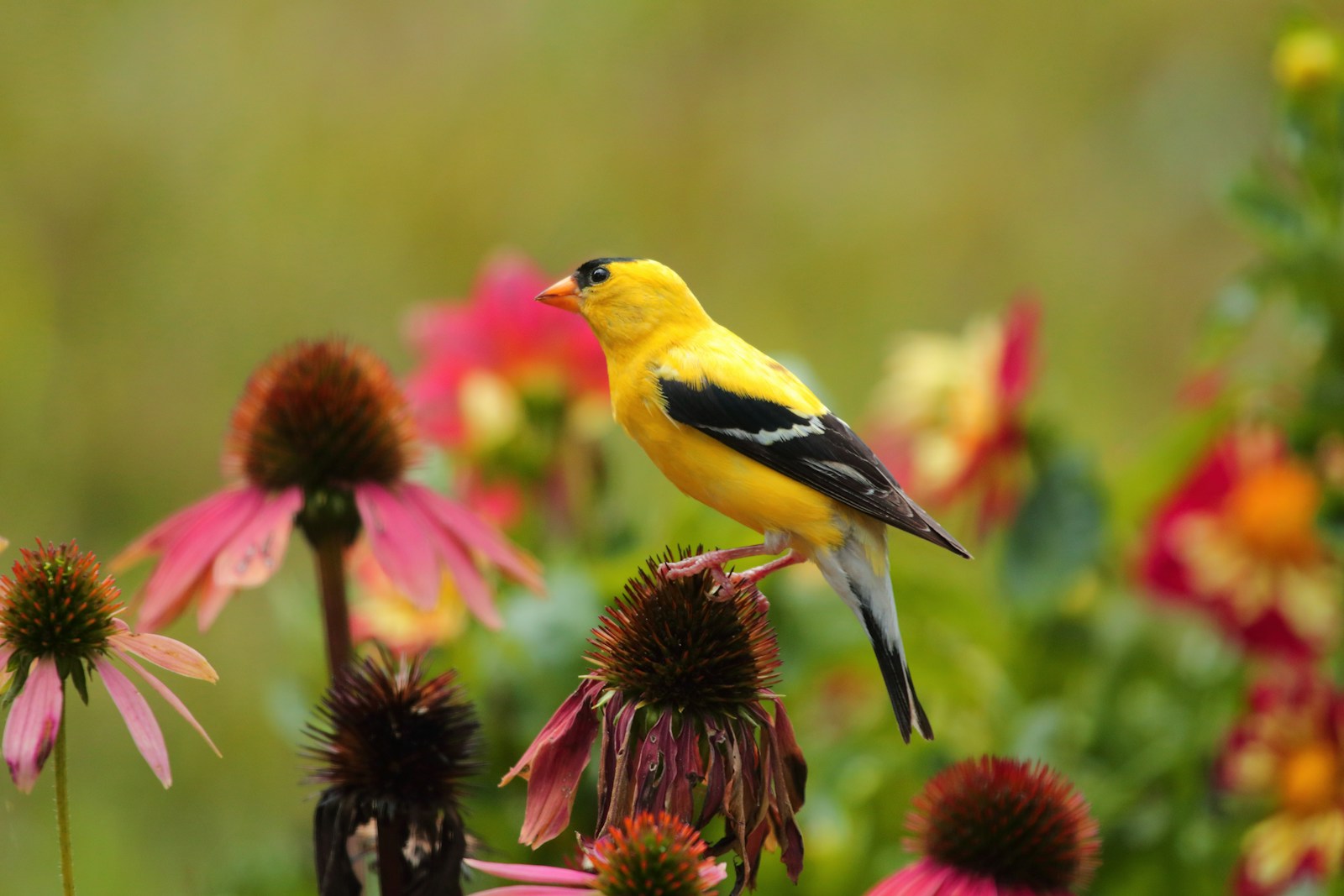
Deadheading means removing spent flowers. Early in the season, cut faded blooms back to a leaf or side bud to prompt more flowers. From late summer on, stop deadheading. Leave the seed heads standing through winter. Goldfinches and other small seed-eaters feed on them, and the stems give shelter to insects. Cut the old stems down in early spring, before new growth appears.
Dividing
Clumps can be divided every four years or so in spring. Coneflower resents disturbance, though, so only divide when a clump has thinned in the centre. Many gardeners simply let self-sown seedlings replace old plants.
Good companions include black-eyed Susan, bee balm, ornamental grasses and salvias. All enjoy the same sunny, well-drained spot.
Harvesting
For vases, cut stems when the petals have opened fully but before pollen covers the cone. Cut in the cool of the morning. Take a long stem back to a leaf joint and put it straight into water. Flowers usually last a week or more. The bare cones, with petals pulled off, also work well in dried arrangements.
Saving seed
Let a few heads ripen on the plant until the cone turns dark brown and dry. Cut the head and wear gloves, because the cone is prickly. Crumble it over a tray and pick out the pale, wedge-shaped seeds. Store them dry in a paper envelope in a cool place. Seed saved from the straight species comes true. Seed from hybrids gives mixed, often duller results.
Problems and pests
Wet, cold soil in winter is the most common way coneflowers fail. Crowns rot in soggy clay, and many double-flowered hybrids are short-lived for the same reason. Plant in free-draining soil, keep mulch off the crown and never plant too deep.
Flowers are green, twisted or sprouting tufts
This is usually aster yellows, a disease spread by leafhoppers. Leafhoppers are small sap-sucking insects. There is no cure. Dig out and bin the whole plant so it cannot infect others. Do not compost it.
White powder on the leaves
Powdery mildew, a fungal disease, appears in late summer when plants are dry at the roots and crowded. Space plants well and water in dry spells. Remove the worst leaves. It is mostly cosmetic this late in the season.
Leaves and petals chewed to lace
Japanese beetles are the likely cause in areas where they occur. Hand-pick them in the morning into a bucket of soapy water. Check plants every day while the beetles are active.
Seedlings vanish overnight
Slugs and rabbits both target young coneflowers. Grow seedlings on to a good size before planting out. Protect them with a wire cage until they toughen up. Collect slugs with a flashlight after rain.
Brown spots on older leaves
Leaf spot fungi thrive in wet, crowded conditions. Remove affected leaves and improve air flow. Water the soil, not the foliage.
Varieties worth growing
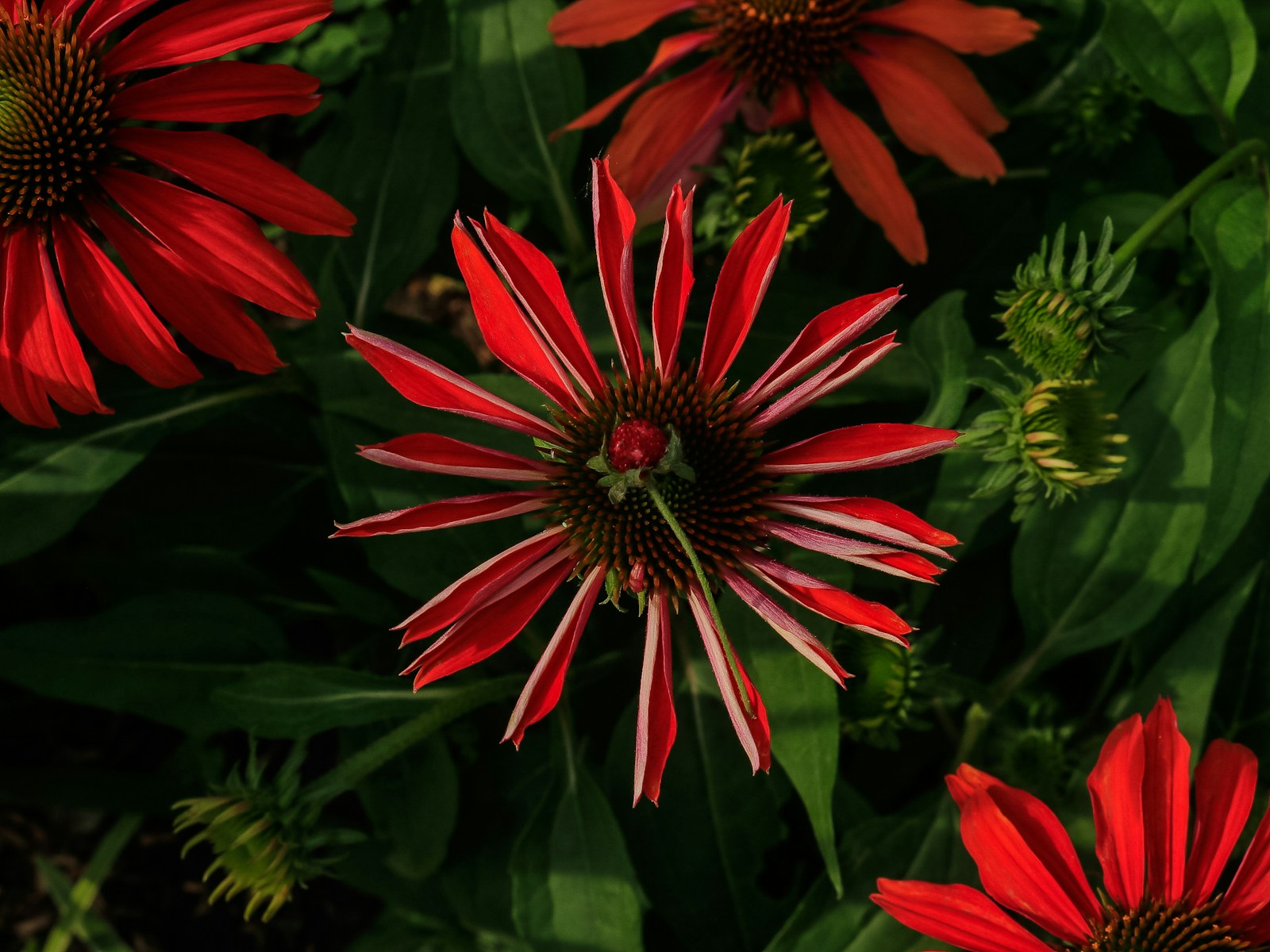
Species and seed-raised types
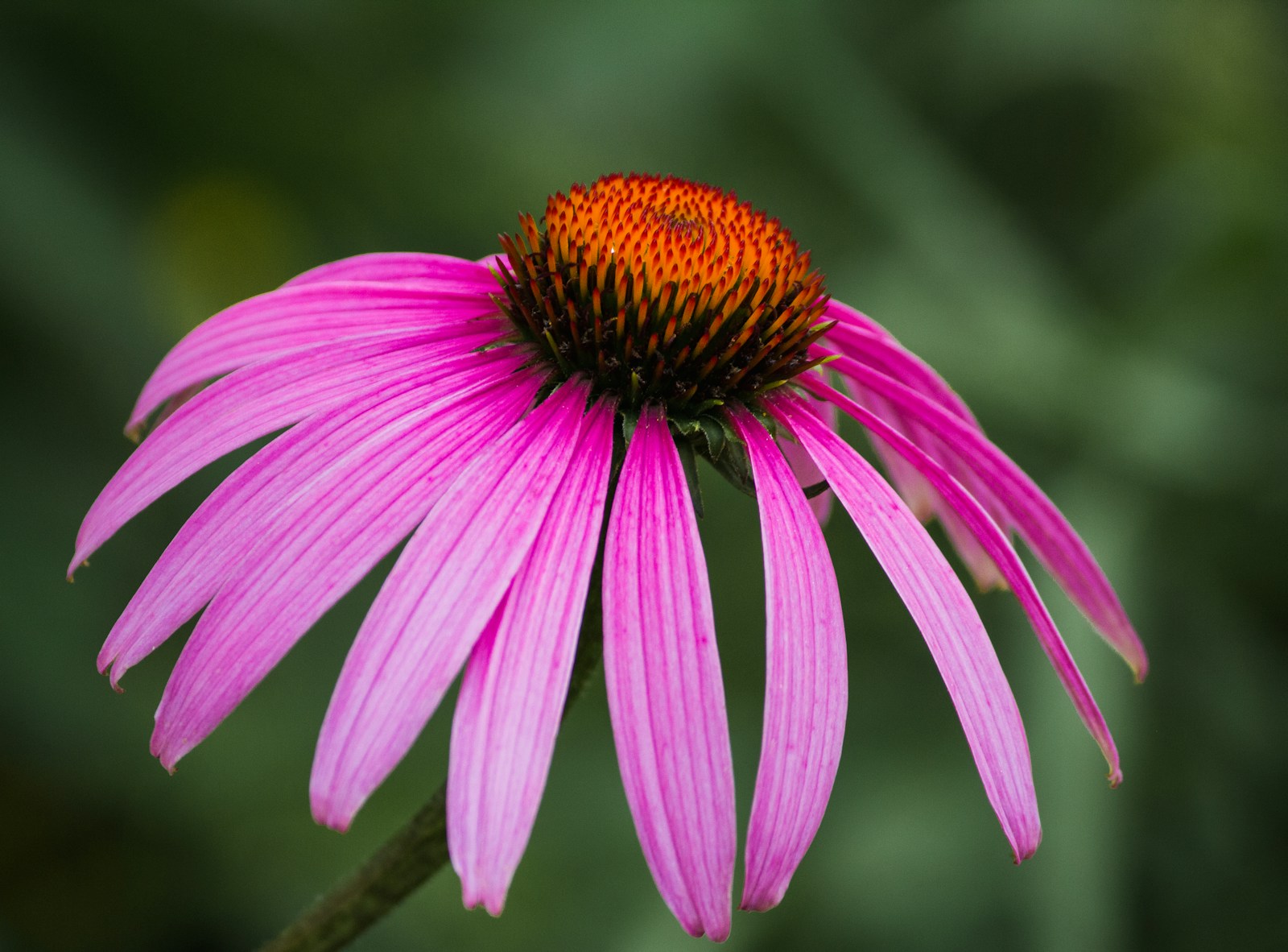
- 'Magnus' – large, flat, rosy-purple flowers on sturdy stems; comes true from seed.
- 'White Swan' – creamy white petals around a coppery orange cone.
- 'Ruby Star' ('Rubinstern') – deep carmine-pink flowers with horizontal petals.
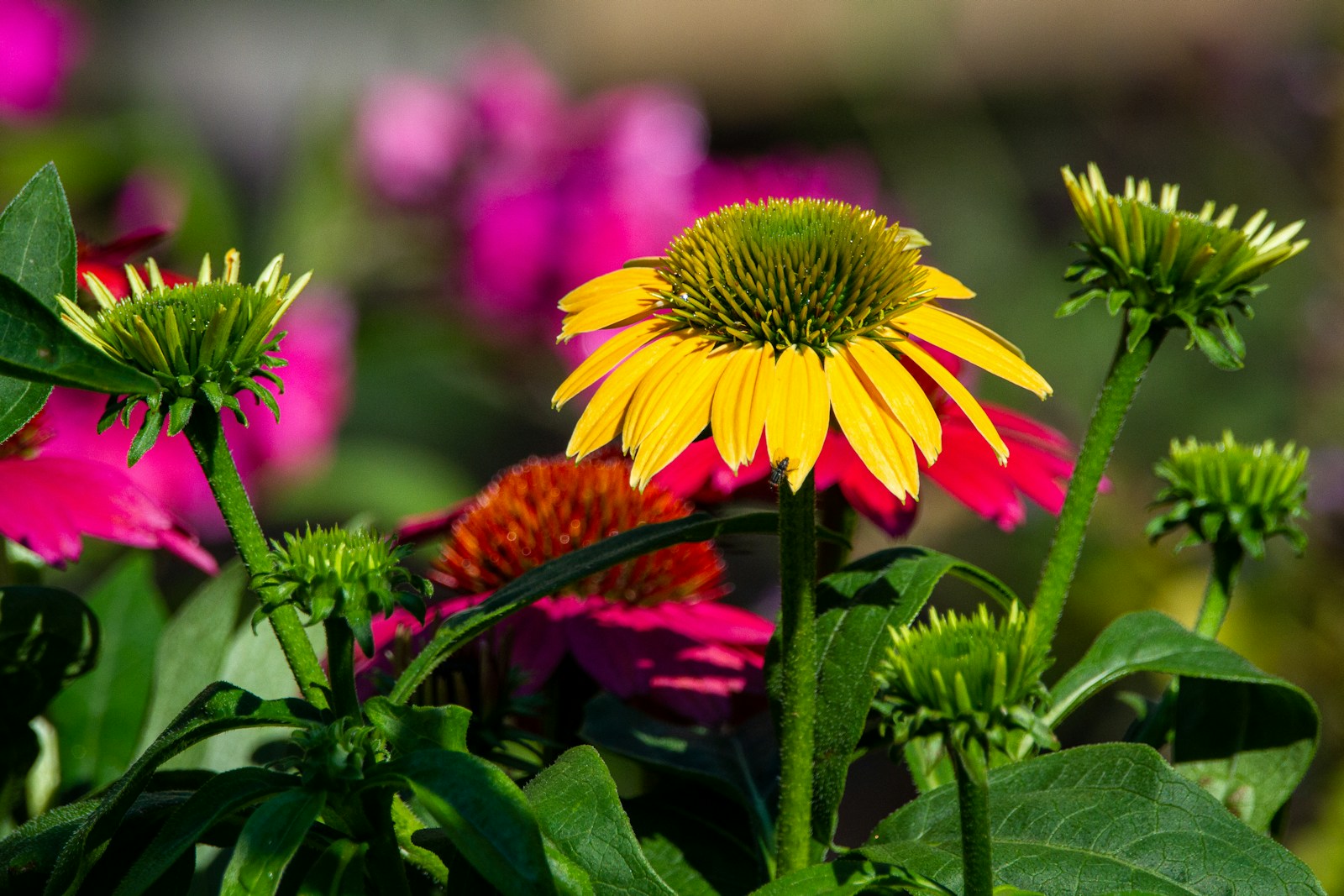
- 'Cheyenne Spirit' – a seed mix in red, orange, yellow, cream and pink that often flowers the first year.
Compact hybrids
- 'PowWow Wild Berry' – short, bushy plant covered in bright berry-pink flowers; good in containers.
- 'Kim's Knee High' – a compact pink form around 2 feet (60 cm) tall for the front of a border.