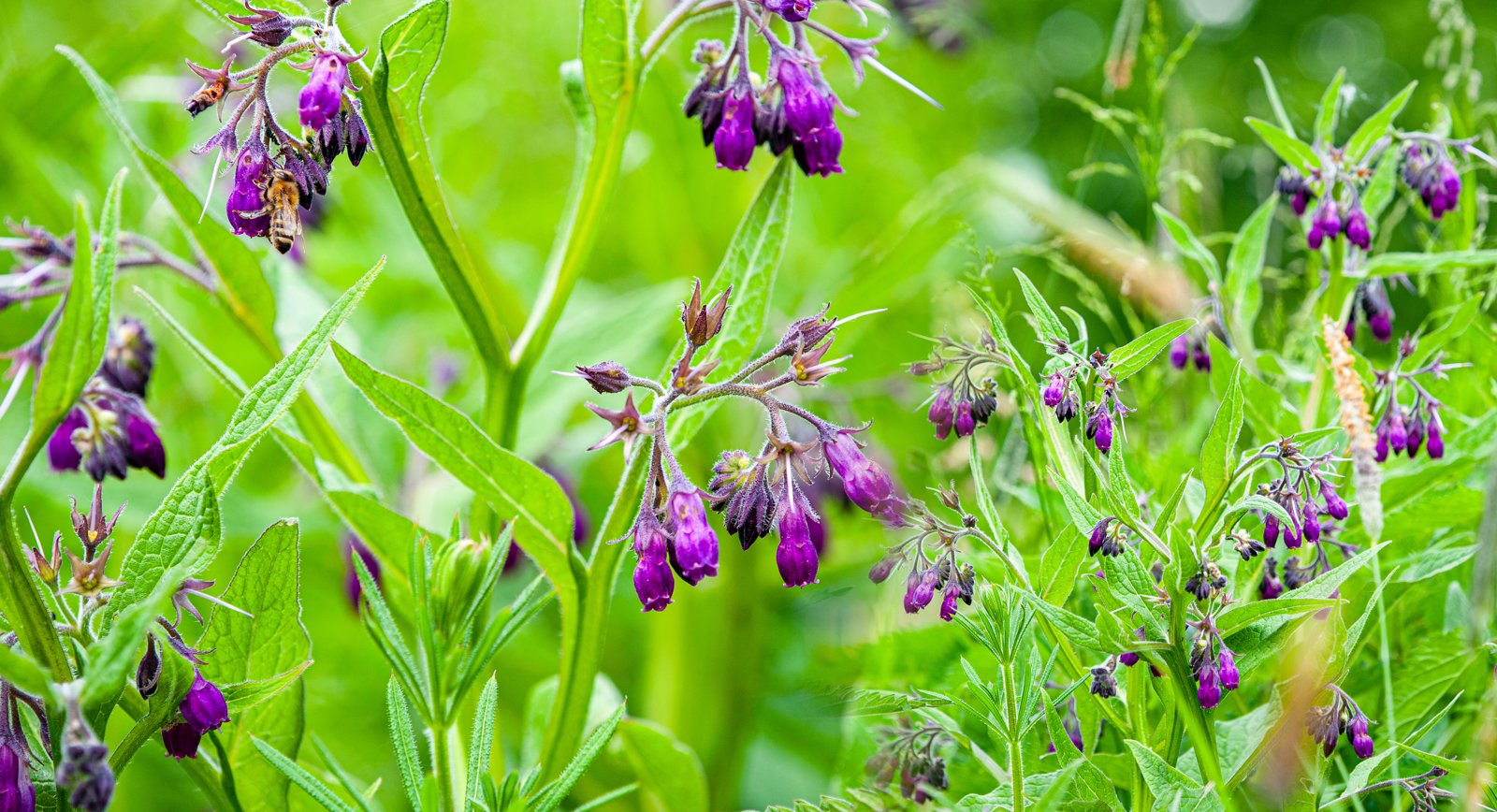
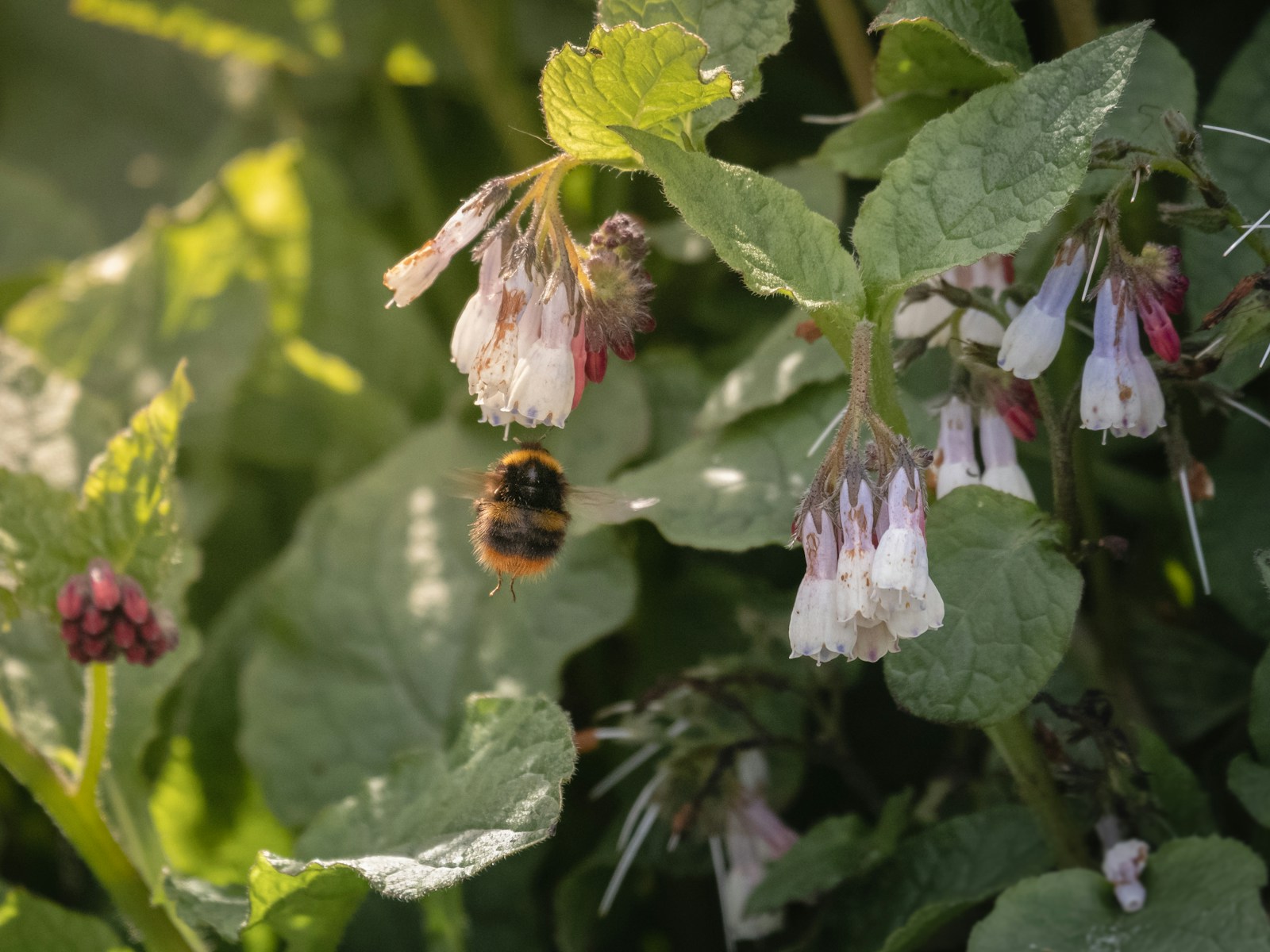
Comfrey is a big, bristly perennial with a deep taproot, broad leaves and drooping clusters of bell flowers. Gardeners grow it for bumblebees and for a steady supply of leaves to feed the compost heap. It is one of the easiest plants you can own. The hard part is choosing where it goes, because it is very difficult to remove.
Two plants share the name. Common comfrey (Symphytum officinale) sets seed and spreads. Russian comfrey (Symphytum x uplandicum) is a hybrid, and its selection 'Bocking 14' is sterile, meaning it sets no viable seed. Most gardeners are happier with 'Bocking 14'.
Do not eat or drink comfrey. All parts contain pyrrolizidine alkaloids, which can cause serious liver damage, and the roots hold the most. Make no teas, salads or tonics from it. Wear gloves to handle it and keep it away from grazing animals.
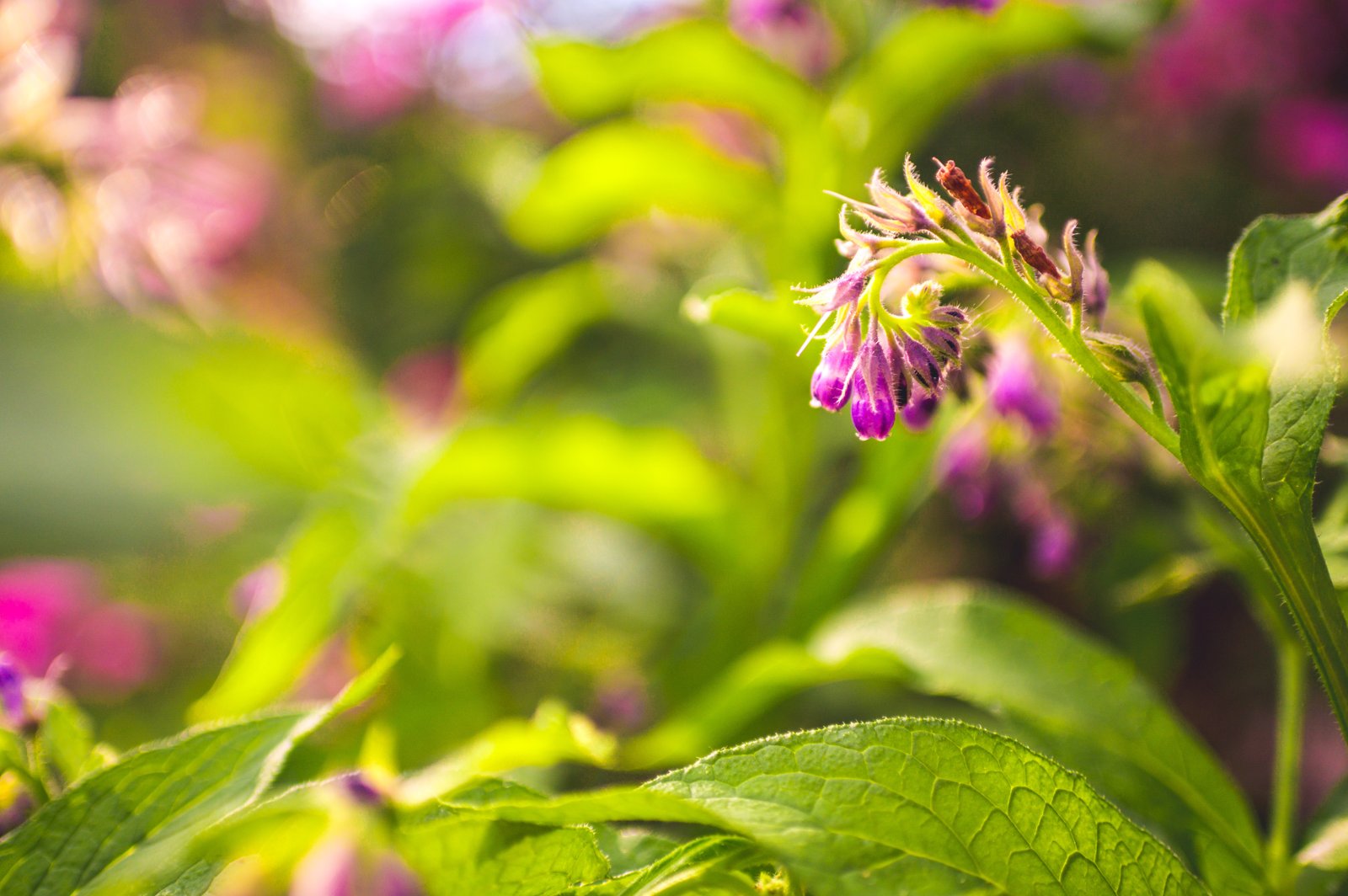
Sowing and planting
Pick the site before anything else. Comfrey regrows from any piece of root left in the soil, so treat the spot as permanent. Keep it out of vegetable beds that you dig or till. A corner near the compost heap, a fence line or the edge of an orchard suits it well.

'Bocking 14' cannot be grown from seed. You buy it as one of three kinds of planting stock:
- Root cuttings: pieces of root 2 to 6 inches (5 to 15 cm) long. They are cheap and slow to start.
- Crown cuttings: pieces of the crown (the point where roots and shoots meet) with buds attached. They establish faster.
- Potted plants: the quickest and the most costly.
Plant in spring once the soil can be worked, or in early fall at least six weeks before your first hard frost. Loosen the soil deeply and mix in compost. Lay root cuttings flat, 2 to 3 inches (5 to 8 cm) deep. Set crown cuttings with the buds just below the surface. Space plants 2 to 3 feet (60 to 90 cm) apart, water well and mark the spot. Shoots can take several weeks to show.
Common comfrey does come from seed, but germination is slow and uneven. The seed usually needs cold stratification, a period of cold, moist conditions that breaks dormancy. Sow it outdoors in fall and let winter do the work. You can also chill sown pots in a refrigerator for several weeks before moving them somewhere warm. Plant seedlings out after your last frost.
You can grow comfrey in a container, but the taproot needs depth. Use the deepest pot you have, water often, and expect a smaller plant.
Growing on
Water new plants weekly through their first summer when rain fails. After that the deep root finds its own water in most soils. Growth does slow in drought, and a deep soak brings it back.
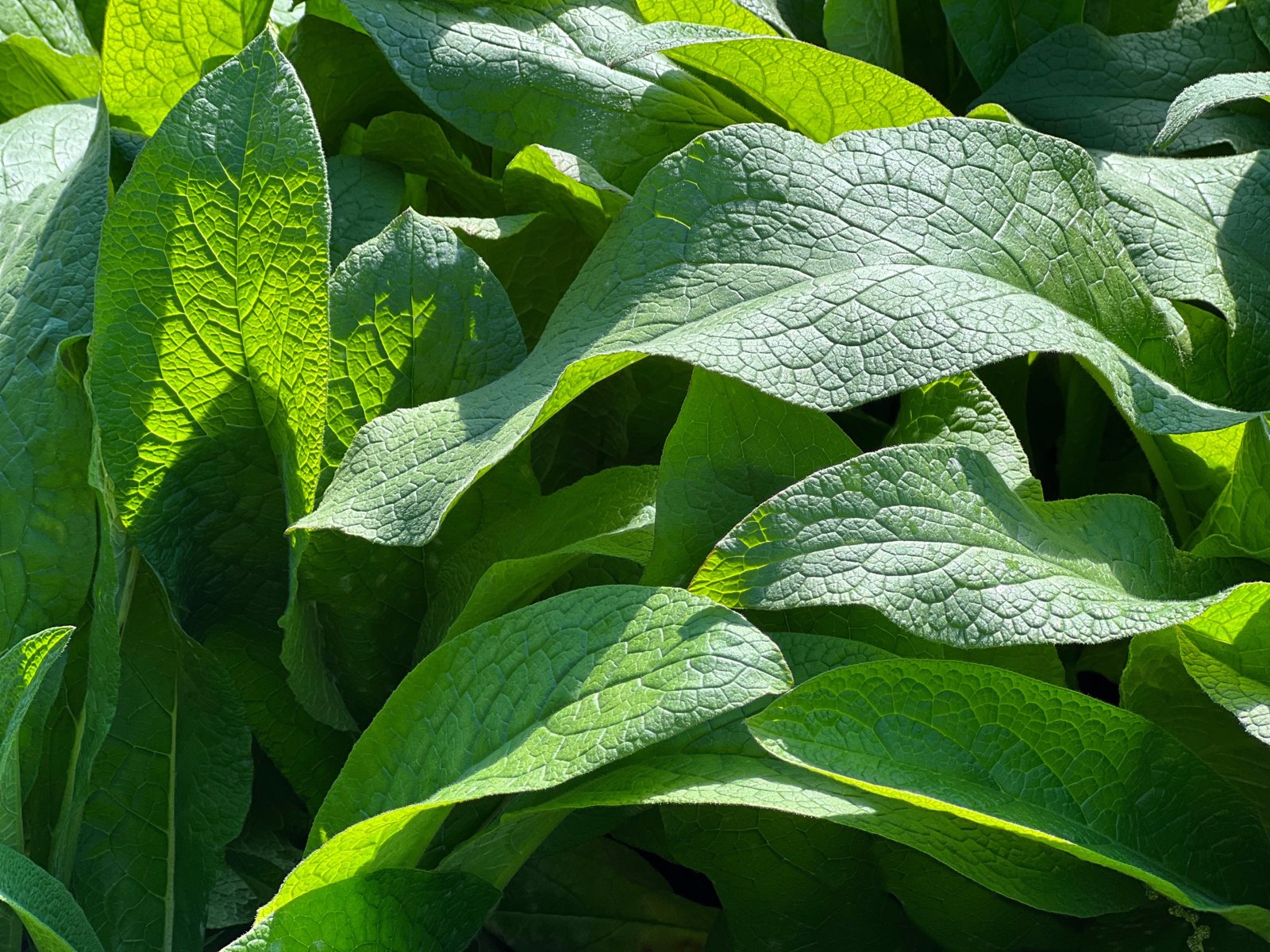
Comfrey is a hungry plant, and nitrogen drives its leaf growth. Mulch each spring with compost or well-rotted manure. Many growers also scatter grass clippings around the crowns through the season.
It needs no staking and no real pruning. Tall flowering stems often flop open after heavy rain. Cut the whole plant back when that happens, and fresh leaves follow within a couple of weeks.
If you grow common comfrey, cut the flower stems down before seed sets. Otherwise seedlings turn up well away from the parent. Frost kills the top growth in fall. Leave the dead leaves where they drop, or clear them if slugs are a problem in your garden.
Divide crowded clumps in spring or fall with a sharp spade. Every offcut of root can become a new plant. Let unwanted pieces dry out fully in the sun before you compost them.
Harvesting
The harvest is leaves for the garden, never for the kitchen. In the first year, let the plant build its root. Take one light cut late in the season at most, or simply remove any flower stems.
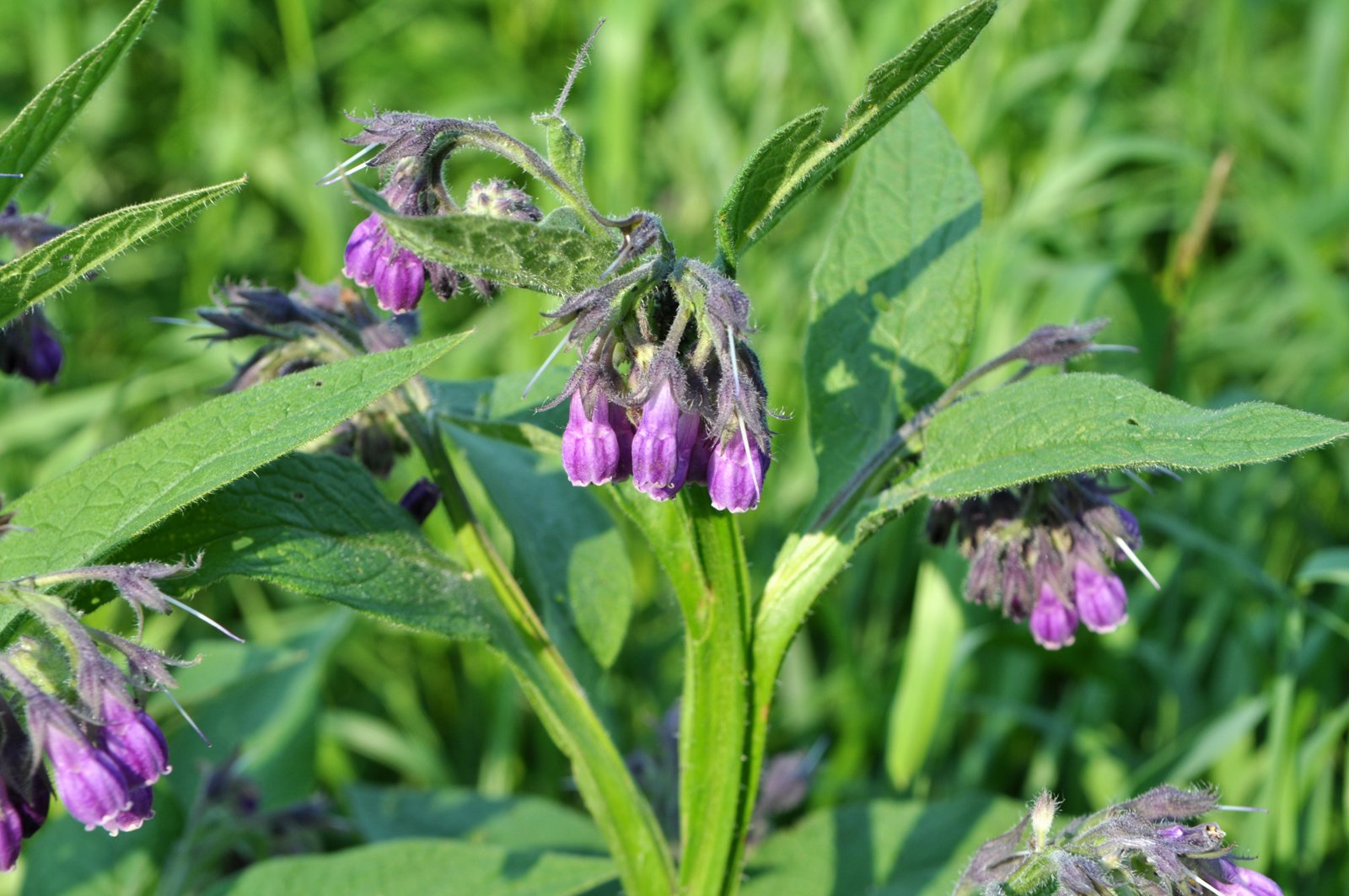
From the second year, cut when plants reach about 2 feet (60 cm) and flower stems begin to rise. Use shears or a sickle and cut everything about 2 inches (5 cm) above the ground. Wear gloves and long sleeves, because the stiff leaf hairs irritate many people's skin.
An established plant in good soil usually gives three to five cuts a season. Stop cutting about six weeks before your first expected frost. The last flush of leaves then feeds the root for winter.
Use the leaves as mulch, as a compost activator or for liquid plant feed. If you want flowers for bees, leave a few plants uncut. You can also let the first flush bloom before you start cutting.
A note on folk use
Comfrey came to North America with European settlers as a household herb. Anthony Cavender's Folk Medicine in Southern Appalachia records mountain families laying poultices of the leaves and root on bruises, sprains and set bones. Some families also drank the leaf as tea. That last habit is the one to leave in the past, because the plant's liver toxins were not understood then. This is history, not medical advice. Do not use comfrey to treat any condition.
Problems and pests
Orange or rusty powder under the leaves
This is comfrey rust, a fungus that overwinters in the crown and weakens the plant over several years. Cut affected growth to the ground and put it in the trash, not the compost heap. Dig out badly infected plants. Buy clean stock, and avoid taking divisions from a plant that shows rust.
Ragged holes in young leaves
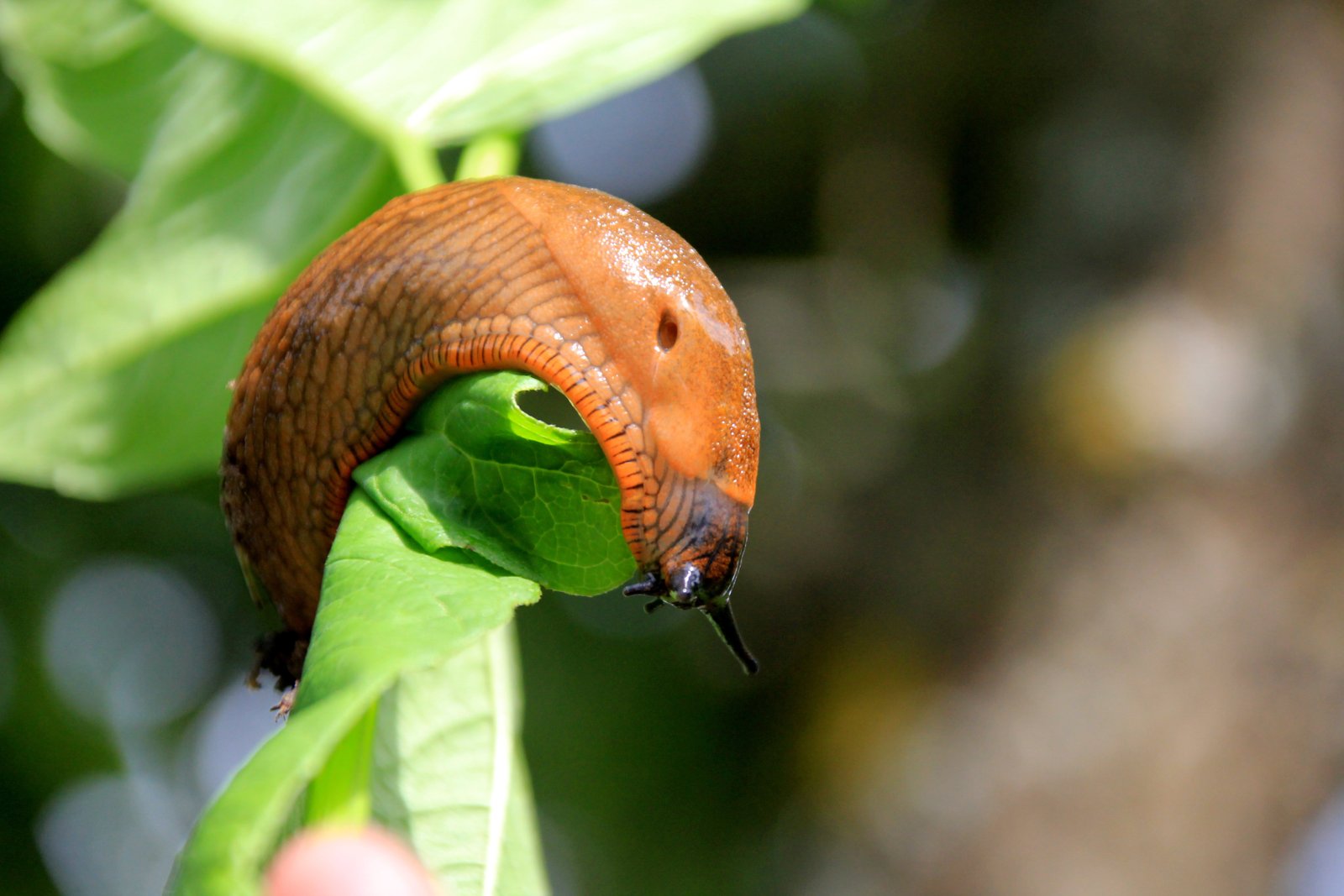
Slugs and snails feed on new shoots in spring and on young plants. Hand-pick them at dusk. Clear dead leaves and other hiding places from around the crowns. Established plants outgrow the damage.
White powdery coating on older leaves
Powdery mildew shows up in late summer, mostly on dry, crowded plants. Cut the plant back to 2 inches (5 cm) and water deeply. The regrowth comes through clean.
Plants coming up where you did not plant them
Root fragments moved by digging or tilling cause this, as do seedlings from common comfrey. Never till near a clump. To remove a plant, dig out as much root as you can. Then cut every regrowing shoot at ground level for a season or two. You can also smother the area under thick cardboard and mulch for a full year.
Limp, thin regrowth after repeated cutting
The plant is hungry or dry. Feed it with compost or manure, water it deeply, and skip the next cut.
Varieties worth growing
Comfrey has few named garden varieties, so the list below includes clearly labelled related species.
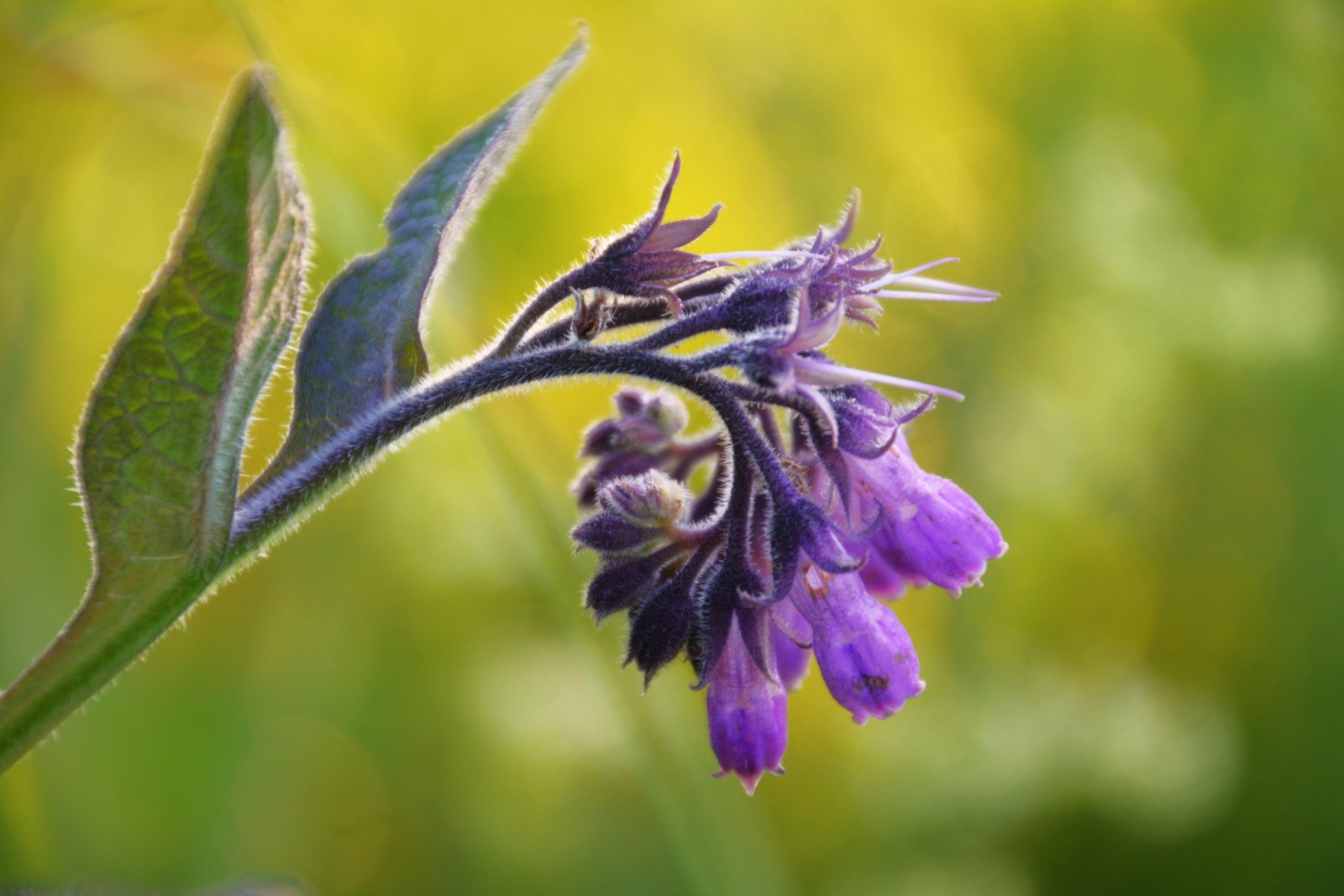
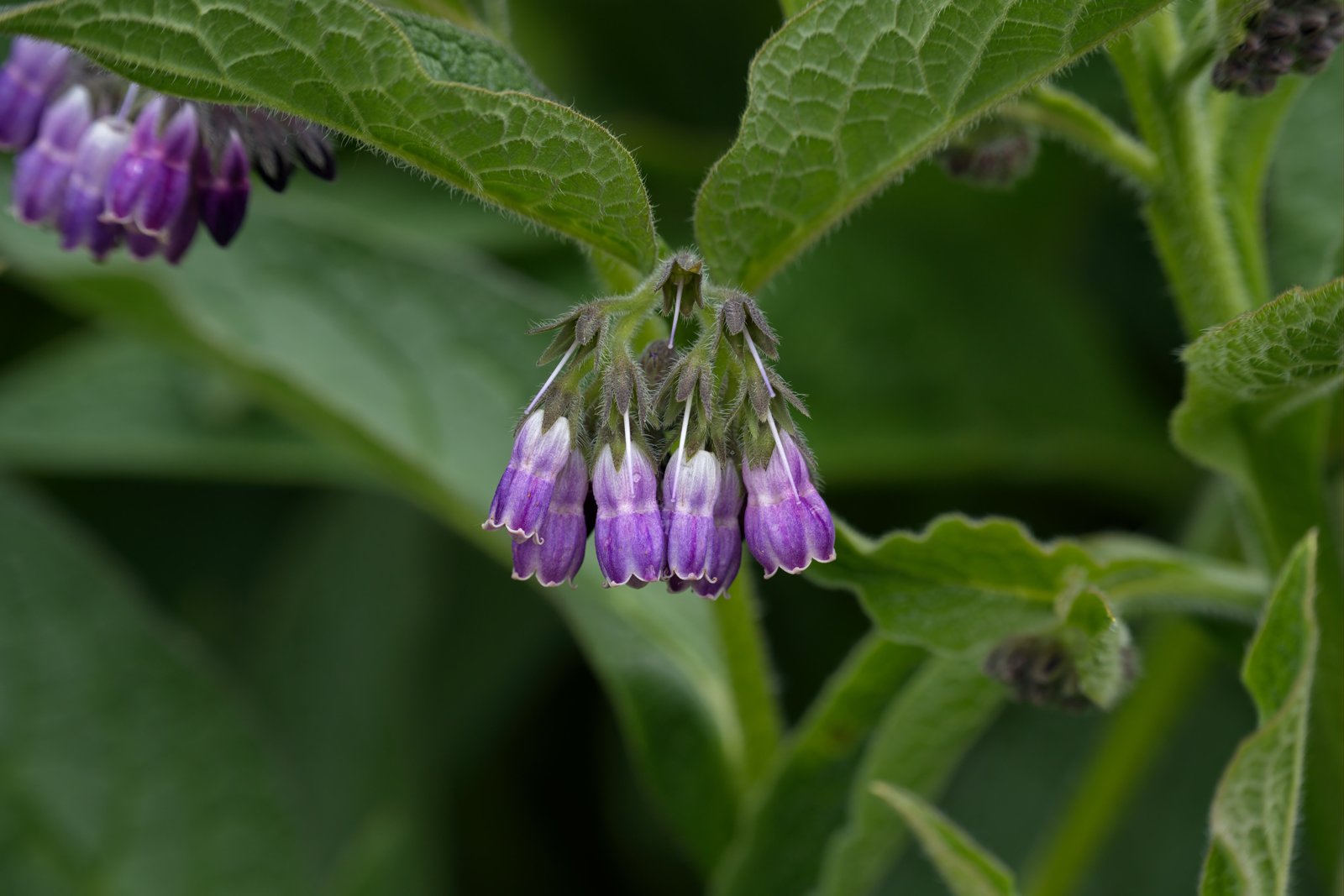
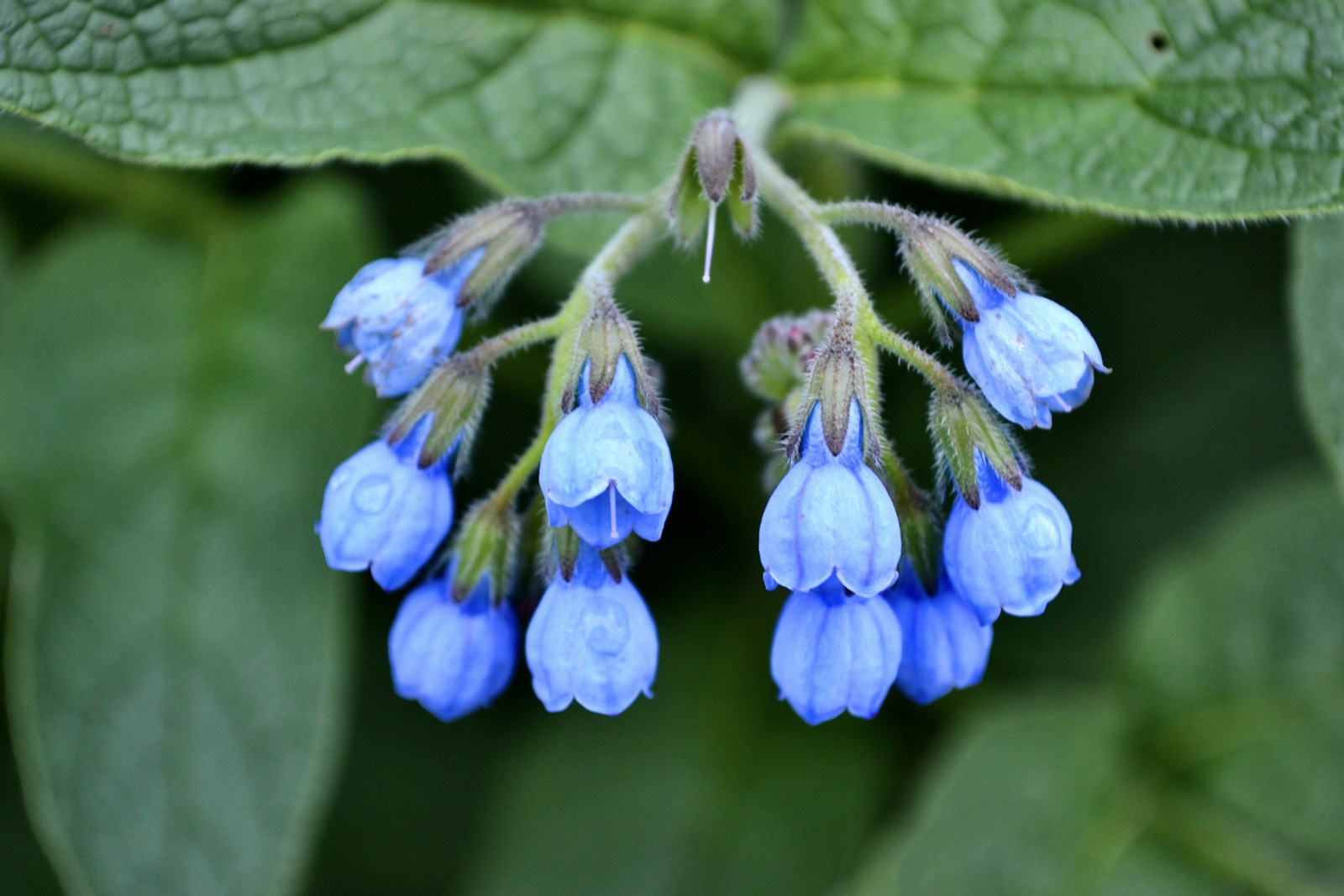
- 'Bocking 14' (Russian comfrey, S. x uplandicum): sterile, vigorous and high yielding. It is the standard choice for garden use.
- 'Bocking 4' (Russian comfrey): a sister selection first chosen as animal fodder. It is deeper rooted and less widely sold.
- Common comfrey (S. officinale): the old herb-garden species, with cream, pink or purple flowers. It sets seed and self-sows freely.
- 'Axminster Gold' (S. x uplandicum): an ornamental form with broad cream-yellow leaf margins. It is slower growing and best in part shade.
- 'Hidcote Blue' (a related species, S. grandiflorum, often sold as dwarf comfrey): a low, spreading groundcover for shade under trees. It is too small to be worth cutting for leaves.