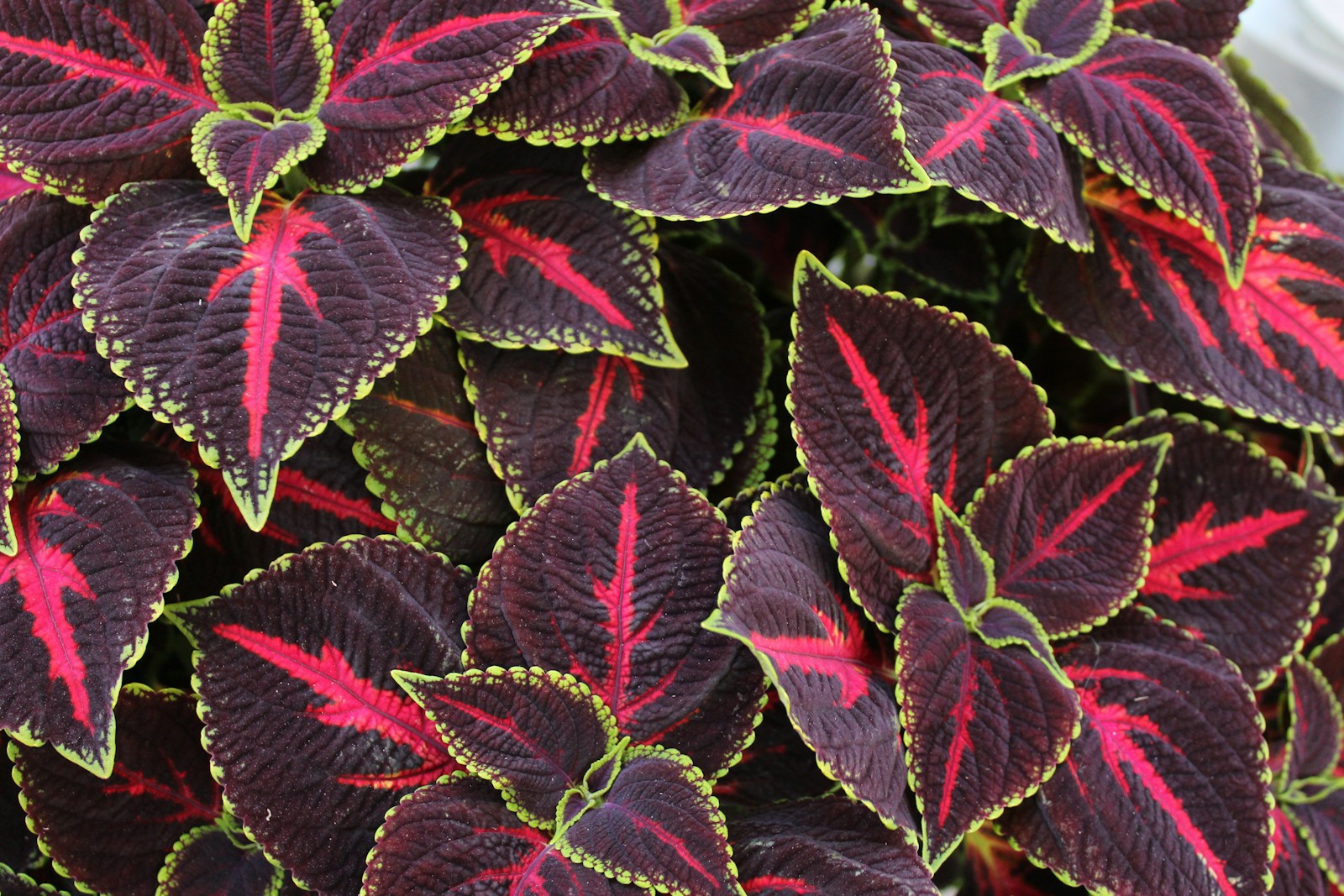
Coleus is a tender plant grown for its leaves, not its flowers. The foliage comes in lime, burgundy, pink, copper and near-black, often splashed or edged in a second colour. It lights up shady beds, sunny borders and containers from late spring until frost. Coleus is one of the easiest plants to grow and to multiply from cuttings.
Sowing and planting
There are two broad groups of coleus. Seed-grown types are usually compact and prefer part shade. Strong sun can scorch their leaves. Sun coleus are mostly raised from cuttings, not seed. They hold their colour in bright light and are slower to flower. Many sun types also grow well in part shade.
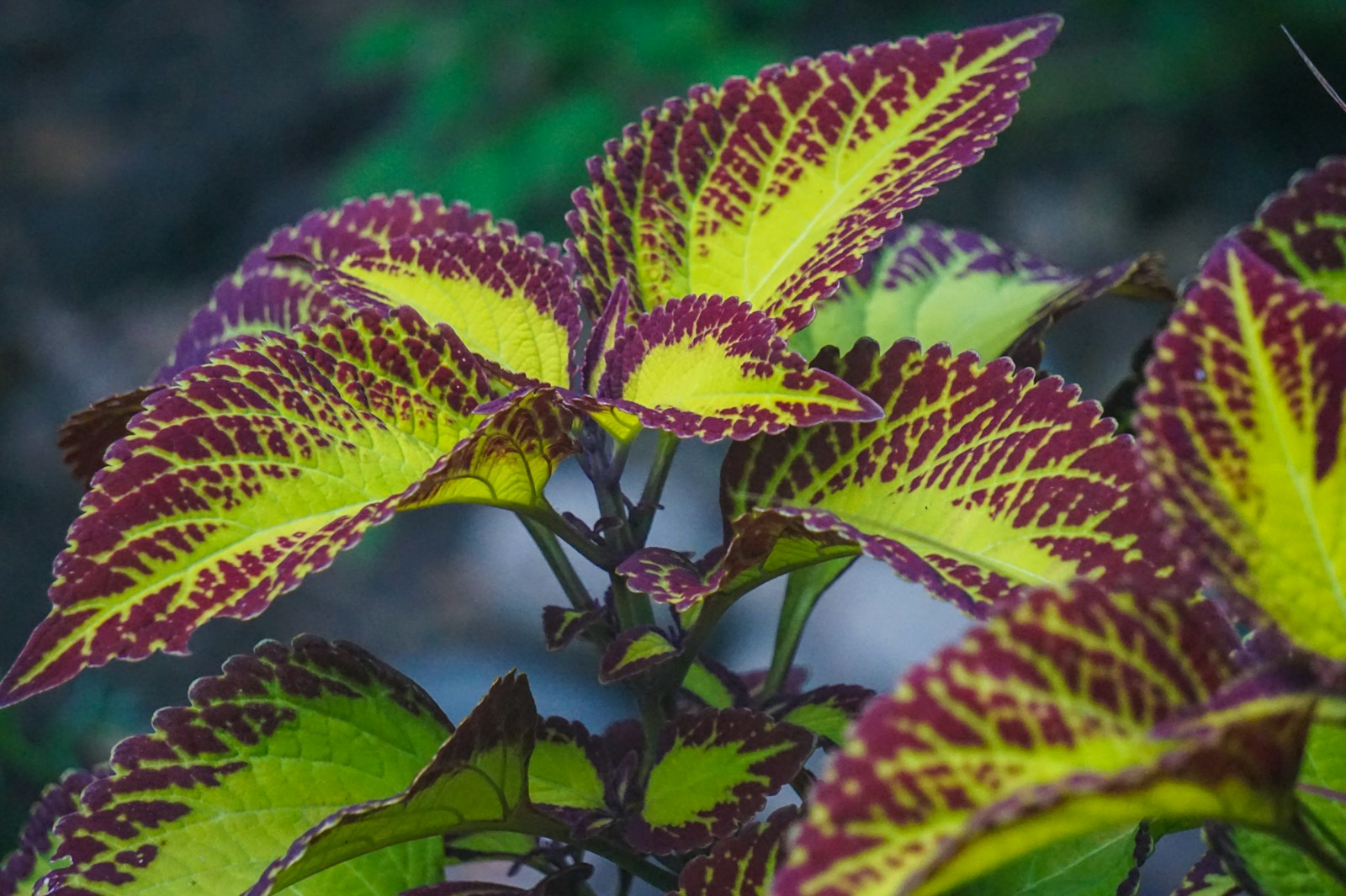
Sow seed indoors eight to ten weeks before your last frost. Scatter the tiny seeds on moist seed compost and press them in lightly. Do not cover them, because they need light to germinate. Keep the tray at 70 to 75°F (21 to 24°C) under a clear lid. Seedlings usually appear in one to three weeks.
Grow seedlings in bright light, ideally under grow lights. Leaf colour develops as the plants grow, so early seedlings may look plain. Pot them into individual cells once they have two sets of true leaves.
Plant out one to two weeks after your last frost, when nights stay above 50°F (10°C). Harden off first (getting young plants used to outdoor conditions over about a week). Set plants at the same depth they grew in their pots.
Coleus grows well in containers. Use a pot at least 10 inches (25 cm) across with drainage holes. Fill it with good potting mix, not garden soil.
Growing on
Water regularly to keep the soil evenly moist but never soggy. Coleus wilts dramatically when dry, then usually recovers after a drink. Repeated wilting stunts growth and spoils the leaves. Pots in sun may need water daily in hot weather.
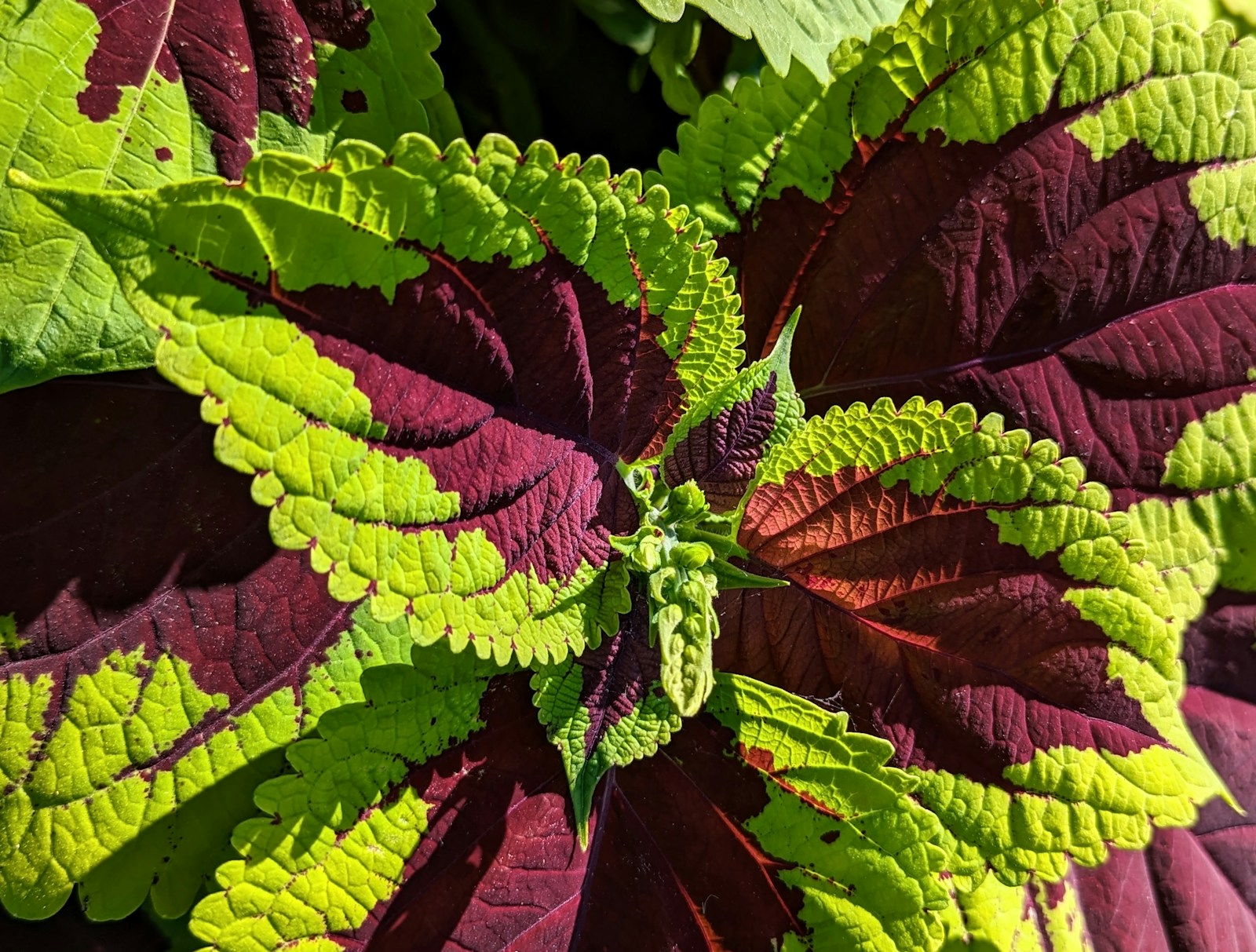
Feed lightly every two to four weeks with a balanced liquid fertilizer at half strength. Too much nitrogen can dull leaf colour on some varieties. In-ground plants in rich soil need less.
Mulch beds with 2 inches (5 cm) of compost or shredded bark. It keeps roots cool and moist. Keep it a little away from the stems.
Pinching means removing the growing tip to make a plant branch. Pinch young plants when they have three or four pairs of leaves. Keep pinching the longest shoots through the season for a full, bushy plant.
Coleus sends up spikes of small blue or lilac flowers, especially in late summer. Pinch out the flower spikes as soon as you see them. Letting them bloom makes the plant leggy and slows new leaf growth. Bees visit the flowers, so you can leave a few if you like.
Tall sun types may need a short stake in windy spots. Most bushy varieties need no support.
Coleus pairs well with begonias, impatiens and ferns in shade. In sun, it contrasts nicely with grasses and salvias.
Harvesting
With coleus, harvesting means taking cuttings. Cuttings are the easiest way to multiply a favourite variety. They are also how you keep it through winter.
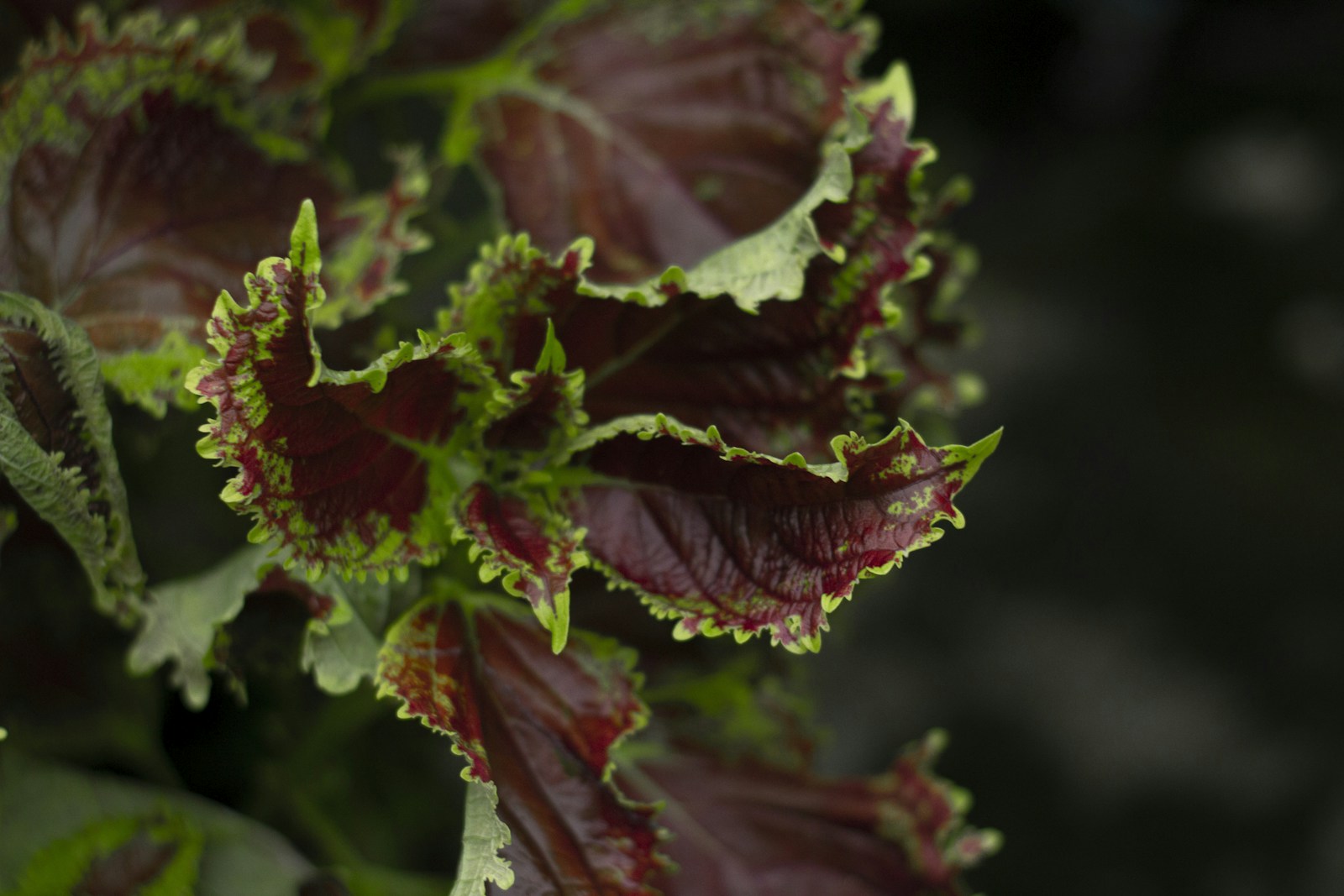
Cut a 4 to 6 inch (10 to 15 cm) shoot just below a leaf joint. Strip off the lower leaves and any flower spikes. Stand the cutting in a glass of water or insert it into moist potting mix. Roots usually form in one to three weeks.
Before your first fall frost, take several cuttings. Pot them up and grow them on a bright windowsill indoors. Keep them warm, above 60°F (16°C), and water sparingly in winter. In spring, take fresh cuttings from these plants to fill your beds again.
Coleus stems also make a colourful filler for vases. Cut them in the cool of the morning and stand them in water straight away.
Saving seed from coleus is possible but rarely worthwhile. Seedlings do not come true, and named sun types seldom set seed.
Problems and pests
All parts of coleus are toxic to cats, dogs and horses. Eating it can cause vomiting, diarrhea and lethargy. Grow it where pets cannot chew it, and keep indoor cuttings out of reach.
White, cottony clumps in leaf joints
Mealybugs are sap-sucking insects that hide in stem joints. Wipe them off with a cotton swab dipped in rubbing alcohol. Keep alcohol away from flames and test it on one leaf first. Check indoor cuttings closely before winter.
Tiny white insects fly up when disturbed
Whiteflies feed under the leaves and leave sticky honeydew. Hang yellow sticky traps nearby. Spray insecticidal soap under the leaves; follow the label and spray in the cool of evening, away from open flowers where bees feed.
Fine speckling and webbing on leaves
Spider mites thrive in hot, dry conditions, especially indoors. Mist or rinse the plants regularly. Remove badly affected shoots.
Leaves curl, with fuzzy grey growth underneath
This may be coleus downy mildew, a fungal-like disease that spreads in cool, damp weather. Remove and bag affected plants. Space plants for good airflow and water the soil, not the leaves.
Stems blacken and collapse at the base
Root and stem rot follow cold or waterlogged soil. Improve drainage and let the surface dry slightly between waterings. Never plant out while the soil is still cold.
Varieties worth growing
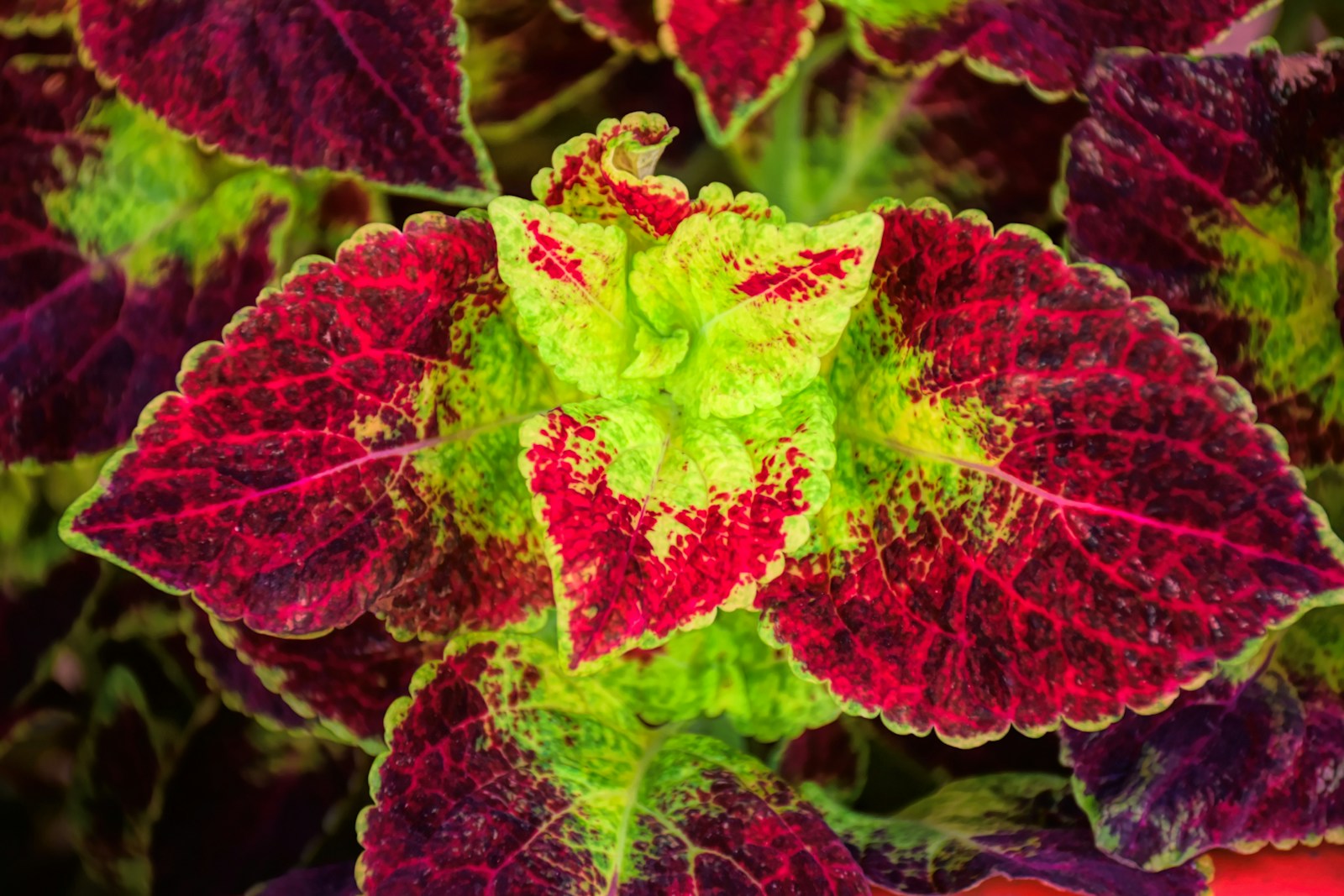
Sun coleus
- 'Redhead': bright, solid red leaves that hold their colour in full sun.
- 'Henna': serrated chartreuse leaves with copper tops and burgundy undersides.
- 'Wasabi': vigorous plant with bright lime-green leaves.
- 'Kingswood Torch': rose-red leaves with a narrow green edge on a tall plant.
Shade and seed-grown coleus
- 'Wizard' series: compact, seed-grown mix in many patterns, good for shady beds.
- 'Kong' series: very large leaves in bold patterns for shade and containers.
- 'Black Dragon': deep purple-black, ruffled leaves with a bright red centre.