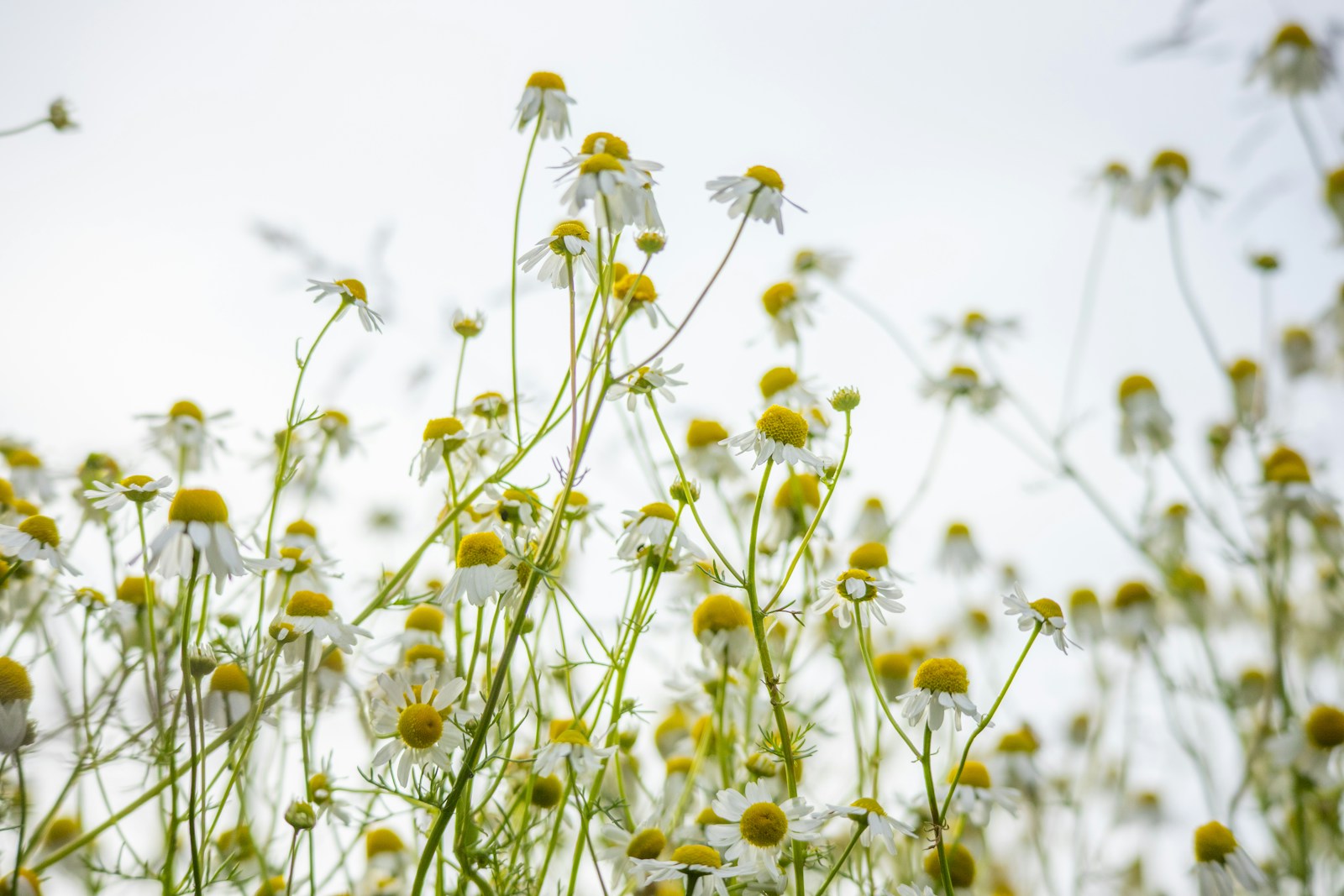
Chamomile gives you small white daisies with yellow centres and a sweet, apple-like scent. Two different plants share the name. German chamomile is a tall annual grown mainly for tea flowers. Roman chamomile is a low perennial for edging, paths and scented lawns. Both suit sunny, poor ground and need little care. Difficulty: easy, though the tiny seed needs a gentle hand.
Sowing and planting
Chamomile seed is as fine as dust. Mix it with a pinch of dry sand so you can see where it falls. Press it onto the surface and do not cover it, because light triggers germination.
German chamomile is best sown where it is to flower. Sow outdoors two to four weeks before your last frost, once you can work the soil. Seedlings cope with light frost. In zones 8 and warmer, an autumn sowing often overwinters and flowers early the following spring. Rake the bed fine, scatter the seed thinly and water with a fine rose. Keep the surface damp until seedlings show.
Thin German chamomile to 6 to 8 inches (15 to 20 cm) apart. Sow again three to four weeks later for a longer picking season.
You can also start German chamomile indoors four to six weeks before your last frost. Sow a small pinch into each cell and grow the clump on as one plant. Harden off (get seedlings used to outdoor conditions over a week) before planting out around your last frost date.
Roman chamomile is slower from seed. Start it indoors six to eight weeks before your last frost, at around 65°F (18°C). Plant out once the danger of frost has passed. Many gardeners buy young plants instead, or divide an established clump in spring.
For a chamomile lawn or path, use a non-flowering Roman type grown from rooted pieces. Plant them 4 to 6 inches (10 to 15 cm) apart into weed-free, well-drained soil. Keep foot traffic off until the plants knit together.
Growing on
Water seedlings regularly until they are growing strongly. Established plants need water only in long dry spells. Roman chamomile rots in cold, wet soil, so good drainage matters more than watering.
Skip the fertiliser. Rich soil gives soft, leafy plants with fewer flowers. A thin layer of compost before sowing is plenty.
Weed carefully while plants are small. Seedlings are easily smothered. A light mulch of fine compost between rows helps, but keep it off Roman chamomile crowns (the point where stems meet the roots).
German chamomile can flop in wind or after heavy rain. Grow it in blocks so plants hold each other up. Push a few twiggy sticks into exposed rows if needed.
Deadheading is simply harvesting. The more flowers you pick, the more the plant produces. Leave the last flush to set seed if you want seedlings next year.
Trim Roman chamomile lightly after flowering to keep it compact. Mow or clip a chamomile lawn on a high setting a few times each growing season. Divide Roman clumps every three or four years, replanting the vigorous outer pieces.
Both types attract hoverflies and small solitary bees. German chamomile looks pretty sown among vegetables, where it fills gaps without casting much shade.
Warning: Chamomile belongs to the daisy family. If you react to ragweed, daisies or related plants, handling the flowers or drinking the tea can trigger an allergy. The plants are also listed as toxic to dogs, cats and horses, so keep pets from grazing on them.
Harvesting
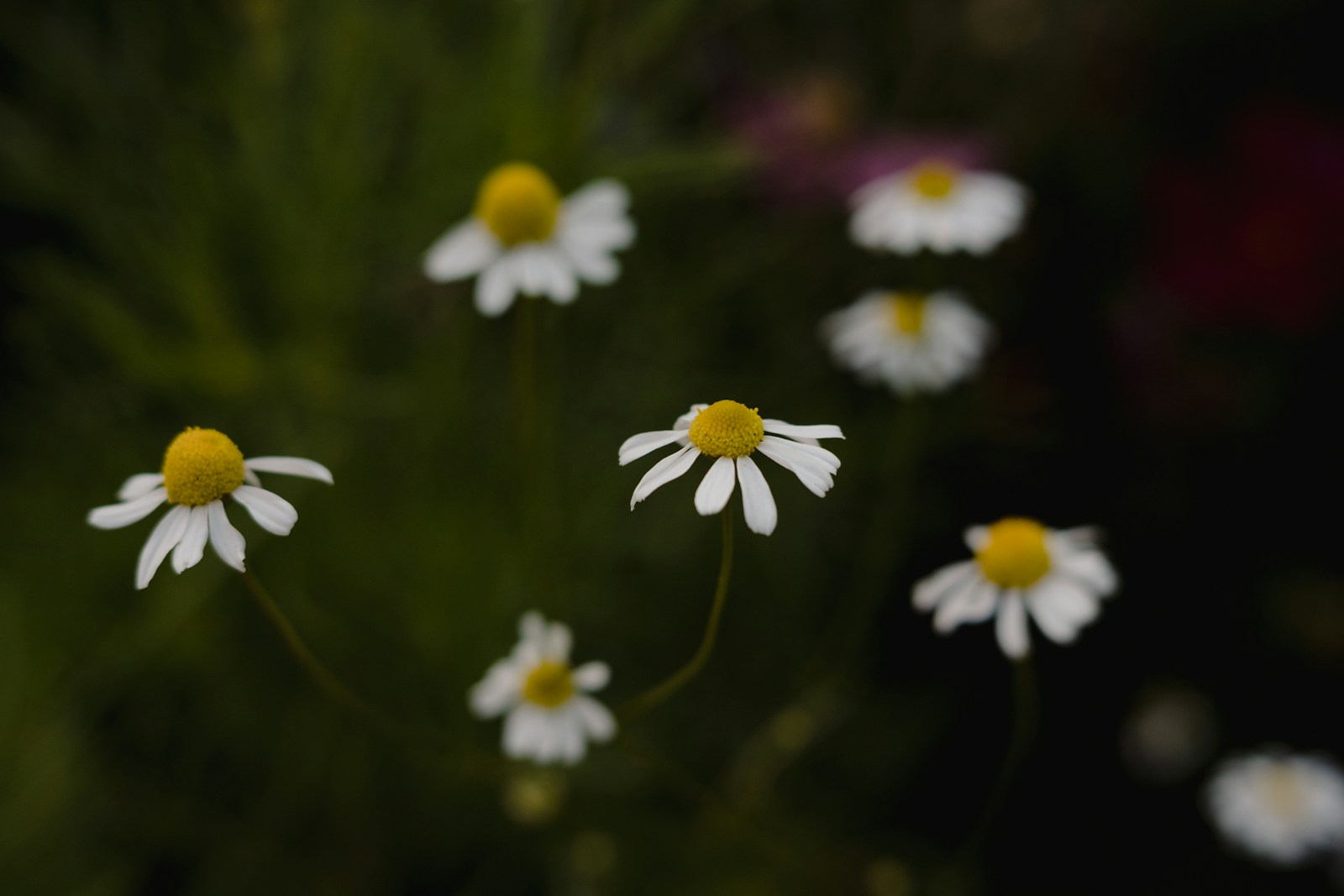
Pick flowers when they are fully open. The white petals should lie flat or just begin to fold back. Pick on a dry, sunny morning after the dew has gone.

Pinch each head off just below the flower, leaving the stalk behind. For a large patch, run your spread fingers up through the plants like a comb. Pick every few days during peak flowering, because new buds open constantly.
To dry the flowers, spread them in a single layer on a screen or tray. Keep them somewhere warm, shady and airy. They are ready in one to two weeks, when the centres crumble easily. A dehydrator on its lowest setting, around 95°F (35°C), is quicker. Store dried flowers in an airtight jar away from light and use them within a year.
Fresh flowers make a lighter, sweeter tea than dried ones. Use roughly twice as many fresh heads as dried. Flowers can also be frozen in a sealed bag for short-term use.
Roman chamomile flowers are used the same way, though they taste more bitter. Most growers keep Roman plants for scent and ground cover.
For vases, cut long stems of German chamomile with plenty of open flowers. They last several days and pair well with other small cottage flowers.
To save seed, let the last flowers dry on the plant until the centres turn brown. Rub the heads over a paper sheet and store the seed dry. German chamomile self-seeds freely, so you may not need to.
Problems and pests
Clusters of small insects on stems and buds
Aphids (small sap-sucking insects) gather on flower stalks. Knock them off with a jet of water. Hoverflies and ladybirds usually follow. If needed, spray insecticidal soap, following the label and keeping it off open flowers when bees are about.
White powdery coating on leaves
Powdery mildew is common in dry soil and crowded plantings. Thin plants for better air flow and water at the base during dry spells. Remove badly affected stems.
Seedlings collapse at soil level
Damping off is a fungal problem in cold, wet compost. Use fresh seed compost and clean trays. Water from below and give seedlings good air movement.
Tall, leafy plants with few flowers
Rich soil, shade or too much feeding cause this. Grow chamomile in full sun in lean soil. Pick flowers often to keep new buds coming.
Bare, brown patches in a Roman chamomile lawn
Wet winter soil, heavy wear or weed competition kill patches. Improve drainage with grit and keep traffic off in wet weather. Replant gaps with rooted pieces from the edges.
Varieties worth growing

German chamomile
- Common German chamomile (Matricaria chamomilla): the standard tea chamomile, tall and free-flowering.
- 'Bodegold': a selected form with large flowers and upright, even growth for easy picking.
Roman chamomile
- Common Roman chamomile (Chamaemelum nobile): single white daisies over a fragrant, ferny mat.
- 'Treneague': a non-flowering selection used for chamomile lawns and paths.
- 'Flore Pleno': a compact form with double, creamy pompom flowers.