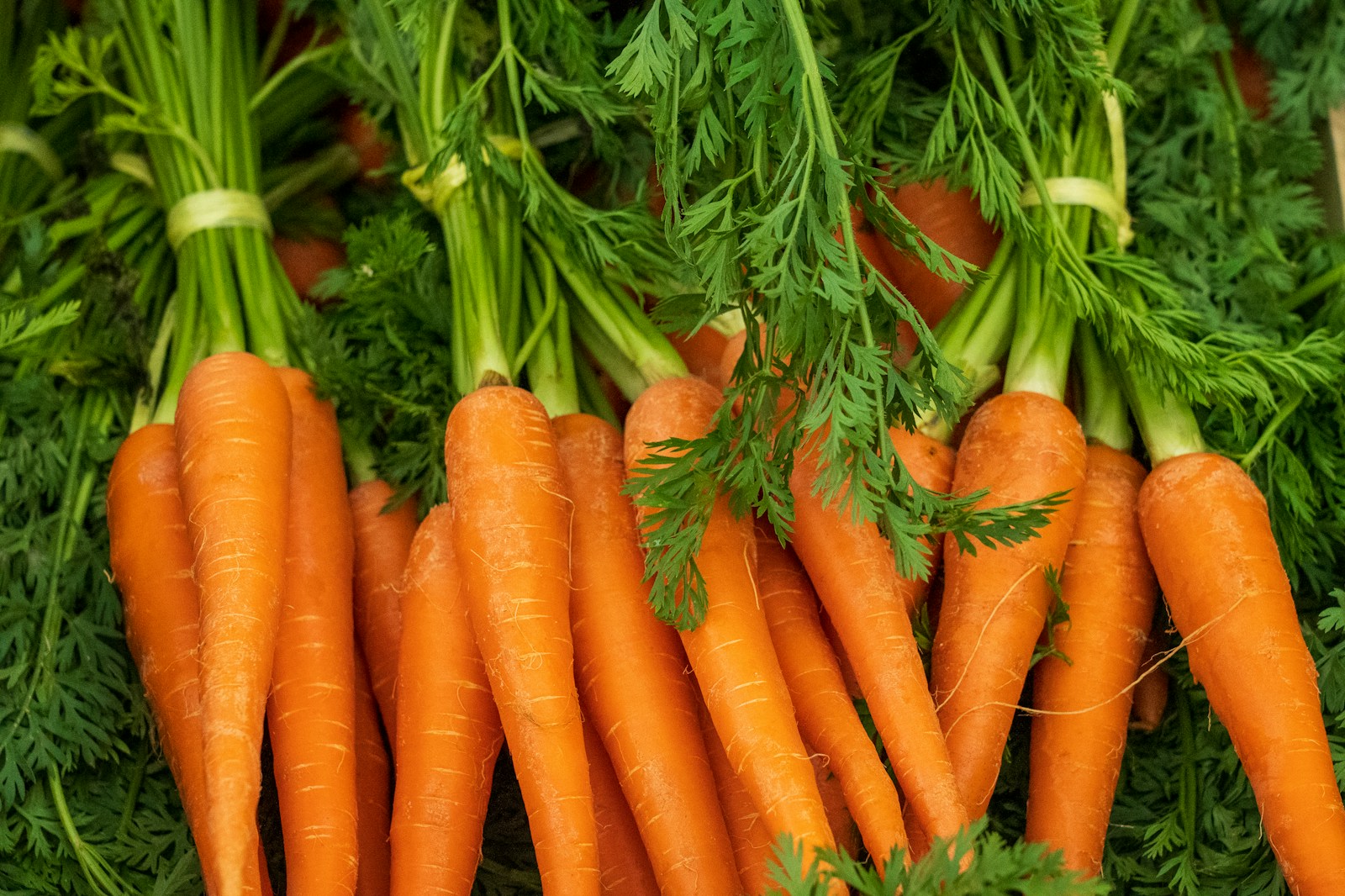
Carrots are cool-season root crops grown for their sweet, crisp taproots. Home-grown roots taste far sweeter than most shop carrots, especially after a light frost. They are easy once they germinate, but getting that first flush of seedlings up is the tricky part. Difficulty: easy to moderate.
Sowing and planting
Always sow carrots directly where they will grow. They dislike root disturbance, and transplanted seedlings usually give forked, stunted roots.
Start sowing two to four weeks before your last spring frost, once the soil can be worked. Carrot seed germinates in soil as cool as 45°F (7°C), but it is slow there, often taking three weeks. In soil near 75°F (24°C), seedlings usually appear in 7–10 days.
For an autumn crop, sow again about 10–12 weeks before your first autumn frost. In USDA zones 8–10, you can sow through autumn and winter for a cool-season harvest.
Prepare the bed well. Dig or fork it to at least 10 inches (25 cm) deep and remove stones, clods and old roots. Anything the root hits makes it fork. Avoid fresh manure, which also causes forking and hairy roots. Rake the surface to a fine tilth (a crumbly texture with no lumps).
Draw a shallow drill (a narrow furrow) about ¼ inch (6 mm) deep. Sow the seed thinly, aiming for two or three seeds per inch (2.5 cm). Cover with fine soil or sieved compost, firm gently and water with a fine rose.
Keep the surface moist until the seedlings are up. A board, burlap or row cover laid over the row holds moisture in. Lift it daily and remove it as soon as the first seedlings show.
The most common way carrots fail is a dry or crusted seedbed during germination. Carrot seed is tiny and sits near the surface, so one hot, dry day can kill the sprouting seed. Water the row lightly every day or two until the seedlings are up, and never let a hard crust form.
For a steady supply, sow a short row every three weeks from early spring until early summer. Then pick up again with autumn sowings.
Carrots grow well in containers at least 12 inches (30 cm) deep. Short or round varieties suit shallower pots and heavy clay soils.
Growing on
Thin the seedlings when they are about 2 inches (5 cm) tall. Leave one every 1–2 inches (2.5–5 cm), then thin again to 2–3 inches (5–8 cm) a few weeks later. The second thinnings are small enough to eat. Crowded carrots stay thin and tangled.
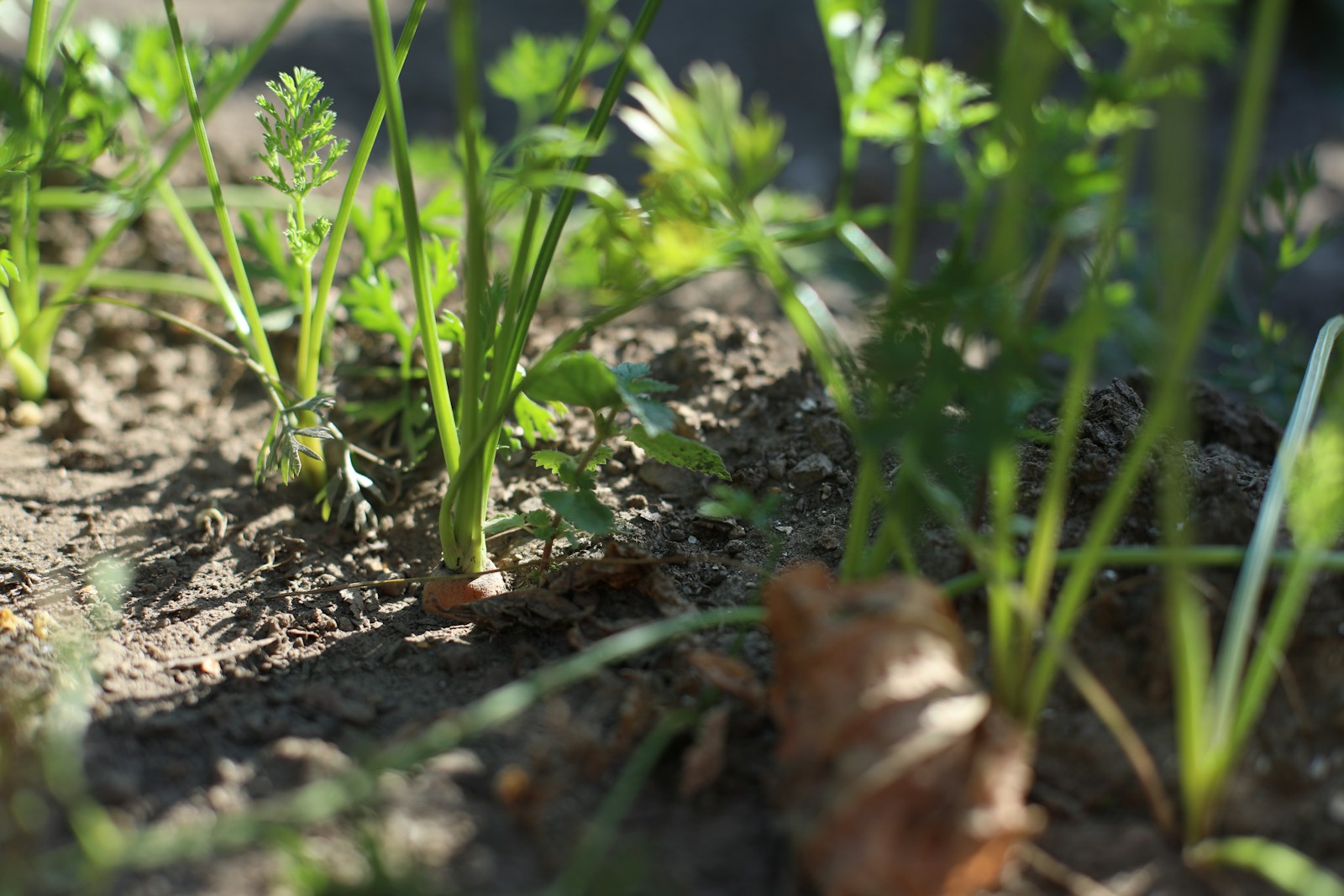
Thin in the evening and firm the soil back around the remaining plants. Water afterwards. The smell of bruised foliage attracts carrot rust fly, so remove the thinnings from the bed.
Water deeply once a week in dry spells rather than little and often. Uneven watering is the main cause of split roots. A sudden soaking after drought makes the root swell faster than its skin can stretch.
Carrots need little feeding. Too much nitrogen gives lush tops and small, hairy roots. If your soil is poor, work in a balanced, low-nitrogen fertiliser before sowing. Nothing more is usually needed.
Weed carefully by hand while the seedlings are small. Young carrots grow slowly and cannot compete. Once the plants are 4 inches (10 cm) tall, mulch lightly with grass clippings or straw. This keeps the soil cool and moist and smothers weeds.
Watch the tops of the roots. If shoulders push above the soil, cover them with soil or mulch. Exposed shoulders turn green and bitter.
Carrots need no staking or pruning. Onions, leeks and chives are traditional row neighbours. Their scent may help mask carrots from carrot rust fly.
Harvesting
Most carrots are ready 50–80 days after sowing. Brush the soil away from the top of a root to check its width. Most varieties are ready when the shoulder is ¾–1 inch (2–2.5 cm) across and the colour is deep.
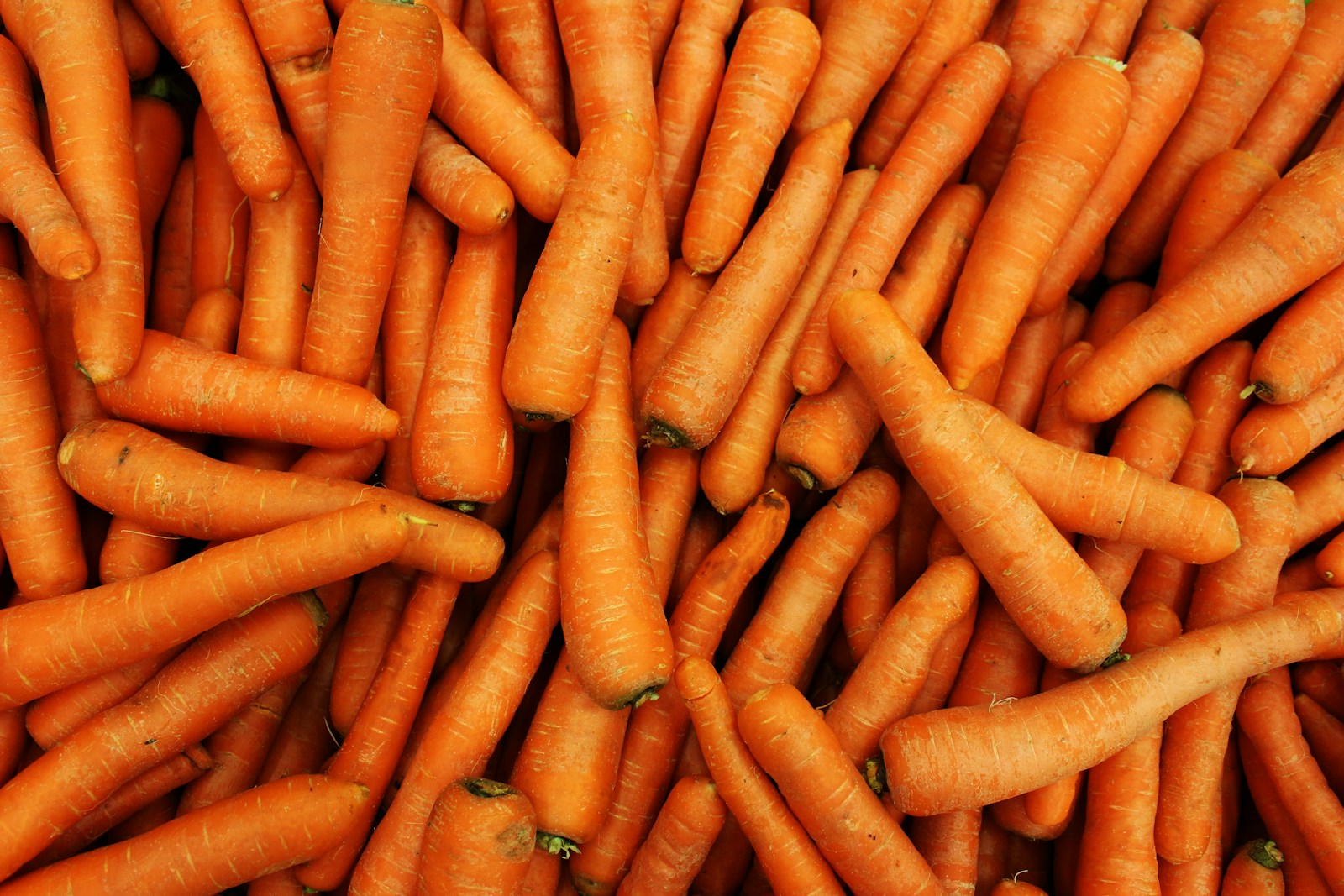
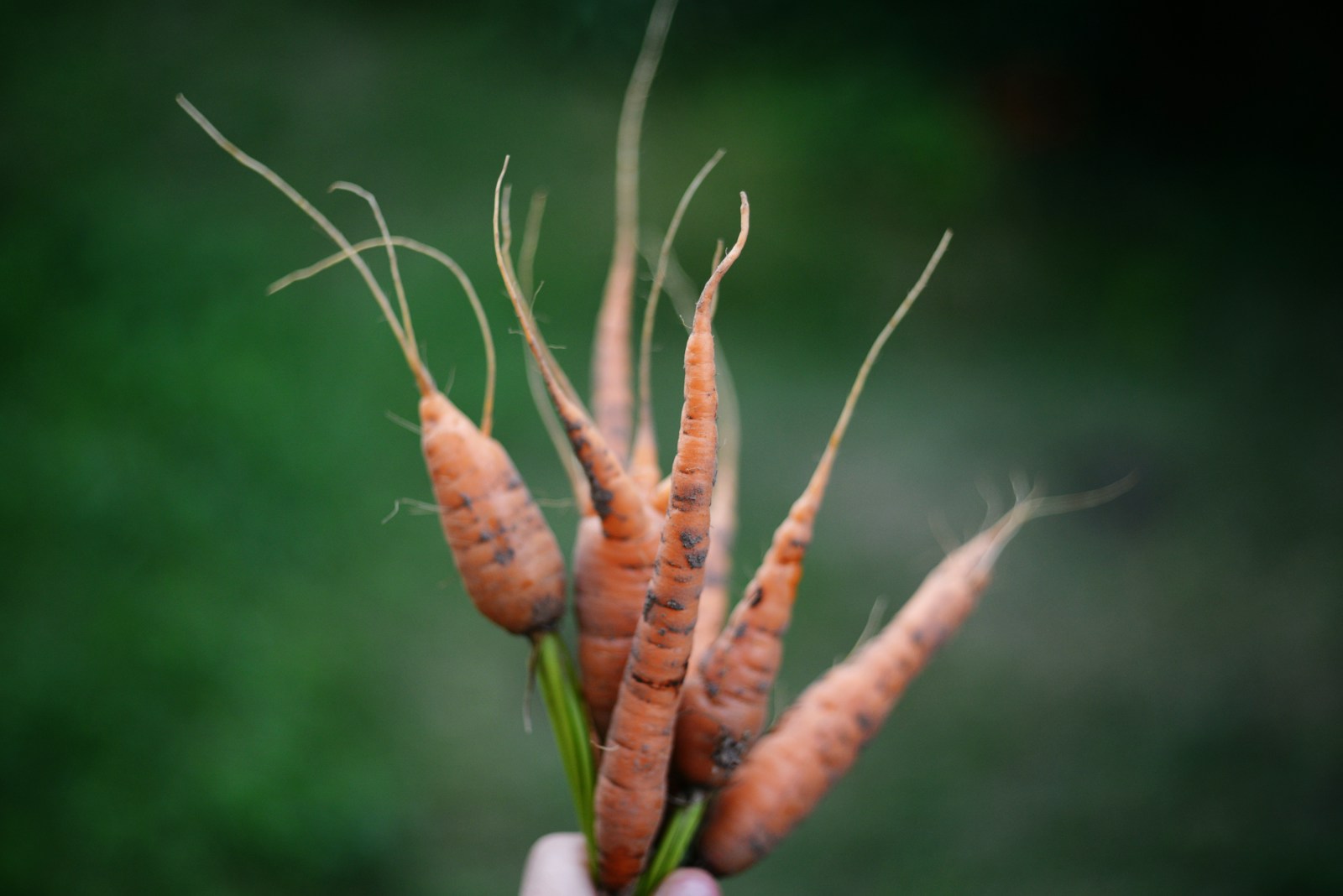
Pull a test root before harvesting a whole row. Young baby carrots are tender and sweet.
Water the bed the day before harvest to soften the soil. Grip the foliage close to the crown and pull with a gentle twist. In heavy soil, loosen the row first with a garden fork pushed in beside the roots.
Cold weather turns some starch into sugar, so autumn carrots taste sweeter after a few light frosts. In mild areas you can leave them in the ground and dig as needed. Cover the row with a thick layer of straw before hard freezes set in.
For storage, twist or cut off the tops, leaving about ½ inch (1 cm) of stem. Do not wash them if you plan to store them for long. Keep unwashed roots in a cool, humid place near 32–40°F (0–4°C). Layer them in damp sand in a box, or keep them in a perforated bag in the fridge. Stored this way, they usually keep for several months.
Saving seed is possible but slow. Carrots flower in their second year and cross readily with wild carrot (Queen Anne's lace). Buy fresh seed unless you can isolate your plants. Carrot seed also loses vigour quickly, so use it within two or three years.
Problems and pests
Rusty tunnels in the roots
This is carrot rust fly, also called carrot fly. Its small larvae tunnel through the roots, leaving rusty brown scars that rot. Cover the crop with fine insect mesh or row cover from sowing to harvest, sealing the edges. Thin in the evening and remove all thinnings.
Forked, stubby or twisted roots
The root hit stones, hard clods, compacted soil or fresh manure. Crowding also twists roots together. Loosen the soil deeply, remove stones and use only well-rotted compost. On heavy clay, grow short or round varieties, or use raised beds.
Split roots
Irregular watering causes splitting, especially heavy rain after a dry spell. Keep moisture steady with deep weekly watering and mulch.
Seedlings vanish overnight
Slugs and snails graze young carrot seedlings to the ground. Hand-pick them at dusk, use beer traps, or scatter iron phosphate slug pellets, which are approved for organic use. Keep all pellets out of reach of children and pets, and follow the label.
Leaves turn yellow and blotchy, then brown
Leaf blights and aster yellows (a disease spread by leafhoppers) both cause this. Pull and bin affected plants rather than composting them. Rotate carrots to fresh ground each year. Row cover keeps leafhoppers off.
Varieties worth growing
Carrot varieties fall into groups by root shape, which decides how deep your soil needs to be.
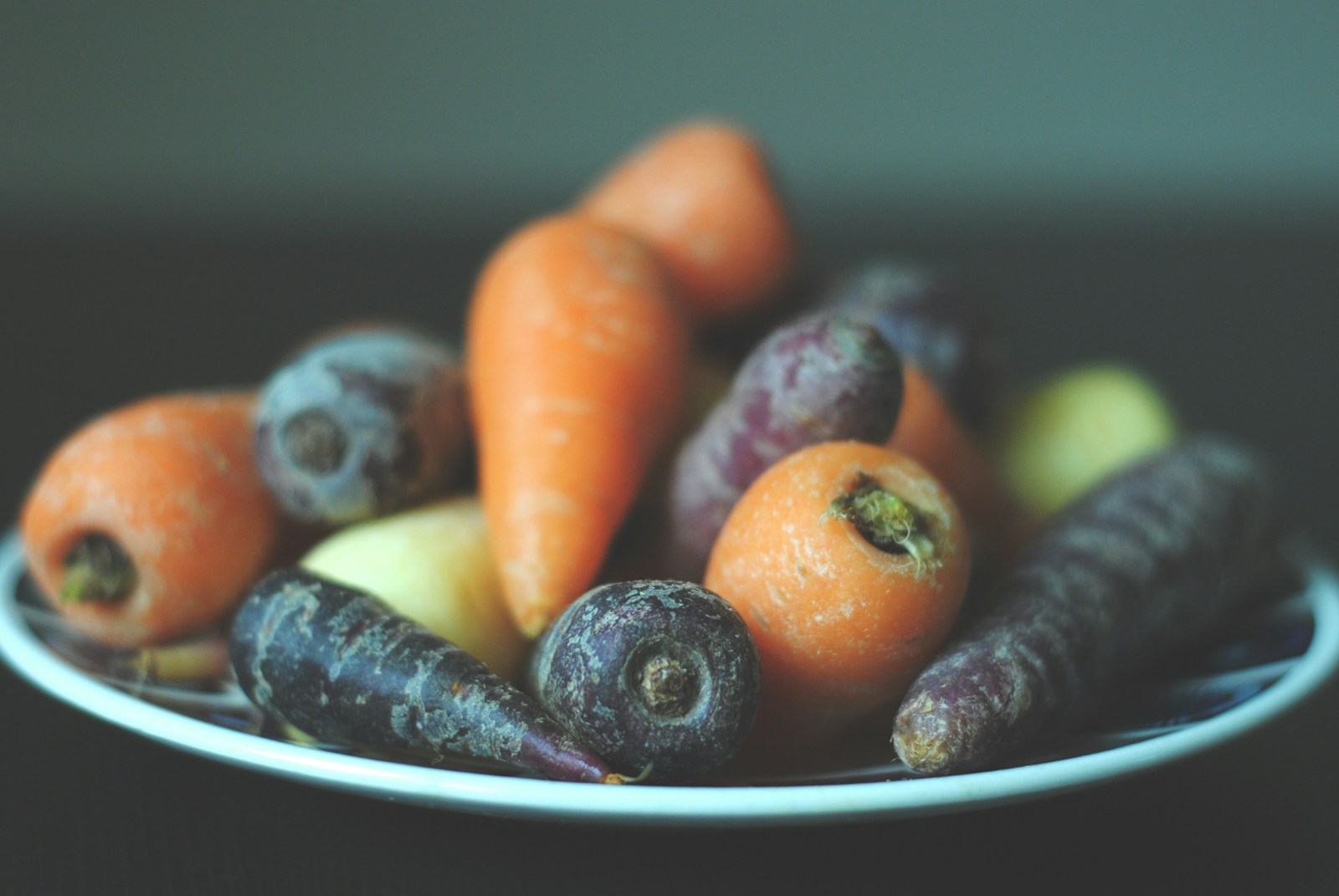
Short and round types
- Paris Market – small, round roots that suit containers, heavy clay and shallow beds.
- Chantenay Red Core – short, broad, tapered roots that push through heavier soil well.
Medium, cylindrical types
- Scarlet Nantes – sweet, crisp, blunt-ended roots with little core; a reliable all-rounder.
- Danvers 126 – tapered, deep-orange roots that tolerate heavier soil and store well.
- Bolero – a Nantes-type hybrid with good vigour and long storage life.
Long types
- Imperator 58 – long, slim, tapering roots for deep, loose, sandy soil.
Coloured carrots
- Purple Haze – purple skin with an orange core; best raw, as the colour fades when cooked.