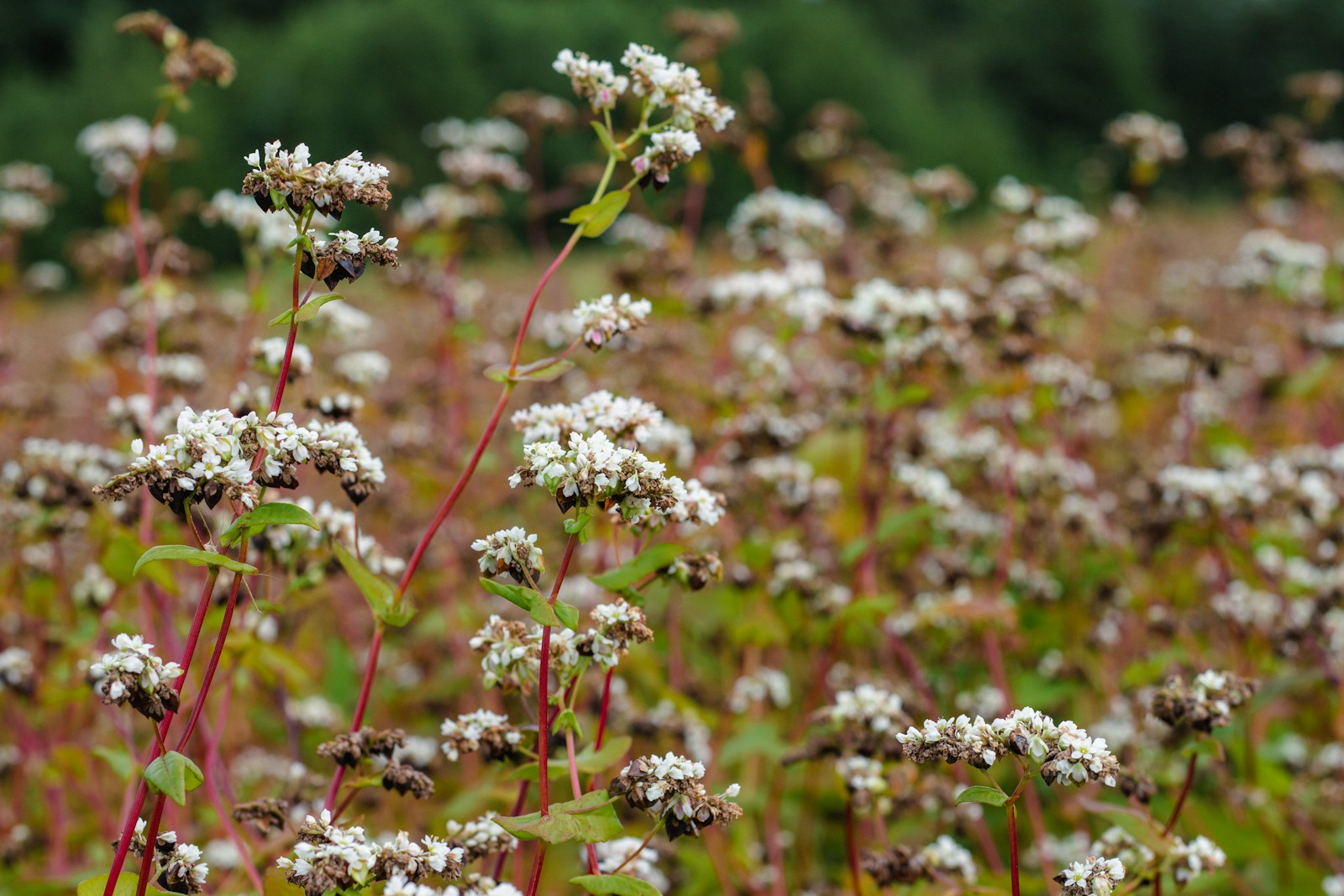
Buckwheat is the speed crop of the backyard grain plot. It flowers about a month after sowing, smothers weeds, and draws bees from all around. It is not a true grain or a grass at all. It is a broad-leaved plant related to rhubarb and sorrel, grown for its seed like a grain. It is one of the easiest crops you can sow, as long as you keep it away from frost.
Sowing and planting
Sow buckwheat outdoors 1 to 2 weeks after your last frost, once the soil has warmed to at least 50°F (10°C). It hates being moved, so never start it indoors. Seed sprouts in 3 to 5 days in warm soil.
Buckwheat is killed outright by frost, even a light one. Do not sow until all danger of frost has passed, and time grain crops to ripen at least a couple of weeks before your first autumn frost.
For a grain harvest, sow no later than about 12 weeks before your first autumn frost. For a cover crop, you can keep sowing until about 6 to 8 weeks before first frost. The plants flower and cover the ground in that time, and frost kills them into a ready-made mulch.
Buckwheat is ideal for succession sowing. In most gardens you can grow two or three back-to-back cover crops in one summer. Cut each one as it flowers and sow the next straight after.
Rake the bed roughly level and pull out any perennial weeds. A fine seedbed is not needed.
Broadcasting is the usual way. Scatter the seed evenly by hand in two passes at right angles, then rake it in to about 1 inch (2.5 cm) deep. Firm the surface with the back of the rake. Rows 6 to 8 inches (15 to 20 cm) apart make weeding and seed harvest a little tidier.
For seed rate, use about 2 to 4 ounces per 100 square feet (roughly 6 to 12 g per square metre). Sow at the top of the range for a cover crop, so the canopy closes fast and shades out weeds. Sow at the lower end for grain, which gives stronger, branching plants.
Growing on
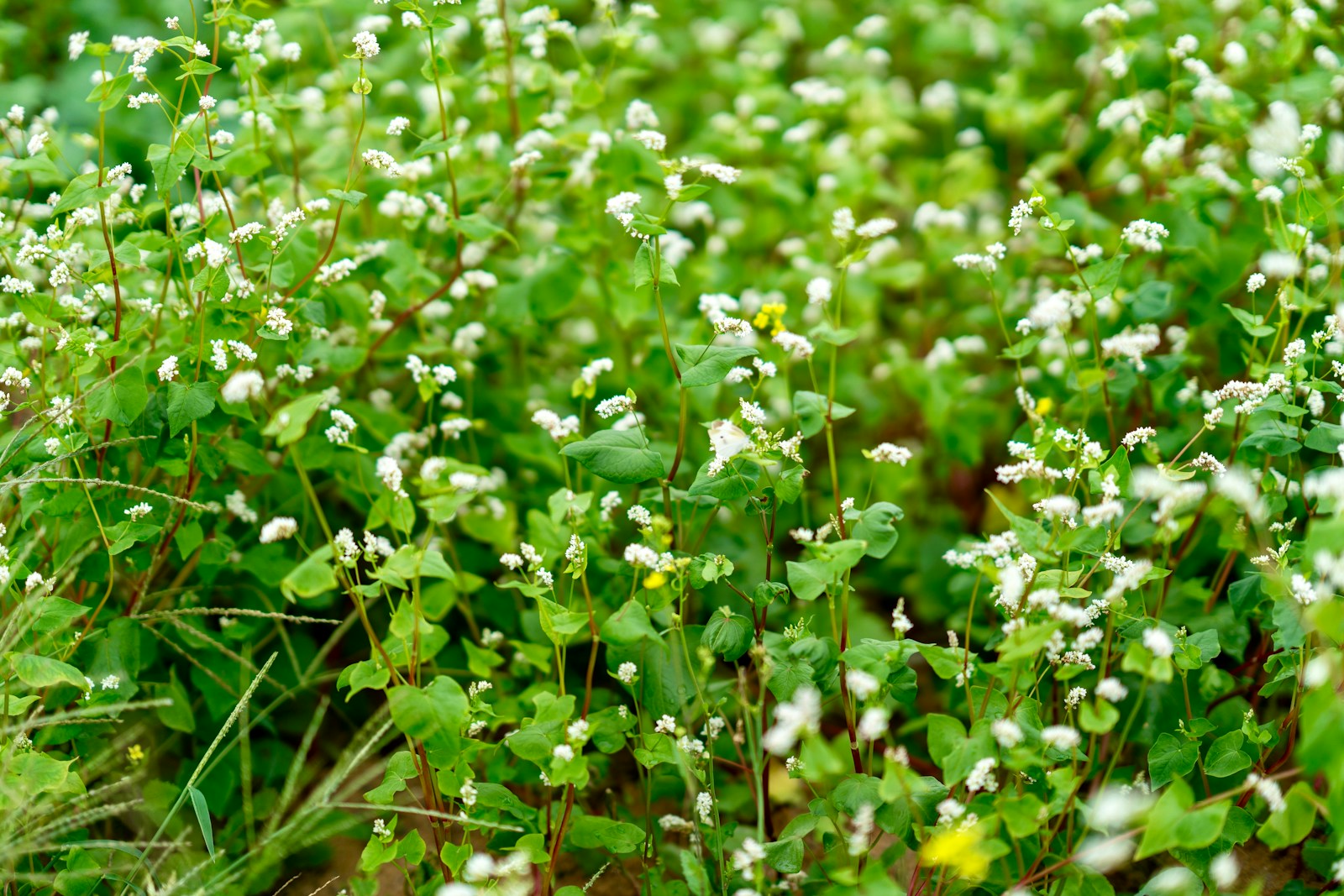
Buckwheat needs very little care. It grows so fast that it shades out most weeds within 3 to 4 weeks.
Water in dry spells, especially once flowering starts. Drought and heat during bloom are the main reasons for a poor seed set.
Do not feed it. Buckwheat does well in poor soil, and rich soil or extra nitrogen gives tall, soft stems that fall over. Mulch is not needed either, because the leaves soon cover the ground.
It needs no staking, pruning or pinching.
As a cover crop
Buckwheat is one of the best summer cover crops. Its dense leaves smother weeds, and its fine roots loosen topsoil. It is also good at taking up phosphorus that other crops struggle to reach. When its stems break down, that phosphorus returns to the soil.

Cut or mow the crop about 7 to 10 days after the first flowers open. At that stage no seed has hardened yet. Leave the stems on the surface as mulch, or dig them in lightly. They break down fast, and you can usually sow or plant the bed after about 2 weeks.
For pollinators
Buckwheat flowers are rich in nectar. Honeybees, native bees, hoverflies and small beneficial wasps work them heavily, mostly in the morning. A strip at the edge of the vegetable garden brings pest predators in close to your other crops. Since it keeps flowering for weeks, a single sowing feeds pollinators for a long spell.
Harvesting
Buckwheat keeps flowering while its first seeds ripen, so the seed never ripens all at once. Harvest when about three-quarters of the seeds have turned dark brown or black. Try the thumbnail test on a few dark seeds. Press a thumbnail into one. If it dents like soft wax, wait. If it is hard, it is ready. Do not wait for the last flowers, because the earliest seeds drop (shatter) if left too long.

Cut the stems near the ground with shears or a sickle, early in the day when the plants are slightly damp. This reduces shattering. Lay the stems on a tarp, or tie them in loose bundles, and let them dry in an airy, covered spot for 3 to 7 days.
Threshing is easy with buckwheat. Beat the dry stems inside a pillowcase or sack, or rub the heads between gloved hands over a tarp. The seeds fall readily.
Winnowing removes the leaf bits and chaff. Pour the seed slowly from one bucket to another in front of a fan or a steady breeze. Repeat until it is clean.
Spread the cleaned seed thinly for a few more days to dry fully. Store it in airtight jars in a cool, dry, dark place. Freezing it for 3 to 4 days before storing kills any insect eggs.
Each seed sits inside a tough, dark hull. You can sprout whole seed for microgreens as it is. To get groats (the hulled kernel) for cooking, crack the seeds lightly in a grain mill set wide or a few quick pulses in a blender. Then winnow again to blow off the hulls.
Saving your own seed is simple. Keep back some of your plumpest seed from the best plants.
Problems and pests
Plenty of flowers but little seed
Hot, dry weather during bloom causes this, as flowers fail to set seed above about 85 to 90°F (29 to 32°C). Time your grain sowing so flowering falls in milder weather. Keep the soil evenly moist through bloom.
Stems bend over and the crop lies flat
This is lodging, from rich soil, too much nitrogen or a thick sowing. Grow buckwheat on leaner ground, skip the fertilizer, and sow grain crops at the lower seed rate.
Buckwheat pops up where you do not want it
Seeds that ripen and drop give you volunteer seedlings the next season. Cut cover crops within 10 days of first bloom. After a grain crop, hoe off the seedlings while small. Frost kills them, so they never become a lasting problem.
Leaves chewed to lace
Japanese beetles are the usual culprits where they occur. Hand-pick them early in the morning into a bucket of soapy water. Heavy damage to a cover crop is rarely worth treating, since it will be cut soon anyway.
Plants grazed or trampled
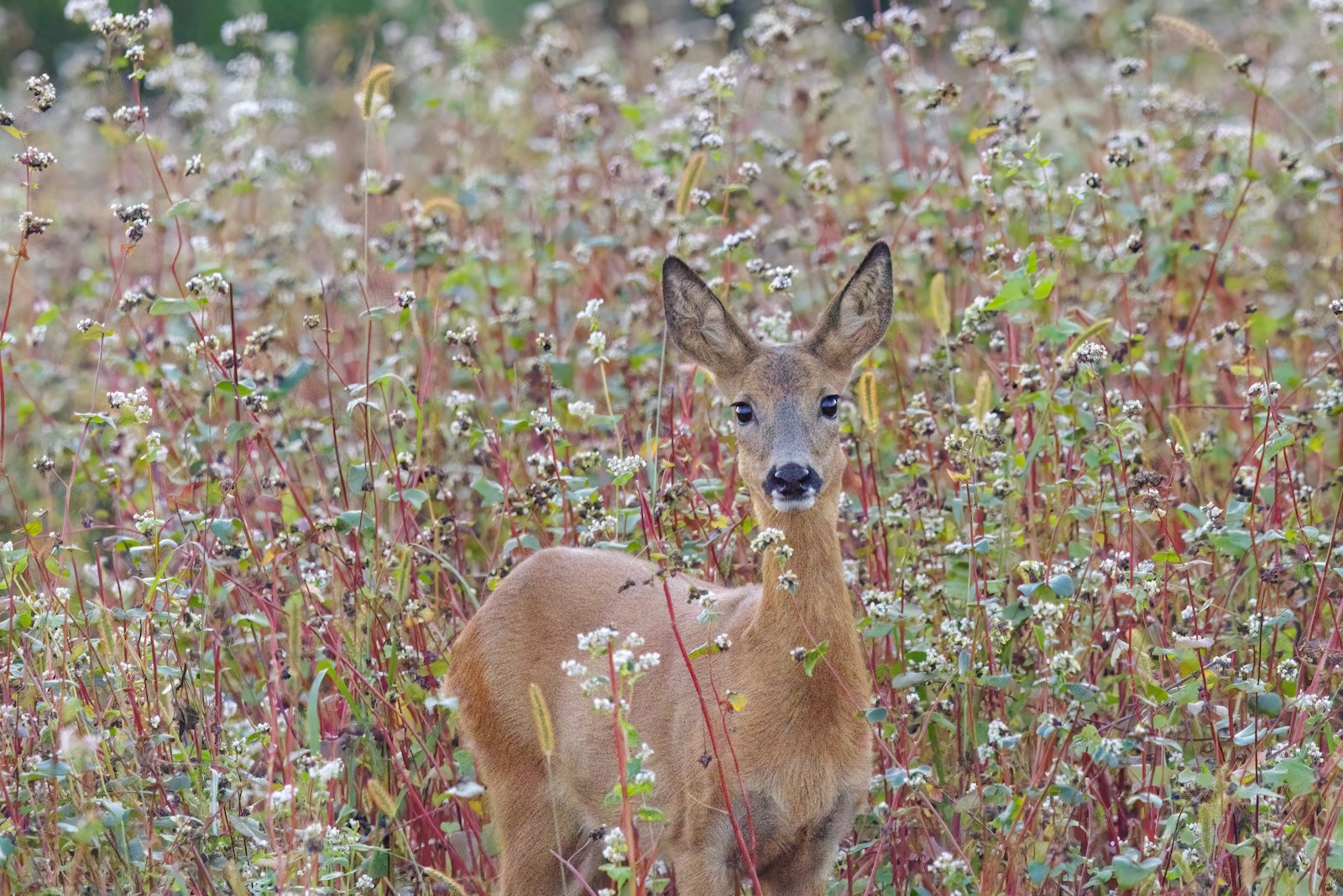
Deer love buckwheat and will graze or bed down in it. A tall fence is the only reliable fix. Otherwise, treat an unfenced patch as a crop you share with wildlife.
Varieties worth growing
Most cover-crop seed is sold simply as common buckwheat, with no variety named. It works well for both cover and grain. For a better grain harvest, choose a named variety.
Common buckwheat
- 'Mancan': A large-seeded Canadian variety grown widely for grain.
- 'Koto': A Canadian variety with large, plump seed, popular for grain and flour.
- 'Manor': A reliable Canadian variety with good yields in cool summers.
- Common or unnamed seed: The usual cover-crop choice. It is cheap, vigorous and good for pollinators.
Tartary buckwheat
- Tartary buckwheat (Fagopyrum tataricum): A separate species with smaller, greenish flowers and bitter-tasting seed. It is hardier in cool mountain climates and is grown mainly for flour and tea.