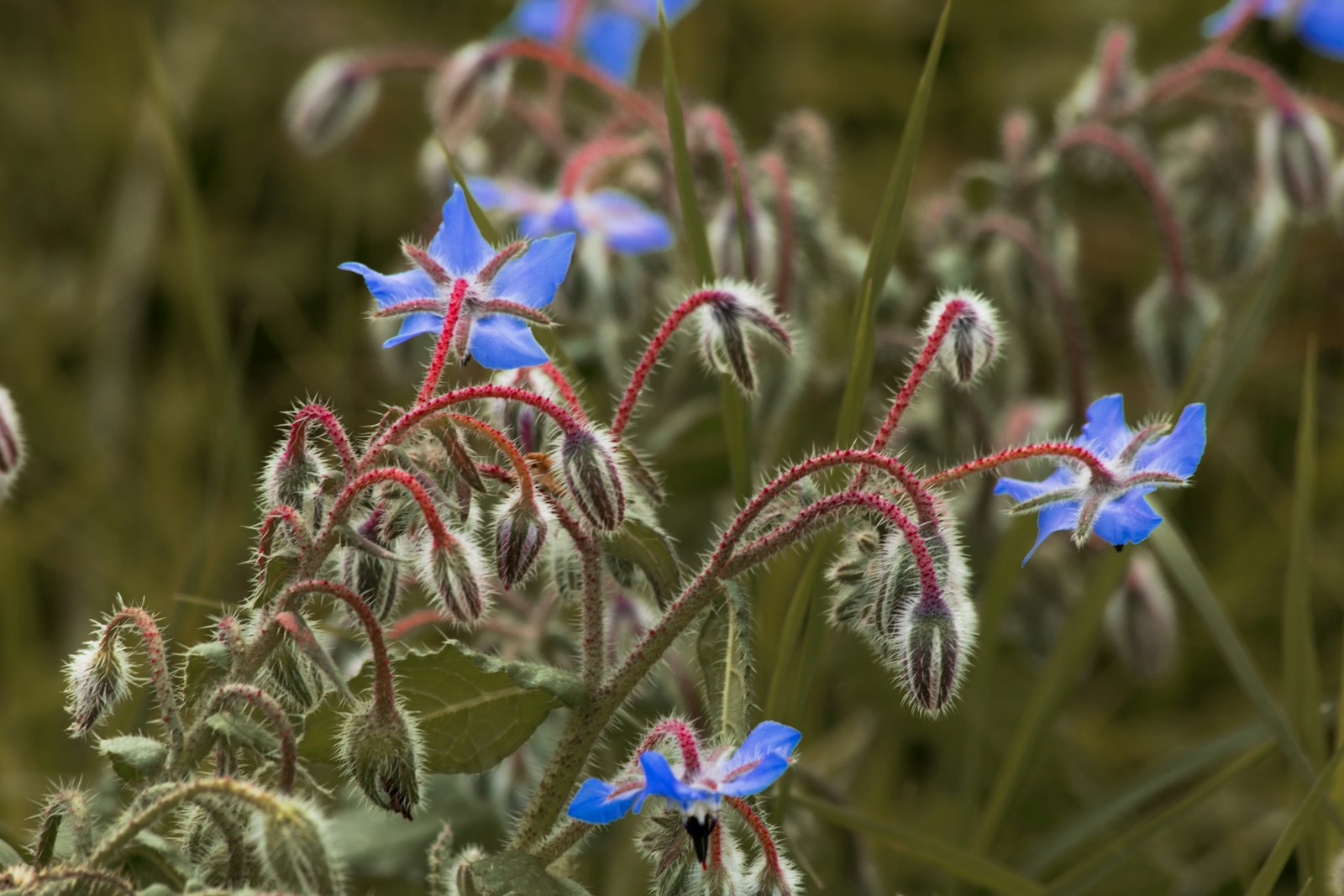
Borage is a hardy annual herb with hairy grey-green leaves and nodding, star-shaped blue flowers. Bees visit it from morning to dusk, so it earns a place beside fruiting crops. The flowers taste mildly of cucumber and look striking in salads, drinks and ice cubes. It grows fast, tolerates poor soil and rarely needs fuss. Difficulty: very easy, and a good first herb for beginners.
Sowing and planting
Borage grows a long taproot (a single deep main root), so it dislikes being moved. Sow it where it is to flower whenever you can.
Sow outdoors from two weeks before your last frost until early summer. Seedlings shrug off a light frost, so an early start is safe in most gardens. Rake the soil to a fine surface first. Sow two or three seeds per spot, about 1/2 inch (12 mm) deep, and cover them well. The seed needs darkness to germinate.
Thin to one strong seedling per spot once the first true leaves appear. True leaves are the ones that follow the first pair of rounded seed leaves. Final spacing is 12 to 18 inches (30 to 45 cm). Crowded plants flop and catch mildew.
For earlier flowers, sow indoors three to four weeks before your last frost. Use deep cells or biodegradable pots so the root is never disturbed. Keep them at about 65°F (18°C). Harden off the seedlings before planting out. Hardening off means setting them outside for a few hours a day, for a week, to get them used to wind and sun.
Borage flowers for weeks but eventually tires. Sow a second batch four to six weeks after the first for flowers until autumn. In zones with mild winters, an autumn sowing often overwinters and flowers early the next spring.
Choose a sunny, open spot. Borage does well in ordinary soil and is often better in lean soil than rich. Very rich soil gives lush, soft growth that topples.
Growing on
Water seedlings regularly until they are growing strongly. After that, water deeply during dry spells, roughly once a week. Borage wilts dramatically on hot afternoons. Check the soil before watering, because the leaves usually recover by evening.
Feeding is rarely needed. A thin layer of compost at sowing is plenty. Too much nitrogen gives large leaves and fewer flowers.
Mulch lightly around established plants to keep the soil cool and moist. Keep mulch away from the stems.
Tall plants in windy gardens tend to sprawl. Push twiggy sticks in around young plants so they grow up through them. Alternatively, grow them close to a fence or among sturdier plants.
Pinching out the growing tips when plants are about 8 inches (20 cm) tall gives bushier plants. This delays flowering by a week or two. Cut back sprawling stems by a third in midsummer to encourage a fresh flush of flowers.
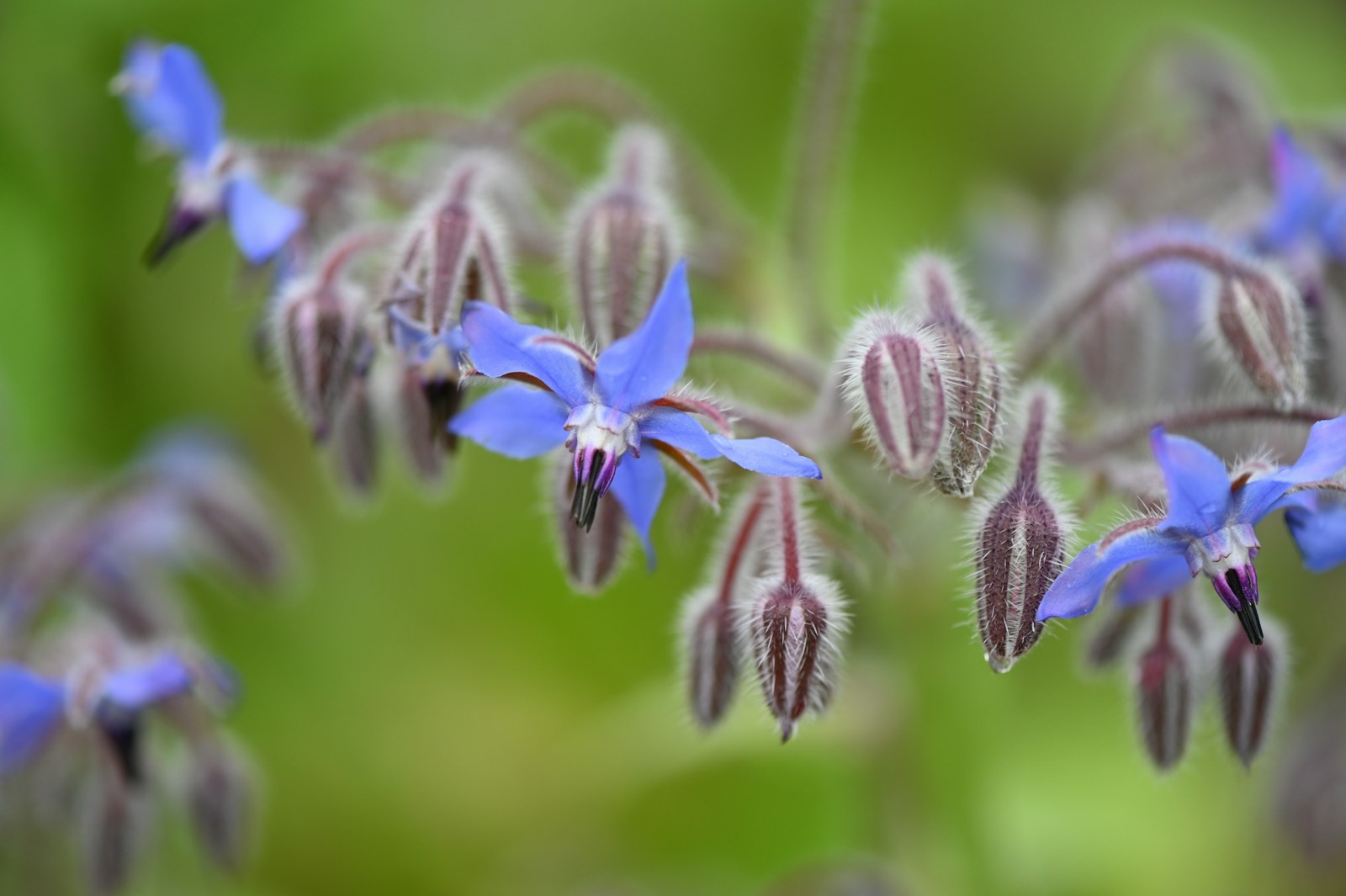
Wear gloves when handling borage. The bristly hairs on the stems and leaves can irritate your skin.
As a companion, borage is often grown beside strawberries, squash, tomatoes and beans. Its main value is bringing bees in to pollinate their flowers. Give it space, because a mature plant can smother small neighbours.
Borage self-seeds generously. Let a few plants drop seed and you rarely need to sow again. Pull unwanted seedlings while they are small, before the taproot goes deep.
Harvesting
Pick flowers when they are fully open and bright blue. Morning is best, once the dew has dried. Pinch the flower gently and pull. It usually slips free of its hairy green back, leaving the clean star.
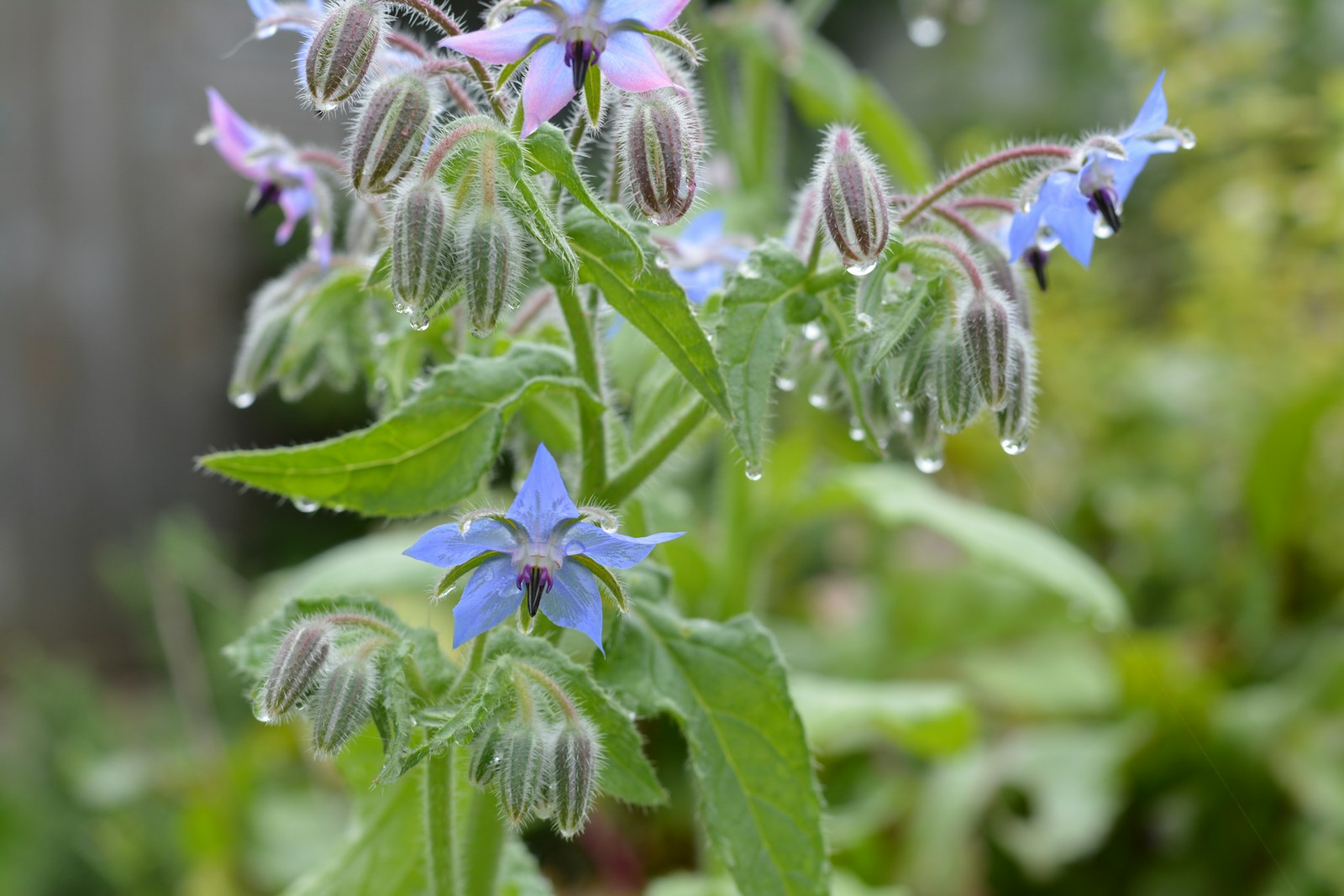
Use flowers fresh on the day you pick them. They wilt within hours. To keep them longer, freeze each flower in water in an ice-cube tray. Flowers can also be candied with egg white and sugar.
Young leaves have a light cucumber flavour. Pick them small, before the hairs toughen, and chop them finely. Older leaves are too bristly to eat raw. Borage leaves do not dry well and lose their flavour, so use them fresh.
For cut flowers, pick stems with plenty of buds. Singe or dip the cut ends in hot water for a few seconds. Borage lasts only a few days in a vase, but the nodding sprays look lovely.
To save seed, leave a few flowerheads on the plant. Seeds ripen dark brown to black and drop quickly. Tie a paper bag over the heads or shake them over a tray every few days. Store dry seed in a paper envelope in a cool, dry place.
Warning: Borage leaves and stems are covered in stiff hairs that irritate skin, so wear gloves. The plant is listed as toxic to dogs, cats and horses. Keep pets from chewing it, and eat the leaves only occasionally and in small amounts.
Problems and pests
Clusters of small insects on shoot tips
Aphids (small sap-sucking insects) cluster on tender tips and flower buds. Blast them off with a jet of water. Ladybirds, lacewings and hoverflies usually clear them within a week or two. If needed, spray insecticidal soap, following the label and keeping it off open flowers when bees are active.
White powdery coating on leaves
Powdery mildew appears late in the season, especially in dry soil and crowded rows. Water at the base during dry spells and thin plants for good air flow. Pull badly affected plants, because a new sowing soon replaces them.
Seedlings chewed or vanished overnight
Slugs and snails eat young seedlings before the leaves toughen. Go out with a torch after rain and pick them off. Use wool pellets or a ring of grit around sowings, or sow extra seed.
Plants flop and lie on the ground
Rich soil, shade or wind make stems soft and top-heavy. Grow borage in full sun in average soil. Support it early with twiggy sticks, or cut sprawling stems back by a third.
Varieties worth growing
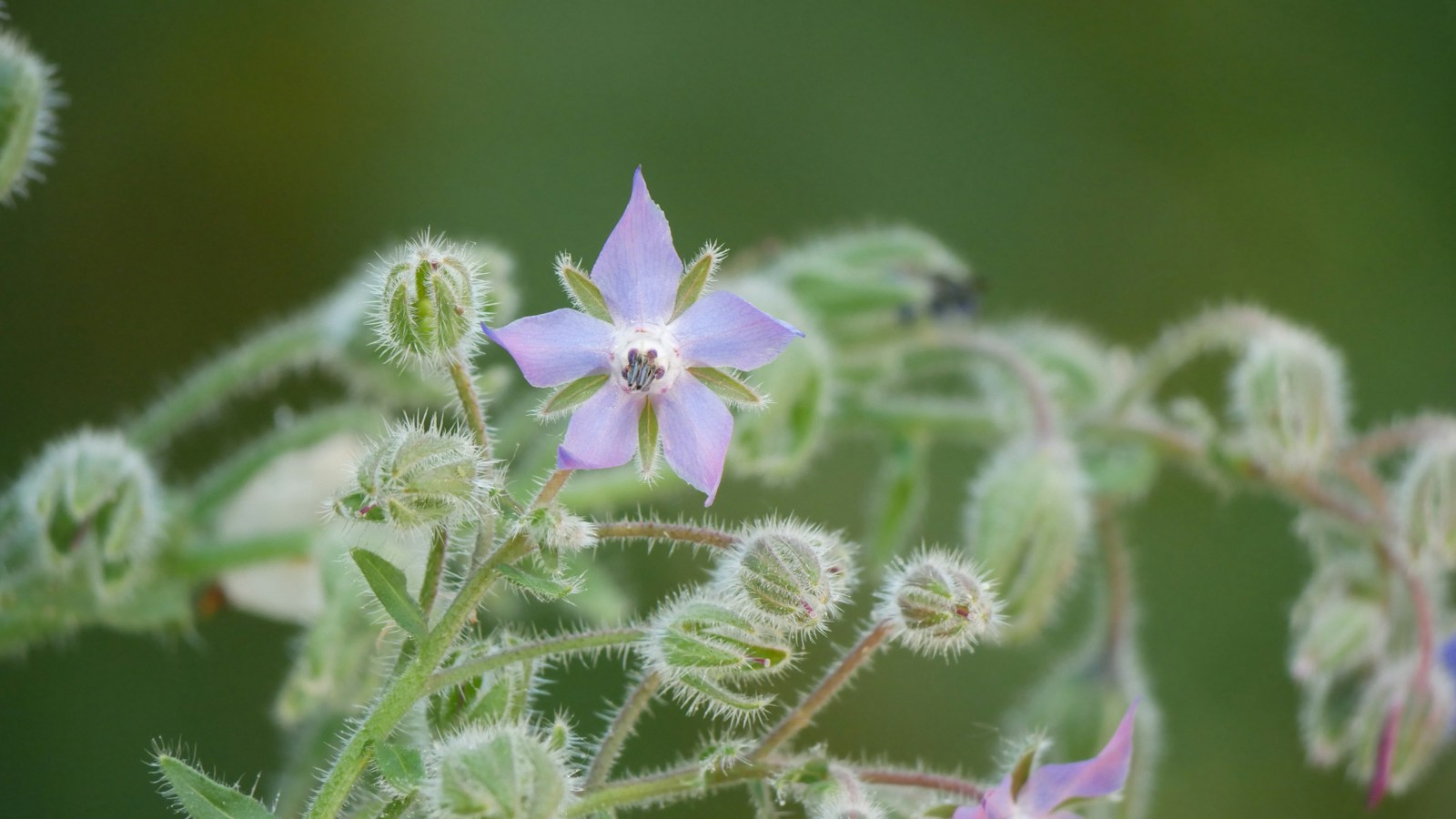
- Common blue borage (Borago officinalis): the standard form, with sky-blue flowers and vigorous growth.
- 'Alba' (white borage): pure white flowers on the same easy plant, good mixed with the blue.
- 'Variegata': leaves splashed with cream, grown mainly as an ornamental.
- Creeping borage (Borago pygmaea): a low, short-lived perennial with smaller pale blue bells, for shady corners.