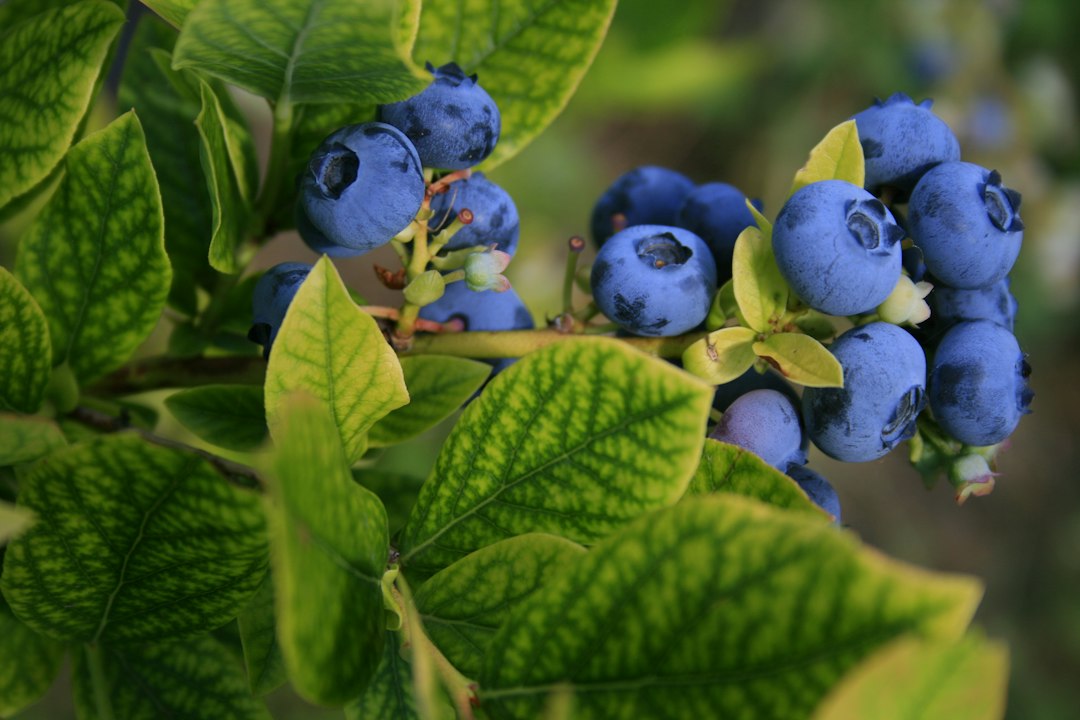
Highbush blueberry (Vaccinium corymbosum) is a deciduous shrub in the heath family, grown for clusters of sweet, blue-black berries with a dusty pale bloom. It earns a spot as an ornamental too, with white spring flowers and fiery red fall foliage. Difficulty is moderate: the plant itself is easy-going once settled, but it demands acidic soil that most gardens don't start with, so getting the ground right matters more than anything else you do.
Sowing and planting
Blueberries are grown from a nursery plant, not seed. Seed-grown blueberries are slow and unreliable, and named varieties don't come true from seed anyway, so buy a container-grown plant, usually one to three years old, from a nursery or garden center.
Soil is the part worth getting right before anything else. Blueberries need acidic soil, with a pH of 4.5-5.5, which is lower (more acidic) than most vegetable and flower beds. Test your soil's pH before planting. If it comes back above 5.5, work in an acidifying amendment such as elemental sulfur a few months ahead of planting, following the product's rate for your soil type, and mix in an acidic organic matter like pine bark fines or well-rotted pine needle compost. If your native soil is heavy clay or doesn't drain freely, consider planting in a raised bed or large container filled with an acidic mix instead of fighting the existing ground.
Plant in full sun, spacing bushes about 60 inches (150 cm) apart so each has room to fill out. Dig a hole twice the width of the root ball, tease the roots apart gently, and set the plant at the same depth it sat in its pot. Water in well and mulch immediately. Plant at least two different varieties near each other; blueberries set a heavier, more reliable crop of fruit with cross-pollination between varieties than with just one. Early spring, once the ground has thawed and is workable, is the best planting window in most areas; if you're gardening in a cold area such as zone 6b, fall planting is riskier because roots have less time to establish before winter, so spring is the safer choice there.
Growing on
Blueberries have shallow, fibrous roots and dislike drying out, so keep the soil evenly moist rather than letting it swing between wet and dry. About 1-2 inches (2.5-5 cm) of water a week, from rain or irrigation, suits an established bush; young plants need closer attention through their first couple of summers.
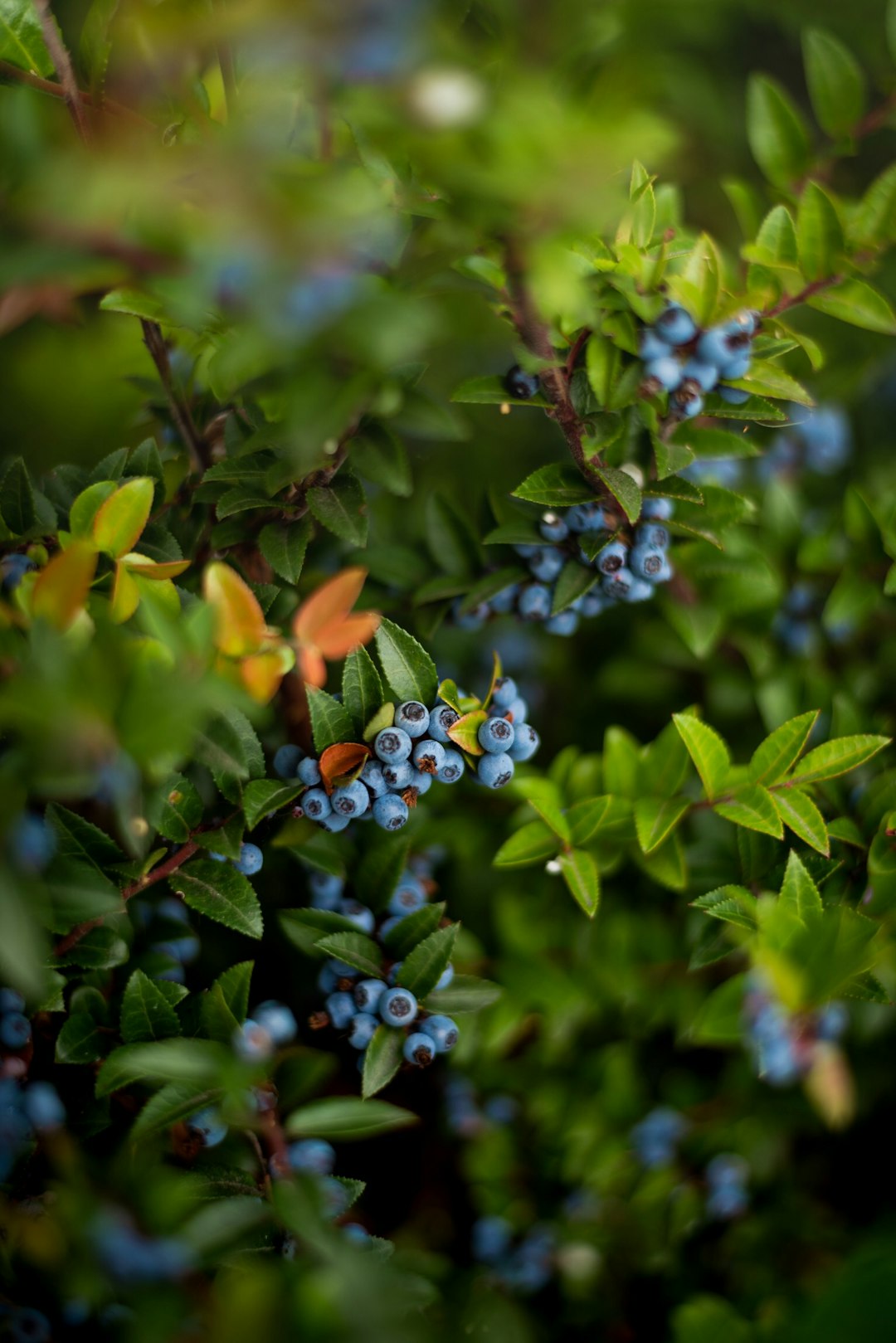
Feed with a fertilizer formulated for acid-loving plants (sometimes labeled for azaleas, rhododendrons or camellias), applied in early spring as growth starts. Avoid general-purpose fertilizers that can push soil pH upward over time. A 2-4 inch (5-10 cm) mulch of pine bark, pine needles, or wood chips helps hold moisture, keeps roots cool, suppresses weeds, and slowly adds acidity as it breaks down; keep it a few inches clear of the stems.
Pruning isn't needed in the first two or three years beyond removing damaged wood. On a mature bush, prune in late winter while it's dormant: remove the oldest, thickest canes at the base (canes older than about six years crop less heavily), cut out any weak, crossing, or low-growing branches, and aim for an open center that lets in light and air. This keeps the bush productive rather than overgrown.
Harvesting
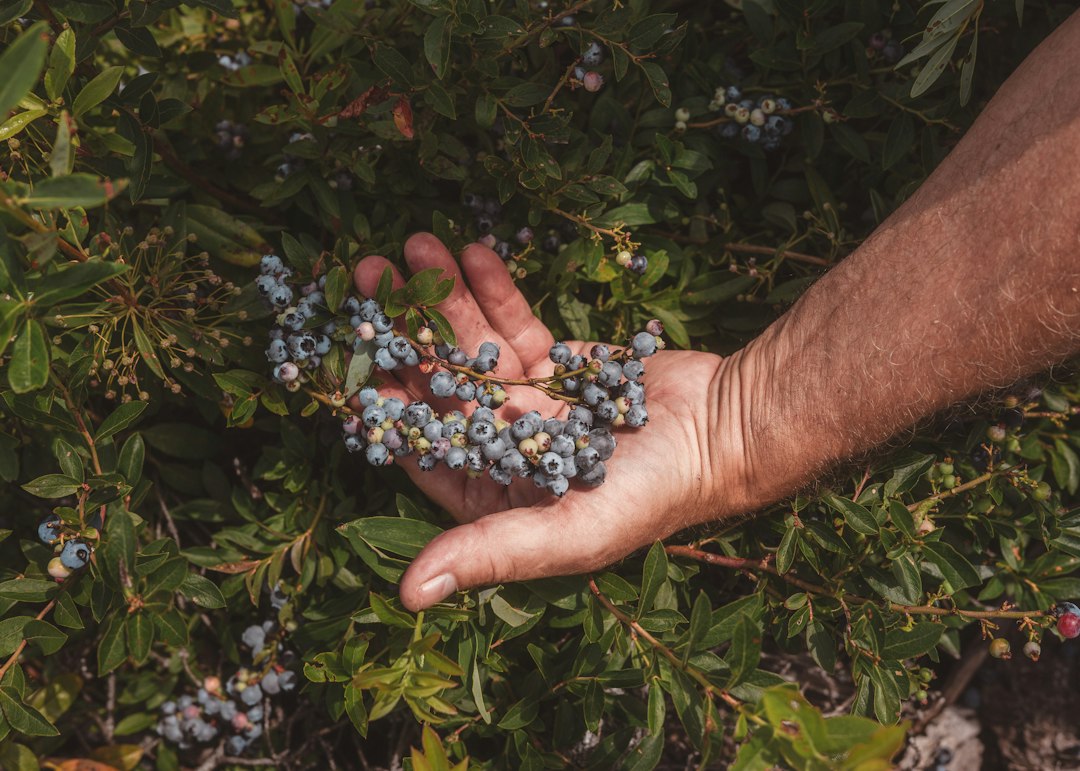
Berries don't ripen all at once, so expect to pick over several weeks rather than in one go. Fruit is ready once it's fully blue all the way around, with no red or green left at the base; berries often look blue a few days before they're actually sweet, so a taste test is the most reliable check. Ripe berries come away with a gentle roll between your fingers; if you have to tug, give them a few more days. Blueberries don't continue ripening once picked, so only harvest what's actually ready. Pick into a shallow container so berries at the bottom aren't crushed by their own weight.
Problems and pests
Leaves turn yellow between green veins
This is chlorosis, usually caused by soil pH drifting too high for blueberries, which makes iron unavailable to the plant even when enough is present in the soil. Retest your soil pH and reapply an acidifying amendment such as sulfur if it's climbed above 5.5; a chelated iron feed can green up the leaves while the pH correction takes effect.
Birds strip the berries before you get to them
Birds find ripening blueberries as easily as you do, and a hungry flock can clear a bush in a day. Drape bird netting over the bush as the berries start to color, supported on a frame so it doesn't rest directly on the foliage.
Leaves develop reddish-brown spots
Fungal leaf spot diseases take hold in humid conditions with poor airflow. Space and prune bushes to let air move through them, avoid wetting foliage when you water, and clear fallen leaves from around the base at the end of the season.
Small white grubs appear inside ripe berries
This points to a fruit fly larva, most likely spotted wing drosophila, which lays eggs in ripening fruit. Pick berries as soon as they're ready rather than letting them sit, and remove any overripe or fallen fruit promptly so it doesn't become a breeding site.
Flowering is heavy but fruit set is poor
A single variety, or varieties that bloom at very different times, can leave flowers poorly pollinated. Plant two or more different varieties together so they cross-pollinate, and avoid pruning away too much flowering wood in late winter.
Varieties worth growing
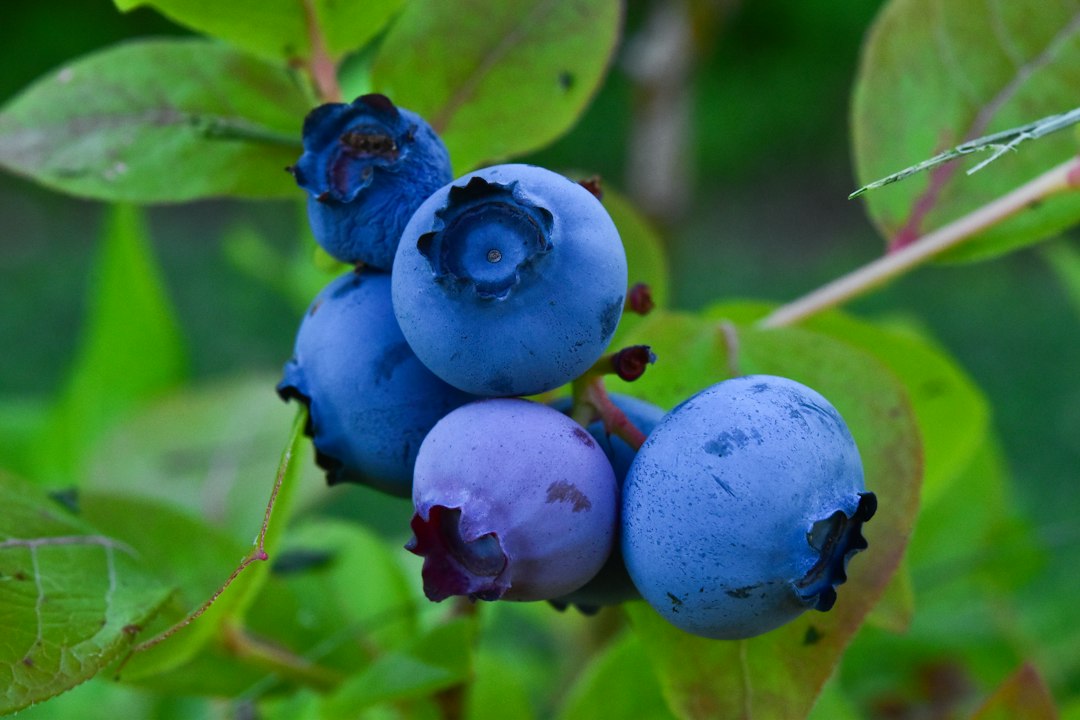
- Bluecrop – the standard mid-season variety in most gardens: reliable, cold-hardy, and widely available.
- Duke – an early-season variety with an upright, tidy growth habit.
- Patriot – compact and especially cold-hardy, a good choice toward the colder end of the hardiness range.
- Jersey – an older, very cold-hardy late-season variety still popular for its reliability.
- Elliott – ripens very late, useful for stretching the harvest into early fall.