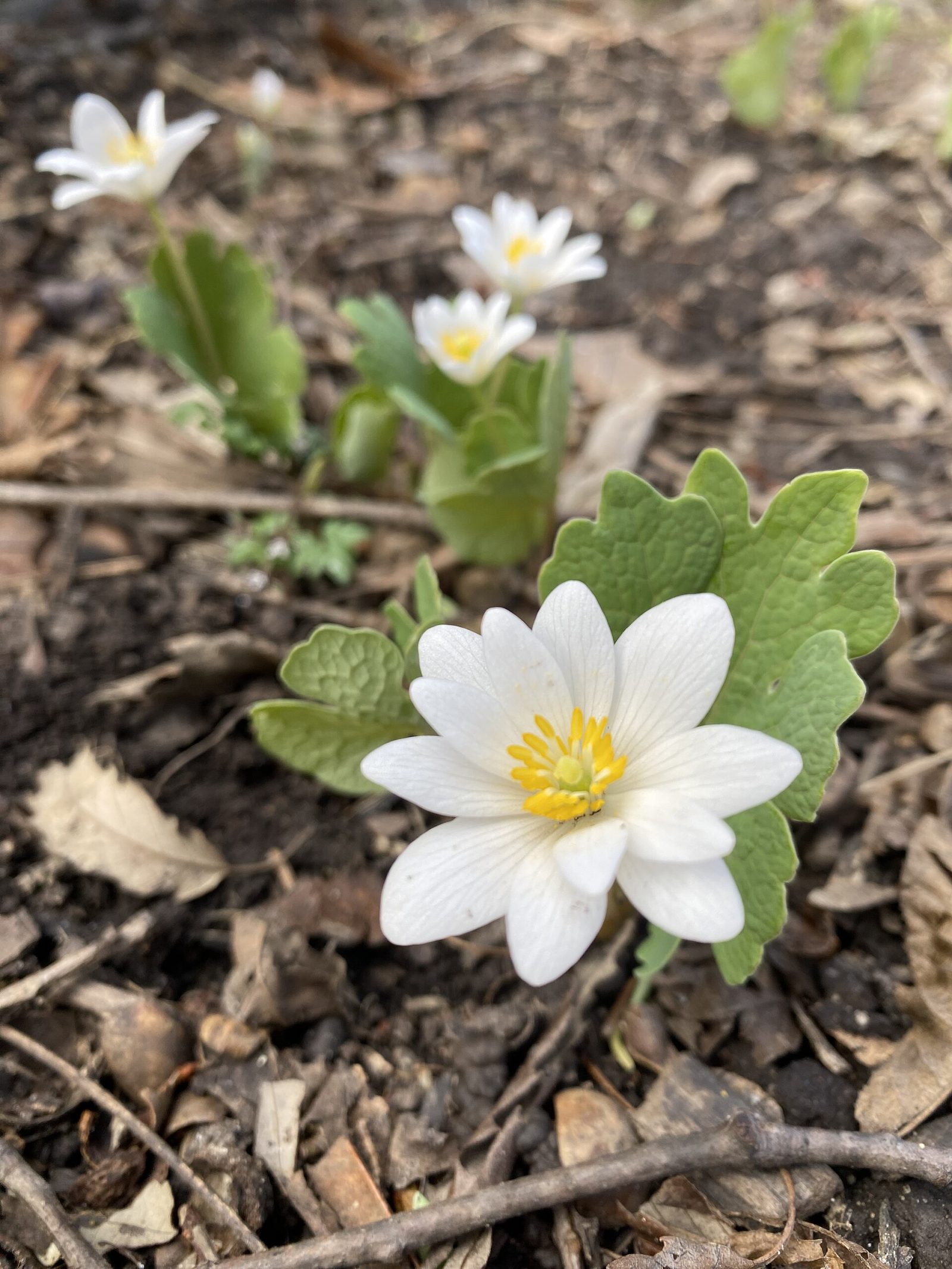
Bloodroot (Sanguinaria canadensis) is a small woodland wildflower native to eastern North America. Each plant sends up one white, many-petaled flower in early spring, wrapped at first in a single scalloped leaf. It belongs under deciduous trees, where it slowly forms a handsome colony. It is easy to grow once the site is right. The name comes from the orange-red sap that bleeds from a cut rhizome (a thick underground stem).
Bloodroot is toxic. The sap and rhizome are poisonous if eaten, and the sap can irritate or burn skin. Wear gloves when you plant or divide it, wash your hands and tools afterward, and keep pieces away from children and pets. Never swallow any part of it or put it on your skin.
Quick facts
| Feature | Detail |
|---|---|
| Family | Poppy family (Papaveraceae) |
| Sun | Part shade to full shade under deciduous trees |
| Water | Evenly moist in spring, never waterlogged |
| Spacing | 6 to 12 inches (15 to 30 cm) |
| Days to harvest | Not a food crop. Seed-grown plants usually flower in 2 to 4 years |
| Hardiness | USDA zones 3 to 8 |
| Height | 6 to 10 inches (15 to 25 cm) |
| Soil | Humus-rich, well drained, slightly acid to neutral |
Bloodroot is a spring ephemeral in habit. That means it does most of its growing before the tree canopy closes overhead. The leaves often last into summer if the soil stays moist, then die back. The plant rests underground until the next spring.
Mountain families in southern Appalachia knew this plant well. Anthony Cavender's Folk Medicine in Southern Appalachia lists the root among old household remedies, used as a so-called blood purifier and for coughs. It was also one of the wild roots dug and sold to the herb trade. That is history, not advice. Nothing in this article is medical advice, and the plant is too poisonous for home use.
Decades of digging, along with habitat loss, have thinned wild stands in many places. Do not dig bloodroot from the woods. Buy nursery-propagated plants or seed, and ask the seller how the stock was grown.
Sowing and planting
Choose the site first. Look for ground under deciduous trees or on the north or east side of a building. Spring sun followed by summer shade is ideal. The soil should be loose, dark and rich in rotted leaves. Avoid low spots where water stands after rain.
Plant rhizomes in fall or early spring. Dormant rhizomes are usually sold in fall, which is the best planting time. Potted plants can also go in during spring, once the soil is workable. Wearing gloves, follow these steps:
- Loosen the soil 6 inches (15 cm) deep and mix in a generous layer of leaf mold or compost.
- Lay each rhizome flat, with any buds pointing up.
- Cover it with about 1 inch (2.5 cm) of soil.
- Space plants 6 to 12 inches (15 to 30 cm) apart.
- Water well, then mulch with 1 to 2 inches (2.5 to 5 cm) of shredded leaves.
Sow seed fresh. Bloodroot seed loses viability quickly if it dries out. Sow it as soon as the pods ripen in late spring. Press seeds about 1/4 inch (6 mm) deep into a shaded, prepared bed or a pot of leafy compost. Keep the soil moist all summer. Seedlings usually appear the following spring, after a winter of cold. Expect to wait two to four years for the first flowers.
Growing on
Watering. Keep the soil evenly moist from the time shoots emerge until the leaves yellow. In dry summers the leaves vanish early. That does not harm the plant, but a longer leaf season builds a stronger rhizome. Water deeply during spring dry spells. Once the plant is dormant, normal rainfall is enough in most gardens.
Feeding. Bloodroot needs no fertilizer in decent woodland soil. A fresh layer of shredded leaves or leaf mold each fall feeds it and keeps the soil cool. Let fallen tree leaves lie where they land, as long as they do not mat down thickly.
Support and pruning. Neither is needed. Let the leaves die back naturally, because they are feeding next year's flower. Mark the clump with a label so you do not dig into it during the dormant season.
Companions. Bloodroot leaves a gap by midsummer. Plant it among ferns, wild ginger, foamflower or hostas, which fill the space after it fades. Keep aggressive groundcovers away, since they can smother it.
Harvesting
Bloodroot is an ornamental, not a kitchen or tea herb. Do not harvest it for eating or for home remedies. The two things worth gathering are seed and divisions, both for making more plants.
Collecting seed. After flowering, a slender green pod forms on each stalk. It ripens roughly a month later, in late spring. Watch closely, because pods split suddenly and ants remove the seed within hours. Pick pods when they turn yellowish and start to soften. Ripe seeds are shiny and brown to black. You can also tie a small mesh bag over a pod to catch the seed. Sow it the same day.
Dividing clumps. Divide established clumps in late summer or early fall, as the leaves yellow. Wear gloves and old clothes, since the sap stains. Follow these steps:
- Lift the clump carefully with a garden fork.
- Cut the rhizomes into pieces 2 to 3 inches (5 to 8 cm) long, each with at least one bud.
- Let the cut ends dry for an hour or so in the shade.
- Replant at the same shallow depth and water in.
Wait until a clump is at least three or four years old before dividing it. Divisions often flower the next spring.
Problems and pests
Holes in leaves and flowers. Slugs and snails are the usual cause, especially in wet springs. Pick them off at dusk, and pull thick mulch back from the emerging shoots. Traps or iron phosphate bait help in bad years. Follow the label directions and store any bait away from children and pets.
Rhizomes turn soft and rot. The soil is too wet or too heavy. Bloodroot wants moisture with drainage. Move surviving pieces to a slope or a raised area, and work leaf mold into the soil. Double forms are the most prone to rot.
Leaves disappear by early summer. This is early dormancy, usually caused by dry soil or too much sun. The plant is not dead. Water during spring dry spells, mulch with leaves, and consider a shadier spot.
Few or no flowers. Young or newly divided plants often skip a year. Deep shade from evergreens can also stop flowering. Bloodroot needs the bright light of a leafless canopy in early spring.
Plants dug up or missing. Squirrels and chipmunks sometimes disturb fresh plantings. A piece of wire mesh pinned over the spot for the first season helps. Deer and rabbits usually leave bloodroot alone.
Varieties worth growing
Few named forms of bloodroot are sold, and the choices below are the ones you are likely to find.
- The wild species. Single white flowers with eight to twelve or so petals and a gold center. It sets seed, spreads by ants and suits naturalistic plantings best.
- 'Multiplex'. The fully double form, with flowers like tiny white water lilies. It is sterile, so the blooms last a little longer than singles. It sets no seed and is increased only by division. It is slower, costs more and needs excellent drainage.
- 'Flore Pleno'. Plants sold under this name are generally the same double form as 'Multiplex'. Nursery labeling has long been mixed between the two names. Buy it as a double and do not expect a different plant.
- Pink-tinged and semi-double forms. Specialist nurseries occasionally offer these. Names are inconsistent and color often fades as the flower opens. Buy them in bloom, or from a seller who shows a picture of the actual stock.
Whichever form you choose, confirm that it is nursery propagated rather than wild collected.