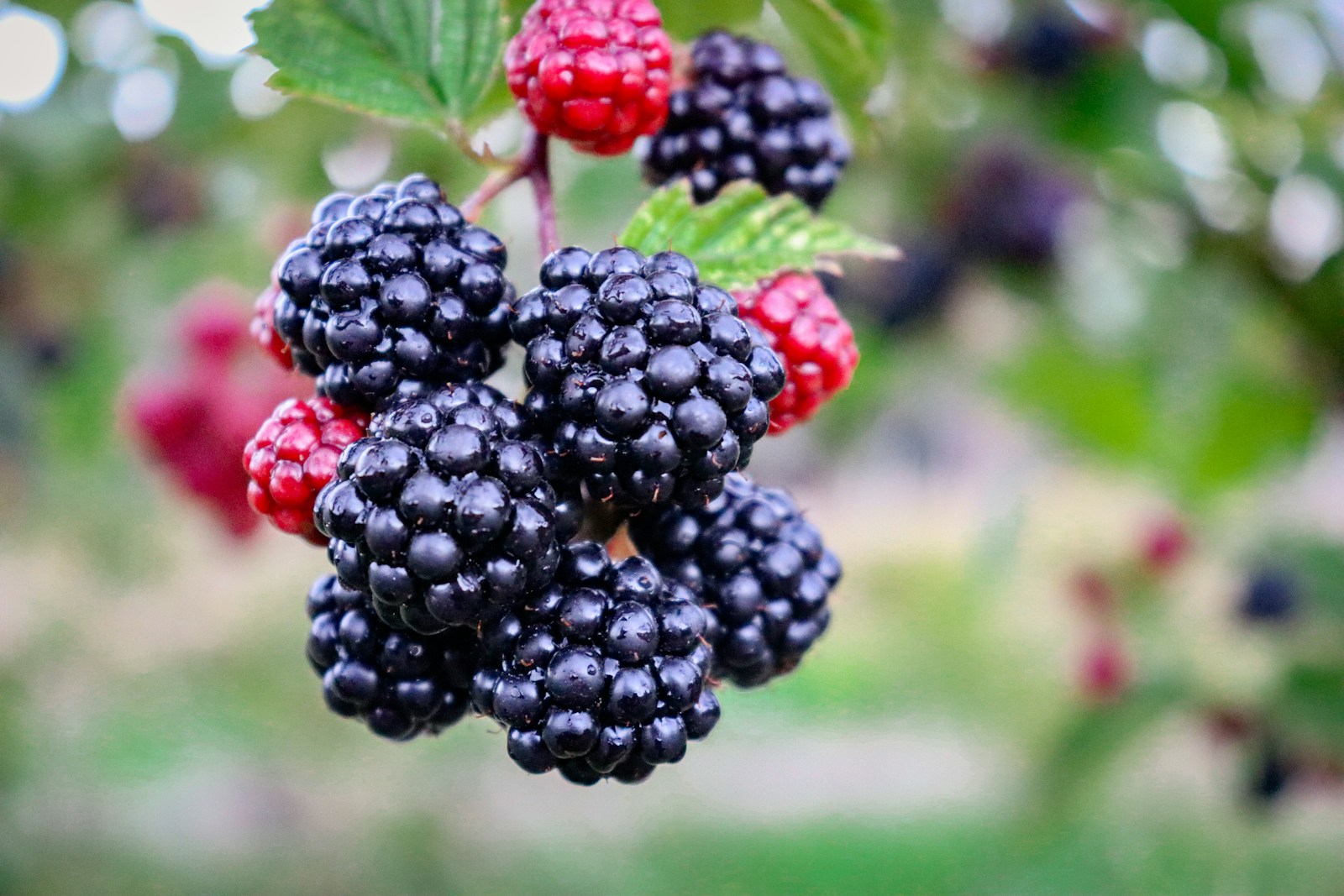
Blackberries (Rubus, cultivated hybrids) are long-lived cane fruits with perennial roots and stems that live just two years. A short row gives bowls of fruit each summer for ten years or more. Modern thornless kinds make picking painless. Difficulty: easy, once you understand which canes to cut.
In the southern Appalachians, blackberry was a household plant as much as a food. Anthony Cavender's Folk Medicine in Southern Appalachia records that mountain families favored it above other plants for summer diarrhea. They brewed the root or root bark as tea, or took the fruit as jam, wine or brandy. The book lists the plant as Rubus occidentalis, which is actually the black raspberry, a close relative. This is history only and not medical advice.
Sowing and planting
Blackberries are not grown from seed at home. You buy dormant bare-root plants or potted plants of a named variety.
First, know the three growth habits:
- Erect types have stiff, upright canes and need little support.
- Semi-erect types start upright, then arch over. They need a trellis.
- Trailing types have long, flexible canes that must be tied to wires. They suit mild-winter areas.
Plant bare-root stock in early spring, as soon as the soil can be worked. In zones 7 and warmer, late fall planting also works.
Choose a site in full sun with good drainage. Roots rot in soil that stays wet, so use a raised row on heavy clay. Dig in compost before planting. Avoid ground where tomatoes, potatoes, peppers or eggplants grew recently, as they share soil diseases with brambles.
Buy certified disease-free plants from a nursery, and do not transplant wild brambles or suckers from an old patch. Wild plants often carry viruses and orange rust, which have no cure and spread to every cane fruit nearby. Clear wild blackberries growing close to your row where you can.
Set each plant at the same depth it grew in the nursery, with the crown (where roots meet stem) at soil level. Spread the roots, backfill and water well. Cut the old cane back to about 6 inches (15 cm). Mulch with 3 to 4 inches (8 to 10 cm) of wood chips, straw or pine needles.
Put the trellis up at planting time. For semi-erect and trailing types, set sturdy posts 15 to 20 feet (4.5 to 6 m) apart. Run two wires, one at about 3 feet (90 cm) and one at about 5 feet (1.5 m). Erect types need only a single wire to lean on.
Growing on
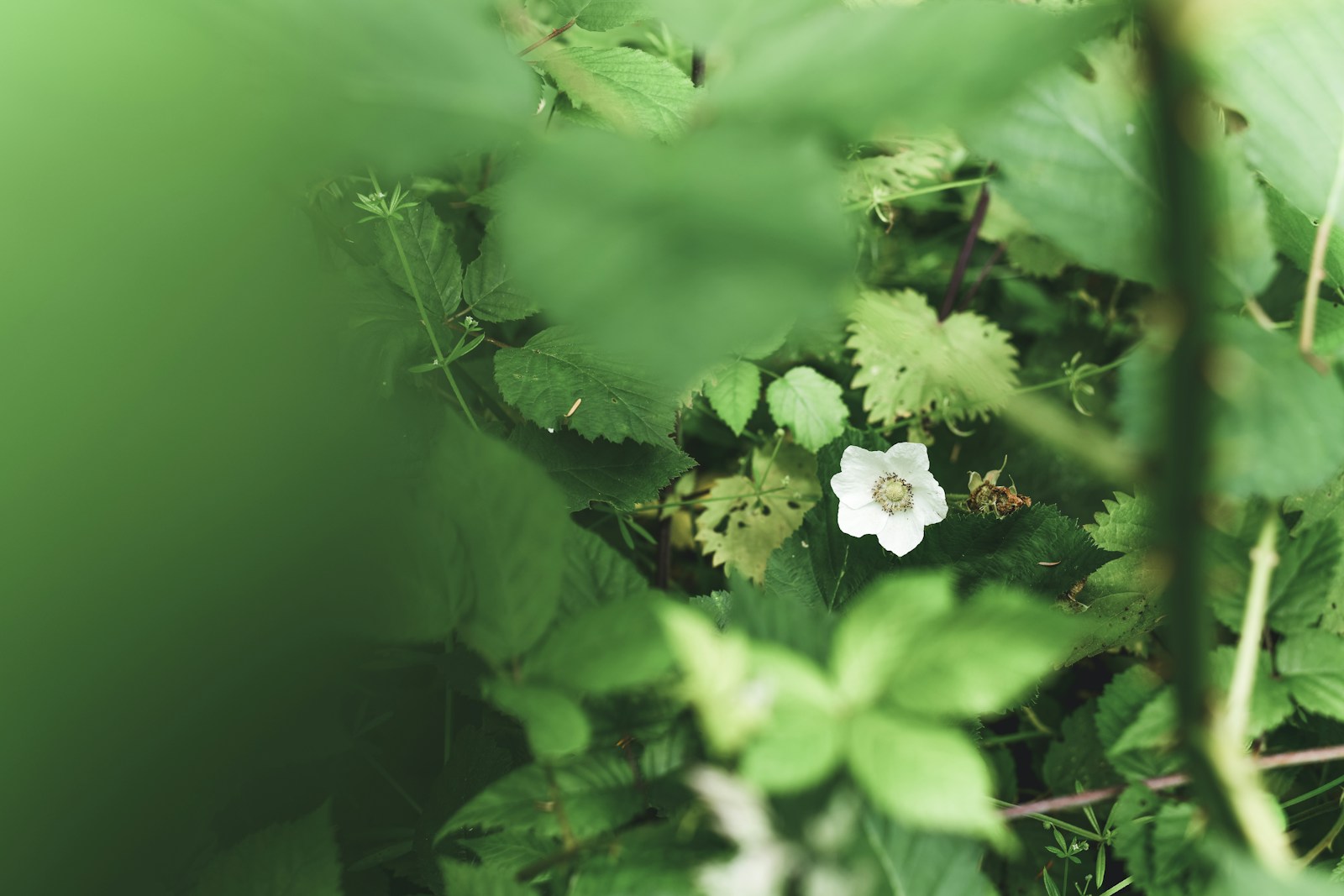
The key to blackberries is the two-year cane cycle. A primocane is a new cane in its first year. On most varieties it only grows leaves. The next year that same cane is called a floricane. It flowers, fruits, and then dies. New primocanes rise from the crown each year, so the plant always holds both ages at once.
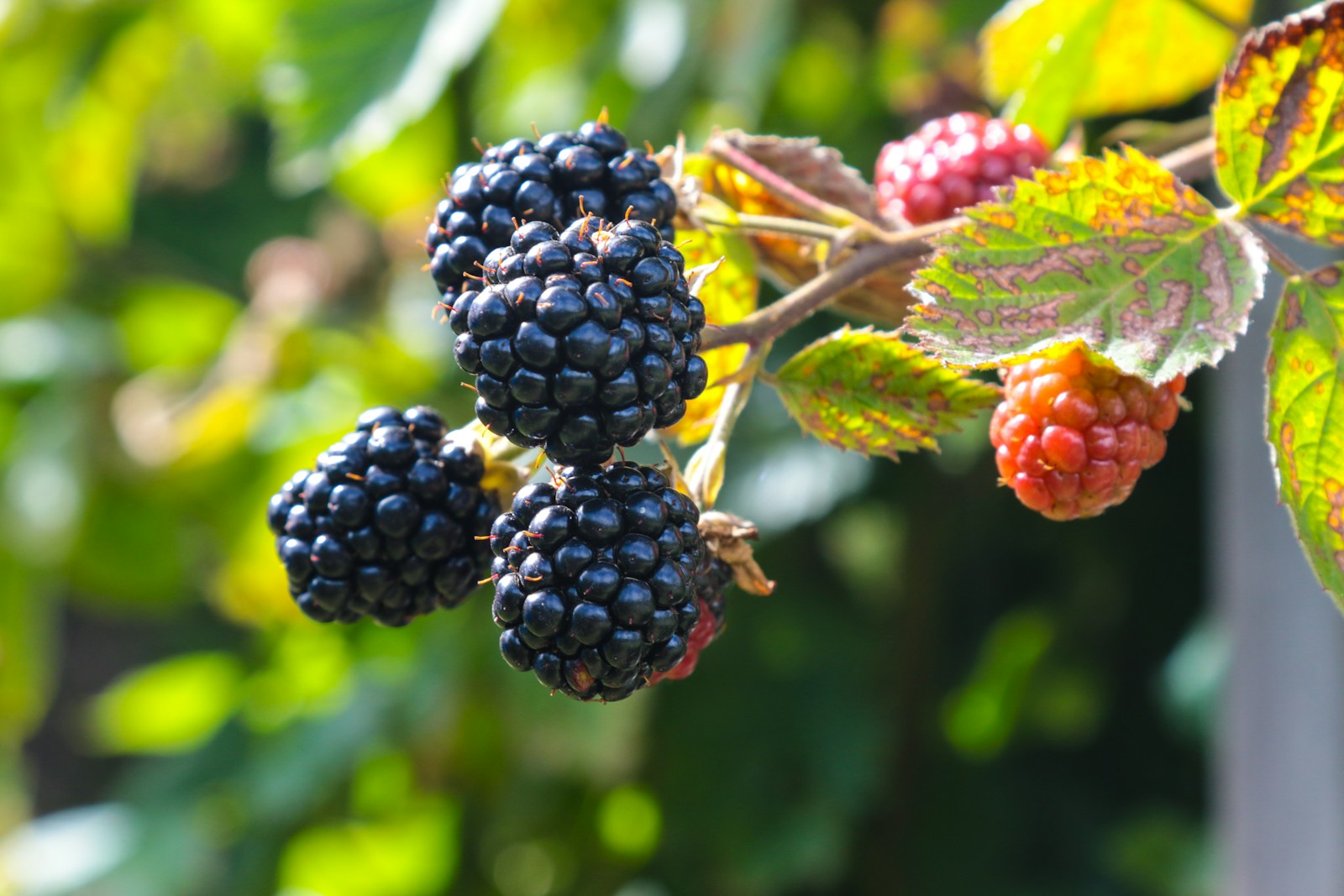
A few newer varieties are primocane-fruiting. They bear a crop on the tips of first-year canes in late summer and fall.
Watering. Give 1 to 2 inches (2.5 to 5 cm) a week from flowering through harvest. Water at the base. Wet leaves and fruit invite disease.
Feeding. Spread compost along the row in early spring. You can also apply a balanced fertilizer, such as 10-10-10, as growth starts. Follow the label rate, keep it off the crown, and wear gloves when you handle it. Do not feed after midsummer, because soft late growth is easily killed by cold.
Summer tipping. On erect and semi-erect types, pinch out the tip of each primocane when it reaches 3 to 4 feet (90 to 120 cm). Tipping forces side branches, called laterals, which carry next year's fruit. Trailing types are not tipped. Bundle their new canes along the ground or a low wire out of the way.
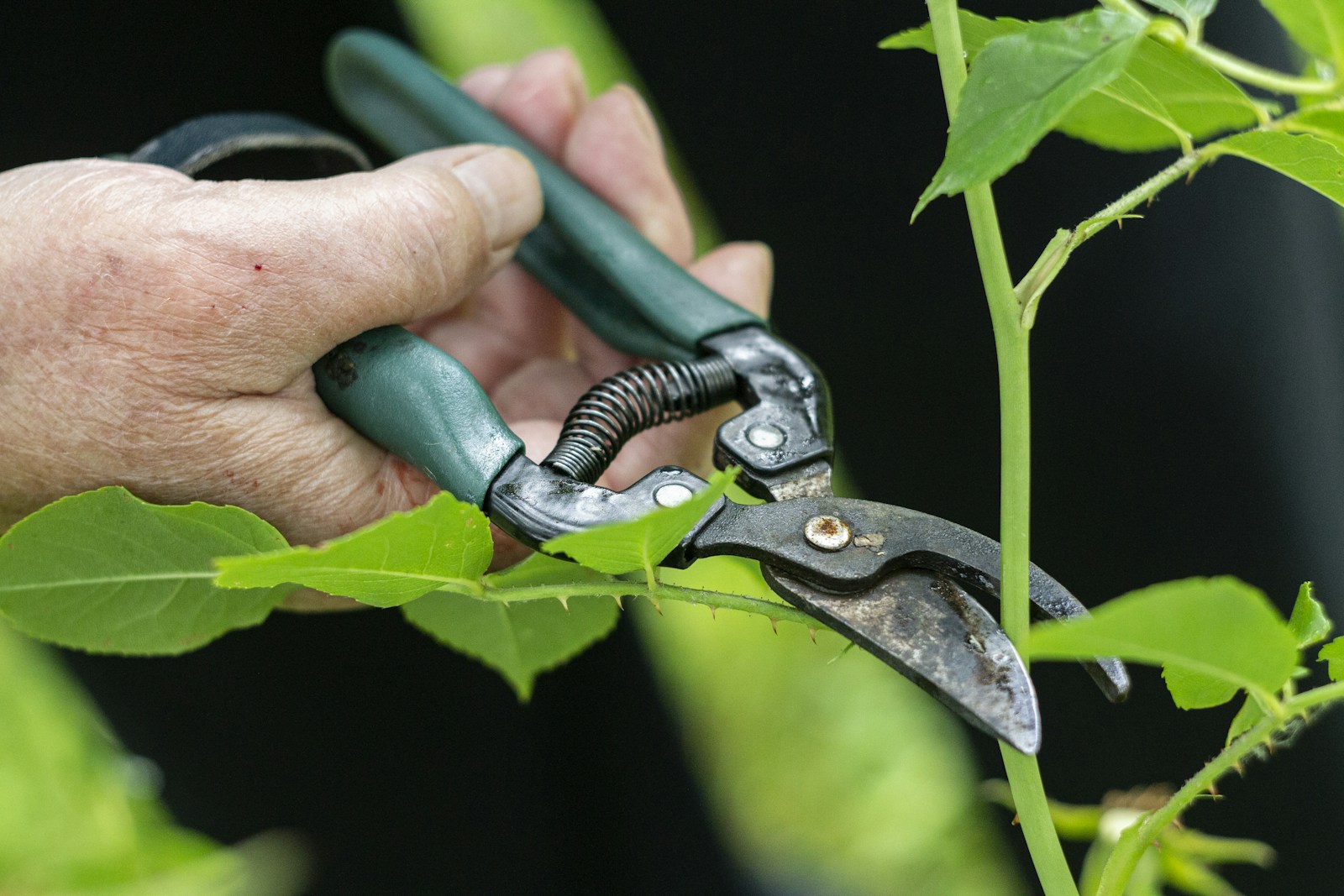
After harvest. Cut every cane that fruited to the ground. Spent floricanes are gray and woody and are already dying. Remove them from the garden. Use sharp, clean pruners, and wear long sleeves, thick gloves and eye protection around thorny kinds.
Late winter. Before growth starts, thin each plant to the 4 to 6 strongest canes. Shorten laterals to 12 to 18 inches (30 to 45 cm). Tie semi-erect and trailing canes to the wires, fanned out so light reaches every one.
Primocane-fruiting types. For the simplest care, mow or cut all canes to the ground in late winter. You then get one late crop on new canes. For two crops, leave the canes and prune as above.
Pull or mow suckers that come up outside the row.
Harvesting
Expect a small crop the summer after planting and full crops from the third year. Most varieties ripen in midsummer over three to five weeks.
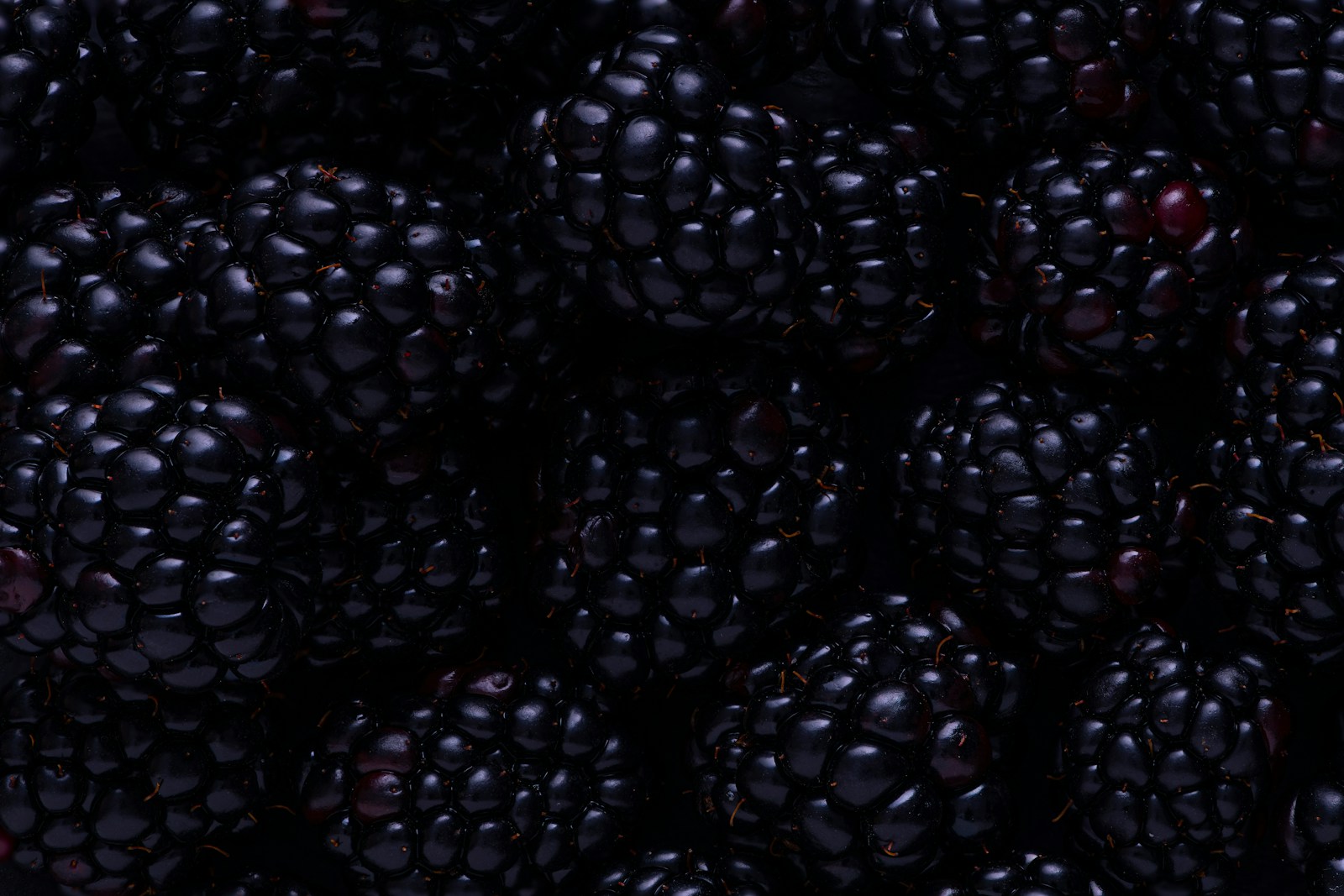
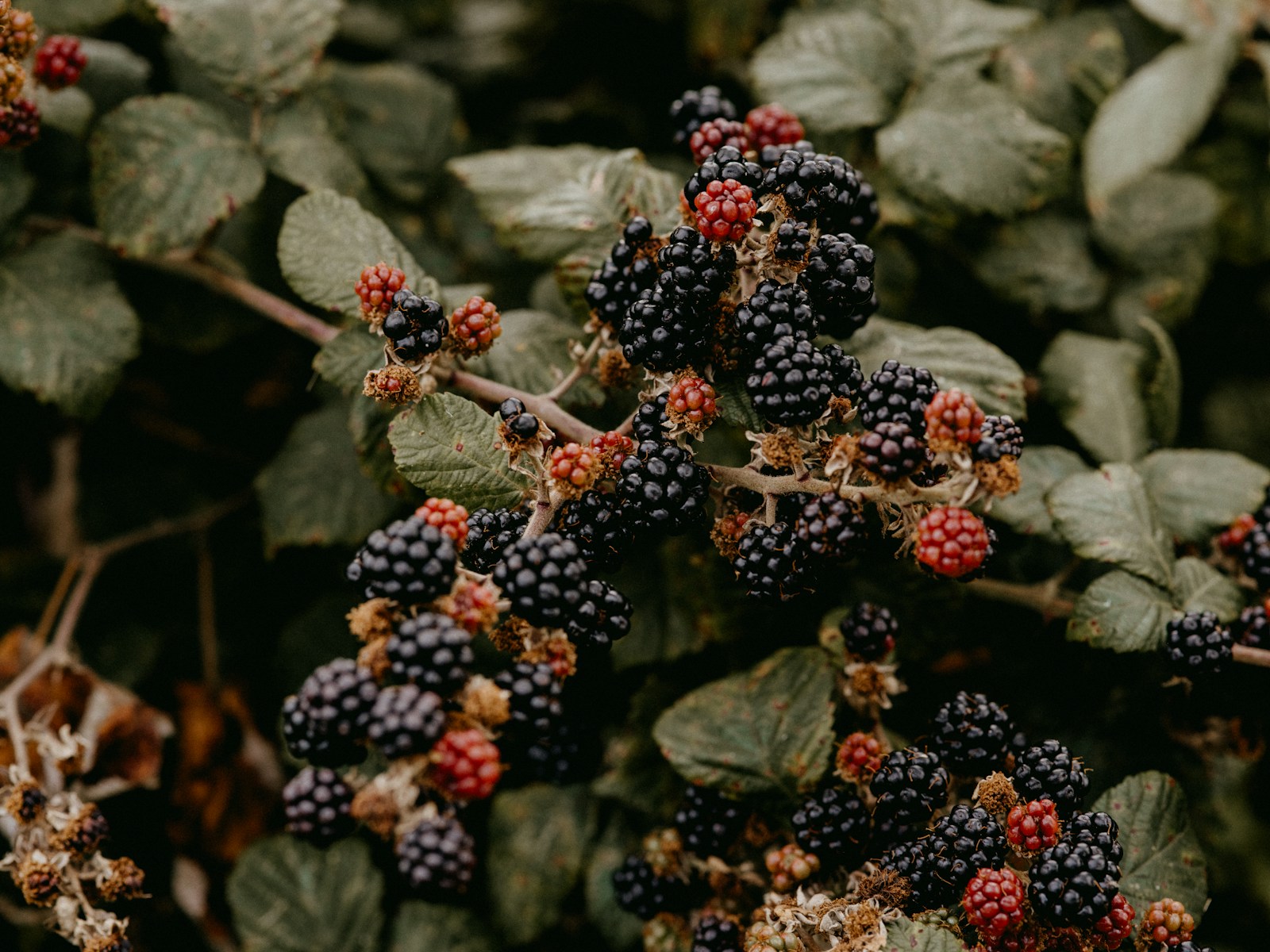
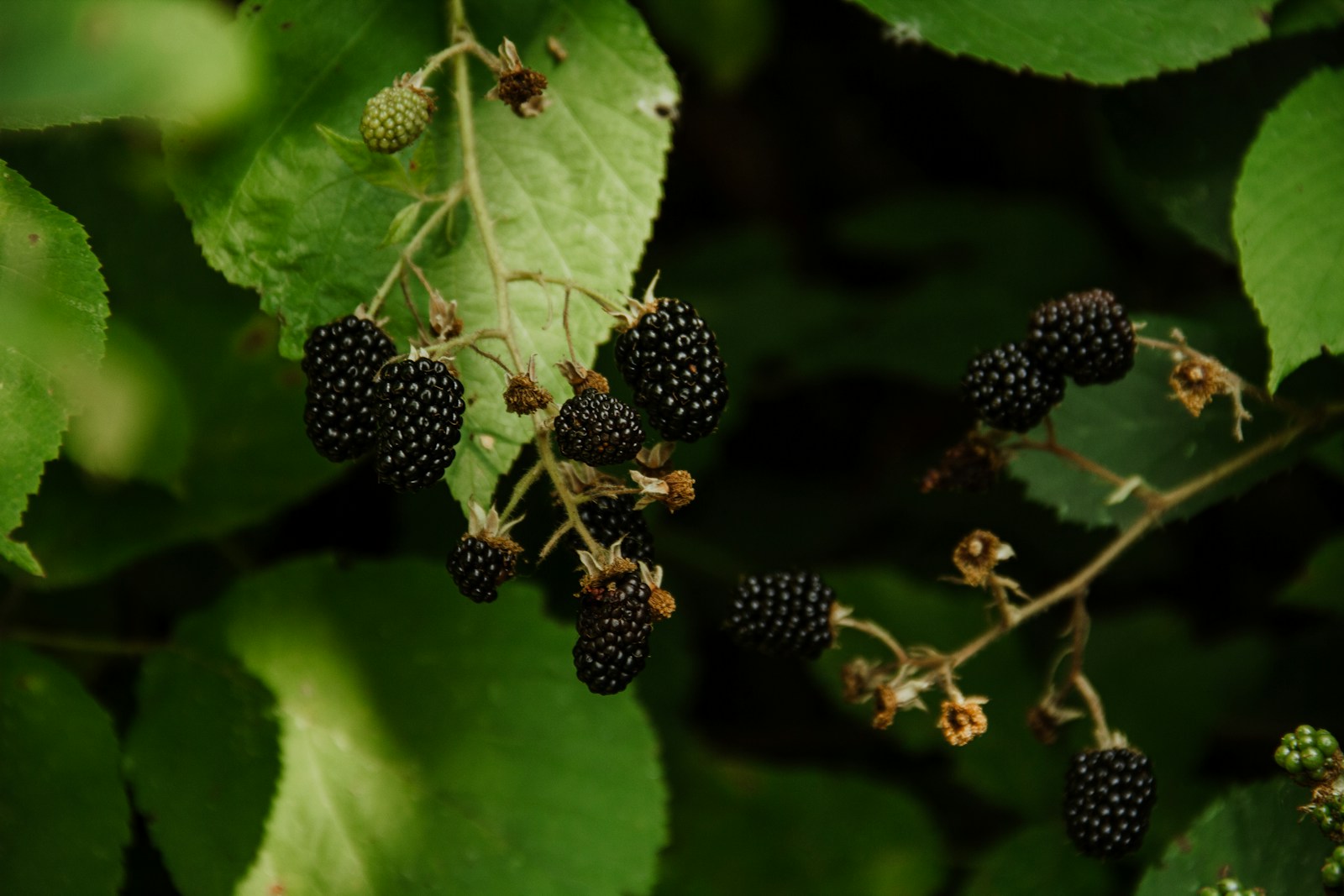
A blackberry turns black several days before it is ripe. Wait until the shine fades to a dull black and the berry feels plump. A ripe berry comes away with a gentle tug. The pale core stays inside the fruit. That is how you tell it from a black raspberry, which pulls off hollow like a thimble.
Pick every two to three days, in the cool of the morning once the dew has dried. Use shallow containers so the fruit on the bottom is not crushed. Chill berries quickly and wash them only just before eating.
Problems and pests
Bright orange powder under the leaves in spring
This is orange rust, a fungus that lives inside the whole plant. New shoots look weak and spindly. There is no cure. Dig out the plant, roots included, before the spores blow around. Bag it and put it in the trash, not the compost.
Tiny white maggots in ripe fruit
Spotted wing drosophila is a small fruit fly that lays eggs in ripening berries. Pick often and pick clean. Remove overripe and fallen fruit. Chill the harvest straight away. Fine insect netting put on before fruit colors keeps the flies out.
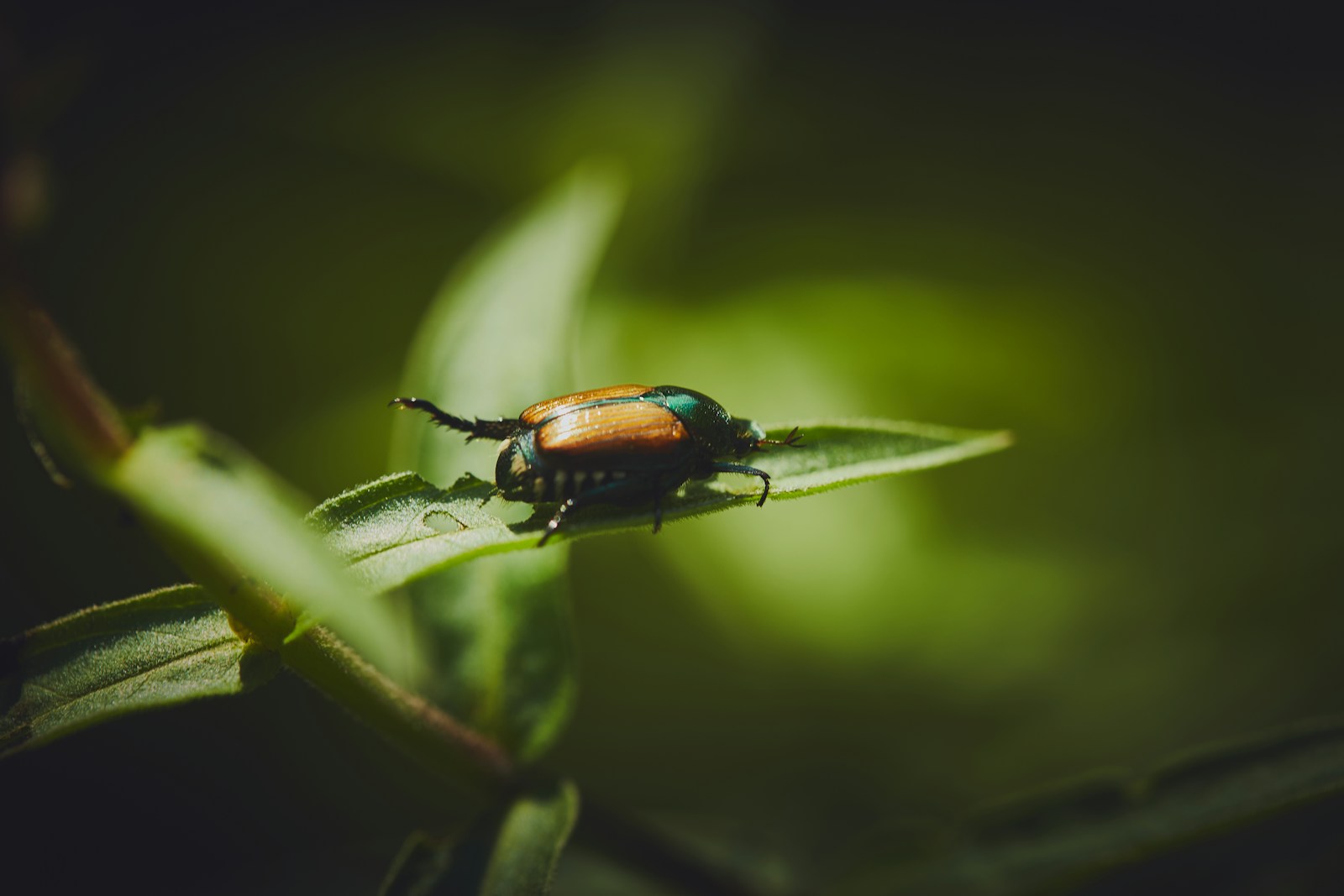
Leaves chewed to lace
Japanese beetles feed in groups in midsummer. Knock them into a bucket of soapy water in the early morning, when they are sluggish. Skip beetle traps near the row, as they tend to draw more beetles in.
Canes die back or have sunken purple spots
Cane blight and anthracnose enter through wounds and spread in crowded, damp rows. Prune in dry weather and remove old canes promptly. Thin for airflow. Canes that simply fail to leaf out after a hard winter are cold damaged. Choose a hardier variety.
Varieties worth growing
All five are thornless and widely sold.
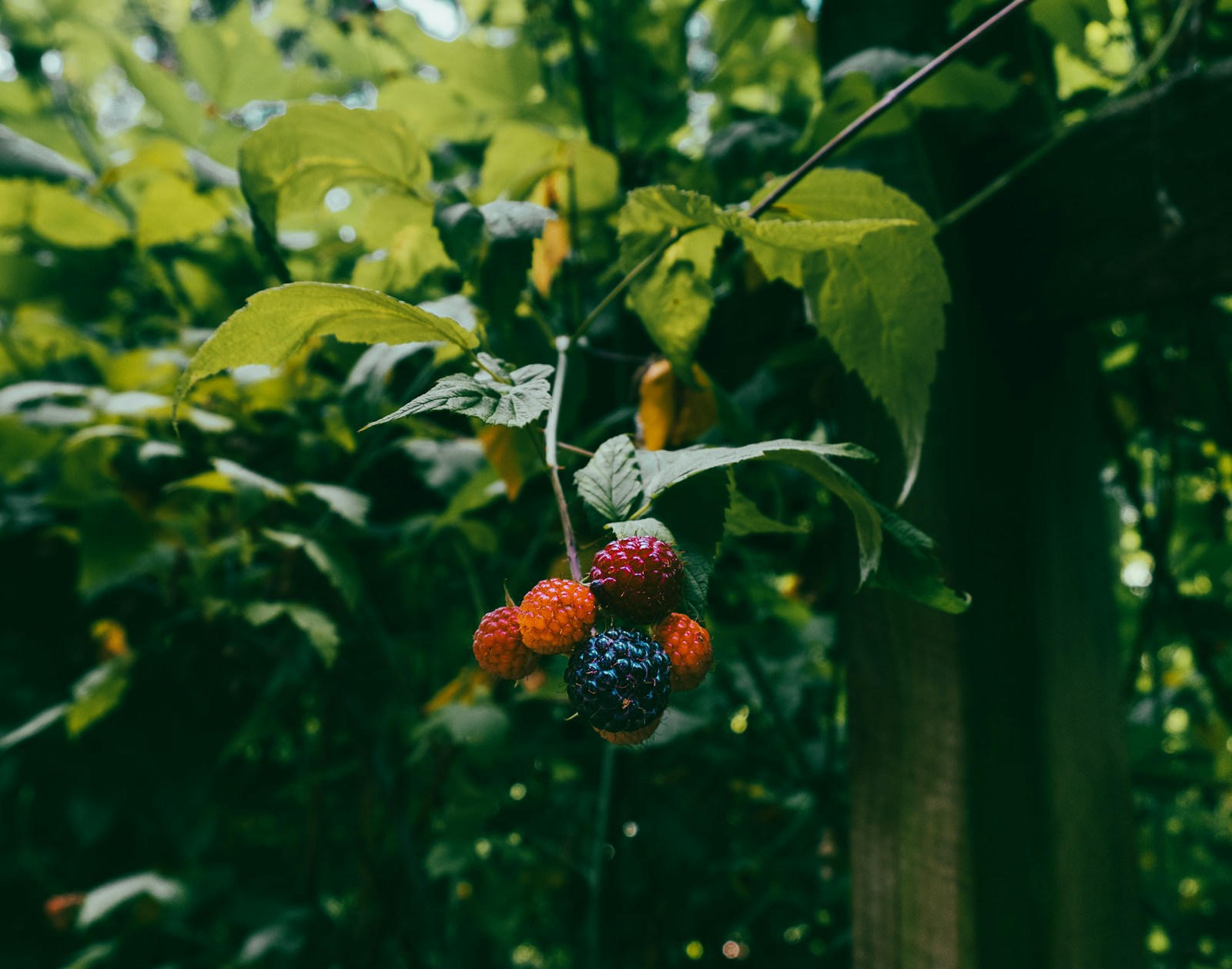
- 'Triple Crown': semi-erect and vigorous, with large, very sweet berries over a long mid to late season. Needs a trellis.
- 'Chester': semi-erect, late ripening, and among the most cold-hardy thornless kinds. A good pick for zone 5 gardens.
- 'Ouachita': erect canes that need little support, with firm, sweet fruit in midseason. Does well in heat.
- 'Navaho': erect, with medium berries of excellent flavor that store well. Ripens a little later than 'Ouachita'.
- 'Prime-Ark Freedom': erect and primocane-fruiting, so it crops on first-year canes. Very early on second-year canes, with large fruit. Best in zones 6 and warmer.