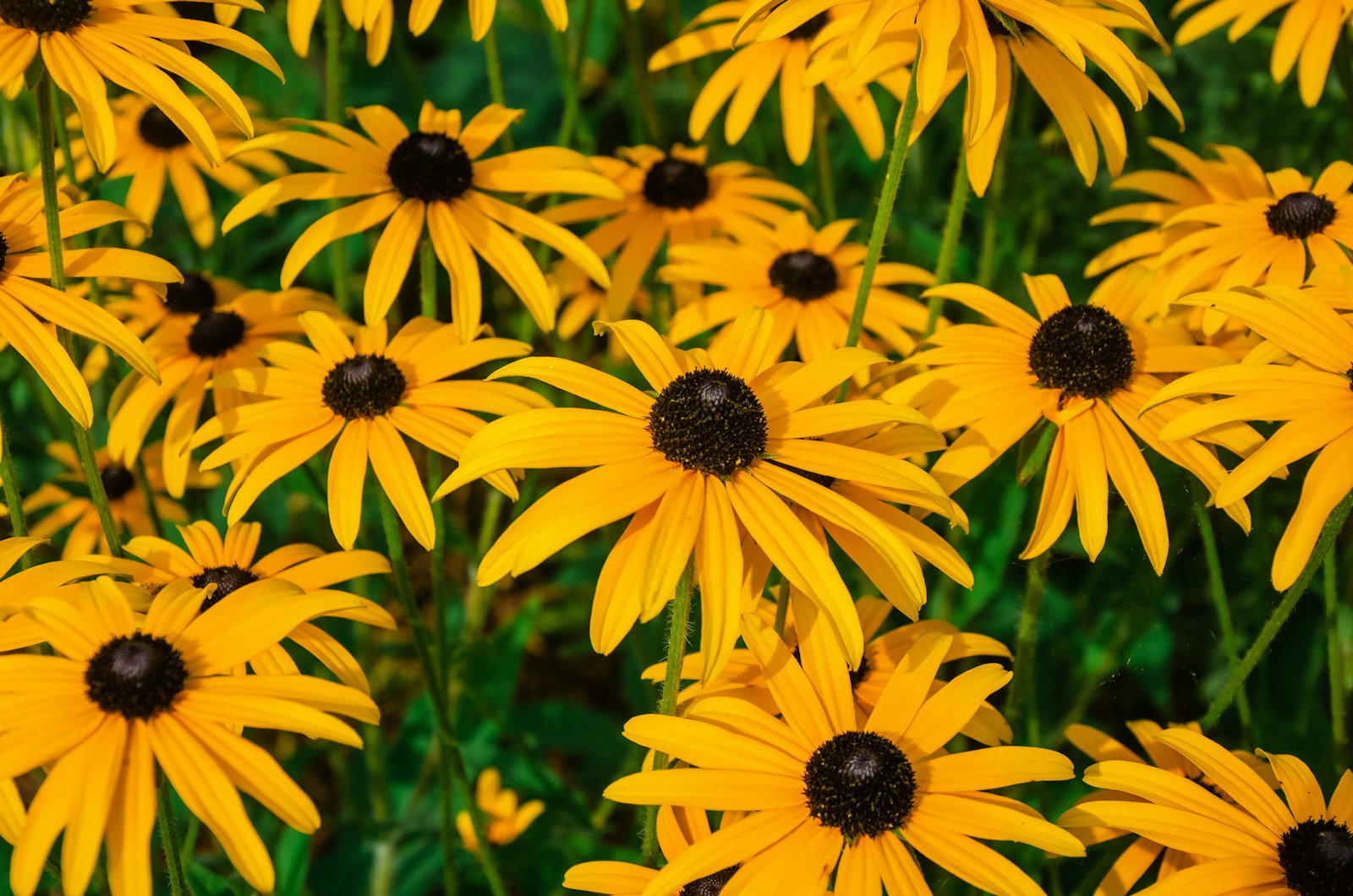
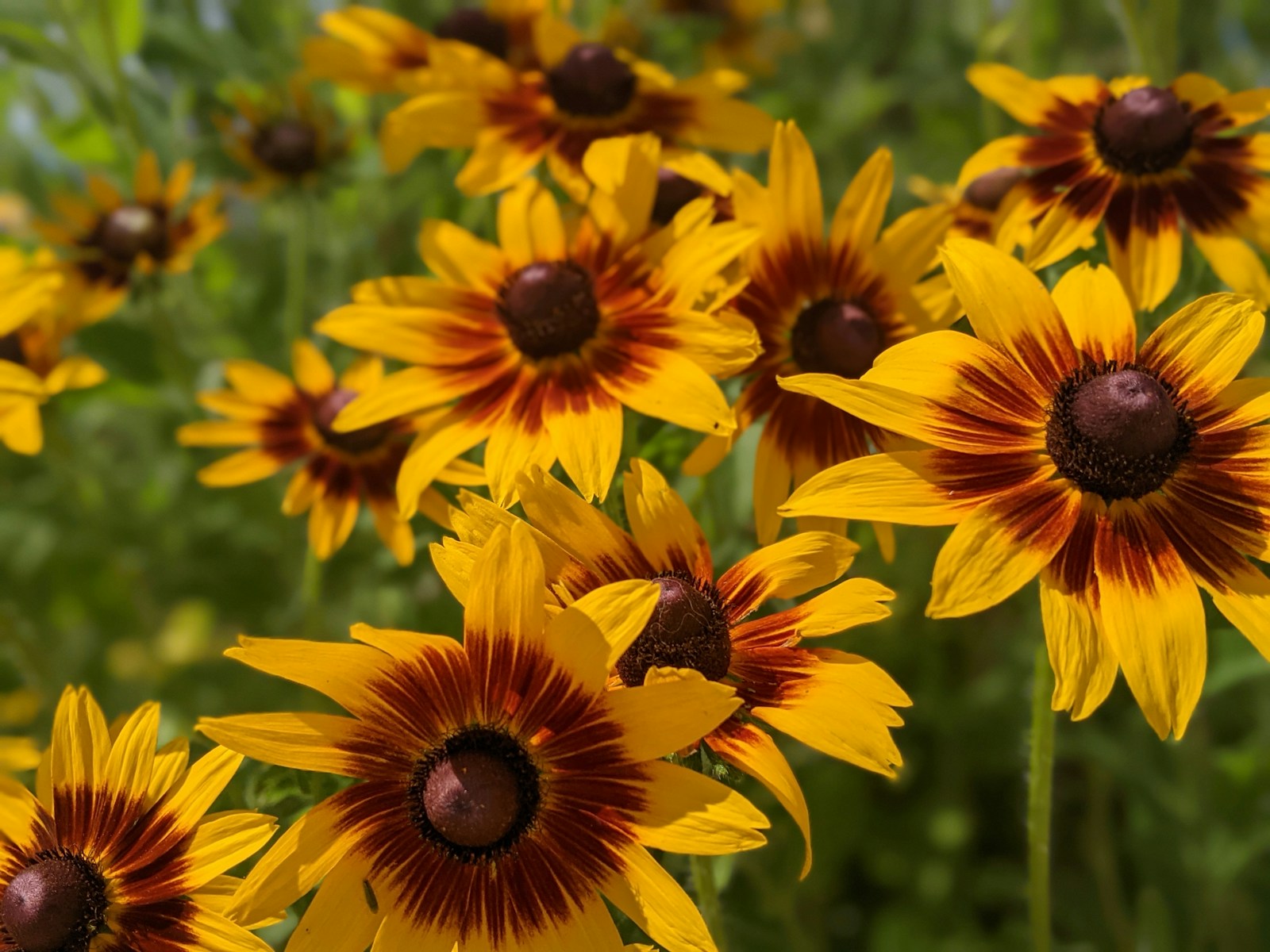
Black-eyed Susan (Rudbeckia hirta) is a native North American wildflower with golden-yellow petals around a dark brown cone. It flowers from midsummer until frost and shrugs off heat, poor soil and dry spells. Bees and butterflies visit the flowers, and finches eat the seed in autumn. Depending on your climate and variety, it behaves as an annual, a biennial (a plant that flowers in its second year and then dies) or a short-lived perennial. Longer-lived perennial species such as Rudbeckia fulgida are covered in the separate Rudbeckia profile. This is one of the easiest flowers to grow from seed.
Sowing and planting
Many modern varieties flower in their first summer if you start them early. Wild types often make a low rosette of leaves in year one and flower in year two.
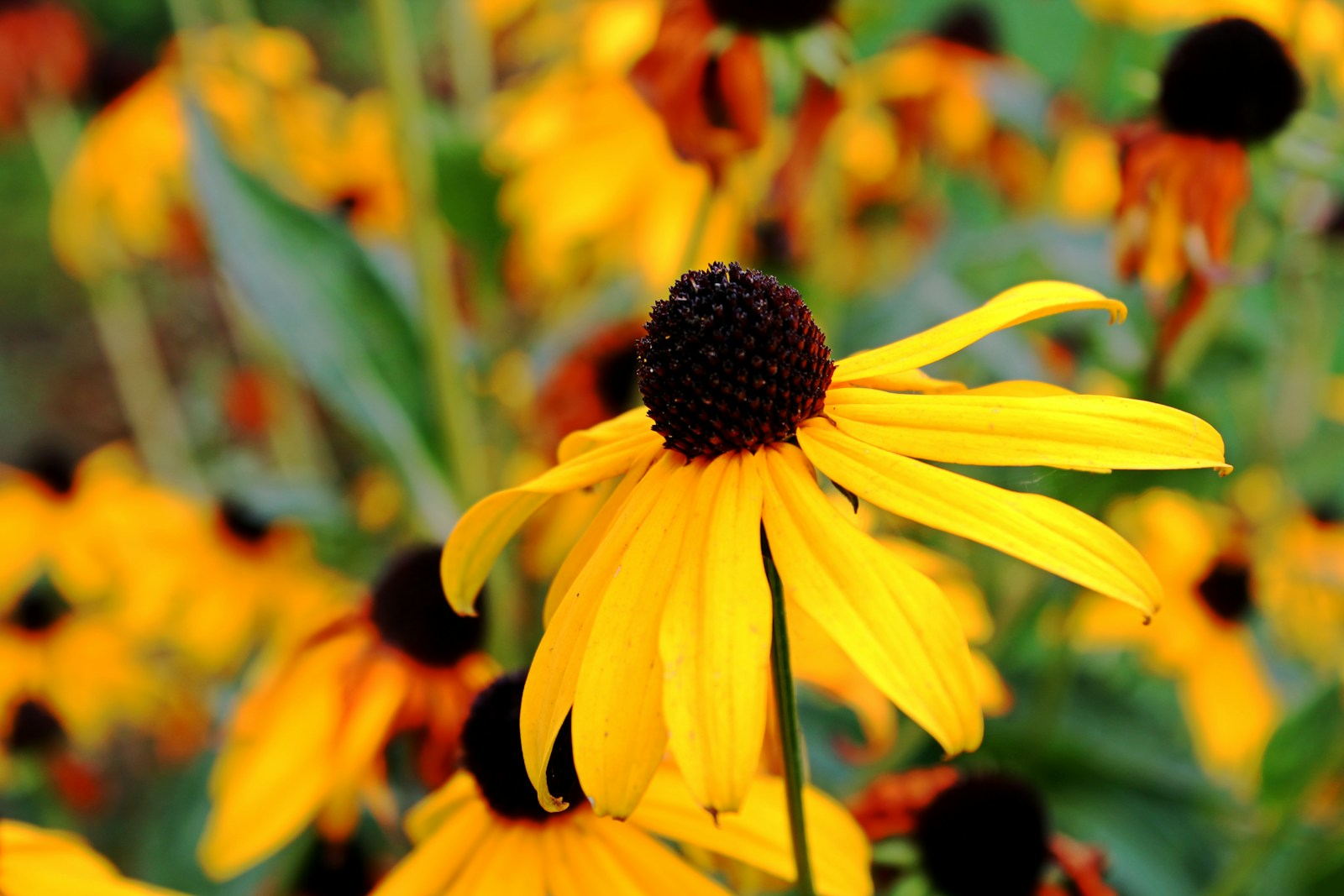
Sowing indoors. Sow 6 to 8 weeks before your last frost. Press the seed onto the surface of damp seed compost and barely dust it with more. Light helps germination. Keep the tray at 68 to 75°F (20 to 24°C). Move seedlings into their own pots when they have two true leaves (the first leaves after the seed leaves).
Sowing outdoors. Sow directly after your last frost, once the soil has warmed to about 65°F (18°C). Rake the soil fine, scatter the seed, press it in and keep it moist. You can also sow in autumn. Winter cold helps break dormancy, and seedlings appear the next spring.
Planting out. Harden off indoor seedlings (getting them used to outdoor sun and wind over 7 to 10 days) before planting out after your last frost. Set nursery plants out in spring or early autumn. Space plants 12 to 18 inches (30 to 45 cm) apart for good air flow.
Siting. Choose full sun and soil that drains freely. The plants tolerate clay if it does not stay soggy. They suit borders, meadows, containers and cut-flower rows.
Succession sowing. For a fresh flush of flowers late in the season, sow a second batch 3 to 4 weeks after the first.
Growing on
Watering. Water seedlings and new plants regularly for the first few weeks. After that, water only in long dry spells, soaking the soil once a week. Water at the base to keep the leaves dry.
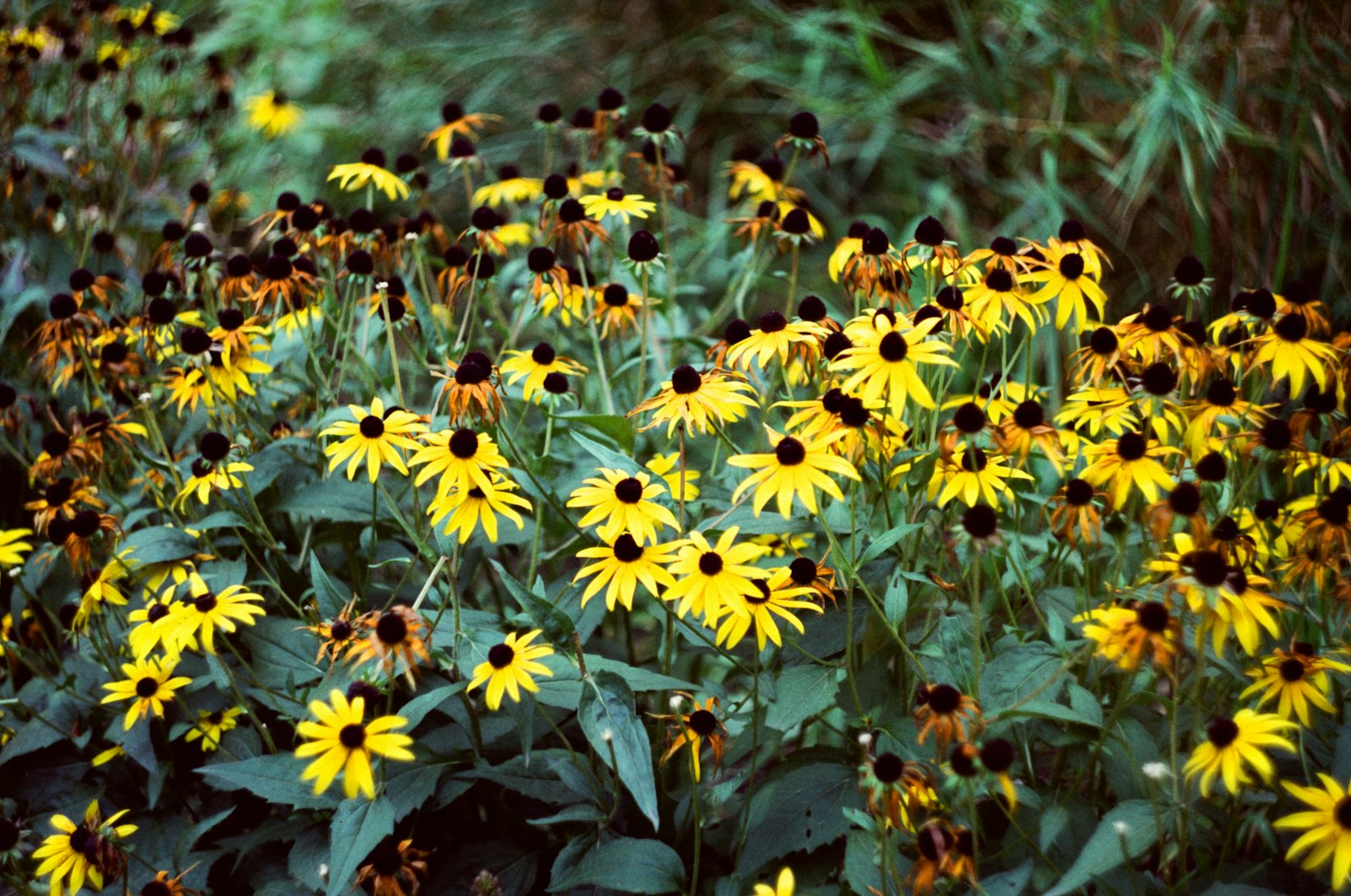
Feeding. Black-eyed Susan prefers lean soil. Extra fertiliser gives leafy, floppy plants. Work a little compost in at planting and do not feed again. In containers, give a diluted balanced feed once a month.
Mulching. A thin layer of mulch holds moisture and smothers weeds. Keep it clear of the crown (the point where stems meet the roots), which rots if it stays wet.
Pinching and staking. Pinch out the growing tip of young plants at about 8 inches (20 cm) tall for bushier, sturdier plants. Tall varieties may need a ring of twiggy sticks in windy gardens.
Deadheading. Snip faded flowers back to a side bud to keep new blooms coming. Towards the end of the season, stop deadheading. The seed heads feed birds and give you self-sown seedlings next year.
Handling. Stems and leaves are covered in stiff hairs that can irritate sensitive skin. Wear gloves when cutting or dividing if this bothers you.
Companions. Pair it with purple coneflower, salvias, ornamental grasses and asters. It also draws pollinators to a vegetable garden.
Pollinators. The open daisy shape gives bees, hoverflies and butterflies an easy landing pad. In autumn, goldfinches and other seed-eating birds strip the cones.
Harvesting
Cutting for vases. Cut stems when the petals are fully open but the central cone is still firm. Cut in the cool of the morning and put the stems straight into water. Strip leaves that would sit below the waterline. Black-eyed Susan usually lasts 7 to 10 days in a vase. Regular cutting also encourages more flowers.
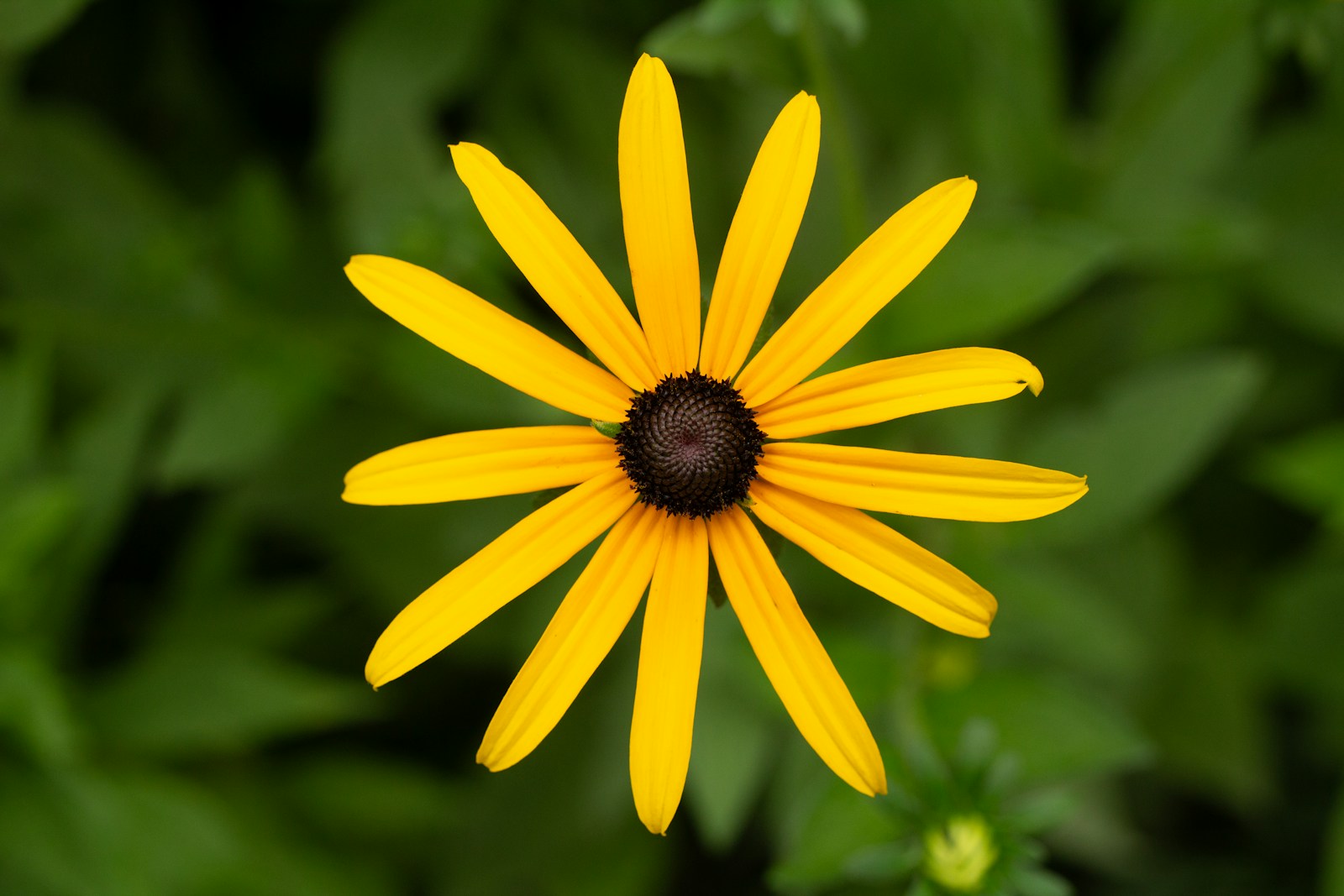
Drying. Seed cones without their petals make good dried material for arrangements. Hang the stems upside down in a dark, airy place.
Saving seed. Leave a few flower heads on the plant until the cones turn dark and dry. Cut them and rub the cones over a paper bag to release the small black seeds. Store the seed cool and dry in a labelled envelope. Hybrids and mixed strains may not come true, so expect some variation in colour and form.
Self-sown seedlings. Plants often seed themselves where they are happy. Thin seedlings in spring or move them while small.
Problems and pests
Wet soil is the most common way black-eyed Susan fails. The crown rots in soggy ground, especially over winter, and plants collapse or fail to return. Grow it in free-draining soil, keep mulch away from the stems, and water only when the top inch (2.5 cm) of soil is dry.
White powder on the leaves
This is powdery mildew, a fungal disease that appears in late summer. It is mostly cosmetic. Space plants widely, water the soil rather than the leaves, and remove badly affected leaves.
Dark brown or black spots on the lower leaves
This is usually septoria leaf spot, a fungal disease that spreads by rain splash. Pick off spotted leaves as soon as you see them. Clear away old foliage at the end of the season and mulch to stop spores splashing up.
Clusters of small insects on stems and buds
Aphids, small sap-sucking insects, gather on tender growth. Knock them off with a strong jet of water. Ladybirds and lacewings usually control them if you avoid broad-spectrum sprays.
Seedlings eaten overnight
Slugs and snails love young seedlings. Go out after dark with a torch and hand-pick them. Protect young plants until they are about 6 inches (15 cm) tall.
Plants wilt and die at the base
This is crown or root rot from waterlogged soil. Remove dead plants and improve drainage with compost, or grow in raised beds or containers.
Varieties worth growing
- 'Indian Summer': very large golden flowers on tall stems; excellent for cutting.
- 'Prairie Sun': golden petals with pale tips and a green centre.
- 'Irish Eyes': clear yellow petals around a green centre that darkens with age.
- 'Cherry Brandy': unusual cherry-red petals around a dark cone.
- 'Toto': a dwarf type for edges and containers.
- 'Autumn Colors': a mix of gold, bronze and rust flowers with banded petals.
- Gloriosa daisy mixes: large flowers in mixed yellow, orange and mahogany shades.