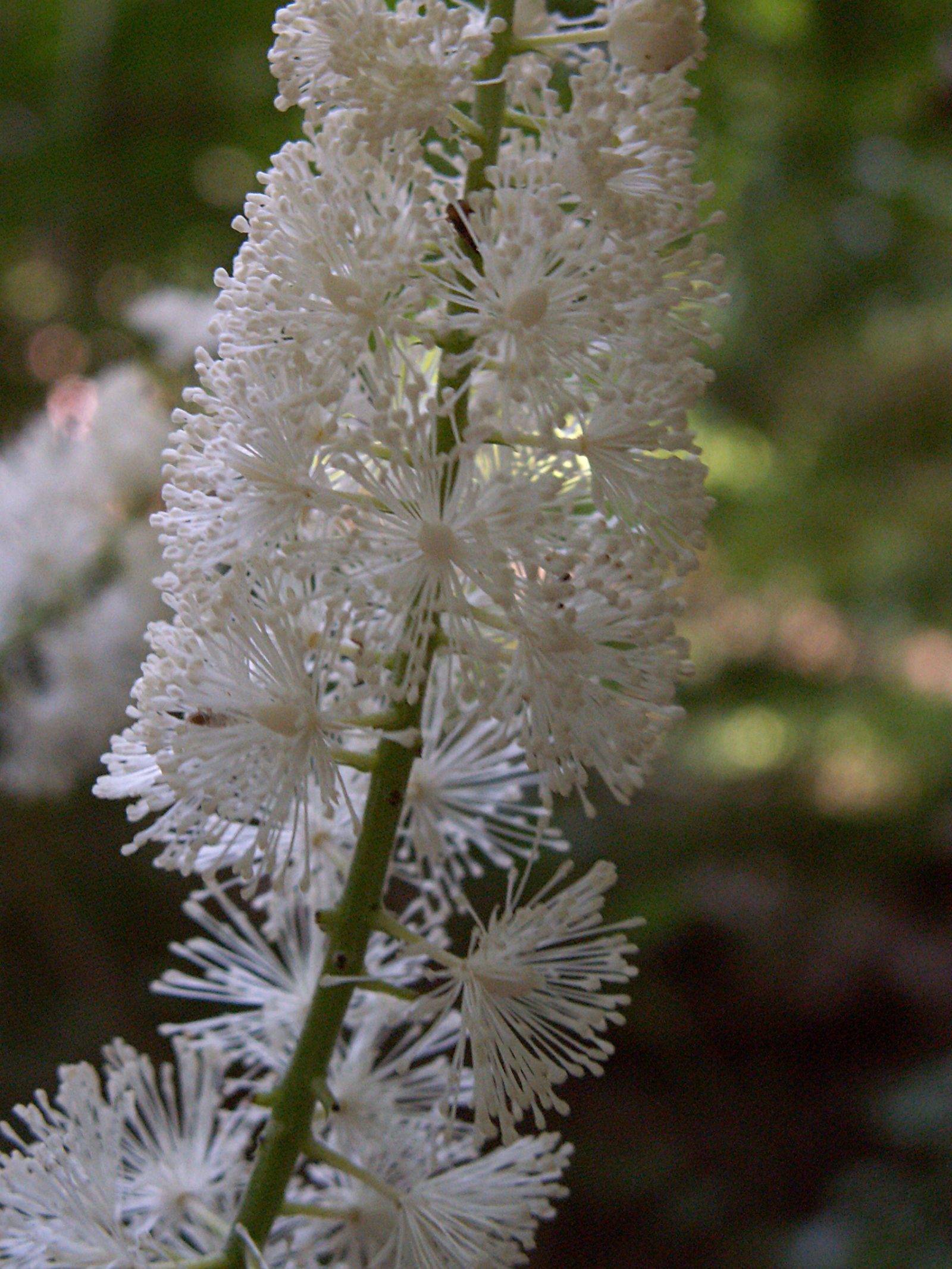
Black cohosh (Actaea racemosa, formerly Cimicifuga racemosa) is a native perennial of rich eastern hardwood forests. In summer it lifts slender white flower spires high above a mound of ferny, dark green leaves. Few shade plants give you this much height and drama. It is easy to grow in the right spot, but slow to establish. Patience is the main skill it asks of you.
Quick facts
| Feature | Detail |
|---|---|
| Family | Buttercup family (Ranunculaceae) |
| Sun | Part shade to full shade |
| Water | Steady moisture; dislikes drying out |
| Soil | Humus-rich, slightly acidic, well-drained |
| Height | 4 to 6 feet (1.2 to 1.8 m) in flower, sometimes taller |
| Spacing | 2 to 3 feet (60 to 90 cm) |
| Days to harvest | Not applicable as an ornamental; flowers in 2 to 4 years from a young plant |
| Hardiness | USDA zones 3 to 8 |
Sowing and planting
Choose a spot that copies a forest floor. Dappled light under tall deciduous trees is ideal. Morning sun with afternoon shade also works. The soil should be rich in humus (dark, crumbly, decayed leaf matter) and should hold moisture without staying soggy.
Black cohosh is heavily dug from the wild for the herb trade, and wild populations are at risk. Never dig wild plants. Buy nursery-propagated plants or seed, and ask the seller how the stock was grown.
Common names overlap, which causes confusion. Black cohosh is also sold as black snakeroot, bugbane or fairy candles, and other plants share some of those names. Shop by the botanical name to be sure of what you get.
Planting nursery stock
Plant potted or bare-root black cohosh in early spring or in fall, at least a month before the ground freezes. The plant grows from a rhizome (a thick underground stem that creeps sideways).
- Loosen the soil to about 12 inches (30 cm) deep.
- Work in a generous layer of leaf mold or finished compost.
- Set the rhizome so its buds sit 1 to 2 inches (2.5 to 5 cm) below the surface.
- Space plants 2 to 3 feet (60 to 90 cm) apart.
- Water well, then mulch with shredded leaves.
Growing from seed
Seed is slow but inexpensive. Black cohosh seed has a double dormancy. It needs a warm, moist period followed by a cold, moist period before it sprouts. The simplest method lets the seasons do the work.
Sow fresh seed outdoors in late summer or early fall, as soon as it ripens. Press it into a prepared shady bed or a pot of seed compost, and cover it about a quarter inch (6 mm) deep. Keep the soil moist. Seedlings usually appear the following spring. Some seed waits a second year, so label the spot and do not give up. Old, dried seed germinates poorly.
Seedlings stay small for their first year or two. Expect flowers in the third or fourth year.
Growing on
Water is the key to a good clump. Give new plants about 1 inch (2.5 cm) of water a week through their first two seasons if rain falls short. Established plants tolerate brief dry spells, but leaf edges brown and crisp when the soil dries out. Deep shade helps in warm climates, especially toward USDA zone 8.
Mulch each fall with 2 to 3 inches (5 to 8 cm) of shredded leaves. This feeds the soil, holds moisture and mimics the woodland litter the plant grows in naturally. In humus-rich soil you need no other fertilizer. In poor soil, top-dress with compost in spring.
The flower stalks are wiry and usually stand unaided. In deep shade they may lean toward the light. Set a discreet stake or a ring support early, before the stalks stretch. Shelter from strong wind helps too.
Black cohosh needs no pruning. Leave the seed heads standing for winter interest, since the dry pods rattle in the breeze. Cut old stems to the ground in late winter, before new growth shows.
Clumps can stay in place for many years. If you want more plants, divide in early spring or in fall. Lift the clump, then cut the rhizome with a clean, sharp knife. Make sure each piece has at least one or two buds and a share of roots. Replant at once and keep the divisions watered. They often sulk for a season before growing strongly again.
Harvesting
In the home garden, the harvest is the flower display. Bloom comes in early to midsummer and lasts several weeks. The tiny white flowers open from the bottom of each spire upward. They have a strong, musky scent that some people dislike, so you may prefer to plant away from a seating area. Bees, flies and beetles visit them freely.
You can cut a few stems for tall arrangements when the lowest third of the spire is open. Collect seed in fall when the pods turn brown and dry. Sow it right away for the best results.
The root is the part with a long folk history. Anthony Cavender's Folk Medicine in Southern Appalachia lists black cohosh root among plants that mountain families used as a blood toner and for menstrual complaints. The root was also gathered and sold to the herb trade, a practice that continues and now strains wild stands. Some growers cultivate it as a woodland crop, lifting rhizomes in fall after several years of growth.
These uses are reported as history only. This article is not medical advice. Black cohosh belongs to the buttercup family, which includes many irritant and toxic plants. Do not eat any part of it or make home remedies from it. Commercial black cohosh products have been linked in case reports to liver problems. Talk to a doctor or pharmacist before using any herbal product. Wear gloves when you divide plants if you have sensitive skin.
Problems and pests
Leaf edges turn brown and crisp
This is scorch from too much sun or dry soil. Water deeply, renew the leaf mulch, and move the plant to deeper shade in fall if it happens every year.
Ragged holes in young leaves
Slugs and snails feed on tender spring growth, mainly on seedlings and new divisions. Hand-pick them after dark, and clear boards or debris where they hide nearby. Mature clumps usually outgrow the damage.
Brown or black spots on leaves
Fungal leaf spots show up in wet summers or crowded plantings. Remove and bin badly affected leaves, and clear old foliage in late winter. Space plants for good airflow and water at the base, not overhead.
Flower stalks flop over
Deep shade or a windy site makes stalks lean. Stake early in the season, or move the clump to brighter dappled shade.
No flowers after two or three years
This is usually just youth or a recent move. Black cohosh builds its rhizome before it blooms. Keep the soil moist and rich, and avoid disturbing it. Deer and rabbits rarely bother this plant, so browsing is seldom the cause.
Varieties worth growing
The plain native species is what most nurseries sell, and it is the right choice for a native or woodland garden. Named selections of Actaea racemosa itself are uncommon. The well-known purple-leaved bugbanes belong to a related Asian species. The plants below are relatives, clearly not the same plant, and none of them carries the Appalachian history.
- Actaea racemosa (the species): green leaves, tall white spires in summer, and the best pick for eastern native plantings.
- Actaea simplex 'Brunette' (related species): dark purple-brown foliage and fragrant, pink-tinged white flowers in fall.
- Actaea simplex 'Hillside Black Beauty' (related species): among the darkest-leaved bugbanes, flowering late in the season.
- Actaea podocarpa, mountain bugbane (related native species): similar to black cohosh but flowers later, in late summer.
- Actaea pachypoda, white baneberry or doll's eyes (related native species): a shorter woodland plant with white berries on red stalks. The berries are poisonous.