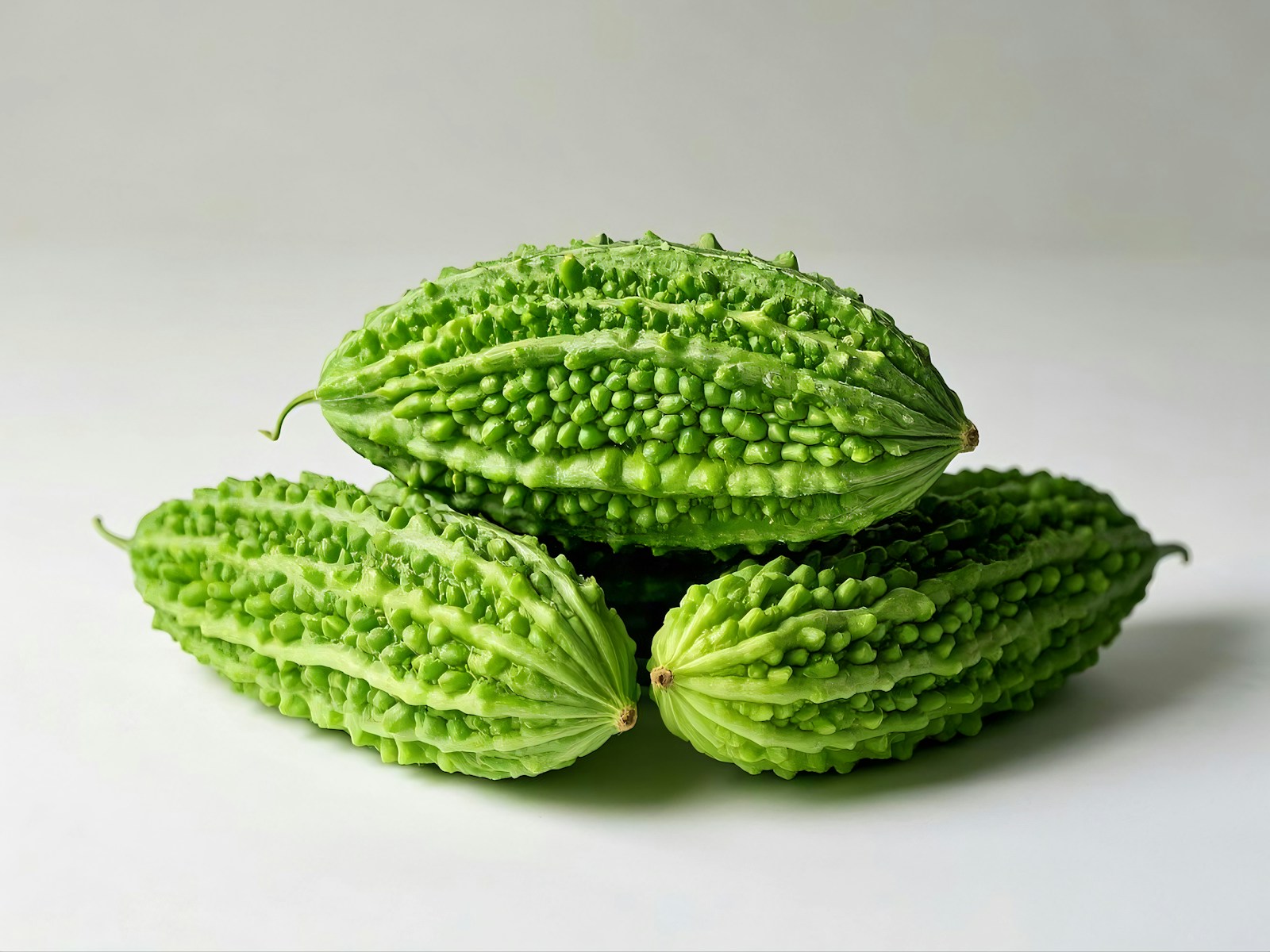
Bitter melon (Momordica charantia), also called bitter gourd or karela, is a vigorous climbing vine grown for its warty green fruit. The fruit is prized in many Asian, African and Caribbean kitchens for its sharp, bitter flavour. It is moderately easy to grow if you give it real heat, a tall trellis and a long season.
Sowing and planting
Bitter melon needs warmth from start to finish. In short-season areas, sow indoors three to four weeks before your last frost. Where summers are long and hot, you can sow outdoors two to three weeks after your last frost, once the soil is at least 70°F (21°C).
The seeds have a hard coat. Soak them in warm water overnight before sowing. You can also nick the pointed end gently with nail clippers, taking care not to cut into the seed inside. Both steps speed up sprouting.
Sow indoors in individual pots, one or two seeds per pot, 0.5 to 1 inch (1 to 2.5 cm) deep. Use biodegradable pots if you can, as the roots dislike disturbance. Keep the pots at 80°F to 85°F (27°C to 29°C). A heat mat helps a lot. Seedlings usually appear in one to two weeks.
Harden off the seedlings before planting them out. This means setting them outdoors for a few hours each day for about a week so they adjust to sun and wind. Plant out one to two weeks after your last frost, when nights stay above 55°F to 60°F (13°C to 16°C).
Set up a sturdy trellis, fence or arch before planting. It should be 6 to 8 feet (1.8 to 2.4 m) tall. Plant 12 to 24 inches (30 to 60 cm) apart along its base. In large containers of at least 5 gallons (19 litres), grow one plant per pot with a trellis behind it.
One sowing is usually enough. A healthy vine keeps fruiting until cool weather arrives.
Growing on
Water deeply and evenly, keeping the soil moist but never soggy. Fruit set drops and fruit grows misshapen when the soil dries out. Water at the base in the morning to keep leaves dry.
Feed well. Work plenty of compost into the planting area. Side-dress with compost or a balanced organic fertilizer once the vines start to run and again when flowering begins. Too much nitrogen gives leafy vines with few fruit.
Mulch with straw or shredded leaves once the soil is warm. Mulch holds moisture, keeps down weeds and stops fruit resting on damp ground.
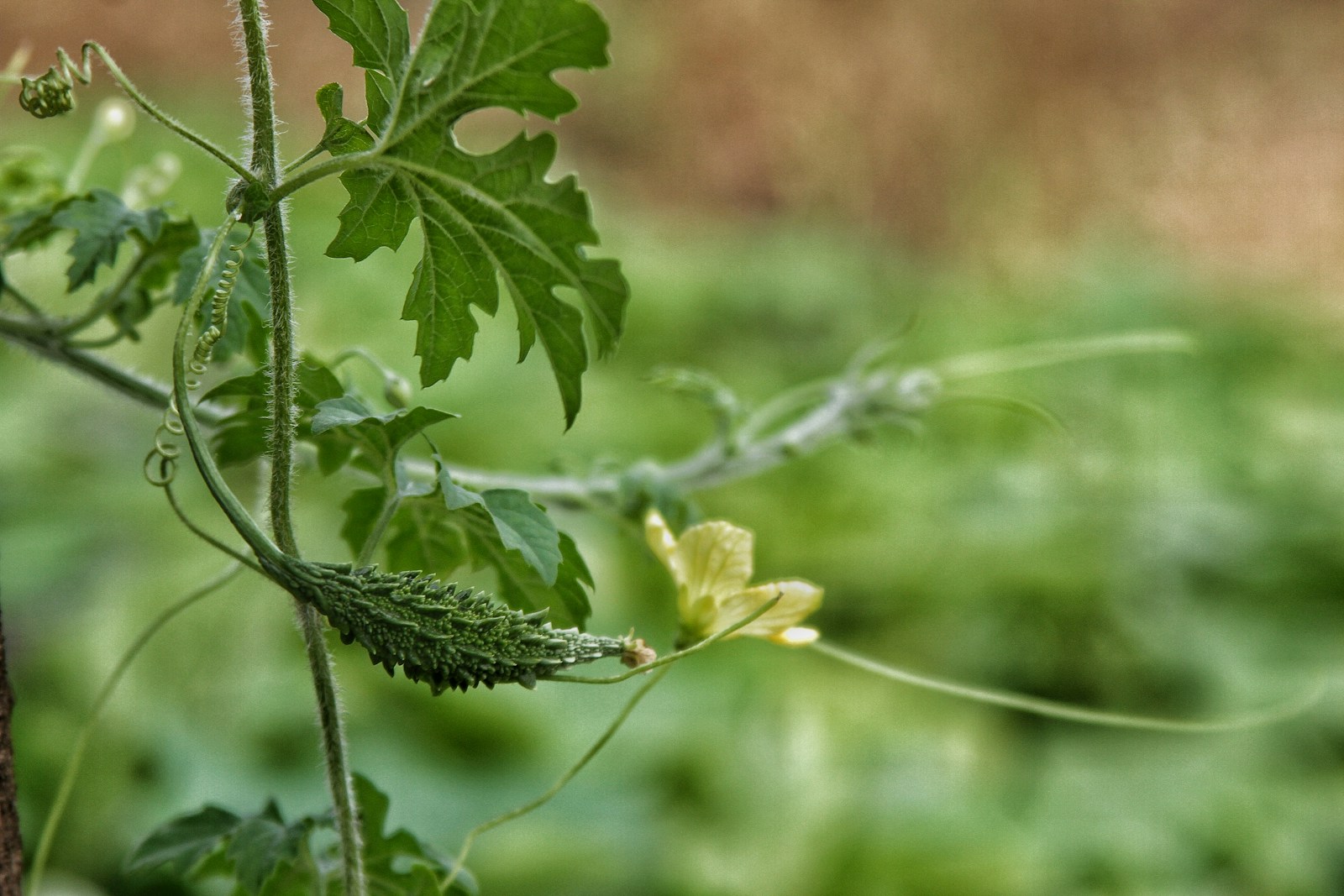
Guide young vines onto the trellis. Their tendrils grip on their own once they reach it. Some growers remove side shoots on the lowest 2 to 3 feet (60 to 90 cm) of the main stem. This directs energy upward and improves airflow. Pinch out the growing tip when it reaches the top of the support to encourage fruiting side shoots.
Bitter melon has separate male and female flowers on the same plant. Both are small and yellow. The female flower has a tiny bumpy fruit behind it. Male flowers usually appear first, so early flowers often drop without fruit. That is normal.
If bees are scarce, hand pollinate. Pick a freshly opened male flower in the morning, peel back its petals and brush its pollen onto the centre of a female flower.
Companion planting matters little here. Keep the vine away from other cucurbits, such as squash and cucumber, if you want to limit shared pests.
Harvesting
Pick bitter melon while it is young, green and firm. Most fruit is ready one to three weeks after the flower opens. Look for fruit that is 4 to 10 inches (10 to 25 cm) long, depending on the type. The skin should be bright green with firm, crisp warts.
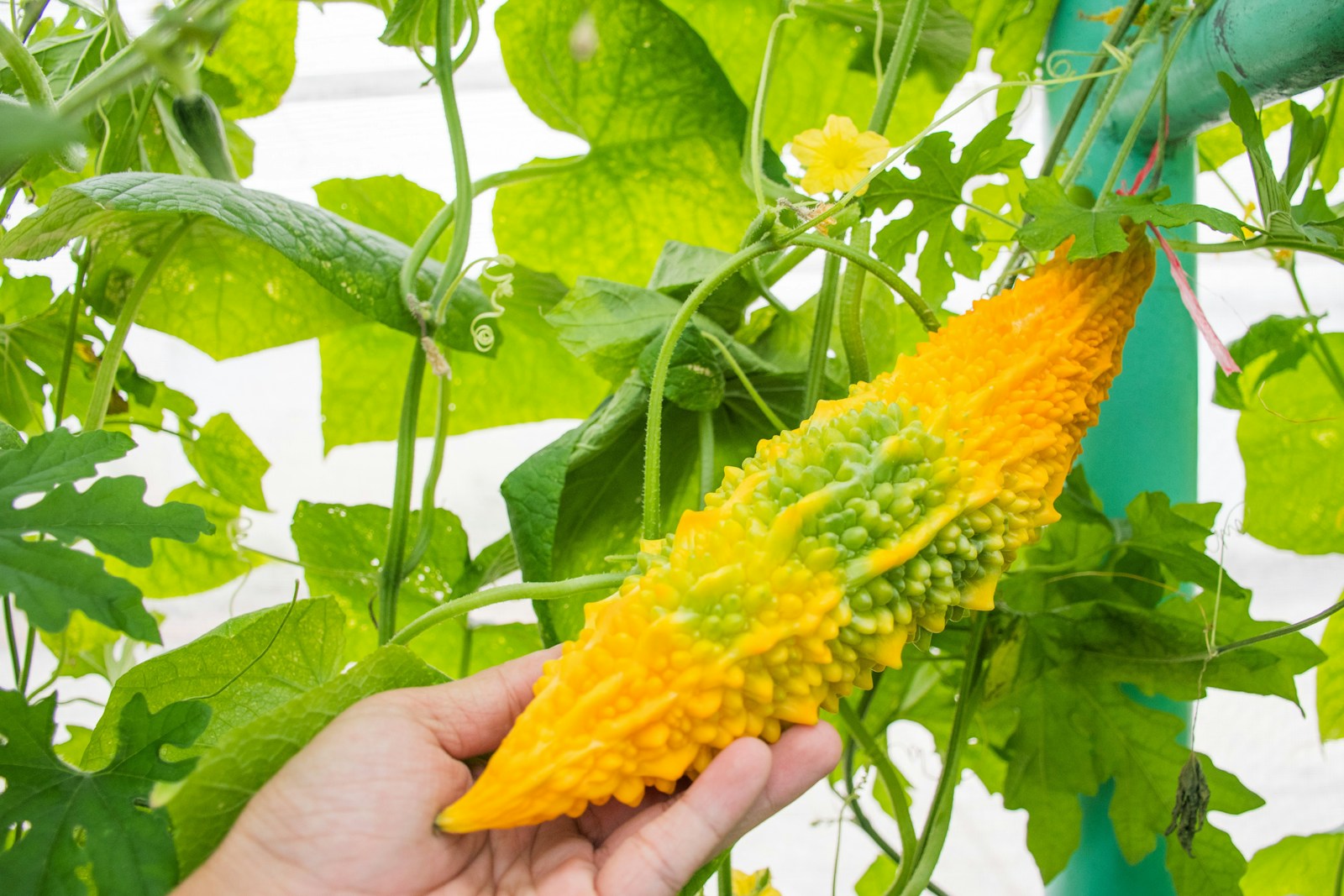
Younger fruit is less bitter. As fruit ripens, it turns yellow or orange, softens and loses quality. Fully ripe fruit splits open and shows seeds wrapped in bright red flesh.
Cut the fruit off with scissors or pruners, leaving a short stem. Pulling can damage the vine. Harvest every two to three days during peak season. Regular picking keeps the vine flowering.
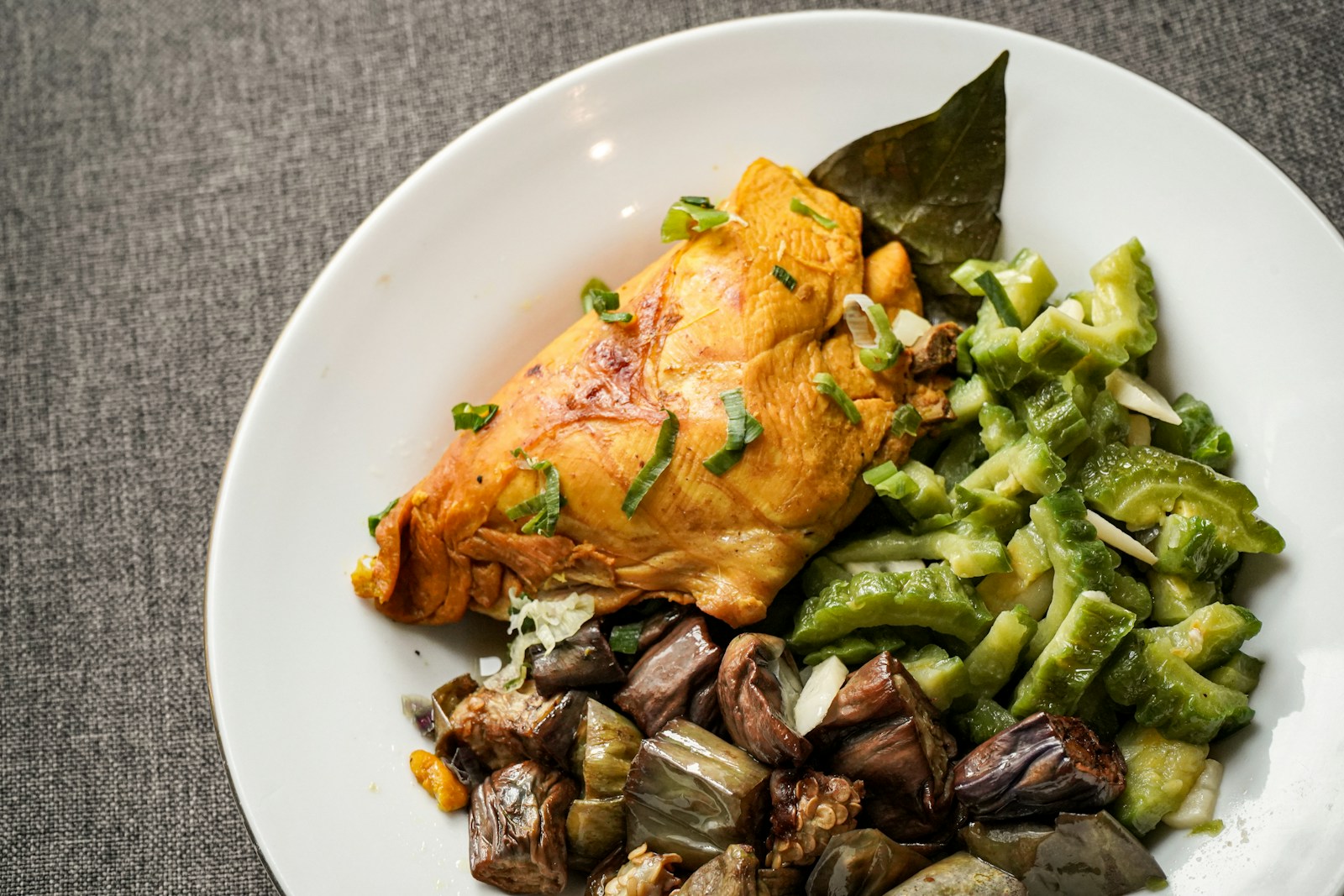
Store fruit unwashed in a bag in the fridge for up to about a week. Keep it away from ripening fruit such as bananas and tomatoes, as their gas speeds yellowing. Many cooks slice the fruit, salt it and rinse it before cooking to reduce bitterness.
Eat only the green, unripe fruit. Ripe orange fruit and the seeds inside are generally considered unsafe to eat and can make people unwell. Keep ripe fruit and seeds away from children and pets, and remove overripe fruit from the vine promptly.
To save seed, leave one or two fruit on the vine until they turn orange and begin to split. Wear gloves, scoop out the seeds and wash off the red flesh. Dry the seeds for one to two weeks, then store in a cool, dry place out of reach of children.
Problems and pests
Leaves with holes and striped or spotted beetles
Cucumber beetles chew leaves and flowers and can spread bacterial wilt. Cover young plants with floating row cover until flowering, then remove it for pollinators. Hand-pick beetles in the cool of the morning.
Fruit that rots or has tiny tunnels inside
Fruit flies lay eggs in developing fruit in warm regions. Pick fruit promptly. Wrap young fruit in paper bags or mesh fruit bags. Destroy damaged fruit rather than composting it.
White powdery patches on leaves
Powdery mildew is a fungal disease common in late summer. Space plants for good airflow and water the soil, not the foliage. Remove badly affected leaves. A spray of diluted potassium bicarbonate can slow it down. Wear gloves, follow the label and spray in the cool of the evening.
Flowers fall and no fruit sets
Early flowers are usually male and drop naturally. If female flowers also fall, the cause is often poor pollination, cool nights or dry soil. Hand pollinate and keep the soil evenly moist.
Stunted plants with knobbly roots
Root-knot nematodes, which are microscopic soil worms, cause swollen roots in warm, sandy soil. Rotate crops, add plenty of compost and grow in containers of fresh mix if the problem persists.
Varieties worth growing
Named varieties differ by seller and region, so choose by fruit type:
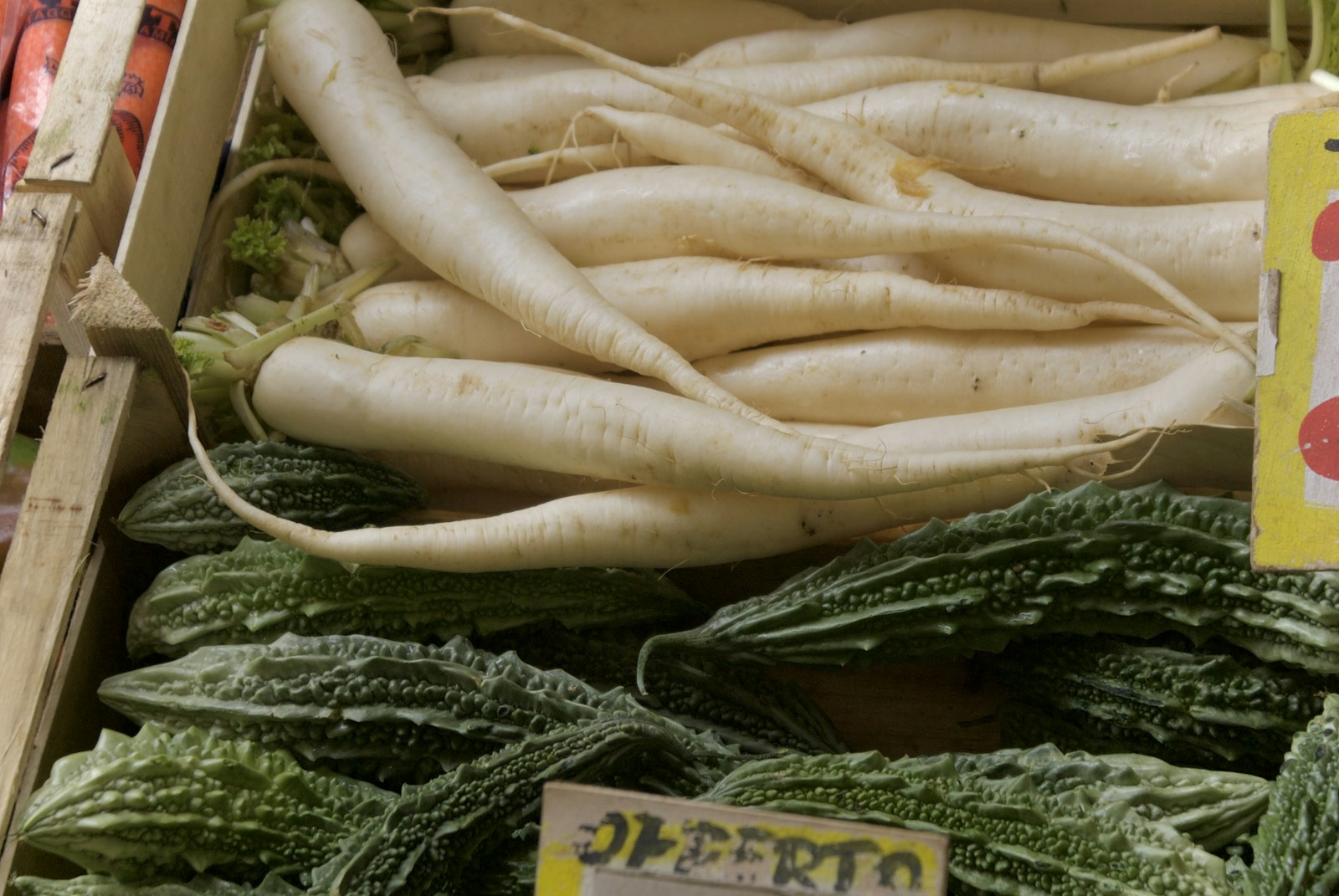
- Chinese type: long, pale to mid-green fruit with smooth, rounded bumps and milder bitterness.
- Indian type: shorter, dark green fruit with sharp, spiky ridges and a stronger bitter taste.
- Small-fruited type: finger-sized fruit, often very bitter, that crops heavily on vigorous vines.
- White type: creamy white to pale green fruit, usually on the milder side.