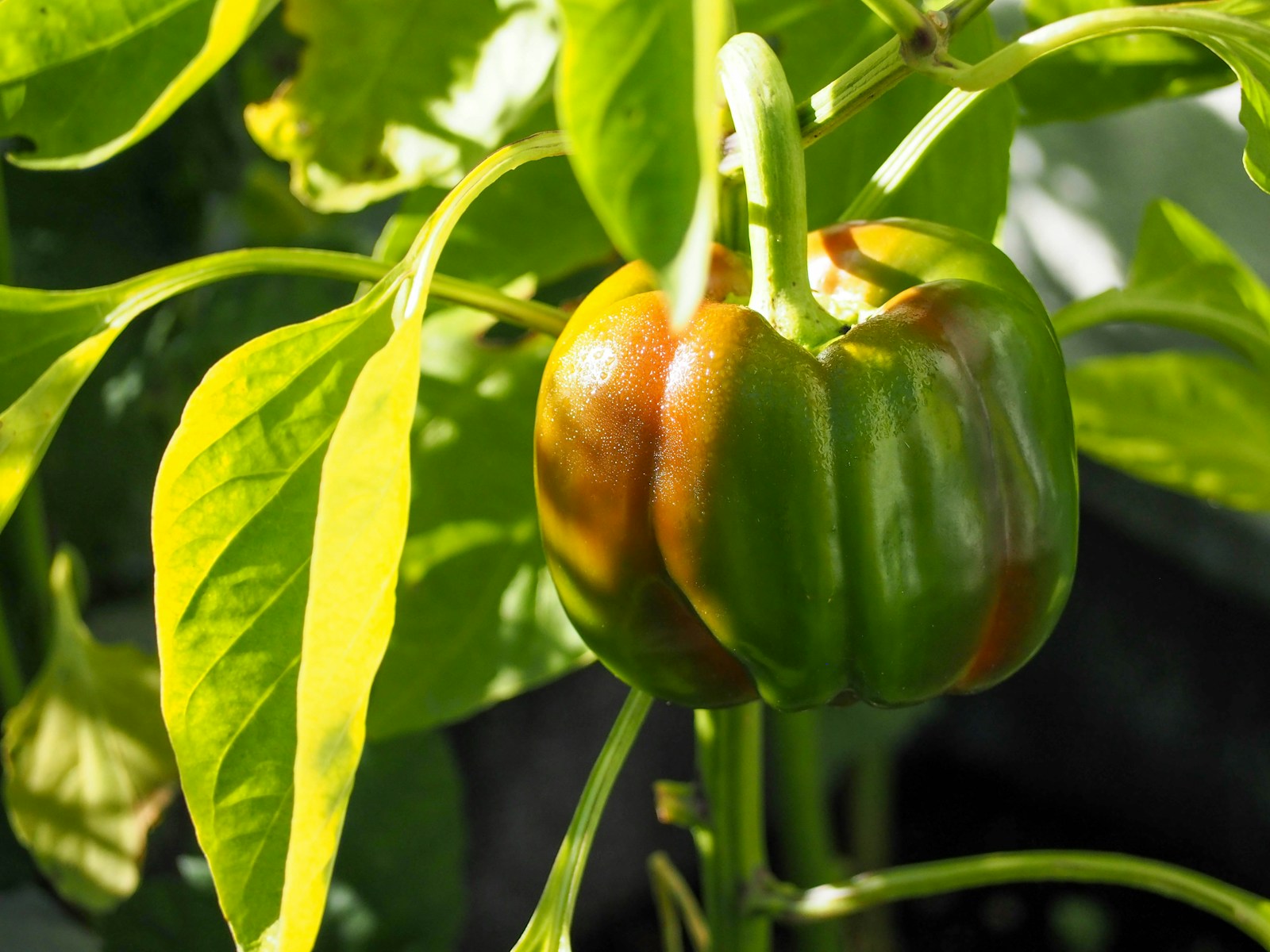
Bell peppers are the blocky, thick-walled sweet peppers used raw in salads and cooked in countless dishes. Home-grown fruit can ripen fully on the plant, which gives far more flavour than green shop peppers. They are moderately easy, but need a long, warm season.
Sowing and planting
Bell peppers need a long growing season, so most gardeners start them indoors.
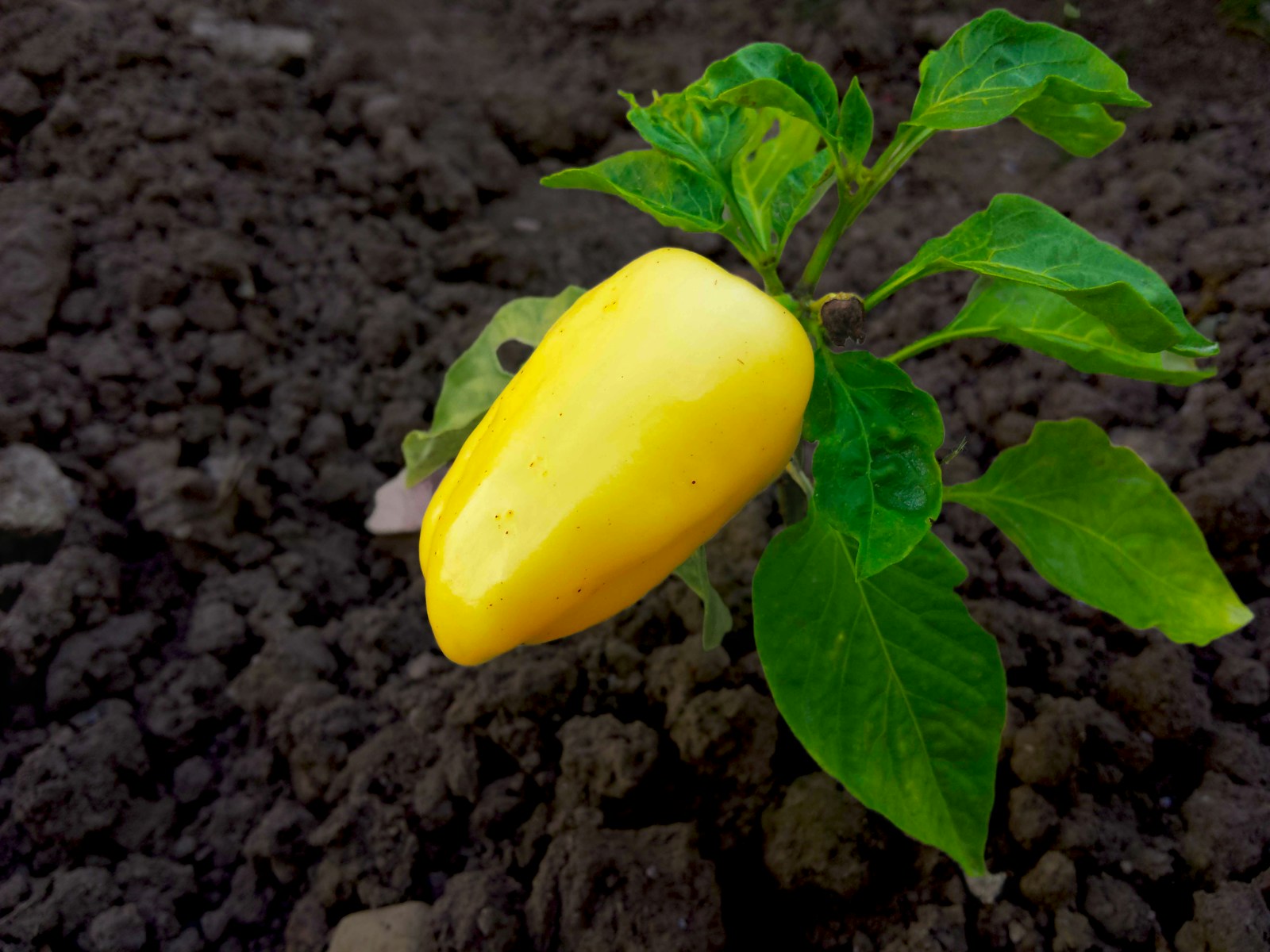
Sow seed indoors eight to ten weeks before your last frost. Use seed-starting mix in small cells or pots, ¼ inch (6 mm) deep. Keep the mix at 75-85°F (24-29°C); a heat mat is the easiest way. Seedlings usually appear in 7-14 days, sometimes longer in cooler rooms.
Once seedlings emerge, move them to bright light. A south-facing window works, but grow lights 2-4 inches (5-10 cm) above the tops give sturdier plants. Grow them on at about 65-75°F (18-24°C). Pot them into 3-4 inch (8-10 cm) pots once they have two sets of true leaves.
Plant out two to three weeks after your last frost. Wait until night temperatures stay above 55°F (13°C) and the soil has warmed to at least 65°F (18°C). First harden off the plants (get them used to outdoor conditions) over 7-10 days. Start with an hour or two in a sheltered spot and build up.
Set plants at the same depth they grew in their pots, 18-24 inches (45-60 cm) apart. In cool areas, laying black plastic or landscape fabric over the bed a week or two before planting warms the soil. Row covers give extra warmth for the first few weeks.
Peppers grow well in containers too. Use a pot of at least 3-5 gallons (11-19 liters) with good drainage, filled with quality potting mix.
In USDA zones 9-11 you can plant out earlier and may get a second flush of fruit in autumn.
Growing on
Water deeply once or twice a week so the soil stays evenly moist. Peppers have shallow roots and dislike swings between wet and dry. Container plants may need water daily in hot weather.
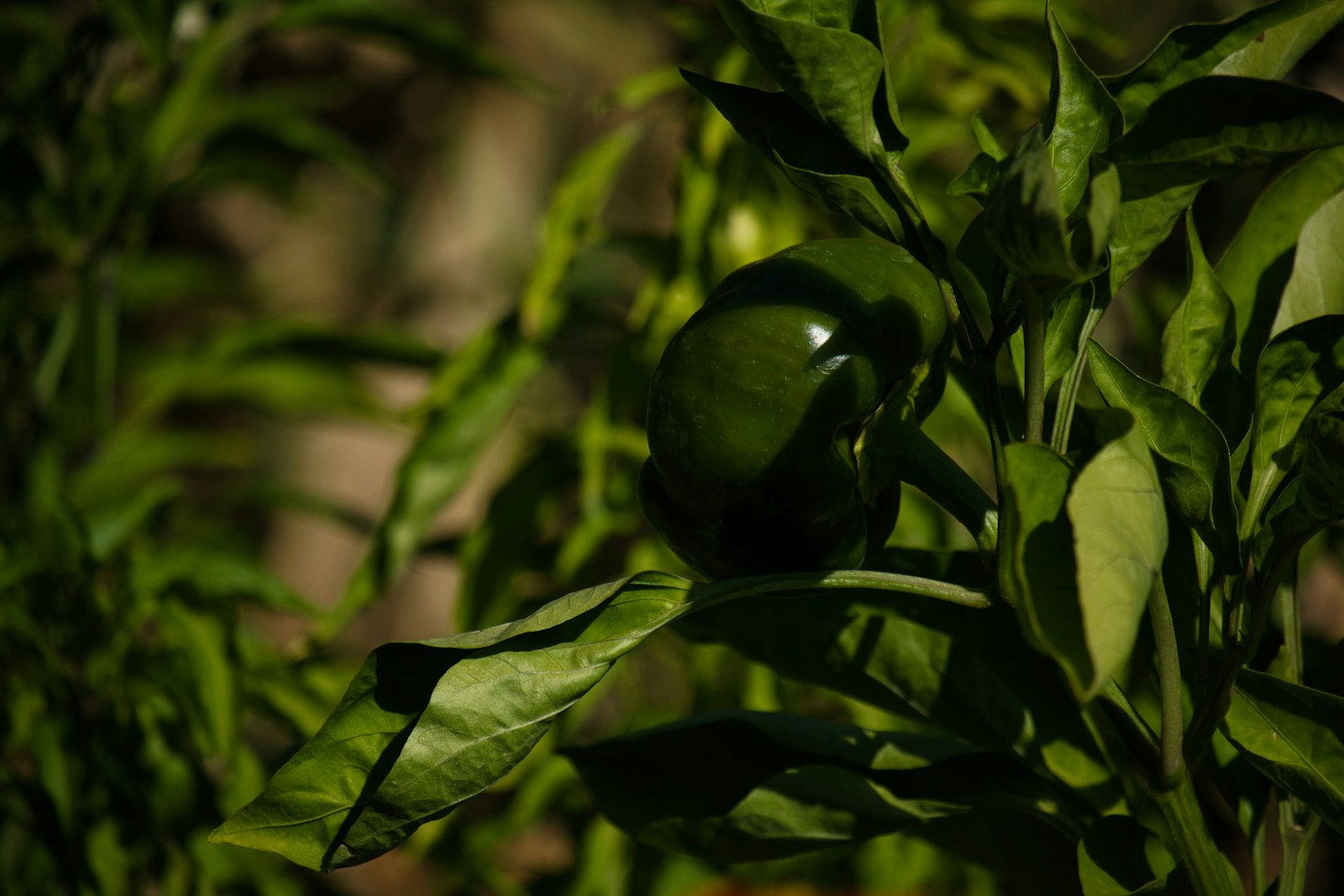
Mulch with 2-3 inches (5-8 cm) of straw or shredded leaves once the soil is warm. Mulching too early keeps the soil cold.
Mix compost into the bed before planting. Once the first fruits set, feed every two to three weeks with a balanced or tomato-type fertilizer. Too much nitrogen gives leafy plants with few peppers. Follow the label rates and wear gloves when handling granular feeds.
Bell peppers have brittle stems, and a heavy crop can snap branches. Push a stake or small cage into place at planting time. Tie the main stem loosely as the plant grows.
Pruning is optional. Some gardeners pinch off the first flower or two so the plant puts more energy into growth. In short-season areas, pinch off new flowers about four to six weeks before your first frost. This lets the plant ripen the fruit already set.
Peppers grow well beside basil, onions and carrots. Avoid planting them where tomatoes, potatoes or eggplant grew the year before, as they share diseases.
Cold is the most common reason peppers fail. Plants set out while nights are still below 55°F (13°C) sit and sulk, and frost kills them outright. Wait until the soil is warm before planting, and keep row covers ready for cold snaps.
Harvesting
Every bell pepper starts green. Green peppers are simply unripe fruit and are edible once they reach full size and feel firm. Left on the plant, they change colour as they ripen, usually through a mottled stage. Depending on the variety, the final colour is red, yellow, orange, purple or brown. Purple varieties are purple while unripe and usually turn red when fully ripe.
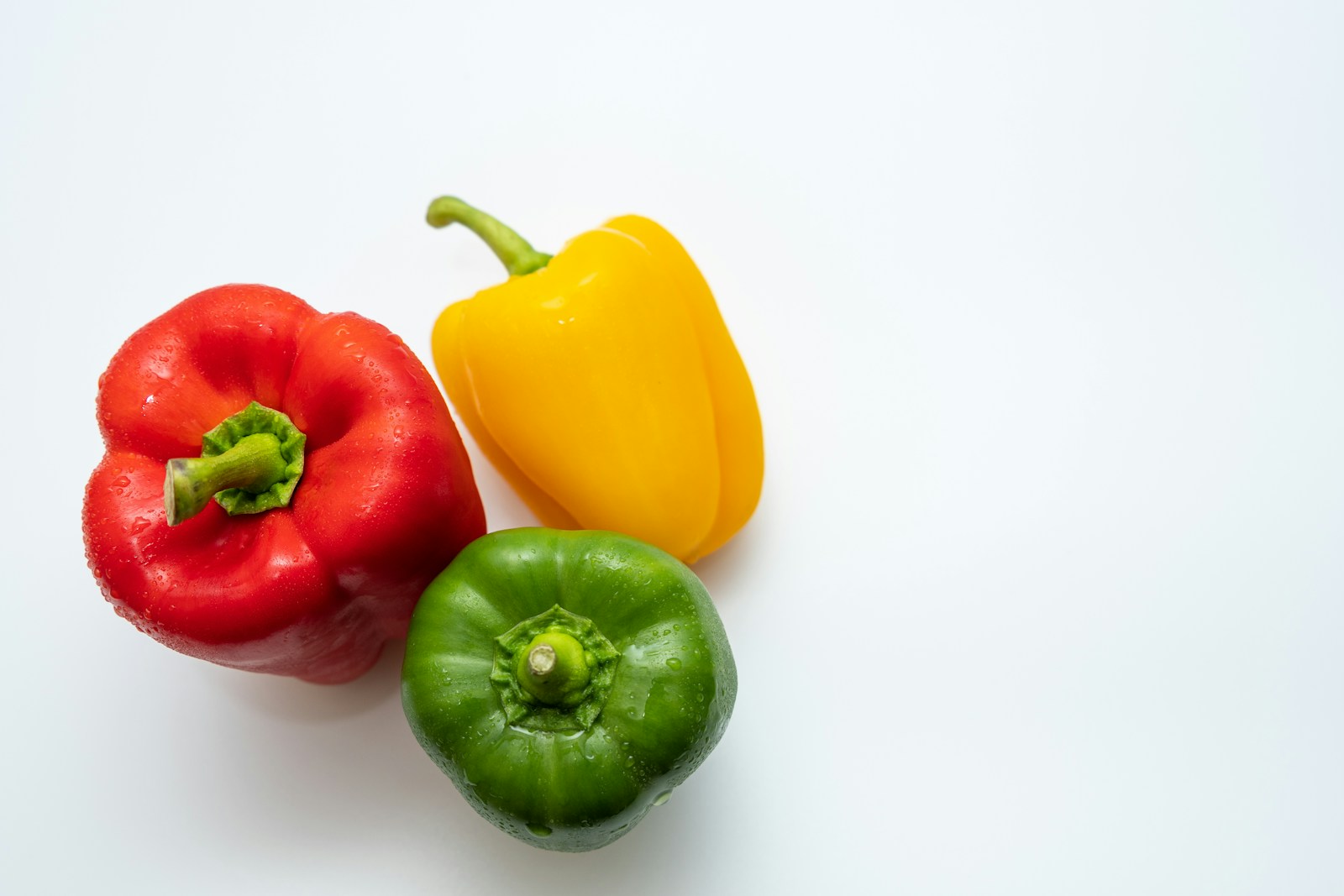
Fully coloured peppers are sweeter and have a richer flavour. The trade-off is time: full colour takes another two to four weeks. Picking some fruit green encourages the plant to set more.
Cut peppers off with pruners or scissors, leaving a short piece of stem. Pulling by hand often breaks branches.
Pick all fruit before the first frost. Peppers that have started to colour usually keep ripening indoors at room temperature.
Store unwashed peppers in the refrigerator crisper for one to two weeks. For longer storage, slice and freeze them without blanching, or roast and freeze.
To save seed, let a fruit from an open-pollinated (not hybrid) variety ripen fully. Scrape out the seeds, dry them on a plate for one to two weeks and store them cool and dry. Peppers can cross with other peppers growing nearby, so grow them apart or cover flowers with fine mesh bags.
Problems and pests
Sunken, dark patches at the bottom of the fruit
This is blossom end rot. It happens when the plant cannot move enough calcium into the fruit, usually because of uneven watering. Water deeply and regularly and mulch to keep moisture steady. Remove affected fruit; later fruit is often fine.
Flowers drop off without setting fruit
Blossom drop follows temperatures above about 90°F (32°C) in the day or below 60°F (16°C) at night. Dry soil and heavy nitrogen feeding also play a part. Keep plants watered and wait for milder weather, when fruit usually sets again.
Pale, papery patches on the fruit
Sunscald occurs when fruit is suddenly exposed to strong sun, often after leaves are lost or removed. Keep plants leafy and well-fed. In very hot areas, use shade cloth during the afternoon.
Clusters of small insects under the leaves
Aphids suck sap and leave sticky honeydew. Rub them off or wash them away with a strong spray of water. If you use insecticidal soap, follow the label, spray in the evening and avoid open flowers so you do not harm bees.
Dark, water-soaked spots on the leaves
Bacterial leaf spot spreads in warm, wet weather. Water at the base, not over the leaves, and space plants for air flow. Remove affected leaves, buy disease-free seed and rotate crops for at least two years.
Varieties worth growing
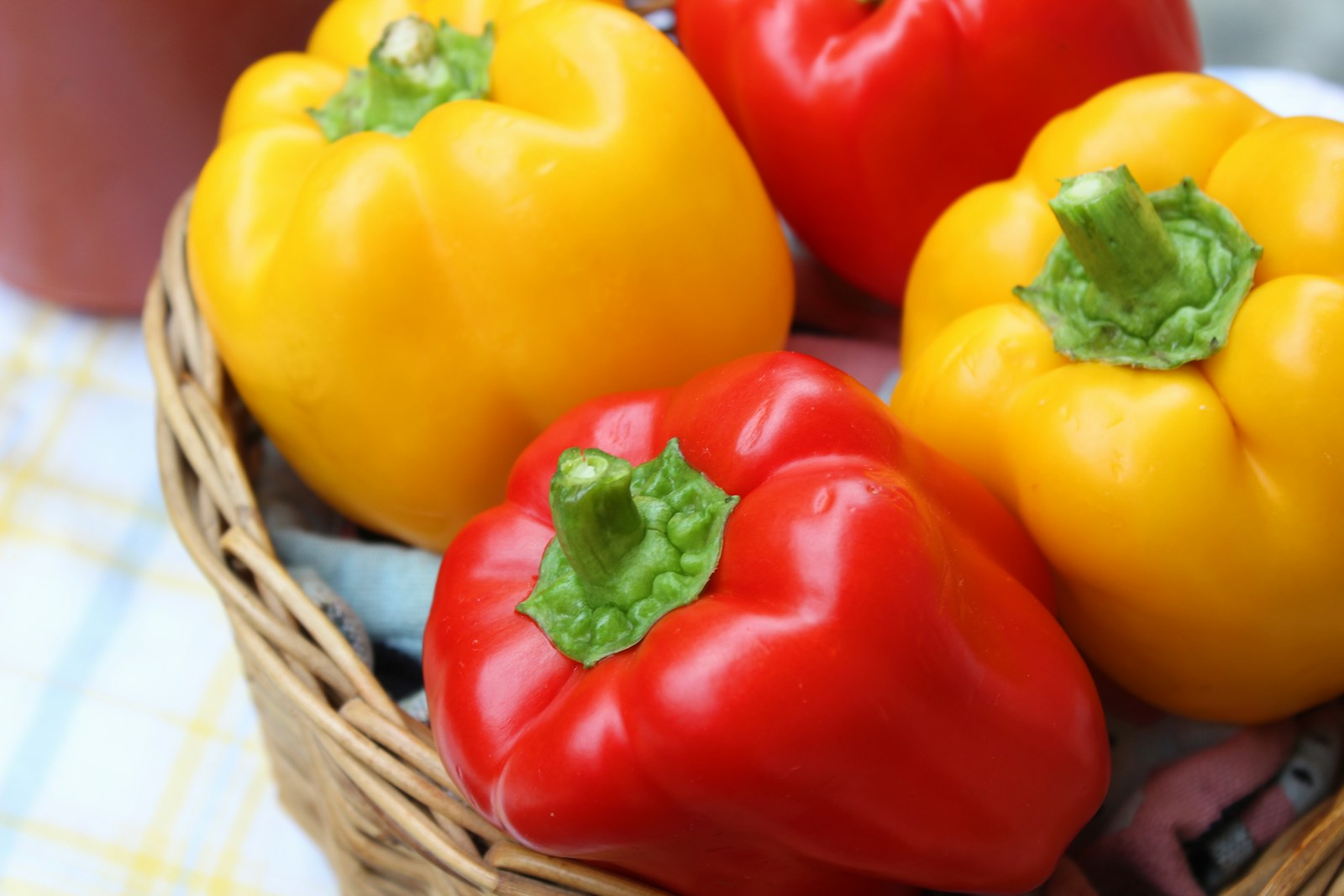
- 'California Wonder': the classic heirloom bell with thick walls, ripening from green to red.
- 'Golden California Wonder': a yellow-ripening form of the classic.
- 'King of the North': an heirloom red bell suited to cooler, shorter summers.
- 'Ace': an F1 hybrid that crops early and reliably in cool areas.
- 'Purple Beauty': a compact plant with purple fruit that ripens to red.
- 'Orange Sun': a large, blocky bell that ripens to bright orange.
Hot peppers belong to the same and closely related species but are grown slightly differently, and have their own profile.